
Investigations
The Man Behind the Badge: How Prof. Erastus Kanga Turned Kenya’s Premier Wildlife Agency into a Theatre of Corruption, Fear and Impunity
When activist Francis Awino was arrested last week on charges of attempted extortion, the Kenya Wildlife Service boss who ordered his prosecution had a story of his own to tell. A Kenya Insights investigation, drawing on official government reports, court records, parliamentary transcripts and whistleblower testimony, lays bare the scandal-riddled tenure of Prof. Erastus Kanga and asks the question authorities have not: does the man who controls the gun have a clean enough hand to point it at anyone?

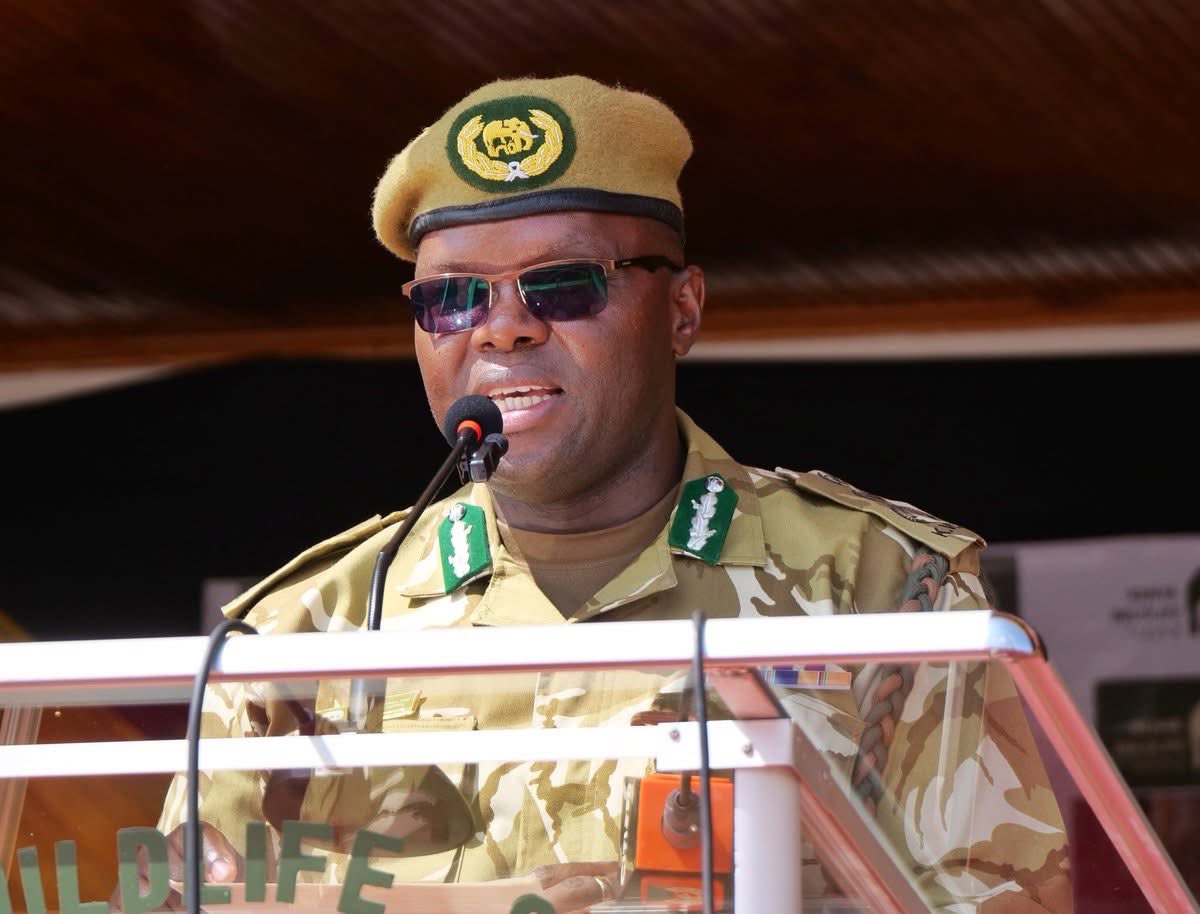
On the morning of April 22, 2026, officers from the Directorate of Criminal Investigations descended on Karen and arrested Francis Awino Onyango without a warrant.
He was bundled into custody, and within twenty-four hours he stood before Milimani Chief Magistrate Teresia Nyangena charged with attempting to extort Sh1.7 million from Kenya Wildlife Service Director General Prof. Erastus Kanga.
The prosecution’s theory was clean and damning: Awino, they alleged, had filed a constitutional petition threatening to expose Kanga’s alleged Chapter Six violations, and then offered to make it all disappear for a price.
Awino denied the charge in full.
His lawyer, Mr Nthei, told the court his client’s petition was a bona fide exercise of constitutional rights and that the criminal charges were a deliberate mechanism to arm-twist the activist into withdrawing a petition that had become an embarrassment to the KWS boss.
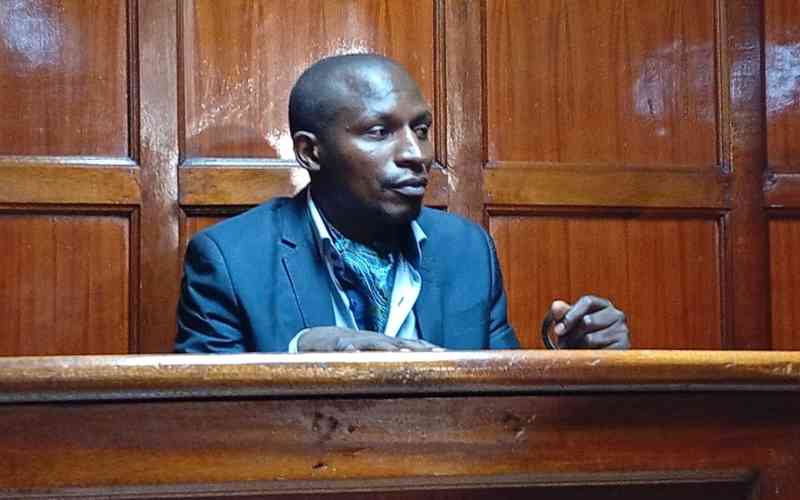
Francis Awino Onyango in court.
The court released Awino on a bond of Sh1 million with an alternative cash bail of Sh200,000. The next hearing is May 7, 2026.
That much is public record, and every newsroom in Nairobi carried the headline.
What they did not carry is the archive.
Because before Awino ever walked into the KWS compound on that January afternoon, Prof. Erastus Kanga was already standing in the eye of a storm of his own making. And the public had a right to know.
KWS under Kanga was the single most corrupt institution in the country, accounting for 35.73 percent of all bribery in Kenya, according to the EACC’s own August 2025 report.
KENYA’S MOST CORRUPT INSTITUTION: THE EACC VERDICT
In August 2025, the Ethics and Anti-Corruption Commission released its National Ethics and Corruption Survey.
The findings were, by any measure, catastrophic for the man sitting in the Director General’s office at KWS headquarters along Lang’ata Road.
KWS under Kanga was identified as the single most corrupt institution in the country, accounting for a staggering 35.73 percent of all bribe money exchanged across Kenya during the entire survey period.
For context, the national average bribe stood at Sh4,878. At KWS, job seekers were being squeezed for more than Sh200,000 just to get through the door.
The numbers were not a rounding error or a bureaucratic anomaly.
They reflected a culture so rotten that the EACC felt compelled to single out one institution from across the entire government apparatus.
The second most corrupt institution, the National Social Security Fund, accounted for 8.42 percent of national bribes. KWS had more than quadrupled it.
Whether that culture existed on Prof. Kanga’s watch, during his watch, or was actively cultivated under his leadership are the questions that Parliament, whistleblowers and legal petitions have since been asking with increasing urgency.
THE SH740 MILLION INSURANCE TENDER SCANDAL
Perhaps no single episode better illustrates the rot alleged to have taken hold at KWS than the saga of its Sh740 million staff medical insurance tender.
Advertised in April 2025, the three-year contract attracted bids from eight major insurers, including Jubilee Health Insurance and Britam General Insurance.
After evaluation, KWS awarded the tender to Britam. The problem was how Jubilee was knocked out.
When the Public Procurement Administrative Review Board examined the matter, it found that KWS evaluators had relied on what it described as a forged authorization letter purportedly from Jubilee Health Insurance, bearing incorrect director names and a fictitious address, to disqualify the company from bidding. Jubilee officials immediately identified the document as fraudulent when they saw it.
Despite this, KWS had used the forgery as grounds for elimination, without affording Jubilee an opportunity to respond.
The Board found that Jubilee’s bid was unfairly disqualified and that KWS had acted contrary to both procurement law and the provisions of the tender document.
The entire process was nullified and a fresh evaluation ordered.
Then came the arithmetic that defied innocent explanation.
Between Britam’s winning bid and the final award letter, the contract value had risen from Sh710 million to Sh740 million. The unexplained Sh30 million balloon had no basis in any document before the Board.
Adding to the suspicion, KWS proceeded to issue a letter of intent to Britam even after the tender had been officially suspended following Jubilee’s complaint.
The Board’s ruling, dated May 19, 2025, was emphatic: the procuring entity had failed to conduct the evaluation in accordance with the law.
That should have been the end of it.
It was not.
When the Board ordered KWS to complete the lawful procurement process, Prof. Kanga declined to approve the award and instead unilaterally terminated the entire tender, citing what he described as “material governance issues.” He produced no specifics.
The Board, in a subsequent ruling, found this termination unlawful, poorly explained and procedurally flawed.
In the plainest language the Board could deploy, it said that the mere recitation of statutory language was not sufficient justification for killing a procurement process.
It ordered KWS to comply with the law and complete the tender within sixty days.
The contract value ballooned from Sh710 million to Sh740 million between the winning bid and the award letter. No document before the Board explained the Sh30 million difference.
It was in this very context, and over these very procurement questions, that activist Francis Awino filed his original constitutional petition at the Milimani High Court seeking Prof. Kanga’s removal.
The petition, filed in January 2026, accused the KWS boss of unlawfully terminating the medical insurance procurement in defiance of binding court orders and escalating costs by Sh30 million. Three months later, Awino was in handcuffs.
A FISHERMAN VANISHES: THE NAKURU COVER-UP
On the morning of January 18, 2025, a fisherman named Brian Odhiambo was arrested by Kenya Wildlife Service rangers at the Manyani area near Lake Nakuru National Park.
He was accused of illegal fishing. Before the day was out, he had disappeared. His family never saw him alive again.
What followed was one of the most disturbing abuse-of-power cases to emerge from a government institution in recent memory. Six KWS rangers, including Senior Sergeant Francis Wachira and rangers Alexander Lorogoi, Isaac Ochieng, Michael Wabukala, Evans Kimaiyo and Abdulrahaman Sudi, were formally charged with abducting Odhiambo.
A protected prosecution witness, testifying virtually from Nakuru GK Prison where he was serving a sentence for illegal fishing, told the court he had seen Odhiambo lying unconscious in a KWS Land Cruiser.
He told the court that when rangers realized the fisherman might be dead, they signaled each other and drove off at speed into the park.
Another witness, Alex Maina, testified he had spoken with Odhiambo that morning before the arrest. He told the court he watched rangers beat Odhiambo, tear his clothes, and load him into their green vehicle. The fisherman was wearing only shorts when he was last seen, corroborating the first witness’s account.
Chief Inspector Julius Muhui, the lead detective, told the Nakuru court in November 2025 that the disappearance was planned and coordinated by the six officers.
He noted that the officers failed to record Odhiambo’s escape in the Occurrence Book as required by law, indicating that no escape had taken place. Phone records placed four of the accused rangers at the same location as Odhiambo on the morning of January 18.
Through all of this, the six officers continued to report for duty at Lake Nakuru National Park. Despite criminal charges hanging over their heads since May 2025, none were suspended.
Kenya Insights put the question directly: what does it say about KWS leadership that uniformed officers facing a charge of abduction to murder were permitted to remain in active service, armed, inside a national park?
Prof. Kanga has not answered that question in any public forum. His agency’s response, as reported in multiple news platforms, was to suggest that unnamed corrupt individuals were fighting the institution.
Six rangers charged with abducting a fisherman who was last seen unconscious in a KWS vehicle continued to report for duty at the same national park where the incident occurred.
THE CULTURE OF PURGES: SIX SENIOR MANAGERS OUT IN ELEVEN MONTHS
From the very first weeks of his tenure as Director General, Prof. Kanga displayed a pattern that insiders described in court filings and testimony as the systematic destruction of anyone who challenged or inconvenienced him.
Internal documents and court filings reviewed by the Daily Nation in December 2023 showed that at least six senior managers were suspended or interdicted within the first eleven months of Kanga’s leadership.
Finance Director Japheth Kilonzo, Partnerships Director Edwin Wanyonyi, Senior Assistant Director Bernard Omware and former Company Secretary Doreen Mutung’a were all interdicted between January and July of that year.
Ms Mutung’a eventually resigned and filed a suit against KWS for constructive dismissal, the legal doctrine that applies when an employee is forced out through a hostile working environment.
The case of Deputy Director Nancy Kabete is particularly revealing.
Kabete was transferred from KWS to the Ministry of Tourism after she declined to approve payment for firefighting equipment that had been massively overpriced.
The equipment in question included digging hoes that the tender had specified should be made from carbon fibre.
The firm awarded the contract supplied wooden hoes at Sh14,000 each, against a market price of between Sh1,000 and Sh2,000.
Kabete refused to sign off. She was removed from her post within days.
She filed a formal complaint with the KWS Board of Trustees alleging the transfer was punishment for her refusal to bend procurement rules on Kanga’s instruction.
The Public Service Commission agreed with her, rescinded the transfer and ordered her return to KWS. She also alleged that Kanga had ordered her work email deleted and that senior officers were reprimanded for merely being seen speaking to her in the parking lot.
In that same period, the Nation reported that KWS’s senior management page on its website listed eleven individuals, of whom only Prof. Kanga and one other held substantive positions. All nine others were in acting capacities.
For an institution managing Kenya’s entire wildlife and national parks estate, that is not restructuring. That is institutional decapitation.
THE PROCUREMENT INFLATIONS: DOUBLE PAYMENTS AND QUESTIONABLE SUPPLIERS
The pattern of procurement manipulation did not begin with the insurance tender.
Internal documents reviewed by Nation journalists in December 2023 showed that KWS had awarded a supply contract to Msafiri Feeds Ltd at dramatically inflated prices during the 2022-2023 financial year.
The original supplementary budget for replenishing KWS stores was Sh6.5 million. By the time a contract was executed, the figure had ballooned to Sh16.5 million.
The price distortions were stark.
Corned beef tins were purchased at Sh1,210 for a 350-gramme can, a price far above prevailing retail rates.
More seriously, Msafiri Feeds Ltd, the firm that won the supply contract, had a history that raised red flags.
The company had previously been flagged by the Financial Reporting Centre after receiving Sh8 million from Nairobi County for a garbage collection contract and had separately been implicated in an EACC investigation into Nairobi County over fraudulent payments for goods allegedly never supplied, totaling Sh39 million.
What made the KWS documentation damaging for Prof. Kanga personally was his signature.
A Local Purchase Order placed in evidence showed Kanga had approved the document on February 25, 2023, two days before the document was dated February 27, 2023.
He had signed off on a purchase order before it existed.
Kanga signed a Local Purchase Order on February 25, 2023, approving a supplier payment. The document itself is dated February 27, 2023. He approved it two days before it was written.
PARLIAMENT LOSES PATIENCE: THREE SUMMONS, ONE EMPTY CHAIR
Just a week before Awino’s arrest, Kenya’s National Assembly Committee on Cohesion and Equal Opportunities was at the end of its patience with Prof. Kanga.
The committee, chaired by Mandera West MP Adan Yussuf Haji, had summoned the KWS Director General three consecutive times to answer questions about the escalating human-wildlife conflict crisis, following a reported incident in Kisima Location, Samburu County, where wildlife attacks had caused deaths, injuries and destruction of property. Three times, the chair sat empty.
Kanga had reportedly called the committee chair informally to explain his absences. He did not follow up in writing as required.
The committee’s frustration was visible and public.
Luanda MP Dick Maungu moved that the committee recommend Kanga’s arrest and have him brought before Parliament by force.
The committee chair issued a formal summons warning of a personal fine of Sh500,000, emphasising that the penalty would come from Kanga’s own pocket, not from public funds.
It was a remarkable scene: a Director General of a major state agency, facing criminal charges against officers under his command, a nullified multibillion-shilling tender process, an EACC indictment of his institution as the most corrupt in the country, and now the threat of parliamentary arrest, finding the time to pick up a phone but not to walk into a committee room.
THE SENATE, THE WHISTLEBLOWERS AND THE DOSSIER
The Senate, too, had been drawn into the KWS vortex.
According to reporting by Kenya Today in November 2025, senators summoned Kanga to appear and address the escalating controversies at the agency. During that session, senators went as far as to question the legitimacy of the Director General’s continued occupation of the office.
The Senate gave him one week to produce documentary evidence. Insiders told the publication that the deadline created severe internal tension.
Meanwhile, a confidential internal dossier compiled by anonymous KWS whistleblowers had reportedly made its way to corruption investigators.
The dossier, as described in reporting by Kenya Insights in December 2025, accused Kanga of personally directing the disruption of public participation meetings held to review the Wildlife Conservation and Management Act, allegedly deploying KWS wardens to break up sessions and threatening staff who supported the reform process.
The whistleblowers described an organisation operating on fear rather than law.
Scientists said their recommendations were routinely dismissed or blocked for political convenience. Rangers reported lack of timely support during field missions.
Training opportunities abroad were allegedly reserved for a small circle of loyalists. Personnel transfers were used as instruments of punishment rather than operational tools.
The dossier also flagged what it described as commercial cartels penetrating protected areas, with allegations of mining activities encroaching into ecosystems at Tsavo, Kora and Meru/Bisanadi. KWS publicly denied mining at Tsavo East, attributing circulating images to irrigation canal construction at the adjacent Galana Ranch.
The denial did not address Kora or Meru/Bisanadi, nor the broader allegation that connected interests had been given access to conservation zones.
THE PRESIDENT’S MEDAL AND THE MISSING ACCOUNTABILITY
On December 12, 2025, President William Ruto awarded Prof. Erastus Kanga the Chief of the Order of the Burning Spear, the highest class of that state decoration.
The citation praised his exemplary leadership and sustained service to the nation.
Four months earlier, the EACC had identified KWS as the most corrupt institution in Kenya.
Five months earlier, rangers under Kanga’s command were in a Nakuru court accused of abducting and possibly killing a fisherman.
The procurement board had nullified his agency’s biggest tender.
The Senate had questioned his legitimacy.
The timing of the decoration was noticed. The questions it raised have not been answered.
Four months after the EACC named KWS the most corrupt institution in Kenya, President Ruto awarded Prof. Kanga the highest class of the Order of the Burning Spear.
WHAT THE PETITION SAID
The constitutional petition that Francis Awino filed at the Milimani High Court in January 2026 was not a fishing expedition.
It was anchored in a specific grievance: that Prof. Kanga had unlawfully terminated the medical insurance tender in defiance of a binding ruling by the Public Procurement Administrative Review Board, escalating the cost to the taxpayer by Sh30 million in the process, and that this conduct constituted a violation of Chapter Six of the Constitution on leadership and integrity.
The charges against Awino rest on the prosecution’s claim that he offered to withdraw the petition in exchange for Sh1.7 million.
That allegation will be tested in court.
What will not disappear with the verdict, whichever way it falls, are the underlying governance failures the petition sought to expose.
Those are in the public domain, documented by the government’s own agencies, parliament’s own committees and the courts’ own records.
Awino’s defence counsel put it plainly before the magistrate: the criminal charges were designed to arm-twist his client into withdrawing litigation that had become uncomfortable.
Whether that is true or false is for the court to decide.
But for Kenyans watching from outside the courtroom, the more uncomfortable truth is that the litigation existed for reasons.
Those reasons have not been prosecuted.
THE PATTERN
What emerges from a full review of the public record on Prof. Erastus Kanga’s tenure as KWS Director General is not a collection of isolated incidents. It is a pattern.
A procurement board nullifying a Sh740 million tender because of a forged letter and an unexplained cost inflation.
The same Director General refusing to comply with that board’s orders and being found unlawful a second time.
Six senior managers pushed out in under a year.
A deputy director transferred for refusing to approve overpriced supplies, only to be reinstated by the Public Service Commission.
An activist jailed pending bail for filing a petition about that tender.
Six rangers accused of killing a fisherman continuing to work in the same park where the crime allegedly occurred.
Three consecutive parliamentary summons ignored.
A Senate that questioned whether the Director General should remain in office. And the EACC declaring KWS the most bribery-infested institution in the entire country.
Each of these episodes, taken alone, might be explained away.
Together, they constitute a governance catastrophe at one of Kenya’s most symbolically and economically significant conservation institutions.
The wildlife estate generates nearly Sh8 billion in annual revenue for the country.
It is the centrepiece of Kenya’s tourism identity. The 270 rangers and officers it deploys carry firearms in some of the most sensitive ecosystems on the continent.
The man at the top of that institution is not in court. The man who filed a petition about it is.
Kenya Insights allows guest blogging, if you want to be published on Kenya’s most authoritative and accurate blog, have an expose, news TIPS, story angles, human interest stories, drop us an email on [email protected] or via Telegram



Nyali MP Moha Jicho Pevu Caught Up In Alleged Sh44 Million KPA Debt Scam

Somalia Deputy PM Held at JKIA, Deported Over Questionable Acquisition of Kenyan Passport

The White-Coat Heist: How MP Shah Hospital Ran a Decade-Long Double-Extraction Racket While Hiding Behind Charity Status

The Patriarch, His Children, and a Buried Sh3.9 Billion Fraud: The Story of Titus Muya That Kenya Was Never Meant to Read

The Founder’s Ransom: How Titus Muya Had to Be Paid Sh231 Million to Let Go of Family Bank and Why That Bill Is Now Yours

Kenya’s gambling industry pushes back against a licensing bill

Kenya Airways Sinks Into Deeper Turbulence As American Supplier Sues In New York Court Over Sh129 Million Unpaid Debts

Kenyan player wins a Ksh3.2 million jackpot

IEBC Sets August 10 Date For 2027 General Election

Furious Ruto Lashes Out at Gideon Moi Over Repeated ‘Blackmail, Extortionist’ Headlines on The Standard and KTN

Businessman Philip Waithaka Kinuthia’s Minor Son Allegedly Drove Drunk, Killed Two Peponi Students in Ngong Road Horror Crash as Claims of Cover-Up Intensify

Inside NCBA’s Decline: How a Banking Giant Lost Its Strategic Edge

South Sudan: Adut Salva Kiir’s Shadow Treasury Exposed

Cement, Cash and Courts: How the Hashu Dynasty Crushed the Ramji Brothers for Fourteen Years and Why the Walls Are Now Closing In

Standard Chartered Ghosts Haunt Joshua Oigara At Stanbic As Whistleblower Spills Beans

Inside The Urban Planning Cartel That Owns Nairobi

THE VULTURE AND THE SCHEME How Nairobi West Hospital Became the Most Dangerous Institution in Kenya’s SHA Ecosystem and Why the Books Must Be Audited Now

The President’s Daughter and The Missing Witness: How Adut Salva Kiir’s Shadow Treasury Silenced Its Most Dangerous Critic

How Adil Popat Saved His Empire On The Eve Of Imperial Bank Collapse and Why Kenya’s Mainstream Media Buried The Story

Why John Ngumi Is Running From the EACC and Why the Sh415 Million Payday May Be the Least of His Worries
-
 News2 weeks ago
Businessman Philip Waithaka Kinuthia’s Minor Son Allegedly Drove Drunk, Killed Two Peponi Students in Ngong Road Horror Crash as Claims of Cover-Up Intensify
-
 Investigations1 week ago
THE VULTURE AND THE SCHEME How Nairobi West Hospital Became the Most Dangerous Institution in Kenya’s SHA Ecosystem and Why the Books Must Be Audited Now
-
 Business20 hours ago
The Patriarch, His Children, and a Buried Sh3.9 Billion Fraud: The Story of Titus Muya That Kenya Was Never Meant to Read
-
 Business5 days ago
BURRIED TWICE: The Victoria Bank CEO Yogesh Pattni Files
-
 Business1 week ago
Inside the Billion-Shilling Betrayal: How Senior Treasury Officials Plundered a UN Poverty Fund and Built a Real Estate Empire on the Backs of Kenya’s Rural Poor
-

 Business2 weeks ago
The Listing That Doesn’t Lie: What the Market Isn’t Saying About Family Bank’s NSE Debut
-

 Business1 week ago
The Banker Who Walked Away: How Yogesh Pattni Survived a Financial Crime Scandal That Shook Kenya
-

 News7 days ago
My Life Is In Danger: Investor Drops Bombshell Expose On Thomas Ogutu CEO VeGrid Ltd And Fugitive Nairobi CEC Charles Kerich – DCI Inaction And Corruption Network Exposed