
Business
How Mohamed Jaffer Tightened His Stranglehold on Mombasa Port as Parliament Looked Away and a Dirty Fuel Scandal Engulfed His Empire
Mohamed Jaffer has just locked in another 20 years over Kenya’s grain lifeline. Parliament warned him. Courts rebuked his rivals. And while a carcinogen-laced fuel scandal burns through public trust, the Ruto government handed him the keys anyway.

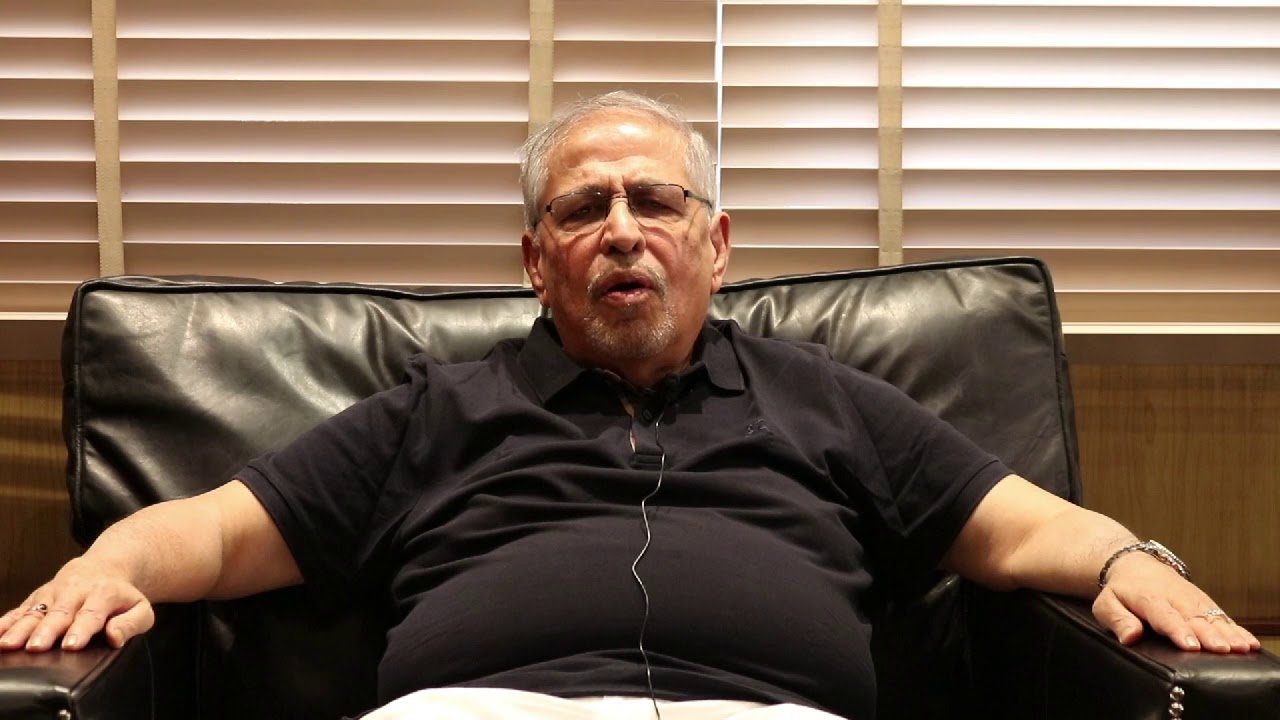
The vessel MT Paloma had barely cleared Mombasa port and entered South African waters when the full scale of Mohamed Jaffer’s double exposure became impossible to ignore. His fuel company stood accused of flooding Kenyan roads with contaminated petrol over Easter weekend 2026. His lawyers were fighting off a Ugandan importer demanding the release of wheat that had sat detained at berths three and four for years. And somewhere in the Ministry of Roads and Transport, a contract was being drafted that would hand him those same berths, and the grain monopoly they represent, for another twenty years.
That contract, approved by President William Ruto’s administration and awaiting gazettement as of the date of this publication, extends Bulkstream Limited’s lease over the Port of Mombasa’s only specialized bulk grain discharge terminals seven years before the existing concession was due to expire. It is not a renewal born of competitive merit, transparent procurement, or public interest. It is the latest triumph of an empire that has outlasted four presidents, survived every parliamentary investigation thrown at it, and buried every rival who came close enough to threaten it.
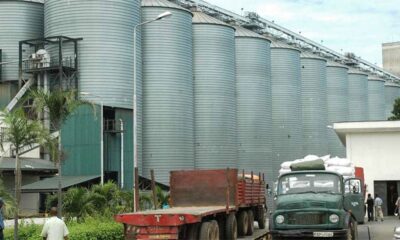
The deal cements what market analysts, parliamentary committee members, and competing operators have called for two decades the most consequential private monopoly in Kenya’s food supply chain. Bulkstream, formerly known as Grain Bulk Handlers Limited before a quiet 2024 rebranding, handles approximately 98 percent of all bulk grain imports into Kenya, including wheat, rice, and maize destined not only for Kenyan mills but for the landlocked nations of Uganda, Rwanda, South Sudan, Burundi, and eastern Democratic Republic of Congo. Roughly 2.2 million tonnes pass through its terminals every year. No rival has been allowed to operate at scale since the original exclusivity window expired in 2008. It did not expire because the market decided so. Parliament tried to force open the door. The door stayed shut.
Parliament warned. Courts ruled. Rivals were crushed. And the Ruto government handed him 20 more years anyway.
THE ARCHITECTURE OF PERMANENT ADVANTAGE
To understand why no competitor has successfully entered the bulk grain market at Mombasa for over two decades, one must understand the pricing structure that Parliament itself identified as the foundational problem. Bulkstream pays the Kenya Ports Authority a service fee of $3.85 per metric tonne to operate its specialized terminals. Conventional operators wishing to handle bulk grain through non-specialized berths are charged $10.40 per metric tonne for the same privilege. That gap of $6.55 per tonne is not a market outcome. It is a regulatory inheritance, embedded in the KPA tariff book, that makes it structurally impossible for any competitor to undercut Jaffer’s pricing regardless of how efficient, well-capitalized, or willing they might be.
On top of the KPA fee, Bulkstream charges millers $16 per metric tonne for its handling services. The math is unambiguous. Across 2.2 million tonnes annually, the terminal extracts over $35 million a year in miller fees alone, against a cost base that includes a KPA service charge equivalent to approximately $8.5 million. The embedded price differential flows directly into the cost of bread, ugali, and animal feed across Kenya and several neighboring countries. It is a toll paid by every East African family that consumes grain. Parliament did not merely notice this arrangement in passing. It named it explicitly.
The 2020 report of the National Assembly Finance, Planning and Trade Committee described the differential as a technical barrier to trade and competition and recommended the transparent appointment of additional bulk grain operators and expansion of port facilities to accommodate them. The Kenya Ports Authority set a 2022 deadline to license a second handler. That deadline passed without a single approval being granted. The committee’s language was unambiguous. Its recommendations were ignored with equal clarity.
BULKSTREAM BY THE NUMBERS
Market share of bulk grain imports at Mombasa: ~98%
Annual throughput: 2.2 million metric tonnes
KPA service fee paid by Bulkstream: $3.85/tonne
KPA fee charged to conventional operators: $10.40/tonne
Differential (competitive moat): $6.55/tonne
Handling fee charged to millers: $16/tonne
Lease extension: 20 years, approved 7 years early
Original concession signed: ~2000 (33-year term)
MJ Group estimated valuation (Africa Report, 2025): KSh16.3 billion
TWO DECADES OF WARNINGS, ZERO CONSEQUENCES
The 2020 parliamentary committee report is not a standalone intervention. It is the culmination of over two decades of parliamentary scrutiny of an arrangement that legislators, regulators, and trade observers have consistently identified as anti-competitive and harmful to the public interest. As far back as 2018, MPs were issuing directives to end Jaffer’s monopoly on the grain trade, as contemporaneous media records show. The problem was never lack of awareness. The problem was the persistent gap between parliamentary resolve and executive action.
The original concession between Grain Bulk Handlers Limited and the Kenya Ports Authority was signed around the year 2000. It included an initial eight-year exclusivity window, explicitly granted to allow the company to recover its investment costs. That exclusivity expired in February 2008. The KPA board resolved at that point to liberalize grain handling and introduce competition. What followed was a series of cancelled tenders, aborted licensing processes, and unending delays that preserved the monopoly in practice while abandoning it in theory. Each successive government found a reason not to finish the process.
When in 2022 interests linked to Mining Cabinet Secretary Hassan Joho appeared to have finally broken through, winning a Sh5.9 billion contract for Portside Freight Terminals to construct a competing facility, the Supreme Court quashed the procurement. The ruling found that KPA had failed to meet constitutional thresholds of fairness, transparency, and competitiveness. The irony was corrosive. The very procurement standards cited to cancel Jaffer’s competitor were standards that the original concession to Jaffer had never been compelled to meet. The playing field was cleared again. Jaffer remained the only player on it.
A senior KPA manager’s remarks to international media in the aftermath of the Portside ruling were telling in their candor. The official stated plainly that KPA cannot run the grain facility and that the two berths are likely to remain under private entities for a longer period. That is not the language of a regulator planning to introduce competition. It is the language of a captured institution confirming that the current arrangement will endure. The 20-year lease renewal that followed merely formalized what the official had already conceded.
A senior KPA manager told media: ‘The two berths are likely to remain under private entities for a longer period.’ The 20-year lease simply made it official.
MT PALOMA: CARCINOGENS, COVERUPS, AND THE EASTER WEEKEND CONTAMINATION
On March 27, 2026, the vessel MT Paloma docked at the Port of Mombasa carrying approximately 60,000 to 68,000 metric tonnes of Premium Motor Spirit. The ship had last been in Fujairah, United Arab Emirates. It had originally been destined for Angola. It arrived in Kenya under an emergency import authorisation signed on March 25, two days before it docked, for a cargo that laboratory tests would later show contained elevated levels of sulphur, benzene, and manganese, all above legally permitted Kenyan standards. Benzene is classified as a known human carcinogen. Elevated manganese destroys catalytic converters. Excess sulphur corrodes engines and elevates toxic roadside emissions.
One Petroleum Limited, the importing company, is registered to the Jaffer family. Corporate registry documents list Mohamed Jaffer, his sons Mujtaba Jaffer and Ali Abbas Jaffer, and other family members among the directors and shareholders. The firm is headquartered in Mbaraki, Mombasa. It is not a new entrant in the fuel trade. It is a long-established company within the MJ Group ecosystem.
The sequence of events that allowed contaminated fuel into the Kenyan market reads as a governance failure at multiple levels. Energy Principal Secretary Mohamed Liban wrote to the Kenya Bureau of Standards managing director requesting a temporary waiver on conformity certificates, citing disruption to the Strait of Hormuz following US-Iran tensions as the justification for emergency procurement outside the standard government-to-government supply framework. Trade Cabinet Secretary Lee Kinyanjui then issued a letter on March 28, by which time MT Paloma had already been docked for 24 hours, granting the waiver. The letter acknowledged in plain language that the petroleum aboard contained high levels of manganese, sulphur and benzene.
The waiver directed that the substandard fuel be blended with existing stocks in KPC’s pipeline system to dilute the chemical concentrations. What that meant in practice was that contaminated fuel was deliberately commingled with Kenya’s strategic reserves and released to oil marketing companies serving retail stations across the country. Kenyan motorists who filled their vehicles over the Easter weekend, some of the highest-traffic days of the year, were doing so without any knowledge that the fuel entering their tanks had failed quality tests. Reports of engine damage linked to the consignment began circulating before the Directorate of Criminal Investigations had made its first arrests.
Narok Senator Ledama Ole Kina became the most aggressive parliamentary voice on the scandal. In explosive testimony before the Senate Energy Committee, Ole Kina named three individuals at the centre of what he described as a coordinated scheme to manufacture a fuel shortage and exploit it for profit: Joel Mburu, Supply and Logistics Manager at the Kenya Pipeline Company; Joseph Wafula, Deputy Director of Petroleum at the Ministry of Energy; and Mohamed Jaffer. The senator alleged internal communications showed premeditated planning and an orchestrated crisis, with the emergency declaration being used to justify bypassing the G2G framework. His phrasing was blunt: he called it the most brazen act of energy-sector looting in Kenya’s recent history.
The DCI opened its investigation quickly and its reach was wide. Former KPC Managing Director Joe Sang, former EPRA Director-General Daniel Kiptoo, and former Principal Secretary Mohamed Liban were arrested, questioned, and subsequently resigned from their positions. Two KPC employees, Joseph Wafula and Joel Mburu, were taken into custody and released on police cash bail of Sh100,000 each. Investigators summoned executives from One Petroleum and, separately, Swiss-owned Oryx Energies, which had imported a second controversial consignment of approximately 60,000 tonnes at prices Ole Kina alleged were set at $253.94 per metric tonne against the government’s own contracted rate of $84.00. The DCI confirmed it was working with both local and international investigative bodies.
One Petroleum’s public statement attempted damage control. The company confirmed that four firms had responded to an emergency request from the Energy Ministry, that it was one of them, and that it had taken steps to ensure the MT Paloma consignment would not enter the market. That last assurance was contradicted within days. KPC confirmed that the fuel had in fact been mixed with existing stocks and released to oil marketing companies. Energy CS Opiyo Wandayi, who ordered the product withdrawn from the market and blocked payments to One Petroleum, stated that the importation would have pushed pump prices up by as much as Sh14 per litre. The government ultimately reversed its own waiver, but by then the fuel had traveled far beyond any pipeline.
THE MT PALOMA TIMELINE
March 25, 2026: Emergency import authorisation signed for One Petroleum
March 27, 4:14 PM: MT Paloma docks at Port of Mombasa
March 28: Trade CS Kinyanjui issues written waiver acknowledging benzene, sulphur, manganese violations
March 30: MT Paloma departs for South Africa
Easter Weekend: Contaminated fuel distributed via KPC to oil marketers
April 5-6: DCI arrests Sang, Liban, Kiptoo; Wafula and Mburu held on bail
April 7: Government orders fuel withdrawal; One Petroleum’s Sh11.8 billion exposure confirmed
April 15: KPC confirms contaminated fuel already in market, commingled with reserves
April 17: Senator Ole Kina names Jaffer, Mburu, and Wafula in Senate committee testimony
THE SUCCESSION GAMBLE: PASSING THE EMPIRE TO THE SONS
Even as the fuel scandal was burning through KPC’s senior leadership and generating its first Senate committee hearings, a quieter restructuring was unfolding inside the Jaffer business empire that goes to the heart of whether the family can sustain what the patriarch built. Mohamed Jaffer is 78 years old. He has been described in regional business media as a work-in-silence billionaire who guarded his empire jealously and brokered political friendships along the way to protect it. That political protection is now being redistributed across a more complex ownership structure, and the question of whether it survives the transition is genuinely open.
In 2024, MJ Group indirectly sold a controlling stake in Bulkstream through its Mauritius-based holding company Incorp Limited to African Infrastructure Investment Managers, the South Africa-headquartered institutional fund manager with assets under management of approximately $3.8 billion and a portfolio spanning toll roads, renewable energy, and port logistics across Africa. AIIM is itself a subsidiary of the Old Mutual group. The Incorp Limited holding structure places the transaction at arm’s length from direct Kenyan regulatory scrutiny while maintaining the family’s operational influence through subsidiary roles.
AIIM is now reported to be preparing to sell approximately half of its stake in African Ports and Corridors Holdings, its Mauritius-based platform covering port and commodity logistics assets in Zambia and Tanzania, to Globe In Limited. Globe In is another Mauritius-registered entity with active cargo handling interests in Kenya and Uganda and traceable connections to the Jaffer network. The circular logic of the restructuring is not lost on analysts who track the group: institutional capital comes in through the front door, and network control is maintained through affiliated entities at the back.
Mujtaba Jaffer and Abass Jaffer, sons of the founder, are the visible faces of the next generation. Mujtaba has fronted Bulkstream’s public statements in the Pan Afric Commodities wheat detention case. Abass, a director at Bulkstream, did not respond to questions from international media in late May 2026 about the lease renewal. Their ascension to operational leadership coincides with a period of maximum external pressure: a live criminal investigation into One Petroleum, multiple court battles over detained cargo, an Sh1.8 billion land compensation dispute involving Miritini Free Port Limited, and the spectacle of their patriarch’s name being read into the record of a Senate committee hearing on a national fuel crisis.
The institutional investors now holding a controlling interest in Bulkstream through AIIM bring governance expectations and reputational considerations that the family structure did not face in the same way. Foreign institutional capital does not tolerate the kind of opacity that enabled three decades of parliamentary investigation without consequence. Whether AIIM views the One Petroleum scandal as a reputational contagion risk to its infrastructure fund is a question that will play out in boardrooms, not courtrooms. The sons are entering leadership not in a period of consolidation but in a period of acute vulnerability, and the difference between inherited political capital and proven political acumen is a gap that no business school curriculum can close.
Mujtaba and Abass Jaffer are inheriting an empire under criminal investigation, buried in lawsuits, and restructured through layers of Mauritius-registered entities. The patriarch made it look easy. It was not.
A PATTERN OF IMPUNITY: THE CONTROVERSIES THAT KEEP ACCUMULATING
The grain monopoly and the fuel scandal are not aberrations in an otherwise clean record. They are the two largest current expressions of a pattern of controversy that has attached itself to the Jaffer empire across multiple sectors and over multiple decades. Court filings, parliamentary records, and investigative reporting have documented a series of disputes that individually might be dismissed as the inevitable legal friction of large-scale business but collectively form a picture of an empire that uses institutional chokepoints, legal attrition, and political proximity as competitive weapons.
The Pan Afric Commodities case is illustrative of how Bulkstream’s market power translates into leverage over importers. The Ugandan firm purchased approximately 2,837 tonnes of Ukrainian wheat in 2018 under a charter party agreement. The wheat was shipped to Mombasa and handled by Bulkstream. A portion of the consignment, 1,514 tonnes, remained in storage as a dispute over import taxes and the intervention of a Ugandan receivership manager complicated the release. By September 2025, Bulkstream was asserting a bailment lien over the wheat pending payment of $1.1 million in accumulated handling and storage fees. The Mombasa High Court was still hearing the case into early 2026. A cargo shipped in 2018 was still impounded in 2026. The firm controlling the only bulk grain terminal in Kenya has no commercial incentive to resolve such disputes quickly.
Parallel civil suits from Kenyan maize millers alleging Sh90 million in damages have traversed the court system over similar grievances. The cases share a structural dynamic: importers and processors who depend entirely on Bulkstream for their grain intake have no alternative handler to turn to, which means any contractual dispute places them at the mercy of their only logistics option. Parliament recognized this leverage in its 2020 report. The market still operates with that leverage fully intact.
The Miritini Free Port land dispute has brought a separate line of allegations into view. Court records show that Bulkstream’s related entity Miritini Free Port Limited received approximately Sh1.8 billion from the National Land Commission as compensation for land in Jomvu, Mombasa. Those payments have been challenged in court, with proceedings in the Environment and Land Court in Mombasa. Justice Ogla Sewe extended interim orders in the case in July 2024, and as of the period of this publication the matter remains unresolved.
Reports have also circulated, some contested, regarding allegations of parliamentary bribery in connection with Bulkstream’s interests. A report in August 2025 described allegations that officials connected to Bulkstream paid bribes to members of parliamentary committees handling matters relevant to the grain terminal. President Ruto had around the same time ordered investigations into rising corruption in parliamentary committees. Bulkstream has not formally addressed these allegations. The individuals named in those reports have not faced charges that this publication can verify. But the allegations follow a company whose relationship with parliamentary oversight has always been one of attrition rather than accountability.
The ProGas and LPG sector dealings attributed to the Jaffer network have generated their own trail of regulatory disputes and court actions. LPG pricing, market access, and cylinder standards have all featured in filings that critics say point to an enterprise that replicates at the energy level the same stranglehold it maintains at the port. The pattern is consistent regardless of sector: identify a regulated infrastructure chokepoint, secure the position through initial investment and political relationships, then use the position to price competitors out while using legal process to exhaust those who resist.
WHO PAYS THE TOLL
The 20-year lease renewal is not merely a business story. It is a food security story, a public health story, and a governance story about what happens when accountability institutions fail to act on their own findings. Every parliamentary committee report, every court hearing on competitive procurement, every DCI investigation into fuel quality, represents a moment when the system had the information it needed to act. The lease renewal confirms that having the information and acting on it are not the same thing.
For Kenyan consumers, the cost of the grain monopoly is embedded in the price of every loaf of bread and every bag of ugali. The $16 per tonne handling fee that Bulkstream charges millers, in a market where no alternative exists, is a tax on food that Parliament labeled a technical barrier to competition six years ago and which remains unchanged today. The landlocked countries that route their food imports through Mombasa inherit the same embedded inefficiency. Uganda, Rwanda, South Sudan, and the DRC are food-secure only insofar as Mohamed Jaffer’s terminal is willing and able to move their grain. That dependency is not a result of geography alone. It is a result of a deliberate regulatory choice to allow a single private operator to control the only specialized facility for 25 years and counting.
The fuel episode added a dimension of physical risk to the economic one. Kenyan motorists who filled up over Easter 2026 did not consent to receive benzene-laced petrol. They had no way of knowing. The blending directive issued by Trade CS Kinyanjui was not disclosed publicly until it leaked. The government’s first communication was that the fuel had been blocked from the market. That statement was false. The fuel was already circulating. Vehicles had already been reported damaged. The subsequent order to withdraw the consignment came after the damage was done.
Whether criminal charges ultimately follow Jaffer or his sons in the One Petroleum investigation remains to be seen. The DCI has stated it is pursuing the matter with international cooperation. Several officials who facilitated the procurement have resigned and face their own legal exposure. The Sh11.8 billion question is whether One Petroleum’s principals will face the same accountability or whether, as has happened before across multiple sectors and multiple investigations, the institutional protection that has kept this empire intact for 25 years will once again absorb the impact.
THE RUNWAY THAT NEVER ENDS
Under President Moi, Grain Bulk Handlers Limited signed a 33-year concession that gave it exclusive rights over Kenya’s only bulk grain terminals. Under President Kibaki, the exclusivity window expired but the monopoly persisted. Under President Kenyatta, parliamentary committees investigated and recommended competition. Under President Ruto, the answer was a 20-year extension signed seven years early while the country’s DCI was actively investigating the same family’s fuel company for importing contaminated petroleum.
The Billionaires Africa publication that broke the renewal story noted that across four presidencies, the answer to whether Jaffer wins at the Port of Mombasa has always been yes. That observation is accurate and damning. It points not to a single government’s failure but to a systemic failure of the Kenyan state to subordinate private infrastructure control to public interest when the private controller has sufficient political proximity and legal firepower to resist. That resistance has been sustained across decades, across party lines, and now apparently across criminal investigations.
Abass Jaffer did not respond to questions about the lease renewal. Mujtaba Jaffer has been the public face of a grain company fighting a cargo lien case in Mombasa courts. KPA’s managing director, the Ministry of Transport, and Bulkstream representatives all declined to comment on the early renewal when contacted by international media. The silence is coherent with a business that has never needed to justify itself to the public because the public has never had a meaningful alternative.
The 20-year lease simply extends the runway. Ordinary Kenyans will keep paying the toll on their bread. Ugandan wheat importers will continue navigating the lien disputes of the only terminal operator in East Africa’s largest port. Senators will keep naming names in committee rooms. Parliamentary committees will keep writing reports that no one is obliged to implement. And somewhere in the Ministry of Roads and Transport, the gazette notice is being prepared.
Kenya Insights allows guest blogging, if you want to be published on Kenya’s most authoritative and accurate blog, have an expose, news TIPS, story angles, human interest stories, drop us an email on [email protected] or via Telegram










TOO MUCH PR, NOTHING TO SEE: How Gladys Wanga Built a Perfect Story of Transformation While Homa Bay Bled

Netanyahu Says Israel Must ‘Break Free from Dependence’ After Tensions With Trump Administration

Niger pulls Out Of International Criminal Court After Calling It Neo-Colonialist

Kenya Awards Sh154 Billion JKIA Upgrade Tender To Chinese Firm CRBC

The Untouchable: How KURA’s Silas Kinoti Has Survived A Decade Of Corruption Storms While Kenya’s Roads Bled

Fake Papers, Dirty Millions And The Analo Connect: How Kitisuru MCA Alvin Palapala Built a Shadow Empire Inside Nairobi’s Planning Machine

Migori Payment Row Deepens As Branding Firm Demands Sh3.8 Million Over Unpaid Piny Luo Festival Deal

Utumishi Girls Fire Suspects To Be Charged With Murder

Putin Says Russia Ready For Peace Talks With Ukraine Based on Anchorage, Istanbul Agreements

South Sudanese Must Give Adut Salva Kiir The Benefit Of The Doubt

Businessman Philip Waithaka Kinuthia’s Minor Son Allegedly Drove Drunk, Killed Two Peponi Students in Ngong Road Horror Crash as Claims of Cover-Up Intensify

Inside NCBA’s Decline: How a Banking Giant Lost Its Strategic Edge

South Sudan: Adut Salva Kiir’s Shadow Treasury Exposed

Cement, Cash and Courts: How the Hashu Dynasty Crushed the Ramji Brothers for Fourteen Years and Why the Walls Are Now Closing In

Standard Chartered Ghosts Haunt Joshua Oigara At Stanbic As Whistleblower Spills Beans

Inside The Urban Planning Cartel That Owns Nairobi

THE VULTURE AND THE SCHEME How Nairobi West Hospital Became the Most Dangerous Institution in Kenya’s SHA Ecosystem and Why the Books Must Be Audited Now

The President’s Daughter and The Missing Witness: How Adut Salva Kiir’s Shadow Treasury Silenced Its Most Dangerous Critic

How Adil Popat Saved His Empire On The Eve Of Imperial Bank Collapse and Why Kenya’s Mainstream Media Buried The Story

Why John Ngumi Is Running From the EACC and Why the Sh415 Million Payday May Be the Least of His Worries
-
 News1 week ago
Businessman Philip Waithaka Kinuthia’s Minor Son Allegedly Drove Drunk, Killed Two Peponi Students in Ngong Road Horror Crash as Claims of Cover-Up Intensify
-
 Business2 weeks ago
Inside NCBA’s Decline: How a Banking Giant Lost Its Strategic Edge
-
 Africa2 weeks ago
South Sudan: Adut Salva Kiir’s Shadow Treasury Exposed
-
 Business2 weeks ago
Standard Chartered Ghosts Haunt Joshua Oigara At Stanbic As Whistleblower Spills Beans
-
 Investigations5 days ago
THE VULTURE AND THE SCHEME How Nairobi West Hospital Became the Most Dangerous Institution in Kenya’s SHA Ecosystem and Why the Books Must Be Audited Now
-
 Africa2 weeks ago
The President’s Daughter and The Missing Witness: How Adut Salva Kiir’s Shadow Treasury Silenced Its Most Dangerous Critic
-
 Business2 weeks ago
How Adil Popat Saved His Empire On The Eve Of Imperial Bank Collapse and Why Kenya’s Mainstream Media Buried The Story
-
 Business2 weeks ago
Why John Ngumi Is Running From the EACC and Why the Sh415 Million Payday May Be the Least of His Worries