
Africa
South Sudan: Adut Salva Kiir’s Shadow Treasury Exposed
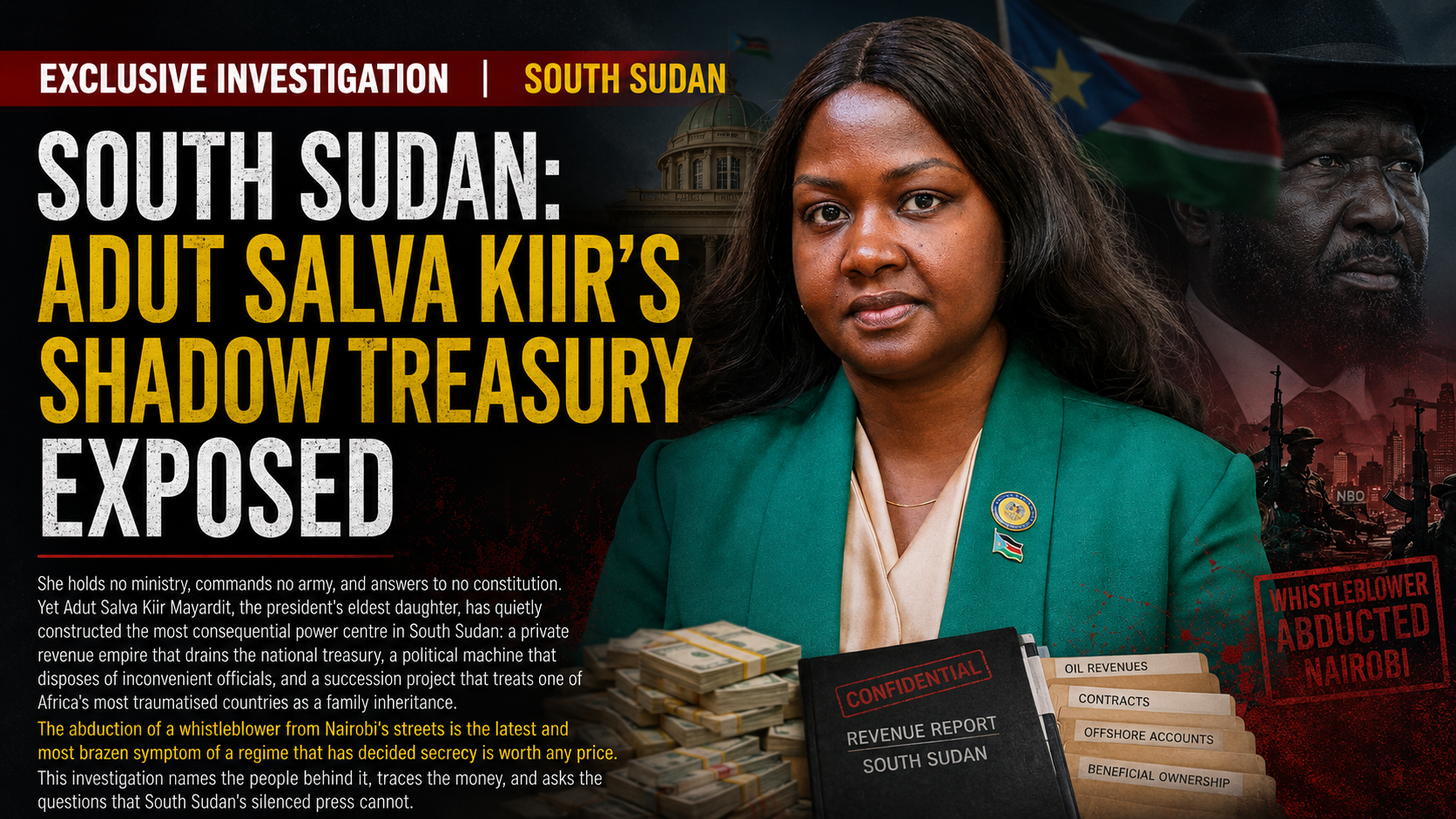
She holds no ministry, commands no army, and answers to no constitution. Yet Adut Salva Kiir Mayardit, the president’s eldest daughter, has quietly constructed the most consequential power centre in South Sudan: a private revenue empire that drains the national treasury, a political machine that disposes of inconvenient officials, and a succession project that treats one of Africa’s most traumatised countries as a family inheritance. The abduction of a whistleblower from Nairobi’s streets is the latest and most brazen symptom of a regime that has decided secrecy is worth any price. This investigation names the people behind it, traces the money, and asks the questions that South Sudan’s silenced press cannot.

PART ONE: THE WOMAN BEHIND THE CURTAIN
On August 22, 2025, a relatively unremarkable ceremony took place at the State House in Juba. Adut Salva Kiir Mayardit, eldest daughter of President Salva Kiir Mayardit, was sworn into the position of Senior Presidential Envoy for Special Programmes. The occasion was presented publicly as an administrative appointment, a routine expansion of the presidential advisory structure. State media covered it dutifully. Critics condemned it privately as nepotism. And the rest of the world moved on.
That was a mistake. Because what was installed at State House on August 22, 2025 was not merely a presidential advisor. It was the formalisation of a parallel governance structure that had been operating in the shadows of the Juba establishment for years, now given a title, a desk, and, for those who needed reminding, an official state imprimatur.
Adut’s formal position as Senior Presidential Envoy gives her oversight of government initiatives, management of international partnerships, and coordination of investment programmes. In a country where every major economic decision flows ultimately through the President’s office, and where her father’s deteriorating health and compressed inner circle have made informal access to the President the single most valuable political commodity in South Sudan, this mandate is effectively unlimited. There is no constitutional definition of its scope. There is no parliamentary oversight of its activities. There is no published framework governing what decisions she can make or what she cannot. Professor Jok Madut Jok of Syracuse University, one of the most respected scholars of South Sudanese governance, told Radio Tamazuj in June 2026 that her position’s constitutional basis, mandate, and limits of authority remain entirely unclear. She wields influence, he observed, that reaches into economic affairs, appointments, and state security without any institutional check.
She is not, moreover, the first figure to occupy this void. Her predecessor in the Senior Presidential Envoy role was Benjamin Bol Mel, the construction magnate and longtime Kiir financial associate who was briefly elevated as heir-apparent before being unceremoniously cast aside in November 2025. Bol Mel, himself placed under US sanctions in 2017 for corruption and described by multiple analysts as the person who managed the Kiir family’s finances, was stripped of his position without explanation. The revolving door of loyalty and disposal that has characterised the Kiir inner circle for years swung shut on Bol Mel and opened for the President’s own blood.
The International Crisis Group’s March 2026 briefing on South Sudan captured the trajectory of Kiir’s consolidation with clinical precision. In October 2024 he dismissed his long-serving intelligence chief, General Akol Koor Kuc, dismantling the sprawling security apparatus that had protected him for a decade. He removed his long-standing Vice President James Wani Igga, briefly installed Bol Mel, then reversed that decision and reinstated Igga. He arrested First Vice President Riek Machar in March 2025, placed him under house arrest, and later charged him with treason. As his circle of trust shrank toward zero, Kiir began concentrating what remained of his authority within his own family. Adut’s appointment was not merely nepotism. It was the President’s answer to a survival problem: when you can trust no one else, you trust your children.
“Amid visible signs of worsening ill-health, President Salva Kiir Mayardit has been moving to protect his authority and succession.” — Africa Confidential, May 2026
Behind the scenes, sources cited by Radio Tamazuj and by political analysts inside Juba confirm that Adut’s ambitions are not confined to the advisory role she formally holds. She has reportedly expressed interest in assuming the Vice Presidency in place of Wani Igga, and in being elevated to First Deputy Chair of the ruling Sudan People’s Liberation Movement. Both positions would place her directly on the succession trajectory. The prospect of Adut Salva Kiir as the next President of South Sudan is no longer merely the speculation of exiled critics. It is being discussed, according to Professor Jok, by people who work closely with her.
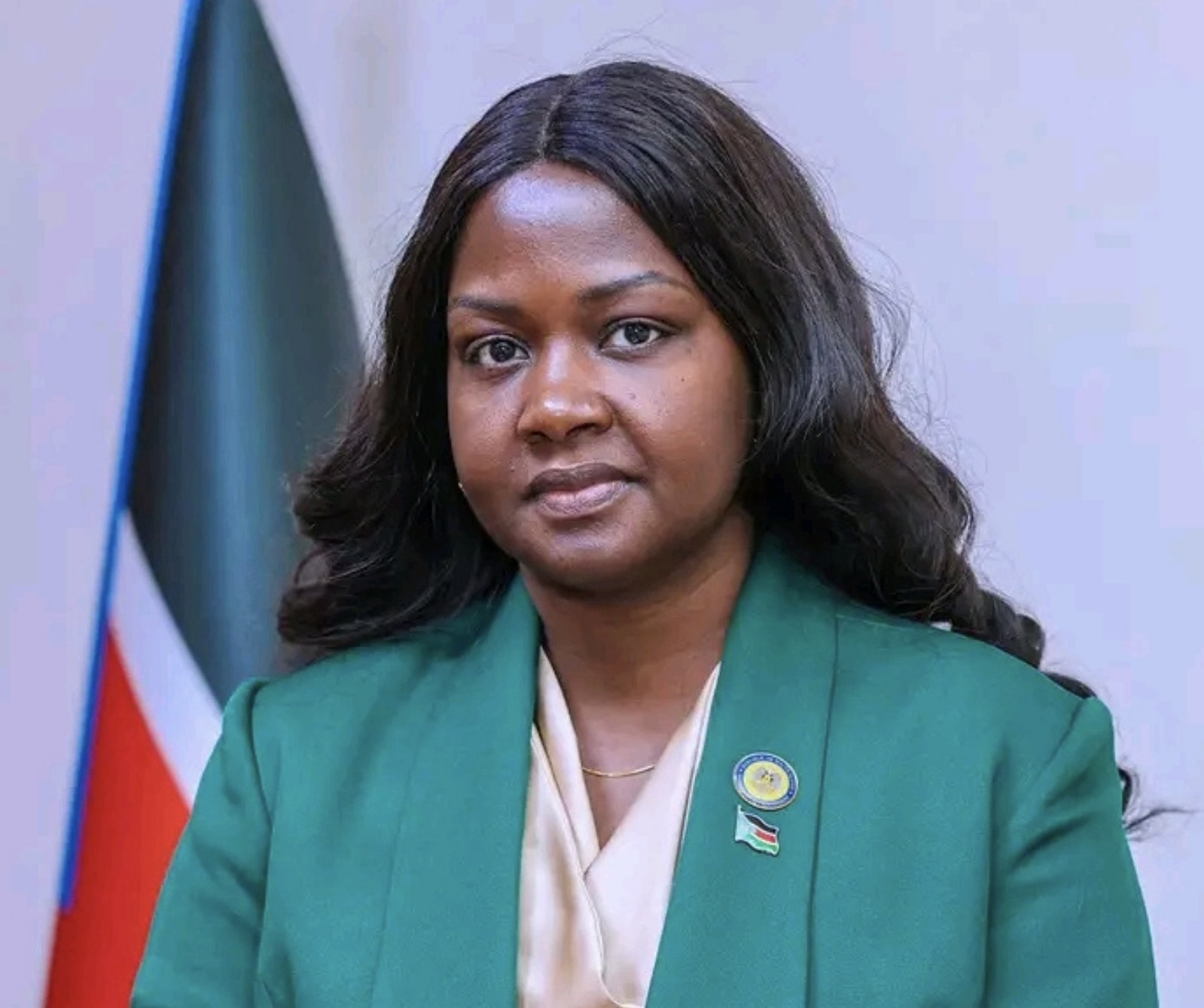
Adut Salva Kiir Mayardit
Whether or not she achieves formal power, she has already achieved something more immediately damaging to South Sudan’s 12 million people: control over its money.
PART TWO: THE ARCHITECTURE OF EXTRACTION — HOW CRAWFORD CAPITAL WAS BUILT
Crawford Capital Ltd. is incorporated in the United Kingdom. Its website presents the company as a forward-looking technology firm dedicated to digital transformation in emerging markets, promising seamless and secure solutions to governments and organisations. The corporate language is polished. The registered address in the UK lends the company a veneer of Western respectability. The reality documented by the United Nations, the United States State Department, and multiple independent investigations is categorically different.
Crawford was awarded its foundational government contract on November 16, 2019, in an agreement signed with the Ministry of Information, Communication Technology and Postal Services under Minister Thomas Tut Lam. The contract was not competitively tendered. There was no public procurement process. There was no parliamentary authorisation. There was no published contractual framework. The company was handed exclusive control of South Sudan’s entire e-government services infrastructure through what the UN Commission described as a process fundamentally inconsistent with South Sudan’s own Public Procurement and Disposal of Assets Act, 2018.
What Crawford received through this no-bid arrangement was not modest. Its platforms now control e-visa processing, e-tax collection, trade permit issuance, customs clearance, and most critically the Electronic Crude Oil Accreditation Permit system, the ECOAP gateway through which every single barrel of South Sudanese crude oil exported to international markets must be cleared. The company operates at the intersection of every revenue stream the South Sudanese state possesses. It sits, in the terminology of public finance, directly on top of the national treasury.
The terms of the contract are what transform this from a story about digital services into a story about organised looting. Under the November 2019 arrangement, Crawford Capital retains 75 percent of all revenues collected through its platforms. The government of South Sudan, the sovereign authority that owns the taxes being collected, receives 25 percent. Three quarters of every pound, every dollar, every shekel of non-oil revenue that passes through Crawford’s digital gateway goes to a UK-registered private company. This is the arrangement that the UN Commission, in its September 2025 report Plundering a Nation: How Rampant Corruption Unleashed a Human Rights Crisis in South Sudan, described as unjustifiable and indicative of abuse of public office.
CONTEXT: South Sudan’s Public Procurement and Disposal of Assets Act, 2018 requires competitive bidding for government contracts of significant value. The Crawford contract was signed without any such process. The contract also, according to documents reviewed by the UN Commission, proposed that the Ministry of ICT should ‘be the face of the project’ while Crawford remained the operational principal an arrangement that effectively disguised private capture of public revenue as a government digitalisation programme.
The crude oil component alone illustrates the scale of extraction. Every cargo of South Sudanese crude requires ECOAP clearance, with a 0.03 percent levy on cargo values flowing to CapitalPay. A single shipment generates fees of between 146,000 and 166,000 US dollars. Between January and October 2025 alone, South Sudan exported 22 cargoes of Dar and Nile blend crude oil, according to a UN Panel of Experts report reviewed by the Global Trade Review. The financial accumulation for Crawford and its principals across the years of the contract runs into tens of millions of dollars.
The contract was also, according to the UN Commission’s documents, constructed to maximise Crawford’s financial insulation. It purports to exempt the company from paying any taxes, including corporation tax, import tax, and value added tax, during the first ten years of implementation. A company collecting the state’s taxes is simultaneously exempt from paying any taxes of its own. The circular absurdity of this arrangement is not an oversight. It is the point.
“Crawford’s e-Services have facilitated organised corruption and predation, resulting in further revenue diversion.” — UN Commission on Human Rights in South Sudan, Plundering a Nation, September 2025
PART THREE: THE OWNERSHIP WEB — GARANG MAYOM, JEREMY GISEMBA, AND THE KIIR FAMILY
The formal ownership structure of Crawford Capital, as documented by the UN Commission and multiple independent investigations, lists Garang Mayom Kuoc Malek as the majority shareholder, holding approximately 68 percent of Crawford Capital Ltd. and 61.2 percent of CapitalPay Ltd., its operational payments arm. He also holds 95 percent of a third entity, Crawford Laboratory Ltd. The second largest shareholder is Kenyan businessman Jeremy Gisemba, who holds approximately 26 percent of Crawford Capital and 23.4 percent of CapitalPay. The company’s CFO and Chair, Ariech Wol Mayar Ariec, rounds out the principal executive figures. Crawford Capital is, furthermore, registered to dual South Sudanese-UK citizens, including Garang Mayom Malek, one Deng Daniel, Ariech Wol Mayar, and a Kurtis Lathanial Dinnall-Bateman, a name conspicuously British in character, suggesting deliberate use of the UK corporate framework to present an international face to what is, at its operational core, a Juba political enterprise.
Who are these people? Garang Mayom Kuoc Malek, the company’s CEO and Managing Director, is not a technology entrepreneur who built a platform from nothing. He is, according to the UN Commission, the son of a former deputy minister and parliamentarian, a politically connected insider whose access to government contracting machinery was central to the firm’s ability to secure a single-source contract that should never have been awarded without open competition. Ruey Majok Guandong, the company’s other co-founder, who previously held a 50 percent stake at incorporation, is the son of South Sudan’s ambassador to Turkey. The founding equity of Crawford Capital was, from its very inception, distributed among the children of powerful political families.
The Kenyan dimension is equally significant and has so far received insufficient attention. Jeremy Gisemba, holding a substantial minority stake in both Crawford and CapitalPay, is a Kenyan national. His presence as a significant shareholder in a company now sanctioned by the United States for siphoning public funds from South Sudan’s treasury places Kenya’s financial sector in a deeply uncomfortable position. The UN Commission’s September 2025 report, as cited in the East African, noted explicitly that South Sudan’s political elites have been aided by rogue Kenyans to siphon billions of dollars out of South Sudan by acting as fronts of the political elite. Gisemba has not publicly responded to questions about his role, and Kenyan regulatory authorities have maintained notable silence about their citizen’s involvement in a now-sanctioned entity.
Then there is Adut. Her photograph appears at the apex of the organisational chart titled The Crawford/CapitalPay Looting Squad that has been circulated by South Sudanese accountability researchers and adopted by international investigative outlets. The chart shows her at the top, with Garang Malek as CEO below her, Ariech Mayar Wol as CFO and Chair, and connections running laterally to the National Communications Authority, whose senior leadership has its own documented relationship with the Crawford network. Africa Confidential, whose South Sudan reporting is among the most meticulously sourced in the world, described the entire structure as Adut Salva Kiir’s shadow treasury.
The family business connection predates Crawford itself. Radio Tamazuj’s investigation established that Garang Malek and Ruey Guandong, Crawford’s co-founders, previously formed a separate company together with Mayar Salva Kiir, the President’s son, through a vehicle called Air Afrik Aviation Limited, incorporated in 2013. The Kiir family’s commercial partnership with these same individuals runs back more than a decade. Crawford Capital is not a new relationship. It is the latest and most lucrative iteration of a longstanding arrangement.
PART FOUR: THE REGULATORY CAPTURE — HOW THE NCA BECAME PART OF THE MACHINE
The Crawford/CapitalPay Looting Squad organogram does not confine itself to the company’s own executive structure. It extends outward to the institution that regulates the digital communications sector in South Sudan: the National Communications Authority. The implications of this connection have not been adequately scrutinised in international reporting on the scandal.
Rizik Dominic Samuel, who assumed the role of NCA Director General in November 2025, comes directly from the Office of the President, where he previously served as Chief of State Protocol and Executive Director. He was not appointed to the NCA through any transparent meritocratic process. According to The Juba Mirror, a South Sudanese outlet, Rizik Dominic had been secretly lobbying Adut Salva Kiir and Garang Malek to push for his appointment, describing the NCA role as one he coveted while Garang Malek was simultaneously implementing the digitisation of government services through Crawford’s e-Tax platform. Rizik Dominic secured the appointment in November 2025, the same period in which Crawford’s operations were deepening and the company was extending its contractual reach. He has since begun his duties as, in his own words, a regulator committed to digital transformation.
The NCA Board, meanwhile, is chaired by Tejwok Simon Ajak, who simultaneously serves as Deputy Chairperson of E-Government in the very Ministry of ICT and Postal Services that signed the original Crawford contract and acts as the formal government face of Crawford’s operations. Tejwok’s dual role, overseeing the telecom regulator while holding a senior position in the ministry that administers Crawford’s government partnership, represents a conflict of interest of breathtaking directness. The Chairperson of the body supposed to regulate South Sudan’s digital communications sector is simultaneously an official in the ministry that underwrites the digital monopoly he is supposed to regulate.
What this means in practice is that the regulatory architecture of South Sudan’s digital economy, the NCA, the Ministry of ICT, and the presidential economic advisory machinery, form a single interlocking system with Crawford Capital at its commercial core and Adut Salva Kiir at its political apex. No reform can succeed in this environment. No ministerial directive can take hold. When Trade Minister Atong Kuol Manyang Juuk issued her suspension order against Crawford in March 2026, she was not merely challenging a company. She was challenging an entire ecosystem of power. She lost within 24 hours.
“The engagement of Crawford Capital was not a unilateral decision, but the result of extensive deliberations by the Economic Cluster, presided over by H.E. the President.” — VP James Wani Igga, overturning Crawford Capital suspension, March 6, 2026
PART FIVE: THE HUMAN CATASTROPHE BEHIND THE CORPORATE STRUCTURE
It is necessary to pause the architecture of the scheme and confront what it means for the 12 million people of South Sudan.
The UN Commission’s September 2025 report documented that the government of South Sudan has received more than 25.2 billion US dollars in oil-related inflows since independence in 2011. The World Bank estimates the economy contracted by 24 percent in 2025. The International Monetary Fund projected a further 4.3 percent contraction for the same year with inflation running at 65.7 percent. South Sudan ranks at the absolute bottom of both the UN Human Development Index and the Transparency International Corruption Perceptions Index. These are not rankings that improve by accident. They are the arithmetic of sustained, deliberate looting.
International donors now spend more on South Sudan’s basic services than the government itself. The health system has functionally collapsed. The education system is in crisis. Most civil servants are either underpaid or have received no salary at all. The Commission’s Chairperson, South African human rights lawyer Yasmin Sooka, said that corruption is not incidental, it is the engine of South Sudan’s decline, driving hunger, collapsing health systems, and causing preventable deaths, as well as fuelling deadly armed conflict over resources.
Crawford Capital sits inside this catastrophe as one of its most efficient instruments. Between 2020 and 2024, less than 48 percent of collected non-oil revenues reached core government services. Health received under 0.9 percent of the national budget on average. Education received approximately 2.3 percent. Every percentage point absorbed by Crawford’s 75 percent share was a percentage point that did not reach a hospital in Juba, a teacher’s salary in Malakal, or a borehole in Jonglei.
In 2024, the predation extended even into humanitarian operations. Crawford extended an unlawful levy onto fuel imports by tax-exempt humanitarian organisations, a direct contractual violation of the immunities international law affords humanitarian actors. The UN Commission documented how this contributed to the disruption of critical World Food Programme distribution operations at a moment when, according to WFP’s own data, over 60 percent of South Sudan’s population was already experiencing severe food insecurity. A company retaining 75 percent of the national treasury reached into the supply lines keeping starving children alive and extracted a toll from those too.
The $10 million advanced to Crawford for a 2022 Ebola and COVID preparedness project was never fully accounted for. The UN Commission’s documents on this disbursement describe an advance that was made, a project that largely did not materialise, and a financial trail that leads nowhere the government can publicly explain. In a country where the average annual health expenditure per person is measured in single-digit dollars, ten million dollars is not a rounding error. It is a year’s difference between a child dying of a preventable disease and surviving it.
STATISTICS: The UN Commission’s analysis documents that South Sudan’s president’s personal medical budget exceeded the government’s total expenditure on public health. This single data point, if it requires elaboration, should require none.
PART SIX: THE PURGE REGIME — HOW ADUT ELIMINATES INCONVENIENT PEOPLE
The abduction of Athorbey Al-Gaddhaffy-Dit from Nairobi on June 10, 2026 did not emerge from a vacuum. It is the most extreme expression of a systematic pattern of repression that Adut’s network has been deploying against its critics, its former associates, and anyone who has accumulated knowledge of how the shadow treasury operates.
The wave of arrests that swept through Juba’s financial and security establishment in early 2026 provides the immediate context. In late February, in the space of a single week, a former central bank governor, a former finance minister (Bak Barnaba Chol, apprehended attempting to cross into Uganda), a former undersecretary for the Ministry of Petroleum, and a general in the domestic intelligence agency previously posted to the same ministry were all detained. The government’s spokesman declared the arrests were not political and constituted a direct response to irregularities identified within the monetary system. The arrests were political. The affected individuals all possessed detailed knowledge of how South Sudan’s revenue systems had been operating under Crawford’s dominance. Their removal from any position to speak publicly about what they knew served the network’s interest regardless of what they were formally accused of.
This is the pattern that defines the Kiir-Adut governance structure in its current form: officials who could challenge the revenue architecture are fired, arrested, or both. South Sudan has had nine finance ministers since 2020. Each removal is delivered without stated reason. The pace of dismissals has accelerated precisely as Crawford’s operations deepened and as international scrutiny of those operations intensified. Marial Dongrin Ater, fired as finance minister in August 2025, was subsequently arrested. Bak Barnaba Chol, who replaced him in November 2025, was arrested in February 2026 while attempting to flee the country. The message to the financial technocracy is unambiguous: do not ask where the money is going, and do not try to leave.
Trade Minister Atong Kuol Manyang Juuk’s experience illustrates what happens to officials who challenge the machine through formal channels rather than flight. She issued her suspension order against Crawford on March 5, 2026. She was overruled by Vice President Igga within 24 hours, publicly humiliated, and her directive nullified by the invocation of a Council of Ministers resolution that had itself been signed by the President. She subsequently lifted the suspension. The episode sent a message to every other minister in Juba: do not try this.
Meanwhile, Adut’s alleged campaign against her own network’s insiders has been documented by sources with direct knowledge. Multiple accounts describe her ordering arrests of business associates and employees suspected of leaking sensitive information about her financial arrangements. She has allegedly used government security mechanisms to file criminal cases against individuals outside South Sudan who possess knowledge of her financial dealings, branding them enemies of the state engaged in espionage. The espionage designation is doing a great deal of work here: it transforms financial whistleblowing into a criminal act triable before security courts, removes the accused from civil judicial protections, and places them in the custody of the NSS’s Internal Security Bureau, the same body whose Director General, Akec Tong, allegedly issued the arrest warrant for Athorbey Al-Gaddhaffy-Dit.
The Juba Mirror had already, in September 2024, documented Rizik Dominic Samuel’s alleged role as an intelligence operative with connections to rebel networks in Western Bahr el Ghazal, while simultaneously lobbying Adut and Garang Malek for a senior appointment. That this individual is now Director General of the NCA, the regulator of the very digital infrastructure at the heart of the Crawford scandal, and is named in sources as a co-financier of the Athorbey abduction operation, illuminates the depth to which the network’s tentacles have reached into South Sudan’s regulatory institutions.
“If you work for Adut, please reconsider, because eventually, just like those who worked for her father, you may end up exiled, disappeared, dead, or jailed.” — South Sudanese opposition network warning, June 2026
PART SEVEN: THE ABDUCTION — WHAT ATHORBEY KNEW AND WHY HE HAD TO DISAPPEAR
Athorbey Al-Gaddhaffy-Dit, known to those around him as Gadafi or Daffi, was not a passive victim of a political machine he did not understand. He understood it precisely, and he had spent months ensuring that others understood it too. A Kenyan-South Sudanese national living in Nairobi, he had direct familiarity with the inner workings of the Crawford structure, its revenue flows, its ownership connections, and its political protections. He had been circulating this information to investigative journalists, accountability researchers, and international oversight bodies. His materials contributed to the evidentiary foundation that informed UN Commission findings and, ultimately, US sanctions decisions.
He knew the risk. He filed statements at multiple Nairobi police stations before he disappeared, each statement making the same explicit declaration: if I am harmed, abducted, or killed, you should investigate Adut Salva Kiir Mayardit and Garang Mayom Kuoch. Those statements are now evidence in an abduction that has confirmed everything he feared. The deterrent failed. The operation was authorised anyway.
At approximately 3 a.m. on June 10, 2026, Athorbey left Lucky 8 Casino near Yaya Centre in Nairobi’s Kilimani district and boarded a Bolt ride arranged by casino staff. A white pickup carrying masked, armed men blocked his vehicle, overpowered him at gunpoint, and bundled him inside. His wife, speaking to Radio Tamazuj, described calling him repeatedly through the night, receiving no answer, tracing his phone signal to a hospital on Kiambu Road, searching the facility without result, and finally being informed by a relative that a police report had been filed: her husband had been taken.
From Kilimani, Athorbey was transported to Jomo Kenyatta International Airport, where Amnesty International Kenya, issuing an emergency statement the same morning, warned he was being held ahead of imminent deportation. Amnesty International Kenya Section Director George Morara described the incident as bearing the hallmarks of an enforced disappearance, a grave violation under both Kenyan and international law. The deportation that Amnesty feared then materialised. Sources in Lokichoggio and Nadapal, the Kenya-South Sudan border region, confirmed vehicles waiting to receive deportees. Athorbey crossed the border and arrived in Juba, where he is now held at a military intelligence facility on fabricated espionage charges whose arrest warrant was allegedly issued by NSS-ISB Director General Akec Tong.
His family’s fears are not abstract. Athorbey has underlying medical conditions requiring regular attention. Military intelligence detention facilities in Juba are not equipped for medical care. The conditions under which political prisoners are held in the NSS system have been documented by the UN Commission and multiple human rights organisations as constituting cruel and degrading treatment. His relatives have warned publicly that if he is tortured, denied medical care, or held in harsh conditions, the consequences could be fatal. If that occurs, the responsibility will lie with the people who ordered his abduction: Adut Salva Kiir Mayardit, Garang Mayom Kuoch, Ariech Wol Mayar, and the security officials who executed the operation.
PART EIGHT: THE UK’S ACCOUNTABILITY GAP — HOW CRAWFORD HIDES IN PLAIN SIGHT
Crawford Capital Ltd. maintains its registration in the United Kingdom. This is not incidental to the scandal; it is load-bearing. The UK corporate framework gives Crawford access to international banking relationships, credibility with potential business partners, and a degree of insulation from the informal pressures that would otherwise render a purely South Sudanese entity more vulnerable to scrutiny. The British flag on Crawford’s corporate filing is a commercial weapon.
The question that UK regulatory authorities should now be answering publicly is this: how does a company incorporated in the United Kingdom, now designated as a corrupt entity by the United States State Department under sanctions authority for siphoning public funds from one of the world’s poorest countries, continue to maintain its registration in good standing? Companies House, which maintains Crawford’s corporate records, has no formal mechanism to act on foreign sanctions designations. The Financial Conduct Authority, which oversees financial services, has limited jurisdiction over a company operating primarily as a government services contractor in a foreign country.
But the UK’s National Crime Agency, which has powers under the Proceeds of Crime Act 2002 and the Criminal Finances Act 2017, does have jurisdiction over the proceeds of corruption that pass through UK-linked corporate structures. Unexplained Wealth Orders, available under the 2017 Act, can compel UK-connected individuals to explain the sources of their wealth. The Bribery Act 2010 creates liability for UK companies that engage in or facilitate corruption abroad, regardless of where the acts occurred. The UK Government has the legal tools to pursue Crawford Capital and its principals. The question is whether it has the political will to use them.
The presence of Kurtis Lathanial Dinnall-Bateman, a conspicuously British name, among Crawford Capital’s registered directors in the UK creates additional exposure. A UK national serving as a director of a company now under US sanctions for foreign corruption is not a position that falls outside the reach of UK law enforcement.
PART NINE: THE INTERNATIONAL ACCOUNTABILITY AGENDA — WHAT MUST HAPPEN NOW
The Crawford Capital scandal has now attracted the attention of the US State Department, the UN Commission on Human Rights, Africa Confidential, AFP, the Global Trade Review, Radio Tamazuj, and a widening circle of international investigative outlets. The abduction of Athorbey Al-Gaddhaffy-Dit has escalated the case from a financial corruption story to a transnational repression story with a victim who holds Kenyan citizenship and whose safety is in direct jeopardy. The following accountability actions are now imperative.
The Government of Kenya must act immediately and publicly. Athorbey Al-Gaddhaffy-Dit is a Kenyan citizen. His abduction from Kenyan soil, detention at a Kenyan airport, and deportation across the Kenyan border to a military intelligence facility constitute a cascade of violations of Kenyan law, Kenyan sovereignty, and Kenya’s international obligations under the 1951 Refugee Convention and the 1969 OAU Convention on Specific Aspects of Refugee Problems in Africa. Kenya must demand his immediate and unconditional return, conduct a full investigation into how a Kenyan citizen was removed from the country without judicial process, and identify and prosecute any Kenyan officials who facilitated or failed to prevent the operation. Kenya’s reputation as a regional hub for international organisations and civil society depends on its willingness to enforce its own laws when powerful foreign interests violate them.
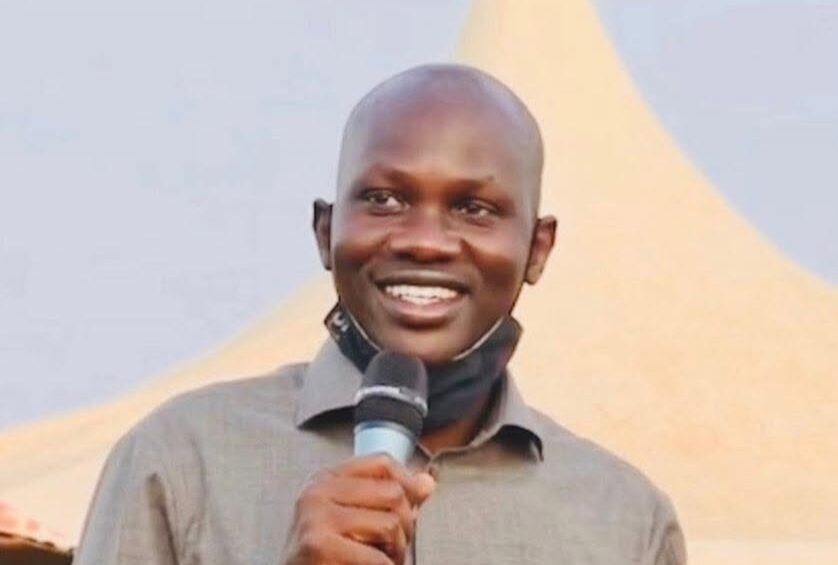
Athorbey Al-Gaddhaffy-Dit
The United Kingdom must investigate Crawford Capital’s UK corporate structure. The US sanctions designation provides a basis for UK authorities to examine Crawford’s financial flows, the role of UK-registered directors, and whether revenues passing through UK-linked accounts constitute proceeds of crime. The NCA, the FCA, and the Serious Fraud Office should each assess whether Crawford Capital’s UK presence falls within their respective mandates. The Bribery Act 2010 should be examined for its application to UK nationals associated with the company.
The UN Security Council’s South Sudan Sanctions Committee must expand its designated entities list to include Crawford Capital and its principal shareholders. The existing sanctions regime on South Sudan has focused primarily on individuals associated with military violence. The Crawford evidence base, now publicly documented by the UN Commission, the US State Department, and multiple independent investigations, justifies the addition of the company and its leadership to the Security Council’s designations, triggering asset freezes and travel bans at the multilateral level.
The African Union must address the transnational repression dimension. The abduction of Athorbey Al-Gaddhaffy-Dit from Kenya to South Sudan, conducted by masked operatives using an arrest warrant from a national security service on fabricated charges, is a textbook case of the enforced disappearance practices the AU’s own human rights instruments prohibit. The African Commission on Human and Peoples’ Rights should receive an urgent communication on this case and respond accordingly.
The US Treasury’s Office of Foreign Assets Control, which administers the Crawford Capital sanctions designation, should now examine whether secondary sanctions are warranted against third parties facilitating Crawford’s continued operations, including the international oil traders who pay ECOAP fees to Crawford-linked accounts and the banks that process those payments.
“Our Commission has repeatedly identified systemic impunity, economic predation, and deliberate subversion of peace agreements as central drivers of recurrent armed conflict.” — UN Commission Chairperson Yasmin Sooka, February 2026
PART TEN: THE RECKONING
South Sudan’s local journalists do not write stories like this one. They cannot. The consequences are too immediate: a knock at the door, a white vehicle in the dark, a one-way journey to a facility where mobile phones do not work and lawyers do not arrive. The abduction of Athorbey Al-Gaddhaffy-Dit was, among other things, a message to every South Sudanese journalist and activist who has been following the Crawford story. The message is: we will reach across international borders. We will use state security infrastructure to silence you. We are watching.
This publication is not intimidated by that message. And neither, it should be said, are the many foreign correspondents, accountability researchers, and international oversight bodies who are now engaged with this story in a way that cannot be undone by further abductions. Adut Salva Kiir’s shadow treasury has been dragged into the light of the most powerful investigative apparatus the world possesses. The US State Department has named it. The UN Commission has documented it. Africa Confidential has profiled it. Radio Tamazuj has traced its corporate wiring. The Global Trade Review has followed its oil money. AFP has reported its latest crime from Nairobi’s streets.
The Kiir family’s calculation, that abducting a whistleblower would contain the story, has failed with spectacular completeness. Every day that Athorbey Al-Gaddhaffy-Dit remains in military intelligence custody in Juba is another day that the world’s attention focuses not merely on Crawford Capital’s contractual terms but on the willingness of a dying president’s daughter to reach across international borders, violate the sovereignty of a neighbouring state, abduct a citizen of that state, and hold him on fabricated charges to protect a revenue machine that has been stealing from South Sudan’s starving population for seven years.
There is a South Sudanese civil society activist who has said, on the record, that this regime is very desperate, and the good news is that it is coming to an end. Those words carry the weight of a people who have endured more than most nations are ever asked to survive: two civil wars, a famine, four million displaced, a collapsed health system, and a ruling elite that has responded to every humanitarian catastrophe by stealing more. The shadow treasury is exposed. The network is named. The principals are identified. The accountability mechanisms exist.
The question that remains is whether those with the power to act will choose to do so before the next person who knows too much is loaded into a white vehicle in the dark.
— — —
THE CRAWFORD NETWORK: KEY PRINCIPALS
ADUT SALVA KIIR MAYARDIT — Eldest daughter of President Salva Kiir Mayardit; Senior Presidential Envoy for Special Programmes since August 22, 2025; alleged apex of the Crawford/CapitalPay network as documented in the Looting Squad organogram; described by Africa Confidential as the operator of a ‘shadow treasury’; named by Athorbey Al-Gaddhaffy-Dit in his safety filings as the principal person to investigate if he came to harm.
GARANG MAYOM KUOC MALEK — CEO and Managing Director, Crawford Capital; holds approximately 68 percent of Crawford Capital Ltd., 95 percent of Crawford Laboratory Ltd., and 61.2 percent of CapitalPay; son of a former South Sudanese deputy minister and parliamentarian; co-formed Air Afrik Aviation with Mayar Salva Kiir (President’s son) in 2013; named in Athorbey’s safety filings.
ARIECH WOL MAYAR ARIEC (ARIECH MAYAR WOL) — CFO and Chair of the Board, Crawford Capital and CapitalPay; alleged co-financier of the Athorbey abduction operation, alongside NCA leadership elements.
JEREMY GISEMBA — Kenyan businessman; holds approximately 26 percent of Crawford Capital and 23.4 percent of CapitalPay. His presence as a major shareholder in a now-sanctioned entity raises serious questions for Kenyan regulatory authorities.
RUEY MAJOK GUANDONG — Co-founder of Crawford Capital; son of South Sudan’s ambassador to Turkey; previously held 50 percent at incorporation.
KURTIS LATHANIAL DINNALL-BATEMAN — UK-registered director of Crawford Capital Ltd.; his nationality makes him subject to UK corporate and criminal law as a director of a company under US sanctions.
RIZIK DOMINIC SAMUEL — Director General, National Communications Authority, since November 2025; previously Chief of State Protocol in the Office of the President; allegedly lobbied Adut Salva Kiir and Garang Malek for the NCA appointment; named in sources as a co-financier of the Athorbey operation.
TEJWOK SIMON AJAK — Chairperson, NCA Board of Directors; simultaneously serves as Deputy Chairperson of E-Government in the Ministry of ICT — the same ministry that administers Crawford’s government partnership. Represents a direct conflict of interest in the regulatory structure.
BIONG DENG BIONG — Director of Finance, National Communications Authority; listed in the Crawford network organisational chart.
AKEC TONG — Director General, NSS Internal Security Bureau; allegedly issued the fabricated espionage arrest warrant for Athorbey Al-Gaddhaffy-Dit.
JAMES WANI IGGA — Second Vice President, South Sudan; chairs the government’s Economic Cluster; on March 6, 2026, publicly overruled Trade Minister Atong Kuol Manyang Juuk’s suspension of Crawford Capital operations, citing a Council of Ministers resolution ‘presided over by H.E. the President.’ His intervention protected the network at the most critical moment of domestic challenge it had faced.
BENJAMIN BOL MEL — Former Vice President (November 2025); Adut’s predecessor as Senior Presidential Envoy; described as the person who managed the Kiir family’s finances; himself under US sanctions since 2017 for corruption; stripped of his position without explanation, illustrating the volatility of the inner circle.
THE VICTIM
ATHORBEY AL-GADDHAFFY-DIT (GADAFI ATHORBEY GUET, ‘DAFFI’) — Kenyan-South Sudanese citizen and whistleblower; abducted from Nairobi’s Kilimani district at approximately 3 a.m. on June 10, 2026, by armed masked men; held at Jomo Kenyatta International Airport before deportation to a military intelligence facility in Juba; faces fabricated espionage charges; has underlying medical conditions requiring regular care; named Adut Salva Kiir and Garang Mayom Kuoch in advance safety filings at multiple Nairobi police stations. His life is in danger.
Kenya Insights allows guest blogging, if you want to be published on Kenya’s most authoritative and accurate blog, have an expose, news TIPS, story angles, human interest stories, drop us an email on [email protected] or via Telegram



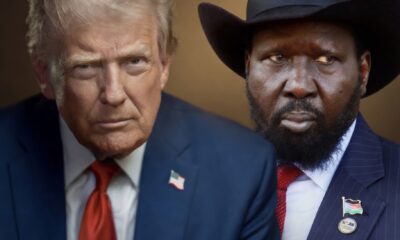


South Sudan: Adut Salva Kiir’s Shadow Treasury Exposed

Wajir North MP Ibrahim Abdi Dissatisfied With2026/27 Budget, Claims It Totally Excludes North Eastern Region

The Eldoret Tax Fortress: How David Langat Turned an Industrial Park Dream Into Kenya’s Most Sophisticated Domestic Tax Haven

Why John Ngumi Is Running From the EACC and Why the Sh415 Million Payday May Be the Least of His Worries

Shiquo Hii Style Store Was Not Raided, Anti-Counterfeit Authority Confirms; Says Influencer Used Empty Shelves for Content as She Relocates

Treasury CS Mbadi Unveils Sh4.8 Trillion Budget Estimates

Fraud, Misrepresentation and A Decade Of Evasion: How Indo Africa Finance Pocketed Sh150 Million Youth Funds and Fought To Keep Every Cent

Kenya Picks Chinese Firm For Sh375 Billion JKIA Upgrade Project After Adani Fallout

The President’s Daughter and The Missing Witness: How Adut Salva Kiir’s Shadow Treasury Silenced Its Most Dangerous Critic

Kisii Under Siege: Governor Arati’s Wife Accused of Hijacking IFMIS and Running a Parallel Government

Cement, Cash and Courts: How the Hashu Dynasty Crushed the Ramji Brothers for Fourteen Years and Why the Walls Are Now Closing In

Inside The Urban Planning Cartel That Owns Nairobi

Standard Chartered Ghosts Haunt Joshua Oigara At Stanbic As Whistleblower Spills Beans

Why Ruto’s Favourite Candidate Adan Mohammed Could Be Locked Out of the KRA Top Job

Inside NCBA’s Decline: How a Banking Giant Lost Its Strategic Edge

LifeCare on the Brink: SHA Fraud, Stolen Wages, and the Rotten Empire Jayesh Saini Built

Betika Faces DCI Probe, Directors Arrest and License Revocation Over Massive 29.5 Million Safaricom Customers’ Data Breach

Este Medical Kenya Fights American’s Explosive Complaints

Fresh Move Launched to Remove Kenya Railways MD Mainga From Office After Awarding Sh817 Million Consultancy Contract

The Rot Inside Absa: How Bank Insiders Are Looting Nairobi’s Customers
-
 Investigations1 week ago
Cement, Cash and Courts: How the Hashu Dynasty Crushed the Ramji Brothers for Fourteen Years and Why the Walls Are Now Closing In
-
 Investigations6 days ago
Inside The Urban Planning Cartel That Owns Nairobi
-
 Business1 day ago
Standard Chartered Ghosts Haunt Joshua Oigara At Stanbic As Whistleblower Spills Beans
-
 Business2 days ago
Inside NCBA’s Decline: How a Banking Giant Lost Its Strategic Edge
-
 Investigations2 weeks ago
Betika Faces DCI Probe, Directors Arrest and License Revocation Over Massive 29.5 Million Safaricom Customers’ Data Breach
-
 Investigations1 week ago
Fresh Move Launched to Remove Kenya Railways MD Mainga From Office After Awarding Sh817 Million Consultancy Contract
-
 Business1 week ago
TRUST BETRAYED: How Senior DTB Bank Insiders Allegedly Looted Sh149 Million From a Customer’s Account Over Five Years
-
 News2 weeks ago
How Uhuru’s Deal With Obama In 2015 Paved Way For America’s Ebola Plan In Kenya