
News
THE KURIA NETWORK TAKES THE BOARDROOM: How Moses Kuria’s Inner Circle Seized Control of Africa Mega Agricorp And the Paper Trail That Links It All
A former Cabinet Secretary’s personal assistant and senior adviser now sit atop a Nairobi Securities Exchange-listed agribusiness empire built on a KSh 210 million deal that critics say was engineered from inside government. The money trails, the UAE shell structures, and the edible oil scandal that links them all.

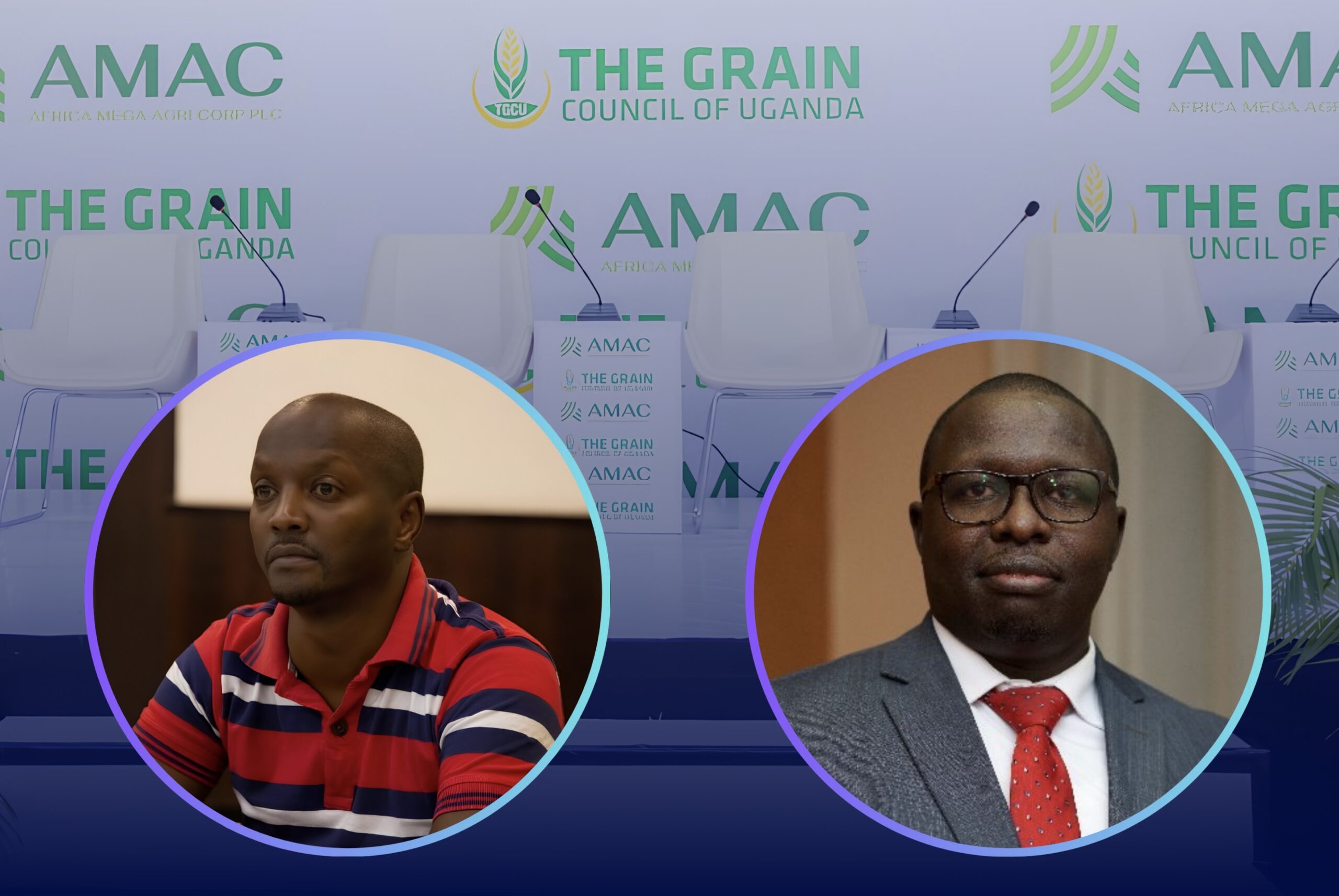
On the morning of June 3, 2026, two men who spent years fetching briefcases and drafting memos for one of Kenya’s most colourful politicians took their seats at the top of a publicly listed company.
Joshua Gakinya, once the personal assistant to former Cabinet Secretary Moses Kuria, was appointed Independent Non-Executive Director of Africa Mega Agricorp PLC.
Phillip Ndabari Muriuki, who served as Kuria’s senior adviser when he ran the Ministry of Public Service, Performance and Delivery Management, was installed as the company’s new Chairman.
Their ascent to the board of a Nairobi Securities Exchange-listed firm would be unremarkable if not for what preceded it: a corporate acquisition that critics argue was orchestrated from within government, a UAE-registered firm that shares a postal address with Kuria himself, and a pattern of state contracts flowing to entities within the same web of relationships. The appointments complete a circle that has been drawing slowly tighter since 2023.
The two men who once carried Kuria’s briefcases now carry the chairmanship and a directorship at a KSh 1.4 billion agribusiness empire.
FROM KENYA ORCHARDS TO AMAC: THE ARCHITECTURE OF A TAKEOVER
Africa Mega Agricorp PLC traded on the NSE under the ticker AMAC did not always wear its current ambitions. For decades it was known as Kenya Orchards Limited, a modest Nakuru-based processor of fruit jams, tomato paste, canned beans, and condiments that had quietly lost its competitive edge. By 2024, its share price hovered around KSh 19.50, and the company’s future was the subject of a cautionary statement rather than investor enthusiasm.
That changed in June 2024 when Kenya Orchards issued a statement to the exchange disclosing that it had received a bid from a company called Africa Mega Agriculture Centre Limited to acquire an 84.42 per cent controlling stake. The purchase price, calculated on prevailing share values, was estimated at KSh 210 million.
The sellers were Westpac Holdings Limited, which held 34.28 per cent, alongside three individual shareholders: Thakarshi Keshav Patel at 33.61 per cent, his son Vipul Thakarshi Patel at 14.89 per cent, and Hansa Dinesh Chandra Shah at 1.65 per cent. The transaction was conducted as a private sale and involved asset transfers to settle outstanding dues owed by the company to its outgoing shareholders.
Shareholder approval was secured at an extraordinary general meeting in August 2024.
A certificate of change of name was issued by the Registrar of Companies on December 16, 2024, and by early 2025, Kenya Orchards had formally disappeared from the exchange, replaced by Africa Mega Agricorp PLC.
Today the company trades at around KSh 111 to KSh 115 per share, giving it a market capitalisation approaching KSh 1.43 billion a near-600 per cent appreciation from the price at which its controlling stake changed hands.
THE INVESTAFRICA THREAD: A UAE ENTITY, A SHARED ADDRESS, A DENIED CONNECTION
The story of who actually orchestrated the Kenya Orchards acquisition begins not at Nakuru but in Dubai. Africa Mega Agriculture Centre Limited, the vehicle that purchased the controlling stake, was incorporated on November 24, 2023, by InvestAfrica-FZCO a firm registered in the United Arab Emirates whose beneficial ownership has been the subject of sustained controversy since 2022.
InvestAfrica-FZCO first surfaced in Kenyan public discourse in 2023 when it acquired a 35 per cent stake in Eveready East Africa from the family of the late industrialist Naushad Merali.
That transaction, like the Kenya Orchards deal that followed, was structured as a private sale with no obligation extended to minority shareholders and no intention to delist.
The structural similarities between the two transactions same acquirer network, same approach, same NSE disclosure template were not lost on market analysts.
What elevated InvestAfrica-FZCO from an anonymous UAE investor to a subject of parliamentary and press scrutiny was a single detail revealed by auctioneers in March 2025: a postal address shared by InvestAfrica-FZCO and Moses Kuria himself.
An advertisement published by Garam Investments Limited in connection with the intended auction of Kuria’s properties at Juja and Ruaka disclosed the shared address, setting off a chain of corporate archaeology.
The trail did not end there. InvestAfrica-FZCO is listed as the sole beneficial owner of Emerging Capital Holdings, which in turn owns Smith and Gold Productions Limited. Smith and Gold was, until 2023, listed in corporate filings with Kuria himself as beneficial owner.
When ownership of Smith and Gold shifted to InvestAfrica-FZCO, Kuria’s brother Alois Kinyanjui remained a stakeholder in the firm. Smith and Gold had previously won a KSh 259 million contract for the construction of Karatu Stadium in Kiambu County work that a parliamentary report in 2020 found had not been completed to the value of the funds disbursed, with KSh 102 million released despite inadequate delivery.
Until 2023, Kuria was named as Smith and Gold’s beneficial owner. Ownership then shifted to InvestAfrica-FZCO. His brother remained inside the structure.
THE EDIBLE OILS SCANDAL: STATE POWER, DUBAI SUBSIDIARIES, AND QUESTIONABLE CONTRACTS
The edible oils episode provides the most documented intersection between Moses Kuria’s tenure as a Cabinet Secretary and the entities that orbit InvestAfrica-FZCO.
When Kuria served as Cabinet Secretary for Trade and Industrialisation before his subsequent move to the Public Service ministry his ministry oversaw a government programme to import 125,000 metric tonnes of cooking oil through the Kenya National Trading Corporation to address rising consumer prices.
Among the companies awarded local purchase orders under that programme was Shehena Trading Commodity Limited, a wholly-owned subsidiary of InvestAfrica-FZCO.
Shehena secured a KSh 1.33 billion contract to supply edible oils to KNTC. Investigators and parliamentary inquiries later confirmed that Wilfred Saroni, listed as CEO of the InvestAfrica-FZCO enterprise, was described in official documents as closely associated with the then Trade CS.
The same audits revealed that KNTC did not pay customs duty of 35 per cent, import declaration fees of 3.5 per cent, or agricultural levies totalling 2 per cent on the consignments a combined tax exemption of 42.5 per cent that investigators calculated would generate a liability of nearly KSh 10 billion against the full programme.
The Kenya Bureau of Standards subsequently confirmed in a letter dated September 5, 2023, that the 125,000 metric tonnes of cooking oil imported was unfit for human consumption.
Kuria denied personal wrongdoing throughout, and has consistently maintained that he has no ownership of InvestAfrica-FZCO.
The Directorate of Criminal Investigations was among agencies that sought corporate registration details for Shehena and related firms.
THE APPOINTMENTS: NDABARI, GAKINYA, AND THE COMPLETION OF A CIRCLE
Effective June 3, 2026, Africa Mega Agricorp PLC made four simultaneous announcements: Phillip Ndabari Muriuki was appointed Chairman and Independent Non-Executive Director; James Watenga Kamau was appointed Executive Director; Joshua Gakinya was appointed Independent Non-Executive Director; and Abraham Ng’etich was named Acting Chief Executive Officer. The outgoing directors, Yebeltal Getachew and Michael Foley, resigned simultaneously.
Ndabari, the new Chairman, brings a professional biography that spans commercial banking, payment systems, and board oversight across Africa, the Middle East, and the Gulf Cooperation Council region — a career arc that mirrors Kuria’s own early trajectory through Standard Chartered and Al Rajhi Bank in Saudi Arabia. His appointment as the independent chair of a company controlled by an entity linked to Kuria raises questions the Capital Markets Authority has tools to examine.
Gakinya, the new non-executive director, operated as Kuria’s personal assistant during his ministerial career. His professional profile references entrepreneurial interests in agribusiness and technology.
The appointment of a former personal assistant as an independent director on the board of a company whose acquisition was engineered by an entity associated with the same employer is, at minimum, an unusual governance arrangement for an NSE-listed public company.
WESTPACK, DIGIFARM, AND THE AGRIBUSINESS AMBITION
Before InvestAfrica-FZCO structured the Kenya Orchards deal, Kuria’s own declared business interests extended into agriculture through a company called Westpack.
The firm signed an agreement with Safaricom’s DigiFarm platform to market green grams Ndengu grown by smallholder farmers in Kitui County, connecting them to downstream buyers through digital infrastructure.
The arrangement collapsed before delivering material results, but it demonstrated that Kuria had, even before his ministerial appointments, identified the nexus of smallholder agriculture, digital platforms, and market access as an area of commercial interest.
AMAC’s current positioning which it describes as a farm-to-global trade infrastructure company connecting smallholders in Kenya’s 47 counties to buyers in the Middle East, Europe, and beyond through technology and traceability mirrors precisely that thesis.
Whether the Westpack-DigiFarm venture was a precursor to the AMAC strategy, or merely a coincidence of strategic interest, is a question that the overlap of personnel and timing invites.
WHAT AMAC REPRESENTS: SIGNIFICANCE BEYOND THE CONTROVERSY
It would be a disservice to the millions of Kenyan smallholders who depend on agricultural value chains to reduce this story to its political dimension alone. Africa Mega Agricorp PLC operates in a sector that accounts for a significant share of Kenya’s GDP, employs the majority of its rural population, and generates substantial foreign exchange through exports of coffee, tea, avocados, cut flowers, and horticultural produce.
A well-governed, well-capitalised NSE-listed agribusiness with genuine reach across all 47 counties and real export infrastructure could provide price stability for farmers, reduce post-harvest losses, improve access to trade finance, and position Kenya as the dominant agro-processing hub in the East African region.
The company’s stated ambitions cold-chain logistics, digital marketplaces, warehouse receipt financing, ESG-compliant supply chains are the kind of structural interventions that Kenya’s agricultural sector genuinely requires. The question is not whether such a company should exist. It is whether the manner in which it came to exist, and the identity of those who now govern it, can withstand the scrutiny that public markets demand.
REGULATORY SILENCE AND THE DISCLOSURE QUESTION
Kenya’s Capital Markets Authority requires listed companies to observe the highest standards of corporate governance, including the independence of non-executive directors and full disclosure of related-party interests.
The CMA’s own rules on the independence of directors specifically require that an individual’s relationships with controlling shareholders be examined. The connection between AMAC’s new Chairman, its new non-executive director, and the man whose associate network acquired the controlling stake in the company is the kind of relationship that the CMA’s definitions of independence were designed to interrogate.
NSE-listed shares are held by pension funds, retail investors, unit trusts, and insurance companies institutions entrusted with the savings of ordinary Kenyans.
Those shareholders are entitled to know whether the persons declared to be independent directors truly are independent, and whether the company’s governance architecture protects minority shareholders or serves the interests of its controlling entities.
Kenya Insights allows guest blogging, if you want to be published on Kenya’s most authoritative and accurate blog, have an expose, news TIPS, story angles, human interest stories, drop us an email on [email protected] or via Telegram








THE KURIA NETWORK TAKES THE BOARDROOM: How Moses Kuria’s Inner Circle Seized Control of Africa Mega Agricorp And the Paper Trail That Links It All

Who Is The Somali Referee Barred From Entering The US For The World Cup?

Inside NCBA’s Decline: How a Banking Giant Lost Its Strategic Edge

Shiquo wa Hii Style Counts Costly Lesson After Anti-Counterfeit Raid Wipes Out Shop Stock

“Are They Giving Kickbacks To Government Officials?” The Scandalous Record Behind Kenya’s Most Favoured Chinese Contractor

Two MPs Defrauded of Sh93.5 Million in Karen Land Scam

Gachagua Rejects Sh50 Million Court Compensation, Calls It An Insult

Ghost Firm, Ghost Justice: Two Judges Fingered In KETRACO’S Sh10 Billion Scandal

SH2 BILLION HEIST EXPOSED: How Tatu City’s Foreign Masters Used Dirty Offshore Traps, London Arbitration & Mauritius Liquidation to Strip Local Investors of Their Stake

Dimba Accused of Extorting Bank Executives in Escalating Feud

Cement, Cash and Courts: How the Hashu Dynasty Crushed the Ramji Brothers for Fourteen Years and Why the Walls Are Now Closing In

Inside The Urban Planning Cartel That Owns Nairobi

Why Ruto’s Favourite Candidate Adan Mohammed Could Be Locked Out of the KRA Top Job

LifeCare on the Brink: SHA Fraud, Stolen Wages, and the Rotten Empire Jayesh Saini Built

Este Medical Kenya Fights American’s Explosive Complaints

Betika Faces DCI Probe, Directors Arrest and License Revocation Over Massive 29.5 Million Safaricom Customers’ Data Breach

The Rot Inside Absa: How Bank Insiders Are Looting Nairobi’s Customers

Inside FAFSA Fraud: How Kenyan Cybercriminals Siphoned Millions from America’s Sh12 Billion Student Loan System

Fresh Move Launched to Remove Kenya Railways MD Mainga From Office After Awarding Sh817 Million Consultancy Contract

Court Confirms Safaricom Customers Data Was Sold To Betting Companies In Seven-Year Cover-Up
-
 Investigations5 days ago
Cement, Cash and Courts: How the Hashu Dynasty Crushed the Ramji Brothers for Fourteen Years and Why the Walls Are Now Closing In
-
 Investigations4 days ago
Inside The Urban Planning Cartel That Owns Nairobi
-
 Investigations1 week ago
Betika Faces DCI Probe, Directors Arrest and License Revocation Over Massive 29.5 Million Safaricom Customers’ Data Breach
-
 Investigations5 days ago
Fresh Move Launched to Remove Kenya Railways MD Mainga From Office After Awarding Sh817 Million Consultancy Contract
-

 News2 weeks ago
Eight Students Arrested In Kenya After Suspected Deadly School Arson Attack
-
 News1 week ago
How Uhuru’s Deal With Obama In 2015 Paved Way For America’s Ebola Plan In Kenya
-

 Business6 days ago
TRUST BETRAYED: How Senior DTB Bank Insiders Allegedly Looted Sh149 Million From a Customer’s Account Over Five Years
-
 Investigations4 days ago
Why Drivers Cheered Bolt’s Reported Exit: Inside the Slow Financial Strangulation of Thousands of Kenyan Drivers and Riders in Kenya