
Investigations
Fresh Move Launched to Remove Kenya Railways MD Mainga From Office After Awarding Sh817 Million Consultancy Contract
A new petition filed under a certificate of urgency at the Employment and Labour Relations Court demands Philip Mainga vacate office immediately. It arrives as evidence mounts of bribery negotiations tied to the Sh817 million Nairobi Central Station tender, two contempt convictions, a land fraud trail touching over 544 public parcels, catastrophic financial losses exceeding Sh28 billion in a single year, and a tenure whose legal authority remains shrouded in deliberate opacity.

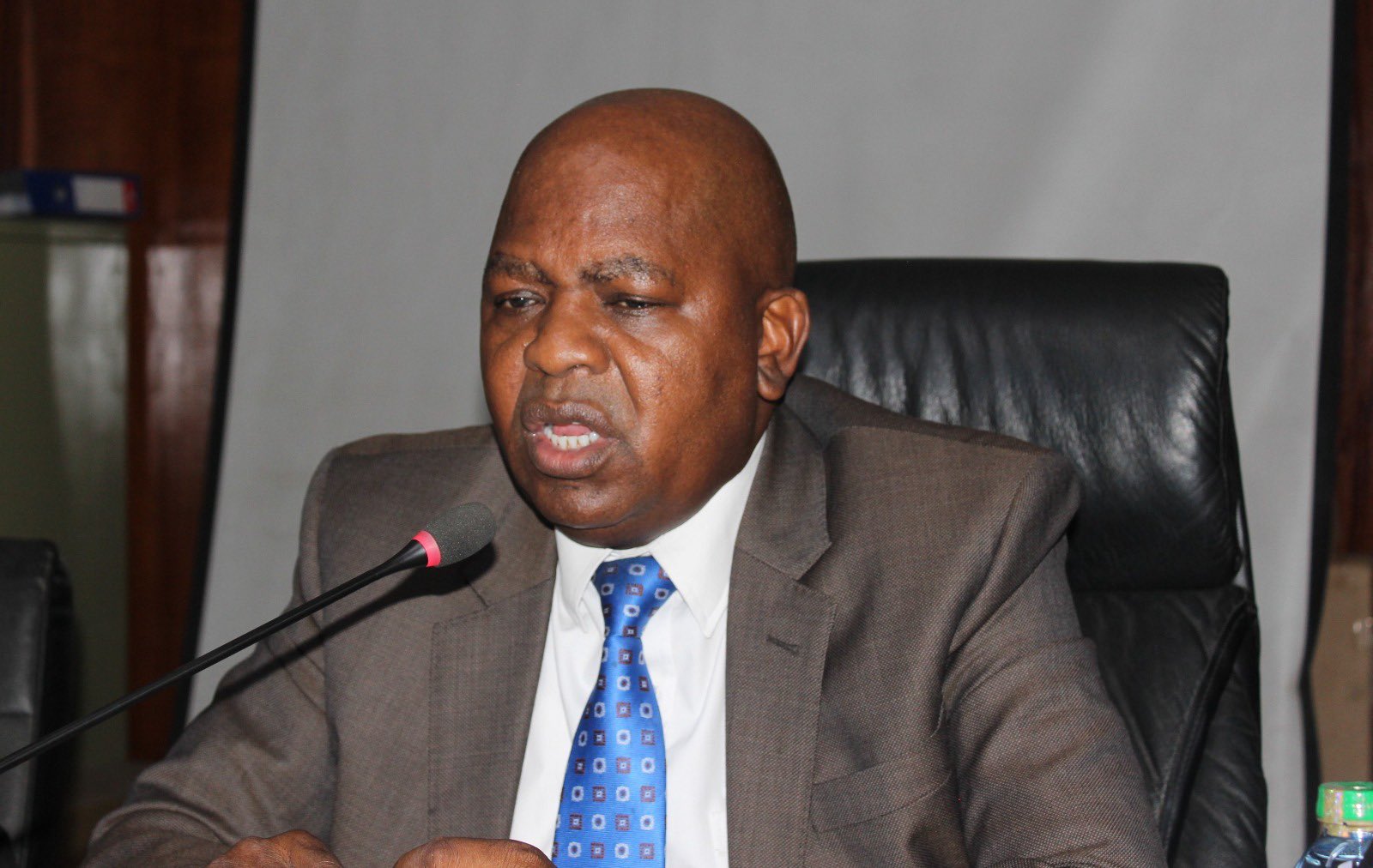
Philip Mainga has spent years constructing an almost impenetrable wall of silence around the most basic questions that governance demands of any public officer: What instrument authorises you to be here? When does it expire? Who approved your continuation? For years those questions went unanswered, buried under a combination of board inaction, judicial restraint and the raw political cover that comes from knowing the right people. That wall now faces its most serious battering yet, and the ammunition is accumulating from every direction simultaneously.
On June 4, 2026, a Nairobi resident by the name of Masha Wario marched to the Employment and Labour Relations Court and filed a petition under a certificate of urgency, placing before Justice Monica Mbaru a direct demand: stop Philip Mainga from exercising any further authority as Managing Director and Chief Executive Officer of Kenya Railways Corporation until his continued tenure can be shown to have a lawful foundation.
The petition names the Public Service Commission and the Kenya Railways Board as respondents, enjoins the Ethics and Anti-Corruption Commission as an interested party, and is scheduled for hearing on June 15, 2026.
The timing is not coincidental. The petition lands precisely one week after the Public Procurement Administrative Review Board cleared Kenya Railways to proceed with the award of an Sh817,677,187 consultancy contract to Mace YMR LLP for the design and construction of the Nairobi Railway City Central Station.
That clearance, which came on May 27, 2026, formally dismissed a challenge by rival bidder Dar Kenya/Dar Plus Joint Venture. It should have been a moment of institutional triumph. Instead it has become the trigger for yet another escalation, because what accompanied the tender award in the shadows was far more damaging than any procurement board ruling could sanitise.
Sources indicate at least Ksh130 million in promised bribes allegedly at play between Mainga and officers of the Mace YMR LLP consultancy firm.
THE SH817 MILLION TENDER AND THE BRIBERY TRAIL
The Public Procurement Administrative Review Board found that Mace YMR LLP’s proposal was substantially compliant and that Dar Kenya/Dar Plus Joint Venture had properly been disqualified at the preliminary evaluation stage for failing to submit certified audited accounts for three consecutive financial years and for submitting practising licences lacking proper signatures.
Kenya Railways argued, and the board agreed, that Articles 227(1) of the Constitution alongside Sections 79 and 80 of the Public Procurement and Asset Disposal Act required strict adherence to mandatory criteria and did not permit the waiver of fundamental deficiencies.
On paper the procurement process ended there: a clean ruling, a compliant winner, a cleared path to contract signature.
Beneath the surface, however, an entirely different picture is emerging. Investigative sources with direct knowledge of the procurement negotiations allege that behind-the-scenes bribery discussions were ongoing between Kenya Railways officials and management officers of Mace YMR LLP, with at least Ksh130 million in promised inducements allegedly at play.
A trail of communications and secret meetings between Mainga himself and officers of the firm is said to be available for scrutiny, and the development is expected to open the lid on possible multiple criminal investigations into the Nairobi Central Station procurement process at Kenya Railways.
The Nairobi Central Station redevelopment is not a minor contract. It is the centrepiece of the broader Nairobi Railway City project, a flagship programme jointly financed by the governments of Kenya and the United Kingdom under the UK Export Finance framework and described by proponents as a transformative urban infrastructure intervention.
That such a project may now be tainted by corruption allegations at the very moment of contract award raises profound questions about the integrity of Kenya’s entire infrastructure procurement pipeline and the continued credibility of the UK export finance relationship.
THE PETITION: WHAT WARIO IS ASKING THE COURT TO COMPEL
Masha Wario’s petition is notable for the breadth of what it demands by way of disclosure, which in itself speaks to the depth of the opacity surrounding Mainga’s continued service.
The petitioner contends that the office of the Kenya Railways Managing Director is a public trust position, constitutionally required to be exercised in accordance with national values under Articles 10, 73 and 232 of the Constitution.
The uncertainty over whether lawful authority for Mainga’s continued occupancy of that office exists, the petition argues, undermines public confidence and constitutional accountability.
The court is being asked to compel the Public Service Commission and the Kenya Railways Board to produce employment contracts, renewal agreements, board resolutions, gazette notices, performance contracts and any instruments authorising his continued service.
The petitioner additionally wants disclosure of agreements and instruments executed during the disputed period, including those linked to commuter rail developments and international engagements. Pending the full hearing, conservatory orders are sought barring Mainga from performing the duties of the office entirely. The June 15 hearing date gives Kenya Railways and the PSC fourteen days to file responses.
The urgency is self-evident. Mainga’s tenure officially expired on January 3, 2026. Kenya Railways issued no public notice of competitive recruitment, the board maintained complete silence, and the managing director simply continued to operate as though nothing had happened.
A whistleblower report submitted to the EACC has accused Mainga of securing a controversial 2023 term extension through alleged bribes paid to then Transport Cabinet Secretary Kipchumba Murkomen and to KRC board members, ensuring a continuation to 2026 that activists describe as doubly irregular: irregular in how it was obtained and then compounded by an informal rollover beyond even that extended date. The Public Service Commission has reportedly opened its own inquiry into the circumstances of that extension.
Mainga’s tenure officially expired on January 3, 2026. No competitive recruitment was announced. No board resolution was published. He simply stayed.
THE EARLIER PETITIONS: A PATTERN OF FAILED ACCOUNTABILITY
Wario’s petition is not the first. It is not the second or the third. It is merely the most recent in a long procession of legal challenges that have sought, and thus far failed, to dislodge Mainga through the courts.
In September 2024, human rights defender Eric Kithinji Mwiti filed a constitutional petition before the High Court seeking Mainga’s removal over allegations of corruption, irregular procurement, fictitious compensation payments for land in the Datuto/Dafur Settlement Scheme and the embezzlement of public funds in violation of Articles 10, 73 and 232 of the Constitution.
The High Court struck out that petition in November 2025 on preliminary jurisdictional grounds, ruling that the power to remove the managing director rests with the Cabinet Secretary under the Kenya Railways Corporation Act and that complainants should first channel grievances through the EACC. The substantive allegations of misconduct were never tested on their merits.
Earlier in 2026, the Consumers Federation of Kenya filed a separate court challenge arguing that Mainga had served beyond two standard three-year terms, had remained in acting and substantive roles for combined extended periods and had continued past the mandatory retirement age of 60.
COFEK’s filing cited fraud cover-up allegations and demanded that the board account for how someone operating without a transparent, publicly disclosed legal mandate had continued to sign contracts, award tenders, conduct international negotiations and bind a strategic national institution.
Civic activists Matasi Yatundu, Timothy Rasugu and Julius Chebitok have filed or supported actions seeking EACC and Directorate of Criminal Investigations scrutiny of all financial transactions conducted under Mainga’s tenure and the recovery of allegedly lost public funds. Separately, Francis Owino and Ezekiel Okoth moved to court in 2023 alleging that Mainga’s tenure facilitated the loss of Sh700 billion in the Standard Gauge Railway tender scandal and accusing him of illegal tenure extension and gross transgressions of the law.
In every instance so far, procedural hurdles and jurisdictional questions have provided Mainga with the legal breathing room he needs to continue.
The Wario petition, filed through the Employment and Labour Relations Court with a certificate of urgency and supported by the specific framing of public trust, constitutional accountability and the absence of disclosed authorising instruments, attempts to navigate around those procedural obstacles. Whether Justice Mbaru will entertain it where earlier courts refused is the question Kenya’s governance watchers are now asking.
TWO CONTEMPT CONVICTIONS: A RECORD WITHOUT PRECEDENT IN KENYA’S PARASTATAL SECTOR
Before the ink on the Wario petition was dry, Mainga was already a twice-convicted contemnor of court. The significance of this cannot be understated. Very few senior state corporation executives in Kenya’s history carry even one contempt conviction. Mainga carries two, both within fourteen months of each other, both involving the deliberate demolition of private property in defiance of active court orders.
The first conviction came in April 2025, when Justice Anthony Ombwayo of the High Court in Nakuru found Mainga guilty of contempt for failing to pay businesswoman Monica Macharia Sh45.5 million in compensation following the illegal bulldozing of her property on October 11, 2020. Macharia had owned the one-acre plot along the Nakuru-Kisumu highway since 1995, operating a bag manufacturing factory and rental premises from the land.
Kenya Railways officials summoned her to their offices in March 2020, ostensibly to clarify ownership. Within months her business was rubble. She sued for Sh132 million and was awarded Sh45.5 million in October 2023. Kenya Railways refused to pay. By February 2025 the interest-accrued figure had grown to Sh54 million. Mainga was found in contempt, failed to appear in court on the day he was to show cause why he should not be jailed, and eventually consented to pay Sh10 million quarterly, with the final instalment scheduled for July 30, 2026.
The second conviction arrived with far greater political resonance.
In May 2026, Justice Oscar Angote of the Environment and Land Court found Mainga and Acting Corporation Secretary Stanley Gitari guilty of contempt for knowingly disobeying court orders issued on March 11, 2026, which had explicitly barred any demolition, construction or further activity on a contested parcel of land along Douglas Wakiihuri Road near Nyayo National Stadium.
That land housed businesses associated with Kiambu Governor Kimani Wamatangi, specifically a car wash, carpet cleaning facility, restaurant and car yard operated by Superclean Shine Enterprises Limited and King Prime International Limited. The businesses were razed overnight in January 2026. An independent court-ordered inspection confirmed what the petitioners alleged: the land had become an active construction site with excavated trenches, piles of aggregate and workers in protective gear. Justice Angote concluded that the essential elements of contempt had been proved beyond doubt. Mainga and Gitari are scheduled to appear before the court for mitigation and sentencing on June 25, 2026, where they face fines, imprisonment or both.
The pattern is not one of institutional failure. It is one of institutional culture. Kenya Railways under Mainga has demolished first and litigated later, counting on the delays of the judicial system to absorb the consequences while construction proceeds.
In the Wamatangi-linked case, construction resumed on January 22, 2026, one day after service of the original orders, continued on January 24 and January 25, and received a cease-and-desist letter from opposing lawyers on January 23 that was simply ignored.
Two contempt convictions. Seventeen billion in avoidable SGR penalties. Billions in fictitious land compensation. This is not a governance failure. This is a captured institution.
THE LAND FRAUD ARCHITECTURE: 544 PARCELS AND COUNTING
Perhaps no dimension of the Mainga era is more financially devastating than the land scandal. Audits and investigative disclosures have identified over 544 parcels of public railway land allegedly transferred to private individuals without proper authorisation under his watch, covering prime properties in Nairobi, Mombasa and Nakuru. The scale of the alleged theft is staggering in both breadth and method.
The most extensively documented instance centres on the Dupoto/Dafur Settlement Scheme in Embakasi, a 90-acre parcel situated between the Standard Gauge Railway alignment, the flight path and the boundary of Nairobi National Park. According to investigative disclosures, the scheme was carefully orchestrated: proxies were identified and issued title deeds to the public land, the land was then sold to the government for a Kenya Railways project at a fraudulently inflated price, and the compensation money was wired to bank accounts opened by those proxies before being withdrawn by the masterminds.
Billions of shillings are alleged to have moved through this scheme. The Ethics and Anti-Corruption Commission attempted to investigate and was stopped, with sources attributing the interference to well-connected individuals within government circles.
Earlier in Mainga’s tenure, accusations surfaced over the leasing of prime Kenya Railways facilities at Makongeni container yards in Nairobi for ten years without board approval, allegedly causing revenue losses exceeding Sh400 million.
The Malaba godown occupied by Kristaline Salt Ltd was reportedly seized without cause in March 2018 and subsequently leased to a Mainga-favoured tenant, Multiple Solutions Ltd, exposing the corporation to a USD 10,315 claim plus general damages.
Land at Limuru and Kikuyu stations is reported to have changed hands under circumstances that prompted investigations repeatedly stalled by powerful interests.
Letters dated July 10, 2019, show Mainga indicating that the board at its 430th special meeting had recommended leasing of land to Kokotoni Investments Ltd and Mapset Maritime Ltd for 30 years, when sources contend the board approved no such thing.
A legal notice from a senior official linked to the Qatar Chamber of Commerce alleges unfulfilled commitments in railway-linked real estate projects, a development that has damaged Kenya Railways’ credibility among foreign investors and generated concerns within international business circles about the reliability of commitments made by the corporation’s senior leadership.
THE SGR FINANCIAL CATASTROPHE: SH28 BILLION LOST IN ONE YEAR
Kenya Railways Corporation’s financial performance under Mainga presents one of the most damning indictments of state corporation management in recent Kenyan history.
The Auditor-General’s report for the year ended June 2025 recorded a Sh28.17 billion loss, with the corporation operating with negative equity of Sh121 billion. Loan arrears tied to SGR financing have reached over Sh413 billion.
The structural problem is the escrow arrangement under which all SGR revenues flow into a joint account managed by Kenya Railways and China Exim Bank, which requires a minimum balance of Sh25 billion before any surplus can be applied to loan servicing.
That threshold has never been reached, meaning no loan repayments have flowed from SGR revenues, causing arrears to accumulate even as the line continues to generate income.
The Auditor-General’s report for the year ended June 2024 separately found that failure to meet loan obligations when due had attracted avoidable expenditure of Sh34.1 billion in penalties amounting to Sh5.3 billion and interest of Sh28.85 billion, money that could have been directed to operations, maintenance or debt reduction.
Kenya currently owes China Exim Bank 741 million dollars in principal, 222 million dollars in interest and 41 million dollars in penalties for the 2025-2026 fiscal year alone.
The corporation spends more than one billion dollars per year servicing SGR debt to China. Critics have long argued that the terms of the SGR deal were structurally disadvantageous and that the escrow mechanism made it mathematically impossible for SGR revenues to service the loan, but those criticisms do not diminish the significance of a management record that has allowed avoidable penalties of over thirty-four billion shillings to accumulate on top of the principal obligation.
Earlier figures were no less alarming. Kenya Railways reported Sh33.5 billion in losses for the year ended June 2023.
The Afristar deal, the flawed management contract with Africa Star Railways for SGR operations that was initiated by Mainga himself and ran largely unchecked, was alleged to have cost the corporation up to Sh1.4 million daily in avoidable losses.
THE RETIREES: 270 PEOPLE, 19 YEARS, SH21.9 MILLION
Against the backdrop of billions allegedly lost to fraud, ghost compensation schemes and financial mismanagement, one figure strikes with particular moral force: 270 retired Kenya Railways employees have been waiting since 2006 for Sh21.9 million in benefits that sit, unclaimed, in a State Department of Transport account at the Central Bank of Kenya. No comprehensive beneficiary list exists. No payment has been made. The Auditor-General flagged the matter in the 2022-2023 financial year report. The Parliamentary Public Accounts Committee summoned Mainga in April 2025 to explain the delay. Committee members heard testimony that some of the retirees had fallen into depression and others had died in poverty while waiting for dues earned through decades of service.
Separately, Kenya Railways faces a larger pension liability exceeding Sh2.26 billion owed to retirees under the Kenya Railways Staff Retirement Benefits Scheme. Mainga’s response before the Senate Labour Committee was to propose selling prime city assets, including Makongeni Estate valued at approximately Sh8 billion and Ngara Estate estimated between Sh8 billion and Sh10 billion, to generate the cash needed to stabilise pension payments. Critics found the irony difficult to absorb: land assets whose origins in some cases are themselves disputed, being proposed as the solution to a pension crisis that developed on the watch of the same management whose land dealings are under investigation.
THE MURRAM SCANDAL, THE BACKDATED CONTRACTS AND THE PROCUREMENT TRAIL
Beyond the Mace YMR LLP tender, Kenya Railways under Mainga has accumulated a significant archive of procurement irregularities. A Sh150 million tender for murram supply on the Nairobi-Nanyuki line rehabilitation is alleged to have bypassed open competitive bidding despite the value far exceeding the Sh30 million threshold for restricted tendering. Contracts worth Sh88.2 million to First Choice General Suppliers Limited and Sh34.5 million to Mosrach Limited were allegedly backdated, with work reportedly commencing before formal agreements were signed, a violation of fundamental procurement principles that the Auditor-General’s office has flagged repeatedly as an invitation to abuse and financial exposure.
The Afristar contract deserves particular scrutiny in the context of the current Mace YMR LLP bribery allegations. Mainga himself initiated the Afristar deal, a contract that was subsequently found to have run unchecked and to have cost the corporation Sh1.4 million daily. The combination of contract initiation without adequate protective clauses, the subsequent absence of oversight mechanisms and the enormous daily losses that accrued follows a pattern that investigators say is now being replicated in the Nairobi Central Station tender, where behind-the-scenes negotiations allegedly designed the outcome before the formal evaluation process even concluded.
THE ACCUMULATED RECORD: A CASE STUDY IN INSTITUTIONAL CAPTURE
What distinguishes Mainga’s tenure from ordinary mismanagement is the systemic nature of the conduct alleged across multiple independent sources. From court records, parliamentary oversight proceedings, Auditor-General reports and investigative disclosures, a coherent picture emerges not of a poorly run institution but of a deliberately captured one.
Procurement processes have allegedly been structured to deliver predetermined outcomes. Land transactions have allegedly been used to channel public assets to private beneficiaries. Court orders have been defied with a consistency that suggests institutional policy rather than individual error. Oversight institutions, including the EACC, the PSC and Parliament, have been navigated, delayed and in some cases frustrated. The renewal mechanism itself has allegedly been compromised through bribes to the very officials whose responsibility was to ensure integrity in the appointment process.
The Public Service Commission’s reported investigation into Mainga’s 2023 term extension could be the thread that unravels the entire arrangement. If the extension is found to have been procured through corrupt payments to the former Transport CS and board members, it does not merely invalidate the tenure. It criminalises it. Every major decision taken under that invalid authority, including the Sh817 million Mace YMR LLP contract, becomes a procurement action taken by someone with no lawful mandate to bind the state. The legal exposure that creates is vast.
For the Nairobi Railway City project and the UK Export Finance relationship, the reputational stakes are equally serious. British taxpayers’ money, channelled through UKEF guarantees, is ultimately underwriting a programme whose flagship contract may now be shown to have been awarded through bribery negotiations. The Foreign, Commonwealth and Development Office and UK Export Finance will have their own accountability questions to answer if investigations confirm what sources are alleging.
WHAT HAPPENS NEXT: THE CONVERGENCE OF JUNE 15 AND JUNE 25
Philip Mainga now faces two critical court dates within ten days of each other. On June 15, 2026, Justice Monica Mbaru will hear arguments on whether Masha Wario’s petition warrants conservatory orders that would immediately bar Mainga from exercising the functions of his office. If those orders are granted, Kenya Railways will be without an acting or substantive managing director at the precise moment when the Nairobi Central Station contract is due for execution, when ongoing Nairobi Railway City construction is proceeding and when the UK Export Finance framework is under scrutiny.
On June 25, 2026, Mainga and Stanley Gitari will appear before Justice Oscar Angote for mitigation and sentencing in the Wamatangi-linked contempt case. A custodial sentence, even a brief one, would be unprecedented for a sitting state corporation chief executive in Kenya and would force the government’s hand on succession in a way that no petition alone has managed to do.
Against these immediate pressures, the PSC inquiry into the 2023 extension continues, the EACC’s reported interest in the Mace YMR LLP bribery trail is developing, and the DCI faces renewed activist pressure to open a comprehensive investigation into all financial transactions conducted under Mainga’s tenure. The petition by Wario, layered on top of COFEK’s challenge, the Mwiti petition that failed on jurisdiction, the activist court filings, the whistleblower report, two contempt convictions, parliamentary summonses, Auditor-General flags and now bribery allegations tied to the corporation’s single biggest current procurement, collectively represent a dossier that Kenya’s oversight institutions can no longer plausibly ignore.
The question is not whether Philip Mainga’s record is indefensible. By any objective measure, applied to any parastatal in any country that takes governance seriously, it is. The question is whether Kenya’s institutions, individually and collectively, have the will to act before the next Sh817 million contract is signed, the next court order is bulldozed and the next generation of retirees begins its own two-decade wait for money they were owed the moment they walked out of their offices for the last time.
Kenya Insights allows guest blogging, if you want to be published on Kenya’s most authoritative and accurate blog, have an expose, news TIPS, story angles, human interest stories, drop us an email on [email protected] or via Telegram








Kenya Airways Sinks Into Deeper Turbulence As American Supplier Sues In New York Court Over Sh129 Million Unpaid Debts

Kenyan player wins a Ksh3.2 million jackpot

IEBC Sets August 10 Date For 2027 General Election

Furious Ruto Lashes Out at Gideon Moi Over Repeated ‘Blackmail, Extortionist’ Headlines on The Standard and KTN

Mombasa Gripped by ‘Male Organ Theft’ Panic as Social Media Fuels Mob Attacks and Fear

TOO MUCH PR, NOTHING TO SEE: How Gladys Wanga Built a Perfect Story of Transformation While Homa Bay Bled

Netanyahu Says Israel Must ‘Break Free from Dependence’ After Tensions With Trump Administration

Niger pulls Out Of International Criminal Court After Calling It Neo-Colonialist

Kenya Awards Sh154 Billion JKIA Upgrade Tender To Chinese Firm CRBC

The Untouchable: How KURA’s Silas Kinoti Has Survived A Decade Of Corruption Storms While Kenya’s Roads Bled

Businessman Philip Waithaka Kinuthia’s Minor Son Allegedly Drove Drunk, Killed Two Peponi Students in Ngong Road Horror Crash as Claims of Cover-Up Intensify

Inside NCBA’s Decline: How a Banking Giant Lost Its Strategic Edge

South Sudan: Adut Salva Kiir’s Shadow Treasury Exposed

Cement, Cash and Courts: How the Hashu Dynasty Crushed the Ramji Brothers for Fourteen Years and Why the Walls Are Now Closing In

Standard Chartered Ghosts Haunt Joshua Oigara At Stanbic As Whistleblower Spills Beans

Inside The Urban Planning Cartel That Owns Nairobi

THE VULTURE AND THE SCHEME How Nairobi West Hospital Became the Most Dangerous Institution in Kenya’s SHA Ecosystem and Why the Books Must Be Audited Now

The President’s Daughter and The Missing Witness: How Adut Salva Kiir’s Shadow Treasury Silenced Its Most Dangerous Critic

How Adil Popat Saved His Empire On The Eve Of Imperial Bank Collapse and Why Kenya’s Mainstream Media Buried The Story

Why John Ngumi Is Running From the EACC and Why the Sh415 Million Payday May Be the Least of His Worries
-
 News1 week ago
Businessman Philip Waithaka Kinuthia’s Minor Son Allegedly Drove Drunk, Killed Two Peponi Students in Ngong Road Horror Crash as Claims of Cover-Up Intensify
-
 Africa2 weeks ago
South Sudan: Adut Salva Kiir’s Shadow Treasury Exposed
-
 Investigations6 days ago
THE VULTURE AND THE SCHEME How Nairobi West Hospital Became the Most Dangerous Institution in Kenya’s SHA Ecosystem and Why the Books Must Be Audited Now
-
 Business2 weeks ago
How Adil Popat Saved His Empire On The Eve Of Imperial Bank Collapse and Why Kenya’s Mainstream Media Buried The Story
-
 Business2 weeks ago
Why John Ngumi Is Running From the EACC and Why the Sh415 Million Payday May Be the Least of His Worries
-

 Business1 week ago
The Listing That Doesn’t Lie: What the Market Isn’t Saying About Family Bank’s NSE Debut
-
 Business3 days ago
BURRIED TWICE: The Victoria Bank CEO Yogesh Pattni Files
-
 Business6 days ago
Inside the Billion-Shilling Betrayal: How Senior Treasury Officials Plundered a UN Poverty Fund and Built a Real Estate Empire on the Backs of Kenya’s Rural Poor