
Business
BURRIED TWICE: The Victoria Bank CEO Yogesh Pattni Files
How the entrapment of a blogger in 2020 buried explosive money laundering allegations against Victoria Commercial Bank CEO Dr. Yogesh Pattni allegations that resurfaced with even greater force in 2023 when the DCI arrested him over the Mumias Sugar fraud and how both investigations were made to disappear. The story behind the silence, the method behind the impunity, and the questions that refuse to die.

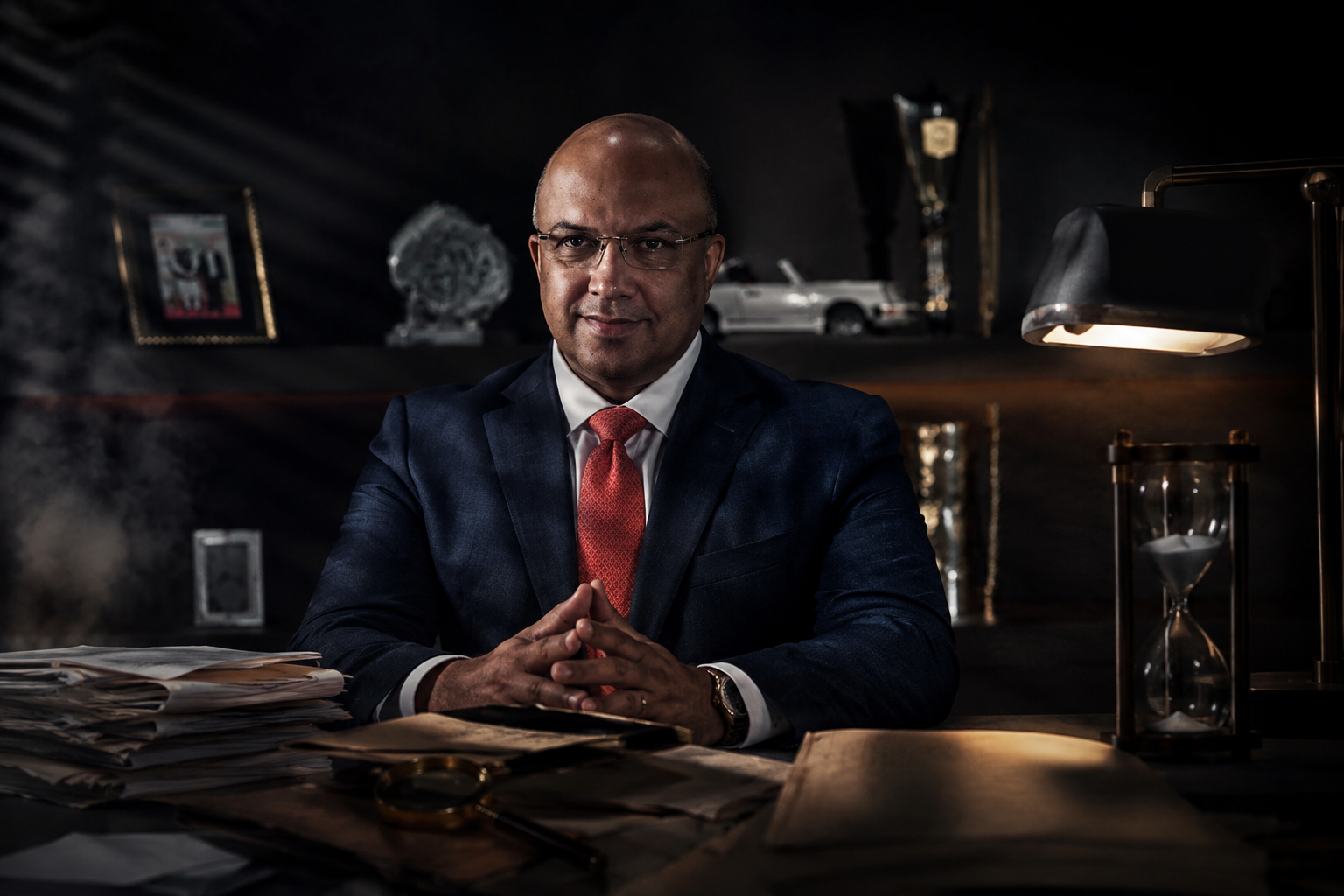
There is a method to the silence. It is not accidental, not the product of overstretched institutions or under-resourced investigators. When you study the arc of serious allegations against Victoria Commercial Bank and its chief executive, Dr. Yogesh Pattni, you begin to see it a deliberate, repeating architecture of suppression that first tested itself against a blogger in 2020 and then, when larger threats materialized in 2023, deployed the same logic at national scale. The allegations were buried twice. The method was refined between burials. The public is still waiting for either the truth or a credible explanation of why it has been withheld.
This is the story of how that happened.
It requires going back to the beginning to the blog posts that started it all, to the sting operation that was supposed to silence the blogger forever, to the High Court judgment that instead exposed the sting itself, to the money laundering allegations the sting was designed to suppress, and then forward to August 2023, when those same allegations returned in the form of a national criminal probe that erupted with the force of a scandal and then, again, went cold.
Understanding Yogesh Pattni and Victoria Commercial Bank requires understanding this sequence. Because the sequence is the story.
PART ONE: THE BLOGGER THEY HAD TO STOP
Between September and December 2019, blogger Cyprian Nyakundi published a series of articles on his widely read platform that caused significant alarm inside the Two Rivers Mall offices of Victoria Commercial Bank. The posts were detailed, they were pointed, and they touched on subjects that any institution with something to hide would recognise as dangerous.
The allegations Nyakundi published were serious.
He alleged the bank was a conduit for money laundering, writing with characteristic directness about what he described as illicit financial flows through the institution.
He alleged connections to arms dealers and drug networks operating out of the Horn of Africa and India, specifically citing Ali Punjani a Mombasa-linked figure with alleged drug trade ties and Vicky Goswami, described as being in private asylum in India. He alleged the bank ran what he characterised as a ‘parallel bank’ called Chopri, facilitating off-record transactions.
He alleged the CEO had acquired a second citizenship without declaring it as required under Kenyan law. He alleged the bank’s parent structure under chairman Kanji D. Pattni who built the institution from a finance company beginning in 1987 had been fundamentally corrupted under his successor’s stewardship.
Pattni responded on September 18, 2019, issuing a public statement dismissing the publications as ‘completely false, treacherous and libelous.’ The bank hired Schillings, a high-profile British law firm whose past clients have included Brad Pitt, Naomi Campbell and J.K. Rowling, to pursue defamation proceedings in the High Court of Kenya.
On September 24, 2019, the High Court issued an injunction requiring Nyakundi to remove the posts and barring further publication.
Nyakundi, characteristically, defied the order and continued writing.
What happened next is documented in meticulous and damning detail in the court records of Petition No. E284 of 2020, which ultimately came before Justice Anthony Mrima at the Milimani High Court.
A separate complaint against Nyakundi was lodged by one Harish Mawjee in November 2019 over earlier blog posts. DCI Corporal Charles Odhiambo, badge number 85552, began investigating.
The DPP declined to approve criminal charges for defamation and publication of false information, citing the ruling in Alai v. Attorney General which had established such charges were unconstitutional. The charge sheet prepared by the DCI was blocked before it could be filed.
It was at this point that the alternative route was developed.
The DCI contacted a Standard Group journalist to lure the blogger to a meeting before any formal complaint had been lodged. The plan was already in motion.
On January 3, 2020, Nyakundi published a further post specifically about Pattni.
According to detailed court findings, Pattni then contacted businessman Dharmesh Shah about the blog posts. Shah contacted Nuri ‘Tinta’ Akasha court documents describe him as a relative of the Akasha brothers, Ibrahim and Baktash Akasha, who in 2019 received long sentences in the United States for drug trafficking offences involving trafficking heroin and methamphetamine to US markets. Nuri Akasha was tasked, according to the court record, with initiating contact with the blogger.
Here the story darkens significantly.
Rather than having a formal complaint filed, Nuri Akasha on January 9, 2020 contacted the same Corporal Odhiambo who had been investigating the previous complaint not to report a crime, but to seek advice on ‘the way to go about the whole issue.’ No formal complaint had been lodged.
Odhiambo, according to the court’s findings, advised Akasha to get Nyakundi to meet bank representatives so they could understand the rationale behind his continued blogging.
The DCI then, on January 10, 2020, contacted a Standard Group journalist named Nicholas Asego a personal acquaintance of Odhiambo’s and requested that Asego introduce Nyakundi to bank officials.
The court record is explicit: Odhiambo told Asego they had ‘planned a discreet operation’ and that the DCI would not like to be seen to be involved. Odhiambo then obtained Nyakundi’s contact number from Asego and passed it to Nuri Akasha.
On January 12, 2020, Nyakundi met with Nuri Akasha, Sammy and Dharmesh Shah who introduced himself as acting on behalf of Victoria Commercial Bank. Shah asked Nyakundi to state his price for pulling down the posts and ceasing further publications.
According to the court record, Nyakundi named a figure of Ksh30 million. After negotiation, the amount settled at Ksh17.5 million.
A subsequent meeting was held in a boardroom which, according to the court findings, had been fitted with secret surveillance cameras by DCI officers.
On January 20, 2020, Nyakundi and co-accused Emmanuel Ong’era arrived at the third floor of Westgate Mall and were handed a small black shopping bag containing Ksh1 million as a down payment. They were immediately arrested by DCI officers stationed at Gigiri.
The DCI tweeted within hours. The Ksh1 million was photographed. The arrest played across every television bulletin. The narrative was fixed: a shameless extortionist blogger, caught red-handed, trying to bleed a respectable banker.
The allegations Nyakundi had written about were, in the public discourse that followed, reframed as the grievances of a criminal rather than the findings of a journalist. The banker was the victim. The blogger was the fraud.
This is precisely what the operation was designed to achieve.
PART TWO: THE JUDGMENT THAT EXPOSED THE TRAP
For slightly over a year, the case dragged through Milimani Chief Magistrates Court as Criminal Case No. 144 of 2020. The narrative held. Then, in September 2020, Nyakundi and Ong’era filed a constitutional petition challenging the entire prosecution. It came before Justice Anthony Mrima.
On March 11, 2021, Justice Mrima delivered a judgment that should have caused significant institutional turbulence at the DCI, Victoria Commercial Bank, and within Nairobi’s legal and business establishment.
It did not receive the attention it deserved because by then the Nyakundi extortion story had been internalized as settled: the blogger was the criminal. The judgment disturbed that settled conclusion in ways that remain deeply relevant today.
Justice Mrima applied what legal scholars recognize as the ‘timing, nature and extent of involvement’ test to the conduct of the police. He found that the DCI was involved from before the meeting was even arranged. He found that Odhiambo advised Nuri Akasha on how to proceed before any formal complaint existed.
He found that Odhiambo used a journalist contact to lure Nyakundi to the table.
He found that the DCI, Akasha and ‘one Sammy’ held consistent planning meetings about how to execute the sting. He found that secret cameras were set up in the boardroom by investigators. He found that investigators were updated throughout the discussions as they progressed toward the Ksh17.5 million agreement.
His conclusion was unambiguous.
He found the conduct of the police ‘variously infringes Article 10 of the Constitution… Article 157(11)… and Article 244 of the Constitution.’ He found that ‘the involvement of the police went far beyond the limits of acceptable police conduct and investigations and right into the realm of entrapment.’ And he delivered the sentence that ends the prosecution’s case and should open an entirely different inquiry:
‘In essence, had it not been Corporal Odhiambo advising, linking up Nuri with the Petitioners and being firmly behind the whole encounter, there is no evidence that the Petitioners would have nevertheless taken any steps to commit the offence. The whole ordeal was masterminded by the DCI.’ — Justice A.C. Mrima, High Court of Kenya, 11 March 2021
All evidence was ruled inadmissible. The constitutional petition was upheld. The DPP, then under Noordin Haji, terminated the criminal trial in August 2021 after a magistrate gave 14 days to confirm the prosecution’s position. Principal Magistrate Zainab Abdul discharged the accused persons unconditionally.
The DCI Corporal Charles Odhiambo was never publicly disciplined. No investigation into the entrapment operation was publicly announced. Victoria Commercial Bank faced no institutional consequences for its apparent role in initiating the sequence that led to an unlawful sting operation. The Schillings defamation case dissolved without public conclusion. And the bank’s UK law firm quietly withdrew from the Kenyan arena.
But here is what was almost entirely absent from the coverage when the case collapsed: any serious, sustained revisitation of the allegations Nyakundi had originally published.
The allegations that triggered the entire sequence money laundering, arms dealing links, regulatory irregularities, parallel banking operations, undisclosed citizenship, questionable client networks were never independently investigated, publicly addressed, or conclusively rebutted by the CBK, the DCI as an institution, or the DPP.
They had been successfully attached to the persona of a criminal. When the criminal case fell, the allegations fell with it, at least in mainstream public consciousness.
That outcome may not have been accidental.
PART THREE: WHAT THE BLOGGER ACTUALLY ALLEGED AND WHETHER ANYONE EVER ANSWERED
Kenya Insights has reviewed the broad substance of what Nyakundi published between September 2019 and January 2020 and compared it against what investigative bodies were still asking in 2023. The overlap is striking.

Blogger Cyprian Nyakundi
The 2019-2020 blog posts alleged that Victoria Commercial Bank was being used as a money laundering conduit, specifically involving the routing of funds to Dubai and offshore destinations.
The 2023 DCI Banking Fraud Unit probe, supported by sworn affidavit from Inspector Isaac Ogutu, specifically investigated VCB’s role in transacting with Vartox Resources Inc., a Dubai-linked, British Virgin Islands-registered entity.
The DCI’s own application to the Milimani magistrates court alleged that transactions could be fictitious and described the movement of money through VCB’s actual books of account in connection with a suspected scheme to defraud Mumias Sugar Company.
The 2019-2020 posts alleged links between the bank’s select clientele and arms and narcotics networks. The 2023 DCI probe included, according to multiple sourced reports, questions to Pattni about arms dealing connections.
The Kenya Insights 2023 coverage reported DCI investigators were probing ‘significant amounts of money siphoned from VCB bank accounts and routed to distant offshore destinations such as Dubai and Mauritius’ allegedly to ‘facilitate illicit activities, including arms trade, narcotics distribution, and even bolstering political campaigns.’
The 2019-2020 posts alleged the bank’s regulatory approvals and ownership structure were irregular.
The 2023 probe, according to court documents and sourced reporting, included direct questions about how the bank obtained its CBK approvals and how sugar billionaire Jaswant Rai allegedly came to hold a controlling interest through proxies in violation of the Banking Act’s beneficial ownership requirements.
One does not need to accept every allegation Nyakundi published in 2019-2020 as verified fact to observe something significant: serious investigative bodies were still asking the same category of questions about the same institution four years later.
The allegations did not die. They matured.
They accumulated corroborating structure. They were eventually taken seriously enough by the DCI’s own Banking Fraud Unit for armed officers to descend on Two Rivers Mall at 6 a.m. to arrest the CEO.
Nowhere in the 2021 collapse of the extortion case and nowhere in the years that followed did the Central Bank of Kenya issue any public statement addressing whether the categories of concern raised about VCB’s operations had been independently examined and found without merit. That silence is the CBK’s to explain.
The allegations did not die when the blogger was arrested. They went underground and three years later, the DCI’s own Banking Fraud Unit was asking the same questions.
PART FOUR: AUGUST 2023, THE METHOD, TESTED AT NATIONAL SCALE
By August 2023, what had been a blogger’s allegations about Victoria Commercial Bank had acquired the concrete form of a detailed criminal investigation supported by sworn court affidavits, judicial orders permitting account investigation, and the full institutional weight of the DCI’s Banking Fraud Investigations Unit. The underlying facts had not changed in their essential character since 2019. What had changed was their scale and specificity.
Mumias Sugar Company once the economic spine of western Kenya, sub-Saharan Africa’s largest sugar producer, the mill whose cane supply sustained the livelihoods of tens of thousands of smallholder farmers for decades had been placed under KCB receivership in 2019 over a Ksh545 million debt.
It was a figure that, in retrospect, seems extraordinarily small given the national importance of the institution it brought low. PVR Rao was appointed receiver-manager. A brutal litigation war over the mill’s carcass commenced.
Into this litigation landscape entered Vartox Resources Inc. registered in the British Virgin Islands, operating through Dubai, led by a director named Kristian Khachatourian with local signatory Amal Kokkandathil Joseph.
Vartox materialized in the Mumias insolvency proceedings carrying what it claimed was a Ksh6 billion debt inherited from Victoria Commercial Bank, which had itself acquired debt instruments from Proparco (the French development finance institution that had lent approximately USD35 million to Mumias secured against the ethanol plant) and EcoBank.
The combined value of the two Mumias assets Vartox claimed security over the ethanol facility and the cogeneration power plant was approximately Ksh5.9 billion.
A small, select-clientele Kenyan bank had acquired foreign development institution debt worth tens of millions of dollars and then moved it to a BVI-Dubai vehicle. The mechanism by which it did so, and the source of funds, are the questions that the DCI was trying to answer.
Inspector Isaac Ogutu’s sworn court affidavit, filed in support of the DCI’s June 23, 2023 court application, stated that preliminary investigations had established unnamed individuals had conspired to defraud Mumias Sugar Company with the aim of sabotaging its revival.
He alleged the transactions involved could be fictitious, recorded in the bank’s actual books to create a false paper trail of legitimacy. This was the language of a serious financial crime investigation. It was not vague or speculative. It was specific and supported by court-filed testimony.
On July 3, 2023, Victoria Commercial Bank and Vartox moved to the Commercial Court seeking orders to halt the DCI from investigating, summoning, or demanding documents from either entity.
The conservatory order was granted on July 5.
Pattni appeared voluntarily before investigators on June 21 and told the court he received no specific particulars. Jaswant Rai the sugar baron whose alleged proxy control of VCB sat at the heart of the probe was intercepted by DCI officers at JKIA in July 2023 for questioning.
Then came the abduction.
On August 25, 2023, Rai was seized in broad daylight along Wood Avenue, Kilimani, by armed men appearing to be police officers. He was held for two days and released unharmed on the evening of August 27. No ransom. No explanation. No perpetrators identified or charged. Hours after his release, on August 28, Banking Fraud Unit officers descended on Two Rivers Mall and arrested Pattni despite the active Commercial Court order still in place. That they moved through the conservatory order suggests they had developed grounds sufficient, in their professional judgment, to justify the risk.
President Ruto had, a day earlier, stood in Kakamega and issued his by now famous ultimatum to sugar cartel operators: withdraw your cases, leave the country, face jail, or ‘go to heaven.’ Within 48 hours of Pattni’s arrest, Vartox Resources filed a notice in the Court of Appeal withdrawing its petition challenging the Sarrai Group’s Mumias lease.
The investigators had moved. The politicians had signalled. The cartel entities had retreated. It appeared, to every observer, that the system had finally reached its breaking point with the networks it had tolerated for years.
And then, silence. Again.
PART FIVE: THE SILENCE AND WHAT IT TELLS US
Nearly three years after the Banking Fraud Unit arrested Pattni at dawn, not one charge has been publicly confirmed against him or Victoria Commercial Bank in connection with the Mumias probe.
The DPP has offered no public statement on whether a complete, prosecutable file was received. The CBK has maintained its institutional silence on whether it examined VCB’s capacity to acquire USD45 million in distressed assets or the persistent allegations about Rai’s alleged proxy ownership.
The KRA has not publicly acknowledged the 2025 finding by Justice Alfred Mabeya in Kisumu that a property transaction involving Pattni, his wife Azmina and VCB was structured through a shell company, Flynn Limited, explicitly ‘designed to appear as a corporate reorganisation’ but ‘in substance a sale and purchase transaction meant to evade taxes.’ No criminal proceedings on that judicial characterisation have been announced.
One is forced to examine the parallel: in 2020, when a blogger published allegations about money laundering and regulatory irregularities at Victoria Commercial Bank, the DCI mobilised through a figure with alleged ties to the drug trade to entrap the blogger, discredit the allegations, and create a public narrative in which the banker was the victim.
The operation succeeded until a judge dismantled it. In 2023, when the DCI’s own Banking Fraud Unit developed grounds serious enough to arrest the same banker despite an active court order, those grounds appear to have been quietly abandoned without explanation.
The structural logic of both episodes is identical: threat emerges, method is deployed to neutralise it, institutional silence does the remaining work. The 2020 method neutralised the external critic. The 2023 method appears to have neutralised the internal investigation. The beneficiary of both outcomes is the same individual operating through the same institution.
This is Yogesh Pattni’s identifiable mode of operating not as determined through personal accusation, but as evidenced through the documented institutional record.
He is a man who, when threatened with reputational exposure, retaliates with the full arsenal of the connected: elite law firms, court injunctions, criminal complaints, and as Justice Mrima found the mobilisation of state investigative capacity through intermediaries with troubling associations.
When threatened with criminal investigation, he retaliates with conservatory orders, sworn affidavits attacking the investigation’s integrity, and the patience of a man who understands that institutional momentum is finite and can be exhausted.
The method is not chaos. It is architecture. Threat appears. Arsenal deploys. Silence returns. Pattni continues. The public loses.
What makes this particularly troubling is the human cost that sits behind the legal abstractions. The farmers of western Kenya who grew cane for Mumias Sugar for generations did not merely lose a mill. They lost the economic infrastructure of entire sub-regions. The introduction of Vartox Resources into the insolvency proceedings armed with a Ksh6 billion claim inherited from VCB via Proparco and EcoBank inserted a foreign-registered private creditor into a process that should have been moving toward recovery for Kenyan farmers, workers and suppliers.
That insertion, whatever its technical legal justification, delayed and complicated the revival of a facility whose decay inflicted real, documented poverty on real people. The criminal investigation that was supposed to determine whether those transactions were legitimate has been allowed to sleep.
PART SIX: THE QUESTIONS THAT MUST BE ANSWERED
There is a category of question in accountability journalism that deserves to be called permanent: questions that remain open not because they are unanswerable but because those with the answers have found it more comfortable to remain silent. The questions raised by the Pattni-VCB sequence are of that category. This publication puts them on record because they must not be buried a third time.
For DCI Director Mohammed Amin: Was the Banking Fraud Unit file on Pattni and Victoria Commercial Bank transmitted to the DPP in complete form? If so, when? If not, why not? Was the investigation concluded or suspended? Were any elements of the investigation chain subject to interference, and has the Director personally reviewed the file’s integrity? Given the documented precedent of DCI officers being found by a High Court judge to have engaged in entrapment at the behest of the same institution under investigation, does the Director consider a fresh, independent review of both the 2020 sting and the 2023 investigation to be warranted?
For the Director of Public Prosecutions: Was a prosecutable file received in connection with the Pattni/VCB/Vartox/Mumias matter? If the file was received and found insufficient, on what specific evidential grounds? The public interest in this case is substantial and documented. Institutional credibility requires not silence but an accounting that distinguishes between cases dropped for legitimate reasons and cases that die for other reasons.
For the Central Bank of Kenya: How did the supervisory process account for persistent, multi-source allegations that Jaswant Singh Rai held a controlling interest in VCB through proxy structures in violation of Banking Act beneficial ownership requirements? How did the CBK’s ongoing oversight engage with the question of how a bank of VCB’s balance sheet size acquired rights over Mumias assets approaching USD45 million in value? What was the outcome of any parallel CBK inquiry that was reportedly underway alongside the DCI investigation?
For the Kenya Revenue Authority: Justice Alfred Mabeya of the High Court in Kisumu found in 2025 that a property transaction involving Pattni, his wife and Victoria Commercial Bank was structured through a shell vehicle ‘designed to appear as a corporate reorganisation’ but was ‘in substance a sale and purchase transaction meant to evade taxes.’ What action, if any, has the KRA taken in response to that judicial characterisation?
For Parliamentary Committees on Finance and Justice: The institutional failures exposed by the Nyakundi entrapment DCI officers mobilising through drug-adjacent intermediaries to neutralise a journalist writing about a bank and the apparent stalling of a serious banking fraud probe three years later involving the same institution demand formal, on-the-record parliamentary scrutiny. Accounting officers from the DCI, DPP, CBK and KRA should be summoned and required to give sworn testimony on the record.
CONCLUSION: A FILE THAT REFUSES TO CLOSE
There is something that distinguishes a calculated silence from an ordinary institutional failure. An ordinary failure is the product of overwork, under-resourcing, bureaucratic inertia. A calculated silence has a pattern. It has consistent beneficiaries. It has a history of deploying specific mechanisms legal, political, investigative at specific moments to achieve specific outcomes. It leaves behind a record, if you know how to read it.
The record of Victoria Commercial Bank and Dr. Yogesh Pattni is, by any honest reading, a record that raises profound and still-unanswered questions. A journalist writes exposés and is entrapped by officers of the state through intermediaries with drug trade links. A High Court judge finds the entrapment was ‘masterminded by the DCI.’ The entrapment is exposed. The journalist is freed. The bank’s CEO faces no consequence. The original allegations about money laundering, regulatory irregularities, problematic client relationships are never publicly addressed.
Three years later, the same category of allegation appears in the sworn testimony of a DCI inspector before a court of competent jurisdiction, backed now by the institutional weight of the Banking Fraud Unit. The CEO is arrested. The nation watches. Then, silence.
Mumias Sugar Company remains, three years on, the subject of ongoing revival efforts whose pace has been shaped in part by the years of litigation that the Vartox-VCB connection fuelled. Jaswant Rai, who denied any criminality throughout, has since expanded his sugar sector footprint by securing the Nzoia Sugar factory lease. The farmers of western Kenya continue to absorb the cost of a system that consumed their mill in litigation while those at its levers walked free.
Victoria Commercial Bank continues to operate from its discreet premises, serving its select clientele. Dr. Yogesh Pattni remains its chief executive. The bank’s public profile remains, by institutional design, minimal. Its appetite for legal combat when threatened the Schillings instruction, the injunctions, the conservatory orders, the sworn affidavits, the Commercial Court petitions has not diminished. Its relationship with accountability remains unresolved.
This investigation is not over. The file on Yogesh Pattni and Victoria Commercial Bank will not be allowed to become the third occasion on which serious allegations against this institution were successfully buried. Kenya Insights will report every development. We will return to every unanswered question. We will demand public responses from every institution that has chosen silence over accountability.
The method has worked twice. It will not work a third time with this publication watching.
KEY DOCUMENTED FACTS IN THE PUBLIC RECORD
September–December 2019: Nyakundi publishes allegations of money laundering, arms dealing links and regulatory irregularities at Victoria Commercial Bank. Bank hires London law firm Schillings; obtains High Court injunction on September 24, 2019.
November 23, 2019: First criminal complaint against Nyakundi by Harish Mawjee. DPP declines to charge: defamation and false publication offences ruled unconstitutional.
January 3, 2020: Nyakundi publishes new post about Pattni. Pattni contacts Dharmesh Shah. Shah contacts Nuri ‘Tinta’ Akasha described in court as a relative of convicted US drug traffickers to approach Nyakundi.
January 9, 2020: Akasha contacts DCI Corporal Charles Odhiambo before any formal complaint is lodged. Odhiambo advises Akasha to bring Nyakundi to the table.
January 10, 2020: DCI contacts Standard Group journalist Nicholas Asego to help lure Nyakundi. Odhiambo tells Asego ‘they have planned a discreet operation’ and the DCI should not appear involved. Nyakundi’s contact number obtained and passed to Akasha.
January 20, 2020: Nyakundi and Ong’era arrested at Westgate Mall after receiving Ksh1 million in a black shopping bag. Charged with extortion (Criminal Case No. 144 of 2020): demanding Ksh17.5 million as condition to pull down blog posts.
March 11, 2021: Justice A.C. Mrima rules all prosecution evidence inadmissible as obtained through entrapment in violation of Article 50(4) of the Constitution. Finds the DCI ‘was at the centre of the whole matter from inception.’ Criminal case quashed.
August 2021: DPP Noordin Haji terminates Criminal Case No. 144 of 2020. Nyakundi and Ong’era discharged unconditionally.
June 23, 2023: DCI obtains court order to probe Vartox Resources accounts at VCB from January 2019. Inspector Ogutu swears unnamed parties conspired to defraud Mumias Sugar Company and sabotage its revival.
July 3–5, 2023: VCB and Vartox obtain conservatory order halting aspects of DCI investigation in the Commercial Court.
July 15, 2023: DCI intercepts Jaswant Rai at JKIA for questioning on Mumias and money laundering matters.
August 25–27, 2023: Rai abducted in Kilimani, held for two days, released unharmed. No ransom. No arrest of perpetrators.
August 28, 2023: DCI Banking Fraud Unit arrests Pattni from Two Rivers Mall despite active Commercial Court conservatory order. Grilled all day at DCI headquarters on Kiambu Road.
August 30, 2023: Vartox Resources withdraws from Court of Appeal Mumias Sugar proceedings two days after Pattni’s arrest.
2023–2026: No criminal charges publicly confirmed. No DPP public statement. No CBK supervisory response. No KRA action on Kisumu court findings. File appears cold.
EDITOR’S NOTE AND LEGAL DECLARATION
This investigation is grounded in the public record: the full text of High Court Constitutional Petition E284 of 2020 (Cyprian Nyakundi & another v Director of Criminal Investigations & 2 others; Victoria Commercial Bank, Interested Party), as reported by Kenya Law and reproduced in the court’s judgment delivered by Justice A.C. Mrima on 11 March 2021; DCI court documents filed at Milimani Magistrates Court in June 2023 seeking banking account investigation orders; Commercial Court proceedings in the Mumias Sugar insolvency (Insolvency Petition E004 of 2019); Court of Appeal proceedings involving Vartox Resources; the High Court ruling in Kisumu (E166 of 2019) by Justice Alfred Mabeya; contemporaneous reporting by the local press; and information provided by sources in investigative, banking, regulatory and business circles whose identities are protected. All allegations derived from court documents are reported as allegations made in those proceedings, not as proven facts. All subjects of specific allegations were offered the opportunity to respond before publication. No response was received from Victoria Commercial Bank or Dr. Yogesh Pattni. Allegations attributed to unverifiable sources are explicitly framed as such throughout. This publication relies on the Reynolds public interest defence and the doctrine of fair comment under Kenyan law. Factual corrections will be published promptly on receipt. Kenya Insights stands by this report in its entirety.
— INVESTIGATION CONTINUES —
Kenya Insights allows guest blogging, if you want to be published on Kenya’s most authoritative and accurate blog, have an expose, news TIPS, story angles, human interest stories, drop us an email on [email protected] or via Telegram











The Chivayo Network: How a Convicted Fraudster Won Access to Presidents, Passports and Billion-Dollar Deals Across Africa

BURRIED TWICE: The Victoria Bank CEO Yogesh Pattni Files

Court Stops Transfer Of EABL Shares To Asahi By Diageo In A Fresh Snag

Death Before Justice: Stephen Ngei, Victim of Sh180 Million Laptop Tender Scam Linked to Allan Chesang, Killed in Highway Crash

Court Brands Sh1.1 Billion Fee Demand by Lawyer Victor Swanya “Excessive and Exorbitant,” Exposes How City Hall Lets Public Money Bleed Through Legal Bills

Trump Unveils New Air Force One

MR. NO SHOW: Finance Bill 2026 Exposes Ndindi Nyoro’s Political Conmanship

Billionaire Eric Muli Rebukes Musalia Mudavadi Over Nairobi Capital Relocation Debate

Lawyer Cliff Ombeta Warns Against Taking Insurance Cover With Old Mutual: “Talk to Me Before You Do, Their Imara Cover Is a Fraud”

My Life Is In Danger: Investor Drops Bombshell Expose On Thomas Ogutu CEO VeGrid Ltd And Fugitive Nairobi CEC Charles Kerich – DCI Inaction And Corruption Network Exposed

Businessman Philip Waithaka Kinuthia’s Minor Son Allegedly Drove Drunk, Killed Two Peponi Students in Ngong Road Horror Crash as Claims of Cover-Up Intensify

Inside NCBA’s Decline: How a Banking Giant Lost Its Strategic Edge

Cement, Cash and Courts: How the Hashu Dynasty Crushed the Ramji Brothers for Fourteen Years and Why the Walls Are Now Closing In

Standard Chartered Ghosts Haunt Joshua Oigara At Stanbic As Whistleblower Spills Beans

South Sudan: Adut Salva Kiir’s Shadow Treasury Exposed

Inside The Urban Planning Cartel That Owns Nairobi

THE VULTURE AND THE SCHEME How Nairobi West Hospital Became the Most Dangerous Institution in Kenya’s SHA Ecosystem and Why the Books Must Be Audited Now

How Adil Popat Saved His Empire On The Eve Of Imperial Bank Collapse and Why Kenya’s Mainstream Media Buried The Story

Why John Ngumi Is Running From the EACC and Why the Sh415 Million Payday May Be the Least of His Worries

The President’s Daughter and The Missing Witness: How Adut Salva Kiir’s Shadow Treasury Silenced Its Most Dangerous Critic
-
 News7 days ago
Businessman Philip Waithaka Kinuthia’s Minor Son Allegedly Drove Drunk, Killed Two Peponi Students in Ngong Road Horror Crash as Claims of Cover-Up Intensify
-
 Business2 weeks ago
Inside NCBA’s Decline: How a Banking Giant Lost Its Strategic Edge
-
 Business2 weeks ago
Standard Chartered Ghosts Haunt Joshua Oigara At Stanbic As Whistleblower Spills Beans
-
 Africa1 week ago
South Sudan: Adut Salva Kiir’s Shadow Treasury Exposed
-
 Investigations3 days ago
THE VULTURE AND THE SCHEME How Nairobi West Hospital Became the Most Dangerous Institution in Kenya’s SHA Ecosystem and Why the Books Must Be Audited Now
-
 Business1 week ago
How Adil Popat Saved His Empire On The Eve Of Imperial Bank Collapse and Why Kenya’s Mainstream Media Buried The Story
-
 Business1 week ago
Why John Ngumi Is Running From the EACC and Why the Sh415 Million Payday May Be the Least of His Worries
-
 Africa2 weeks ago
The President’s Daughter and The Missing Witness: How Adut Salva Kiir’s Shadow Treasury Silenced Its Most Dangerous Critic