
Africa
The Chivayo Network: How a Convicted Fraudster Won Access to Presidents, Passports and Billion-Dollar Deals Across Africa
The more consequential and far better-documented matter is the Zimbabwe Electoral Commission’s election-materials tender, routed through South African printing firm Ren-Form CC.

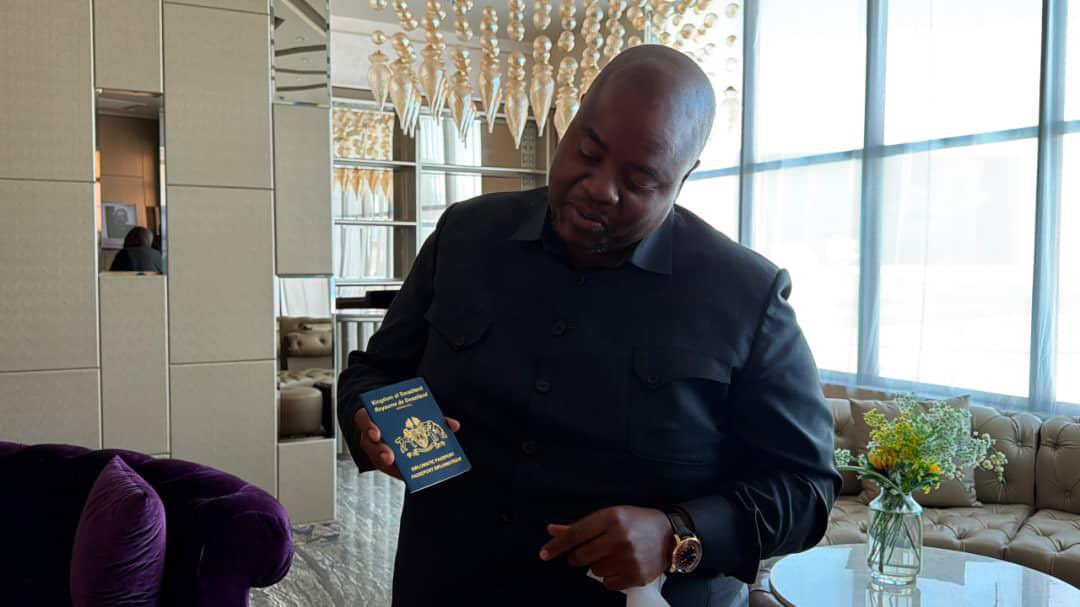
A South African court has frozen his accounts and grounded his jet. A Financial Intelligence Centre report traced over R800 million into his personal companies. Three governments have made him a citizen, and one has handed him a diplomatic passport. Now an activist’s tweet has accused him of something larger still and the gap between what is proven and what is alleged is itself the story.
On June 21, 2026, activist and presidential aspirant Boniface Mwangi posted on X that Zimbabwean businessman Wicknell Chivayo is helping President William Ruto move gold smuggled out of Sudan through Dubai, and that Chivayo’s private jet is being used to fly stolen Kenyan money, converted into dollars, out of the country.
It is an explosive claim, made by a prominent public figure with a real platform, about a sitting head of state and a man who dines at his table. It is also, as of this writing, unaccompanied by any flight manifest, customs record, financial trail, or named source a fact Mwangi has not disputed.
That single sentence has the power to dominate a news cycle, and it should be reported as exactly what it is: a serious public allegation from a serious public figure, not an established fact.
But treating the Sudan-gold claim with the caution it requires does not mean looking away from what is established, because the documented Wicknell Chivayo file is, on its own terms, one of the most remarkable due-diligence failures in recent African governance and it deserves the same unflinching scrutiny Mwangi’s tweet has attracted, minus the parts that cannot yet be proven.
What Mwangi Actually Said and What He Did Not Show
Mwangi’s claim arrived days after Nairobi lawyer Donald B. Kipkorir publicly questioned why Ruto grants Chivayo what he called unimpeded access to State House, why the businessman can be filmed handing out cash at Jomo Kenyatta International Airport, and what that proximity does to Kenya’s institutional credibility.
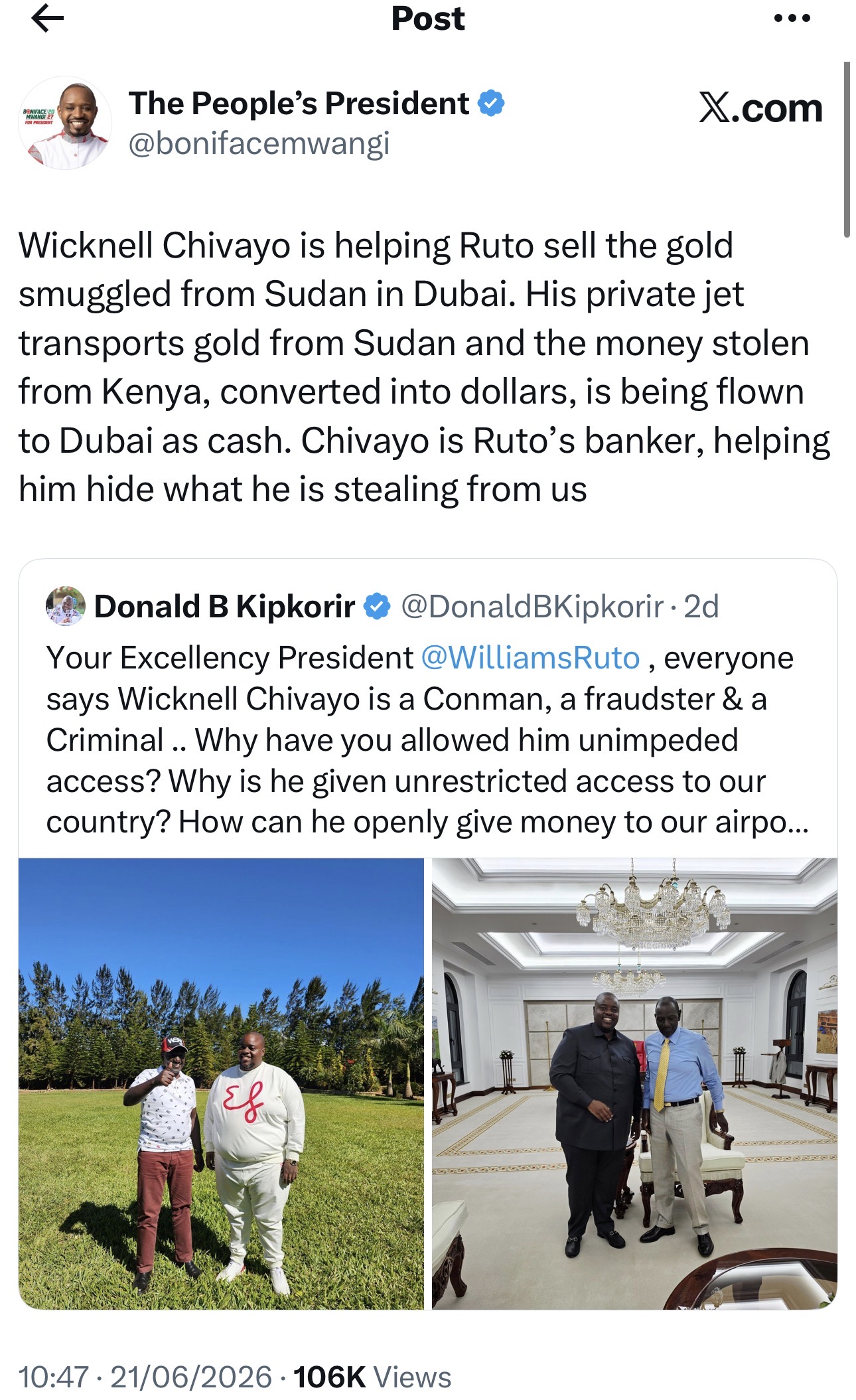
Screenshot
Kipkorir’s criticism, unlike Mwangi’s gold claim, tracks an established pattern of public commentary he has made repeatedly since the Adani Group’s original, later-cancelled JKIA concession he has used near-identical language, accusing the government of secrecy and “state capture,” each time a foreign businessman has been linked to the airport deal.
Mwangi’s own credibility on Chivayo is not in question it was Mwangi who first made public, by publishing a list of foreign nationals granted Kenyan citizenship, the disclosure that Chivayo had received a Kenyan passport in February 2026. That earlier revelation was a documented fact, later confirmed by multiple Kenyan outlets and never seriously disputed by the government.
The gold-smuggling claim is a different category of statement entirely: an allegation of an ongoing international crime, made without supporting documentation, against a head of state and a private citizen who holds no public office in Kenya. Kenyan and regional law on defamation, and the ordinary standards of investigative journalism, both demand that this distinction be preserved rather than blurred.
“Whenever he comes to Kenya, he arrives via Eldoret Airport. We must begin to ask, what is it that they do with William Ruto?” — Justin Muturi, former National Assembly Speaker
Former National Assembly Speaker Justin Muturi has separately raised his own questions about the Chivayo-Ruto relationship, displaying what he described as photographs of the businessman inside the President’s office and in meetings with regional leaders, and linking him to Zimbabwean President Emmerson Mnangagwa.
Muturi’s framing that Chivayo’s web of political relationships across the region shields him from accountability is, notably, an argument about access and impunity, not a specific allegation of gold smuggling. It is the more defensible version of the same underlying concern Mwangi has raised, and it is worth taking seriously precisely because it does not overreach.
The Paper Trail That Is Real: South Africa’s R800 Million Question
Strip away the unproven Sudan claim and the documented Chivayo record is still extraordinary. In 2004 he was convicted in South Africa of theft by false pretences in a foreign-currency scam. In Zimbabwe, his company Intratrek received a multimillion-dollar advance, reported at roughly $5.6 million, for the 100-megawatt Gwanda solar project a plant that saw minimal construction despite the disbursement, triggering fraud and money-laundering charges that were ultimately acquitted or allowed to lapse on procedural grounds.
The more consequential and far better-documented matter is the Zimbabwe Electoral Commission’s election-materials tender, routed through South African printing firm Ren-Form CC.
A Daily Maverick and Open Secrets investigation, corroborated by a leaked South African Financial Intelligence Centre report, found that Ren-Form received more than R1 billion from Zimbabwe’s Ministry of Finance for ballot papers, biometric voter-registration kits and other election materials between April 2023 and May 2024 at prices investigators flagged as grossly inflated, including a server invoiced at R23 million against a retail price of roughly R90,000, and portable toilets billed at nearly seven times their market cost.
The same FIC report concluded that more than R800 million of that money was subsequently transferred into bank accounts controlled by Chivayo and his companies, including Edenbreeze and Intratrek-linked entities, with a further R157 million paid directly to Edenbreeze by Zimbabwe’s Finance Ministry. Investigators flagged the rapid, round-figure movement of funds through multiple accounts as a possible money-laundering pattern known as layering, and referred the findings to South Africa’s police, tax authority and the FBI.
Zimbabwe’s Anti-Corruption Commission closed its own probe in December 2025, citing a lack of “contractual evidence” directly tying Chivayo to the ZEC deal a conclusion that drew sharp criticism from Zimbabwean commentators given the scale of the traced bank transfers.
What ZACC declined to pursue, a South African court did not.
On April 23, 2026, a Pretoria High Court order obtained in connection with Chivayo’s divorce proceedings from his estranged wife, Sonja Madzikanda froze his accounts at FNB, Absa and Standard Bank and directed the Airports Company of South Africa to restrict the movement of his aircraft, relying explicitly on the FIC’s Ren-Form findings as evidentiary grounding. It is, to date, the single most concrete legal consequence Chivayo has faced anywhere for the conduct South African regulators flagged.
The Kenya Chapter: Passport, State House, and a Contested Airport Deal
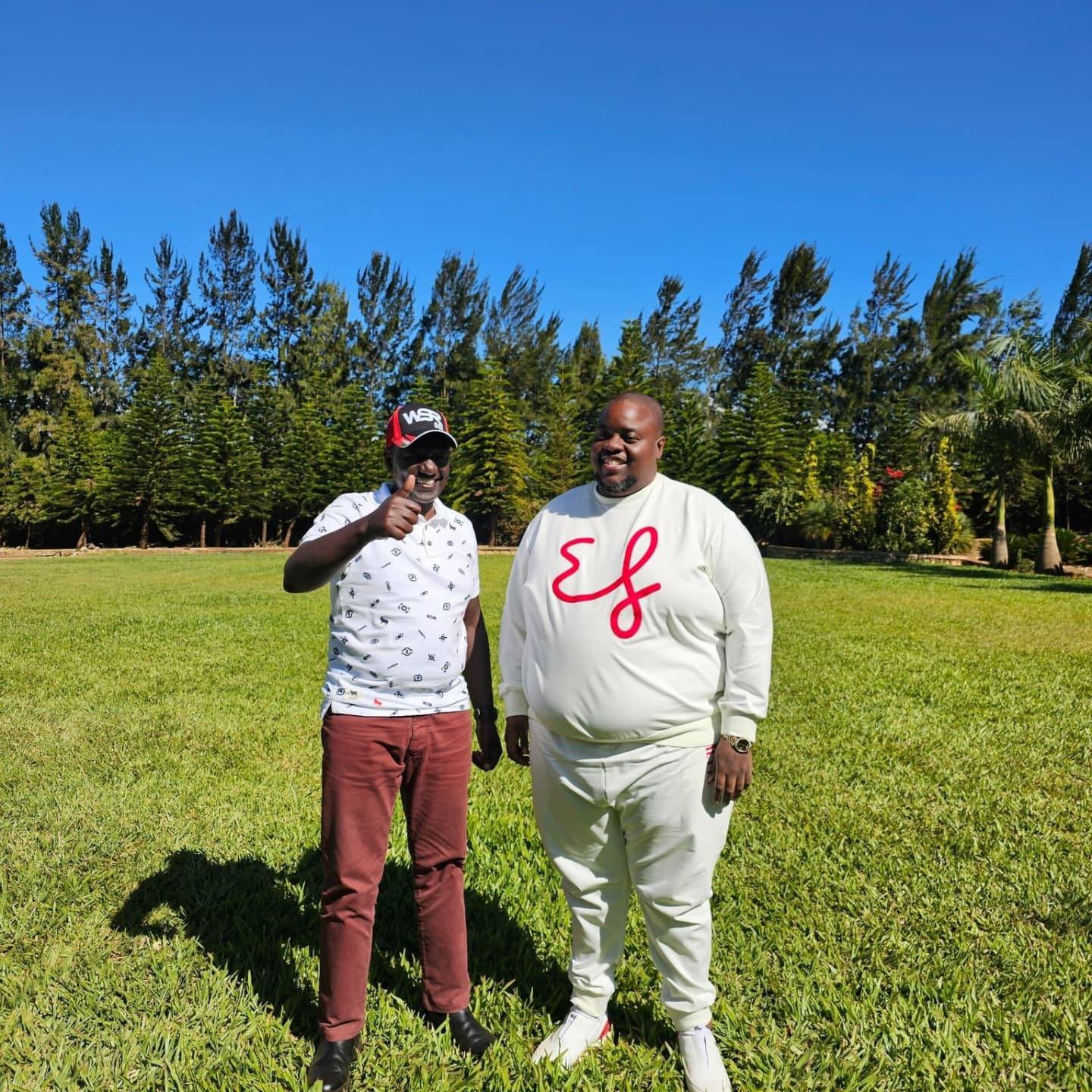
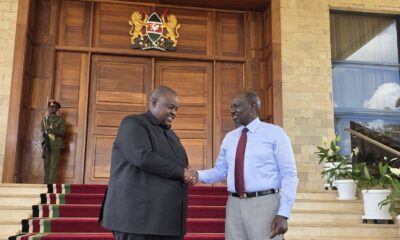
Zimbabwean entrepreneur and regional investor Wicknell Chivayo paid a distinguished courtesy call on President William Ruto.
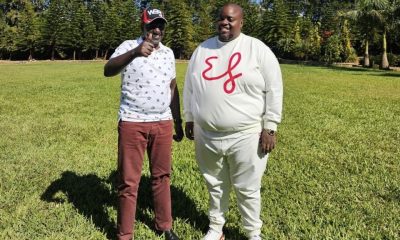
Chivayo’s relationship with Ruto has been built in plain sight, not in shadow which is itself part of what troubles his critics. He first publicly displayed the connection in January 2025, sharing photographs from the President’s Kilgoris residence and describing Ruto as a father figure whose guidance extends “into matters of faith and eternal destiny.” He met Ruto and Deputy President Kithure Kindiki at Sagana State Lodge in January 2026, and appeared again at the newly built Wajir State Lodge on June 1, 2026 a day after Madaraka Day where he disclosed he was in talks with the President over an unspecified multimillion-dollar investment.
The Kenyan passport, granted in February 2026, was the disclosure that first put Chivayo’s name into sustained Kenyan public debate, after Mwangi published it. Kenyan immigration authorities and State House have not explained what screening process, if any, accompanied the grant to a foreign national carrying an active South African financial-intelligence file and a documented Zimbabwean fraud conviction.
That question sharpened considerably in mid-June 2026, when ZimLive reporting subsequently confirmed by The Standard and other Kenyan outlets identified IMC Construction Kenya, a company reported to be wholly owned by Chivayo, as a joint-venture partner brought into the KSh375 billion ($2.9 billion) JKIA expansion contract alongside China Communications Construction Company and its subsidiary, China Road and Bridge Corporation.
The Consumers Federation of Kenya, which had already petitioned the High Court in an earlier case, HCCHR Petition No. E083 of 2026, seeking to bar Chivayo from Kenya entirely over his fraud and money-laundering record, filed a fresh constitutional petition seeking disclosure of the JKIA consortium’s full ownership and financing structure. The High Court certified the case urgent and directed the government to respond within seven days, with further directions scheduled for June 25.
Transport Cabinet Secretary Davis Chirchir moved quickly to contain the controversy, telling reporters on June 18 that the Chivayo-linked firm “is not among the contractors that submitted bids for the JKIA contract” and that the procurement process had followed all statutory requirements.
The denial was narrower than it first appeared: Chirchir addressed the formal bidder list but did not directly engage with ZimLive’s reporting, sourced to two people described as familiar with the transaction, that IMC Construction Kenya held a joint-venture arrangement with the winning consortium outside the formal bid documents. COFEK’s petition, notably, does not accuse Chivayo of wrongdoing in the JKIA matter itself it asks only that the government disclose who actually owns and controls the companies behind a national infrastructure asset, a far more modest and more easily defensible demand than Mwangi’s gold-smuggling claim, and one the courts may yet force the government to answer.
A Pattern Across Borders: Mnangagwa, Mswati, and the Passport Portfolio
Kenya is not an isolated case. Chivayo’s foundational relationship is with Zimbabwean President Emmerson Mnangagwa, built over years of public donations to ZANU-PF-aligned musicians and loyalists and a self-styled “Sir Wicknell” persona that signals regime favour. He has also been received, according to multiple regional reports, by Mozambican President Daniel Chapo, Nigerian President Bola Tinubu, Zambian President Hakainde Hichilema, Ugandan President Yoweri Museveni and Tanzanian President Samia Suluhu Hassan a continent-spanning portfolio of presidential access that no single business track record obviously justifies.
The most recent addition came on June 18, 2026, when King Mswati III of Eswatini granted Chivayo citizenship and a diplomatic passport following a private audience at the Royal Palace in Ezulwini, framed publicly around discussions of renewable energy and infrastructure investment. Chivayo described it on his verified Facebook page as the king accepting him as “a young, fellow African son.” Diplomatic passports are not standard instruments of commercial convenience; they are typically reserved for accredited officials and exist specifically to reduce border scrutiny.
Their issuance to a private businessman with an open South African money-laundering file, days after a Kenyan court case naming him in a $2.9 billion contract dispute, is the kind of detail due-diligence analysts would ordinarily treat as a serious red flag rather than a footnote to a goodwill visit.
Multiple passports and citizenships from multiple sovereigns are not, by themselves, evidence of any crime plenty of legitimate investors and dual nationals hold more than one. But stacked alongside an active asset-freeze order, a still-live South African Hawks investigation, and a fraud conviction that has never been overturned, the accumulating travel-document portfolio is a legitimate subject of scrutiny in its own right, independent of any claim about what it might be used for.
The Jet: What a Gulfstream G550 Can and Cannot Tell Us
Chivayo took delivery in early June 2026 of a Gulfstream G550, reportedly acquired for around $34 million, registered T7-WMC his own initials. The aircraft has an intercontinental range of roughly 12,500 kilometres, can carry up to nineteen passengers, and is capable of nonstop flights between most major African and Gulf cities. He flew it into Nairobi on June 15, 2026, to meet Ruto before the President’s departure for the G7 summit in France, and was filmed days later distributing cash to airport staff at JKIA before reboarding.
It is true, as a general matter, that owner-operated long-range business jets carry less mandatory cargo and passenger disclosure than scheduled commercial flights, and that this category of aircraft is structurally well suited to discreet movement of high-value, low-bulk goods. That is a documented vulnerability of private aviation as an industry, repeatedly flagged by financial-crime researchers studying conflict-gold and cash-smuggling networks generally. It is a different thing entirely to say that Chivayo’s specific aircraft has been used this way.
No flight manifest, customs seizure, regulatory filing or named source has placed the G550 on any Sudan-linked route, and this article does not allege that it has. What can be said is narrower and still significant: a businessman under an active foreign asset-freeze order and a live money-laundering investigation now controls a personal long-range aircraft and the routing discretion that comes with private ownership, at the same moment his access to two African heads of state and a monarch has visibly deepened. Whether regulators in any of the relevant jurisdictions have examined the aircraft’s flight logs is, as of publication, not publicly known and is a question this newsroom has put to Kenyan and Zimbabwean aviation authorities.
Sudan’s Gold, Dubai’s Vaults: A Documented Trade, an Undocumented Link
The broader phenomenon Mwangi’s tweet gestures toward is real and extensively documented by independent investigators it simply has not, to date, been connected to Chivayo by any named source or financial record.
Sudan’s Rapid Support Forces control significant artisanal gold-mining territory in Darfur and Kordofan, and watchdog organisations including The Sentry and Swissaid have traced large volumes of that gold through Chad, Libya, South Sudan, Egypt and other transit states into the United Arab Emirates, with Dubai functioning as the dominant refining and resale hub. Sudan’s central bank has reported that roughly 90 to 97 percent of the country’s official gold exports go to the UAE, and Swissaid’s research estimates the value of gold smuggled from RSF-controlled territory exceeded $850 million across 2024 and early 2025 alone.
The Sentry has separately documented a $24 million Dubai property portfolio linked to the family of RSF commander Mohamed Hamdan Dagalo, known as Hemedti, and to entities controlled by his sanctioned associates.
The UAE has consistently and publicly denied providing military or financial support to the RSF, and has pointed to a $500 million humanitarian pledge announced in February 2026. Human rights organisations have dismissed that pledge as inadequate relative to the scale of alleged harm.
The Financial Action Task Force placed the UAE on its grey list between 2022 and 2024 over gold-sector money-laundering vulnerabilities and is due to conduct a further review in 2026.
None of this regional reporting names Chivayo, his companies, or his aircraft. It establishes only that the corridor Mwangi alleges Chivayo is operating within conflict gold moving from Sudan through East African transit states into Dubai is a real and well-evidenced criminal economy, not a speculative one.
Whether any individual private businessman with East African aviation access has been recruited into that economy is precisely the kind of claim that requires the flight records, financial trails and named sources this article does not yet have, and Mwangi has not yet produced.
The Due-Diligence Questions That Remain Open
Set aside the unproven gold-smuggling allegation and the documented record still raises questions Kenyan and regional institutions have not answered. Why did Kenyan immigration authorities grant citizenship to a foreign national carrying an active South African financial-intelligence file and an unresolved fraud conviction, and what screening process, if any, was applied? What is the actual ownership and contractual relationship between IMC Construction Kenya and the CCCC-CRBC consortium awarded the JKIA expansion, given that the government’s June 18 denial addressed only the formal bidder list and not the joint-venture arrangement reported by multiple outlets? Why has Zimbabwe’s Anti-Corruption Commission been unable to reach the same conclusions a Pretoria High Court reached in April 2026 using the same underlying financial-intelligence data? And what, if any, source-of-funds due diligence accompanied a $34 million aircraft purchase by a businessman whose accounts a foreign court has since frozen?
These are not rhetorical questions designed to imply an answer. They are the specific, documentable gaps in oversight that COFEK’s court petition, Kipkorir’s public criticism, and Muturi’s pointed remarks about access all converge on and they are answerable, by the institutions with the power to compel disclosure, in a way that an activist’s social media post about gold smuggling, however serious, is not.
What This Story Is and Is Not
Boniface Mwangi has a credible track record of surfacing real, previously undisclosed information about Chivayo’s access to the Kenyan state the passport disclosure was accurate, consequential, and remains the foundation of nearly every subsequent line of scrutiny applied to this relationship.
That track record is precisely why his newest claim, about Sudanese gold and a sitting president’s banker, cannot simply be waved away, and equally why it cannot be reported as established fact on the strength of one social media post.
What is established, independently and on the documentary record, is enough on its own to warrant the kind of institutional scrutiny Kenya has so far declined to apply: a foreign businessman with a standing fraud conviction, a live South African money-laundering investigation, a frozen set of bank accounts, a $34 million private jet, citizenship and travel documents from at least three African states including one diplomatic passport, and privileged, repeated, photographed access to a sitting Kenyan president whose own government cannot yet give a straight answer about that businessman’s role in a $2.9 billion national infrastructure contract. That is not a smuggling conviction. It is, on the public record alone, more than enough to demand one of two things disclosure, or consequence.
Kenya Insights allows guest blogging, if you want to be published on Kenya’s most authoritative and accurate blog, have an expose, news TIPS, story angles, human interest stories, drop us an email on [email protected] or via Telegram





The Chivayo Network: How a Convicted Fraudster Won Access to Presidents, Passports and Billion-Dollar Deals Across Africa

BURRIED TWICE: The Victoria Bank CEO Yogesh Pattni Files

Court Stops Transfer Of EABL Shares To Asahi By Diageo In A Fresh Snag

Death Before Justice: Stephen Ngei, Victim of Sh180 Million Laptop Tender Scam Linked to Allan Chesang, Killed in Highway Crash

Court Brands Sh1.1 Billion Fee Demand by Lawyer Victor Swanya “Excessive and Exorbitant,” Exposes How City Hall Lets Public Money Bleed Through Legal Bills

Trump Unveils New Air Force One

MR. NO SHOW: Finance Bill 2026 Exposes Ndindi Nyoro’s Political Conmanship

Billionaire Eric Muli Rebukes Musalia Mudavadi Over Nairobi Capital Relocation Debate

Lawyer Cliff Ombeta Warns Against Taking Insurance Cover With Old Mutual: “Talk to Me Before You Do, Their Imara Cover Is a Fraud”

My Life Is In Danger: Investor Drops Bombshell Expose On Thomas Ogutu CEO VeGrid Ltd And Fugitive Nairobi CEC Charles Kerich – DCI Inaction And Corruption Network Exposed

Businessman Philip Waithaka Kinuthia’s Minor Son Allegedly Drove Drunk, Killed Two Peponi Students in Ngong Road Horror Crash as Claims of Cover-Up Intensify

Inside NCBA’s Decline: How a Banking Giant Lost Its Strategic Edge

Cement, Cash and Courts: How the Hashu Dynasty Crushed the Ramji Brothers for Fourteen Years and Why the Walls Are Now Closing In

Standard Chartered Ghosts Haunt Joshua Oigara At Stanbic As Whistleblower Spills Beans

South Sudan: Adut Salva Kiir’s Shadow Treasury Exposed

Inside The Urban Planning Cartel That Owns Nairobi

THE VULTURE AND THE SCHEME How Nairobi West Hospital Became the Most Dangerous Institution in Kenya’s SHA Ecosystem and Why the Books Must Be Audited Now

How Adil Popat Saved His Empire On The Eve Of Imperial Bank Collapse and Why Kenya’s Mainstream Media Buried The Story

Why John Ngumi Is Running From the EACC and Why the Sh415 Million Payday May Be the Least of His Worries

The President’s Daughter and The Missing Witness: How Adut Salva Kiir’s Shadow Treasury Silenced Its Most Dangerous Critic
-
 News1 week ago
Businessman Philip Waithaka Kinuthia’s Minor Son Allegedly Drove Drunk, Killed Two Peponi Students in Ngong Road Horror Crash as Claims of Cover-Up Intensify
-
 Business2 weeks ago
Inside NCBA’s Decline: How a Banking Giant Lost Its Strategic Edge
-
 Business2 weeks ago
Standard Chartered Ghosts Haunt Joshua Oigara At Stanbic As Whistleblower Spills Beans
-
 Africa1 week ago
South Sudan: Adut Salva Kiir’s Shadow Treasury Exposed
-
 Investigations3 days ago
THE VULTURE AND THE SCHEME How Nairobi West Hospital Became the Most Dangerous Institution in Kenya’s SHA Ecosystem and Why the Books Must Be Audited Now
-
 Business1 week ago
How Adil Popat Saved His Empire On The Eve Of Imperial Bank Collapse and Why Kenya’s Mainstream Media Buried The Story
-
 Business1 week ago
Why John Ngumi Is Running From the EACC and Why the Sh415 Million Payday May Be the Least of His Worries
-
 Africa2 weeks ago
The President’s Daughter and The Missing Witness: How Adut Salva Kiir’s Shadow Treasury Silenced Its Most Dangerous Critic