
Africa
The President’s Daughter and The Missing Witness: How Adut Salva Kiir’s Shadow Treasury Silenced Its Most Dangerous Critic
Athorbey Al-Gaddhaffy-Dit knew too much. The Kenyan-South Sudanese whistleblower who had spent months publicly exposing Crawford Capital’s brazen looting of South Sudan’s national revenues was snatched from the streets of Nairobi at 3 a.m. on June 10, 2026, bundled into a white vehicle by masked gunmen, and spirited across the border into a military intelligence facility in Juba. Sources from Lokichoggio to the South Sudanese capital name the same two people as the architects of his disappearance: Adut Salva Kiir Mayardit, the President’s eldest daughter and the alleged power behind Crawford Capital’s empire, and her close business associate Garang Mayom Kuoch.

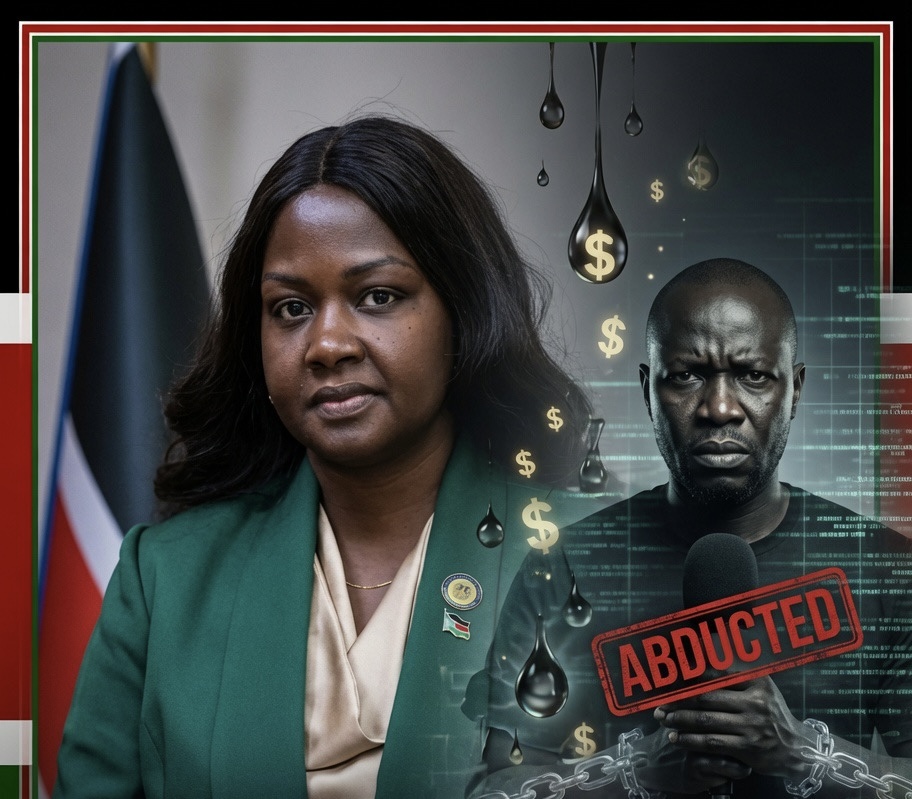
KEY INDIVIDUALS
Adut Salva Kiir Mayardit — Eldest daughter of President Salva Kiir Mayardit; Senior Presidential Envoy for Special Programmes since August 2025; alleged principal of Crawford Capital / CapitalPay network; named by Athorbey in his safety filings as the person to investigate should he be harmed.
Garang Mayom Kuoc Malek — CEO and Managing Director of Crawford Capital; holds approximately 68 percent of the company and 61.2 percent of CapitalPay; named alongside Adut in Athorbey’s safety filings.
Ariech Wol Mayar Ariec (Ariech Mayar Wol) — CFO and Chair of Crawford Capital / CapitalPay; alleged financier of the abduction operation.
Jeremy Gisemba — Kenyan businessman and significant shareholder in Crawford Capital and CapitalPay.
Akec Tong — Director General of the NSS Internal Security Bureau; allegedly issued the arrest warrant for Athorbey on fabricated espionage charges.
Brigadier General Rizik Dominic Samuel — Director General, National Communications Authority; named in the Crawford network chart.
James Wani Igga — Vice President of South Sudan; overruled Trade Minister Atong Kuol Manyang Juuk’s suspension of Crawford Capital operations in March 2026, directly protecting the network.
Athorbey Al-Gaddhaffy-Dit (Gadafi Athorbey Guet, ‘Daffi’) — Kenyan-South Sudanese whistleblower, businessman, and Crawford Capital exposé source; abducted from Nairobi on June 10, 2026 and transported to military intelligence detention in Juba; suffers underlying medical conditions.
THE SNATCHING
The last person to speak with Athorbey Gadafi Guet before his world went dark was his wife. She told Radio Tamazuj she last heard his voice at approximately 10:19 p.m. on Monday, June 8. By 3 a.m. on the Wednesday morning, when he had still not come home and his phone lines had gone dead, she knew the moment she had long dreaded had arrived.
According to a police report filed at Kilimani Police Station and seen by AFP, Athorbey had left Lucky 8 Casino near Yaya Centre in Nairobi’s upmarket Kilimani district and boarded a Bolt ride arranged by casino staff. What happened next took no more than minutes. A white pickup carrying masked, armed men blocked his vehicle, overpowered him at gunpoint and bundled him inside. His wife, tracing his phone’s last signal to a hospital on Kiambu Road and finding nothing, received a call from a relative who had seen the police report. Her husband was gone.
Amnesty International Kenya moved with unusual speed, issuing a statement within hours expressing grave concern and naming what it believed was happening: an enforced disappearance. The rights organisation said it believed Athorbey was being held at Jomo Kenyatta International Airport awaiting deportation to South Sudan and described the incident as bearing the hallmarks of a grave violation of both Kenyan and international law.
“If Mr Gaddhaffy-Dit is suspected of any offence, the only lawful course of action is to proceed through Kenya’s justice system, not through abduction, incommunicado detention, and deportation.” — Amnesty International Kenya
The deportation feared by Amnesty swiftly materialised. Sources in the border towns of Lokichoggio and Nadapal confirmed that Athorbey was driven across the Kenyan frontier and transported toward Juba, where he arrived at a military intelligence detention facility. He is now reportedly held on fabricated espionage charges, the arrest warrant allegedly issued by Akec Tong, Director General of the National Security Service’s Internal Security Bureau. He is accused, in the darkly ironic language of authoritarian retribution, of leaking information about Crawford Capital.
As for who gave the order: multiple sources with direct knowledge of the operation have identified Adut Salva Kiir Mayardit and Garang Mayom Kuoch as the principals behind the abduction. The operation is said to have been financed by Ariech Wol Mayar Ariec, who serves as CFO and Chair of Crawford and CapitalPay, and by elements within the National Communications Authority leadership.
Athorbey had anticipated this. Before he disappeared, he filed statements at multiple Nairobi police stations warning that if he were harmed, abducted, or killed, investigators should examine links to Adut Salva Kiir and Garang Mayom Kuoch. Those statements are now evidence of something far worse than he hoped they would ever be used for.
Athorbey Al-Gaddhaffy-Dit, also styled Gadafi Athorbey Guet or ‘Daffi’, holds dual Kenyan-South Sudanese citizenship. His abduction therefore also constitutes a violation of Kenyan sovereignty and a failure of Kenya’s duty to protect its own citizens. Relatives confirm he has underlying medical conditions requiring regular attention; the conditions in military intelligence facilities in South Sudan are not compatible with adequate care.
THE MACHINE HE EXPOSED: CRAWFORD CAPITAL’S ARCHITECTURE OF PLUNDER
To understand why a man was snatched from the streets of Nairobi in the dead of night, you must first understand what he knew. And what Athorbey Al-Gaddhaffy-Dit knew about Crawford Capital Ltd. was enough to embarrass a president, implicate a president’s daughter, and help trigger sanctions from the world’s most powerful nation.
Crawford Capital Ltd. is registered in the United Kingdom, a corporate detail that has allowed it to present itself as a legitimate fintech company while functioning as something altogether different: a private tax collection bureau operated primarily for the benefit of South Sudan’s ruling elite. Its operational arm, CapitalPay, controls the country’s entire e-government service delivery infrastructure, the electronic gateway through which businesses must pass for e-visas, trade permits, customs clearances, and crucially the Electronic Crude Oil Accreditation Permit, the ECOAP system through which every single barrel of South Sudanese crude oil exported must be cleared.
Crawford secured its stranglehold through a November 2019 no-bid contract with the Ministry of Information, Communication Technology and Postal Services, signed under Minister Thomas Tut Lam. The terms of that contract, reviewed by the United Nations Commission on Human Rights in South Sudan and reported on extensively by Radio Tamazuj and other investigators, are staggering in their audacity. Under the arrangement, Crawford retains 75 percent of all revenues collected through its platforms. The South Sudanese government, the owner of the taxes being collected and the supposed custodian of the public interest, receives 25 cents for every shilling that should flow to its treasury.
The UN Commission’s September 2025 report, titled Plundering a Nation: How Rampant Corruption Unleashed a Human Rights Crisis in South Sudan, described profit splits of this nature as unjustifiable and indicative of abuse of public office. The more precise word is robbery. Banks were reportedly directed to route non-oil revenues into accounts controlled by Crawford rather than official treasury channels, severing the public money supply from the public good entirely.
The crude oil levy alone illustrates the scale of the haemorrhage. Every cargo of South Sudanese crude requires ECOAP clearance, with a 0.03 percent levy on cargo values flowing directly to CapitalPay. Single shipments have generated fees of between 146,000 and 166,000 US dollars. South Sudan exported 22 cargoes of Dar and Nile blend crude oil between January and October 2025 alone. The financial accumulation for Crawford and its principals over the years of the contract is, as the UN Commission noted, enormous.
The humanitarian cost of this arrangement is not abstract. Between 2020 and 2024, less than 48 percent of collected non-oil revenues reached core government services. Health received under 0.9 percent of the national budget on average. Education received approximately 2.3 percent. In a country where, despite receiving more than 25 billion US dollars in oil-related inflows since independence in 2011, more than half the population faces acute food insecurity and four million citizens have been displaced, the Crawford arrangement was not merely corrupt. According to the UN Commission’s own framing, it was a direct driver of the human rights catastrophe gripping the country.
“Crawford’s e-Services, implemented through Crawford Capital Ltd., have facilitated organised corruption and predation, resulting in further revenue diversion.” — UN Commission on Human Rights in South Sudan, September 2025
In 2024, Crawford’s reach extended even further into the humanitarian sector. The company extended an unlawful fuel import levy onto tax-exempt humanitarian organisations, including organisations supplying critical food aid operations. The UN Commission documented how this move contributed to the suspension of World Food Programme distributions at a moment when tens of millions of South Sudanese were already facing acute starvation. A company capturing 75 percent of national revenues was not content with that bounty; it reached into the lifeline supplies keeping children alive and took a cut from those too.
The 2022 Ebola and COVID preparedness project deepened the pattern. A 10 million dollar advance disbursed for pandemic response was never fully accounted for, illustrating how the Crawford network used every crisis, digital, fiscal, or public health, as another opportunity for financial extraction.
ADUT AT THE APEX: THE SHADOW TREASURY AND ITS ARCHITECT
The formal ownership structure of Crawford Capital lists Garang Mayom Kuoc Malek as holding approximately 68 percent of the company and 61.2 percent of CapitalPay, with Kenyan businessman Jeremy Gisemba holding a significant stake alongside him. Ariech Mayar Wol serves as CFO and Chair. Ruey Majok Guandong, the other co-founder, rounds out the disclosed principals. On paper, this is a private fintech company with South Sudanese and Kenyan shareholders, no more and no less.
But accountability researchers circulating an organisational chart titled The Crawford/CapitalPay Looting Squad have placed a different face at the very top. That face belongs to Adut Salva Kiir Mayardit, the eldest daughter of President Salva Kiir and the woman currently serving as Senior Presidential Envoy for Special Programmes. Africa Confidential, the authoritative intelligence outlet reporting on the continent since 1960, described Crawford’s network as her shadow treasury. The description has proven durable because every piece of subsequent investigation has reinforced it.
The connection between Adut and Crawford runs deeper than a simple accusation. Garang Mayom Kuoc Malek and Ruey Majok Guandong, Crawford’s co-founders, have a documented history of forming companies with politically connected individuals. Notably, radio Tamazuj’s investigation revealed that the same Malek and Guandong previously formed a company together with Mayar Salva Kiir, the President’s son, through a vehicle called Air Afrik Aviation Limited in 2013. The Kiir family’s commercial entanglement with these same founders predates Crawford by years.
Syracuse University professor Jok Madut Jok, one of South Sudan’s most respected scholars, told Radio Tamazuj in an interview published this week that Adut’s position as Presidential Envoy for Special Programmes operates without any clear constitutional basis, mandate, or limits of authority. She has effectively created a power centre outside all formal institutions, answerable to no one but her father, and wielding influence over the economic architecture of the state.
The succession dimension is the most alarming element of this picture. Sources cited by Radio Tamazuj indicate that Adut is actively being discussed in political circles as a candidate for Vice President in place of James Wani Igga, and possibly as First Deputy Chair of the ruling Sudan People’s Liberation Movement, a positioning that would place her directly on the trajectory to inherit power from her ailing father. Those within her networks, Professor Jok told Tamazuj, have heard her express precisely these ambitions.
The Crisis Group, in a March 2026 briefing, confirmed how Kiir has dramatically concentrated power within his family as his health has deteriorated and his circle of trust has shrunk. In October 2024, Kiir dismissed his long-serving intelligence chief, General Akol Koor Kuc. He then removed long-time Vice President James Wani Igga, briefly elevated business associate Benjamin Bol Mel, and later reversed that decision. In August 2025, with his succession options narrowing and his family loyalties sharpening, he appointed Adut to the senior envoy role. The consolidation of the Crawford revenue machine and the consolidation of Adut’s political ambitions are not separate stories. They are one story.
BACKGROUND: Adut Salva Kiir Mayardit is the eldest child of President Salva Kiir Mayardit and First Lady Mary Ayen Mayardit. She is also known as the founder and chairperson of the Adut Salva Kiir Foundation (ASK), a nominally philanthropic vehicle through which she has cultivated a public profile. She assumed the Presidential Envoy role on August 21, 2025.
THE PROTECTED COMPANY: HOW CRAWFORD SURVIVED EVERY CHALLENGE
That Crawford Capital has survived multiple attempts to scrutinise or suspend its operations is not an accident. It is the direct result of presidential family protection deployed at every level of government.
The most dramatic episode unfolded in March 2026. Trade and Industry Minister Atong Kuol Manyang Juuk issued a formal directive on March 5 halting Crawford’s operations pending a 90-day review. It was a courageous move, and it lasted less than 24 hours in effective terms. Vice President James Wani Igga, writing to the minister, told her that her unilateral decision violated the principle of administrative order and the rule of law. Igga invoked the authority of the Council of Ministers, citing Resolution 34/2024 as formal cabinet endorsement of the Crawford contract, a resolution presided over by the President himself. The suspension was overturned. Crawford continued operating.
The parliamentary route fared no better. A parliamentary committee moved to support the minister’s position, only to find itself outmanoeuvred by the same mechanisms of executive protection. Crawford’s contract, its ownership, its revenue arrangements, and its political patrons have never been subjected to parliamentary oversight, competitive bidding processes, or published contractual frameworks. The government’s own South Sudan Revenue Authority has been accused by the UN Commission of complicity in the arrangements.
Then came Washington. On May 12, 2026, the United States State Department imposed sanctions on Crawford Capital Ltd., naming it as a corrupt entity that had siphoned money from South Sudan’s treasury and stolen foreign assistance funds intended to support the South Sudanese people. Visa restrictions were simultaneously applied to associated officials. For a company that had draped itself in the veneer of UK corporate respectability, US sanctions were a catastrophic reputational blow.
Juba’s response was immediate and furious. At least four government ministries and the national revenue authority issued defensive statements within a day. The regime argued that Crawford was a legitimate digital services provider delivering government modernisation. It pointed to the company’s formal contract. It said the UN Commission’s findings were intended to disparage the South Sudanese people. What it could not explain was why a supposedly legitimate government technology contractor needed to keep 75 percent of the nation’s taxes.
SILENCING THE WITNESSES: A PATTERN OF TRANSNATIONAL REPRESSION
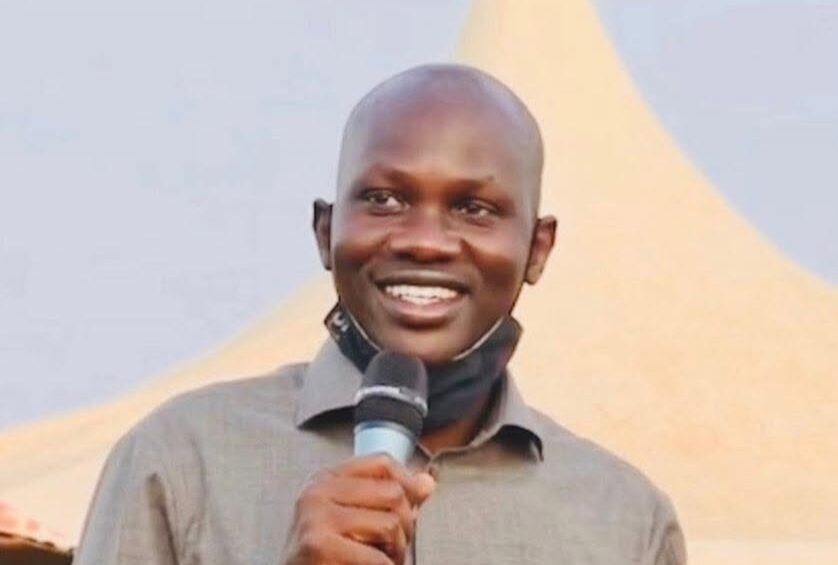
Athorbey Al-Gaddhaffy-Dit
The abduction of Athorbey Al-Gaddhaffy-Dit did not emerge from nowhere. It is the most extreme expression of a pattern that sources inside the Crawford network and inside Juba’s political circles have been documenting for months.
As international scrutiny of Crawford intensified following the US sanctions and the global circulation of the Looting Squad organogram, Adut Salva Kiir allegedly turned her coercive apparatus inward. Multiple sources have described her ordering the arrest of business associates and employees suspected of leaking sensitive information about her financial empire. She has reportedly used government mechanisms to file criminal cases against individuals outside South Sudan who possess knowledge of her financial dealings, designating them enemies of the state engaged in espionage. Athorbey was not the first person in her network to face these threats. He was simply the one foolish enough, or brave enough, to go public.
What made Athorbey a uniquely dangerous target was the specificity and credibility of his knowledge. A Kenyan-South Sudanese citizen with direct familiarity with the inner workings of the Crawford structure, he had been circulating information about the company’s ownership network, revenue arrangements, and political connections. His materials, passed to investigative outlets and international accountability bodies, contributed to the evidentiary foundation that eventually informed UN reports and US sanctions decisions. He knew exactly how the money flowed, who benefited, and which officials had signed what. That knowledge, in Juba’s calculus, made him not merely an inconvenience but an existential threat.
His preemptive police filings in Nairobi, explicitly naming Adut and Garang Mayom Kuoch as the people to investigate if he came to harm, were a calculated attempt to create a deterrent. He understood what he was dealing with. The deterrent failed. The abduction was authorised anyway.
The message sent to the wider network around Crawford is now impossible to misread. If you worked for Adut, if you had access to documents, if you spoke to journalists or international investigators, you are now being watched and potentially targeted. Sources within the network who spoke to this publication did so only under strict conditions of anonymity, describing an atmosphere of intense fear.
“Eventually, just like those who worked for her father, you may end up exiled, disappeared, dead, or jailed.” — Warning circulated in South Sudanese opposition networks, June 2026
Athorbey is also not the only person believed to have been taken from Kenya in connection with the Crawford investigation, according to sources at the Kenyan border. The full scope of this transnational repression operation remains unclear, and Kenyan investigative and immigration authorities have yet to offer any public accounting of what they knew, when they knew it, and what role, if any, their personnel played in facilitating or ignoring the removal of a Kenyan citizen from Kenyan soil.
KENYA’S COMPLICITY PROBLEM
Kenya’s record on the forced removal of South Sudanese nationals has not been clean, and the international community has not forgotten. The deaths of South Sudanese figures previously transferred from Kenya to Juba under murky circumstances, cases that civil society organisations have cited in their condemnations of the current abduction, loom over the Kenyan government’s response to the Athorbey case.
Amnesty International Kenya, in its June 10 statement, was blunt: Athorbey Al-Gaddhaffy-Dit holds Kenyan citizenship. Abducting a Kenyan citizen at gunpoint in the capital, holding him at JKIA, and transferring him to a foreign intelligence facility on fabricated charges is not a matter for diplomatic discretion. It is a violation of Kenyan law, Kenyan sovereignty, and Kenya’s obligations under the 1951 Refugee Convention and the 1969 OAU Convention, both of which prohibit refoulement to persecution.
Kenya has spent years cultivating its reputation as a regional hub for international organisations, diplomatic missions, and civil society bodies precisely because of its nominal commitment to the rule of law. Every time Nairobi allows a foreign government to conduct an enforced disappearance on Kenyan soil, that reputation corrodes further. Kenya’s silence in the initial hours and days following Athorbey’s abduction has been conspicuous and damaging.
It is tempting, when writing about companies and contracts and revenue splits, to lose sight of what those numbers mean on the ground in South Sudan. The UN Commission’s data does not permit that abstraction.
Since independence in 2011, South Sudan has received more than 25 billion US dollars in oil-related inflows. It has consistently ranked at or near the bottom of every global human development index. More than half its population faces acute food insecurity. The health system has functionally collapsed. Education spending has averaged around 2.3 percent of the budget in the years of Crawford’s operation. The President’s personal medical budget, the UN Commission found, exceeded the government’s total expenditure on public health.
Crawford Capital did not single-handedly create this catastrophe. The catastrophe has been decades in the making, built from civil war, elite predation, ethnic violence, and international indifference. But as the UN Commission concluded, Crawford became one of its most efficient instruments in the digital era. Every percentage point captured by the 75/25 split was a percentage point that did not reach a hospital in Juba, a school in Jonglei, a food distribution in Upper Nile.
The 10 million dollars advanced for Ebola and COVID preparedness in 2022, which disappeared without full accounting, represents roughly the same amount that the government spent on health for hundreds of thousands of South Sudanese in an entire quarter. The fuel levy extended to humanitarian agencies in 2024, the one that contributed to WFP distribution suspensions, placed a financial toll on the organisations trying to prevent mass starvation in a country where 70 percent of the population already required humanitarian assistance.
This is what Athorbey Al-Gaddhaffy-Dit was exposing. Not an abstract financial scandal. A machine that had been eating the South Sudanese state alive from the inside for seven years, protected at every turn by the President’s daughter, her business associates, and the coercive apparatus of a regime that has never hesitated to use violence against its critics.
THE RECKONING THAT CANNOT BE STOPPED
Adut Salva Kiir’s response to international exposure has been to escalate. Arrests. Threats. Disappearances. The seizure of a Kenyan citizen from a Nairobi street at 3 a.m. by masked operatives. Each escalation has produced not silence but the opposite: more coverage, more investigations, more international attention, more sanctions. The regime’s desperation is visible in the crudeness of its methods.
Major international news organisations are now actively investigating Crawford’s contracts, ownership structures, and the human cost of the 75/25 arrangement. Africa Confidential, Radio Tamazuj, the Global Trade Review, AFP, and accountability networks from New York to London are all on this story. The UN Commission has issued 54 detailed recommendations to the South Sudanese government. The United States has landed direct financial sanctions on the revenue machine that has been shielding the presidential family. And now the abduction of a whistleblower who explicitly named Adut and Garang Mayom Kuoch in his safety filings has confirmed, in the starkest possible terms, what the accountability community has been arguing for years: this network will not stop until someone forces it to.
The Kenyan government must act. It has an obligation to demand Athorbey’s immediate and unconditional release, to investigate how a Kenyan citizen was removed from Kenyan territory without judicial process, and to hold accountable any Kenyan officials who facilitated or ignored the operation. Failure to do so is not neutrality. It is complicity.
The United Kingdom, as the jurisdiction in which Crawford Capital Ltd. is registered and where its corporate existence is maintained, has accountability obligations of its own. UK financial crime investigators have the authority to examine the flow of funds through a UK-registered entity subject to US sanctions. The question of how a company collecting national revenues in South Sudan, retaining three quarters of those revenues for itself, and protecting that arrangement through the abduction of witnesses, maintains its UK registration in good standing is one that Companies House and the Financial Conduct Authority should be asking loudly and publicly.
As for Crawford Capital itself, the game is over. The organogram is public. The ownership is documented. The UN Commission report is on the record. The US sanctions are in force. The arrest of Athorbey Al-Gaddhaffy-Dit, far from burying the story, has guaranteed that Crawford Capital’s name will now appear in every future UN Security Council debate on South Sudan, in every future US foreign policy review of the region, and in every future accountability audit of revenue diversion in fragile states.
Adut Salva Kiir believed she could build a shadow treasury beneath the ruins of her father’s government, capture the digital arteries of a broken state, and silence anyone who noticed. She has instead created the most thoroughly documented corruption scandal in South Sudan’s history, triggered the most significant US unilateral action against Juba’s ruling elite in years, and ensured that the name Crawford Capital will follow her, and her father’s legacy, into every historical account of how South Sudan failed its people.
Athorbey Al-Gaddhaffy-Dit must be released immediately. His medical conditions are known. His captors are named. The world is watching.
The South Sudanese people have paid for this empire with their hunger, their displacement, their children’s future, and now with the disappearance of one of the men brave enough to document what was being done to them. The reckoning is not coming. It is already here.
— — —
Kenya Insights allows guest blogging, if you want to be published on Kenya’s most authoritative and accurate blog, have an expose, news TIPS, story angles, human interest stories, drop us an email on [email protected] or via Telegram









The President’s Daughter and The Missing Witness: How Adut Salva Kiir’s Shadow Treasury Silenced Its Most Dangerous Critic

Kisii Under Siege: Governor Arati’s Wife Accused of Hijacking IFMIS and Running a Parallel Government

Al-Shabaab Issues Statement Defending Omar Artan, Accuses U.S. of Discrimination After Referee’s Deportation

Netanyahu To Run For Re-Election, His Party Says, After Trump Raises Doubts

US Cracks Down on Birth Tourism Schemes

Microsoft Limits Employee Use Of Anthropic’s Claude Fable 5 Over Data Retention Concerns, The Verge Reports

Standard Chartered Ghosts Haunt Joshua Oigara At Stanbic As Whistleblower Spills Beans

Caleb Amisi Says Linda Mwananchi Has Lost Direction, Announces Plans To Form A New Movement

Air Canada Pilot Flew Passengers For Years With A Fake Pilot’s License, Police Say

Itumbi Claims Kalonzo Has Settled on Sifuna as Running Mate

Cement, Cash and Courts: How the Hashu Dynasty Crushed the Ramji Brothers for Fourteen Years and Why the Walls Are Now Closing In

Inside The Urban Planning Cartel That Owns Nairobi

Why Ruto’s Favourite Candidate Adan Mohammed Could Be Locked Out of the KRA Top Job

LifeCare on the Brink: SHA Fraud, Stolen Wages, and the Rotten Empire Jayesh Saini Built

Este Medical Kenya Fights American’s Explosive Complaints

Betika Faces DCI Probe, Directors Arrest and License Revocation Over Massive 29.5 Million Safaricom Customers’ Data Breach

The Rot Inside Absa: How Bank Insiders Are Looting Nairobi’s Customers

Inside FAFSA Fraud: How Kenyan Cybercriminals Siphoned Millions from America’s Sh12 Billion Student Loan System

Fresh Move Launched to Remove Kenya Railways MD Mainga From Office After Awarding Sh817 Million Consultancy Contract

Court Confirms Safaricom Customers Data Was Sold To Betting Companies In Seven-Year Cover-Up
-
 Investigations6 days ago
Cement, Cash and Courts: How the Hashu Dynasty Crushed the Ramji Brothers for Fourteen Years and Why the Walls Are Now Closing In
-
 Investigations5 days ago
Inside The Urban Planning Cartel That Owns Nairobi
-
 Investigations1 week ago
Betika Faces DCI Probe, Directors Arrest and License Revocation Over Massive 29.5 Million Safaricom Customers’ Data Breach
-
 Investigations6 days ago
Fresh Move Launched to Remove Kenya Railways MD Mainga From Office After Awarding Sh817 Million Consultancy Contract
-
 News2 weeks ago
Eight Students Arrested In Kenya After Suspected Deadly School Arson Attack
-
 News2 weeks ago
How Uhuru’s Deal With Obama In 2015 Paved Way For America’s Ebola Plan In Kenya
-
 Business1 week ago
TRUST BETRAYED: How Senior DTB Bank Insiders Allegedly Looted Sh149 Million From a Customer’s Account Over Five Years
-
 Investigations5 days ago
Why Drivers Cheered Bolt’s Reported Exit: Inside the Slow Financial Strangulation of Thousands of Kenyan Drivers and Riders in Kenya