
News
Court Upholds Gachagua Impeachment, Awards Him Sh50M In Constitutional Damages To Be Paid By Senate
Three-judge bench finds Senate violated Gachagua’s right to fair hearing but refuses to overturn his removal, invoking constitutional finality clause to preserve Kindiki’s tenure and ward off a crisis of dual incumbency

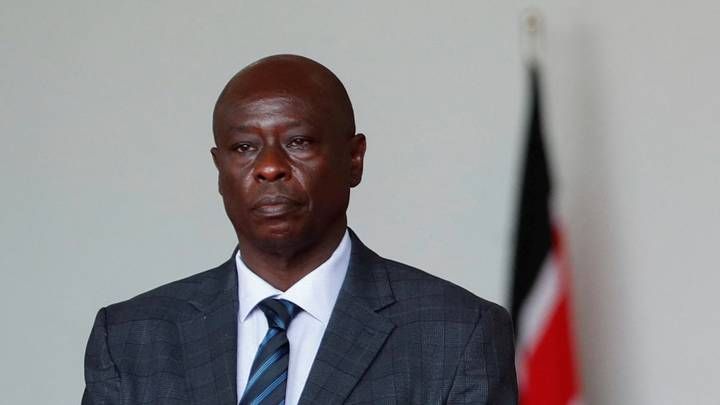
In a ruling that will reverberate across Kenya’s constitutional landscape for years to come, the High Court on Monday delivered a verdict as contradictory as the political theatre that spawned it: Rigathi Gachagua’s impeachment stands, his removal from the office of Deputy President is permanent and lawful, yet the Senate that tried and convicted him has been ordered to pay him Sh50 million for violating his constitutional rights in the very process it used to throw him out.
The three-judge bench of Justices Eric Ogola, Anthony Mrima and Fridah Mugambi dismissed consolidated petitions in which Gachagua had challenged his October 2024 impeachment, ruling that both the National Assembly and the Senate had acted within the bounds of the Constitution and that the public participation process had satisfied the requisite constitutional threshold. The court declined, entirely, to interrogate whether the charges against Gachagua were meritorious, holding that the question of whether he deserved to be removed is one reserved exclusively for Parliament and is non-justiciable.
What the court did not let go of was the Senate’s treatment of Gachagua during the trial itself. Delivering the bench’s finding on the right to a fair hearing, Justice Mugambi drew a sharp and damning distinction between a litigant who is heard and then outvoted, and one who is actively prevented from completing his defence. Gachagua, she held, was the latter. The Senate’s refusal to grant an adjournment he had sought during proceedings amounted to a violation of Article 50 of the Constitution, a provision so fundamental that it is listed among the non-derogable rights under Article 25, rights that cannot be suspended even during a state of emergency.
“This is not a case of a party who was heard and then outvoted. It was a case of a party who was prevented from completing his hearing.” Justice Fridah Mugambi
The violation was real. The remedy, however, stopped far short of what Gachagua had hoped for. The court ruled that acknowledging the breach warranted constitutional compensation but could not, and would not, unwind the impeachment itself. The bench anchored this position on two pillars: the finality clause in Article 145(7) of the Constitution and the practical constitutional absurdity of reinstating Gachagua when his successor, Kithure Kindiki, had already been lawfully nominated, approved and sworn in. To nullify the impeachment at this stage, the judges reasoned, would produce the constitutionally intolerable prospect of two sitting Deputy Presidents, an outcome the Constitution could not conceivably be taken to have contemplated.
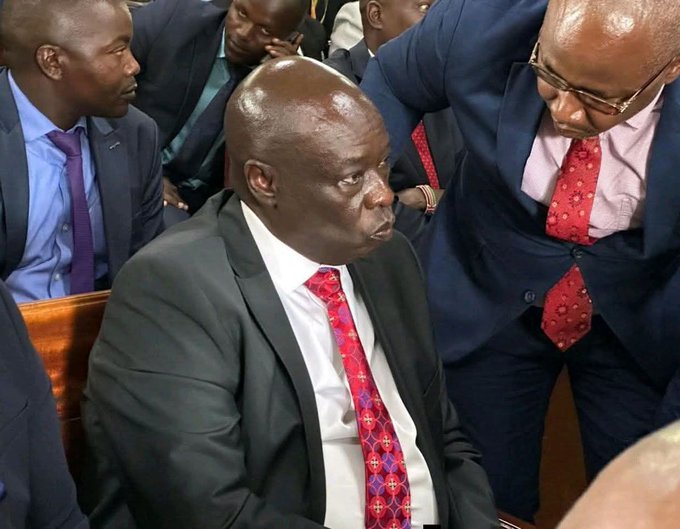
Gachagua during an appearance in court.
Sh50 Million: A Constitutional Rebuke That Leaves Gachagua on the Outside
The court awarded Gachagua constitutional damages of Sh50 million, payable by the Senate, framing the sum not merely as compensation but as a deterrent signal to Parliament that future impeachment proceedings must scrupulously observe due process. The award is intended, the bench stated, to vindicate the Constitution, restore the dignity of the affected party and serve notice that procedural violations in high-stakes parliamentary hearings carry a legal price.
It is a remarkable outcome. The Senate tried Gachagua, denied him an adjournment he was entitled to, upheld his impeachment, and has now been ordered by a court to reach into public coffers and pay the man it convicted. The Sh50 million will not buy back the office. It will not restore the motorcade, the security detail or the ceremonial title. But it places on record, in black judicial ink, that Kenya’s upper house conducted a constitutionally flawed trial and that its refusal to grant Gachagua breathing room during proceedings was not merely a procedural oversight but a breach of a fundamental right.
“The award is intended as a constitutional remedy to vindicate the Constitution, restore the dignity of the affected party and serve as a deterrent against future violations of similar nature in parliamentary proceedings.”
On Bias and Predetermination: The Court Was Unsparing
Gachagua’s legal team had argued strenuously that the impeachment was a coordinated scheme, that the Speaker and members of both houses had predetermined the outcome and that political bias had corrupted the proceedings from the outset. Justice Ogola, delivering the bench’s findings on this issue, was dismissive of the claims in terms that left little ambiguity about the evidentiary threshold the petitioners had failed to meet.
The allegations of bias, predetermination and conflict of interest advanced against the Speakers, members of Parliament and senators, Ogola held, amounted to nothing more than bare and unsubstantiated assertions grounded in political inference and suspicion rather than objective evidence. The mere fact that legislators had supported or opposed the impeachment was not, standing alone, capable of establishing constitutional bias. Impeachment, the court noted, is an inherently political-constitutional process. Lawmakers are not expected to approach it as blank slates devoid of political opinion. What the Constitution demands is not the absence of political inclination but a genuine openness to considering the evidence and discharging constitutional responsibilities in good faith.
The court further confirmed its own jurisdiction in unambiguous terms, holding that impeachment proceedings are justiciable and subject to judicial scrutiny wherever constitutional violations are alleged. The separation of powers, Justice Ogola stated, does not mean separation from the Constitution. Courts may not substitute Parliament’s political judgment with their own assessment of the gravity of charges, but they can and must police the process for constitutional compliance.
Public Participation: The Door Was Opened Widely
One of the more contested fronts in the litigation was the adequacy of the public participation process conducted by the National Assembly before the impeachment vote. Gachagua had argued that the exercise was a choreographed facade, that logistics had failed in material ways across the country and that his own response to the charges had not been made publicly available during the participation window, rendering the process defective.
The court found otherwise. The bench acknowledged that logistical and operational challenges will inevitably arise in any large-scale, nationally coordinated exercise conducted under time pressure. Such localised deficiencies, it held, do not invalidate an otherwise lawful process. The evidence showed that the process was conducted openly and in good faith. The fact that Gachagua’s response to the charges was not circulated to the public during the participation window did not render the exercise constitutionally deficient because public participation in an impeachment process is, by design, functionally and substantively distinct from the adversarial hearing to which the respondent is entitled. It was never intended to be a mini trial of the charges.
The Senate, additionally, was not required to conduct its own separate and independent public participation process. The court similarly rejected statistical anomaly claims relating to participation data, finding the figures mathematically sound and within acceptable limits.
Standing Orders, Timelines and the IEBC: All Arguments Dismissed
The petitioners had also assailed the constitutional validity of the Parliamentary Standing Orders governing impeachment timelines, particularly the seven-day framework in the National Assembly and the Senate’s self-imposed ten-day plenary arrangement. The court declined to declare either unconstitutional. On the seven-day framework, the bench held that the duration alone is not constitutionally determinative. What matters is whether Parliament took substantive steps within that period to discharge its constitutional obligations. It did. On the Senate’s ten-day framework, the court noted that neither the Constitution nor the Standing Orders prescribe a specific timeline for plenary proceedings. The Senate’s adoption of a ten-day arrangement was a self-imposed procedural choice. The petitioners failed to demonstrate that adopting such a timeline was itself a constitutional violation.
The court also dispensed with arguments relating to the Independent Electoral and Boundaries Commission. No clearance or involvement of the IEBC was constitutionally or legally required in the process of filling the office of Deputy President. The President and the National Assembly acted with expedition in discharging their obligations under Article 149 following the vacancy. Acting swiftly, the bench noted pointedly, is not evidence of predetermination. Compliance with a constitutional duty, performed promptly, cannot without more be construed as wrongdoing.
Kindiki’s Appointment: Open, Transparent and Constitutional
The nomination and approval of Kithure Kindiki as Gachagua’s successor was separately subjected to constitutional scrutiny. Justice Mugambi, delivering this segment of the verdict, held that the National Assembly proceedings were conducted in a fully open and transparent manner. The debate was televised, proceedings were recorded in Hansard, the press reported freely and members of Parliament were directly accountable to their constituents for how they voted. Not every parliamentary decision automatically triggers a requirement for structured public participation, particularly where the decision involves a vote within the Assembly exercising its constitutional mandate on a binary question. Public participation, the court observed with some tartness, would have added nothing of constitutional value to a binary vote of this character.
The verdict closes the principal judicial chapter of Kenya’s most politically explosive constitutional moment since the promulgation of the 2010 Constitution. Gachagua’s impeachment stands confirmed. Kindiki’s tenure is judicially insulated. The Senate pays Sh50 million. And the Court of Appeal now awaits, with Gachagua’s legal team having signalled their intention to escalate the matter to the next tier of the judiciary.
“The separation of powers does not mean separation from the Constitution.” Justice Eric Ogola
What the Ruling Means
At its core, the judgment is a study in judicial restraint pushed to its constitutional limits. The bench found a real rights violation, named it, punished it financially and then refused to let the punishment undo the act it censured. The reasoning is rooted in constitutional pragmatism rather than strict remedial logic: the court feared the chaos of dual incumbency more than it was committed to the symmetry of having a breach followed by nullification.
The implications are significant. Parliament now knows it can impeach a sitting deputy president, violate his right to a fair hearing in the process and still have the impeachment survive judicial review provided the violation is not egregious enough to attract nullification rather than damages. The court has, in effect, created a constitutional category of a survivable fair hearing breach, one serious enough to cost the Senate Sh50 million but not serious enough to cost it the outcome it sought.
For Gachagua personally, the award is a pyrrhic vindication. The Sh50 million is a considerable sum by any measure but it is cold comfort against the backdrop of a removed, constitutionally confirmed and court-certified ouster. The political arithmetic of a return to power through the courts has now been permanently foreclosed at the High Court level. Whether the Court of Appeal will be persuaded to reach a different conclusion on the remedial question is the singular issue that will define the next phase of a legal battle that has already made Kenyan constitutional history.
Kenya Insights allows guest blogging, if you want to be published on Kenya’s most authoritative and accurate blog, have an expose, news TIPS, story angles, human interest stories, drop us an email on [email protected] or via Telegram



Court Upholds Gachagua Impeachment, Awards Him Sh50M In Constitutional Damages To Be Paid By Senate

Somali FIFA Referee Denied Entry To US Ahead Of 2026 World Cup: Reports

David Maraga: Kenya’s Ex-Chief Justice Arrested At Protest Against Building On National Park

KRA Warns It Will Automatically File Tax Returns for Kenyans Who Miss June 30 Deadline Using Its Own Data

Govt Plans to Monetise eCitizen Data in New Revenue Drive

Dennis Onyango: Why Raila Won Elections But Never Became President

Israel, Iran Trade Fire Despite Trump’s Call For Restraint

Dennis Onyango Lifts Lid on Raila’s Inner Circle, Says Sifuna Lost Baba’s Trust While Babu Was Viewed as a Threat

Sibling Rivalry? Cracks Emerge Within Linda Mwananchi

Instant Traffic Fines Still Active Despite Court Order, NTSA Clarifies

Cement, Cash and Courts: How the Hashu Dynasty Crushed the Ramji Brothers for Fourteen Years and Why the Walls Are Now Closing In

Inside The Urban Planning Cartel That Owns Nairobi

Why Ruto’s Favourite Candidate Adan Mohammed Could Be Locked Out of the KRA Top Job

LifeCare on the Brink: SHA Fraud, Stolen Wages, and the Rotten Empire Jayesh Saini Built

Este Medical Kenya Fights American’s Explosive Complaints

The Rot Inside Absa: How Bank Insiders Are Looting Nairobi’s Customers

Betika Faces DCI Probe, Directors Arrest and License Revocation Over Massive 29.5 Million Safaricom Customers’ Data Breach

Inside FAFSA Fraud: How Kenyan Cybercriminals Siphoned Millions from America’s Sh12 Billion Student Loan System

Fresh Move Launched to Remove Kenya Railways MD Mainga From Office After Awarding Sh817 Million Consultancy Contract

Court Confirms Safaricom Customers Data Was Sold To Betting Companies In Seven-Year Cover-Up
-
 Investigations4 days ago
Cement, Cash and Courts: How the Hashu Dynasty Crushed the Ramji Brothers for Fourteen Years and Why the Walls Are Now Closing In
-
 Investigations3 days ago
Inside The Urban Planning Cartel That Owns Nairobi
-
 Investigations2 weeks ago
LifeCare on the Brink: SHA Fraud, Stolen Wages, and the Rotten Empire Jayesh Saini Built
-
 Investigations1 week ago
Betika Faces DCI Probe, Directors Arrest and License Revocation Over Massive 29.5 Million Safaricom Customers’ Data Breach
-
 Investigations4 days ago
Fresh Move Launched to Remove Kenya Railways MD Mainga From Office After Awarding Sh817 Million Consultancy Contract
-

 News1 week ago
Eight Students Arrested In Kenya After Suspected Deadly School Arson Attack
-
 News1 week ago
How Uhuru’s Deal With Obama In 2015 Paved Way For America’s Ebola Plan In Kenya
-

 Investigations2 weeks ago
The Invisible Hand: Al Jazeera Further Exposes How Safaricom Became The Regime’s Most Powerful Spy