
Americas
Inside FAFSA Fraud: How Kenyan Cybercriminals Siphoned Millions from America’s Sh12 Billion Student Loan System
According to a retrospective federal audit released on April 27, 2026, by US Secretary of Education Linda McMahon, more than thirty million dollars in student aid was siphoned specifically through accounts registered to deceased American citizens

From nondescript Nairobi cyber cafes and rented apartments in Kasarani to the corridors of American community colleges thousands of kilometres away, a sophisticated transnational fraud operation has been silently bleeding the United States federal government of hundreds of millions of dollars. The machinery is ingenious, the participants are young, and the money has been flowing into Kenya in staggering quantities, financing luxury lifestyles, real estate acquisitions, and an entire criminal subculture that law enforcement agencies on two continents are now racing to dismantle.
The Loophole Nobody Locked
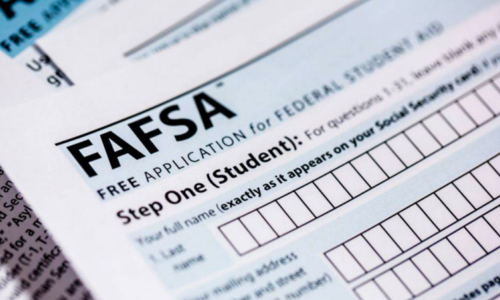
The Free Application for Federal Student Aid, known universally as FAFSA, is the gateway through which millions of American students access federal grants and loans to finance their university education every year. Administered by the United States Department of Education’s Office of Federal Student Aid, the programme disburses tens of billions of dollars annually in Pell Grants, subsidised loans, and institutional aid to students who qualify on the basis of income, citizenship, and enrolment in accredited institutions.
What the architects of that system did not fully anticipate was that digital enrolment would create a loophole large enough for entire criminal enterprises to walk through. When American colleges, particularly community colleges with open-enrolment policies and minimal application requirements, rushed to establish online learning infrastructure during the COVID-19 pandemic, they stripped away the physical verification mechanisms that had once served as a basic deterrent. A student no longer had to appear in person. They no longer had to produce documents in front of an administrator. They merely had to complete a digital form and pass automated processing checks that, it turned out, could be circumvented with a purchased identity package and a correctly configured VPN.
The criminal networks that identified and exploited this gap did not emerge from thin air. They were the product of an already-thriving underground economy in Kenya, one that had spent years developing the technical skills, institutional knowledge, and transnational connections needed to run large-scale digital fraud at industrial volume.
“In this case, one goes into the dark web and for as low as Sh1,000, you can buy personal information of someone in the US. You do not buy just one if you want to maximise profit.”
The Mechanics of the Scam: How It Worked
The operation, at its core, was a four-stage industrial process. The first stage was identity acquisition. Kenyan operatives accessed dark web marketplaces, many of which are reachable through the Tor browser and known within the criminal community by a rotating set of addresses. There, for prices as low as a thousand shillings per package, they purchased what the trade calls ‘fullz’ — comprehensive identity dossiers on real American citizens. A fullz package typically includes a Social Security number, full legal name, date of birth, residential address, driver’s licence details, and banking information. The identity of a deceased American citizen was particularly valuable because it could rarely be traced to a living person who might notice fraudulent activity and raise an alarm.
According to a retrospective federal audit released on April 27, 2026, by US Secretary of Education Linda McMahon, more than thirty million dollars in student aid was siphoned specifically through accounts registered to deceased American citizens, whose Social Security numbers had been harvested from memorial websites, obituary databases, and breached healthcare records. Another forty million dollars was drained by automated bot networks that mimicked real student enrolment behaviour, completing registration forms, clicking through course modules, and even generating responses to automated assessment tools.
The second stage was application construction. After securing a batch of identities, typically a hundred or more to maximise the odds of success, operators would use a properly configured Virtual Private Network to mask their Kenyan internet address and simulate the geographic location of the identity they were using. An identity associated with a California address required a VPN server reading as California. If the VPN location did not match the identity’s address, the application would be flagged and the applicant directed to appear before a commissioner of oaths to confirm their physical address, a step that collapsed the scheme immediately. This geographic alignment was not merely a technical nicety. It was the difference between a successful application and a wasted investment.
With the correct VPN in place, operators would apply for FAFSA aid before selecting a school, a deliberate tactical inversion of the normal process. The reason, as insiders explained, was straightforward: selecting an institution first and then discovering that the purchased identity had already been used or was flagged as indebted would waste the investment. By confirming FAFSA eligibility first, operators could identify which identities remained clean and channel them toward the most lucrative enrolment pathways.
The third stage was academic ghost maintenance. Once enrolled, the fictitious student needed to remain enrolled long enough for disbursements to flow. This is where Kenya’s vast informal academic writing economy became directly integrated into the fraud machine. Nairobi has for years sustained a substantial grey-market industry of contract academic writers who produce essays, assignments, dissertations, and examination answers for Western students willing to pay for them. These writers, many of them university graduates earning a fraction of what their work was worth through brokers, were now subcontracted by fraud operators to attend virtual classes, complete assessments, and generate just enough academic presence to keep the ghost student’s enrolment active and the disbursements flowing.
The disbursement structure itself was engineered to maximise extraction. The US Department of Education typically releases student aid in tranches. A first disbursement of around a thousand dollars arrives early in the semester. A second disbursement of approximately eight hundred dollars follows after the student passes continuous assessment milestones. A third and final payment of twelve hundred dollars arrives later in the semester, assuming the student remains enrolled. For operators running a hundred enrolled identities simultaneously, even extracting only the first disbursement across all of them represented a gross income of roughly twelve million shillings before expenses.
“The impatient ones, once they get $1,000 for 50 courses, they are out. That is why you find so many first-years joined virtual courses but did not complete them.”
The most patient and sophisticated operators held on for the second semester. That patience paid exponentially: a student who passes their first semester and re-enrols becomes eligible for a federal student loan of up to ten thousand dollars per academic year. At that scale, a single successfully maintained ghost identity was worth more than a million shillings in loan disbursements alone.
Moving the Money: The Cashout Syndicate
Getting the money out was its own specialised operation. Disbursed student aid funds are deposited into a digital student wallet created for each enrolled student by the institution. The wallet holds funds remaining after tuition fees are deducted, with the government operating on the assumption that the balance covers living expenses for a genuine student. Moving money from that digital wallet required an American bank account, and real American bank accounts were not available to Kenyan operators sitting in Nairobi apartments.
The solution was a secondary criminal infrastructure: a network of American-based collaborators who, for a commission of around thirty percent, received the money into their own accounts and laundered it back to Kenya through a combination of international wire transfers, mobile money systems, and cryptocurrency exchanges. These individuals, known in criminal parlance as ‘money mules,’ are often themselves members of the diaspora or recruited through the same social media networks that underpin the broader fraud economy. Some operators in rare cases managed to have physical cheques sent to friendly American addresses, with cooperating residents collecting and cashing them on behalf of their Kenyan contacts.
The money’s ultimate destination in Kenya was rarely the simple bank account of a single fraudster. The proceeds flowed into a layered economy of visible consumption and concealed investment. Luxury vehicles, high-end electronics, prime rental accommodation in Nairobi’s wealthier neighbourhoods, and in more ambitious cases, real estate purchases, all served as both status symbols and instruments of money laundering. The Ahmednaji Maalim Aftin Sheikh case, which emerged in September 2025, illustrated this dynamic with stark clarity. Sheikh, a twenty-eight-year-old Kenyan national, was indicted by a federal grand jury in Minnesota for laundering millions of dollars in proceeds from the Feeding Our Future fraud scheme, a separate American federal programme fraud. According to the indictment, Sheikh used his share of the proceeds to purchase a twenty percent stake in a Nairobi company, acquire an apartment building in the South C neighbourhood adjacent to Nairobi National Park, and buy land in Mandera Town near the borders of Somalia and Ethiopia.
The KYC Networks: Nairobi’s Underground Trading Floors
The operational nerve centres of this economy were not housed in fortified server rooms or secret warehouses. They were WhatsApp groups. Known within the criminal ecosystem as KYC networks, a sardonic appropriation of the banking term ‘Know Your Customer,’ these sprawling invite-only groups served as the informal digital trading floors of Nairobi’s cybercrime economy. Within them, operators traded freshly harvested identity packages, advertised cashout services, shared tips on VPN configurations and new institutional targets, coordinated academic writing subcontracts, and recruited new participants into the scheme.
The groups operated through layers of vetting. A new participant needed a trusted referral from an existing member. The more sensitive operational details, including specific institutional targets and cashout channel contacts, were reserved for smaller inner circles. The WhatsApp groups were, in effect, a living criminal market that could scale rapidly when new opportunities emerged and contract just as quickly when law enforcement pressure mounted.
That model has now been significantly disrupted. Meta, WhatsApp’s parent company, executed a sweeping purge of these KYC forums, abruptly shutting down and permanently banning the most notorious groups and severing the peer-to-peer communication channels that allowed operators to coordinate at scale. The closures did not eliminate the criminal enterprise, but they fractured its operational fluency and forced operators to seek alternative channels, including encrypted platforms like Telegram, where oversight is both more complex and more contested.
The Scale of the Damage in America
The human and institutional wreckage left behind in the United States is not abstract. It is documented, quantified, and still being counted. The US Department of Education’s retrospective audit, announced on April 27, 2026, confirmed that approximately ninety million dollars in student aid had been disbursed to ineligible recipients over the previous three years. Federal investigators were at the same time actively tracing an estimated three hundred and fifty million dollars in siphoned funding flowing through international networks, with the Office of the Inspector General carrying more than two hundred active criminal investigations into student aid identity fraud accumulated over the preceding five years.
The damage was sharpest within the California Community College System, which by virtue of its open-enrolment philosophy and sheer size presented the most accessible attack surface. California community colleges recorded more than 1.2 million fraudulent applications in 2024 alone, resulting in at least 223,000 suspected fake enrolments and more than eleven million dollars in unrecoverable financial aid losses. At the Foothill-De Anza Community College District in the San Francisco Bay Area, administrators flagged ten thousand suspect profiles out of twenty-six thousand applications received before the quarter could even commence.
The College of Southern Nevada absorbed perhaps the most concentrated single-semester damage: a complete write-off of seven point four million dollars in fraudulent ghost student enrolments in the fall 2024 semester, money the college was ultimately required to repay to the Department of Education from its own funds. At Century College in Minnesota, a history instructor publicly noted that fifteen percent of students in one of his classes appeared to constitute what he described as an organised crime ring, submitting identical or algorithmically generated responses to assignments while never engaging with course content in any authentic way.
KEY FIGURES IN THE FAFSA FRAUD CRISIS
Sh11.7 billion: Amount confirmed lost to ineligible student aid recipients over three years (US Dept of Education audit, April 2026). Sh45.3 billion: Total funds under active federal tracing across international networks. 200+: Active OIG criminal investigations into student aid fraud over five years. 1.2 million: Fraudulent applications recorded by California community colleges in 2024 alone. Sh958 million: Amount written off by College of Southern Nevada in a single semester due to ghost student fraud.
The FBI Moves Deeper into Nairobi
The significance of what happened on the ninth of May 2026 at the Directorate of Criminal Investigations headquarters at Mazingira Complex in Nairobi is difficult to overstate. FBI Co-Deputy Director Andrew Bailey flew into the country for a closed-door session with DCI Director Mohamed Amin that officials on both sides described publicly in careful, measured language. Discussions, both agencies said, touched on counterterrorism, cybercrime, financial fraud, human trafficking, narcotics, money laundering, and crimes against children.
What the official language did not say, but what the specific timing and operational context makes plain, is that the visit occurred in the direct aftermath of a period of intensive American investigative focus on Kenyan-connected financial fraud schemes. The FAFSA ghost student investigation, the Feeding Our Future laundering indictment, the Business Email Compromise extradition proceedings involving Peter Omari, Francis Asanyo, and Elvis Obaigwa, and the Operation Red Card cybercrime sweeps all converged within a compressed timeline that placed Kenya at or near the centre of American federal fraud investigators’ concerns.
The headline outcome of that May meeting was an announcement that the FBI Legal Attache Office in Nairobi would be upgraded and expanded through the appointment of a Regional Transnational Anti-Corruption Programme Manager, a new position that would extend American investigative capacity across the broader East African region. The Nairobi office, which has served as a coordination hub for FBI cooperation across the continent, is being repositioned as a more proactive operational base rather than a passive liaison point. The meeting also produced commitments to deepen cooperation in digital forensics, artificial intelligence-assisted investigations, cryptocurrency tracking, and predictive analytics, all of which are directly applicable to the fraud architectures that Kenyan criminal networks have deployed.
Bailey specifically acknowledged Kenyan officers who have been trained at the FBI National Academy in Quantico, Virginia, praising their role in strengthening cooperation between the two institutions. That recognition was both diplomatic and strategic: it signalled that the American investment in building Kenyan investigative capacity is expected to yield returns in the form of faster extraditions, more reliable intelligence sharing, and a domestic criminal justice system capable of prosecuting complex cybercrime cases without constant American intervention.
The Extradition Pipeline Opens
The extraditions and indictments accumulating in Nairobi courts and American federal dockets over the past eighteen months represent something qualitatively new in Kenya’s relationship with international law enforcement. For much of the previous decade, the perception persisted among operators within the cybercrime economy that Kenya’s distance from the United States, the complexity of extradition procedures, and the general slowness of the criminal justice system provided effective insulation. That perception is being systematically dismantled.
In February 2026, a Milimani court ordered the detention of Peter Omari, Francis Asanyo, and Elvis Obaigwa at Kileleshwa Police Station pending extradition proceedings initiated by US federal authorities. The three had been indicted by the US District Court for the Eastern District of Virginia in November 2023 on charges of conspiracy to commit computer intrusions, wire fraud, aggravated identity theft, and related aiding and abetting offences. DCI investigators established that between 2019 and 2023, the trio had created fake internet domains mirroring legitimate businesses, tricked victims into redirecting payments to fraudulent accounts, and channelled the proceeds back to Kenya through American money mules. Their eventual arrest came through a joint operation involving the DCI, Interpol, and the FBI.
Earlier, in September 2025, a federal grand jury in Minnesota indicted Ahmednaji Maalim Aftin Sheikh on charges of international money laundering connected to the Feeding Our Future scheme, a massive fraud on a federal child nutrition programme. Sheikh’s brother, the primary architect of the scheme, had stolen millions from a programme designed to feed vulnerable children, and Sheikh had helped conceal the proceeds by channelling them into Kenyan real estate. The indictment included documented conversations between the brothers, photographs of cash bundles exceeding 130,000 and 200,000 dollars, and a receipt recording a three-hundred-thousand-dollar money transfer.
In a parallel case that concluded in 2026, a Kenyan national identified as Wamuigah pleaded guilty in October 2025 to conspiracy to commit wire fraud in connection with a scheme that caused losses of approximately 1.5 billion shillings. Wamuigah had fled the United States to Malaysia, was arrested there in 2022 at American request, and was extradited to face charges. His guilty plea was followed by a transfer to ICE custody for deportation back to Kenya, completing a transnational criminal justice arc that took years but ultimately reached its destination.
Africa in the Frame: The Continent’s Cybercrime Epidemic
Kenya does not stand alone in this crisis. It stands at the acute end of a continental phenomenon that Interpol’s March 2026 Global Financial Fraud Threat Assessment formally designated as one of the top five global crime threats, alongside illicit drug trafficking and money laundering. The assessment estimated that financial fraud inflicted 442 billion dollars in global losses in 2025 alone, a figure that situates the problem not as a peripheral criminal nuisance but as a systemic threat to the architecture of international commerce.
Between 2024 and 2025, Interpol recorded a sixty percent spike in fraud-related police notices and diffusions across the African region. The threat report characterised regional criminal syndicates as having rapidly professionalised, adopting an industrialised hybrid model that exploits the continent’s expanding digital infrastructure to target high-value institutions and Western financial systems. The Communications Authority of Kenya’s own security audits placed the country second only to Nigeria in total continental cyber fraud losses.
Nigeria’s parallel crisis illustrates both the geographic spread of the problem and the intensifying regional law enforcement response. The Economic and Financial Crimes Commission, pursuing the collapse of the Crypto Bridge Exchange platform in 2025, issued international arrest warrants for four Kenyan nationals identified as Johnson Okiroh Otieno, Israel Mbaluka, Joseph Michiro Kabera, and Serah Michiro. The platform, marketed under the acronym CBEX with promises of one hundred percent monthly returns powered by artificial intelligence, defrauded investors across Nigeria, Kenya, and Egypt of an estimated 840 million dollars. Nigeria’s EFCC confirmed it had arrested some suspects and recovered a portion of the funds, while announcing it was coordinating with Interpol and the FBI to locate the four Kenyans still at large.
The West African dimension of this problem extends to documented extraditions from other countries on the continent. In Ghana, Maxwell Peter, a twenty-seven-year-old Ghanaian national, was extradited to the United States to face charges of wire fraud, computer fraud, money laundering, and identity theft after being part of an Africa-based cybercrime group that ran Business Email Compromise schemes, romance scams, and credit card fraud targeting American victims. In Nigeria, Matthew Akande was arrested at London’s Heathrow Airport in October 2024 at American request and extradited to Boston in March 2025 to face computer intrusion charges connected to theft of US government funds. Three Nigerian nationals involved in sextortion and associated money laundering were similarly extradited over a two-year period ending in February 2026, with the last defendant receiving a sentence confirmed in court after pleading guilty.
Operation Red Card and the Multi-Agency Net
The most dramatic demonstration of the coordinated international response to African cybercrime was Operation Red Card 2.0, an eight-week multinational law enforcement sweep that ran from December 8, 2025 to January 30, 2026, across sixteen African nations. The operation, conducted under Interpol’s African Joint Operation against Cybercrime with funding from the UK Foreign, Commonwealth and Development Office and additional support from the European Union, resulted in 651 arrests across the continent, the recovery of more than 4.3 million dollars in stolen assets, the seizure of 2,341 devices, and the dismantling of 1,442 malicious internet domains, servers, and IP addresses.
In Kenya specifically, authorities executed twenty-seven targeted arrests focused on decentralised networks that used messaging applications, social media platforms, and fictitious investment dashboards to lure victims into high-yield investment scams. Investigators documented victims being shown fabricated account statements displaying impressive returns while withdrawal requests were systematically blocked. The total losses exposed by the operation exceeded forty-five million dollars, with 1,247 identified victims drawn predominantly from the African continent but also from Western nations.
The operation also uncovered the cross-platform reach of the criminal networks. Over one thousand fraudulent social media accounts were taken down during the sweep. Six members of a sophisticated syndicate were arrested specifically for breaching the internal platform of a major telecommunications provider, highlighting that the threat has evolved well beyond individual fraud schemes into systematic attacks on critical communications infrastructure.
The Mulot Shadow and Kenya’s Homegrown Cybercrime Economy
To understand how Kenya became the operational theatre for frauds of this complexity and scale, one must understand what happened in a small market town straddling the border between Bomet and Narok counties over the course of fifteen years. Mulot, a cluster of three trading centres separated by the River Amalo, has for more than a decade been the acknowledged headquarters of Kenya’s SIM-swap fraud economy. What began as opportunistic mobile money theft grew, through a process of institutional learning and criminal entrepreneurship, into a sophisticated training ecosystem where operators paid fees of between fifteen thousand and forty thousand shillings to be schooled in increasingly advanced fraud techniques.
The DCI has executed waves of arrests across Mulot and its satellite networks, most recently on November 6, 2025, when detectives arrested six suspects found in possession of 2,464 identity documents and more than 3,000 SIM cards believed to have been deployed in mobile money scams. Earlier that year, on February 22, suspects were arrested in Ruiru for incapacitating a victim and swapping his SIM card, sweeping 250,000 shillings from his mobile banking accounts. The DCI’s own intelligence assessments acknowledge that the Mulot-linked syndicates have dispersed their operations across Nairobi, Nakuru, Kericho, Kiambu, Mombasa, and Eldoret, making containment substantially more difficult than geographic enforcement sweeps alone can achieve.
What the Mulot story represents, in the broader context of the FAFSA fraud economy, is the maturation of a criminal infrastructure that was always going to find international targets once it exhausted the domestic ones. The technical skills honed through SIM swapping, the money laundering networks built to process mobile money fraud proceeds, and the corrupted institutional relationships cultivated over years of local operations all translated directly into the requirements of a transnational scheme targeting American government systems.
The Net Closes: America’s Counter-Response
The US Department of Education’s April 27, 2026 announcement was the most significant institutional response to the crisis since it fully emerged into public view. Secretary Linda McMahon unveiled a nationwide fraud prevention initiative that activated real-time identity verification directly within the FAFSA application process itself, screening every applicant as they submitted their form and flagging high-risk submissions for a live camera-based identity check before the application could be completed. Applicants unable to complete the live verification receive a Reject Code 74 and a Comment Code 355, codes that financial aid offices across the country now treat as high-probability fraud indicators requiring no further processing.
The Department introduced a four-tier risk screening architecture that assigns incoming applications to different verification tracks based on a combination of behavioural signals, geographic data, identity document characteristics, and enrolment pattern analysis. Institutions are no longer required to take action on rejected applications unless a legitimate student contacts them directly to resolve the issue, a policy that effectively reverses the burden of proof that had previously allowed ghost students to exploit administrative backlog and processing delays.
Legislatively, Congressman Burgess Owens of Utah introduced the No Aid for Ghost Students Act, which passed the House Education and Workforce Committee in March 2026. The bill mandates the Department of Education to deploy a fraud detection system for every FAFSA application, establish formal identity verification procedures, notify applicants if their FAFSA is flagged as suspicious, and report annually to Congress on the effectiveness of the fraud identification systems. The bill specifically requires a yearly audit, creating an accountability mechanism that previous administrations had not imposed.
The Department’s own retrospective data indicates that fraud prevention systems put in place from 2025 onwards thwarted false applications that would have cost the United States approximately 129 billion shillings had they succeeded. That figure, representing attempted rather than completed fraud, underscores both the ambition of the criminal networks targeting the system and the fragility of the defences that had previously stood between them and success.
The Informant Economy and What Comes Next
Perhaps the most revealing aspect of the FAFSA fraud ecosystem is how openly it was discussed within the circles of those who participated in it. The operators who sat in Kasarani apartments and suburban cyber cafes, running hundreds of ghost student applications through carefully configured VPN tunnels, were not a secret society operating in conspiratorial silence. They were, in many respects, the most visible members of their peer groups, distinguished by the quality of their vehicles, the frequency of their leisure expenditures, and the studied vagueness with which they explained their income sources.
The academic writing economy that supplied the ghost maintenance labour for the scheme also operated in plain sight. Writers who produced dissertations and assignments for Western students were already a known feature of urban Kenyan economic life, sufficiently common that they had their own informal guild structures, price hierarchies, and reputational networks. The extension of that infrastructure into the service of a criminal scheme was, from the inside, experienced as a relatively minor ethical escalation: one more foreign client, one more opaque engagement, one more payment arriving through digital channels whose ultimate source was not interrogated.
That social normalisation is precisely what makes the problem structurally durable. Enforcement operations arrest individuals. They dismantle specific networks. They freeze specific accounts and seize specific devices. But as long as the structural conditions that make fraud rational persist, including youth unemployment, digital skill concentrations without formal employment outlets, and the visible social rewards accruing to successful operators, new networks will emerge to replace those that fall. The FBI’s expanded Nairobi presence, the acceleration of extradition proceedings, and the tightening of FAFSA’s digital perimeter all represent genuine progress. They do not, on their own, constitute a solution.
What they do constitute is the closing of a chapter in which the arbitrage between American institutional vulnerability and African criminal ingenuity was wide enough to sustain an industry. That arbitrage is narrowing rapidly, and the operators who bet their futures on its persistence are discovering, in courtrooms in Nairobi and federal detention centres in Virginia, Minnesota, and Nevada, precisely how costly that miscalculation has become.
Kenya Insights allows guest blogging, if you want to be published on Kenya’s most authoritative and accurate blog, have an expose, news TIPS, story angles, human interest stories, drop us an email on [email protected] or via Telegram


How Mary Wambui’s Bid To Delete Her Past Collided With A Fresh Sh400 Million Conflict-Of-Interest Finding

Mary Wambui’s Glee Hotel Faces Auction Over Sh100 Million Debt

Somali Government Adviser Held in Kenya Over Alleged Sh3.5 Million Gold Fraud and Terrorism Links

Reprieve for Lawyer Conrad Maloba as Court Extends Orders Blocking His Prosecution in Gold Fraud Case

How Adil Popat Saved His Empire On The Eve Of Imperial Bank Collapse and Why Kenya’s Mainstream Media Buried The Story

South Sudan: Adut Salva Kiir’s Shadow Treasury Exposed

Wajir North MP Ibrahim Abdi Dissatisfied With2026/27 Budget, Claims It Totally Excludes North Eastern Region

The Eldoret Tax Fortress: How David Langat Turned an Industrial Park Dream Into Kenya’s Most Sophisticated Domestic Tax Haven

Why John Ngumi Is Running From the EACC and Why the Sh415 Million Payday May Be the Least of His Worries

Shiquo Hii Style Store Was Not Raided, Anti-Counterfeit Authority Confirms; Says Influencer Used Empty Shelves for Content as She Relocates

Inside NCBA’s Decline: How a Banking Giant Lost Its Strategic Edge

Cement, Cash and Courts: How the Hashu Dynasty Crushed the Ramji Brothers for Fourteen Years and Why the Walls Are Now Closing In

Standard Chartered Ghosts Haunt Joshua Oigara At Stanbic As Whistleblower Spills Beans

Inside The Urban Planning Cartel That Owns Nairobi
South Sudan: Adut Salva Kiir’s Shadow Treasury Exposed

Why Ruto’s Favourite Candidate Adan Mohammed Could Be Locked Out of the KRA Top Job

Betika Faces DCI Probe, Directors Arrest and License Revocation Over Massive 29.5 Million Safaricom Customers’ Data Breach

LifeCare on the Brink: SHA Fraud, Stolen Wages, and the Rotten Empire Jayesh Saini Built
Why John Ngumi Is Running From the EACC and Why the Sh415 Million Payday May Be the Least of His Worries

The President’s Daughter and The Missing Witness: How Adut Salva Kiir’s Shadow Treasury Silenced Its Most Dangerous Critic
-
 Business5 days ago
Inside NCBA’s Decline: How a Banking Giant Lost Its Strategic Edge
-
 Investigations1 week ago
Cement, Cash and Courts: How the Hashu Dynasty Crushed the Ramji Brothers for Fourteen Years and Why the Walls Are Now Closing In
-
 Business4 days ago
Standard Chartered Ghosts Haunt Joshua Oigara At Stanbic As Whistleblower Spills Beans
-
 Investigations1 week ago
Inside The Urban Planning Cartel That Owns Nairobi
-
 Africa3 days ago
South Sudan: Adut Salva Kiir’s Shadow Treasury Exposed
-
 Investigations2 weeks ago
Betika Faces DCI Probe, Directors Arrest and License Revocation Over Massive 29.5 Million Safaricom Customers’ Data Breach
-
 Business3 days ago
Why John Ngumi Is Running From the EACC and Why the Sh415 Million Payday May Be the Least of His Worries
-
 Africa4 days ago
The President’s Daughter and The Missing Witness: How Adut Salva Kiir’s Shadow Treasury Silenced Its Most Dangerous Critic