
Business
How Adil Popat Saved His Empire On The Eve Of Imperial Bank Collapse and Why Kenya’s Mainstream Media Buried The Story
While 50,000 ordinary depositors waited years to recover barely half their savings, Simba Corporation withdrew Sh729 million from Imperial Bank in the final days before its collapse with the chairman’s brother sitting in the corner office. The forensic trail, hidden in court filings, has never been told in full.

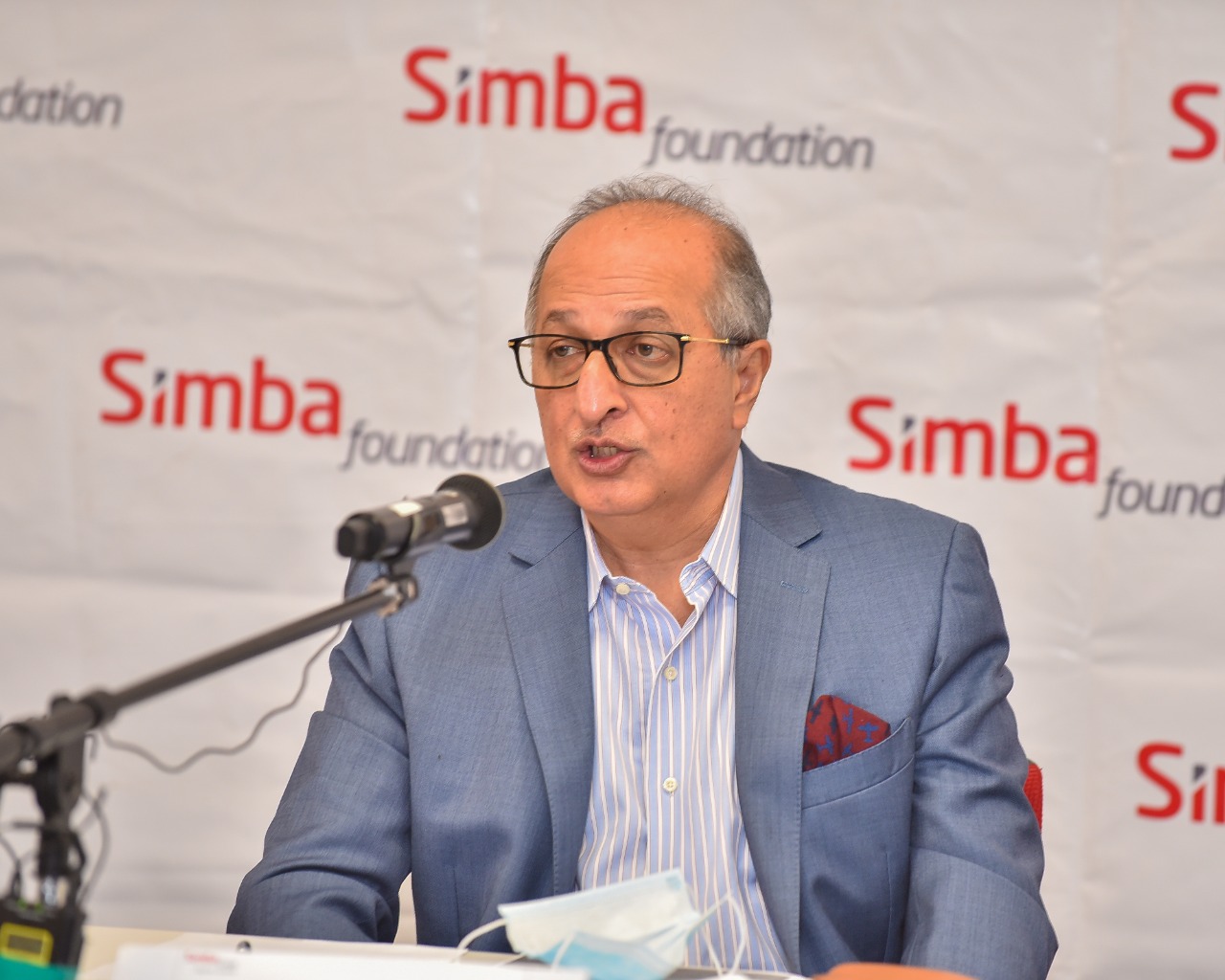
The morning of October 13, 2015, Kenyans arrived at Imperial Bank branches across the country to find the doors locked. The Central Bank of Kenya had placed the lender under the management of the Kenya Deposit Insurance Corporation overnight, citing unsafe and unsound conditions rooted in what would eventually be described as a decade-long embezzlement scheme.
Behind those locked doors, the savings of an estimated 50,000 depositors small traders, insurance companies, farmers’ cooperatives, pensioners were frozen. They would wait years, and many still have not received everything they are owed.
What the official narrative of that morning did not immediately tell was that nine days before the doors shut, over three-quarters of a billion shillings had already left the building. The money belonged to Simba Corporation. Adil Popat’s company. The brother of the man then running the bank.
This is the story that has never been fully told.
THE EMPIRE AND THE BANK: A FAMILY TRIANGLE
To understand the Imperial Bank saga, you must first understand the Popat family and the architecture of its wealth. Abdulkarim Chatur Popat, born in 1925 to Indian migrants, started selling used cars on Nairobi’s Koinange Street in 1948 under the name Deluxe Motors Ltd. By 1968 he had secured the Mitsubishi franchise and renamed the operation Simba Motors. By the time of his death in March 2013 at age 87, he had built one of Kenya’s most formidable family business empires, estimated at the time at approximately Sh4 billion, with interests spanning motor vehicle distribution and assembly, luxury hospitality, real estate and financial services.
He also invested in a commercial bank. Imperial Bank, founded in part by the Popat family, was conceived — according to public accounts from the period — as a vehicle to extend asset financing to vehicle buyers, deepening the commercial loop that Simba’s motor business depended upon. It was, in that sense, not merely an investment but an embedded instrument of the broader corporate strategy.
Upon Abdulkarim’s death, the three sons took different paths through the empire. Adil, who had studied at the University of Washington and earned an MBA from the Wharton School of Business, had joined the family business in 1994 as Finance Director and became CEO in 2007. He took the corporate crown. Alnashir, the estranged middle child who had been excluded from his father’s will in a bitter testament to a relationship their court battle would later describe as damaged from childhood, remained connected to the bank. He served as Imperial Bank chairman, sitting atop its board when the institution imploded. Azim, the eldest, had his own orbit, eventually migrating to Canada after a separate succession dispute.
The three brothers and the businesses around them were not, whatever the public statements suggested, entirely separate universes.
“The records at Imperial Bank show that between October 1, 7, 8 and 9, 2015 when Alnashir Popat, as chairman, was in charge of running the bank a total of Sh729,057,404 was withdrawn by Simba Corporation in circumstances that suggest directors were misusing insider information.” — KDIC Receiver Manager Mohamud Ahmed, court filings
THE WITHDRAWAL: NINE DAYS, FOUR TRANCHES, SH729 MILLION
Imperial Bank managing director Abdulmalek Janmohammed died suddenly in September 2015. The exact circumstances of his death have never been fully explained in the public domain, and Alnashir Popat himself later objected vigorously in court to the KDIC receiver manager’s characterisation of it as ‘unexplained and convenient.’ But the effect of Janmohammed’s death was immediate and structural: it left Alnashir Popat, as board chairman, as the effective day-to-day overseer of the institution.
What followed in those weeks, as forensic investigators from the American firm FTI Consulting were quietly beginning to work through the bank’s records under Central Bank supervision, is documented in court papers filed by KDIC receiver manager Mohamud Ahmed in proceedings involving Sandview Properties and Upperview Properties — two companies co-owned by Janmohammed’s estate and certain Imperial directors including, notably, Alnashir Popat himself.
Between October 1 and October 9, 2015, Simba Corporation executed four separate withdrawals from one of 29 accounts it maintained at Imperial Bank. The total: Sh729,057,404. The Central Bank moved to place the institution under receivership on October 13. Simba’s withdrawals, all falling within the nine-day window when the bank was operating under its chairman’s personal oversight and before the public knew anything was wrong, amounted to one of the cleanest exits in the collapse’s documented history.
Receiver manager Ahmed was direct in his court filings. The manner of withdrawal, he said, was consistent with either insider tipping that someone at the bank, with knowledge of the impending collapse, had warned Simba to move its money or deliberate cushioning of a related party in advance of the institution’s seizure. Neither scenario was benign. Both pointed to the same question: how did a company controlled by the chairman’s brother move three-quarters of a billion shillings out of a dying bank in precise tranches over nine days, while ordinary depositors had no idea what was about to happen?
Simba Corporation had previously stated publicly, through executive director Dinesh Kotecha, that Standard Chartered and Citibank were the group’s primary bankers, and that there were no related-party transactions between Simba and Imperial Bank. The FTI forensic findings, as introduced in evidence through KDIC court submissions, complicated that position considerably.
THE GHOST ACCOUNTS AND THE CROSSED-OUT NAME
FTI Consulting’s forensic team processed 1.2 terabytes of transaction data. They isolated 700 suspicious accounts and flagged more than 22,520 doubtful transactions spanning what they characterised as a decade-long embezzlement ultimately attributed primarily to Janmohammed and his senior management circle, including managers Naeem Shah and James Kaburu. The total losses to depositors were eventually put at Sh44.9 billion, representing more than half the bank’s deposit base.
The architecture of the fraud involved fictitious and nominee accounts ghost accounts opened under invented or third-party names to receive and redirect stolen funds. These accounts were used to move money outside normal banking controls, with authorisations provided through handwritten chits rather than standard documentation, a system that allowed senior insiders to direct large transfers without creating the paper trail that legitimate banking operations require.
Among the fictitious accounts documented in KDIC pleadings were three that the receiver manager linked to Simba Corporation’s transactions: accounts held in the names B Mohamed, M Khan and Jignesh Shah. FTI identified 12 suspicious transfers totalling Sh190 million connected to this cluster, some involving direct wiring of funds from Simba’s Standard Chartered accounts into these fictitious Imperial Bank accounts. In some instances, money was transferred first into one of Simba’s own Imperial Bank accounts and subsequently redirected into the fictitious names.
One document stood out even in that mass of material. A savings withdrawal form dated March 20, 2013 notably, the same month and year that Abdulkarim Popat died, leaving the family succession dynamics in flux listed ‘B Mohamed’ in the name field. Forensic examination showed that ‘Mr and Mrs Adil Popat’ had originally been written there and then crossed out. The form bore Adil Popat’s signature. Attached to it was a handwritten chit addressed to ‘NS’ the initials understood to refer to senior manager Naeem Shah — written in handwriting the KDIC attributed to Janmohammed himself. Receiver manager Ahmed additionally identified four further transactions linking Adil Popat, Simba Colt Motors and the fictitious B Mohamed account.
Adil Popat has not been charged with any criminal offence in connection with Imperial Bank. The core fraud was attributed in FTI’s findings and in litigation to Janmohammed’s inner circle. What the forensic record establishes, however, is a clear documented connection between Simba’s transactions, the fictitious account infrastructure that served the fraud, and the handwriting of the bank’s managing director. The question of whether that connection was knowing or incidental has never been fully adjudicated in public.
“B Mohamed is written in the name field for a savings withdrawal dated March 20, 2013 but it is evident that Mr and Mrs Adil Popat was written and then crossed out. This form was signed by Adil Popat.” — KDIC Receiver Manager, court affidavit
THE GHOST ACCOUNTS AND THE CROSSED-OUT NAME
Alnashir Popat’s response to the KDIC’s allegations in the Sandview and Upperview litigation was categorical. He argued the references were diversionary, designed to muddy the waters in proceedings whose actual subject was the properties companies’ claims against the bank. He described as ‘scandalous’ the receiver manager’s characterisation of Janmohammed’s death as unexplained and convenient. His legal team argued that the documents relied upon by the receiver had not been properly produced before the court.
The Sandview and Upperview litigation itself illuminated a separate layer of entanglement. Those two companies which owned buildings housing Imperial Bank branches in Upper Hill, Nairobi and Mombasa were co-owned by the estate of the deceased managing director and by certain Imperial directors including Alnashir Popat himself. Their suit against the receiver was, at one level, a demand for access to financial records held in the bank’s offices; at another, it was a vehicle through which the KDIC’s most detailed public disclosures about the Simba connection emerged.
A Court of Appeal judgment issued in May 2025 Civil Appeal E395 of 2017, pitting Imperial Bank in receivership against Alnashir Popat and 18 others — confirmed the continuation of proceedings in which the appellants sought, among other remedies, the transfer of shares held by respondents in 42 linked companies toward recovery of the Sh42.2 billion the KDIC attributed to directorial breach of fiduciary duty. That case remained live as of the date of this publication. Alnashir Popat was the first-named respondent.
THE DEPOSITORS LEFT BEHIND
While Simba Corporation’s withdrawal was precise and its timing fortunate, the 50,000 depositors who did not have advance notice experienced a different story. Their money was locked inside an institution in receivership, and the journey to recovery would stretch across years and arrive incomplete.
The Kenya Power and Lighting Company lost deposits. The National Social Security Fund, the insurer Sanlam, and CIC Insurance were among those caught. Small traders, professionals, and families people whose savings were their operating capital, their school fees money, their medical reserves had no ability to move before the gates closed. Court records from the receivership period include accounts of depositors who could not access funds for medical treatment.
The KDIC initially guaranteed only deposits up to Sh100,000, covering a large proportion of account-holders by number but not by value. Recovery came in slow tranches. KCB Bank reached a deal in 2019 and 2020 to acquire assets and liabilities worth Sh3.2 billion, payable over four years, pushing cumulative recovery at that point to roughly 37.3 percent of eligible deposits. By 2021, approximately 45,700 depositors 92 percent of account-holders had been paid in full, but those were overwhelmingly the smaller depositors. Around 4,300 depositors with larger balances remained in the queue. The CBK directed liquidation in 2021 and KDIC resumed payments in 2023 under the liquidation framework, inviting remaining depositors to file proof-of-debt claims.
The fundamental mathematics of the collapse remained brutal. Of a deposit base of approximately Sh70.9 billion that the KDIC treated as eligible, cumulative recovery through all mechanisms had reached approximately 40 to 55 percent by successive estimates, with the Sh36 billion in outstanding loan balances the bulk of the remaining assets tied up in litigation that continued to delay final resolution. For depositors with large balances, the wait continued into a second decade.
Simba Corporation’s accounts, by contrast, were cleared before the receiver arrived.
THE EMPIRE THAT KEPT GROWING
In the years since October 2015, Simba Corporation has not merely survived. It has expanded on a trajectory that is difficult to reconcile with the image of a company caught in the crossfire of a banking scandal. Adil Popat’s public persona in this period has been that of a progressive industrialist and responsible entrepreneur, and the mainstream business press has largely accepted and reproduced that framing.
The motor business deepened. Simba Colt Motors retains the Mitsubishi franchise alongside Renault and Mahindra. Bavaria Auto handles BMW distribution. Xylon Motors carries the Mahindra commercial range. The Avis car rental franchise adds a leasing dimension. The group’s subsidiary Associated Vehicle Assemblers, operating from its Mombasa plant, has become the single most dominant vehicle assembler in Kenya, currently accounting for 43 percent of all assembled vehicles in the country and operating lines for 23 brands. In January 2022, Simba delivered 100 brand-new Mahindra Scorpio pick-up trucks to the National Police Service under a presidential fleet modernisation initiative. The Kenya Police leasing relationship with government agencies paying for new vehicles from a company whose chairman was being named in billion-shilling fraud recovery proceedings illustrates the elasticity of institutional memory in Kenya’s public procurement culture.
The hospitality portfolio is anchored by the Villa Rosa Kempinski in Nairobi’s Westlands, a five-star property that has hosted heads of state, multinational summits and diplomatic events. The Olare Mara Kempinski in the Maasai Mara and the Acacia Premier in Kisumu complete the hospitality footprint. The Kempinski brand, a European luxury operator, has provided international respectability that the domestic Imperial Bank associations rarely penetrate.
The latest expansion announced in June 2026 involves a Sh1 billion investment in a dedicated electric vehicle assembly line at the Mombasa AVA facility, described as self-funded from group resources without external debt. The investment is timed to capture substantial government tax incentives: EV assemblers are exempt from the 35 percent import duty on fully built units, and the government has cut excise duty on EVs from 20 percent to 10 percent while granting VAT exemption. Simba Corp also supplies MG electric vehicles the British-heritage brand now owned by Chinese state manufacturer SAIC Motor to Kenya Power, a state-owned utility. Simba Corp sold Kenya Power a Sh34.4 million vehicle batch under a 2019 supply contract, and subsequent EV deliveries have continued to build that government-client relationship.
The pattern is consistent across the decade: while legal proceedings, asset freeze applications and KDIC recovery suits named Alnashir Popat as first defendant in a case seeking recovery of Sh42.2 billion, Adil Popat’s side of the same family and the corporation their father built continued to access government contracts, tax concessions, state-owned enterprises as clients and presidential recognition. The two spheres one mired in litigation, the other gathering accolades share the same founding bloodline, the same building on Mombasa Road, and, according to forensic evidence introduced in court, the same bank accounts.
POLITICAL ACCESS AND THE ARCHITECTURE OF INFLUENCE
Adil Popat does not hold elected office. His political influence operates through a different architecture: institutional membership, advisory roles and the quiet leverage of a company that sells vehicles to government agencies, assembles cars under national policy frameworks and sits on the boards of the country’s premier private sector bodies.
Simba Corporation is a member of the Kenya Private Sector Alliance, Kenya Association of Manufacturers, Kenya Motor Industry Association and the Federation of Kenya Employers. KEPSA, the apex private sector body, serves as the primary channel through which Kenya’s business community shapes economic policy and engages successive administrations. It helped draft the Vision 2030 blueprint and played a role in post-election stabilisation processes. Membership at Simba’s scale carries access to pre-budget consultations, policy input mechanisms and the ministerial-level engagements through which regulations governing the motor and assembly industries are shaped.
Adil Popat himself served as chairman of KMI, the Kenya Motor Industry Association, from 2012 to 2015 the same period during which the Imperial Bank fraud was at its peak, and during which, according to the savings withdrawal form introduced in KDIC proceedings, his signature appeared on a document linked to a fictitious account. He has served as a member of the Wharton School’s EMEA Board for more than nine years, advising the institution on African affairs. That connection to an elite American institution adds an international legitimacy layer that further insulates the domestic corporate reputation.
When President Uhuru Kenyatta’s administration launched its manufacturing-sector push under the ‘Big Four’ agenda and introduced the tax incentives for local vehicle assemblers, AVA and Simba Corporation were positioned to be among the primary beneficiaries. President Kenyatta personally attended the launch of Mahindra assembly at AVA and praised the company’s investment. The government’s electric vehicle policy framework, developed during the Ruto administration, has continued to create preferential conditions from which the group’s new EV assembly line will benefit directly. The Sh1 billion investment announced in June 2026 is, in material terms, partly a bet on the durability of government policy architecture that Simba Corp has had a sustained hand in influencing.
That is not corruption in any simple definitional sense. But it is a picture of a corporation that has navigated the transition from one administration to the next, maintained access to government procurement through police and utility purchases, shaped industry regulations through trade body membership, and collected tax incentives calibrated to reward exactly the activities it had already committed to pursue. The structural advantage is cumulative and compounding, and it operates largely outside the scrutiny that the Imperial Bank chapter might have triggered in a country with more robust accountability journalism.
THE INHERITANCE WAR AND WHAT IT REVEALS
The succession battle within the Popat family adds a dimension to the portrait that the public relations exercise of Simba Corporation’s annual reports cannot obscure. When Abdulkarim Popat died in March 2013, he left a will that excluded Alnashir entirely. The father had, in his own document, signalled that the second son was not to share in the formal inheritance. Alnashir contested this in court, eventually winning at the Court of Appeal in October 2021 in a ruling that ordered redistribution to provide him a fair share.
The litigation exposed, through affidavit evidence and court record, the emotional and relational underpinnings of the family’s internal dynamics. A letter Alnashir had written to his father in 2009 described by the appellate judges as ’emotional and bitter’ accused the senior Popat of playing favourites with Adil since childhood, of denying Alnashir the paternal love and guidance he had given freely to his preferred son. The fourth son, Azim, had migrated to Canada in what the court described as an effort to escape the unfavourable family situation blamed on Adil’s influence.
The relevance to the Imperial Bank story is not sentimental but structural. Alnashir Popat, the son left out of the will and excluded from Simba Corporation’s inner circle, was the one who ended up as chairman of the bank. He was the one sitting in the chair when Janmohammed died. He was the one whose name appears as first defendant in the KDIC’s Sh42.2 billion recovery suit. And he was the one whose company contacts and oversight created the conditions whether knowingly or not under which his brother’s corporation moved three-quarters of a billion shillings out in nine days.
Adil, the son who inherited the father’s favoured status and the operational control of Simba Corporation, emerged from the same catastrophe without criminal charge, without his business operations disrupted, and without any sustained public examination of his company’s documented forensic connections to the fraud infrastructure.
The two brothers’ fates in the aftermath of Imperial Bank’s collapse track almost exactly their respective positions in their father’s affections.
THE REPORT THAT WAS NEVER MADE PUBLIC
Perhaps the most consequential single fact in the entire Imperial Bank saga is this: the FTI Consulting forensic report, which processed 1.2 terabytes of data, identified 700 suspicious accounts, mapped 22,520 doubtful transactions and supplied the evidential backbone for both the receivership and the Sh42.2 billion civil recovery proceedings, has never been released to the public in comprehensive form.
What is known of its contents has emerged piecemeal through adversarial litigation through KDIC affidavits filed in Sandview and Upperview proceedings, through freeze applications against directors’ companies, through the ghost-accounts exposé that entered the Business Daily record in late 2016, and through the layered disclosures introduced as CBK and KDIC pursued recovery across multiple suits. The public has never received a standalone accounting of what went wrong, at whose direction, and who benefited.
That opacity is not accidental. The full report would answer questions that the current partial record leaves open: precisely what role, if any, was Simba Corporation’s management playing in the fictitious account transactions? Were the 12 suspicious transfers totalling Sh190 million the result of Simba’s participation, or was the company’s name used without its knowledge? What did the March 2013 savings withdrawal form, with Adil Popat’s name crossed out and his signature still present, actually evidence about the relationship between Simba and Janmohammed’s fiction infrastructure?
Those questions are answerable, in principle, by the material FTI processed. They remain unanswered in public because the report has been deployed as a litigation instrument rather than a transparency mechanism. The depositors who lost money and whose interests the receivership exists to serve have been denied the full factual accounting they are owed.
THE CHARACTER LEDGER
What does the complete record reveal about Adil Popat as an actor in Kenya’s corporate landscape? It reveals, first, a man of genuine business capability. The transformation of Simba Corporation from a family car dealership into a Sh10 billion-turnover conglomerate employing 1,300 people is not achieved by inheritance alone. The hospitality strategy building two Kempinski-branded properties, establishing a presence in the Maasai Mara luxury tourism market required vision and execution. The move into electric vehicles and the AVA investment in the EV assembly line reflect genuine strategic awareness of where the automotive market is heading.
It also reveals a man who, at a documented moment of institutional crisis in October 2015, appears to have had access to information or conditions that allowed his company to exit a collapsing bank before the public knew the exits would close. The forensic evidence does not establish that he personally directed a fraud. It establishes that his company’s accounts were linked to the fictitious account infrastructure that served the fraud, that his signature appeared on a document bearing a fictitious name with his own name crossed out, and that Sh729 million left his company’s Imperial Bank accounts in the nine days when his brother was running the institution into its final hours.
It reveals a man whose public identity KEPSA member, manufacturer, hospitality leader, EV pioneer has been constructed and maintained with considerable care, and whose name has largely been kept out of the mainstream narrative of one of Kenya’s largest banking collapses despite the forensic record’s clear placement of him within it.
It reveals a man who, in the family succession dispute, fought through his lawyers and aligned brother to exclude Alnashir from the estate, and who, after Alnashir’s bank collapsed and Alnashir became the first-named defendant in billion-shilling recovery proceedings, continued to expand the business that their father had built and left preferentially to Adil.
Kenya’s accountability culture has a well-documented habit of pursuing the obvious and abandoning the structural. Janmohammed is dead. Alnashir Popat is in court. The depositors have been told their money is largely gone. The story, for most of the media that has covered it, ends there. Adil Popat is a successful businessman who runs luxury hotels and assembles electric cars.
The FTI records say something different. The court filings say something different. The savings withdrawal form with the crossed-out name says something different.
The question is not whether those documents, standing alone, constitute a criminal case. They do not. The question is whether, in a country where 50,000 depositors were told to wait a decade to recover half their savings, the businessman whose company moved three-quarters of a billion shillings out of that bank before the doors closed has ever been required to answer publicly, under oath, in a forum where ordinary depositors could hear the response why his name was crossed out on a document linked to a ghost account, and who told him when to leave.
That question has not been put. That answer has not been given. And Simba Corporation is now investing Sh1 billion in its next chapter.
Kenya Insights allows guest blogging, if you want to be published on Kenya’s most authoritative and accurate blog, have an expose, news TIPS, story angles, human interest stories, drop us an email on [email protected] or via Telegram


How Adil Popat Saved His Empire On The Eve Of Imperial Bank Collapse and Why Kenya’s Mainstream Media Buried The Story

South Sudan: Adut Salva Kiir’s Shadow Treasury Exposed

Wajir North MP Ibrahim Abdi Dissatisfied With2026/27 Budget, Claims It Totally Excludes North Eastern Region

The Eldoret Tax Fortress: How David Langat Turned an Industrial Park Dream Into Kenya’s Most Sophisticated Domestic Tax Haven

Why John Ngumi Is Running From the EACC and Why the Sh415 Million Payday May Be the Least of His Worries

Shiquo Hii Style Store Was Not Raided, Anti-Counterfeit Authority Confirms; Says Influencer Used Empty Shelves for Content as She Relocates

Treasury CS Mbadi Unveils Sh4.8 Trillion Budget Estimates

Fraud, Misrepresentation and A Decade Of Evasion: How Indo Africa Finance Pocketed Sh150 Million Youth Funds and Fought To Keep Every Cent

Kenya Picks Chinese Firm For Sh375 Billion JKIA Upgrade Project After Adani Fallout

The President’s Daughter and The Missing Witness: How Adut Salva Kiir’s Shadow Treasury Silenced Its Most Dangerous Critic

Cement, Cash and Courts: How the Hashu Dynasty Crushed the Ramji Brothers for Fourteen Years and Why the Walls Are Now Closing In

Inside The Urban Planning Cartel That Owns Nairobi

Standard Chartered Ghosts Haunt Joshua Oigara At Stanbic As Whistleblower Spills Beans

Why Ruto’s Favourite Candidate Adan Mohammed Could Be Locked Out of the KRA Top Job

Inside NCBA’s Decline: How a Banking Giant Lost Its Strategic Edge

LifeCare on the Brink: SHA Fraud, Stolen Wages, and the Rotten Empire Jayesh Saini Built

Betika Faces DCI Probe, Directors Arrest and License Revocation Over Massive 29.5 Million Safaricom Customers’ Data Breach

Este Medical Kenya Fights American’s Explosive Complaints

Fresh Move Launched to Remove Kenya Railways MD Mainga From Office After Awarding Sh817 Million Consultancy Contract

The Rot Inside Absa: How Bank Insiders Are Looting Nairobi’s Customers
-
 Investigations1 week ago
Cement, Cash and Courts: How the Hashu Dynasty Crushed the Ramji Brothers for Fourteen Years and Why the Walls Are Now Closing In
-
 Investigations6 days ago
Inside The Urban Planning Cartel That Owns Nairobi
-
 Business1 day ago
Standard Chartered Ghosts Haunt Joshua Oigara At Stanbic As Whistleblower Spills Beans
-
 Business2 days ago
Inside NCBA’s Decline: How a Banking Giant Lost Its Strategic Edge
-
 Investigations2 weeks ago
Betika Faces DCI Probe, Directors Arrest and License Revocation Over Massive 29.5 Million Safaricom Customers’ Data Breach
-
 Investigations1 week ago
Fresh Move Launched to Remove Kenya Railways MD Mainga From Office After Awarding Sh817 Million Consultancy Contract
-

 Business1 week ago
TRUST BETRAYED: How Senior DTB Bank Insiders Allegedly Looted Sh149 Million From a Customer’s Account Over Five Years
-
 News2 weeks ago
How Uhuru’s Deal With Obama In 2015 Paved Way For America’s Ebola Plan In Kenya