
News
How Uhuru’s Deal With Obama In 2015 Paved Way For America’s Ebola Plan In Kenya
A biosecurity agreement signed without public debate on July 24, 2015, the very day Barack Obama landed in Nairobi on his historic homecoming visit, quietly handed Washington the legal architecture it has now invoked to plant an Ebola quarantine facility on Kenyan soil. The deal, forged under President Uhuru Kenyatta and extended under his successor, was never the subject of a national conversation. It is now.

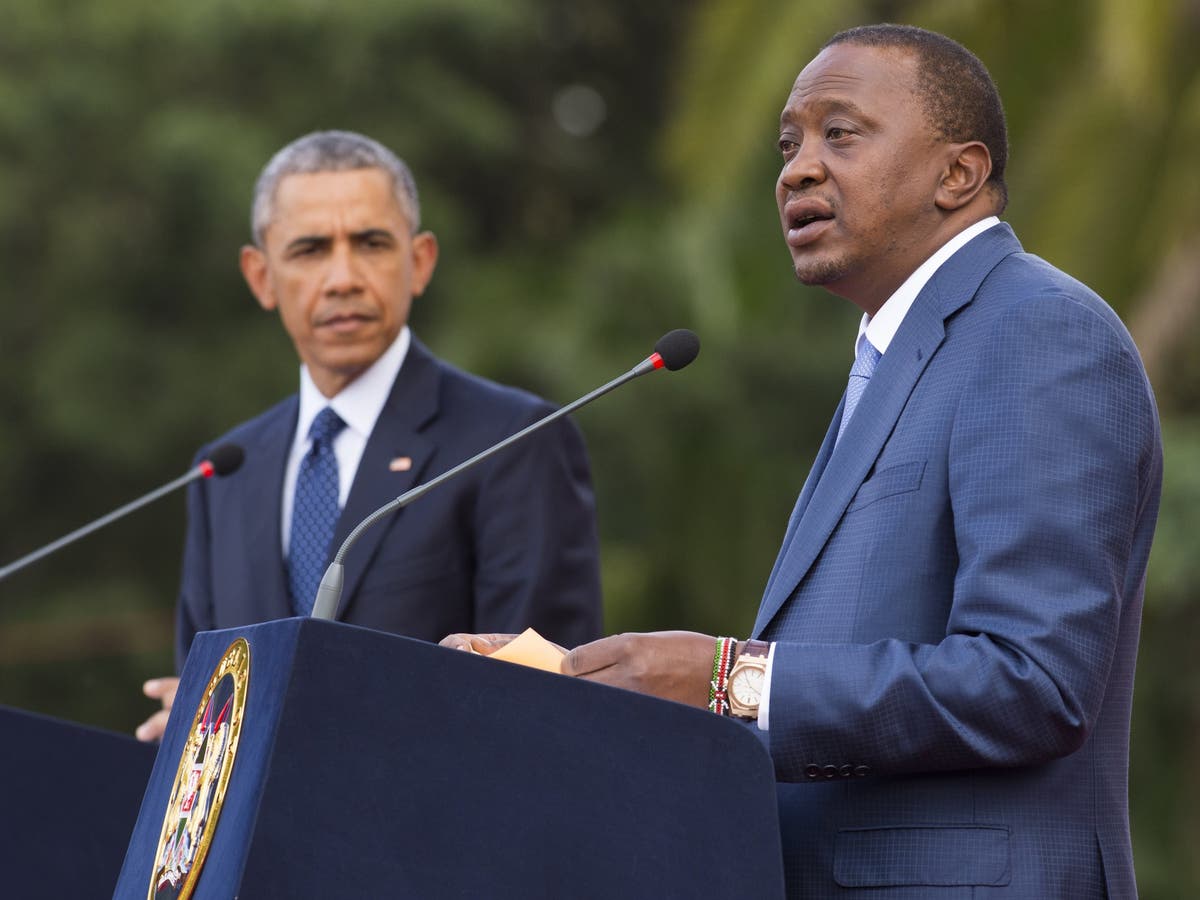
On the afternoon of July 24, 2015, Air Force One touched down at Jomo Kenyatta International Airport bearing a president whose father had been born on the shores of Lake Victoria. Barack Obama’s visit to Nairobi was billed as a homecoming, a celebration of ties between the world’s most powerful democracy and one of East Africa’s most strategically vital nations. While the cameras followed the motorcade through the freshly painted streets of the capital and the state house garden glittered for a presidential state dinner, something of considerably less fanfare was happening across town at the level of technocrats and diplomats.
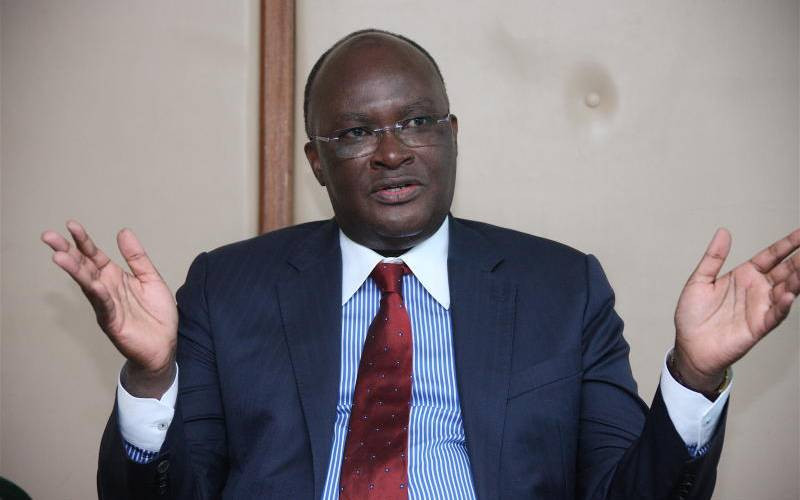
On that same day, Health Cabinet Secretary James Macharia and United States Ambassador to Kenya Robert Godec quietly put pen to paper on a bilateral biosecurity agreement formally titled the Cooperation in Threat Reduction Biological Engagement Programs. The cameras were not there. There was no press conference. Kenyans were not told what had been agreed in their name. More than a decade later, that document sits at the heart of the most explosive public health controversy Kenya has witnessed in recent memory: the attempt by the Trump administration to establish an Ebola quarantine facility for American citizens at Laikipia Air Base in Nanyuki, Laikipia County.
The deal signed in 2015 was not, legally speaking, Barack Obama’s deal with Uhuru Kenyatta. It did not bear either president’s name. But it was conceived, negotiated, and executed during Obama’s tenure as American president and Kenyatta’s first term as Kenya’s fourth president. It emerged from the same diplomatic warmth that characterised the July 2015 summit, in which Kenyatta and Obama signed a raft of agreements covering security, visa reciprocity, and development cooperation. The biosecurity agreement was part of that wave, and like much of what governments agree to in the margins of high-profile summits, it received almost no public scrutiny at the time of its signing.
THE TERMS OF THE 2015 DEAL
What Macharia and Godec signed that day was sweeping in its implications. The agreement gave the United States effective control over any projects that would be generated under it, including the selection of contractors. It exempted imported goods and American workers deployed under the agreement from taxation in Kenya. It contained a mutual liability waiver, meaning that neither Kenya nor the United States could sue the other in the event of death, injury, or property damage arising from any project executed under the framework. In short, Kenya had agreed to absorb both the operational and legal consequences of whatever biological engagement programmes the two countries might undertake together.
The National Assembly ratified the agreement on November 22, 2016, well over a year after it was signed. Kenya was already bound by it before parliamentarians had a chance to scrutinise it. The ratification was, in effect, post-hoc legislative blessing for a deal the executive had already locked in. At the time, there was no particular controversy. The public health context in 2015 was shaped by the tail end of the catastrophic West African Ebola outbreak that had killed more than eleven thousand people and briefly terrified the world. Biosecurity cooperation between governments seemed not only reasonable but urgent. Nobody in the National Assembly chamber that November appears to have anticipated that the agreement’s most consequential clause might one day be invoked not to protect Kenyans from a disease but to bring that disease to their soil.
James Macharia
James Macharia himself would not remain at the Ministry of Health long enough to witness that consequence. He was transferred to the Transport docket in November 2015, just months after signing the agreement, when Kenyatta reshuffled his cabinet. Macharia was an accountant by training, a CPA who had served as a steward of the health ministry rather than as a medical or public health expert. That a document with such profound biosafety implications was signed by a finance professional rather than an epidemiologist or public health authority is, in retrospect, a detail worth noting.
THE DEAL EXTENDED UNDER COVID
Uhuru Kenyatta’s second term produced the COVID-19 pandemic, which transformed the political salience of biosecurity cooperation globally. By 2022, with Kenya still navigating pandemic recovery and seeking external health support, the Kenyatta administration’s then Health Cabinet Secretary Mutahi Kagwe signed a seven-year extension of the 2015 agreement with the United States. His counterpart on the American side was Eric Kneedler, then the US Charge d’Affaires in Nairobi. The extension was signed on April 5, 2022, and it carries the agreement through to April 5, 2029. That date is significant because it means the framework remains operative well into President William Ruto’s second potential term, giving Washington a contractual basis for health cooperation on Kenyan soil that no future Kenyan administration will be able to unilaterally withdraw from without diplomatic consequence until the agreement lapses.
Kagwe was no stranger to high-profile dealings with American officials. In 2021, Kneedler had written a letter to Kagwe informing him that the United States was terminating its medical supply chain relationship with the Kenya Medical Supplies Authority over credible allegations of fraud and corruption identified by USAID’s Office of the Inspector General. The two men navigated that confrontation. A year later, they were extending a biosecurity treaty. The renewal of the agreement received even less public attention than the original signing had. The COVID-19 pandemic had normalised the expansion of emergency health cooperation frameworks, and few questioned the extension at the time.
RUTO SEALS THE ARCHITECTURE
When William Ruto succeeded Uhuru Kenyatta in September 2022, he inherited both the extended biosecurity agreement and the institutional logic embedded within it. His administration then added another layer. In December 2024, Kenya launched a revised national Foreign Policy, the first update to the 2014 document. The policy, presented by Prime Cabinet Secretary and Foreign Affairs Cabinet Secretary Musalia Mudavadi at a ceremony at the Kenyatta International Convention Centre on December 2, 2024, was long on ambition and diplomatic confidence. It added global health diplomacy as a formal pillar of Kenya’s foreign policy for the first time.
Section 4.9.4 of that document, titled Global Health Diplomacy, defined the discipline as an emerging field intersecting public health, international relations, and development. More importantly, it positioned Kenya explicitly as a wellness, humanitarian, and health emergencies medical hub, a declaration that, in the language of international diplomacy, carries specific and consequential meaning. A health emergencies hub is not merely a country with clean hospitals. It is a nation whose territory is available to other countries during health crises, for laboratory testing, for deployment of health workers, and, critically, for the management of health emergencies originating beyond its own borders.
By the time that Foreign Policy document was published, Kenya had already said yes to becoming a quarantine destination before the specific request was formally made. The government had essentially pre-authorised in policy what would later be demanded in practice. The Foreign Policy 2024 also adopted a whole-of-government approach to its implementation, meaning any ministry could operationalise its health diplomacy commitments without requiring fresh parliamentary approval for every individual action taken under the existing framework. It was a legal shortcut whose consequences are now being litigated.
Mudavadi’s ministry had promised to translate the document into Kiswahili and conduct a nationwide sensitisation campaign called Foreign Affairs Mashinani to ensure that ordinary Kenyans understood what the document committed their country to. That process was not complete when the controversy over the Ebola facility erupted. Kenyans are discovering on page 49 of a technical diplomatic document what their country’s position on hosting foreign health emergencies was, and they are discovering it at the same time that American military aircraft are landing at Laikipia Air Base.
THE TRUMP ADMINISTRATION MOVES
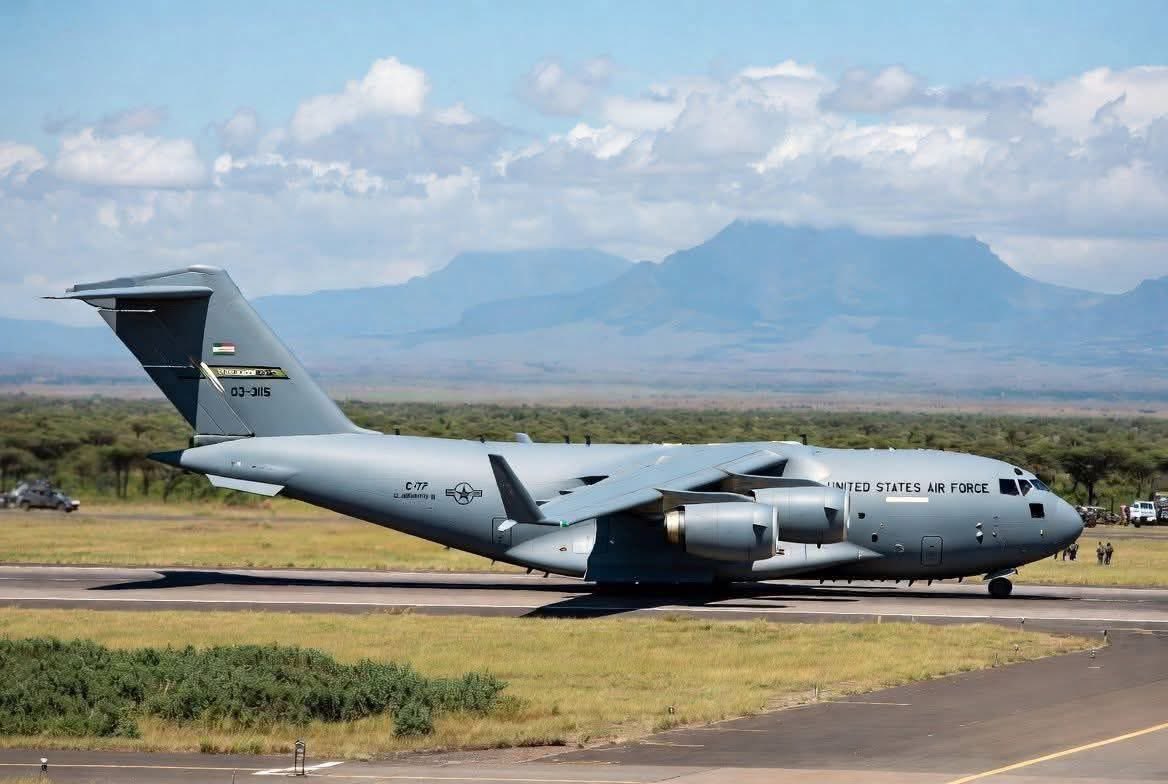
American Air force plane lands in Laikipia where the Ebola facility is being built.
Two weeks after Kenya and the world’s governments formally declared the Bundibugyo Ebola outbreak in eastern Democratic Republic of Congo and Uganda a Public Health Emergency of International Concern, the Trump administration did something unprecedented. On May 15, 2026, both the DRC and Uganda declared outbreaks of the Bundibugyo strain of the Ebola virus, a particularly dangerous variant for which there is currently no licensed vaccine or approved treatment. The World Health Organization elevated the outbreak to its highest global alert level on May 17. By May 28, the outbreak had produced more than 1,200 suspected and confirmed cases and at least 241 deaths, spread across Ituri, North Kivu, and South Kivu provinces in DRC, with confirmed imported cases in Uganda’s capital Kampala.
The Trump administration’s position was stated with uncommon bluntness by Secretary of State Marco Rubio during a Cabinet meeting on May 27: the United States could not and would not allow any cases of Ebola to enter American territory. This was a marked departure from the American approach during the 2014 to 2016 West African outbreak, when several infected American health workers and aid workers were evacuated to US soil for treatment at specialist biocontainment facilities, including the Emory University Hospital in Atlanta. The Trump administration was applying its America First framework with equal force to disease containment, refusing to accept for American soil the biological risk it was prepared to transfer to a partner country.
The partner country chosen was Kenya. On May 27, American officials anonymously confirmed to media that the Trump administration was establishing a quarantine and treatment centre in Kenya, to be built, staffed, and operated entirely by American personnel, for the purpose of receiving Americans exposed to Ebola while working or travelling in the DRC. Senior administration officials subsequently confirmed the facility would be a fifty-bed field hospital at Laikipia Air Base, roughly 125 miles north of Nairobi, capable of expansion to 250 beds if the outbreak’s trajectory demanded it. The unit would be staffed by the United States Public Health Service Commissioned Corps, a uniformed medical service under the Department of Health and Human Services. No Kenyan health worker would be involved in treating American patients.
On May 28, Secretary Rubio held a telephone call with President Ruto, in which the two leaders discussed coordinated efforts to secure vital medical supplies for Kenya and strengthen the country’s health preparedness systems. During that call, Rubio announced a US commitment of approximately Ksh1.74 billion to support Kenya’s Ebola preparedness. The same day, Kenya provided written approval for the American plan, granting the US access to land at Laikipia Air Base. Two US Air Force C-17A Globemaster III transport aircraft had already landed at the base by then. One, registration 98-0051, touched down at 11:12 UTC on May 28, tracked via Flightradar24 on a Ramstein-linked mission route consistent with US Air Mobility Command logistics operations. A second aircraft, 03-3115, followed the next day on an RCH152 mission. The quarantine unit was announced to be operational by Friday, May 29.
THE COURT INTERVENES
It was not to open. On May 28, the Katiba Institute, a Nairobi-based constitutional advocacy organisation led by executive director Nora Mbagathi, filed an urgent petition at the High Court challenging the planned facility on constitutional grounds. The petition argued that the proposed arrangement raised grave constitutional concerns regarding the rights to life, health, fair administrative action, public participation, and parliamentary oversight. It warned of grave and imminent risks to public health, contended that the facility was being established in secrecy and unilaterally, and complained that no environmental impact assessments, biosafety evaluations, or parliamentary approvals had been undertaken or disclosed.
High Court Judge Patricia Nyaundi certified the application as urgent and issued sweeping conservatory orders on May 29. The orders restrained the State Law Office and all respondents from establishing, operationalising, facilitating, approving, or permitting any Ebola exposure, quarantine, isolation, or treatment facility in Kenya arising from arrangements with the United States or any foreign government or agency. The court also barred Kenya from admitting, transferring, receiving, or facilitating the entry into Kenya of any person exposed to or infected with the Ebola virus under the disputed framework. The conservatory orders remain in force pending an inter-partes hearing scheduled for June 2, 2026. Katiba Institute promptly wrote to both the US State Department and the US Department of Health and Human Services notifying them of the ruling, stating that the court order constituted a binding judicial directive and that the United States was expected to respect Kenya’s legal and constitutional processes.
The US response came swiftly. The State Department issued a statement saying it was aware of the court action and was in touch with Kenyan authorities, adding that it was optimistic it could resolve the objections. The phrasing was diplomatic and restrained, but it signalled an expectation that the court-ordered halt was a temporary inconvenience rather than a permanent impediment. The facility, the US position implied, was lawful, the agreement was real, and resolution was a matter of process.
THE GOVERNMENT’S SILENCE
The Kenyan government’s handling of the controversy has been notable for its evasion. Health Cabinet Secretary Aden Duale, who assumed the health docket in March 2025 after a series of cabinet reshuffles, issued a statement that was carefully calibrated to say almost nothing. Any arrangements regarding international health cooperation, the statement read, would be guided by Kenya’s national laws, public health regulations, biosafety and biosecurity standards, and the government’s responsibility to safeguard the health and welfare of Kenyans. It did not confirm the facility existed. It did not deny it. It did not explain when the Americans were expected to begin arriving, why Kenya had been chosen, or by what authority the executive had approved a biosecurity installation on a military base without parliamentary consultation. The Parliamentary Health Committee has since summoned Duale to appear and account for himself.
President Ruto himself has not addressed the matter in a public forum. The State House has issued no statement beyond acknowledging his telephone call with Secretary Rubio. Prime Cabinet Secretary Mudavadi, whose Foreign Policy 2024 document created the legal and rhetorical foundation for Kenya’s role as a health emergencies hub, has similarly stayed silent. The government that designed the architecture for this arrangement has been content to let the architecture speak for itself while declining to defend it publicly.
WHAT THE CRITICS SAY
The opposition to the facility has been broad and pointed. Dr Davji Atellah, secretary-general of the Kenya Medical Practitioners, Pharmacists and Dentists Union, has been the most publicly forceful voice against the arrangement. His formulation is simple and rhetorically devastasting: if the twelve-hour medical evacuation flight from the DRC back to Washington is considered too dangerous for American citizens, by what logic is it safe to fly Ebola-exposed individuals into Kenyan airspace and deposit them in Laikipia? The United States has said openly that it cannot and will not allow Ebola to enter its borders. If it is too dangerous for America, the argument runs, it is too dangerous for Kenya. The union threatened a nationwide strike unless the full text of the bilateral agreement was made public within 48 hours. That demand has not been met.
Former Chief Justice David Maraga has called for parliamentary oversight. The Law Society of Kenya has urged the government to decline the American request. Elected representatives from Laikipia County, including Laikipia East MP Mwangi Kiunjuri, his West counterpart Wachira Karani, North’s MP Sarah Korere, and the county Woman Representative Jane Kagiri, issued a joint statement saying they see no logic in Kenya and Laikipia County hosting such a facility. Laikipia Governor Joshua Irungu went further, pledging that the county’s residents and leadership would do everything in their power to ensure no Ebola quarantine facility was established in the area.
From within the American public health establishment, there is parallel scepticism about the medical logic of the arrangement. For decades, the clinical consensus on haemorrhagic fever management has been that patients should be moved as little as possible, because transit in a deteriorating condition increases both the risk of death and the risk of transmission. Dr Ali Khan, the public health college dean at the University of Nebraska Medical Center and a veteran of American international Ebola responses, has noted that any such facility must provide care equivalent to specialist American biocontainment centres. That standard, maintained at great cost in facilities like the Nebraska Biocontainment Unit and Emory’s serious communicable diseases unit, would be exceptionally difficult to replicate at a temporary field hospital at an Air Force base in the Kenyan highlands.
THE LEGAL ARCHITECTURE AND ITS GAPS
The chain of agreements that produced the current confrontation represents a decade of incremental legal commitments, each building on the last, none of which was individually subjected to meaningful public debate. The 2015 agreement between Macharia and Godec was the foundation. The 2022 extension between Kagwe and Kneedler deepened it. The 2024 Foreign Policy created the ideological framework. The December 4, 2025 Health Cooperation Framework, signed by Mudavadi and Rubio at the State Department in Washington with President Ruto present as a witness, was the capstone. Under that agreement, Kenya became the first country in the world to enter a government-to-government health partnership under the Trump administration’s America First Global Health Strategy. The United States committed to providing $1.6 billion to Kenya’s health system over five years, with Kenya pledging to increase its own domestic health spending by $850 million over the same period. The funds would flow directly to government institutions, bypassing NGOs entirely.
What Katiba Institute’s petition has exposed is that the agreement chain, however legally constructed, may have bypassed constitutional requirements for public participation, parliamentary oversight, and environmental assessment. The court is being asked not to determine whether biosecurity cooperation between Kenya and the United States is inherently unlawful, but whether this specific arrangement, executed in this specific manner, with this specific degree of secrecy, respects the constitutional rights of Kenyan citizens. The distinction matters. A yes from the court would not vindicate the government’s opacity. A no would not necessarily invalidate all existing health cooperation frameworks. But either answer will define how far a Kenyan executive can commit national territory to foreign health operations without democratic accountability.
The liability waiver embedded in the 2015 agreement is one of the more disturbing provisions now attracting scrutiny. By agreeing that neither country could sue the other in the event of death, injury, or property damage arising from projects under the agreement, Kenya effectively capped its legal recourse in the event of an incident at the Laikipia facility. If an American patient deteriorates, escapes containment, or causes a localised exposure that harms Kenyan civilians or military personnel at the base, the legal remedies available to those Kenyans are severely constrained by a contract their government signed in 2015 and extended in 2022, without ever asking them if they agreed.
A DECADE IN THE MAKING
In the end, what is playing out at Laikipia Air Base is not simply a story about Donald Trump’s America First health policy or William Ruto’s transactional relationship with Washington. It is a story about a decision made in 2015 during a summit of maximum diplomatic goodwill, when a Kenyan health minister and an American ambassador signed a document whose full implications neither country chose to explain to its citizens, and which has been quietly extended and expanded in the decade since.
Obama came to Nairobi in July 2015 to host the Global Entrepreneurship Summit, the first time that summit had been held on African soil. He spoke of Kenya being on the move. He danced the Lipala at the State House dinner. He shook hands with Kenyatta before a guard of honour in the late afternoon sun. And on the day he arrived, a biosecurity agreement was signed that gave the United States of America the right to build laboratories and isolation facilities on Kenyan territory for diseases classified as biological threats, with tax exemptions for American personnel and immunity from Kenyan civil suits. That document, ratified by the National Assembly fourteen months later, is what Marco Rubio’s State Department reached for in May 2026 when it decided that Kenya, not America, would bear the risk of Ebola exposure for American citizens fleeing the DRC.
Kenya’s High Court has now pressed pause. The next hearing is June 2. Whether the pause becomes a full stop will depend on whether the court finds that the government’s legal architecture, however elaborately constructed, met the constitutional minimum that the people of Kenya be consulted before their country became a quarantine colony for a lethal virus their government had nothing to do with creating. That question, eleven years after the first agreement was quietly signed in the shadow of a historic homecoming visit, is finally being asked in public.
Kenya Insights allows guest blogging, if you want to be published on Kenya’s most authoritative and accurate blog, have an expose, news TIPS, story angles, human interest stories, drop us an email on [email protected] or via Telegram


Court Brands Sh1.1 Billion Fee Demand by Lawyer Victor Swanya “Excessive and Exorbitant,” Exposes How City Hall Lets Public Money Bleed Through Legal Bills

Trump Unveils New Air Force One

MR. NO SHOW: Finance Bill 2026 Exposes Ndindi Nyoro’s Political Conmanship

Billionaire Eric Muli Rebukes Musalia Mudavadi Over Nairobi Capital Relocation Debate

Lawyer Cliff Ombeta Warns Against Taking Insurance Cover With Old Mutual: “Talk to Me Before You Do, Their Imara Cover Is a Fraud”

My Life Is In Danger: Investor Drops Bombshell Expose On Thomas Ogutu CEO VeGrid Ltd And Fugitive Nairobi CEC Charles Kerich – DCI Inaction And Corruption Network Exposed

City Tycoon Chris Obure Returns To Senteu Plaza After Court Victory

NCBA’s Repossession Empire: How Borrowers Lose Their Cars While the Bank Profits at Every Step

Ex-First Lady Margaret Kenyatta and Siblings Move to Block Widow from Late Brother’s Sh50 Million Estate

Inside the Billion-Shilling Betrayal: How Senior Treasury Officials Plundered a UN Poverty Fund and Built a Real Estate Empire on the Backs of Kenya’s Rural Poor

Businessman Philip Waithaka Kinuthia’s Minor Son Allegedly Drove Drunk, Killed Two Peponi Students in Ngong Road Horror Crash as Claims of Cover-Up Intensify

Inside NCBA’s Decline: How a Banking Giant Lost Its Strategic Edge

Cement, Cash and Courts: How the Hashu Dynasty Crushed the Ramji Brothers for Fourteen Years and Why the Walls Are Now Closing In

Standard Chartered Ghosts Haunt Joshua Oigara At Stanbic As Whistleblower Spills Beans

Inside The Urban Planning Cartel That Owns Nairobi

South Sudan: Adut Salva Kiir’s Shadow Treasury Exposed

How Adil Popat Saved His Empire On The Eve Of Imperial Bank Collapse and Why Kenya’s Mainstream Media Buried The Story

Why John Ngumi Is Running From the EACC and Why the Sh415 Million Payday May Be the Least of His Worries

The President’s Daughter and The Missing Witness: How Adut Salva Kiir’s Shadow Treasury Silenced Its Most Dangerous Critic

Betika Faces DCI Probe, Directors Arrest and License Revocation Over Massive 29.5 Million Safaricom Customers’ Data Breach
-
 News5 days ago
Businessman Philip Waithaka Kinuthia’s Minor Son Allegedly Drove Drunk, Killed Two Peponi Students in Ngong Road Horror Crash as Claims of Cover-Up Intensify
-
 Business1 week ago
Inside NCBA’s Decline: How a Banking Giant Lost Its Strategic Edge
-
 Business1 week ago
Standard Chartered Ghosts Haunt Joshua Oigara At Stanbic As Whistleblower Spills Beans
-
 Africa1 week ago
South Sudan: Adut Salva Kiir’s Shadow Treasury Exposed
-
 Business1 week ago
How Adil Popat Saved His Empire On The Eve Of Imperial Bank Collapse and Why Kenya’s Mainstream Media Buried The Story
-
 Business1 week ago
Why John Ngumi Is Running From the EACC and Why the Sh415 Million Payday May Be the Least of His Worries
-
 Africa1 week ago
The President’s Daughter and The Missing Witness: How Adut Salva Kiir’s Shadow Treasury Silenced Its Most Dangerous Critic
-

 Investigations2 days ago
THE VULTURE AND THE SCHEME How Nairobi West Hospital Became the Most Dangerous Institution in Kenya’s SHA Ecosystem and Why the Books Must Be Audited Now