
Opinion
The Big Gaffe That Has Become Kenya’s Foreign Ministry
Under Musalia Mudavadi and PS Korir Sing’oei, Kenya’s once-respected diplomatic machinery has descended into a comedy of errors broadcast to the world. The problem is not a gaffe here or a misstep there. It is institutional rot at the top of the country’s most consequential ministry.
UPDATED: This article incorporates a rebuttal published by parties aligned to PS Sing’oei and our response to each of its central claims.

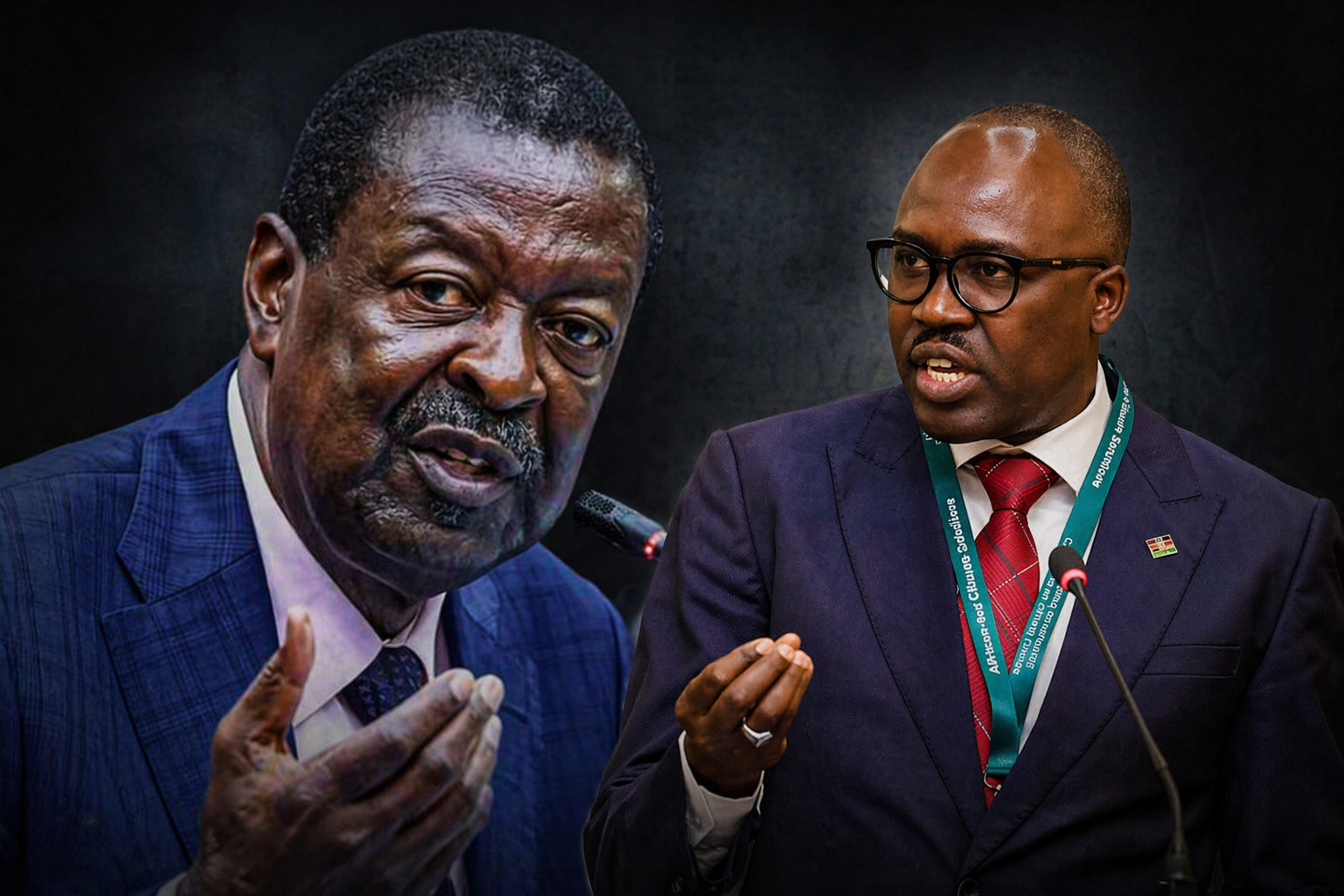
There is a scene that plays out repeatedly at Kenya’s Ministry of Foreign and Diaspora Affairs. A presidential visit is announced. The Cabinet Secretary issues a communique calling it a state visit. The host country’s foreign ministry then issues its own communique, quietly but unmistakably, describing a different and lesser category of engagement altogether.
Kenya’s ambassador to that country, who lives in the country and has read the official protocol, confirms the host’s version.
Kenya’s own Principal Secretary confirms the host’s version. And then Musalia Mudavadi, the man constitutionally responsible for all of this, repeats his original error.
This is not a story about a misplaced adjective in a press release.
This is a story about what happens when a ministry of state is run without institutional discipline, without intellectual rigour, and without the most basic respect for the professional vocabulary of the trade.
Under the stewardship of Prime Cabinet Secretary Mudavadi and Principal Secretary Abraham Korir Sing’oei, Kenya’s Foreign Ministry has become, in the blunt assessment of multiple serving ambassadors who spoke to Kenya Insights on condition of anonymity, an embarrassment to the country it claims to represent.
A foreign affairs minister who cannot distinguish visit types is the diplomatic equivalent of a finance minister who cannot read a balance sheet.
THE PROTOCOL SCANDAL THAT REFUSES TO GO AWAY
The distinction between a state visit and an official visit is not a technicality for pedants.
It is the fundamental vocabulary of international relations, codified in diplomatic protocol dating back to the Vienna Convention on Diplomatic Relations, what former Indonesian Ambassador to Kenya Hery Saripudin has described as the bible of diplomacy.
A state visit is extended by a head of state, carries full ceremonial honours including a 21-gun salute and a state banquet, and signals the highest elevation of bilateral ties.
An official visit is meaningful but categorically subordinate: fewer ceremonies, more working meetings, and explicitly less symbolic weight.
Every foreign minister on earth is expected to know this without being told.
Mudavadi does not appear to.
When President William Ruto travelled to Italy on April 20, Rome had designated the engagement an official visit, the first of its kind between the two countries.
Kenya’s own ambassador to Italy, Fredrick Matwang’a, confirmed this explicitly and on the record.
PS Sing’oei, in a social media post the day before Mudavadi held a briefing on the subject, also described it correctly as an official visit.
And yet Mudavadi, on April 13, on April 19, and again upon Ruto’s arrival in Rome on April 20, called it a state visit, three times, without correction, without shame.
This was not the first time. In March 2024, Mudavadi’s office billed Ruto’s visit to Japan as a state visit.
Tokyo had classified it as an official visit. State House briefly echoed the mislabel before the Japanese foreign ministry’s quiet correction circulated through diplomatic channels.
Earlier this year, when Mozambican President Daniel Chapo arrived in Nairobi, Mudavadi downgraded what the foreign ministry had designated a state visit, calling it a working visit upon Chapo’s arrival.
The ministry then revised its own language again the following day.
Three different officials, three different designations, across two days of a single visit.
The Mudavadi protocol failure has also spread laterally through the government like a contagion. Finance PS Dr. Chris Kiptoo publicly described the Italy engagement as a state visit in his own social media post.
Presidential technology envoy Philip Thigo did the same.
The minister’s inflated language has become the official language of an entire layer of senior officials who either do not know better or are afraid to contradict the man at the top.
THE SING’OEI PROBLEM
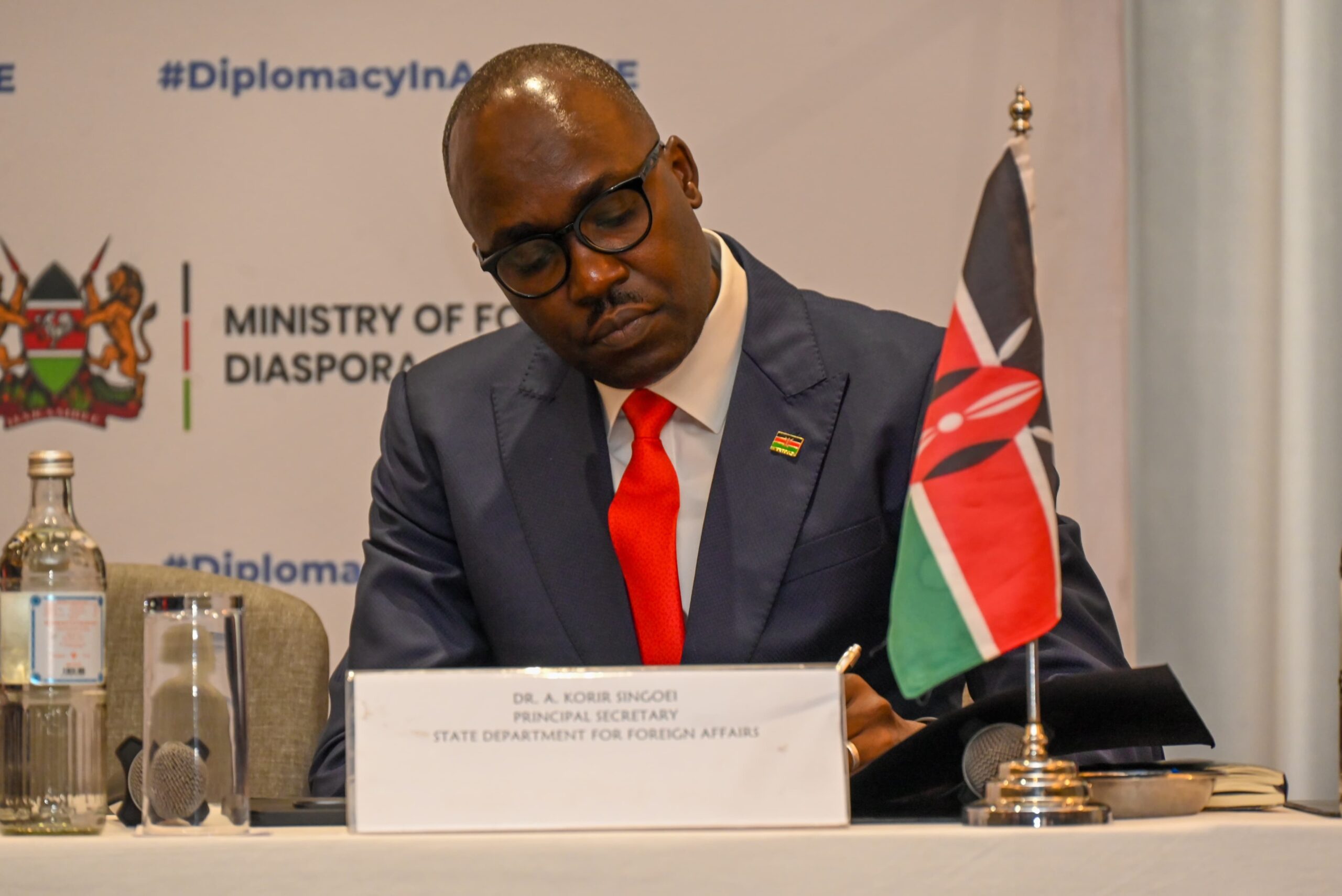
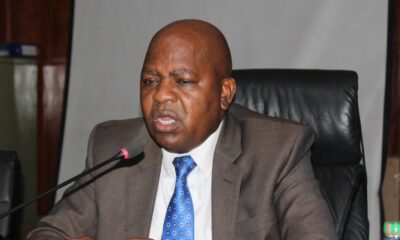
PS Sing’oei
To understand the full extent of Kenya’s diplomatic malfunction, one must look past Mudavadi to the man who runs the machinery on a daily basis.
Korir Sing’oei has served as Principal Secretary at the Foreign Affairs ministry since 2022, appointed directly from his role as Senior Legal Adviser to the Executive Office of the Deputy President.
He arrived with credentials: an advocate of the High Court, a Fulbright scholar, a graduate of the University of Minnesota and the University of Pretoria, a published academic on minority rights and African property law.
He is, by any measure, an intelligent man.
He is also, by the record of the past three years, a catastrophically undisciplined one.
In February 2025, Sing’oei posted a doctored video to his official X account depicting CNN’s Fareed Zakaria praising Kenya’s role in the Sudan peace process.
The video was a deepfake, an AI-generated fabrication that had no connection to CNN, to Zakaria, or to reality.
After a public backlash that drew international attention, Sing’oei was forced into a public apology, promising to enrol in the School of AI Diplomacy at the Foreign Services Academy.
That a Principal Secretary of foreign affairs required remedial education in media verification was, to put it diplomatically, a significant headline.
Months later, the Iran episode arrived. On April 1, 2026, Sing’oei disclosed a phone call with a senior UAE official describing the repercussions of IRGC attacks on Gulf infrastructure, language that placed Kenya’s voice explicitly on one side of a live geopolitical conflict.
The Iranian Embassy in Nairobi issued a pointed rebuttal within days, accusing Kenya of mischaracterising international law and ignoring the wider context of the conflict.
Kenya, which has historically maintained a non-aligned posture honed across decades of regional turbulence, suddenly found itself being publicly lectured on the UN Charter by a foreign embassy in its own capital.
Before that, Sing’oei had publicly clashed with Senate Speaker Amason Kingi over Kenya’s Somaliland policy, using social media to lecture the Speaker of a constitutionally co-equal arm of government about the limits of his mandate.
Senators debated summoning the PS for contempt.
Sing’oei’s office also oversaw a leaking, fractious relationship with heads of mission across multiple embassies, with The Standard reporting sustained clashes in Nairobi’s most consequential postings including Paris, Tokyo, London, Berlin, and Pretoria.
Sources within the ministry described an institutional culture in which the headquarters felt less like a strategic nerve centre and more like an obstacle.
Kenya’s once-formidable diplomatic brand has been replaced with something closer to performative noise: high on ambition, empty on execution.
THE STANDARD THAT WAS SET BEFORE THEM
It is worth remembering what Kenya’s foreign policy leadership used to look like, because the contrast with the current dispensation is not subtle.
Monica Juma, who served as Foreign Affairs Cabinet Secretary under President Uhuru Kenyatta from 2017 to 2018, brought to the role a career diplomat’s rigour and a scholar’s analytical depth.
She had served as Kenya’s concurrent Ambassador to Ethiopia, Djibouti, the African Union, IGAD and the United Nations Economic Commission for Africa, all simultaneously, from a base in Addis Ababa.
She knew the protocol frameworks from lived operational experience. She did not confuse visit categories. She did not post deepfakes.
Amina Mohammed, who held the portfolio from 2013 to 2016 before her elevation to the United Nations, built Kenya’s reputation as a serious continental power through a combination of diplomatic discretion, multilateral engagement, and meticulous attention to Kenya’s non-aligned positioning.
Her tenure produced substantive architecture in AU diplomacy, East African security cooperation, and Somalia’s political transition that Kenya facilitated from behind.
She did not need to be corrected by the host country’s foreign ministry about the nature of a presidential visit.
Alfred Mutua, Mudavadi’s immediate predecessor, completed a functional diplomatic handover that included operational achievements in the visa-free initiative, the hosting of the Africa Climate Summit, and the activation of several bilateral instruments.
Whatever Mutua’s political limitations, he was replaced partly because President Ruto wanted a heavier political figure in the role.
What Ruto got instead was a heavier political figure with a lighter grasp of the role’s professional requirements.
THE TANZANIA CATASTROPHE AND WHAT IT REVEALED
The single most damaging episode of Mudavadi’s tenure was the Tanzania crisis of May 2025. In that month, Kenyan human rights activist Boniface Mwangi, along with former Chief Justice Willy Mutunga, former Justice Minister Martha Karua, Law Society of Kenya Council member Gloria Kimani and others, travelled to Tanzania to observe the treason trial of opposition leader Tundu Lissu, a constitutionally protected activity under the EAC Common Market Protocol.
Tanzanian authorities detained and deported several members of the group.
Mwangi was not merely deported.
He was held incommunicado, subjected to what he and Amnesty International described as beatings and torture including sexual assault, and abandoned at a border post in Ukunda, Kwale County.
Mudavadi, appearing on Citizen TV on the day of Mwangi’s deportation, offered not outrage but a lecture.
He told the nation that Tanzanian President Samia Suluhu had a point about Kenyan activists. He said he could not fault Suluhu. He said there was some truth in her remarks.
A man had been tortured and abandoned at a border crossing. Kenya’s Foreign Minister responded by endorsing the philosophical basis of the conduct that led to his torture.
For critics and former diplomats who spoke to this publication, this was an official declaration that Kenya had abandoned the protection of its citizens abroad as an active foreign policy commitment.
THE REBUTTAL: WHAT SING’OEI’S ALLIES ARE SAYING
Following publication of this story, a formal rebuttal was circulated online by parties whose language, framing and knowledge of internal ministry detail suggest alignment with Sing’oei himself or his immediate circle.
The document describes this publication’s original story as a sensationalist smear relying almost entirely on unnamed sources and argues that Sing’oei is Kenya’s most dynamic and effective Foreign Affairs Principal Secretary.
It makes five central claims in his defence.
Each of them deserves a direct answer.
REBUTTAL CLAIM 1: THE AMBASSADOR BASUNA INCIDENT WAS TABLOID EXAGGERATION
The very same article quotes Ambassador Basuna herself on record: ‘He is too busy, his portfolio is large and complex… it was not mine to judge really… I did not take offence.’ She explicitly declined to validate the anonymous drama. There were no tears and no humiliation. This was not disrespect but accountability.
This argument is a textbook case of using a single on-the-record denial to erase a much larger pattern of off-the-record testimony.
The Standard’s David Odongo reported that multiple sources present at the 19th Ambassadors Conference described the exchange between Sing’oei and Ambassador Basuna as humiliating and disproportionate.
Basuna’s own guarded public statement, that she did not take offence and that it was not hers to judge, is not exculpatory.
It is the language of a serving diplomat who understands that attacking her Principal Secretary on the record would be career suicide.
The rebuttal has somehow interpreted professional discretion as an exoneration.
It is neither.
Ambassadors do not speak freely when their PS has access to their posting, their performance review, and their next assignment.
The fact that multiple sources, in a closed conference environment, described the same scene to a reporter independently is more evidentially significant than one ambassador’s careful public statement.
The rebuttal’s characterisation of performance accountability as responsible leadership would be more convincing if the accountability were applied consistently and without what those present described as public humiliation.
Demanding results and publicly demeaning a veteran diplomat before her peers are not the same act.
REBUTTAL CLAIM 2: SING’OEI’S IRAN COMMENTS WERE CORRECT STATECRAFT, NOT A GAFFE
Kenya had already expressed solidarity with the UAE and Gulf states multiple times under President Ruto. Non-alignment never meant silence when allies are attacked or global energy supplies are threatened. Dr Sing’Oei was simply communicating official government policy clearly and proactively.
This argument would be compelling if the Iranian Embassy had not formally rebutted it. In diplomatic reality, a statement is not merely what it intends to say. It is what it causes other governments to say in response.
When a country’s Principal Secretary of Foreign Affairs makes a public statement that causes the accredited ambassador of a sovereign state to issue a formal written rebuttal accusing Kenya of mischaracterising international law, the statement has produced a diplomatic consequence.
That consequence is not cancelled by explaining what the statement was meant to mean.
Kenya’s own subsequent clarification from Sing’oei’s office, insisting the country remained non-aligned, implicitly acknowledged that the original communication had created a misimpression serious enough to require correction.
A communication that requires immediate clarification to undo its own damage is, by any professional definition, a failed communication.
The rebuttal’s claim that this represents agile, interest-driven Twiga diplomacy mistakes noise for strategy.
REBUTTAL CLAIM 3: THE DEEPFAKE APOLOGY SHOWED ACCOUNTABILITY AND TRANSPARENCY
He immediately apologised publicly, acknowledged the error, thanked those who flagged it, and committed the ministry to exploring AI watermarking and training. This was not an embarrassing cover-up but transparency and forward-thinking leadership in the digital age.
The argument that a Principal Secretary of Foreign Affairs should receive credit for apologising after sharing a fabricated CNN video from his official government account requires a very low threshold for what constitutes forward-thinking leadership.
The standard being invoked here, he apologised, is the minimum available response to a documented falsehood, not evidence of competence.
The relevant question is not whether Sing’oei apologised but why a senior official responsible for managing Kenya’s international image did not verify content before amplifying it to his official government following.
The rebuttal’s framing transforms a basic failure of professional judgment into a demonstration of digital savviness.
This is not a serious argument.
It is the rhetorical equivalent of praising a surgeon for apologising after operating on the wrong patient.
REBUTTAL CLAIM 4: ANONYMOUS SOURCES ARE INHERENTLY UNRELIABLE AND THE CRITICISM IS BUREAUCRATIC RESISTANCE
These are classic bureaucratic pushback against a high-performing outsider demanding results. Dr Sing’Oei is not a career diplomat. He brings fresh expertise, not decades inside the same echo chamber. Blaming him is scapegoating.
The argument that critical anonymous sources are, by definition, resistant to change and therefore discountable is one of the oldest deflection techniques available to a public official under scrutiny.
It allows any institution to dismiss any internal criticism as the product of vested interests, without engaging with the substance of what is being said.
The rebuttal does not address what the sources actually alleged.
It does not explain the mission clashes in Paris, Tokyo, London, Berlin and Pretoria.
It does not explain the weeks of unanswered calls to the headquarters. It does not address the pattern of redeployments following ambassador-deputy conflicts.
It simply asserts that those who complain are people resistant to performance standards, a claim that is inherently unfalsifiable and therefore analytically worthless.
Furthermore, the claim that Sing’oei is an outsider bringing fresh expertise to a stale bureaucracy becomes harder to sustain when that outsider has been in post for nearly four years and the institutional problems have not resolved but compounded. Outsider energy is an asset in year one.
By year four, the culture is yours.
REBUTTAL CLAIM 5: SING’OEI HAS AN IMPRESSIVE RECORD THAT THE ORIGINAL ARTICLE IGNORES
As Principal Secretary since October 2022, he has driven performance contracting and innovation across missions, championed economic diplomacy, diaspora engagement, and youth involvement in foreign policy, and advanced Kenya’s role in regional peace processes including Sudan, Somalia AUSSOM, the DRC Nairobi Process, and South Sudan.
This publication does not dispute that Abraham Korir Sing’oei is a person of considerable intellectual capability or that Kenya has participated in regional peace processes during his tenure.
These things are true and were not challenged in the original article.
The original article challenged something different: the conduct, the communications culture, the treatment of mission staff, the erosion of institutional protocol, and the public record of documented errors that have cost Kenya diplomatic credibility with bilateral partners.
A list of initiatives in which Kenya has participated is not an answer to evidence of institutional dysfunction. A foreign ministry can simultaneously be involved in the DRC Nairobi Process and be incapable of correctly classifying the nature of its president’s visits.
One does not cancel the other.
The rebuttal conflates activity with effectiveness and participation with leadership. These are not the same things.
WHAT THE REBUTTAL ITSELF REVEALS
The most instructive aspect of the Sing’oei rebuttal is not its arguments but its architecture. It was written with evident knowledge of internal ministry dynamics, including specific awareness of what was said at the Ambassadors Conference and the communications around the Basuna exchange.
It was circulated promptly and with clear organisation.
It deploys the language of accountability reform to defend against accountability scrutiny. It invokes the PS’s academic credentials and landmark legal victories as character evidence rather than engaging with the operational failures documented in the original reporting.
This is the strategy of an official who is well-advised but poorly served by the record.
A rebuttal that spends several hundred words praising the PS’s Endorois litigation victory from a decade ago in response to evidence of current institutional disorder is not a defence. It is a distraction.
The Endorois case, which Sing’oei won before the African Commission on Human and Peoples’ Rights in 2010, was a genuine milestone in African human rights jurisprudence.
It has nothing to do with whether the ministry correctly classified Ruto’s visit to Japan in 2024.
Bringing it up suggests the defence team understands they cannot defend the actual record and has opted instead to litigate the PS’s biography.
The rebuttal also makes a revealing error in its own framing. It describes the criticism of Sing’oei as a hit piece against Kenya’s most dynamic and effective Foreign Affairs Principal Secretary.
The word dynamic appears frequently in government circles in Nairobi as a synonym for visible and assertive.
But dynamism is not a foreign policy outcome. It is a personality characteristic. The measure of a Principal Secretary is not whether he posts frequently, attends conferences, or generates social media traffic.
It is whether the ministry he runs produces coherent communications, protects Kenyan citizens abroad, maintains non-partisan positioning on volatile geopolitical questions, and commands the institutional respect of the mission network it supervises.
On each of these measures, the documented record is poor.
THE STRUCTURAL COLLAPSE OF KENYA’S DIPLOMATIC IDENTITY
Kenya’s diplomatic brand rested for decades on three pillars: non-alignment, citizen protection, and multilateral credibility.
All three are in measurable deterioration under the current leadership.
Non-alignment has been replaced with a pattern of reactive alignment that shifts depending on which foreign ministry official calls Sing’oei on a given day.
Citizen protection has been replaced with strategic silence punctuated by occasional statements about bilateral trade volumes.
Multilateral credibility, which Kenya spent forty years building through careful positioning at the UN, the AU, and IGAD, is now routinely undercut by communications gaffes that require foreign governments to correct the public record.
The 19th Ambassadors Conference, held in Nairobi in late March 2026, was meant to address exactly this kind of institutional dysfunction.
President Ruto addressed the assembled envoys on strategic communication.
A dedicated session on coherent communications was led by Gina Din Kariuki. Mudavadi and senior ministry officials were present. Within three weeks, Mudavadi had called the Italy visit a state visit three separate times.
The conference appears to have changed nothing.
The consequences are quiet but cumulative. Ambassadors posted to Nairobi notice when Kenya’s official statements do not match what their own foreign ministries are saying.
Partner governments begin applying what one veteran regional diplomat described to this publication as the verification discount: they receive Kenya’s official communications and independently verify before acting on them.
When a country’s diplomatic word requires independent verification before it can be trusted, it has lost something that cannot be recovered by issuing a corrected tweet.
The Sing’oei rebuttal, energetically denying a record that is publicly documented, applies precisely the same verification discount to itself.
A MINISTRY THAT DOES NOT KNOW WHAT IT DOES NOT KNOW
The most charitable interpretation of the Mudavadi protocol errors is ignorance: that the Cabinet Secretary and his communications team genuinely do not know the difference between visit categories. The Sing’oei rebuttal does not address this at all, because it cannot.
Mudavadi is not Sing’oei.
The rebuttal defends the PS with considerable energy but has nothing to say about the minister who has called three separate presidential visits by the wrong name in front of the host governments concerned.
This gap in the defence is itself revealing.
If the ministry were the coherent, high-performing institution the rebuttal describes, the minister and the PS would be operating from a shared institutional framework.
The fact that Mudavadi repeatedly contradicts his own PS’s correct characterisation of visit categories, and that nobody in the ministry corrects this before it goes public, is the clearest possible evidence that no such framework exists.
The rebuttal has defended one official against a record that implicates the whole house.
Kenya’s neighbours are watching.
Its partners are watching.
The ambassadors posted to Nairobi, who speak among themselves in ways that never appear in official readouts, are watching.
And what they are watching is the slow, public, entirely unnecessary self-destruction of a diplomatic reputation that generations of Kenyan civil servants spent decades building.
A rebuttal published by anonymous allies praising the PS’s human rights litigation record from 2010 has not changed that picture.
It has merely added a footnote to it.
Mudavadi should know what kind of visit his president is making.
His ambassador does.
His PS does.
The host country does. Apparently, the people drafting the PS’s rebuttals do.
At some point, the outlier in that list becomes the story. In Kenya’s case, the outlier has been telling that story, repeatedly and without correction, for over two years. The rebuttal has confirmed it.
Kenya Insights allows guest blogging, if you want to be published on Kenya’s most authoritative and accurate blog, have an expose, news TIPS, story angles, human interest stories, drop us an email on [email protected] or via Telegram


Somali Government Adviser Held in Kenya Over Alleged Sh3.5 Million Gold Fraud and Terrorism Links

Reprieve for Lawyer Conrad Maloba as Court Extends Orders Blocking His Prosecution in Gold Fraud Case

How Adil Popat Saved His Empire On The Eve Of Imperial Bank Collapse and Why Kenya’s Mainstream Media Buried The Story

South Sudan: Adut Salva Kiir’s Shadow Treasury Exposed

Wajir North MP Ibrahim Abdi Dissatisfied With2026/27 Budget, Claims It Totally Excludes North Eastern Region

The Eldoret Tax Fortress: How David Langat Turned an Industrial Park Dream Into Kenya’s Most Sophisticated Domestic Tax Haven

Why John Ngumi Is Running From the EACC and Why the Sh415 Million Payday May Be the Least of His Worries

Shiquo Hii Style Store Was Not Raided, Anti-Counterfeit Authority Confirms; Says Influencer Used Empty Shelves for Content as She Relocates

Treasury CS Mbadi Unveils Sh4.8 Trillion Budget Estimates

Fraud, Misrepresentation and A Decade Of Evasion: How Indo Africa Finance Pocketed Sh150 Million Youth Funds and Fought To Keep Every Cent

Cement, Cash and Courts: How the Hashu Dynasty Crushed the Ramji Brothers for Fourteen Years and Why the Walls Are Now Closing In

Inside NCBA’s Decline: How a Banking Giant Lost Its Strategic Edge

Standard Chartered Ghosts Haunt Joshua Oigara At Stanbic As Whistleblower Spills Beans

Inside The Urban Planning Cartel That Owns Nairobi

Why Ruto’s Favourite Candidate Adan Mohammed Could Be Locked Out of the KRA Top Job
South Sudan: Adut Salva Kiir’s Shadow Treasury Exposed

LifeCare on the Brink: SHA Fraud, Stolen Wages, and the Rotten Empire Jayesh Saini Built

Betika Faces DCI Probe, Directors Arrest and License Revocation Over Massive 29.5 Million Safaricom Customers’ Data Breach

Fresh Move Launched to Remove Kenya Railways MD Mainga From Office After Awarding Sh817 Million Consultancy Contract

Este Medical Kenya Fights American’s Explosive Complaints
-
 Investigations1 week ago
Cement, Cash and Courts: How the Hashu Dynasty Crushed the Ramji Brothers for Fourteen Years and Why the Walls Are Now Closing In
-
 Business4 days ago
Inside NCBA’s Decline: How a Banking Giant Lost Its Strategic Edge
-
 Business3 days ago
Standard Chartered Ghosts Haunt Joshua Oigara At Stanbic As Whistleblower Spills Beans
-
 Investigations1 week ago
Inside The Urban Planning Cartel That Owns Nairobi
-
 Africa2 days ago
South Sudan: Adut Salva Kiir’s Shadow Treasury Exposed
-
 Investigations2 weeks ago
Betika Faces DCI Probe, Directors Arrest and License Revocation Over Massive 29.5 Million Safaricom Customers’ Data Breach
-
 Investigations1 week ago
Fresh Move Launched to Remove Kenya Railways MD Mainga From Office After Awarding Sh817 Million Consultancy Contract
-
 Africa3 days ago
The President’s Daughter and The Missing Witness: How Adut Salva Kiir’s Shadow Treasury Silenced Its Most Dangerous Critic