
News
I Will Bribe Every Judge in Town- MP Jack Wamboka
Bumula MP Jack Wamboka, barely days after being suspended as chairman of a powerful parliamentary watchdog committee for demanding bribes from witnesses, vows to corrupt the judiciary to claw back his position — a threat that raises the spectre of a lawmaker deploying the very weapon that brought him down.

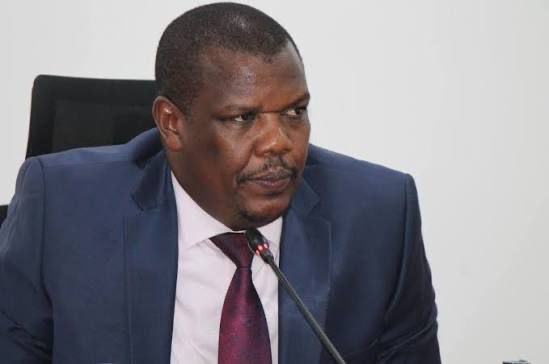
The suspension was barely forty-eight hours old when the defiant boast reached the newsroom. Bumula Member of Parliament Jack Wanami Wamboka, stripped of his chairmanship of the National Assembly’s Public Investments Committee on Governance and Education over credible allegations that he solicited bribes from witnesses who came before the committee, was already plotting his comeback — and the playbook, sources with direct knowledge of his intentions tell Kenya Insights, is as brazen as the conduct that triggered his fall.
Wamboka, according to multiple sources who requested anonymity given the sensitivity of disclosing a sitting lawmaker’s intentions, has been openly telling associates that he intends to shop for a compliant judge, bribe his way to a favourable court order, and use the injunction to nullify the National Assembly’s decision suspending him. ‘I am untouchable,’ he has reportedly told confidants. ‘I will bribe every judge in town to get my orders.’
“I am untouchable. I will bribe every judge in town to get my orders.” — Wamboka, according to sources with direct knowledge of his intentions
THE SUSPENSION THAT SHOOK THE HOUSE
On Wednesday, April 22, 2026, National Assembly Deputy Speaker Gladys Boss Shollei delivered a ruling that brought the chamber to a hush.
In measured but devastating terms, she announced that Wamboka stood suspended from chairing the Public Investments Committee on Governance and Education — one of Parliament’s most consequential oversight organs — pending the outcome of an investigation by the Committee on Powers and Privileges.
The trigger was a formal petition to Speaker Moses Wetang’ula from the National Cohesion and Integration Commission. In its letter, NCIC Chairman Samuel Kobia described what he called open hostility, harassment, and demeaning treatment of commission officers who had appeared before Wamboka’s committee to respond to queries arising from Auditor-General reports for the 2021/2022 and 2023/2024 financial years.
But beyond the hostility, the NCIC levelled a charge that cut to the bone: that Wamboka had demanded bribes as a precondition for granting audience or offering favourable consideration during committee proceedings.
‘In order to safeguard public trust in the work of the Public Investments Committee on Governance and Education during the pendency of the inquiry, I am further persuaded to suspend the Honourable Jack Wamboka from chairing the committee,’ Shollei declared, her words falling into a chamber that understood the gravity of the moment.
The probe has been handed to Ainabkoi MP Samuel Chepkonga, a veteran parliamentarian, with a 45-day deadline to table findings — a report the House must receive by June 9, 2026. Shollei co-opted MPs Sarah Korere and Robert Gichimu to strengthen the investigative panel, and directed the Minority leadership — Wamboka sits on the Minority bench — to nominate an interim committee chair by noon the following day.
By Thursday evening, Luanda MP Dick Maungu had been installed as interim chairman.
A LAWMAKER WHO PROTESTS TOO MUCH
Wamboka, a Democratic Action Party of Kenya legislator representing Bumula Constituency in Bungoma County, rose to address the House after the ruling.
His response was defiant.
He dismissed the NCIC’s complaint as politically motivated, arguing that the commission’s grievances were connected to the committee’s scrutiny of its operations — including questions over recruitment and financial management.
He further pointed to what he described as suspicious timing, suggesting the complaint had been revived after lying dormant, which he framed as evidence of bad faith.
‘The allegations are unfounded and possibly related to the robust examination of reports and accounts of the NCIC by the committee,’ Wamboka told the House. He questioned why the complaint was surfaced at a particular moment, characterising the delay as proof that it lacked merit from inception.
Minority Leader Junet Mohammed offered public support, expressing confidence that Wamboka would be vindicated, describing him as ‘a law-abiding Member of Parliament.’
Majority Leader Kimani Ichung’wah praised the Deputy Speaker’s ruling as balanced, cautioning against generalising the allegations to the entire committee while endorsing the process as one that would deliver fair administrative justice.
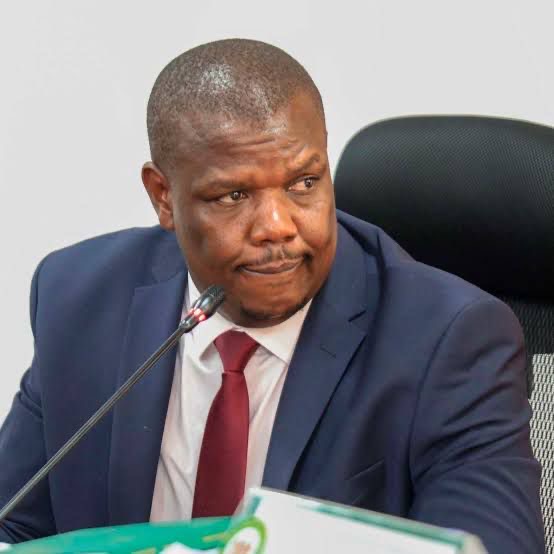
Wamboka had demanded bribes as a precondition for granting audience or offering favourable consideration — NCIC Chairman Samuel Kobia, in petition to Speaker Wetang’ula
Constituents in Bumula staged street protests on Thursday, with demonstrators carrying placards through market centres in Bungoma, insisting the suspension was political punishment for a vocal opposition MP. Edwin Wafula, a spokesperson for the protesters at Kabula market, accused the Kenya Kwanza government of orchestrating the removal. ‘This move is not about accountability but politics,’ he said.
NOW HE THREATENS THE JUDICIARY
What Kenya Insights has established goes beyond the parliamentary record. Well-placed sources — among them persons who have interacted directly with the embattled MP in the days since the suspension — say Wamboka has made no secret of his intention to weaponise the courts. His stated plan is to file proceedings challenging the National Assembly’s decision, and to ensure those proceedings succeed not through the merits of his arguments, but through corrupting whichever judge the case lands before.
The statements, our sources say, have been made with the confidence of a man who believes money is the ultimate leveller.
Wamboka’s reported willingness to approach the judiciary with the same transactional logic he allegedly applied to witnesses before his committee speaks to a deeper pathology — one in which public office is merely a vantage point for extraction, and institutions exist to be gamed rather than served.
If realised, such a scheme would constitute at least two separate offences under Kenyan law. Section 117 of the Penal Code criminalises the corruption of judicial officers, carrying custodial penalties.
The Anti-Corruption and Economic Crimes Act similarly penalises any person who corruptly gives, promises or offers any advantage to a state officer — a category that includes members of the judiciary — in connection with their duties.
For a sitting Member of Parliament, the exposure extends further: Article 75 of the Constitution requires public officers to behave with integrity, and Chapter Six’s leadership requirements would be directly engaged.
The Director of Public Prosecutions, the Ethics and Anti-Corruption Commission, and the Office of the Director of Criminal Investigations have jurisdiction over the conduct now being attributed to Wamboka. His threats, if substantiated, would constitute criminal
conspiracy before a single bribe has changed hands.
THE COMMITTEE HE STOOD TO LOSE
The Public Investments Committee on Governance and Education is not a backwater assignment. It is a frontline oversight organ tasked with examining audit reports on public investments across some of Kenya’s most consequential sectors — education, governance, justice, and law and order.
The Auditor-General’s findings in these areas often expose billions of shillings in unexplained expenditure, procurement irregularities, and outright fraud by state agencies.
A chairman who controls the flow of that scrutiny controls, in significant measure, the fate of public servants and institutional chiefs who come before the committee.
The power that attaches to such a chairmanship is substantial — and, critics say, it is precisely that power that Wamboka allegedly sought to monetise.
The NCIC’s complaint suggests the pattern of extracting inducements from witnesses was not an isolated incident but an operating method, deployed across the examination of multiple audit periods.
Deputy Speaker Shollei, in her ruling, was alert to the systemic implications. She warned that even the perception of impropriety could undermine the committee’s constitutional mandate, and that summoning entities on matters outside the committee’s remit risked antagonising both those entities and the broader institution.
Her caution reads, in hindsight, as a diagnosis of a committee that had drifted from oversight into exploitation.
CORRUPTION’S BOOMERANG
There is a bitter irony in the trajectory of this story. Wamboka chairs — or chaired — a committee designed to hold public agencies accountable for the misuse of public resources.
The very instrument of accountability became, if the allegations against him are true, an instrument of personal enrichment. And now, facing consequences for that alleged enrichment, he reportedly plots to extend the same corruption to the institution designed to adjudicate such matters.
It is a logic that, if left unchecked, would metastasise into every organ of the state. A legislator who can demand bribes from witnesses with impunity, and then buy off a judge to escape the reckoning, would demonstrate to every corner of Kenya’s public sector that accountability is not a constraint but a commodity.
The Powers and Privileges Committee now holds the first line of institutional response. Chepkonga’s panel has 45 days.
The clock started Wednesday. But given the extraordinary nature of what Wamboka is alleged to have said since his suspension — words that amount, at a minimum, to a declaration of intent to commit a serious crime — the question before the DPP, the EACC, and the Judicial Service Commission is whether they are prepared to move faster than Parliament.
Kenya Insights allows guest blogging, if you want to be published on Kenya’s most authoritative and accurate blog, have an expose, news TIPS, story angles, human interest stories, drop us an email on [email protected] or via Telegram


The President’s Daughter and The Missing Witness: How Adut Salva Kiir’s Shadow Treasury Silenced Its Most Dangerous Critic

Kisii Under Siege: Governor Arati’s Wife Accused of Hijacking IFMIS and Running a Parallel Government

Al-Shabaab Issues Statement Defending Omar Artan, Accuses U.S. of Discrimination After Referee’s Deportation

Netanyahu To Run For Re-Election, His Party Says, After Trump Raises Doubts

US Cracks Down on Birth Tourism Schemes

Microsoft Limits Employee Use Of Anthropic’s Claude Fable 5 Over Data Retention Concerns, The Verge Reports

Standard Chartered Ghosts Haunt Joshua Oigara At Stanbic As Whistleblower Spills Beans

Caleb Amisi Says Linda Mwananchi Has Lost Direction, Announces Plans To Form A New Movement

Air Canada Pilot Flew Passengers For Years With A Fake Pilot’s License, Police Say

Itumbi Claims Kalonzo Has Settled on Sifuna as Running Mate

Cement, Cash and Courts: How the Hashu Dynasty Crushed the Ramji Brothers for Fourteen Years and Why the Walls Are Now Closing In

Inside The Urban Planning Cartel That Owns Nairobi

Why Ruto’s Favourite Candidate Adan Mohammed Could Be Locked Out of the KRA Top Job

LifeCare on the Brink: SHA Fraud, Stolen Wages, and the Rotten Empire Jayesh Saini Built

Este Medical Kenya Fights American’s Explosive Complaints

Betika Faces DCI Probe, Directors Arrest and License Revocation Over Massive 29.5 Million Safaricom Customers’ Data Breach

The Rot Inside Absa: How Bank Insiders Are Looting Nairobi’s Customers

Inside FAFSA Fraud: How Kenyan Cybercriminals Siphoned Millions from America’s Sh12 Billion Student Loan System

Fresh Move Launched to Remove Kenya Railways MD Mainga From Office After Awarding Sh817 Million Consultancy Contract

Court Confirms Safaricom Customers Data Was Sold To Betting Companies In Seven-Year Cover-Up
-
 Investigations6 days ago
Cement, Cash and Courts: How the Hashu Dynasty Crushed the Ramji Brothers for Fourteen Years and Why the Walls Are Now Closing In
-
 Investigations5 days ago
Inside The Urban Planning Cartel That Owns Nairobi
-
 Investigations1 week ago
Betika Faces DCI Probe, Directors Arrest and License Revocation Over Massive 29.5 Million Safaricom Customers’ Data Breach
-
 Investigations6 days ago
Fresh Move Launched to Remove Kenya Railways MD Mainga From Office After Awarding Sh817 Million Consultancy Contract
-

 News2 weeks ago
Eight Students Arrested In Kenya After Suspected Deadly School Arson Attack
-
 News2 weeks ago
How Uhuru’s Deal With Obama In 2015 Paved Way For America’s Ebola Plan In Kenya
-
 Business1 week ago
TRUST BETRAYED: How Senior DTB Bank Insiders Allegedly Looted Sh149 Million From a Customer’s Account Over Five Years
-

 Investigations5 days ago
Why Drivers Cheered Bolt’s Reported Exit: Inside the Slow Financial Strangulation of Thousands of Kenyan Drivers and Riders in Kenya