
News
DCI Arrests Woman in Sh55.7 Million Gold Fraud Targeting American Citizen in Nairobi
A Milimani court has ordered Mildred Kache alias Sabreena Ayesha and Ahmed Bashar Mohamed detained at Kilimani Police Station after DCI investigators, armed with blockchain forensics and a Cyber Forensic Lab report, traced $447,000 in cryptocurrency payments made by two American nationals for gold consignments that never existed.

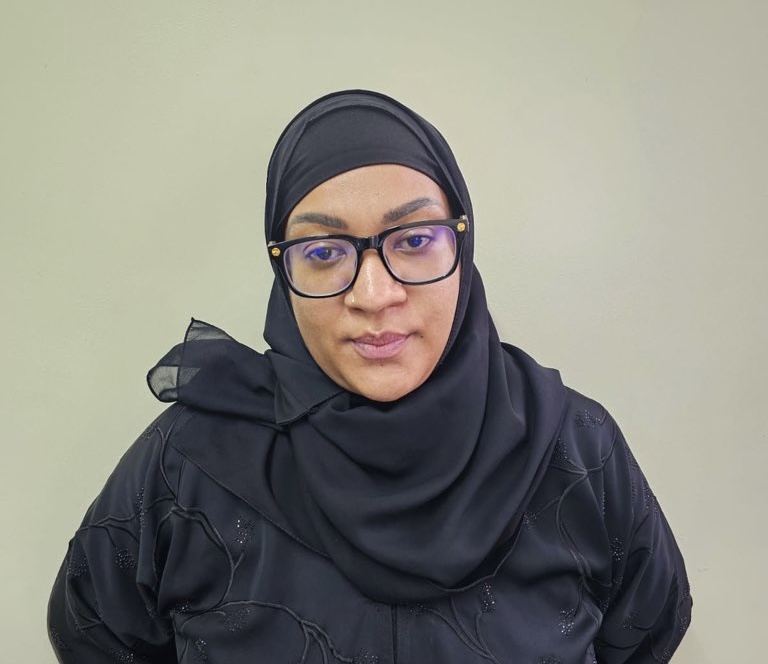
Mildred Kache did not go quietly. When detectives from the Directorate of Criminal Investigations arrived at Crystal Villas in Kilimani on Sunday evening, she locked herself inside House No. 10, refused to surrender, and stayed on her phone coordinating with accomplices outside.
When it became clear the officers were not leaving, she tried to scale the property’s perimeter wall. She did not make it.
Detectives intercepted her before she could flee, and she was placed in handcuffs on the very compound from which she is alleged to have orchestrated one of Nairobi’s most elaborate fake gold conspiracies, a scheme that stripped two American nationals of $447,000, equivalent to approximately Sh57.7 million at prevailing exchange rates.
On Monday, Milimani Magistrate Geoffrey Onsarigo ordered Kache, who also answers to the alias Sabreena Ayesha, and her co-accused Ahmed Bashar Mohamed detained at Kilimani Police Station.
The DCI’s application to hold them for a further ten days pending the completion of investigations will be canvassed on Tuesday after the defence sought time to review the prosecution papers. The court allowed the request and adjourned.
Investigators describe Mildred Kache as the mastermind and principal coordinator of the fraudulent scheme. Bashar is accused of being her cryptocurrency launderer, routing stolen millions through a Binance wallet before dispersing them to her network.
The affidavit sworn by Corporal Dennis Mugambi, the investigating officer, lays out the scale of what investigators believe to be a transnational fraud operation.
The complainants, identified in court papers as Terry Lee Schrubb Jnr and Kenneth J. Adler, were separately targeted by the syndicate and convinced they were entering into a legitimate gold export deal.
The suspects represented to the Americans that they had genuine gold consignments weighing approximately 10 kilograms, 500 kilograms and 700 kilograms ready for export from Kenya to Dubai. Gold, as it turned out, was never part of the picture.
A FEE FOR EVERYTHING, GOLD FOR NOTHING
What makes this case stand apart from ordinary con artistry is the industrial precision of the financial extraction.
The victims were not simply asked to pay for gold and then robbed. They were walked through a meticulously staged commercial transaction in which every step generated a new fee, each one plausible in isolation, each one adding to the total haul. They paid $56,000 in smelting charges.
They paid $231,000 for insurance. They paid $121,000 for cargo jet services to ship the consignment to Dubai. They paid $11,000 for documentation. Not one of those fees produced a single gram of gold, nor any service of any kind. All of it vanished into the syndicate’s accounts.
The payments were made through cryptocurrency wallets, a deliberate architectural choice by the suspects. Digital transactions leave trails, but also create distance and complexity, and the syndicate exploited both.
Forensic analysis of blockchain records and cryptocurrency wallets, including a Binance account directly linked to Bashar, established the movement of the proceeds through multiple digital wallets. A Cyber Forensic Lab report filed as CFDL 332/2026 further confirmed the communication and financial transaction history between Kache and the American complainants.
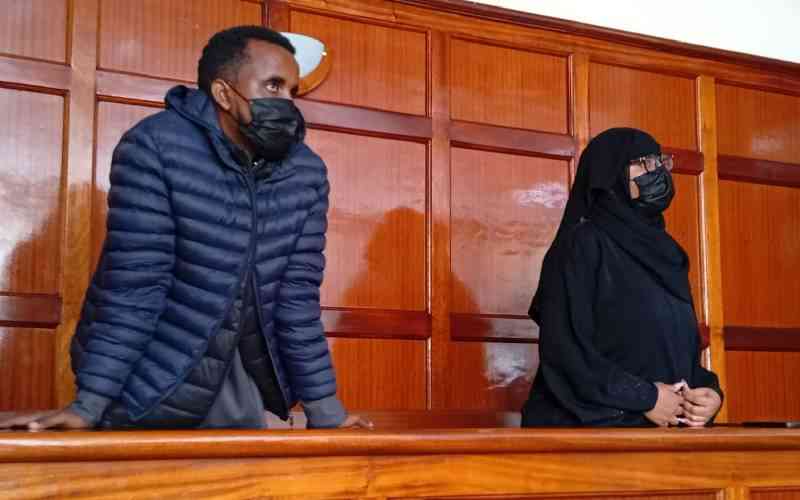
Kache Mildred alias Sabreena Ayesha and Ahmed Bashar Mohamed, before the Milimani Law Courts in Nairobi, on May 18, 2026.
To sustain the illusion long enough to extract full payment, the suspects deployed what investigators describe as forged assay certificates, fabricated insurance documents, and false shipment papers.
These are not documents produced in haste on a home printer. Their existence points to an organised counterfeiting infrastructure that operates in parallel to the fraud itself, generating the paperwork ecosystem on which large commodity deals depend and which ordinary investors have no reliable means of verifying.
The suspects required intelligence from multiple security agencies and extended surveillance before they could be traced. Kache barricaded herself in her apartment, coordinated with accomplices by phone, and attempted to scale a perimeter wall before she was seized.
THE ARREST THAT ALMOST DID NOT HAPPEN
The DCI acknowledged in court papers that the suspects had persistently evaded arrest, requiring intelligence cooperation from multiple security agencies and an extended surveillance operation before they could be located and cornered.
That Kache was found at Crystal Villas in Kilimani was the result of forensic lead-chasing, not a routine check. The apartment at House No. 10 was not a waypoint. It was, investigators believe, her base of operations.
Her behaviour during the arrest itself became a key plank of the DCI’s argument for continued detention.
Corporal Mugambi deponed that her conduct demonstrated she was a clear flight risk and that releasing her on police bail before the completion of investigations would likely result in her absconding the court process entirely.
The magistrate agreed that she and Bashar should remain in custody.
Bashar’s role was more transactional but no less critical.
He is accused of knowingly receiving the fraudulently obtained funds through his Binance wallet and disbursing them to Kache and her associates, providing the money laundering architecture that transformed stolen cryptocurrency into usable cash. Without him, the financial pipeline breaks.
With him, the syndicate had a functioning settlement mechanism that put distance between the crime and the proceeds.
THE WIDER SYNDICATE IS STILL AT LARGE
Two suspects in custody does not mean the syndicate is dismantled. The DCI is pursuing additional cryptocurrency records, KYC documentation and transaction logs from various platforms, and is actively hunting accomplices believed to remain at large.
Among them is a figure referenced in the original DCI arrest bulletin as Ibrahim Yusuf Mohamed, who sensed officers closing in before Kache was arrested and fled, abandoning a black Mercedes-Benz E50 bearing registration number KCV 910C, which was seized and is now held as an exhibit at the Nairobi Regional Headquarters yard.The DCI said in court that releasing Kache and Bashar at this stage would greatly jeopardise ongoing investigations, interfere with the tracing of accomplices, and compromise the recovery of proceeds of crime.
This case does not exist in isolation.
It is the latest, and now the most forensically documented, episode in what has become a relentless wave of fake gold fraud in Nairobi, one that has been running for years but whose pace has accelerated dramatically.
Court records at the Milimani magistrates court show at least 20 people arraigned in the past six months alone over gold fraud cases with a combined declared value of at least Sh5 billion.
The city has quietly become the undisputed epicentre of Africa’s fake gold industry, with a syndicate infrastructure that spans staged smelting operations, forged assay certificates, cryptocurrency laundering pipelines, and cross-border accomplice networks extending into Tanzania, Dubai, and beyond.
In February 2026, Willis Onyango Wasonga, alias Marcus, was arraigned at Milimani over a Sh32.3 million scheme targeting an American lawyer, John Sodipo, who had wired USD 250,500 as chartering fees for a 495-kilogram gold consignment to Dubai.
The funds were routed through a National Bank of Kenya account operated by a company called Mohazcom Trading.
A forex trader, Mohammed Noor, was separately charged in the same matter. Both cases were consolidated and are before the court. In January 2026, detectives investigated a Sh37 million fraud in which an American national, David White Odell, was taken to a staged smelting operation in Kilimani before being defrauded of his money. Suspects Paul Chogo and Collins Onyango remain at large in that case.
In October 2025, police foiled a USD 5.6 million attempt, equivalent to approximately Sh723 million, in which two suspects tried to swindle an American businesswoman before a vehicle chase ended with their arrest and the seizure of two smelting machines and nineteen smelting moulds from their hideout.
And in the most harrowing recent precedent, Australian investor Andrew Adel Gaballa was defrauded of over Sh77.5 million in a scheme that began in Dubai and carried him through Tanzania before unravelling in Nairobi.
When he tried to leave Kenya after filing his DCI complaint, a red alert had been placed on his passport and he was detained for three hours at Jomo Kenyatta International Airport. He went into hiding for four days.
The playbook is identical every time: a polished meeting in a Nairobi suburb, a smelting demonstration, fabricated assay certificates, a fee for every stage of a transaction that was never going to produce gold. The only variable is the name of the victim.
Kenya’s gold trade remains dangerously informal. Despite legitimate mineral deposits in Migori, Turkana and Kakamega, the sector contributes barely one percent of national GDP and operates with minimal institutional oversight.
There are no robust certification requirements for gold intermediaries, no reliable assay chain of custody for foreign buyers, and no central registry against which investors can verify that the individuals they are dealing with hold legitimate mining licences.
That regulatory void is the environment in which the Kilimani gold fraud syndicate has operated and thrived.
The DCI application to detain Kache and Bashar for a further ten days will be heard on Tuesday at Milimani.
The matter of Ibrahim Yusuf Mohamed, the man who ran and left his Mercedes behind, remains open. Investigators say they are tracing his movements.
The investigation into the wider syndicate, its financial networks, its document forgery infrastructure, and its cross-border reach, continues.
Mildred Kache is described by investigators as the mastermind and principal coordinator of the scheme. She is in custody at Kilimani Police Station. The perimeter wall at Crystal Villas, it turns out, was not high enough.
Kenya Insights allows guest blogging, if you want to be published on Kenya’s most authoritative and accurate blog, have an expose, news TIPS, story angles, human interest stories, drop us an email on [email protected] or via Telegram


Govt Plans to Monetise eCitizen Data in New Revenue Drive

Dennis Onyango: Why Raila Won Elections But Never Became President

Israel, Iran Trade Fire Despite Trump’s Call For Restraint

Dennis Onyango Lifts Lid on Raila’s Inner Circle, Says Sifuna Lost Baba’s Trust While Babu Was Viewed as a Threat

Sibling Rivalry? Cracks Emerge Within Linda Mwananchi

Instant Traffic Fines Still Active Despite Court Order, NTSA Clarifies

Why All Eyes Are On Gambling Authority CEO Peter Karimi As Kenya’s Betting Firms Race To Beat The June Licence Renewal Deadline

The Deal Behind Nairobi Animal Orphanage: Is This Really About Animals Or Billions In Prime Park Land

Iran Launches Missiles At Israel For First Time Since Mideast Truce

Rogue Developers, Engineers, Architects and City Hall Officials Charged Over Deadly Manzil Towers Collapse

Cement, Cash and Courts: How the Hashu Dynasty Crushed the Ramji Brothers for Fourteen Years and Why the Walls Are Now Closing In

Why Ruto’s Favourite Candidate Adan Mohammed Could Be Locked Out of the KRA Top Job

Inside The Urban Planning Cartel That Owns Nairobi

LifeCare on the Brink: SHA Fraud, Stolen Wages, and the Rotten Empire Jayesh Saini Built

Este Medical Kenya Fights American’s Explosive Complaints

The Rot Inside Absa: How Bank Insiders Are Looting Nairobi’s Customers

Inside FAFSA Fraud: How Kenyan Cybercriminals Siphoned Millions from America’s Sh12 Billion Student Loan System

Betika Faces DCI Probe, Directors Arrest and License Revocation Over Massive 29.5 Million Safaricom Customers’ Data Breach

Court Confirms Safaricom Customers Data Was Sold To Betting Companies In Seven-Year Cover-Up

Fresh Move Launched to Remove Kenya Railways MD Mainga From Office After Awarding Sh817 Million Consultancy Contract
-
 Investigations3 days ago
Cement, Cash and Courts: How the Hashu Dynasty Crushed the Ramji Brothers for Fourteen Years and Why the Walls Are Now Closing In
-
 Investigations2 days ago
Inside The Urban Planning Cartel That Owns Nairobi
-
 Investigations2 weeks ago
LifeCare on the Brink: SHA Fraud, Stolen Wages, and the Rotten Empire Jayesh Saini Built
-
 Americas2 weeks ago
Inside FAFSA Fraud: How Kenyan Cybercriminals Siphoned Millions from America’s Sh12 Billion Student Loan System
-
 Investigations1 week ago
Betika Faces DCI Probe, Directors Arrest and License Revocation Over Massive 29.5 Million Safaricom Customers’ Data Breach
-
 Investigations3 days ago
Fresh Move Launched to Remove Kenya Railways MD Mainga From Office After Awarding Sh817 Million Consultancy Contract
-

 News1 week ago
Eight Students Arrested In Kenya After Suspected Deadly School Arson Attack
-
 News1 week ago
How Uhuru’s Deal With Obama In 2015 Paved Way For America’s Ebola Plan In Kenya