
Politics
The Man Who Owns Maraga: Inside The Sexual Harassment Scandal Threatening UGM From Within
Agostinho Neto Oyugi built the United Green Movement, handed it to a former Chief Justice, and positioned himself as the invisible power behind a presidential bid built on integrity. Now four women, a Gen Z icon’s public resignation, and a party hearing that produced nothing have placed that very man at the heart of a scandal that could collapse everything before 2027 even arrives.

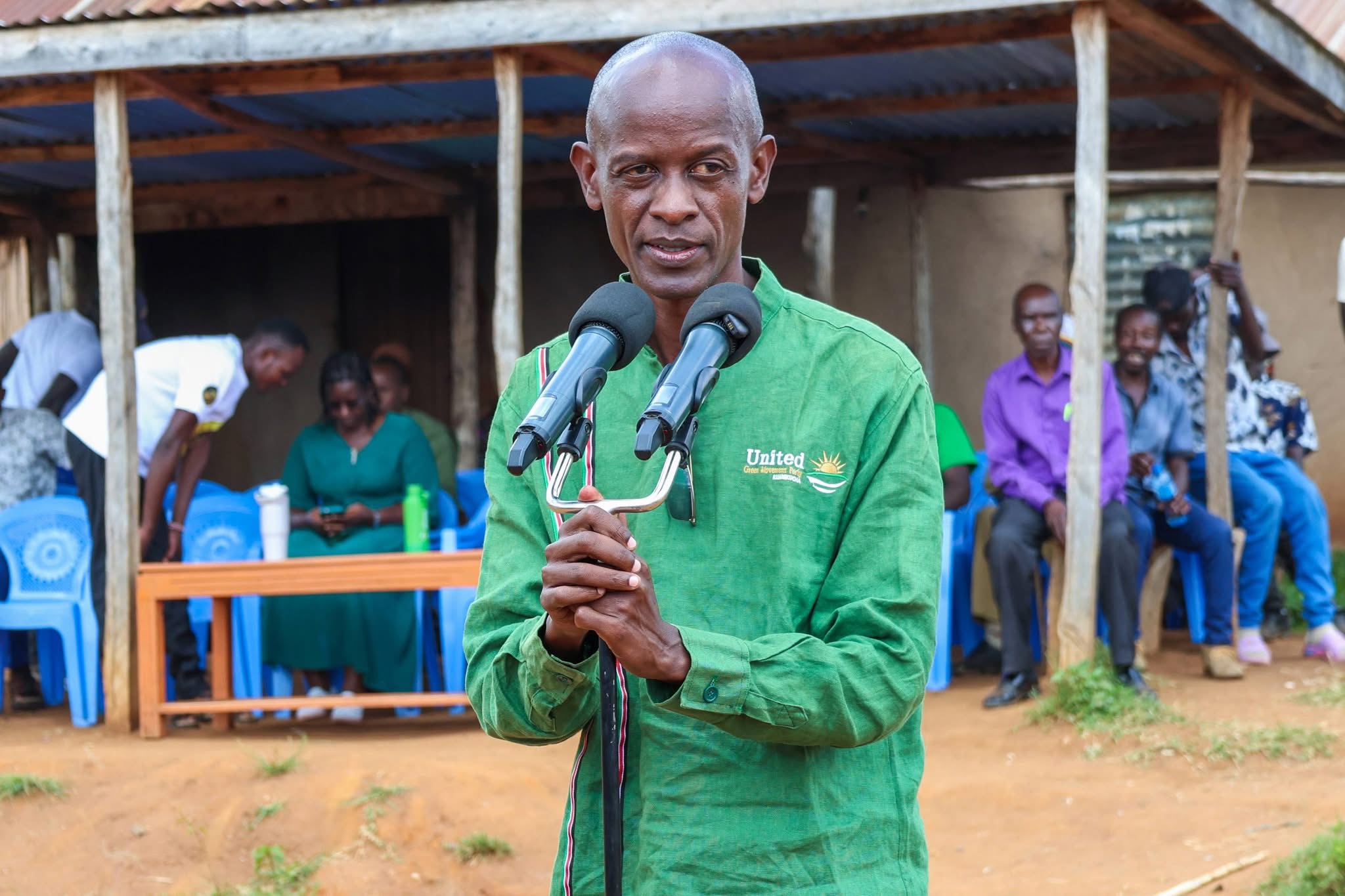
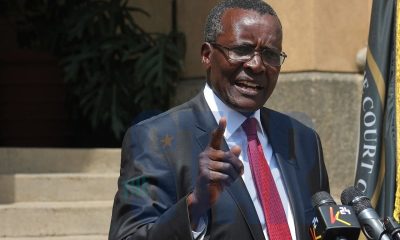
When David Maraga took the colours of the United Green Movement in October 2025 and declared himself a presidential candidate, the optics were perfectly assembled.
The man who had annulled a presidential election on constitutional grounds, who had warned the country about the rot in its institutions, who had built a public identity around the language of restoration and justice, was stepping forward to finish what the constitution started.
The crowd at the Green Action House in Nairobi was animated. The party founder, former Ndhiwa MP Agostinho Neto Oyugi, spoke warmly of what he called a liberation exercise. Kenya, he said, was ready to be saved.
What was not assembled with the same care was the internal machinery of the campaign that was supposed to deliver that salvation.
Within weeks of Maraga’s unveiling, reports began circulating inside the campaign secretariat about conduct that would prove deeply uncomfortable for a candidate whose entire pitch to voters rests on the idea that he is different.
The conduct was attributed not to a minor functionary or a peripheral volunteer. It was attributed to Neto himself, the man who built the party, who owns its founding structures, and who selected Maraga as its presidential standard-bearer.
This is the story of how that conduct surfaced, who carried it forward at enormous personal cost, what the party chose to do with the evidence it received, and what all of it means for a presidential bid that Kenya’s reform-minded voters had dared to take seriously.
THE MAN BEHIND THE MOVEMENT
Agostinho Neto Oyugi was born in Homa Bay County on the first day of 1976. He was the fourth child of Mr. and Mrs. Nicholas Oyugi, educated first at Homa Bay and Asego primary schools before proceeding to Alliance High School, one of the most prestigious secondary institutions in the country. He then read law at the University of Nairobi, where he distinguished himself sufficiently in human rights advocacy to be named Africa’s fourth best oralist in human rights in 2004 at an event organised by the Centre for Human Rights in Pretoria, held at the University of Dar es Salaam.
The human rights pedigree was not merely decorative. It fed directly into a political career built on a particular kind of defiance.
In 2012, Neto contested and won the Ndhiwa Constituency parliamentary seat in a by-election on an Orange Democratic Movement ticket. He was re-elected in the March 2013 general election.
In that same period, he was part of a coalition of activists that mounted a High Court challenge seeking to disqualify both Uhuru Kenyatta and William Ruto from the 2013 presidential race, positioning himself firmly in the camp of constitutional activism against the political establishment.
During his parliamentary term, he was credited with infrastructure development in Ndhiwa roads, schools, healthcare facilities and a bursary programme that supported students from the constituency attending national schools. He presented as a lawmaker with a genuine local constituency and a broader progressive identity.
He was a politician of the sort that Kenyan reform circles produce periodically: someone with real credentials whose trajectory seemed set towards something larger.
What happened instead was a long and winding departure from the path he had set for himself. He lost the ODM primaries ahead of 2017 and ran as an independent, failing to retain his seat. The loss drove a wedge between him and the party infrastructure through which he had risen.
Over the years that followed, the wedge became a chasm.
By 2019, Neto was publicly attacking ODM leader Raila Odinga, accusing him of selfishness and charging that he used his following to enrich himself rather than deliver on the promises of revolution.
He urged the Luo community to abandon Raila politics and, in a move that shocked many in his traditional political circle, urged support for Deputy President William Ruto, whom he credited with having stood with the community in 2007 when Raila and Ruto had worked together in the disputed election that preceded the post-election violence.
The pivot towards Ruto was not a quiet one.
Neto publicly vowed support, claiming there was a silent majority within the Luo community that was tired of ODM’s dominance and ready for a different political alignment.
It was a calculation that placed him firmly outside the Luo political mainstream at a moment when that mainstream remained overwhelmingly loyal to Raila Odinga.
Whether the calculation was driven by conviction, injury at his treatment within ODM, or a reading of where power was moving was a matter of debate in Homa Bay political circles. What was not debatable was that it cost him standing within the community he claimed to speak for.
By 2022, as the presidential race hardened around William Ruto and Raila Odinga, Neto had already been building the United Green Movement, a party whose name invoked environmental consciousness and whose stated values emphasised total inclusivity, youth empowerment, anti-corruption, and green innovation.
He positioned himself as the party’s founding force and eventually as co-party leader alongside other figures. The party became the vehicle through which he would re-enter national politics, not as a candidate himself this time, but as the man who could hand a credible name a platform and shape the politics of the 2027 race.
The credible name he found was David Maraga.
A FOUNDING FORUM AND A PRESIDENTIAL CERTIFICATE
When Maraga arrived at the United Green Movement in October 2025, Neto was unambiguous about the power structure.
As the party’s founding member and co-leader, it was Neto who presided over the founding members forum that served as an internal electoral college and pre-selected Maraga as the party’s presidential flagbearer, pending approval at the National Delegates Conference scheduled for early 2027.
Neto was explicit in articulating this. The forum, he told those gathered, was mandated by the UGM party constitution to act in this capacity. It was his party. He had built it. He was now deploying it.
Maraga, for his part, accepted the framework.
He expressed alignment with the party’s ideology on rule of law, human rights, and democratic governance. He committed to building the party so that it would hold not only the presidency but the majority of seats in the next elections.
He positioned himself as the face of the liberation campaign, the Ukombozi that Neto and UGM had been preaching. The partnership appeared clean and complementary: Neto’s party infrastructure and organisational muscle combined with Maraga’s irreproachable public reputation.
What that arrangement obscured, and what was about to become devastatingly relevant, was the reality that in any dispute involving the party apparatus, the party and its grievance processes belonged to the man whose name appeared on the founding documents. The accused and the institution were, in the most functional sense, the same person.
OCTOBER COMPLAINTS AND THE COST OF SPEAKING
The trouble began in early October 2025, barely days after Maraga’s formal unveiling as the campaign’s presidential flagbearer.
According to Shakira Wanjira Nalia Wafula, who had been appointed Secretary of the Political Committee within the campaign, she and other women on the team began raising concerns about harassment on or around October 7.
The concerns were not anonymous whispers or corridor gossip.
They were specific, they involved multiple women, and they were directed at someone with decisive authority within the party structure.
Shakira was not an inconsequential voice to attach these concerns to.
She had risen to national prominence during the June 2024 Gen Z protests that rocked the country, her face becoming one of the defining images of that uprising after video of her boldly confronting police officers and refusing to leave went viral. She was a fitness coach, a certified lifeguard, a civic educator, and the vice-chairperson of Kikao, an organisation focused on youth engagement and social impact. When Maraga’s campaign was being assembled, her recruitment was a signal to Gen Z voters that this was a candidacy attuned to their generation. She was not someone the campaign could easily dismiss.
A meeting between the women and Maraga reportedly occurred on October 22. A formal written complaint was submitted on November 3. Four women of standing within the campaign had at that point registered their concerns.
The name at the centre of those concerns was Agostinho Neto Oyugi.
What happened next illustrated precisely why women in politics so often conclude that internal reporting mechanisms are not designed for their protection. Rather than an independent investigation, the matter was referred to an ad-hoc committee convened under the auspices of UGM.
The party. Neto’s party. The party whose founding documents bear his name and whose leadership structure he dominates. From the perspective of the women bringing the complaint, they were being asked to participate in a process presided over, at its deepest structural level, by the man they were accusing.
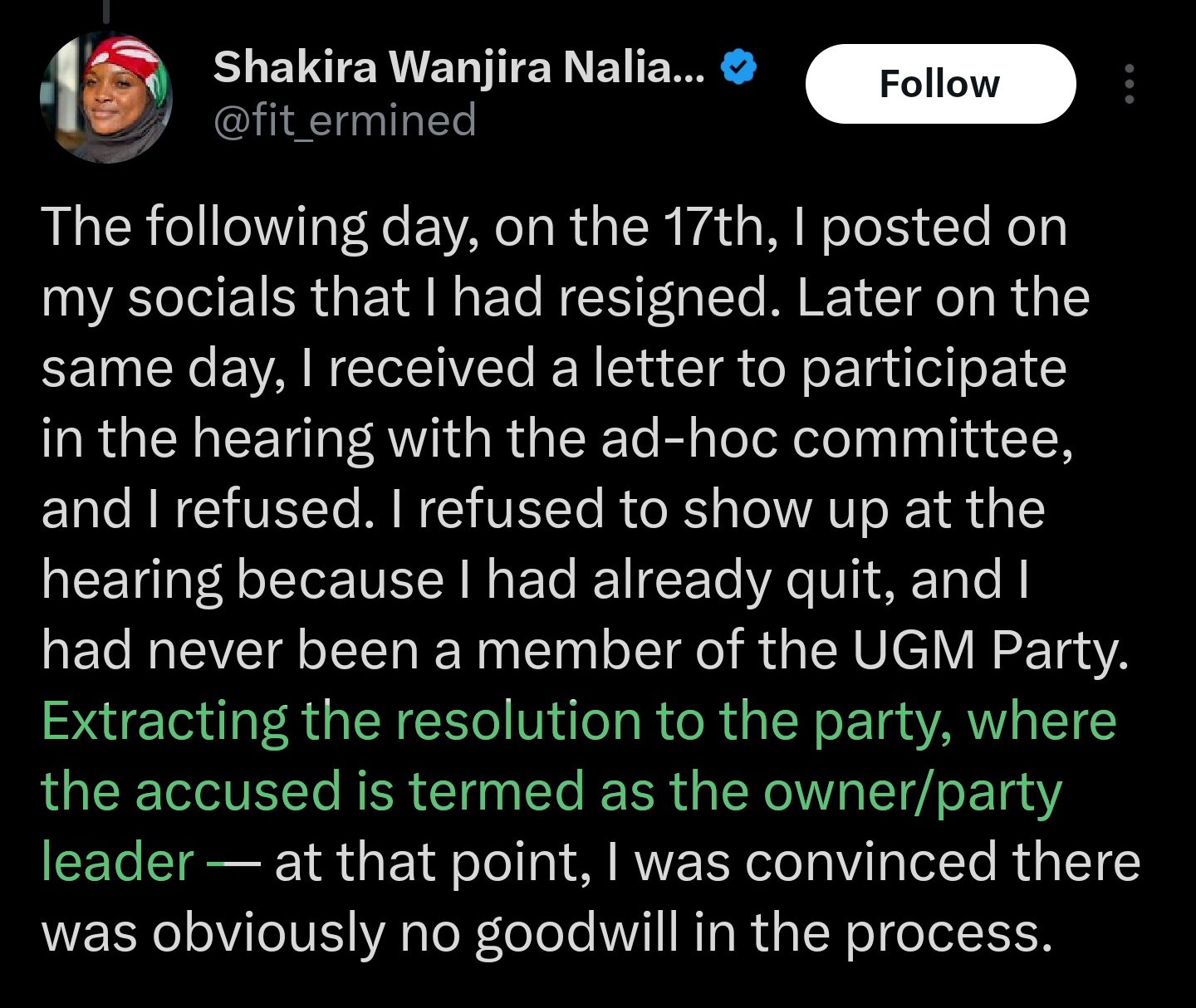
Shakira refused to participate and made her reasons clear. She had already resigned from the campaign. She had never been a UGM party member. And she regarded the referral to a party process controlled by the accused as a gesture lacking in any genuine goodwill.
The ad-hoc committee proceeded without her full cooperation. It conducted its hearings. It recorded that the complainants had not provided written complaints or fully engaged with the process. It produced a finding of no evidence. Case closed, from the party’s perspective.
THE RESIGNATION AND ITS AFTERMATH
On November 17, 2025, Shakira published her resignation from the Political Committee and from all responsibilities associated with the campaign. The statement was carefully worded, diplomatic in its phrasing, and entirely legible to those who knew the internal context.
She cited divergence in foundational values and priorities. She referenced the campaign’s Reset, Restore, Rebuild slogan and suggested that achieving those ideals required a depth of commitment to values that was not present in the campaign’s leadership. She extended best wishes to remaining team members and declared her continued commitment to a Kenya anchored in integrity and accountability.
The media covered it as an interesting internal split. Several outlets noted it as a blow to Maraga’s Gen Z credibility. Radio 254 reported that within hours of the resignation being published, speculation was already circulating online that the diplomatic public letter was a stripped-down version of a more detailed account referencing misconduct allegations against a senior official.
By Tuesday evening, Maraga was trending alongside phrases that were deeply unflattering for a candidate built on the promise of principled governance.
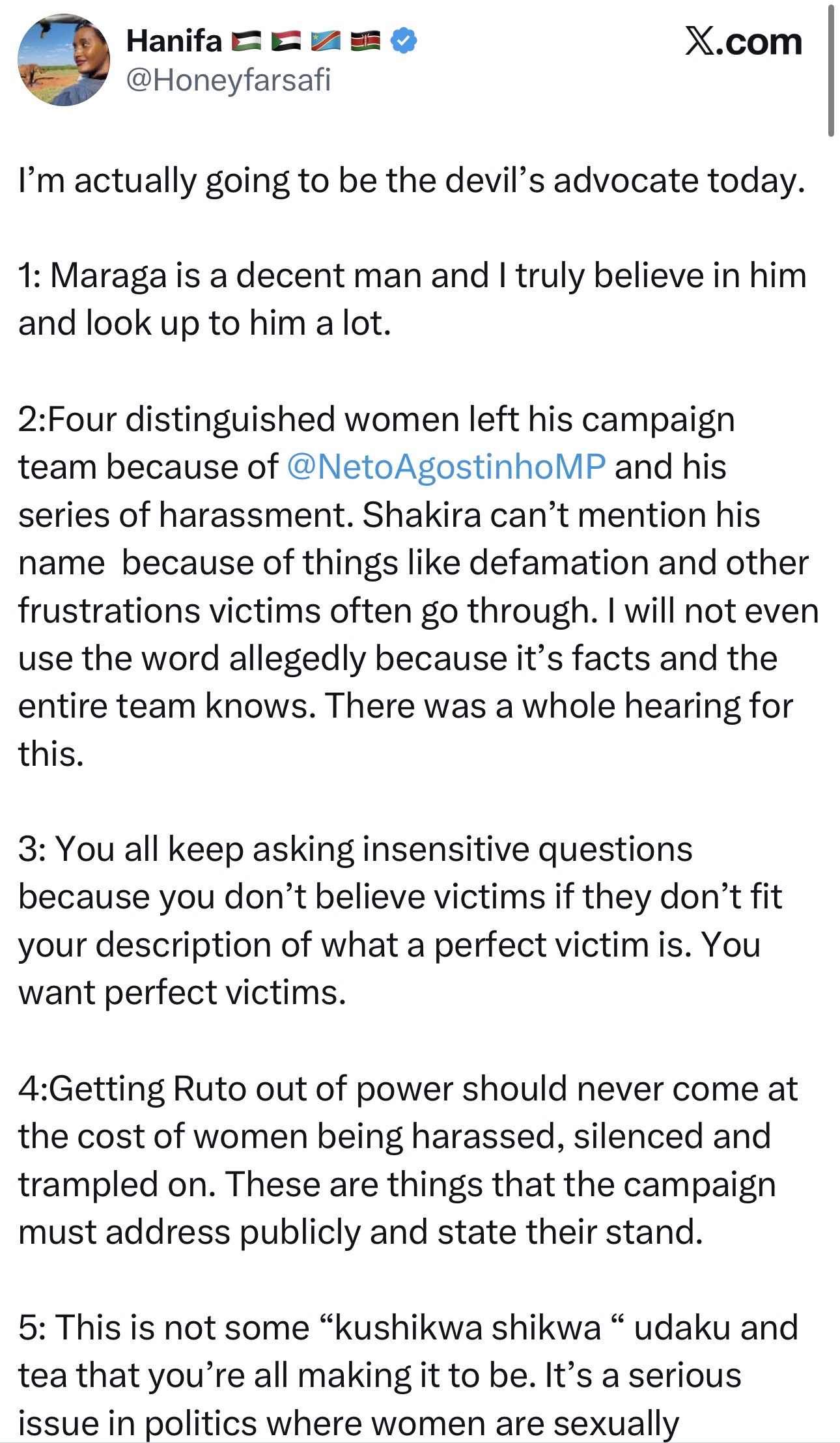
Within the broader online discourse, activist Hanifa, laid out the allegations in greater detail in a thread that named Neto Agostinho as the central figure. Hanifa described Maraga in personal terms as a person she trusted and believed in while insisting that the problem was Neto and the team around him.
She detailed the experiences of the four women who had left, challenged the framing of victims as people who did not fit the stereotype of the perfect victim, and made the argument that removing Ruto from power was not a goal worth pursuing if the means required women to endure harassment and remain silent about it.
This was not, she argued emphatically, kushikwa shikwa udaku. This was not gossip. This was a political crisis with real victims.
Screenshot
Online discourse fractured in predictable ways. Defenders of Neto claimed that the women had formed a WhatsApp group specifically to remove him from the party structure and feminise the organisation, and that when that campaign failed through legitimate means it turned to social media smears. Critics pointed out that this defence was precisely the kind of structural delegitimisation that harassment complainants routinely face, and that the question of what actually happened to those four women remained unanswered by a party finding of no evidence produced by a process the complainants had declined to validate.
FEMICIDE MARCHES AND THE POLITICS OF HYPOCRISY
The matter did not resolve itself quietly. It smouldered through the early months of 2026 as UGM continued its grassroots mobilisation and Neto continued appearing publicly alongside Maraga at campaign events across the country, including in Homa Bay Town and during Maraga’s visits to Nyanza.
The two men were photographed together, presented together, and continued to frame their partnership as the cornerstone of a liberation campaign built on integrity.
Then came June 1, 2026. Thousands of Kenyans, predominantly women, took to the streets of Nairobi in one of the largest demonstrations against gender-based violence the capital had seen in months, organised by the End Femicide movement alongside women’s rights and human rights organisations. They carried empty coffins symbolic of the women killed. They held placards. They brought parts of the central business district to a standstill. And David Maraga joined the march, lending his voice to calls for stronger government action against femicide.
For Shakira Wafula, this was too much. She called it political theatre. The characterisation was precise and devastating. Here was a man marching in solidarity with women against gender-based violence while the sexual harassment allegations against his party co-leader remained unresolved, cloaked behind a party process that the complainants themselves had refused to validate, and while that same co-leader continued to appear beside him at campaign rallies. The optics were not ambiguous. They were a direct collision between the performance of values and the reality of how those values had been applied inside the campaign itself.
On June 3, 2026, UGM issued a formal statement detailing its internal process. The party described an ad-hoc committee that had conducted hearings. It noted that complainants including Shakira had not provided written complaints or fully participated.
It reiterated its finding of no evidence.
It emphasised due process, noted that no police reports had been filed, and pushed back against what it characterised as defamation aimed at undermining Maraga’s candidacy.
The statement did not meaningfully address the central question of why the process had been administered by a party apparatus over which the accused himself exercises foundational authority.
WHAT THE SCANDAL MEANS FOR MARAGA
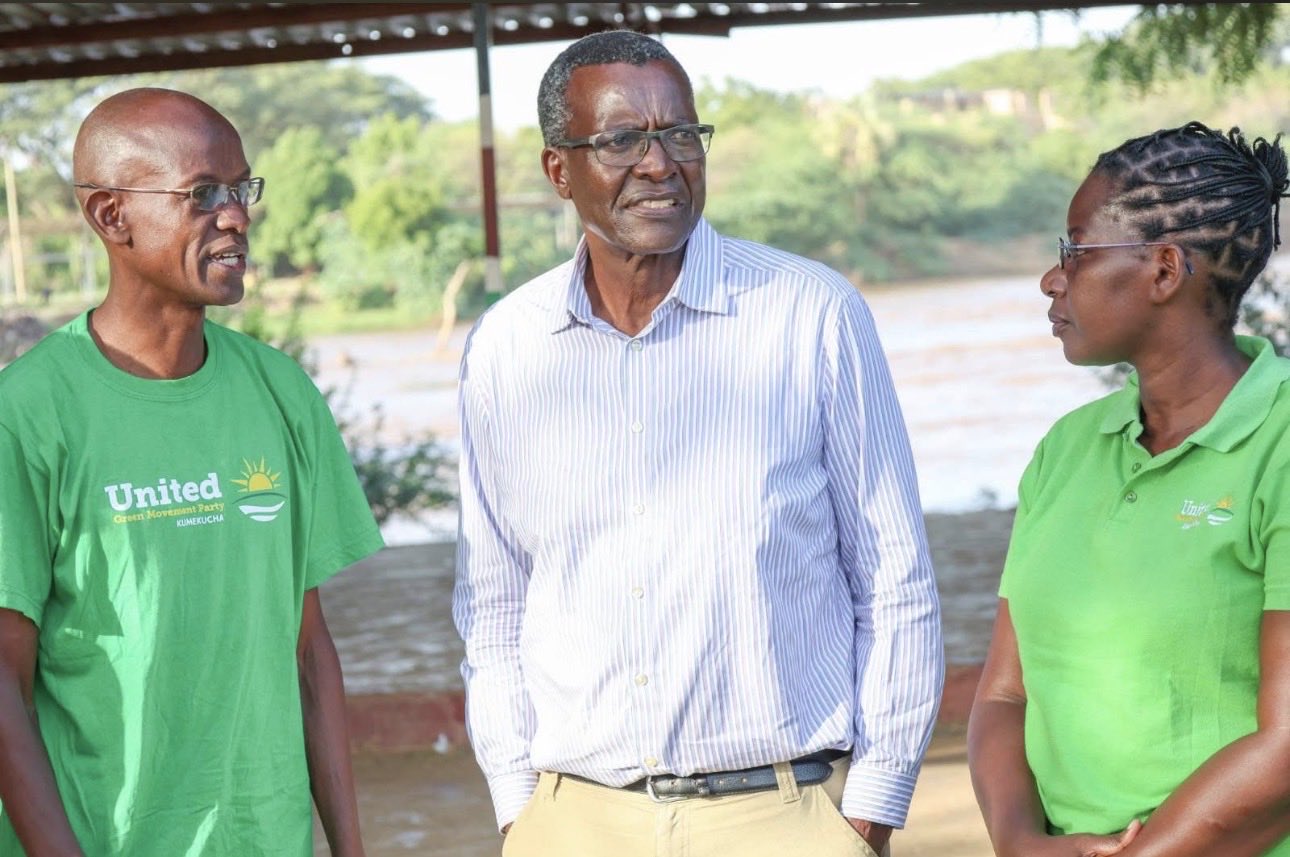
Maraga and Neto in a past event.
David Maraga is running for president on a single compelling asset: the idea that he is constitutionally serious about accountability in a way that Kenya’s political class has never been. His most celebrated act in public life was annulling the 2017 presidential election on the grounds of constitutional irregularities, a decision that cost him and his family personally and that he has consistently described as having been made from a place of principle rather than calculation. Everything about his campaign, the Ukombozi language, the Reset Restore Rebuild slogan, the appeal to Gen Z idealism, the positioning as a jurist stepping into politics to finish what the constitution demands, rests on the credibility of that reputation.
That credibility is now being measured against a different standard. The question being asked is not whether Maraga himself harassed anyone. It is whether a man who built his brand on accountability has chosen to stand beside someone accused of harassment while the mechanism designed to address those accusations was run by the accused’s own party infrastructure, and whether that choice reflects the same constitutional seriousness he has always projected.
The political cost disaggregates across several lines. Among women voters and feminist civil society, who were already among Maraga’s natural constituents and who are now in a state of sustained mobilisation over femicide and gender-based violence, the image of the candidate joining a femicide march while his co-leader faces unresolved harassment allegations is a precise articulation of a hypocrisy they have seen before in Kenyan politics. It will not be forgotten by the demographic he most needs to energise.
Among Gen Z voters, who represent perhaps the most volatile and consequential emerging electoral bloc ahead of 2027, the loss of Shakira’s credible endorsement and her subsequent public identification of the campaign as a space where women were harassed and then referred to the harasser’s own institutional process represents a rupture that is difficult to repair without concrete action. Shakira is not simply a former staffer. She is one of the iconic faces of the 2024 protests. Her departure and her subsequent framing of events carries weight proportional to her public standing.
For Neto himself, the position is both more insulated and more exposed than it might initially appear.
He is insulated because the party’s formal process, which he effectively controls, has produced a finding in his favour and because no criminal charges have been filed.
He is exposed because his continued public visibility alongside Maraga, in Homa Bay, in Nyanza, at rally after rally, keeps the question alive and transforms every platform appearance into a reminder of what has not been resolved.
The deeper problem for UGM is structural and has existed since Maraga joined the party.
A presidential campaign built on a man’s personal integrity being handed to a party whose foundational owner is the subject of harassment allegations is not a combination that resolves itself through press statements.
It resolves itself either through the accused stepping back and submitting to a genuinely independent investigation, or through the candidate making a public and irreversible demonstration that the values he campaigns on are not suspended at the party gate.
As of early June 2026, neither of those things has happened.
THE QUESTIONS THAT REMAIN
Neto Agostinho Oyugi is a trained lawyer who spent years in human rights advocacy, who was once named among Africa’s best young oralists on human rights questions, and who built a political party around values of inclusivity and justice.
That biography makes what he is alleged to have done more troubling, not less. Men who build institutions around the rhetoric of rights are not immune to the exercise of power over vulnerable women in informal spaces. In some cases the rhetoric serves as precise cover for behaviour that the institution it produces will never be equipped to address.
The party process UGM deployed was not independent. The founding members forum that has the power to select and deselect presidential flagbearers belongs structurally to Neto.
A committee reporting to that structure cannot be independent of him regardless of the personal integrity of its individual members. The complainants understood this. Their refusal to validate the process was not obstruction. It was a rational recognition that the process was asking them to submit their complaints to the man the complaints were about.
Four women left a presidential campaign in the space of weeks. One of them was a nationally recognised activist with the credibility and the social media following to make her departure consequential. A party statement saying there was no evidence is not evidence that nothing happened. It is evidence of what a process controlled by the accused tends to find.
Kenya goes to the polls in 2027.
The question of whether David Maraga can mount a serious presidential challenge depends, as it always has, on whether the values he campaigns on are real or rhetorical.
That question now has a very specific test case attached to it, with four names behind it, a June resignation, and a femicide march that a former Chief Justice attended while the women in his own campaign were still waiting for justice.
Kenya Insights allows guest blogging, if you want to be published on Kenya’s most authoritative and accurate blog, have an expose, news TIPS, story angles, human interest stories, drop us an email on [email protected] or via Telegram








IEBC Sets August 10 Date For 2027 General Election

Furious Ruto Lashes Out at Gideon Moi Over Repeated ‘Blackmail, Extortionist’ Headlines on The Standard and KTN

Mombasa Gripped by ‘Male Organ Theft’ Panic as Social Media Fuels Mob Attacks and Fear

TOO MUCH PR, NOTHING TO SEE: How Gladys Wanga Built a Perfect Story of Transformation While Homa Bay Bled

Netanyahu Says Israel Must ‘Break Free from Dependence’ After Tensions With Trump Administration

Niger pulls Out Of International Criminal Court After Calling It Neo-Colonialist

Kenya Awards Sh154 Billion JKIA Upgrade Tender To Chinese Firm CRBC

The Untouchable: How KURA’s Silas Kinoti Has Survived A Decade Of Corruption Storms While Kenya’s Roads Bled

Fake Papers, Dirty Millions And The Analo Connect: How Kitisuru MCA Alvin Palapala Built a Shadow Empire Inside Nairobi’s Planning Machine

Migori Payment Row Deepens As Branding Firm Demands Sh3.8 Million Over Unpaid Piny Luo Festival Deal

Businessman Philip Waithaka Kinuthia’s Minor Son Allegedly Drove Drunk, Killed Two Peponi Students in Ngong Road Horror Crash as Claims of Cover-Up Intensify

Inside NCBA’s Decline: How a Banking Giant Lost Its Strategic Edge

South Sudan: Adut Salva Kiir’s Shadow Treasury Exposed

Cement, Cash and Courts: How the Hashu Dynasty Crushed the Ramji Brothers for Fourteen Years and Why the Walls Are Now Closing In

Standard Chartered Ghosts Haunt Joshua Oigara At Stanbic As Whistleblower Spills Beans

Inside The Urban Planning Cartel That Owns Nairobi

THE VULTURE AND THE SCHEME How Nairobi West Hospital Became the Most Dangerous Institution in Kenya’s SHA Ecosystem and Why the Books Must Be Audited Now

The President’s Daughter and The Missing Witness: How Adut Salva Kiir’s Shadow Treasury Silenced Its Most Dangerous Critic

How Adil Popat Saved His Empire On The Eve Of Imperial Bank Collapse and Why Kenya’s Mainstream Media Buried The Story

Why John Ngumi Is Running From the EACC and Why the Sh415 Million Payday May Be the Least of His Worries
-
 News1 week ago
Businessman Philip Waithaka Kinuthia’s Minor Son Allegedly Drove Drunk, Killed Two Peponi Students in Ngong Road Horror Crash as Claims of Cover-Up Intensify
-
 Africa2 weeks ago
South Sudan: Adut Salva Kiir’s Shadow Treasury Exposed
-
 Business2 weeks ago
Standard Chartered Ghosts Haunt Joshua Oigara At Stanbic As Whistleblower Spills Beans
-
 Investigations5 days ago
THE VULTURE AND THE SCHEME How Nairobi West Hospital Became the Most Dangerous Institution in Kenya’s SHA Ecosystem and Why the Books Must Be Audited Now
-
 Africa2 weeks ago
The President’s Daughter and The Missing Witness: How Adut Salva Kiir’s Shadow Treasury Silenced Its Most Dangerous Critic
-
 Business2 weeks ago
How Adil Popat Saved His Empire On The Eve Of Imperial Bank Collapse and Why Kenya’s Mainstream Media Buried The Story
-
 Business2 weeks ago
Why John Ngumi Is Running From the EACC and Why the Sh415 Million Payday May Be the Least of His Worries
-

 Business5 days ago
Inside the Billion-Shilling Betrayal: How Senior Treasury Officials Plundered a UN Poverty Fund and Built a Real Estate Empire on the Backs of Kenya’s Rural Poor