
Investigations
Fake Papers, Dirty Millions And The Analo Connect: How Kitisuru MCA Alvin Palapala Built a Shadow Empire Inside Nairobi’s Planning Machine
He has presented himself as an oversight warrior, a defender of the small developer against a predatory executive, a champion of due process. The documented record tells a far different story

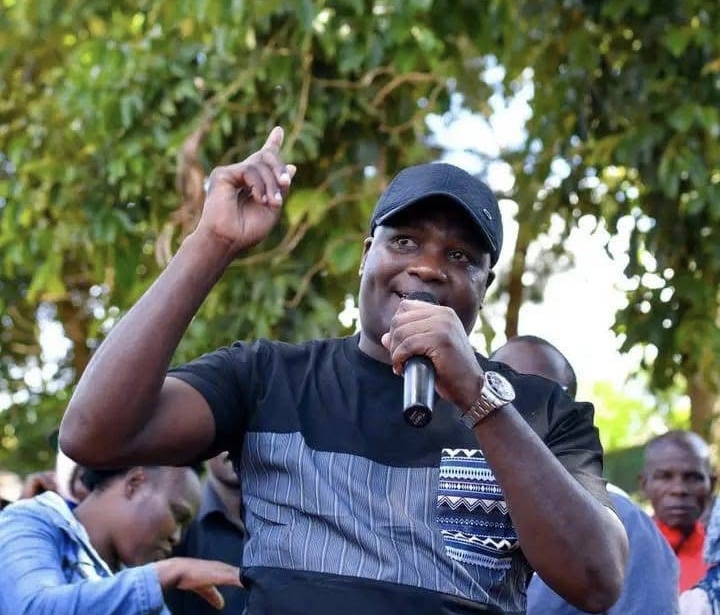
NAIROBI is a city that forgives its powerful their sins, at least for a time. It rewards confidence, cultivates ambiguity, and has long tolerated a class of politician who treats public office not as a mandate but as a commercial licence.
Alvin Olando Palapala, the three-term Member of the County Assembly for Kitisuru Ward and chairman of the Nairobi City County Assembly’s Sectoral Committee on Planning and Housing, has thrived inside that tolerance for the better part of a decade. He has presented himself as an oversight warrior, a defender of the small developer against a predatory executive, a champion of due process.
The documented record tells a far different story: one of forged academic credentials deployed to enter public office, a systematic brokerage of planning approvals conducted through the very department he was supposed to scrutinise, a violent episode in the Nairobi central business district that only makes sense when its real commercial origins are understood, and a cash accumulation pattern so brazen that his own bank felt compelled to flag it to financial regulators.
That record now sits under pressure it has never previously faced.
The June 4, 2026 arrest of Patrick Analo Akivaga, Chief Officer for Urban Development and Planning, by Ethics and Anti-Corruption Commission detectives who recovered Sh65.3 million in cash from his Syokimau residence and vehicle has torn open the ecosystem in which Palapala is alleged to have operated.
The seized materials include county approval plans, title deeds, land sale agreements, laptops, and phones.
Investigators say Analo received over Sh170 million in suspicious cash and M-Pesa deposits between the 2019/20 and 2025/26 financial years. Analo has been suspended. The political bridge that allegedly connected him to developers seeking approvals, sources in the planning sector say, was Alvin Palapala.
THE CERTIFICATE THAT NEVER WAS
Every structure has a foundation. Palapala’s political edifice rests on academic credentials that the Kenya National Examinations Council has formally declared fraudulent. The sequence of events is documented and specific.
In August 2017, advocates acting on a verification request wrote to KNEC seeking authentication of examination results for Alvin Olando Palapala under Index Number 701307/038 at Lugulu AC Secondary School for the 2002 Kenya Certificate of Secondary Education examinations.
The response, dated August 15, 2017 and signed by Nabiki Kashu for the KNEC chief executive, was unambiguous. No candidate by the name Alvin Olando Palapala registered or sat for the 2002 KCSE under that index number at Lugulu AC Secondary School.
The KNEC letter went further: the actual code for Lugulu Secondary School during the 2002 KCSE was 601404. The centre code cited on the certificate Palapala presented, 701309, belonged to New Kisumu High School.
The certificate he produced claimed a mean grade of C minus, with individual subject results in English, Kiswahili, Mathematics, Biology, Chemistry, Geography, Christian Religious Education, and Commerce.
KNEC’s determination was final: the copy of the certificate presented for authentication was not genuine. Not misfiled. Not from a different sitting year. Not a procedural anomaly. Not genuine.
The Ethics and Anti-Corruption Commission subsequently investigated these qualifications as part of Chapter Six integrity checks on Palapala’s fitness for office.
Under Chapter Six of the Constitution, a person may not hold or act in a state office if they do not satisfy requirements of integrity. Using a fraudulent academic certificate to obtain political clearance and enter elective office is not merely an administrative irregularity.
It is, under the Penal Code and the Anti-Corruption and Economic Crimes Act, a series of distinct offences: forgery, uttering a false document, and potentially fraudulent acquisition of public property through the emoluments and benefits that flow from holding office under false pretences.
EACC’s own enforcement record in 2025 and 2026 shows it has prosecuted civil servants for precisely these offences, securing convictions and seeking recovery of fraudulently acquired salaries. That precedent has not, to date, been applied to Palapala.
He has never offered a coherent public explanation. His political clearances have proceeded. He has served three terms and now eyes the Westlands parliamentary seat in 2027. The silence of the institutions that should have acted on the KNEC letter is itself a story, one that speaks to the tolerance for impunity that allowed Palapala to build the empire that followed.
THE MAN IN THE MACHINE: UNDERSTANDING THE ANALO AXIS
To understand how Palapala operated, it is necessary to understand the office of the Chief Officer for Urban Development and Planning.
It is the nerve centre of City Hall’s most financially significant function. Every building plan approval, every change-of-use application, every development permit for Nairobi’s construction sector, worth hundreds of millions and in aggregate billions of shillings annually, flows through or around that office.
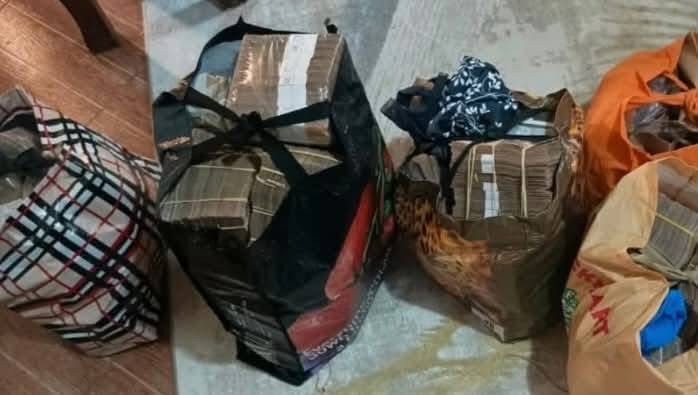
Part of cash recovered by EACC during raid at Analo’s home in Syokimau.
Developers who cannot get their applications through the normal administrative channel have long known that speed and certainty cost money. The office has attracted allegations of bribery and corrupt approvals across successive administrations.
Patrick Analo Akivaga joined City Hall in 2008 as an officer in the Urban Planning Department and rose steadily through its ranks.
Holding a Master’s degree in Urban Management from the University of Nairobi, he cultivated a reputation as a technically authoritative planner, one who could cite planning law chapter and verse, who appeared before committees and public forums with confidence, and who, in November 2025, even fronted a high-profile crackdown on illegal billboards, declaring that outdoor advertising companies owed the county over Sh500 million in unpaid fees.
In 2022, Governor Johnson Sakaja appointed him Chief Officer for Urban Development and Planning. In 2023, Sakaja additionally named Analo as Acting County Secretary, handing one man simultaneous control over two of City Hall’s most sensitive administrative functions.
The planning portrait on Analo’s Syokimau wall reading “God Did It” took on ironic weight on June 4, 2026, when EACC detectives arrived to find Sh51.3 million in Kenyan shillings and USD 113,000, approximately Sh14 million, in his home and car.
EACC’s investigation covers the 2019/20 to 2025/26 financial years, a window that includes most of Analo’s senior tenure. Investigators say the suspicious inflows total over Sh170 million and that his accumulated assets appear disproportionate to any legitimate income source.
The seized county approval plans are particularly significant: they are official documents that should exist only in official custody.
Their presence in a personal residence, alongside title deeds, land agreements, and electronic devices, suggests that the processing of development applications may have been, at least in part, conducted through a private rather than institutional channel.
Into this channel, sources in the planning sector allege, stepped Alvin Palapala.
The architecture of the alleged arrangement was straightforward in design even if opaque in execution. Palapala, as chairman of the committee with direct oversight of Analo’s department, occupied the political position.
Analo controlled the technical lever.
A developer with a stalled or refused application, or one seeking expedited processing, or one wishing to avoid the scrutiny that a sensitive change-of-use request might otherwise attract, could approach Palapala.
He would broker access, invoke Analo’s name, reach Analo directly, and facilitate an outcome. The developer paid.
The payment moved through Palapala.
Kickbacks reached Analo for the approvals he expedited or protected from enforcement action. The oversight committee, whose function was to hold Analo accountable, became the instrument through which he was insulated.
THE PANGANI TRANSACTION AND THE ATTACK THAT EXPLAINED ITSELF
One episode crystallises the alleged mechanics with unusual clarity because it spiralled into public violence.
A city developer, identified in planning sector sources as a substantial property investor, reportedly paid Palapala Sh10 million to facilitate building approvals for a project in Pangani.
Palapala allegedly reached Analo directly during the process, leveraging the relationship to signal that this application carried committee-level weight.
The approvals never materialised. The money was not returned. What followed was not a legal dispute. It was enforcement of the informal kind.
On a morning in January 2025, Palapala was set upon along Kenyatta Avenue in the Nairobi central business district by a group of approximately seven men. He sustained injuries to his head, hand, and mouth from a blunt object.
A medical report signed by Dr Andrew Githuka confirmed the injuries. He was treated at Aga Khan Hospital and discharged. The case was classified as robbery with violence at Central Police Station.
What happened next was a masterpiece of political theatre.
A section of Nairobi MCAs, led by Kileleshwa’s Robert Alai, gathered to condemn the attack as political intimidation orchestrated by the Sakaja administration against legislators carrying out their oversight duties.
Palapala himself told journalists that developers were suffering because they were being asked for money to secure approvals, and that he would remain firm in advocacy for those who followed due process.
The framing was clean: brave MCA targeted by a corrupt executive for resisting the bribery culture. Several colleagues vowed solidarity. The Governor did not respond to requests for comment.
The problem with that narrative is its inversion of the actual commercial relationship. The attack did not originate in Palapala’s resistance to corruption. It originated in a dispute over a corruption transaction in which Palapala was the seller, not the investigator.
The Sh10 million he allegedly received was payment for access and facilitation.
When neither materialised, the aggrieved developer did not approach a court. He sent men to Kenyatta Avenue.
The public narrative of victimhood served to obscure the underlying business arrangement, generate political sympathy, and rally cover against any subsequent inquiry into the actual nature of the dispute. It was, in effect, a second transaction: converting violence into political capital.

Kitisuru MCA Alvin Palapala showing his injuries after the attack by goons on Kenyatta Avenue in Nairobi.
THE COMMITTEE AS SHIELD: PANGANI TITLE DEEDS, JEVANJEE, AND THE STALLING TECHNIQUE
Palapala’s committee did pursue some investigations, and the record of those investigations is itself revealing, not for what it uncovered but for the pattern of how momentum dissipated once it threatened connected interests.
In late 2024, the Planning Committee initiated inquiries into the whereabouts of the title deed for the 5.2-acre parcel of land hosting the Pangani affordable housing project, launched by then President Uhuru Kenyatta in June 2020 as a public-private partnership with Teknofin Kenya Limited.
A committee report tabled in early December 2024 found that the title deed was simply unknown, with county executive officials unable to explain its custody.
In April 2023, the assembly had passed a motion allowing Teknofin to use the title deed as collateral for a Kenya Commercial Bank loan to complete the development.
A court subsequently halted that arrangement following civil society petitions. Teknofin refused to honour assembly summons and declined to share project details with county representatives.
The Jevanjee Estate inquiry was equally troubling. Documents established that the Jevanjee Estate title deed, LR No. 209/5458, had been used by Jabavu Village Limited to secure a Sh1.9 billion loan from the National Bank of Kenya, with Sh450 million already withdrawn.
This was done without the required public or assembly approval.
The county assembly clerk wrote to the National Bank demanding a freeze on all transactions linked to the title deed while the committee investigated. Former Governor Mike Sonko, who claimed to have the Jevanjee title, publicly confirmed that a private developer had used it to secure the loan.
What is striking about both inquiries is what happened next.
The committee issued notices. It summoned executives. It wrote letters. It generated reports. And then, as sources with knowledge of the committee’s workings describe it, the pressure eased. The Jevanjee probe slowed. The Pangani inquiry reached no actionable conclusion despite clear evidence of a missing public title deed and a developer refusing to engage.
The county’s counter-narrative, that neither title deed was actually missing and that documents were safely held by solicitors and banks, served to defuse urgency without resolving the underlying governance question of how public county land came to be used as security for private loans without adequate accountability.
What is also striking is that Palapala himself confirmed to the media that his committee served the letter to the National Bank, positioning himself publicly as the oversight force, even as sources allege his committee had been compromised into softening its own scrutiny of the arrangements it was investigating.
BILLBOARDS, CARTELS, AND A REGULATORY TOLLBOOTH
The Planning Committee’s oversight mandate extends to outdoor advertising, one of Nairobi’s most lucrative and most captured revenue streams.
The numbers in this sector narrate a scandal without requiring embellishment. Of an estimated 3,000 billboards across the city, the county has historically collected revenue from roughly 300, approximately ten percent. Outdoor advertising companies alone owe the county more than Sh500 million in fees collected from private clients but never remitted, according to Analo’s own public statements during the November 2025 enforcement operation he fronted.
Illegal structures have proliferated across roundabouts, pedestrian walkways, and street lighting poles. Rogue operators tap into and damage public power infrastructure to illuminate unauthorised displays. Cartels have for years deployed goons and political interference to block enforcement teams from removing structures.
In this landscape, the committee that oversees enforcement is a critical lever.
An MCA who chairs that committee and is alleged to have relationships with the operators who benefit from non-enforcement holds, in effect, a veto over whether the county recovers hundreds of millions in legitimate revenue or continues to bleed it to private interests.
The pattern alleged against Palapala, of turning regulatory oversight into a commercial service through which connected operators purchase protection, fits precisely the economics of the billboard sector.
The November 2025 enforcement operation fronted by Analo, which received significant media coverage, can be read in this context as either a genuine crackdown or as selective enforcement that targeted operators outside the protected network while sparing those within it.
The distinction matters enormously and it is a distinction that only a forensic audit of which structures were removed and which were left standing would definitively establish.
CHILDREN’S MONEY: THE BURSARY DIVERSION
Before Palapala became the face of planning oversight, he was implicated in a scandal that requires no complex financial analysis to understand. Bursary funds are small individual allocations meant to cover school fees for children from poor families.
They are among the most morally charged line items in any county budget because their diversion carries an immediate, identifiable human cost: a child does not go to school.
In 2020, the Ethics and Anti-Corruption Commission investigated Palapala’s role in the diversion of Sh380,000 in bursary funds allocated to needy students under his ward.
EACC recommended the prosecution of Palapala, his wife, and four City Hall accountants.
Investigations established that bursary funds had been diverted to NR Talvo Limited, a private company linked to Palapala’s wife. Documents obtained by Citizen TV at the time showed stamps from Palapala’s office and his signature on materials connected to the diversion.
Detectives from the Directorate of Criminal Investigations visited schools in Murang’a and Machakos counties, including Kariti Secondary School and General Mulinge High School, to investigate the fraud.
Palapala’s response was consistent with what would become a recurring pattern: deny personal involvement, attribute the evidence to forgery by political enemies, and name the battle as a proxy fight with a more powerful figure.
In 2020, that figure was Governor Mike Sonko.
He claimed his stamps and signatures had been forged and blamed everything on his 2018 fallout with Sonko, who had accused him publicly of diverting bursary funds. Governor Sonko, not an innocent party in Nairobi’s governance failures, had in this instance produced recordings of MCAs discussing techniques for misappropriating county funds.
The existence of those recordings, and the specific naming of Palapala in connection with the bursary fraud by both the EACC and the governor, suggested that however chaotic the Sonko-era politics, the underlying allegation was grounded in documentary evidence rather than manufactured entirely from political malice.
The EACC recommendation to prosecute was made. No prosecution followed. Palapala went on to win a third term. The children whose school fees disappeared into NR Talvo Limited have no public record of receiving justice or replacement funds.
THE CASH WINDOW: WHAT THE BANK NOTICED
Among the most concrete and least ambiguous elements of the case against Palapala is the banking pattern that caught the attention of his own financial institution.
Bank staff at his branch reportedly observed him arriving regularly, specifically on Fridays, to deposit sums exceeding Sh200,000 in cash, often carried in a brown envelope, transacted through the same counter each time.
The regularity, the volume, the specificity of the envelope, and the consistency of the counter all constitute the classic signature of structured cash handling: regular deposits in amounts substantial enough to suggest systematic income but below thresholds that might automatically trigger the most urgent reporting requirements.
The pattern was noticed not by external investigators but by branch-level bank staff, who flagged it internally.
Bank management then raised the matter with regulatory authorities.
The fact that the concern originated inside the bank itself, rather than as a response to an external investigation, suggests that the deposits were unusual enough to generate concern among people who see large numbers of transactions and who can distinguish between a businessman with legitimate high cash turnover and something that looks different from that.
The specific day, the specific counter, and the specific vessel, a brown envelope, all speak to routine rather than opportunism: this was not Palapala occasionally depositing proceeds from a good week. It was a structured collection cycle.
Sources allege that after the EACC raid on Analo’s Syokimau residence became public, Palapala, understanding the proximity of the investigation to his own alleged arrangements, moved quickly to secure cash held at his city residence, reported to be close to Sh50 million, and converted some of it into a new Toyota V8 vehicle.
The purchase of a luxury vehicle with cash in the immediate aftermath of a co-conspirator’s arrest is precisely the kind of asset conversion that financial investigators look for as evidence of an attempt to obscure the origins of funds before investigative scrutiny intensifies.
THE POLITICAL MACHINE: BUYING THE FUTURE
Palapala is not merely a legislator managing the present. He is actively constructing the future. As ODM chairman for Westlands constituency, he has been attending church events, making donations at community functions, and deploying resources to establish local networks that he intends to convert into a parliamentary campaign in 2027. He is widely expected to seek the Westlands parliamentary ticket under the ODM banner, succeeding Tim Wanyonyi who has occupied the seat.
The political machine he is building rests on the financial capacity that his alleged planning brokerage and regulatory patronage have generated.
Sources allege that portions of the proceeds from development approval deals have been directed to local pastors and to networks of unemployed youth who serve as community mobilisers and event attendees.
The philanthropy is calculated: it purchases visibility, loyalty, and a public narrative of community investment that stands in sharp contradiction to the extraction from developers, the capture of billboard oversight, and the diversion of student bursaries that sources and documented records attribute to the same actor.
The Chapter Six problem that haunted his county assembly entry from the beginning has not gone away. If anything it has compounded. A politician who entered office on a certificate that KNEC formally declared fraudulent, who faces EACC recommendations for prosecution over bursary fund diversion, and who is now alleged to be connected to the most significant planning corruption arrest in Nairobi’s devolution era, is seeking to ascend to national parliament. The voters of Westlands deserve to understand what they are being asked to elevate.
THE SYSTEMIC PICTURE: HOW NAIROBI’S PLANNING SYSTEM BECAME A CARTEL
The Palapala story is not, ultimately, the story of a single bad actor. It is the story of a system that designed itself, through a combination of institutional weakness, inadequate oversight accountability, and deliberate capture, to produce exactly this kind of outcome.
The planning function in Nairobi is extraordinarily lucrative and structurally opaque. Development applications involve technical judgements that can be argued either way. Timelines are not guaranteed. Enforcement is discretionary.
The interface between the political oversight structure, the committee, and the technical structure, the chief officer, creates a point of leverage that, in the hands of people willing to monetise it, becomes a tollbooth through which the city’s development economy passes.
The assembly itself has been alleged to have allowed unauthorised individuals described in assembly records as “strangers” associated with the governor’s office to participate in closed-door planning committee sessions.
An oversight body that admits the executive’s representatives to its confidential proceedings is an oversight body that has already been compromised in its independence.
The committee that was supposed to hold Analo accountable for building approvals was, according to consistent allegations, the mechanism through which politically connected developers accessed the approvals Analo controlled. The regulator became the facilitator.
The billboard sector exemplifies what this means in fiscal terms.
Over Sh500 million in fees owed by advertising companies that collected money from clients and never remitted it to the county.
A compliance rate of roughly ten percent on an estimated 3,000 structures. Illegal erection overnight, in prohibited zones, damaging public infrastructure, and persisting through political interference with enforcement.
If the committee chairman is alleged to have relationships with the operators who benefit from non-enforcement, then the committee’s failure to drive genuine compliance is not a governance failure. It is a revenue diversion mechanism.
WHAT ACCOUNTABILITY REQUIRES
The EACC investigation into Analo is a necessary step. It is not a sufficient one.
The evidence trail does not end at Syokimau.
The approval plans recovered from a private residence were processed by a public office. The county development permits found alongside private sale agreements were products of a decision-making function that involved the committee that oversees it. The cash flows that investigators trace to Analo did not originate in a vacuum; they originated in transactions between developers and a brokerage network that, sources consistently allege, extended to the political level.
A full lifestyle audit of Alvin Palapala is the minimum required first step. His declared income as an MCA does not approach the volume implied by Sh200,000 weekly cash deposits.
A forensic examination of his bank transactions, the dates and volumes of those deposits cross-referenced against specific development applications processed by Analo’s office, would constitute a direct evidentiary test of the alleged brokerage relationship. Independent re-verification by KNEC of his academic qualifications, under the current EACC crackdown framework that has already produced prosecutions elsewhere, should proceed without the hesitation that characterised the years since the 2017 letter.
The Pangani transaction, specifically the Sh10 million allegedly paid to Palapala for development approvals that were never delivered, and the subsequent January 2025 assault on Kenyatta Avenue, requires investigation as a commercial dispute arising from a corruption arrangement rather than as a political intimidation case.
The developer who allegedly paid that money and sent those men is a material witness. The phone records that would establish whether Palapala did, as alleged, contact Analo during that transaction are presumably among the electronic evidence recovered from Analo’s devices.
The Jevanjee and Pangani title deed inquiries, which the Planning Committee initiated and then allowed to lose momentum, require independent resumption by a body not subject to the committee’s alleged internal compromises.
The Sh1.9 billion National Bank loan secured against public county land, the Sh450 million already drawn down by the private developer, and the continued opacity of both projects’ financial arrangements represent a potential public loss that dwarfs the individual bribery figures attributed to Palapala in isolation.
The bursary prosecution recommended by EACC in 2020, involving Palapala, his wife, and four county accountants over the diversion of Sh380,000 to NR Talvo Limited, should be reactivated.
The recommendation was made.
The evidence, including the documentary trail through Palapala’s office and the company linked to his wife, was assembled. That prosecution did not proceed. The basis on which it was shelved, if indeed it was formally shelved rather than simply delayed indefinitely, deserves public explanation.
Kenya Insights allows guest blogging, if you want to be published on Kenya’s most authoritative and accurate blog, have an expose, news TIPS, story angles, human interest stories, drop us an email on [email protected] or via Telegram





Netanyahu Says Israel Must ‘Break Free from Dependence’ After Tensions With Trump Administration

Niger pulls Out Of International Criminal Court After Calling It Neo-Colonialist

Kenya Awards Sh154 Billion JKIA Upgrade Tender To Chinese Firm CRBC

The Untouchable: How KURA’s Silas Kinoti Has Survived A Decade Of Corruption Storms While Kenya’s Roads Bled

Fake Papers, Dirty Millions And The Analo Connect: How Kitisuru MCA Alvin Palapala Built a Shadow Empire Inside Nairobi’s Planning Machine

Migori Payment Row Deepens As Branding Firm Demands Sh3.8 Million Over Unpaid Piny Luo Festival Deal

Utumishi Girls Fire Suspects To Be Charged With Murder

Putin Says Russia Ready For Peace Talks With Ukraine Based on Anchorage, Istanbul Agreements

South Sudanese Must Give Adut Salva Kiir The Benefit Of The Doubt

Kenya Stops Work At The US-Linked Ebola Facility

Businessman Philip Waithaka Kinuthia’s Minor Son Allegedly Drove Drunk, Killed Two Peponi Students in Ngong Road Horror Crash as Claims of Cover-Up Intensify

Inside NCBA’s Decline: How a Banking Giant Lost Its Strategic Edge

South Sudan: Adut Salva Kiir’s Shadow Treasury Exposed

Cement, Cash and Courts: How the Hashu Dynasty Crushed the Ramji Brothers for Fourteen Years and Why the Walls Are Now Closing In

Standard Chartered Ghosts Haunt Joshua Oigara At Stanbic As Whistleblower Spills Beans

Inside The Urban Planning Cartel That Owns Nairobi

THE VULTURE AND THE SCHEME How Nairobi West Hospital Became the Most Dangerous Institution in Kenya’s SHA Ecosystem and Why the Books Must Be Audited Now

The President’s Daughter and The Missing Witness: How Adut Salva Kiir’s Shadow Treasury Silenced Its Most Dangerous Critic

How Adil Popat Saved His Empire On The Eve Of Imperial Bank Collapse and Why Kenya’s Mainstream Media Buried The Story

Why John Ngumi Is Running From the EACC and Why the Sh415 Million Payday May Be the Least of His Worries
-
 News1 week ago
Businessman Philip Waithaka Kinuthia’s Minor Son Allegedly Drove Drunk, Killed Two Peponi Students in Ngong Road Horror Crash as Claims of Cover-Up Intensify
-
 Business2 weeks ago
Inside NCBA’s Decline: How a Banking Giant Lost Its Strategic Edge
-
 Africa2 weeks ago
South Sudan: Adut Salva Kiir’s Shadow Treasury Exposed
-
 Business2 weeks ago
Standard Chartered Ghosts Haunt Joshua Oigara At Stanbic As Whistleblower Spills Beans
-
 Investigations5 days ago
THE VULTURE AND THE SCHEME How Nairobi West Hospital Became the Most Dangerous Institution in Kenya’s SHA Ecosystem and Why the Books Must Be Audited Now
-
 Africa2 weeks ago
The President’s Daughter and The Missing Witness: How Adut Salva Kiir’s Shadow Treasury Silenced Its Most Dangerous Critic
-
 Business2 weeks ago
How Adil Popat Saved His Empire On The Eve Of Imperial Bank Collapse and Why Kenya’s Mainstream Media Buried The Story
-
 Business2 weeks ago
Why John Ngumi Is Running From the EACC and Why the Sh415 Million Payday May Be the Least of His Worries