
Investigations
Cement, Cash and Courts: How the Hashu Dynasty Crushed the Ramji Brothers for Fourteen Years and Why the Walls Are Now Closing In
From fabricated forgery charges and engineered arrests to parliamentary scandals and a succession war inside the Patel family, a 7.4-acre plot in Mavoko has peeled back the veneer of philanthropy behind one of Kenya’s most powerful industrial empires. The Ramjis survived. Now they want blood.

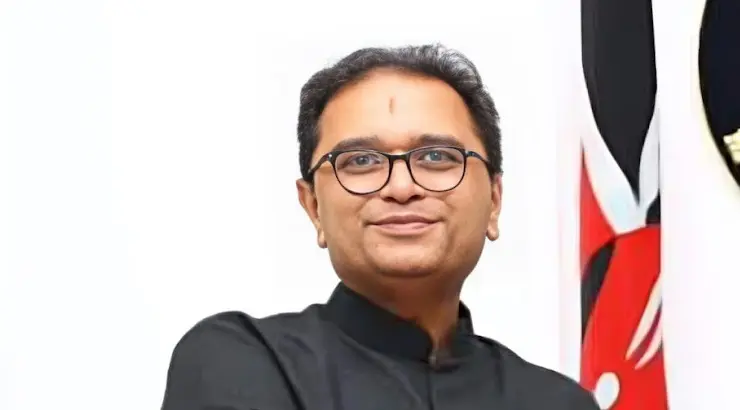
WHEN HARISH RAMJI walked out of a Nairobi magistrate’s court in late 2025 after a judge threw out the case against him as a nullity, he had already been arrested, publicly branded a forger and a fraudster, dragged through every level of the Kenyan judicial system, and drained of money that most Kenyan families would not see in a generation. He had also just beaten one of the most resourced industrial families in East Africa. The problem for the Hashu dynasty of Mombasa Cement is that Harish, his brother Bharat, and youngest sibling Ashvin were not broken. They were sharpened.
The saga that led to that moment began not in 2025 but in 2010, when three Kenyan-Asian brothers who had purchased a 7.4-acre parcel of land in Mavoko, Machakos County from the National Social Security Fund filed suit against Mombasa Cement Limited, which claimed the same piece of earth. At the time, Mombasa Cement was the expanding industrial crown jewel of Hasmukh Kanji Patel, popularly known as Hasu, a cement billionaire whose name was synonymous with charitable giving along Kenya’s coast. The disparity between the two sides could not have been more stark. On one side: a family of three brothers with a sale agreement dated December 2006 and a title in their names. On the other: one of the most politically connected industrialists in the country, a man who fed thousands of the poor daily, built schools, paid hospital bills, erected city sculptures, and enjoyed the company of Cabinet Secretaries, county governors, and opposition kingpins at his table.
What followed was not merely litigation. It was, by every credible account available in court records and testimony from people familiar with the matter, a fourteen-year campaign designed to grind the Ramjis into financial ruin, social disgrace and criminal jeopardy. The outcome, confirmed by Kenya’s highest courts, proved that their title was valid. The question that lingers over the Hashu empire — now navigating a post-patriarch era after Hasu Patel’s unexpected death in August 2024 at the age of fifty-eight — is how much damage was deliberately done along the way, and who must now answer for it.
THE LAND AND THE CLAIM
The origins of the dispute lie in a land-sale programme that the National Social Security Fund ran in Mavoko in the early 2000s, offloading large parcels it held in what would become a contested and litigated stretch of Machakos County. Mombasa Cement entered the picture early. Court records show the company acquired a fifty-acre parcel, LR number 27159, in September 2004 and was subsequently offered an adjoining 7.4-acre piece, LR number 11895/50, which abutted its growing industrial footprint. By September 2006, the company had paid a ten percent deposit on that second parcel, eventually settling the full balance two years later. In their version of events, that money secured them a right of ownership.
The Ramji brothers tell a different story, one backed by a sale agreement they signed with the NSSF in December 2006. The complication that allowed both claims to flourish simultaneously was a third party — a company called Harp Investco — that also claimed interest in NSSF land in Mavoko and filed a High Court case that froze multiple pending sales. A consent judgment in June 2010 purported to resolve the web of competing claims by allowing buyers to proceed. It was on the basis of that consent that Mombasa Cement said it finalised its payment, at a renegotiated price of Sh8.7 million. The Ramji brothers argue, and the Court of Appeal ultimately agreed, that their independent purchase, made through a valid process and supported by their own documentation, gave them the superior title.
Crucially, Mombasa Cement never produced a direct sale agreement between itself and the NSSF for the 7.4-acre parcel. The Ramjis did. That absence would become central to every court that subsequently examined the dispute, but not before the Hashu machine had spent years burying the brothers under procedural rubble.
“The office of Managing Director and Chief Executive Officer of Kenya Railways is a public office that must at all times be exercised in accordance with the Constitution and the principles of good governance.”
THE LONG SIEGE: 2010 TO 2019
The Ramjis filed their civil suit against Mombasa Cement in 2010 with a straightforward claim of ownership. What followed was anything but straightforward. People familiar with the litigation describe a relentless pattern of procedural delays, multiple applications, and manoeuvres that kept the case from resolution while Mombasa Cement’s operations continued to encroach on the disputed parcel. For nine years, the brothers waited for the Environment and Land Court to deliver its judgment. When it came in 2019, it dismissed their case entirely.
The manner of that dismissal drew private disbelief from legal observers. The brothers had filed their documentary evidence. The cement company had not produced the one document that would have confirmed its claim above theirs: a direct NSSF sale agreement. Yet the court found in Mombasa Cement’s favour. The brothers appealed immediately. The Court of Appeal would take another four years to speak. What happened in the space between the 2019 defeat and the 2023 reversal forms the most explosive chapter of this story.
Sources close to the Ramji camp describe an atmosphere during those years that went well beyond ordinary litigation pressure. Claims circulated, backed by what these sources describe as traceable expenditure, that money was moving from the Mombasa Cement side to people capable of influencing outcomes, including officers within law enforcement. Whether or not those specific allegations are ever proven in the criminal proceedings the brothers are now pursuing, the result of the overall period was undeniable: the Ramjis were exhausted, financially strained, and facing the prospect of permanent loss of a Sh350 million asset on which they had legitimate papers.
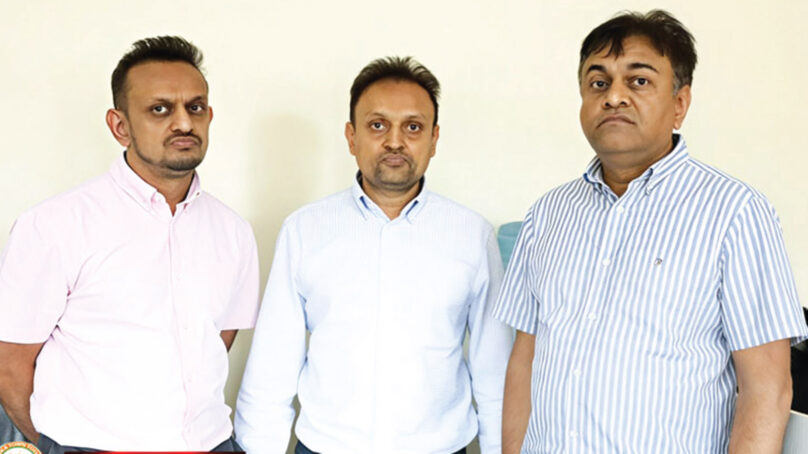
Ramji Brothers.
THE FORGED FORGERY: HOW ARRESTS BECAME A WEAPON
The criminal strand of this story requires particular scrutiny. While the civil dispute was still live, allegations emerged that the Ramji brothers had forged NSSF documents to back their ownership claim. These allegations, which Mombasa Cement’s camp pushed with considerable energy, were never findings made by the civil courts examining the same documents. In December 2023, a three-judge Court of Appeal bench comprising Justices Patrick Kiage, Kathurima M’Inoti and Francis Tuiyott delivered a landmark ruling affirming the Ramjis as rightful owners. The court examined the discrepancies in their documentation and found them attributable to clerical error, not fraud. The judges traced the process of acquisition and found it favoured the Ramji family.
That should have been the end. It was not. In January 2024, a complaint surfaced at DCI headquarters, originating from the NSSF, asserting that the Ramjis had fraudulently obtained title to land the NSSF regarded as its own. The timing was remarkable. The complaint came barely a month after the Court of Appeal had vindicated the brothers, and a month before Mombasa Cement would attempt to take the matter to the Supreme Court. Investigators nevertheless pressed ahead. The Ramjis sought orders from the Kiambu High Court to block their prosecution. Justice Dorah Chepkwony dismissed that petition in July 2024, holding that the investigation was ongoing and that the brothers should present their evidence in criminal proceedings. The brothers appealed. In a brief but significant ruling, Justices Jessie Lesiit and John Mativo noted that the forgery allegations had in fact arisen and been addressed in the Court of Appeal proceedings, and that the existence of a final appellate judgment dismissing those allegations constituted exceptional circumstances.
Mombasa Cement continued to call for the prosecution to proceed. It filed papers before the Court of Appeal characterising the brothers’ attempts to stop the criminal case as an abuse of court process. Then came September 2024: the Supreme Court delivered its ruling, dismissing Mombasa Cement’s application to escalate the civil dispute upward. The apex court found no new question of general public importance warranting its intervention. The Ramjis were confirmed as the owners. A fourteen-year civil war had ended in their favour at every meaningful level.
Yet in December 2025, the DCI arrested all three brothers. They were charged with conspiracy to defraud, making a false document, obtaining registration by false pretences, and forgery. Their lawyers pointed to the September 2024 Court of Appeal order that had barred arrests and prosecutions related to the property while appellate proceedings remained active. The magistrate who eventually heard the matter threw the case out as a nullity. But the damage had already been done: public arrests, the spectacle of charges, and media coverage that had for years branded the brothers as suspects in a case the civil courts had already ruled upon.
PHILANTHROPY AS POLITICAL COVER
Understanding how Mombasa Cement sustained its position through years of adverse evidence requires an understanding of the Hasu Patel brand and the political architecture around it. Hasmukh Patel was not a conventional tycoon. He built visible goodwill on a staggering scale. His Sahajanand Feeding Centre in Mombasa was estimated to feed up to a thousand people a day. He ran scholarship programmes that put over ten thousand learners through school. He paid hospital bills for strangers. He erected sculptures along Mombasa’s roads and funded environmental beautification projects. When he died suddenly in August 2024, the funeral procession brought Mombasa City to a standstill. Cabinet Secretaries delivered condolences on behalf of the President. Opposition leader Kalonzo Musyoka attended personally. In death, as in life, the Hasu brand delivered extraordinary political insulation.
But that insulation had limits, and they were always most visible at the coast’s edges. In Kilifi County, where Mombasa Cement built its main clinker factory at Vipingo, a different narrative competed with the philanthropist story. Local residents and their MPs repeatedly accused the company of acquiring land under questionable processes. Parliamentary committees investigated. In 2015, a committee directed managing director Hasmukh Patel to appear personally before it in Nairobi over questions about 1,233 acres the company held at Vipingo, which residents accused it of having wrested from ancestral owners through illegal procedures. In 2023, approximately five hundred machete-carrying youths invaded part of the Vipingo Sisal farm along the Mombasa-Malindi Highway, claiming the land belonged to their forefathers and that sisal estate leases had expired. Residents filed title deeds they said authenticated their claims, and human rights organisations accused the company of deploying fake title deeds to enforce its ownership.
A parliamentary committee sided with critics of the acquisition, recommending the nullification of Mombasa Cement’s titles, directly contradicting the National Land Commission which had cleared the 2005 purchase from Vipingo Estate Limited at Sh68 million. Sources alleged that NLC chairman Mohammed Swazuri’s relationship with Hasu Patel gave the cement company an advantage in that acquisition. Swazuri was later acquitted in a separate Sh221 million land case, but his tenure at the NLC was itself one of the most scandal-tainted in Kenyan parastatal history.
The Mombasa County government separately fell into open war with Mombasa Cement during this same period. The county moved to oversee and regulate Patel’s charitable donations at public hospitals, a move the tycoon and his company regarded as an intrusion. The response was extraordinary: Mombasa Cement physically removed sculptures it had installed at city roundabouts and carted them to Kilifi County in what observers widely characterised as retaliation. A billionaire was pulling art off public roundabouts in a grudge match with a county governor. In a normal environment, that episode alone would have generated the kind of sustained scrutiny the company never quite received.
THE FAMILY IN PIECES
While Mombasa Cement pursued the Ramji brothers through the courts, the Hashu family’s internal affairs were generating their own litigation. Court records from Mombasa reveal a succession dispute involving the estate of Hasmukh’s late elder brother, Arvind Kanji Premji Patel, who died in 2013. Arvind and Hasmukh were co-directors and co-shareholders in multiple companies, including Corrugated Sheets Limited, Vishnu Holdings Limited, Standard Rolling Mills Limited, Venus Metals Developers Limited and Vishna Investment Limited, as well as Mombasa Cement and Tororo Cement in Uganda. The combined value of those interests ran into billions.
The complication arose from a woman named Moza Abdillahi, who bore Arvind two children during an extramarital relationship while she worked at one of the family companies. Moza and her twins subsequently claimed their share of Arvind’s estate. Her legal team accused Hasmukh of having forged Arvind’s will, arguing that Arvind was not in a sound mental or physical state when the document was executed. The irony of a man whose own legal campaign against the Ramji brothers centred on allegations of document forgery then facing his own will-forgery accusations before a court is the kind of detail that the Hashu family would very much prefer to stay buried in court archives.
Hasmukh died before that succession dispute was publicly resolved. His death in August 2024 came barely five months after the family hosted a grand wedding in Nyali for his son Dhruv Hasmukh Patel, who now serves as a director of Mombasa Cement. Reports from the wedding described the kind of extravagance that belongs to a different universe from the Mavoko brothers they were simultaneously prosecuting: the internationally renowned Tanzanian entertainer Diamond Platnumz was flown in at fees estimated in the multi-millions. Mombasa’s business and political establishment turned out. The celebration was a statement of permanence and power. It was also, in retrospect, the last significant public display of the undiluted Hashu era.
THE COUNTEROFFENSIVE
The Ramji brothers are not the same men who first walked into the Environment and Land Court in 2010 with straightforward papers and reasonable expectations of a fair hearing. Fourteen years of litigation, two criminal arrests, reputational destruction, and financial attrition have not produced compliance. They have produced a calculated campaign of counter-accountability.
Through senior counsel Nelson Havi, the brothers filed a constitutional petition naming DCI Director Mohamed Amin and DPP Director Douglas Kanja as respondents, accusing both of gross abuse of power, violation of their fundamental rights, and defiance of binding court decisions by sanctioning their arrest and prosecution after the dispute had been settled by superior courts. The petition seeks declarations that both officials are unfit to hold public office and demands that they jointly pay Sh300 million in damages for the rights violations alleged. In separate proceedings, the brothers are separately seeking Sh300 million from the DPP and DCI, bringing their total damages claim to Sh600 million.
In parallel, the Ramjis are preparing private criminal proceedings targeting Mombasa Cement’s director Dhruv Hasmukh Patel and CEO Bhadra Shah over trespass on the Mavoko parcel and related offences. Those proceedings would, if they proceed to trial, represent a direct inversion of the story that Mombasa Cement spent over a decade constructing: that the Ramjis were the criminals, the forgers, the usurpers. Instead, the company’s own current leadership would sit in the position of accused.
The criminal case the magistrate threw out as a nullity has not been forgotten. The brothers’ lawyers have pointed publicly to what they describe as the extraordinary alignment between Mombasa Cement’s Supreme Court defeat in September 2024 and the DCI’s decision to move against the brothers in December 2025, arguing that the sequence suggests coordination designed to frustrate the implementation of the courts’ findings. The DCI’s position, that the September 2025 NSSF complaint triggered an independent criminal investigation with forensic backing, has not satisfied the brothers or their counsel, who note that the NSSF’s involvement in a matter where NSSF documentation forms the core of the civil case raises its own questions about who was directing that complaint and why.
WHAT THE RECORDS REVEAL ABOUT MOMBASA CEMENT’S STRATEGY
Reviewing the full litigation trail, a pattern emerges that experienced commercial litigators in Kenya recognise immediately. When a well-resourced party knows its underlying claim is weak, the most effective legal strategy is not to win on the merits but to outlast the opponent. File applications at every junction. Appeal unfavourable procedural rulings. Open parallel fronts in multiple courts. Deploy criminal proceedings to drain the opponent’s finances and management attention, and to generate negative publicity that poisons public perception while civil hearings remain pending. Every element of that playbook appears in the record of Mombasa Cement’s engagement with the Ramji brothers.
The company filed papers characterising the brothers’ attempts to defend themselves as an abuse of court process, a framing that, had it been accepted, would have left them unable to challenge the criminal proceedings at all. It opposed their applications at every turn, insisting that the forgery investigation was independent of the civil dispute even after the Court of Appeal had examined and dismissed forgery allegations in the same matter. When the Supreme Court closed the door on civil escalation in September 2024, a complaint appeared at DCI headquarters the same month from the NSSF, and arrests followed fifteen months later.
None of this proves, on its own, that specific Mombasa Cement officials directed law enforcement action against the Ramjis. What it establishes, through the public record, is that every major escalation in the criminal dimension of this case followed a major setback for Mombasa Cement in the civil dimension. Coincidences, in Kenyan corporate litigation, have a tendency to cluster in patterns that only benefit one side.
THE EMPIRE AFTER HASU
The sudden death of Hasmukh Patel in August 2024 from what his family spokesman described as stomach pains removed the individual whose name, personal relationships, and charitable empire had provided Mombasa Cement with a level of political protection that no corporate strategy alone could replicate. Hasu’s relationships with Governor Abdulswamad Nassir, with Wiper’s Kalonzo Musyoka, with the coast political establishment from MP level upward, were personal bonds built over decades of community investment. His son Dhruv and CEO Bhadra Shah, whatever their individual capabilities, inherited a corporation carrying the weight of those relationships without the man who built them.
The company now faces the Ramji brothers’ counteroffensive without Hasu’s protective halo. It faces the community land pressures at Vipingo without his ability to personally charm parliamentary committees into paralysis. It faces scrutiny of its acquisition history without the philanthropic narrative that historically deflected uncomfortable questions. And it faces all of this while managing an internal succession dispute over the assets of the late Arvind Patel that has yet to reach final resolution, with Moza Abdillahi and her children still pressing their claims through the courts.
CEO Bhadra Shah has in recent years cultivated her own high-profile charitable initiatives, generating positive media coverage that mirrors the pattern Hasu Patel established. Private observers have raised pointed questions about the function of such giving in a company with Mombasa Cement’s tax profile and land-acquisition history, but those questions have not yet found a sustained public hearing.
WHAT HAPPENS NEXT
The Ramji brothers’ damages petitions against the DPP and DCI are live. Their intended private criminal proceedings against Dhruv Hasmukh Patel and Bhadra Shah are at an advanced preparatory stage. The Mavoko parcel, confirmed by courts from the Court of Appeal to the Supreme Court as theirs, remains physically occupied by Mombasa Cement’s infrastructure, making the question of actual possession the next frontier of this battle. Trespass proceedings, if the brothers file and pursue them effectively, would force Mombasa Cement to either vacate industrial infrastructure it has operated for years on land a court has said belongs to three Kenyan-Asian brothers, or pay damages that could be substantial.
For anyone watching Kenya’s accountability landscape, the trajectory of this case matters beyond the specific interests of the parties. It asks whether the systematic weaponisation of law enforcement against a legitimate property owner by a corporate adversary has consequences for those who did the weaponising, not only for those who survived it. It asks whether the DCI and DPP can be held financially accountable for deploying their powers on behalf of parties who have already lost in the courts whose authority those institutions are meant to enforce, not undermine.
It also asks a question that Kenyans in business and outside it know from experience but rarely see posed this directly: when a billionaire’s philanthropy becomes the mechanism for avoiding accountability, what happens when the billionaire dies?
For Harish, Bharat and Ashvin Ramji, the answer is becoming clear. The machine that spent fourteen years trying to bury them is now running without its most powerful component. The brothers are not celebrating. They are filing. And in Kenya’s courts, a company that once weaponised criminal law against three brothers who dared to hold a legitimate title now finds those same brothers using the same courts to come for its directors, its CEO and the state officials they allege were deployed against them.
The Hashu empire is not finished. It is too large, too embedded in the coast’s commercial fabric, and too strategically positioned in Kenya’s construction industry to collapse from a single legal campaign. But it is, for the first time in its history, genuinely frightened. And in a country where money has too often been the last word on land, that fear is itself a kind of justice.
Kenya Insights allows guest blogging, if you want to be published on Kenya’s most authoritative and accurate blog, have an expose, news TIPS, story angles, human interest stories, drop us an email on [email protected] or via Telegram







Kenya Airways Sinks Into Deeper Turbulence As American Supplier Sues In New York Court Over Sh129 Million Unpaid Debts

Kenyan player wins a Ksh3.2 million jackpot

IEBC Sets August 10 Date For 2027 General Election

Furious Ruto Lashes Out at Gideon Moi Over Repeated ‘Blackmail, Extortionist’ Headlines on The Standard and KTN

Mombasa Gripped by ‘Male Organ Theft’ Panic as Social Media Fuels Mob Attacks and Fear

TOO MUCH PR, NOTHING TO SEE: How Gladys Wanga Built a Perfect Story of Transformation While Homa Bay Bled

Netanyahu Says Israel Must ‘Break Free from Dependence’ After Tensions With Trump Administration

Niger pulls Out Of International Criminal Court After Calling It Neo-Colonialist

Kenya Awards Sh154 Billion JKIA Upgrade Tender To Chinese Firm CRBC

The Untouchable: How KURA’s Silas Kinoti Has Survived A Decade Of Corruption Storms While Kenya’s Roads Bled

Businessman Philip Waithaka Kinuthia’s Minor Son Allegedly Drove Drunk, Killed Two Peponi Students in Ngong Road Horror Crash as Claims of Cover-Up Intensify

Inside NCBA’s Decline: How a Banking Giant Lost Its Strategic Edge

South Sudan: Adut Salva Kiir’s Shadow Treasury Exposed

Cement, Cash and Courts: How the Hashu Dynasty Crushed the Ramji Brothers for Fourteen Years and Why the Walls Are Now Closing In

Standard Chartered Ghosts Haunt Joshua Oigara At Stanbic As Whistleblower Spills Beans

Inside The Urban Planning Cartel That Owns Nairobi

THE VULTURE AND THE SCHEME How Nairobi West Hospital Became the Most Dangerous Institution in Kenya’s SHA Ecosystem and Why the Books Must Be Audited Now

The President’s Daughter and The Missing Witness: How Adut Salva Kiir’s Shadow Treasury Silenced Its Most Dangerous Critic

How Adil Popat Saved His Empire On The Eve Of Imperial Bank Collapse and Why Kenya’s Mainstream Media Buried The Story

Why John Ngumi Is Running From the EACC and Why the Sh415 Million Payday May Be the Least of His Worries
-
 News2 weeks ago
Businessman Philip Waithaka Kinuthia’s Minor Son Allegedly Drove Drunk, Killed Two Peponi Students in Ngong Road Horror Crash as Claims of Cover-Up Intensify
-
 Africa2 weeks ago
South Sudan: Adut Salva Kiir’s Shadow Treasury Exposed
-
 Investigations7 days ago
THE VULTURE AND THE SCHEME How Nairobi West Hospital Became the Most Dangerous Institution in Kenya’s SHA Ecosystem and Why the Books Must Be Audited Now
-
 Business2 weeks ago
How Adil Popat Saved His Empire On The Eve Of Imperial Bank Collapse and Why Kenya’s Mainstream Media Buried The Story
-
 Business2 weeks ago
Why John Ngumi Is Running From the EACC and Why the Sh415 Million Payday May Be the Least of His Worries
-
 Business4 days ago
BURRIED TWICE: The Victoria Bank CEO Yogesh Pattni Files
-
 Business7 days ago
Inside the Billion-Shilling Betrayal: How Senior Treasury Officials Plundered a UN Poverty Fund and Built a Real Estate Empire on the Backs of Kenya’s Rural Poor
-

 Business1 week ago
The Listing That Doesn’t Lie: What the Market Isn’t Saying About Family Bank’s NSE Debut