
Business
Inside the Billion-Shilling Betrayal: How Senior Treasury Officials Plundered a UN Poverty Fund and Built a Real Estate Empire on the Backs of Kenya’s Rural Poor
Court documents reveal how a cabal of National Treasury insiders looted Sh1.55 billion from a shuttered IFAD-backed programme, fabricating payment vouchers, opening ghost bank accounts, and withdrawing nearly Sh800 million in cold hard cash then converting their proceeds into hotels and apartment blocks from Eldoret to Athi River.

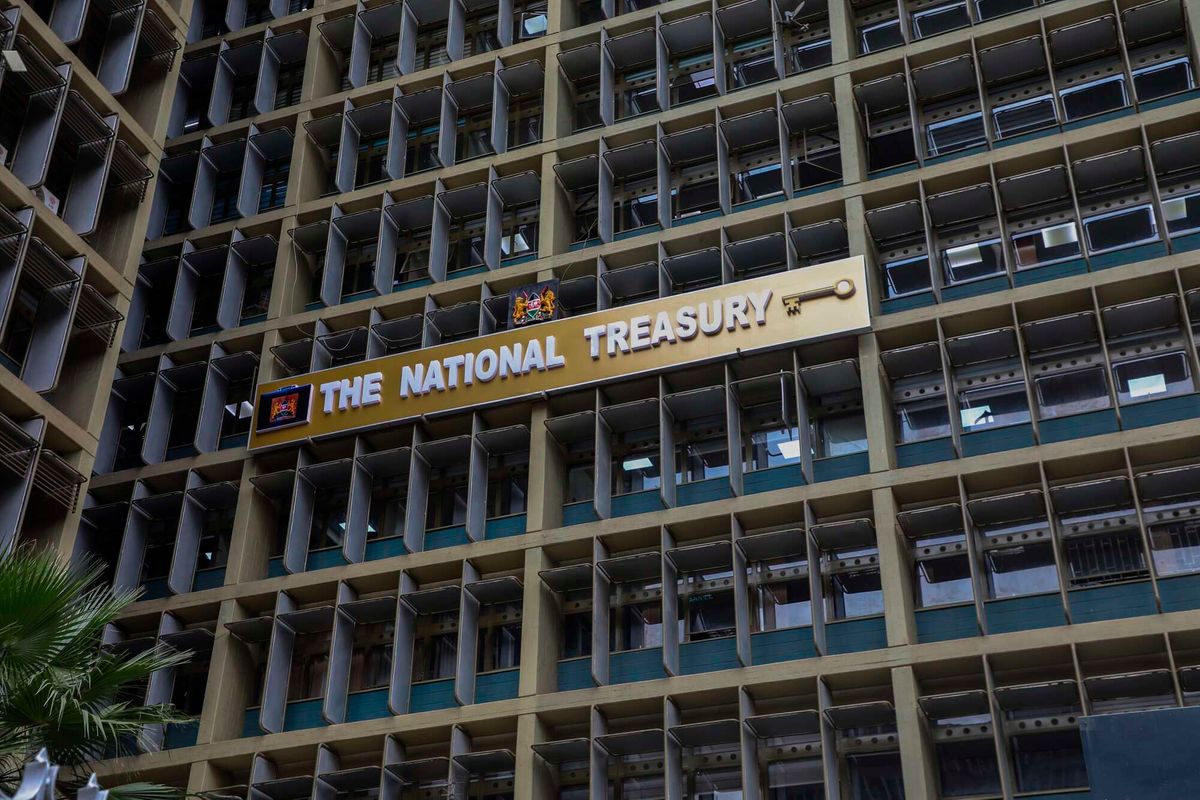
The programme was never supposed to make anyone rich at least, not the civil servants charged with running it. The Programme for Rural Outreach of Financial Innovations and Technologies, known by its clinical acronym PROFIT, was conceived as a lifeline for Kenya’s most marginalised communities: smallholder farmers in arid and semi-arid zones, pastoralists, artisanal fishers, landless labourers and rural women locked out of the formal financial system.
Jointly funded by the Kenyan government and the International Fund for Agricultural Development a United Nations specialised agency it pooled more than $30.8 million over nearly a decade to improve credit access, build microfinance capacity, and extend insurance products to communities where the banking sector’s footprint ended at the nearest tarmac road.
The programme closed on December 31, 2019, its mandate fulfilled, its donor funding exhausted. What happened next, according to explosive court documents filed by the Ethics and Anti-Corruption Commission, was a masterclass in institutional betrayal. Senior National Treasury officials, emboldened by the programme’s closure and the assumption that a dead project attracts little scrutiny, allegedly kept its bank accounts alive, fabricated payment vouchers, and over the course of years siphoned Sh1,554,455,284.35 funds released by the Treasury in the name of a programme that no longer existed and a donor that had long since departed.
The EACC has now taken the suspects to the High Court seeking forfeiture of the stolen funds and the assets in which they were invested, including a four-storey hotel in Eldoret, a clutch of apartments in Athi River, and multiple residential properties on the outskirts of Nairobi.
Bank accounts belonging to the suspects and their associated companies have been frozen by court order, pending the determination of the recovery suit. The accused have not yet filed their responses to the allegations.
The Ringleaders
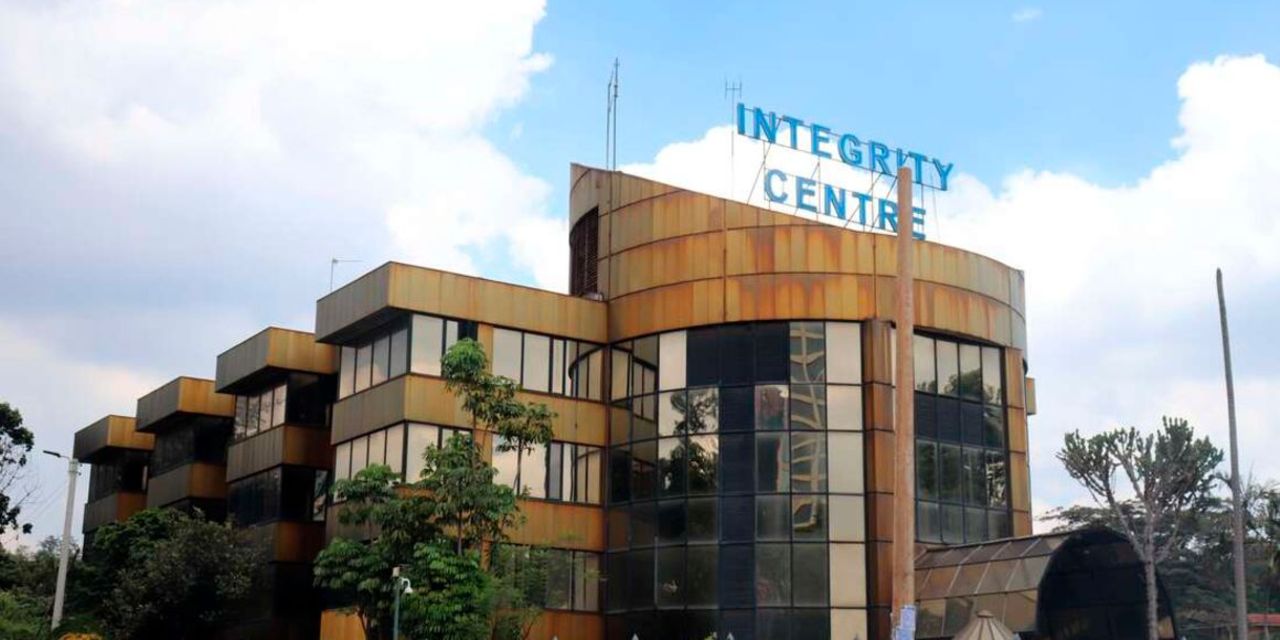
Integrity Centre that hosts Ethics and Anti-Corruption Commission (EACC) offices in Nairobi
At the centre of the scheme, according to EACC’s court filings, are two individuals who served as the programme’s accountants and whose names now appear with damning frequency in the transaction trail: Billy Otieno Obango, the former accountant of the PROFIT programme, and Gladys Juliet Chepkarat, described in the filings as his collaborator. Together, the Commission alleges, the two orchestrated the primary channels through which the funds were drained.
The scale of Obango’s alleged cash withdrawals alone is staggering. EACC investigators say that from PROFIT’s Cooperative Bank of Kenya account an account that should have been wound up when the programme closed Obango personally withdrew Sh799.84 million in cash.
In a country where a single bank transaction of more than Sh1 million triggers regulatory reporting obligations, the alleged withdrawal of nearly Sh800 million in physical cash without detection raises troubling questions about internal controls at both the Treasury and the bank itself.
The scheme’s architects were not operating alone. The court documents name an alarming roster of serving and former National Treasury senior officials as co-conspirators and enablers. Among them: John Maina Muriithi, a senior accountant at the Treasury; Nemwel Moturi Mutonya, also a senior accountant; Lilian Wanjiku Dishon, the senior deputy accountant general; George Kihara, Head of the Treasury’s Accounting Unit; and Susan Warukira, a Principal Accountant.
Two others named in the filings John Ngure Kabutha and Sylvia Awino Obango complete a network whose reach appears to have extended across multiple floors of the Treasury’s offices on Harambee Avenue.
A Ghost Account and Forged Documents
The mechanics of the fraud, as the EACC has laid them out, reveal a criminal operation of some sophistication.
The conspirators exploited a fundamental procedural gap: genuine PROFIT payment vouchers required a two-stage authorisation certification by an Authority to Incur Expenditure holder, followed by sign-off from an accounting officer.
The fraudulent vouchers the suspects allegedly prepared bypassed the first stage entirely, requiring only a single accounting officer authorisation. Investigators believe this shortcut was deliberate and went undetected because oversight of the closed programme had effectively lapsed.
What makes the scheme particularly audacious is that the suspects allegedly continued to invoke IFAD’s name on the fabricated vouchers, purporting to seek funding for programme activities at the request of a donor that had ceased disbursements years earlier. EACC says the forged documents were presented to the Treasury, which then released funds from its own budget into the PROFIT account at Co-operative Bank funds that were then diverted to personal accounts and shell companies with remarkable speed.
When the Co-operative Bank account’s capacity appeared insufficient, the suspects allegedly innovated further.
In October 2022, nearly three years after PROFIT had officially closed, Obango and Chepkarat are alleged to have opened an entirely new bank account at KCB Bank Kenya in the PROFIT programme’s name, using false and forged documents. The account was then presented to the Treasury as a legitimate programme account, and Sh175.3 million was subsequently disbursed into it. Of that sum, the Commission says Sh157.8 million was paid out via cheques supported by fabricated documentation, while Chepkarat personally withdrew Sh16.1 million and Obango pocketed a further Sh897,600 in cash.
The Thugge Connection
Hovering at the edges of the court record is a name that will send shockwaves through the political establishment. On December 8, 2016 three years before the PROFIT programme formally closed then National Treasury Principal Secretary Kamau Thugge personally introduced Obango, Chepkarat and Maina as additional signatories to the PROFIT Co-operative Bank account.
Thugge would later go on to become Governor of the Central Bank of Kenya, Kenya’s monetary authority. The court documents do not allege that Thugge was aware of or complicit in the subsequent fraud; the introduction of additional signatories was a routine administrative act in 2016 when the programme was still active. But his name in the transaction chain raises questions that the EACC or the CBK’s own board may find difficult to ignore.
Hotels, Apartments, and a Property Empire
The stolen funds did not remain in bank accounts. Kenya’s anti-graft investigators followed a real estate trail that stretches from the Rift Valley to the outskirts of Nairobi.
Among the crown jewels is Skyline Hotel in Eldoret a four-storey property that EACC investigators believe was developed using proceeds of the PROFIT fraud, allegedly by Chepkarat and Philip Chepkarat. In Athi River’s Stoni Athi Phase I development, two apartments Flat No. 69A and Flat No. 43A have been flagged by investigators as acquired using diverted funds, one through a company allegedly linked to the scheme’s beneficiaries.
Obango’s personal property portfolio, the Commission alleges, includes a residential flat in Stoni Athi purchased from the National Housing Corporation for Sh8.85 million, alongside four housing units in Kamulu’s Avana Garden Estate acquired for approximately Sh18.1 million all of it allegedly financed by the cash he withdrew from PROFIT’s accounts. In Eldoret’s Racecourse area, a company called 020 Investments Limited described in court filings as a proxy entity whose directors are Chepkarat’s children received Sh104,839,792 and used it to purchase three houses in the neighbourhood.
A second corporate vehicle, Jarods Agency Limited, received Sh40.1 million from PROFIT accounts — funds that arrived after the programme had already been officially closed. The EACC wants both companies, and their assets, swept into the forfeiture net.
The RK-FINFA Diversion
The fraud’s complexity deepened further in the early months of 2023, when — according to court documents — residual funds of approximately Sh206 million were transferred from the PROFIT account at Co-operative Bank into an account belonging to a separate IFAD-backed initiative, the Rural Kenya Financial Inclusion Facility, known as RK-FINFA, held at Housing Finance Bank. Whether that transfer represented a further attempted concealment of the proceeds or an attempt to legitimise residual balances remains subject to the ongoing investigation.
The RK-FINFA programme was a successor financial inclusion effort that IFAD had independently funded and that carried its own management and governance structures the suggested commingling of PROFIT’s residual funds into RK-FINFA’s accounts, if confirmed, would raise serious questions for both entities.
A Systemic Failure Or Deliberate Blindness?
The EACC’s court filings spare nobody in the supervisory chain. Beyond the primary accused, the Commission names a second tier of senior Treasury officials Muriithi, Mutonya, Dishon and others not as direct participants in the withdrawals, but as individuals who allegedly abused their positions and failed in their duty to detect and halt the haemorrhage.
In a ministry whose core function is to manage, account for, and safeguard public expenditure, the failure to notice that billions of shillings were being disbursed into a defunct programme’s bank accounts year after year stretches the limits of what can charitably be called incompetence.
What the Rural Poor Lost
The final accounting is not merely financial. IFAD’s PROFIT programme, at its peak, reached more than 120,000 rural Kenyans smallholder farmers, pastoralists and rural women who, for the first time, gained access to savings products, crop insurance and affordable credit. The programme was designed to serve communities in Kenya’s most economically precarious zones, where a failed harvest or a sick animal can push an entire household into destitution.
When Treasury officials allegedly forged documents in PROFIT’s name to funnel its residual budgets into private accounts, they were not stealing from a government line item they were stealing from the architecture of a promise made to the most vulnerable.
IFAD has invested more than $455 million in Kenya across two decades of rural development programming, building its partnership with successive Kenyan governments on assumptions of basic fiduciary integrity.
If the allegations before the High Court are proven, that partnership and Kenya’s ability to attract future concessional development financing will have been damaged not by external forces, but by a clutch of civil servants who mistook a shuttered programme for a personal ATM.
The High Court is expected to set down the EACC’s recovery suit for hearing in due course. The assets the hotel, the apartments, the land parcels in the Rift Valley remain frozen. The accused have yet to speak. Whether Kenya’s legal machinery can deliver the accountability that its rural poor deserve remains, as with so many such cases, an open question.
Kenya Insights allows guest blogging, if you want to be published on Kenya’s most authoritative and accurate blog, have an expose, news TIPS, story angles, human interest stories, drop us an email on [email protected] or via Telegram


NCBA’s Repossession Empire: How Borrowers Lose Their Cars While the Bank Profits at Every Step

Ex-First Lady Margaret Kenyatta and Siblings Move to Block Widow from Late Brother’s Sh50 Million Estate

Inside the Billion-Shilling Betrayal: How Senior Treasury Officials Plundered a UN Poverty Fund and Built a Real Estate Empire on the Backs of Kenya’s Rural Poor

Tribunal Allows ODM To Take Disciplinary Action Against Sifuna

The Shadow Banker of Harare

Wicknell Chivayo’s VIP Airport Access Raises Serious Questions Over Security Protocols at JKIA

UAE Bans Children Under 15 Years From Using Social Media

‘They Come At Night’: Gachagua Claims Ruto Insiders Secretly Supporting and Advising Him

Lawyer In High-Profile Ugandan Treason Case Charged With Related Offence

Sh2 Billion Time Bomb: Firm Allegedly Linked to Amason Kingi in Kilifi Revenue Deal Continues to Drain County Coffers as Senate Opens Probe

Businessman Philip Waithaka Kinuthia’s Minor Son Allegedly Drove Drunk, Killed Two Peponi Students in Ngong Road Horror Crash as Claims of Cover-Up Intensify

Inside NCBA’s Decline: How a Banking Giant Lost Its Strategic Edge

Cement, Cash and Courts: How the Hashu Dynasty Crushed the Ramji Brothers for Fourteen Years and Why the Walls Are Now Closing In

Standard Chartered Ghosts Haunt Joshua Oigara At Stanbic As Whistleblower Spills Beans

Inside The Urban Planning Cartel That Owns Nairobi

South Sudan: Adut Salva Kiir’s Shadow Treasury Exposed

Why John Ngumi Is Running From the EACC and Why the Sh415 Million Payday May Be the Least of His Worries

How Adil Popat Saved His Empire On The Eve Of Imperial Bank Collapse and Why Kenya’s Mainstream Media Buried The Story

The President’s Daughter and The Missing Witness: How Adut Salva Kiir’s Shadow Treasury Silenced Its Most Dangerous Critic

Betika Faces DCI Probe, Directors Arrest and License Revocation Over Massive 29.5 Million Safaricom Customers’ Data Breach
-
 News4 days ago
Businessman Philip Waithaka Kinuthia’s Minor Son Allegedly Drove Drunk, Killed Two Peponi Students in Ngong Road Horror Crash as Claims of Cover-Up Intensify
-
 Business1 week ago
Inside NCBA’s Decline: How a Banking Giant Lost Its Strategic Edge
-
 Business1 week ago
Standard Chartered Ghosts Haunt Joshua Oigara At Stanbic As Whistleblower Spills Beans
-
 Investigations2 weeks ago
Inside The Urban Planning Cartel That Owns Nairobi
-
 Africa1 week ago
South Sudan: Adut Salva Kiir’s Shadow Treasury Exposed
-
 Business1 week ago
Why John Ngumi Is Running From the EACC and Why the Sh415 Million Payday May Be the Least of His Worries
-
 Business1 week ago
How Adil Popat Saved His Empire On The Eve Of Imperial Bank Collapse and Why Kenya’s Mainstream Media Buried The Story
-
 Africa1 week ago
The President’s Daughter and The Missing Witness: How Adut Salva Kiir’s Shadow Treasury Silenced Its Most Dangerous Critic