
Politics
Finance Bill 2026 ‘Rushed’ Through Second Reading Without Our Input – Opposition MPs
Majority accused of fast-tracking ‘controversial fiscal measures’ without full scrutiny

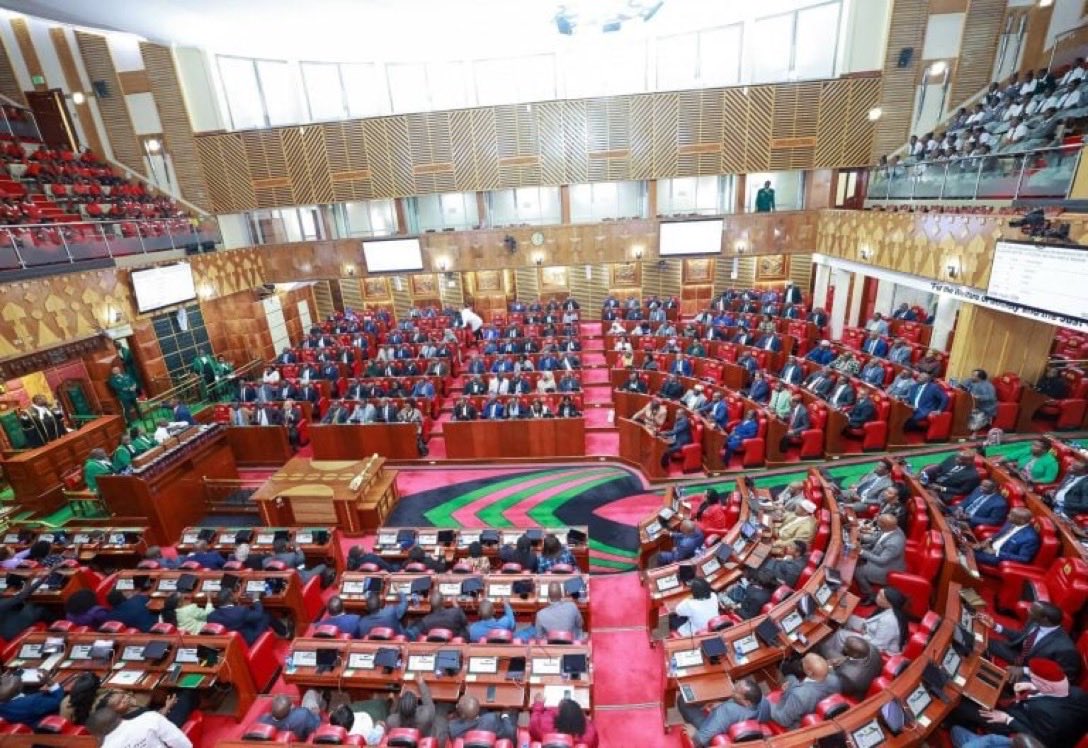
Members of Parliament drawn from the united Opposition have intensified their criticism of the Finance Bill 2026 process, alleging that the Majority side pushed the legislation through its second reading without adequate input from all lawmakers.
Addressing the media at Parliament, the MPs claimed the Bill advanced at an unexpectedly rapid pace, thereby limiting participation and undermining parliamentary scrutiny of key tax proposals. They argue that the manner in which the debate was managed reflects a deliberate strategy to fast-track the approval of controversial tax measures.
Kajiado North MP Onesmus Ngogoyo stated that the process denied members a fair opportunity to formally express their position through a division vote and questioned how the Bill reached its second reading.
“We called for a division, 31 members, and the Speaker refused for us to be head counted so that people will know who voted yes and who voted no to the Finance Bill as it was proposed,” he said.
He further argued that the House debated a published Bill while committee proposals and amendments had not been formally released at the time of the debate.
“What was before the National Assembly this morning and yesterday was the Finance Bill as it was published. The report of the committee… has not been proposed,” he said, adding that MPs were effectively being pressured into voting before full scrutiny.
Ngogoyo also warned that changes affecting second-hand clothing traders could have indirect cost implications, despite claims of tax relief.
“It is true they want to zero-rate the issue of mitumba, but what they are not telling you is that the VAT that people who trade in that business have been claiming, they will not be able to claim,” he explained.
Jack Wamboka, MP for Bumula, also accused the Majority side of compressing debate and limiting participation, stating that fewer than 20 MPs were permitted to contribute meaningfully.
“Less than 20 people have contributed to the Finance Bill this morning, and Osoro laid an ambush to us and from there he brought that thing,” he said.
Wamboka argued that the Bill imposes broad-based taxation on digital platforms and everyday transactions, warning of rising cost pressures across essential services.
“They are taxing digital platforms big time. People paying for medical services in hospitals are going to be taxed. Parents paying school fees as low as 200 shillings are going to be taxed,” he stated.
He added that mobile and digital payment systems would be affected, increasing the cost of basic transactions.
Kathiani MP Robert Mbui accused the Majority side of abandoning full debate in favour of expedited voting procedures, suggesting that Parliament risks losing its deliberative role.
“It is the first time that the Majority has conceded defeat by rushing to the media to explain what was happening on the floor of the House,” he said.
Mbui insisted that Parliament should prioritise debate over voting pressure, especially on a major tax law.
“This House cannot turn into a voting machine. We must be able to debate and articulate our issues,” he emphasised.
He also clarified that clause-by-clause scrutiny belongs to the committee stage, not the second reading, and said amendments would be introduced after the debate concludes.
His Matungulu counterpart, Stephen Mule, spoke on technical provisions in the Bill, citing VAT and excise duty changes affecting digital finance and imports.
“Part three of VAT, section 21A, contains the schedule for Value Added Tax amendments,” he said.
Mule argued that mobile money platforms such as M-Pesa and Airtel Money could be affected, warning of what he termed double taxation on everyday transactions.
“When they pay via M-Pesa, they are being taxed again. That is double taxation,” he asserted.
He also raised concern over excise duty structures on imported mobile phones, stating that costs would ultimately be transferred to consumers.
Kenya Insights allows guest blogging, if you want to be published on Kenya’s most authoritative and accurate blog, have an expose, news TIPS, story angles, human interest stories, drop us an email on [email protected] or via Telegram


Finance Bill 2026 ‘Rushed’ Through Second Reading Without Our Input – Opposition MPs

Sh2 Billion Victims Pay Threatens to Split UDA-ODM Pact

Sifuna Removed From Lucrative Senate Energy Committee Chaired By Oburu

‘I’m The Boss’, Trump Tells G7 Counterparts

Equatorial Guinea Govt Resigns After Failing To Meet Targets

Media Council Puts Kameme FM On Notice Over Offensive Content and Ethnic Incitement

Gladys Wanga Defends Sh500,000 Cost of Two-Door Pit Latrine

The Deal That Broke Telkom: How John Ngumi Pocketed Sh415 Million and Landed in Investigators’ Crosshairs

The Man Who Cannot Be Neutral: Peter Karimi’s Conflict of Interest Cloud Darkens As Betting Firms Fight For Their Licences

Rot From Within: How KCB Became Kenya’s Biggest Battleground for Insider Fraud

Businessman Philip Waithaka Kinuthia’s Minor Son Allegedly Drove Drunk, Killed Two Peponi Students in Ngong Road Horror Crash as Claims of Cover-Up Intensify

Inside NCBA’s Decline: How a Banking Giant Lost Its Strategic Edge

Cement, Cash and Courts: How the Hashu Dynasty Crushed the Ramji Brothers for Fourteen Years and Why the Walls Are Now Closing In

Standard Chartered Ghosts Haunt Joshua Oigara At Stanbic As Whistleblower Spills Beans

Inside The Urban Planning Cartel That Owns Nairobi

South Sudan: Adut Salva Kiir’s Shadow Treasury Exposed

Why John Ngumi Is Running From the EACC and Why the Sh415 Million Payday May Be the Least of His Worries

The President’s Daughter and The Missing Witness: How Adut Salva Kiir’s Shadow Treasury Silenced Its Most Dangerous Critic

How Adil Popat Saved His Empire On The Eve Of Imperial Bank Collapse and Why Kenya’s Mainstream Media Buried The Story

Betika Faces DCI Probe, Directors Arrest and License Revocation Over Massive 29.5 Million Safaricom Customers’ Data Breach
-
 News2 days ago
Businessman Philip Waithaka Kinuthia’s Minor Son Allegedly Drove Drunk, Killed Two Peponi Students in Ngong Road Horror Crash as Claims of Cover-Up Intensify
-
 Business1 week ago
Inside NCBA’s Decline: How a Banking Giant Lost Its Strategic Edge
-
 Investigations2 weeks ago
Cement, Cash and Courts: How the Hashu Dynasty Crushed the Ramji Brothers for Fourteen Years and Why the Walls Are Now Closing In
-
 Business7 days ago
Standard Chartered Ghosts Haunt Joshua Oigara At Stanbic As Whistleblower Spills Beans
-
 Investigations2 weeks ago
Inside The Urban Planning Cartel That Owns Nairobi
-
 Africa6 days ago
South Sudan: Adut Salva Kiir’s Shadow Treasury Exposed
-
 Business6 days ago
Why John Ngumi Is Running From the EACC and Why the Sh415 Million Payday May Be the Least of His Worries
-
 Africa6 days ago
The President’s Daughter and The Missing Witness: How Adut Salva Kiir’s Shadow Treasury Silenced Its Most Dangerous Critic