
Politics
Sh2 Billion Victims Pay Threatens to Split UDA-ODM Pact
Behind the scenes, the State House event reportedly triggered a stormy discussion among ODM’s top leadership.

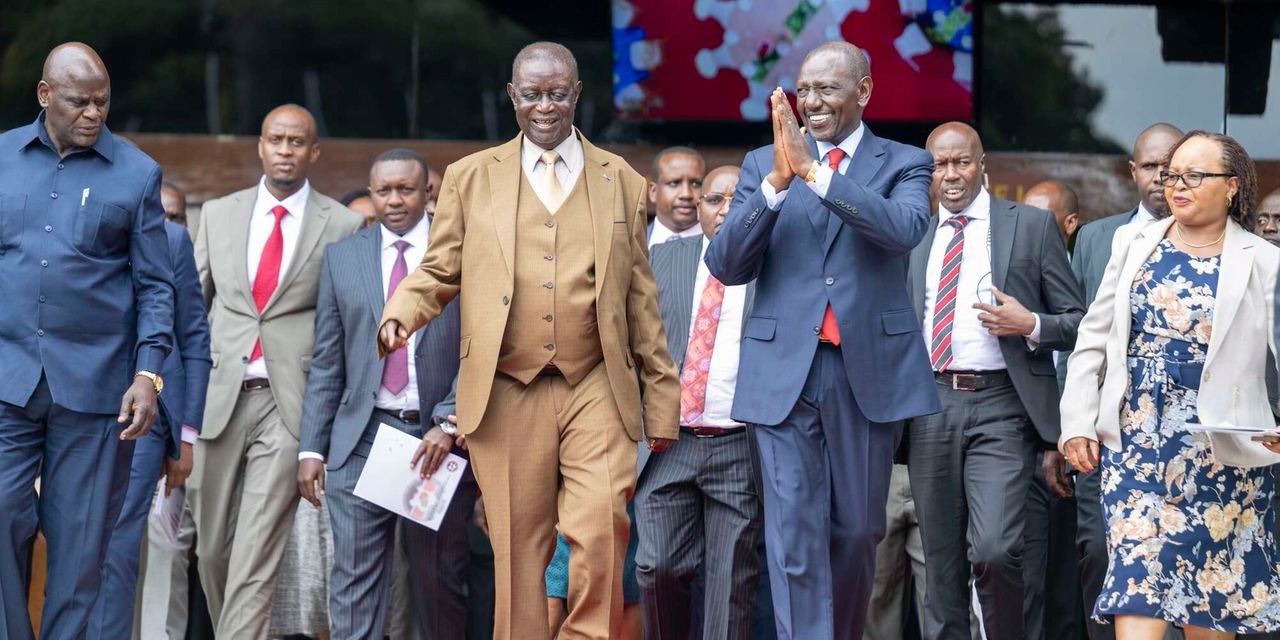
The political truce between President William Ruto’s United Democratic Alliance (UDA) and Raila Odinga’s Orange Democratic Movement (ODM) is facing its most serious test yet after a bitter dispute emerged over the government’s Sh2 billion compensation programme for victims of police brutality and political protests.
What was intended to be a landmark reconciliation initiative has instead exposed growing mistrust within the broad-based government arrangement, with senior ODM figures accusing State House of sidelining the party from a key promise contained in the March 2025 cooperation pact between the two former rivals.
The fallout burst into the open this week during a State House ceremony where President Ruto received a framework prepared by the Kenya National Commission on Human Rights for compensating victims of human rights abuses and families of those killed during anti-government demonstrations. The compensation programme is expected to benefit more than 1,800 victims and has been allocated Sh2 billion by the government.
However, instead of showcasing unity between the coalition partners, the event highlighted simmering tensions within ODM.
ODM leader Oburu Oginga used the occasion to publicly express his dissatisfaction after arriving when the ceremony was already underway, claiming he had not been properly invited. In remarks that caught the attention of political observers, Oginga suggested that the treatment reflected the absence of his brother, Raila Odinga, who has been the chief architect of the UDA-ODM rapprochement.
The compensation agenda occupies a special place within ODM’s political calculations. It was one of the flagship commitments contained in the ten-point agreement signed by President Ruto and Raila Odinga in March 2025, a deal that laid the foundation for the broad-based government and eased months of political hostility.
For ODM, compensation is more than a government programme. It is a politically sensitive issue tied to the party’s traditional support base, many of whom suffered injuries, arrests, deaths and economic losses during successive waves of anti-government protests. Party leaders have repeatedly pointed to the compensation pledge as evidence that engagement with President Ruto was delivering tangible benefits for their supporters.
Behind the scenes, the State House event reportedly triggered a stormy discussion among ODM’s top leadership. Senior party officials questioned why key figures, including governors and senior party office holders, were absent from a ceremony involving one of the most politically significant items in the UDA-ODM agreement.
The concerns go beyond protocol.
Some ODM insiders now believe there is a deliberate attempt by UDA strategists to claim sole ownership of a programme that was negotiated jointly between the two parties. The fear within sections of ODM is that if compensation payments begin reaching beneficiaries without visible ODM involvement, President Ruto could reap the political rewards among communities that have traditionally supported Raila Odinga.
That perception has become particularly sensitive as political conversations increasingly shift toward the 2027 General Election. ODM has invested significant political capital in persuading sceptical supporters that cooperation with Ruto’s administration would yield justice for victims of police excesses and political violence.
The compensation programme itself is extensive. Beneficiaries have been identified across six categories of violations, including deaths, enforced disappearances, torture, sexual violence, unlawful detention and destruction of property. According to government figures, the largest group consists of victims whose freedom and security were violated during demonstrations and related security operations.
President Ruto has framed the initiative as a national healing process aimed at ending a cycle in which protests repeatedly descend into violence, loss of life and destruction of property. He argues that compensating victims is necessary to strengthen democracy and restore public confidence in state institutions.
Yet the politics surrounding the payout may prove more complicated than the compensation exercise itself.
The public protest by Oburu Oginga has revealed underlying tensions that have largely remained hidden since the UDA-ODM pact was signed. While neither side has openly questioned the future of the alliance, the dispute has exposed competing interests over credit, influence and political ownership of flagship programmes.
With billions of shillings now set to flow to victims across the country, the compensation exercise is emerging as more than a human rights intervention. It is becoming an early test of whether the fragile UDA-ODM partnership can survive the political pressures that come with sharing power and claiming achievements.
If the disagreement deepens, the Sh2 billion compensation programme could become the issue that transforms quiet unease within the coalition into a full-blown political confrontation.
Kenya Insights allows guest blogging, if you want to be published on Kenya’s most authoritative and accurate blog, have an expose, news TIPS, story angles, human interest stories, drop us an email on [email protected] or via Telegram


Sh2 Billion Victims Pay Threatens to Split UDA-ODM Pact

Sifuna Removed From Lucrative Senate Energy Committee Chaired By Oburu

‘I’m The Boss’, Trump Tells G7 Counterparts

Equatorial Guinea Govt Resigns After Failing To Meet Targets

Media Council Puts Kameme FM On Notice Over Offensive Content and Ethnic Incitement

Gladys Wanga Defends Sh500,000 Cost of Two-Door Pit Latrine

The Deal That Broke Telkom: How John Ngumi Pocketed Sh415 Million and Landed in Investigators’ Crosshairs

The Man Who Cannot Be Neutral: Peter Karimi’s Conflict of Interest Cloud Darkens As Betting Firms Fight For Their Licences

Rot From Within: How KCB Became Kenya’s Biggest Battleground for Insider Fraud

FBI Foils Drone Attack Targeting White House

Businessman Philip Waithaka Kinuthia’s Minor Son Allegedly Drove Drunk, Killed Two Peponi Students in Ngong Road Horror Crash as Claims of Cover-Up Intensify

Inside NCBA’s Decline: How a Banking Giant Lost Its Strategic Edge

Cement, Cash and Courts: How the Hashu Dynasty Crushed the Ramji Brothers for Fourteen Years and Why the Walls Are Now Closing In

Standard Chartered Ghosts Haunt Joshua Oigara At Stanbic As Whistleblower Spills Beans

Inside The Urban Planning Cartel That Owns Nairobi

South Sudan: Adut Salva Kiir’s Shadow Treasury Exposed

Why John Ngumi Is Running From the EACC and Why the Sh415 Million Payday May Be the Least of His Worries

The President’s Daughter and The Missing Witness: How Adut Salva Kiir’s Shadow Treasury Silenced Its Most Dangerous Critic

How Adil Popat Saved His Empire On The Eve Of Imperial Bank Collapse and Why Kenya’s Mainstream Media Buried The Story

Betika Faces DCI Probe, Directors Arrest and License Revocation Over Massive 29.5 Million Safaricom Customers’ Data Breach
-
 News2 days ago
Businessman Philip Waithaka Kinuthia’s Minor Son Allegedly Drove Drunk, Killed Two Peponi Students in Ngong Road Horror Crash as Claims of Cover-Up Intensify
-
 Business1 week ago
Inside NCBA’s Decline: How a Banking Giant Lost Its Strategic Edge
-
 Investigations2 weeks ago
Cement, Cash and Courts: How the Hashu Dynasty Crushed the Ramji Brothers for Fourteen Years and Why the Walls Are Now Closing In
-
 Business6 days ago
Standard Chartered Ghosts Haunt Joshua Oigara At Stanbic As Whistleblower Spills Beans
-
 Investigations2 weeks ago
Inside The Urban Planning Cartel That Owns Nairobi
-
 Africa5 days ago
South Sudan: Adut Salva Kiir’s Shadow Treasury Exposed
-
 Business6 days ago
Why John Ngumi Is Running From the EACC and Why the Sh415 Million Payday May Be the Least of His Worries
-
 Africa6 days ago
The President’s Daughter and The Missing Witness: How Adut Salva Kiir’s Shadow Treasury Silenced Its Most Dangerous Critic