
News
Untouchable? How Bitok’s History Has Been Riddled With Mega Scandals and Why The PS Has Become Ruto’s Unnecessary Baggage
Two ministries. Three compounding crises. A passport pipeline to a UN-sanctioned warlord. Nearly a million ghost learners. Sixteen dead schoolgirls. And a Principal Secretary who treats Parliament as optional. The real question is not whether Julius Bitok should go. It is why William Ruto keeps shuffling him forward.

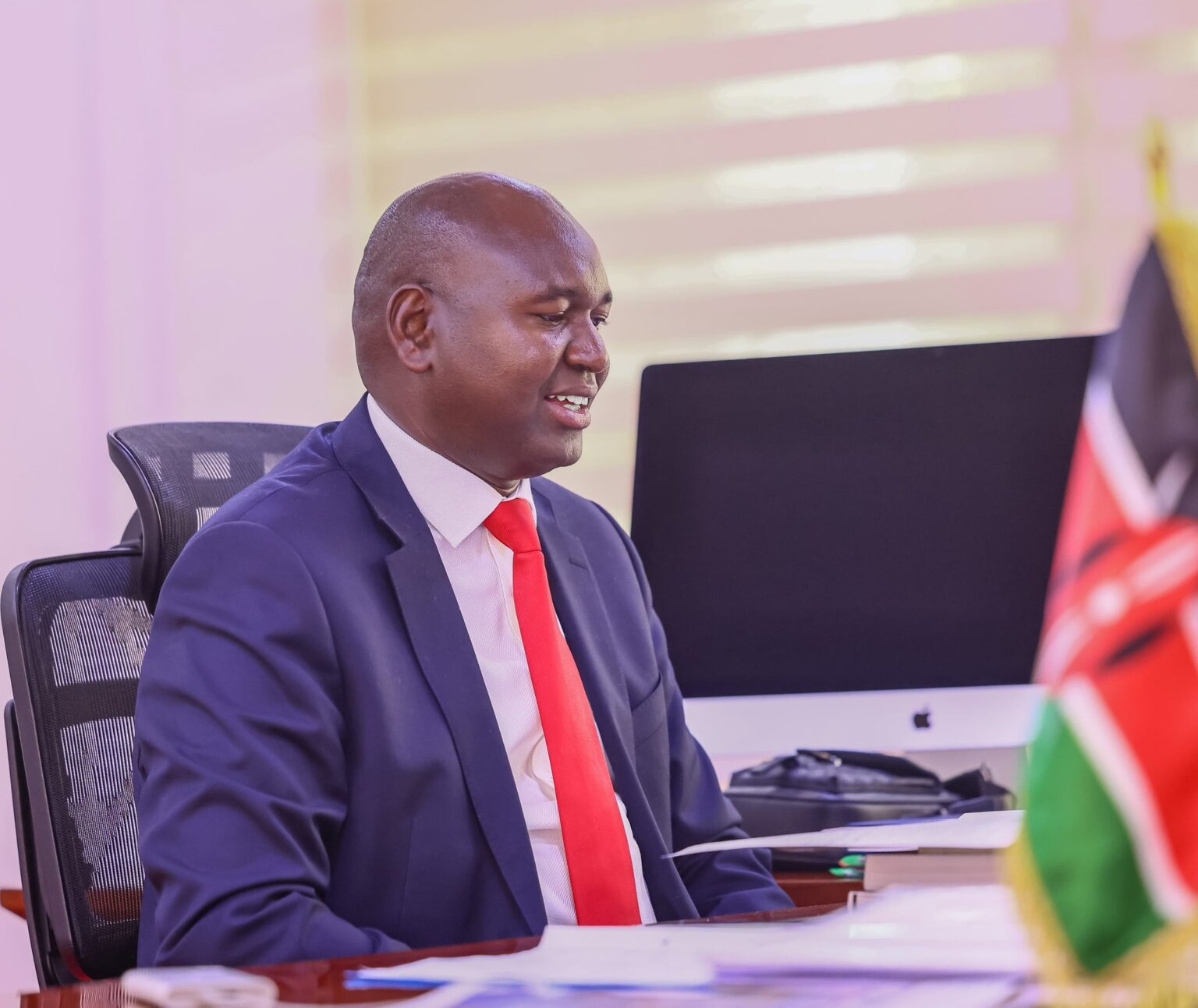
Every government accumulates embarrassments. Some are policy failures, some are acts of God, some are the ordinary friction of a bureaucracy too large and too underfunded to be consistently competent. But there is a different category of scandal, rarer and more corrosive, the kind that attaches itself to one individual and follows him from ministry to ministry, compounding with each posting, and still the man does not go. Prof. Julius Kipyegon Bitok, Ambassador and Principal Secretary for Basic Education, is now that story.
Since President William Ruto placed him in charge of the State Department for Immigration and Citizen Services in September 2022, Bitok has presided over or been directly implicated in three of the most consequential public administration failures of the Kenya Kwanza era. A passport scandal with international dimensions that drew censure from the United States and the European Union. A ghost learners fraud so vast it is estimated to have bled the public education budget of at least five billion shillings annually. And a chain of dormitory fires, the latest at Utumishi Girls Academy killing sixteen children, that exposes a ministry unable or unwilling to enforce its own safety directives.
On June 2, 2026, the Consumers Federation of Kenya formally petitioned the Public Service Commission seeking Bitok’s removal from office. The seven-page document, signed by COFEK Secretary General Stephen Mutoro, catalogues six constitutional grounds including gross misconduct, incompetence, abuse of office, violation of public finance management provisions, and conduct unbecoming a State officer. It asks the PSC to suspend him pending investigation, commission a full integrity audit of the State Department for Basic Education, and refer the passport matter to the DCI, EACC and National Intelligence Service.
The petition is damning not because it introduces new allegations but because it assembles everything that is already in the public record and forces the question that Ruto’s administration has conspicuously refused to answer: at what point does a pattern of failure become a reason to act?
CHAPTER ONE: THE PASSPORT PIPELINE
When Ruto appointed Bitok as Immigration PS in September 2022, the assignment was framed as placing a trusted technocrat in a critical security-adjacent role. Bitok held a PhD in Business Management from Oklahoma State University, had diplomatic credentials, and had moved in government and academic circles long enough to carry the look of competence. The Immigration department, long troubled by corruption and document fraud, was presented as a docket that needed steady administrative leadership.
What happened instead was the emergence, under Bitok’s watch, of what investigators and critics have described as a passport pipeline that handed Kenyan travel documents to some of the most wanted individuals on the African continent.
On February 19, 2026, the United States Department of the Treasury’s Office of Foreign Assets Control updated its sanctions listing for Algoney Hamdan Dagalo Musa, the youngest brother of Rapid Support Forces commander Mohamed Hamdan Dagalo, universally known as Hemedti. The updated entry added to the existing Sudanese documentation a Kenyan passport and a United Arab Emirates identification number. Algoney is sanctioned for leading the procurement of weapons for the RSF, the paramilitary force accused by the United Nations of crimes against humanity including mass murder, rape, and ethnic cleansing in Sudan’s catastrophic civil war. The European Union added him to its own sanctions list on January 29, 2026.
A Kenyan passport, issued under Kenyan law, bearing the name of a man whose weapons procurement for a genocidal militia earned him the personal attention of the US Treasury. The document did not materialise by accident.
His tenure at Immigration is now directly associated with a passport issuance scandal of national security dimensions, attracting adverse international commentary and implicating Kenya in the facilitation of sanctions evasion.
COFEK petition to the Public Service Commission, June 2, 2026
COFEK’s petition names Algoney Hamdan Dagalo Musa, holder of Kenyan passport number AK1586127, as the younger brother of RSF commander Hemedti. But the Hamdan family’s exposure in the Kenyan passport system does not end with one individual. The petition references multiple family members, including Mayada Hamdan, Abdaraheem Hamdan, Zahra Hamdan, Zariwa Hamdan and Musa Hamdan Musa, as also appearing on the leaked passport list. The US and the EU have both imposed sanctions on Algoney personally.
The Standard reported in March 2026, alongside Daily Nation and other outlets, that senior government officials, including Bitok by name and Immigration Director General Evelyn Cheluget, had been photographed together inspecting passport booklets. That image, taken in the ordinary course of administrative duty, acquired a different weight once the leaked documents and the US sanctions update surfaced. The same officials who physically handled the passport infrastructure now stood associated with the same infrastructure’s worst documented abuse.
Photographs of Bitok and Cheluget examining passport consignments circulated widely in the press under headlines that used words like ‘impunity’ and ‘betrayal.’ The government’s initial response was silence. A subsequent statement from the Immigration department under Bitok’s replacement, Belio Kipsang, claimed no non-Kenyan held legitimate documents. That denial satisfied no one and was rejected by the investigative reporting that had already named names, cited passport numbers and referenced US Treasury documents.
What made the scandal structurally significant was its geopolitical context. For years Kenya had styled itself as a neutral regional mediator in Sudan’s conflict between the Sudanese Armed Forces and the RSF. Kenya hosted RSF leadership at the Kenyatta International Convention Centre in January 2025. President Ruto had personally met Hemedti at State House, a meeting that drew immediate backlash and a Sudanese decision to recall its ambassador. Kenya’s tea exports to Sudan faced retaliatory trade restrictions. Against that backdrop, the revelation that Hemedti’s brother held a Kenyan passport, obtained through the system Bitok oversaw, was not merely an immigration scandal. It was a foreign policy wound that Kenya inflicted on itself.
Kenya’s neutrality posture was already strained before the Algoney disclosure. The disclosure made it untenable. Sudan’s military government, the Sudanese diaspora, international human rights organisations and US senators all commented on what the passport’s existence implied about Nairobi’s true loyalties in the conflict. Not one of those comments mentioned Julius Bitok by name. But the question of how such a document was issued and who authorised or failed to prevent it pointed back to the same desk.
Bitok was moved to the Education ministry in March 2025, a full year before the February 2026 Treasury update that made the scandal fully visible internationally. The reshuffle came just as investigative reporting on the passport irregularities was intensifying. Whether the timing was coincidence or calculation, it had the practical effect of shielding Bitok from the most intense scrutiny at the exact moment it was forming. He was no longer the Immigration PS. The next man would have to answer.
CHAPTER TWO: THE GHOST SCHOOL EMPIRE
The education sector had its own crises before Bitok arrived. But the scale of what emerged under his watch as Basic Education PS has been staggering, even for a system long accustomed to audit findings and revenue leakages.
An Auditor-General’s report examined by Parliament’s Public Accounts Committee found that falsified enrolment figures had cost the country more than four billion shillings in capitation funds over four years. A subsequent verification exercise ordered by Parliament and implemented by the Ministry of Education uncovered something that dwarfed the audit’s preliminary numbers.
Basic Education PS Julius Bitok confirmed to Parliament that the exercise had identified approximately 87,000 ghost students in secondary schools and close to 800,000 non-existent learners in primary schools, a combined figure exceeding 880,000 fictitious enrolments drawing government capitation. In the third term of 2025 alone, ghost learners had received over 912 million shillings in government funding. On an annualised basis, COFEK’s petition estimates taxpayers are losing as much as five billion shillings annually through the fraud.
The mechanics of the scheme were not complicated. Inflated enrolment data was submitted to the government to trigger higher capitation allocations. Non-existent schools, 33 of which the PAC audit found receiving government funds, collected payments against learner populations that did not exist. Secondary schools were collectively overpaid by 3.59 billion shillings through falsified figures. Two hundred and seventy primary schools received funding for non-existent learners. The fraud was widespread, involving multiple counties, hundreds of school heads, and at least 28 Sub-County Directors of Education against whom the ministry eventually issued show-cause letters.
Bitok’s defenders would point out that he was the one who ordered the verification exercise, appeared before Parliament to announce the findings and initiated disciplinary action against the identified officials. That is accurate. It is also insufficient. The scale of the fraud, nearly a million phantom learners drawing billions from the public education budget, did not materialise in a single term. The PAC’s special audit had flagged ghost students in 723 of the 1,039 sampled schools. The Auditor-General’s report had already sounded the alarm before Bitok was moved to the Education department. The system had been hemorrhaging for years. The question that deserves answering is not whether Bitok discovered the problem, but why, under his watch as the ministry’s accounting officer, remediation was so slow that by the time he confirmed the full scale of the fraud to Parliament in early 2026, the losses had already accumulated into the billions.
We have 28 Sub-County Directors of Education who are expected to be culpable and should show cause why they should not be disciplined.
PS Julius Bitok, Lenana Primary School, February 17, 2026
Parliament’s PAC had summoned Bitok to account for the Auditor-General’s findings months before the full ghost learner numbers emerged. When he appeared, the committee did not find a PS in confident command of his brief. What it found, according to accounts of the session, was a man seeking more time and more resources, managing the optics of a crisis rather than resolving it.
The broader context of the education sector’s financial problems deepened the concern. The ministry was simultaneously managing a capitation funding shortfall, delayed payments to KNEC examination supervisors, teacher rationalisation disputes, the contested rollout of the CBC and the administrative chaos of Junior Secondary School autonomy. Each of those crises was significant in isolation. Together, under a PS simultaneously associated with the ghost learner scandal and the immigration scandal, they painted a portrait of a ministry in structural difficulty at the top.
That difficulty was reflected in Bitok’s own budget requests. In March 2026 he appealed to Parliament for an urgent 66 billion shillings in supplementary estimates. In May 2026, before the Departmental Committee on Education, he requested an additional 71.77 billion shillings to avert what he described as a critical funding crisis threatening capitation, textbooks, examination payments, and the school feeding programme. Kenya’s education sector was not short of funding demands. It was short of confidence that the funds already committed were being properly accounted for.
CHAPTER THREE: THE BURNING SCHOOLS
At 2 AM on May 28, 2026, a fire tore through the Meline Waithera Dormitory at Utumishi Girls Senior Secondary School in Gilgil, Nakuru County. Sixteen girls died, burned beyond recognition near an emergency exit that was locked or inaccessible during the inferno. Approximately 79 others were injured. Survivors described waking to flames and pressing toward exits that would not open. DCI subsequently arrested eight students as persons of interest in what investigators believe was a planned arson attack.
The immediate tragedy is irreducible. But its institutional context is indicting. Less than two years earlier, on the night of September 5, 2024, twenty-one boys had burned to death in a dormitory at Hillside Endarasha Academy in Nyeri County. That dormitory was overcrowded, its exit doors dangerously narrow. The National Gender and Equality Commission called for an inquiry. President Ruto declared national mourning and ordered a safety audit of all boarding schools. Education CS Julius Ogamba committed to holding the culpable accountable. Head of Public Service Felix Koskei ordered immediate infrastructure inspections. The government promised to prosecute violators.
Post-Endarasha safety directives were issued. The Kenya National Building Code 2024, which came into force in March 2025, mandated emergency lighting, fire detection systems, outward-opening exit doors, and fire compartmentalisation in large dormitories. The directives were clear, the legal framework was in place, and the accountability rhetoric from State House had been explicit.
Eighteen months later, the emergency exit at Utumishi was locked. Girls died at a door that should never have been capable of being locked against them. Business Daily’s analysis of the Utumishi fire against the 2024 building code’s requirements found that at minimum four mandatory safety provisions, escape routes, emergency lighting, fire detection, and fire compartmentalisation, were absent or inoperative. The two-and-a-half-hour gap between when the fire started and when it was officially reported suggests no automatic detection system was active. The Basic Education PS had been overseeing schools through this entire period. The safety directives his own ministry issued after Endarasha had not reached Utumishi in time.
COFEK’s petition holds Bitok directly responsible for the conditions that led to the Utumishi fire, citing the unimplemented post-Endarasha directives and noting that a comprehensive boarding school safety audit had been ordered following the 2024 disaster but had demonstrably not reached one of Nakuru County’s largest girls’ boarding schools before the next catastrophe.
Bitok’s response was to announce, on May 31, three days after the fire, that the ministry was ordering a fresh round of inspections of all 3,200 boarding schools, to be completed within ten days. The announcement was almost a ritual repetition of what had been said after Endarasha. An inspection order. Serious warnings to non-compliant principals. Firm language about consequences. The structural problem, a ministry that issues safety directives without the verification capacity to enforce them, remained unaddressed in the announcement. The cycle of tragedy, announcement, and inaction appeared to be repeating itself in real time.
We are going to take very serious action against any principal, any teacher, or any school that deliberately violates the provisions of the safety standards.
PS Julius Bitok, Wajir County, May 31, 2026 (three days after sixteen girls died at Utumishi)
CHAPTER FOUR: THE ABSENTEE PS
Beyond the three crises of substance, a fourth problem has undermined Bitok’s authority in a way that is harder to dismiss as misfortune: his relationship with Parliament’s oversight function.
In February 2026, the National Assembly’s Departmental Committee on Education, chaired by Tinderet MP Julius Melly, convened to review the education budget and receive a briefing on capitation and key education programmes including SEQUIP and KPEEL. Bitok did not appear. The committee, which had not received timely communication about his absence, was furious. Committee Chairman Melly said he was deeply saddened by what he described as the casual manner in which Bitok was carrying out his work, warning the committee would explore the harshest punitive measures available under parliamentary standing orders.
It was not an isolated incident. Luanda MP Dick Maungu confirmed that Bitok had consistently failed to attend committee meetings since his transfer to the Education ministry, including in the period before the February confrontation when a similar summons had been issued and equally ignored. Mandera South MP Abdul Haro called for Bitok to be made an example to every other PS in government who might be tempted to treat Parliament with the same disdain. Igembe North MP Julius Taitumu said the House was done talking. The committee resolved to schedule an emergency accountability session.
Bitok’s explanation, when he eventually appeared, was that the absence had been the result of a miscommunication. He apologised. He pledged respect for parliamentary oversight. He appeared before the committee at the rescheduled session. Then, in April 2026, with the committee having scheduled a comprehensive briefing for April 23, the State Department wrote to Parliament the day before the meeting requesting a further postponement to May 6, citing prior engagements. The letter, dated April 22, offered no elaboration on what engagement took precedence over a scheduled parliamentary accountability session.
What made the social media dimension particularly combustible was that on the day he was supposed to appear before the aggrieved committee in February, Bitok instead posted photographs of himself inspecting schools in Kikuyu constituency, the constituency of an Education Committee member. The gesture, whatever its intent, communicated that field visits to schools were considered more important than facing elected representatives asking questions about how the ministry’s budget was being managed.
Bumula MP Jack Wamboka called on President Ruto directly to remove Bitok from office, describing him as a politician unfit for a technical reform role and accusing him of presiding over systemic failures that had frustrated key government education reforms. Majority Leader Kimani Ichung’wa, at a January 2026 parliamentary retreat in Naivasha, had reportedly described Bitok as the most clueless Principal Secretary in government, accused him of being out of touch with realities on the ground, and cited failures in teacher rationalisation where some schools of one hundred students had twenty-eight teachers while neighbouring schools with six hundred had none.
CHAPTER FIVE: RUTO’S IMPOSSIBLE BARGAIN
The question that follows from all of this is not complicated but its answer has remained conspicuously elusive. Why does Julius Bitok still have a job?
This is not a rhetorical question. It is a governance question, and it is one that President Ruto himself has given the tools to answer. In November 2024, standing before Cabinet Secretaries and their Principal Secretaries at a performance contract signing ceremony at State House, Ruto said: ‘There is no room for excuses or delayed failure. Accountability must cascade through all levels of ministries, departments and agencies to individual officers.’ He said performance reports would carry ‘recognition, rewards or sanctions, which will be applied without fail.’
His government is simultaneously developing a policy, advanced publicly by Public Service CS Geoffrey Ruku in February 2026, to move all civil servants from permanent terms to five-year renewable contracts tied to performance targets. Those who meet their obligations will be renewed, those who do not will not. The policy has been presented as a modernisation of accountability in public service. It is also a framework under which Julius Bitok’s record would be scored.
By the metrics Ruto’s own administration has established, that record is not close. A national security scandal at Immigration. A multi-billion-shilling fraud in education. Sixteen children dead in a dormitory fire after his ministry’s own post-Endarasha safety directives were not implemented. A pattern of parliamentary contempt so consistent that multiple MPs from the government’s own benches have publicly demanded his removal. An international embarrassment touching Kenya’s credibility as a regional mediator. These are not disputed allegations. They are documented facts, sourced from government audits, US Treasury sanctions updates, parliamentary Hansard, and official investigation reports.
The structural argument for retaining Bitok, to the extent one exists, would be continuity during a sensitive period of CBC rollout and junior school transition, and the implicit assumption that a replacement might need time to find their feet while the reforms are mid-stream. That argument is weaker than it appears. CBC’s implementation challenges are being driven by policy and resource decisions that predate Bitok. The junior school autonomy confusion is a governance design problem, not one created by the personality of a single PS. There is no reform so delicate that its stewardship cannot survive a change of administrative leadership.
The likelier explanation for Bitok’s continued tenure is political, and it is not flattering to anyone involved. Bitok is a Kalenjin PS from a community central to Ruto’s political base. Removing him would require the President to absorb a political cost for a decision driven entirely by accountability rather than electoral arithmetic. That is not a calculation that the current administration has demonstrated willingness to make. The Cabinet dissolution of July 2024, forced by Gen Z protests rather than internal performance review, was an aberration of accountability driven from the street, not from the top.
A Principal Secretary is not untouchable. Article 155(4) of the Constitution is clear, and the Public Service Commission has both the mandate and the obligation to act.
COFEK Secretary General Stephen Mutoro, June 2, 2026
The cost of that political logic is not abstract. It is borne by the family of every girl who died at Utumishi. It is borne by every Kenyan whose tax payment was absorbed by a ghost learner in a school that did not exist. It is borne by the Sudanese diaspora who watched a Kenyan passport enable a sanctioned weapons procurer to evade international accountability. It is borne by the reputation of a country that spent years arguing it was a neutral peace broker in a war and then discovered its own immigration infrastructure was serving one side’s hierarchy.
President Ruto has said accountability must cascade through all levels of government. The cascade, apparently, stops at Julius Bitok.
THE LEDGER
The Public Service Commission’s mandate under Article 155(4) of the Constitution is not discretionary. COFEK has invoked it. The grounds it cites are not speculative. They are drawn from parliamentary records, government audit reports, official casualty figures, and an international sanctions document bearing the imprimatur of the United States Treasury.
The PSC must now decide whether it agrees with COFEK’s core proposition: that no Principal Secretary is above accountability, and that the cumulative weight of what has occurred under Bitok’s watch crosses the constitutional threshold for formal proceedings.
There are accountability institutions in Kenya, formal and informal, that have shown capacity to act when the political will exists. The Ethics and Anti-Corruption Commission has been called to investigate the passport dimension. The DCI has been asked to examine the same. The NIS operates in the space where passport fraud intersects with national security. The PAC continues to track the ghost learner money. Any one of those investigations, pursued seriously, could clarify the legal dimension of Bitok’s exposure.
What none of those investigations can substitute for is the political decision that should already have been made. In Kenya, the most reliable indicator of whether a senior public officer will face consequences is not the severity of what they did but how close they stand to power. Bitok’s proximity to Ruto has, so far, been a more effective shield than any legal argument he could mount in his own defence.
The question COFEK has put to the PSC, and through it to the presidency, is whether that shield is constitutionally legitimate. The Constitution, as COFEK correctly notes, says nothing about a PS being untouchable. It says the opposite.
Julius Bitok has a PhD in Business Management. He was appointed with the implicit promise that he would bring technocratic discipline to whichever docket he led. The record of his stewardship, measured against his own government’s stated accountability framework, has not delivered on that promise. It has delivered a passport scandal with international repercussions, a fraud that saw nearly a million children’s names used to drain the public education budget, sixteen dead in a fire that a more diligent ministry might have prevented, and a relationship with Parliament characterised by absence and contempt.
That is the record. The man who carries it is still in office. The president who retains him has staked his credibility on accountability without exception. One of those two things, the record or the rhetoric, has to give. As things stand, it is the rhetoric that is losing.
Kenya Insights allows guest blogging, if you want to be published on Kenya’s most authoritative and accurate blog, have an expose, news TIPS, story angles, human interest stories, drop us an email on [email protected] or via Telegram


Kenya Stops Work At The US-Linked Ebola Facility

‘The Polygamist’ Pirated Book Go On Sale in Nairobi Following Show Popularity

Justice Mong’are, the Machakos Injunction and the EABL-Asahi Questions Kenya Cannot Ignore

The EABL–Asahi Deal and the Growing Demand for Judicial Transparency

Samburu Governor Lati Lelelit Exposed For Paying Sh60 Million To Ghost Workers

THE GHOST AT ELYSEE PLAZA: How Ghanaian Businessman Erick Agbeko Built a Two-Decade Empire of Land Fraud in Kenya

Njuca Consolidated, Three Firms Faces Auction of 65 Properties Over Crippled Cash Flow

Why Absa Bank Is On The Spot For Enabling Sh150 Million Alleged Insider Fraud In Vetlab Club

Somalia’s Disputed President Allegedly Siphons Up to $6 Million Monthly from Kenyan Miraa Trade, Sharing the Spoils with Nairobi’s Shadow Cartels

Ahmed Adan Hefow: Governor Otuoma’s Trusted Right-Hand Man at the Centre of Busia’s Deepening Finance Scandal

Businessman Philip Waithaka Kinuthia’s Minor Son Allegedly Drove Drunk, Killed Two Peponi Students in Ngong Road Horror Crash as Claims of Cover-Up Intensify

Inside NCBA’s Decline: How a Banking Giant Lost Its Strategic Edge

South Sudan: Adut Salva Kiir’s Shadow Treasury Exposed

Cement, Cash and Courts: How the Hashu Dynasty Crushed the Ramji Brothers for Fourteen Years and Why the Walls Are Now Closing In

Standard Chartered Ghosts Haunt Joshua Oigara At Stanbic As Whistleblower Spills Beans

Inside The Urban Planning Cartel That Owns Nairobi

THE VULTURE AND THE SCHEME How Nairobi West Hospital Became the Most Dangerous Institution in Kenya’s SHA Ecosystem and Why the Books Must Be Audited Now

The President’s Daughter and The Missing Witness: How Adut Salva Kiir’s Shadow Treasury Silenced Its Most Dangerous Critic

How Adil Popat Saved His Empire On The Eve Of Imperial Bank Collapse and Why Kenya’s Mainstream Media Buried The Story

Why John Ngumi Is Running From the EACC and Why the Sh415 Million Payday May Be the Least of His Worries
-
 News1 week ago
Businessman Philip Waithaka Kinuthia’s Minor Son Allegedly Drove Drunk, Killed Two Peponi Students in Ngong Road Horror Crash as Claims of Cover-Up Intensify
-
 Business2 weeks ago
Inside NCBA’s Decline: How a Banking Giant Lost Its Strategic Edge
-
 Africa2 weeks ago
South Sudan: Adut Salva Kiir’s Shadow Treasury Exposed
-
 Business2 weeks ago
Standard Chartered Ghosts Haunt Joshua Oigara At Stanbic As Whistleblower Spills Beans
-
 Investigations5 days ago
THE VULTURE AND THE SCHEME How Nairobi West Hospital Became the Most Dangerous Institution in Kenya’s SHA Ecosystem and Why the Books Must Be Audited Now
-
 Africa2 weeks ago
The President’s Daughter and The Missing Witness: How Adut Salva Kiir’s Shadow Treasury Silenced Its Most Dangerous Critic
-
 Business2 weeks ago
How Adil Popat Saved His Empire On The Eve Of Imperial Bank Collapse and Why Kenya’s Mainstream Media Buried The Story
-
 Business2 weeks ago
Why John Ngumi Is Running From the EACC and Why the Sh415 Million Payday May Be the Least of His Worries