
Investigations
Why All Eyes Are On Gambling Authority CEO Peter Karimi As Kenya’s Betting Firms Race To Beat The June Licence Renewal Deadline
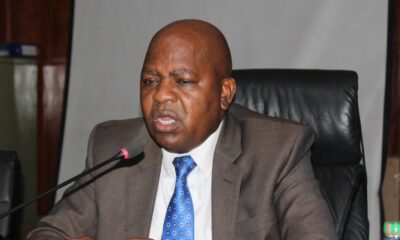
He is a former betting company founder whose associated payment firm was shut by the Communications Authority for non-compliance, and who oversaw a platform that owed KRA Kshs.43.2 million during the same 2019 tax crackdown that swept the industry. He was appointed to regulate that same industry under a law whose five-year cooling-off provision may well bar that very appointment, and a High Court petition is now testing exactly that question. As ninety-nine licensed betting operators across Kenya race to meet a June 30 licence renewal deadline under an entirely new regulatory framework, Peter Maina Karimi, the inaugural Director General of the Gambling Regulatory Authority, is the single most consequential figure in Kenyan gambling since Fred Matiang’i deported seventeen foreign directors in 2019. The mainstream media, funded by betting company advertising, will not write this story about him.

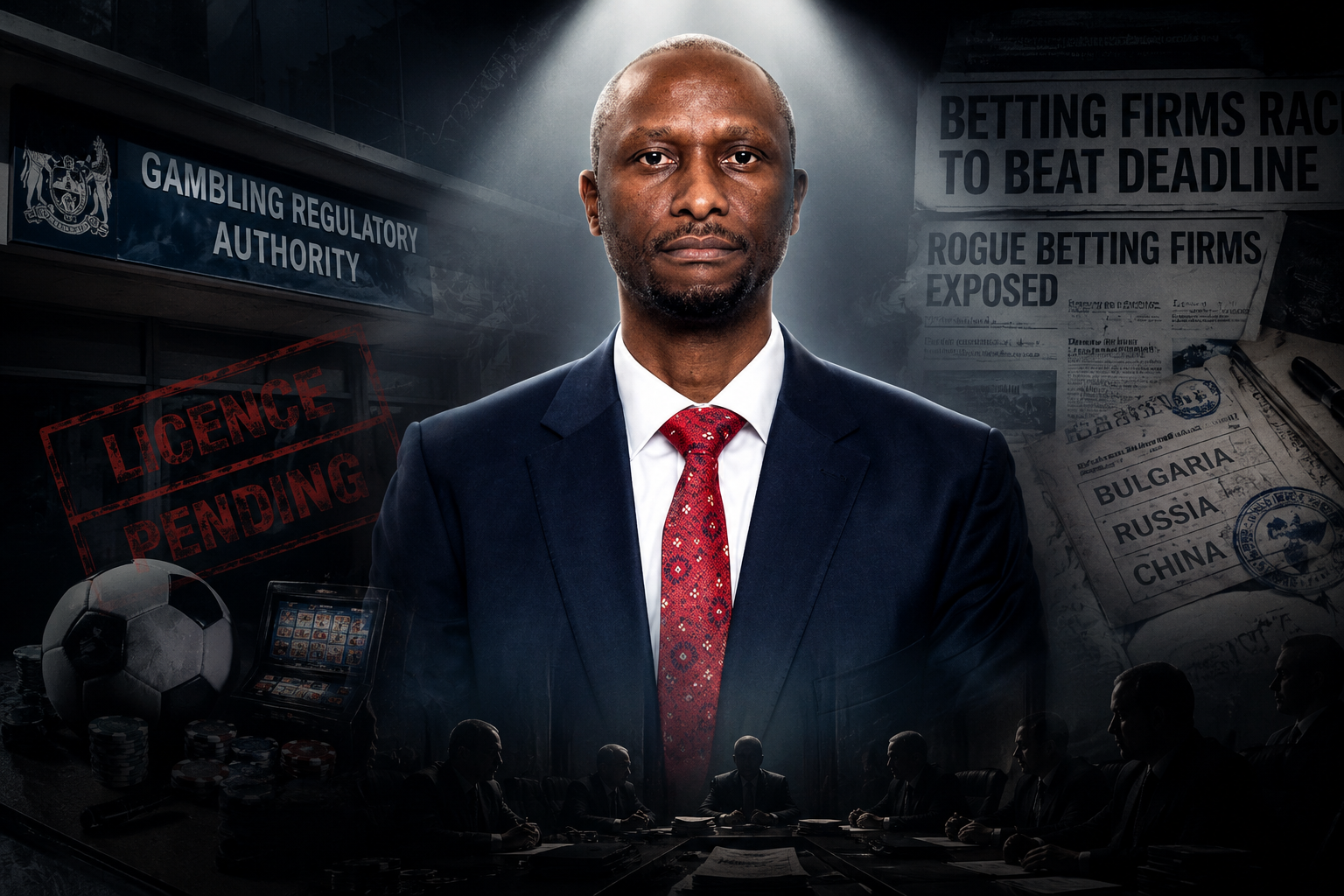
The Office That Has Always Been For Sale
The most important thing to understand about the position Peter Maina Karimi now occupies is what the position has historically meant in Kenya. The Betting Control and Licensing Board, established in 1966 and replaced by the GRA on 28 February 2026, was for most of its sixty-year existence not a regulator in any meaningful technical sense. It was a tollgate. It issued licences, collected fees, and operated as the formal institutional façade behind which an industry dominated by foreign capital, offshore structures, and opaque beneficial ownership could present itself as compliant with Kenyan law. The record is not ambiguous on this point.
When Interior Cabinet Secretary Fred Matiang’i launched Kenya’s most dramatic betting industry intervention in July 2019, he did not merely target the operators. He targeted the BCLB itself, disbanding its board before moving against the firms. His explanation, given in a December 2020 interview with Nation Africa, was unambiguous. The reason regulatory work did not work in the past, Matiang’i said, was that everybody was bribed. They were paying everybody. He described the foreign operators as shadowy people and funny characters who had corrupted every level of oversight including people within government. On the day he deported the Bulgarian directors, he said, he was under a lot of pressure from within government. He had to start his operation by securing the BCLB to ensure he had an uncontaminated team he could trust. The word he used was uncontaminated, the correct word for an institution whose previous occupants had been corrupted by the industry they were supposed to regulate.
This is not ancient history or a structural defect that was cured when the BCLB gave way to the GRA. It is an institutional culture that persisted through every personnel change, every board appointment, every director general, across six decades. It is the culture Karimi walked into in March 2026 when he assumed office and took charge of the June 2026 licensing cycle, the first substantive test of whether Kenya’s new gambling regulatory architecture is genuinely different from the one it replaced or merely the same capture dynamic in a better-appointed office.
Ninety-Nine Operators, One Man’s Desk
The scale of what faces Karimi before June 30 is not trivial. When the BCLB published its final list of licensed operators for the 2025/2026 cycle in July 2025, 99 companies had qualified for continued operation. That list includes the full spectrum of Kenya’s betting industry: domestically owned platforms like Betika, operated through Shop and Deliver Limited with Kenyan shareholders; international operators returning under local corporate structures like SportPesa, which exited in 2019 after the tax enforcement crisis and returned under the Milestone brand; BetPawa, whose director Nikolai Barnwell was on the 2019 deportation list; and dozens of smaller operators whose compliance profiles have never received sustained public scrutiny.
Each of these companies is now presenting itself to the GRA under the Gambling Control Act, 2025 for assessment against a set of standards that are materially more demanding than anything the BCLB ever applied. The Act requires anti-money laundering compliance programmes aligned with the Proceeds of Crime and Anti-Money Laundering Act. It requires real-time transaction monitoring. It requires security checks, vetting and due diligence on licensees, shareholders, directors and beneficial owners. It requires that foreign operators registered in Kenya have a physical address and meet GRA requirements including audited accounts. It requires that online operators run approved control systems covering AML safeguards and data protection. And it requires, in provisions that were specifically designed to address the BCLB’s history of regulatory capture, that the GRA conduct continuous oversight rather than issuing a licence and looking away for twelve months.
For the man administering these assessments, every file on his desk is a decision that will be litigated, scrutinised, and judged against the standard of whether the GRA under his leadership is applying the law consistently across all applicants or whether it is dispensing favours selectively to those with the right relationships, the right intermediaries, or the right financial resources to make problems disappear. The betting industry, which generated Kshs.31 billion in tax revenues in the 2024/25 financial year according to KRA figures cited at the iGaming AFRIKA Summit in May 2026, is not a niche regulatory concern. It is a major sector of Kenya’s economy, and the licence renewal process Karimi is managing is the mechanism through which the rule of law either operates or is circumvented in that sector.
“Ninety-nine operators. One deadline. One Director General. And a High Court case asking whether that Director General should be in the chair at all.”
The Biography the GRA’s Press Release Did Not Lead With
When GRA Board Chairman Joseph Kirui Limo announced Peter Maina Karimi’s appointment on February 26, 2026, the official statement described a man with nearly two decades of leadership in gaming, telecommunications, mobile technology, payment systems and digital services. It cited his senior regional leadership roles at Societe BIC and Nokia International. It mentioned his degree from Strathmore University and his postgraduate connection to Stellenbosch. It expressed the board’s full confidence in his strong commercial acumen and proven ability to build and transform institutions.
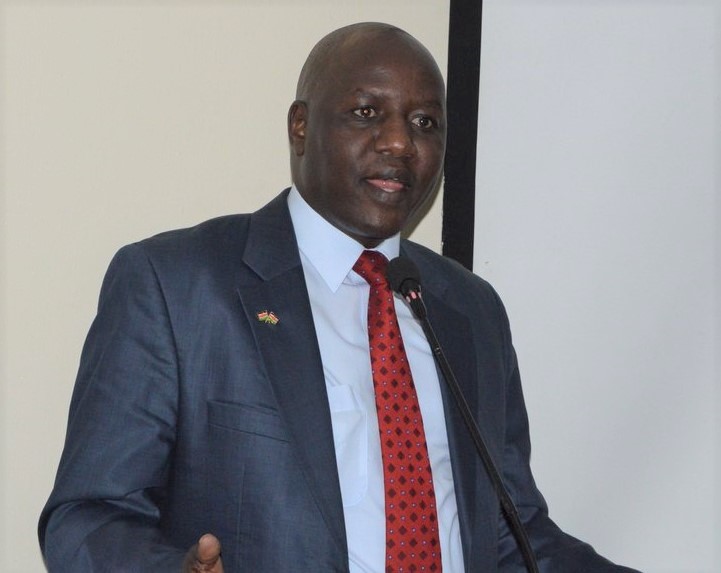
GRA Board Chairman Joseph Kirui Limo
What the announcement disclosed only because it was compelled to by Karimi’s unavoidable public profile in the sector was that he is the founder of Acumen Communications Limited and the man who served as Chief Executive Officer of mCHEZA, a licensed Kenyan betting and gaming platform, from its launch in December 2015. mCHEZA was built on a partnership between Acumen Communications, Greek gaming technology company INTRALOT, and Safaricom’s M-Pesa platform. The platform launched with Karimi as its public face. At the launch, he told trade publications he was excited about building the betting platform and expanding into other East African markets. Former Citizen TV anchor Julie Gichuru was identified in contemporaneous reporting as a director of Acumen Communications, mCHEZA’s parent company.
The legal challenge to Karimi’s appointment, filed before High Court Judge Patricia Nyaundi by Patrick Mwashigadi, rests on a provision of the Gambling Control Act that bars a person who was a director, employee or shareholder of a betting company from appointment to the GRA if they had not left that company at least five years before their appointment. The petitioner argued that Karimi had been Chief Executive Officer of mCHEZA continuously since 2016, over a decade by the time of his February 2026 appointment, and that the GRA board had committed a material non-disclosure by describing his most recent role as chief executive officer of a technology company dealing with development of products and platforms in the financial sector without naming that company or its connection to the betting industry. The petitioner’s lawyer argued the appointment was patently unlawful, ultra vires, null and void ab initio.
Karimi’s legal team has sought to have the case struck out as a labour dispute outside the High Court’s jurisdiction. The case remains before Justice Nyaundi. The GRA has not publicly confirmed any outcome. What this means in practical terms is that every licence Karimi grants or declines across the June 2026 renewal cycle, across all 99 operators on the current list and any new applicants, is being issued by a Director General whose legal authority to hold that office is being tested simultaneously in the same court system that will be asked to review any disputed licensing decision he makes.
The 2019 Crackdown: What It Revealed About the Industry and About Karimi’s mCHEZA
The July 2019 betting industry crisis is essential context for understanding both the structural problems Karimi has inherited and his own position relative to those problems. In that crisis, the BCLB declined to renew licences for 27 operators whose tax compliance with KRA was unresolved. Interior CS Matiang’i signed deportation orders for seventeen foreign directors across the affected firms. The nationalities of those deported included Bulgarian, Italian, Russian and Polish nationals. Two directors of Betin Kenya, the Bulgarian father-son duo Domenico and Leandro Giovando, were deported and later denied re-entry. BetPawa’s director Nikolai Barnwell was on the list. Operators including SportPesa, Betin, Betway, BetPawa, 1xBet, Dafabet, and others had their Safaricom paybill numbers suspended on July 10, 2019.
The KRA tax demand schedule published during this period, as reported by The Star in August 2019, showed the full scale of industry non-compliance. Some firms owed billions: Betin Kenya’s tax arrears reached Kshs.17.6 billion. Betika owed Kshs.2.2 billion. But the schedule was comprehensive and named firms across the size spectrum. Among them, Acumen Communications Limited, the company Peter Karimi had founded and was running as mCHEZA’s CEO, appeared with Kshs.43.2 million in tax arrears.
That figure requires careful handling. The tax dispute of 2019 involved a contested legal question about how winnings were defined under the income tax law, and numerous betting firms had parallel disputes with KRA about the methodology of the demands. Several ultimately prevailed in whole or in part through the courts and the Tax Appeals Tribunal. The relevant legal point, that the 2019 KRA demands were themselves subject to challenge, is one that applies across the industry including to the Acumen Communications figure. What is not in dispute is that Acumen Communications appeared on the published list of firms with outstanding tax demands, that Karimi was the CEO of that firm, and that the same enforcement action that suspended MozzartBet, 1xBet, SportPesa and others also touched mCHEZA’s parent company during the period Karimi was leading it.
mCHEZA survived the 2019 crackdown and continued operating. The associated payment company Umsuka Capital Limited, which the court challenge to Karimi’s appointment identified as a financial services entity connected to mCHEZA’s operations and in which Karimi allegedly held a director’s position, was subsequently shut by the Communications Authority of Kenya for non-compliance. When the GRA board appointed Karimi as Director General of the body charged with preventing the same regulatory failures that the 2019 crackdown exposed, it was appointing a man who had navigated those failures from the other side of the desk.
How the BCLB Was Captured and Why the GRA Is Not Automatically Different
The BCLB’s capture by the industry it regulated was not a sudden event. It was a slow institutional erosion that proceeded through individual transactions, personal relationships, and the accumulated expectation that the regulator was available for negotiation. Matiang’i described it openly. Everybody was bribed. They were paying everybody. But the mechanisms through which that culture was sustained are worth examining, because the GRA inherits those mechanisms whether or not it inherits the personnel.
The most documented example of BCLB regulatory capture involves allegations that were published in 2021 by Nairobi Exposed regarding MozzartBet’s then-country manager Sasa Krneta. That publication reported intelligence indicating that Krneta boasted of having pocketed BCLB Managing Director Peter Mbugi. Mbugi denied the allegation. No formal investigation was ever concluded publicly. Mbugi continued in his role and served as acting Director General through the transition to the GRA before being passed over for the substantive appointment and moved to an unspecified new role. The allegation was never cleared and never prosecuted. It was simply absorbed by an institution too compromised to investigate itself.
The broader pattern of BCLB capture extended beyond any single alleged relationship. In May 2022, Interior CS Fred Matiang’i directed the BCLB to investigate whether existing licensees had been cleared by KRA, the Financial Reporting Centre, the Communications Authority, and the Interagency Security Team, as required by law. The BCLB reported that the majority of licensees were not cleared by the other agencies, meaning they had been operating for years with licences issued by a board that had not completed the multi-agency vetting the law required. This was not a minor administrative oversight. It was a systemic failure that had allowed operators, including some with questionable ownership structures and unresolved AML compliance questions, to continue extracting revenue from Kenyan consumers under the cover of regulatory approval that had never been properly earned.
In April 2025, the BCLB under Peter Mbugi shut down more than fifty betting websites operating without valid licences, directing the Communications Authority and Safaricom to suspend their paybill numbers. That action was necessary and appropriate. But it also underscored the scale of the informal sector that the formal regulatory process had failed to control for decades. The 1xBet case illustrates the international dimension of this failure most vividly. The Russian-owned operation, controlled according to global investigative reporting by three Russian nationals facing international arrest warrants in Russia for operating illegal gambling enterprises, was operating in Kenya through local platform structures, had been on the 2019 suspension list, and continued to be accessible to Kenyan users through various channels after the formal crackdown. Its story in Kenya was one chapter of a global criminal enterprise that the BCLB’s licensing regime was structurally incapable of evaluating or containing.
“The BCLB licensed Bulgarian operators who were later deported, Russian operators whose principals faced international arrest warrants, and Serbian operators whose directors were found by two courts to have received proceeds of crime. The GRA inherits the consequence of each of those decisions.”
The Conflict the Gambling Control Act Was Designed to Prevent
The Gambling Control Act’s five-year cooling-off period for former betting industry participants is not an arbitrary administrative technicality. It is a direct legislative response to the BCLB’s documented capture problem. Parliament, in enacting that provision, made an explicit judgment: a person who has recently been a participant in the betting industry, with the relationships, interests, and industry knowledge that participation creates, cannot be trusted to regulate that industry without a substantial period of distance between their commercial role and their regulatory one. The judgment is not about individual character. It is about structural conflict of interest and the institutional appearances that a functioning regulator must maintain.
Peter Karimi’s appointment, whether or not the High Court ultimately finds it unlawful, embodies exactly the conflict the provision was designed to prevent. He spent a decade building and running a licensed betting platform. He competed in the market with the companies now applying for renewal before his desk. He understands, from the inside, how those companies structure their operations, where their compliance strengths and weaknesses lie, and which relationships matter in the regulatory ecosystem. That knowledge is simultaneously an asset for technical understanding and a liability for impartiality. It means that every major operator in Kenya’s betting market has a prior relationship with Karimi, whether direct or through industry networks, from the period when he was a fellow participant rather than a regulator.
The GRA has published no recusal protocols. It has not disclosed which licence applications Karimi is personally reviewing and which he has delegated to subordinates. It has not published any formal conflict-of-interest declaration from Karimi regarding specific operators whose licence applications are before the authority. In the absence of that transparency, the public, the industry, the courts, and Kenya’s FATF monitoring counterparts cannot assess whether the June 2026 licensing decisions are being made consistently and independently or whether operator relationships from Karimi’s mCHEZA years are influencing the outcome.
Across Kenya’s broader regulatory landscape, this governance gap is not unusual. What makes it unusual in the GRA’s case is the timing. The authority is making its most consequential licensing decisions in its inaugural year, under maximum public and international scrutiny, with a Director General whose legal authority is simultaneously being tested in court. Every decision Karimi makes before the High Court resolves the petition challenging his appointment is potentially contestable on grounds that go beyond the substantive merits of any individual licensing assessment.
What the Industry Wants From Karimi and Why That Is the Problem
Kenya’s betting industry, which KRA collected Kshs.31 billion from in the 2024/25 financial year, wants from the GRA Director General essentially what it has always wanted from the occupant of that office: predictability, lightness of touch on compliance enforcement, and a regulator who understands that the industry’s commercial interests and the regulatory framework’s formal requirements are not necessarily identical, and who is willing to manage that gap through accommodation rather than enforcement. The BCLB, under most of its directors, was willing to provide that. The industry’s preference is that the GRA, under Karimi, continue in that tradition.
Karimi’s own public statements suggest he is aware of the tension. Before the National Assembly’s Administration and Internal Security Committee in March 2026, he identified potential misuse of gambling platforms for illicit financial flows as a key concern. He committed to a more robust licensing and monitoring regime. He promised that protecting Kenyans and giving them comfort that the industry is now under extremely tight regulation would be the first priority. At the iGaming AFRIKA Summit in May 2026, he presented himself as a proponent of smart regulation, positioning the GRA as a partner to responsible operators rather than an adversarial enforcement body. Both framings are legitimate. They are not, however, compatible without a rigorous and publicly visible line between what counts as accommodation of legitimate industry needs and what counts as capture.
The betting industry’s lobbying around the June 2026 deadline has been multidirectional. Operators filing renewal applications have simultaneously been managing political relationships, public relations campaigns, and in some cases industry body positions designed to give them maximum access to the regulatory decision-making process. The GRA is a new institution with incomplete staffing, having committed to recruiting approximately 200 employees to build its operational capacity, and with systems that are still being deployed. In that environment of institutional immaturity, the pressure points that enabled BCLB capture are not just present. They are structurally more acute, because the new institution has fewer procedural defences and less institutional memory than a mature regulator would bring to these interactions.
Data Breaches, Tax Disputes, and the Compliance Files Karimi Must Not Ignore
The individual licensing assessments before the GRA are not uniformly simple. Kenya’s betting sector in 2026 has multiple firms carrying compliance histories that require substantive regulatory scrutiny beyond the standard renewal paperwork. Among the documented issues that should be informing GRA assessments across the industry this cycle are the following.
Betika, Kenya’s largest operator by market share following SportPesa’s 2019 exit, and its sister firm Odibets are facing criminal prosecution proceedings related to handling stolen subscriber data, according to iGaming Expert’s May 2026 reporting. The allegation is that both companies obtained Safaricom subscriber data through former employees for commercial marketing purposes, a computer-related fraud activity that under Kenya’s statutes attracts up to twenty years of imprisonment. Directors of both companies have been detained in connection with investigations. Betika was also separately fined by the Office of the Data Protection Commissioner in 2025 for excessive data collection from an account closure request. SportPesa was fined by the ODPC for a major data breach in March 2025. These are not technical AML compliance questions. They are active criminal proceedings involving the directors of the largest betting operators in the country, and the GRA’s licensing assessment must address what weight to give them.
The foreign ownership question, which the Gambling Control Act’s new 30 percent Kenyan citizen shareholding requirement was designed to address, runs through large portions of the current licensing pool. Betpawa, whose director was on Matiang’i’s 2019 deportation list, has a complex corporate history. Several operators described variously as international operators leverage global expertise through offshore structures that may not, on a look-through beneficial ownership assessment, satisfy the Act’s requirements. The GRA must conduct that look-through assessment for every operator in its current pool and must publish the results of its beneficial ownership verification publicly, not merely issue licences without disclosure of the basis for compliance findings.
The AML compliance question is sector-wide, not confined to operators with court records. Kenya’s 2021 National Money Laundering and Terrorism Financing Risk Assessment identified the gambling sector as a high-risk area for financial crime, noting the cash-based nature of transactions and the foreign ownership concentration among betting shop operators as specific risk factors. The FRC’s supervisory mandate over gambling operators’ AML compliance has historically been poorly enforced because the BCLB did not effectively coordinate with the FRC on licensing assessments. The Gambling Control Act gives the GRA an explicit AML enforcement mandate that the BCLB never had with equivalent clarity. Whether Karimi exercises that mandate rigorously or treats it as paperwork formality will define the sector’s compliance culture for the next decade.
The Questions Parliament and the Ethics Commission Must Ask Peter Karimi Now
This investigation is not a call for Karimi’s removal. His appointment may ultimately survive the High Court challenge. His decade of betting industry experience may, applied with sufficient institutional safeguards, make him a more effective regulator than an outsider would be. What this investigation is demanding is a level of public accountability from the inaugural GRA Director General that the office’s history, the structural conflicts his biography creates, and the scale of the decisions he is currently making all require.
Parliament’s Administration and Internal Security Committee, which has already received at least one appearance from Karimi about the GRA’s plans, must demand a comprehensive public account of the June 2026 licensing process. That account must include the criteria applied to each renewal application, the beneficial ownership verification methodology used for all operators, the AML compliance assessment framework, the basis for any renewal granted to an operator carrying unresolved compliance questions, and the documentation of any recusal decisions Karimi or board members made regarding specific applications.
The Ethics and Anti-Corruption Commission must initiate a formal review of whether Karimi’s appointment process complied with the Gambling Control Act’s conflict-of-interest provisions, regardless of how the High Court challenge resolves. If the Act’s five-year cooling-off period was breached, the EACC has independent authority to investigate how that breach occurred, who in the board approved the appointment despite the statutory bar, and what, if any, processes were circumvented to bring Karimi to the role.
The Financial Reporting Centre must exercise its supervisory mandate over the GRA’s licensing assessments to verify that AML compliance checks are being conducted consistently across all operators, not selectively applied to smaller or less politically connected firms while larger operators with more complex compliance histories receive lighter scrutiny. An FRC review of the June 2026 cycle would both strengthen the quality of the regulatory outcomes and protect Karimi himself from the accusation of selective enforcement.
“The GRA’s first Director General is a former operator who owed KRA Kshs.43.2 million in tax arrears during the same crackdown he is now the successor institution to. He is grading the exam he once sat. Every operator in Kenya knows this.”
What Happens If the Office Claims Him
Fred Matiang’i’s diagnosis of the BCLB’s capture problem was forensically accurate and institutionally courageous. He said everybody was bribed. He disbanded the board. He deported seventeen foreign directors. He tried to create conditions under which the regulator could not be bought. The structure he built did not survive. Within years of his intervention, investigative reporting was documenting new allegations of BCLB compromise. The institution proved more durable than the reforming minister.
The lesson is not that individuals cannot make a difference in captured institutions. The lesson is that individual integrity is insufficient without structural reform, and structural reform is insufficient without enforcement. The Gambling Control Act is genuine structural reform. It creates stronger powers, more explicit AML mandates, real-time monitoring requirements, and explicit conflict-of-interest provisions that its predecessor lacked. But a structural reform that is administered by a Director General operating under a legal cloud, without published recusal protocols, without a fully staffed enforcement capacity, and under documented pressure from an industry with a long history of regulatory capture, is vulnerable to the same dynamics that consumed the BCLB.
Peter Karimi has spoken well in every public forum he has appeared in since assuming office. He has said the right things about protection, about integrity, about tight regulation. He has positioned the GRA, in language at least, as the institution Kenya’s betting sector needed and never had. That positioning costs nothing. It will be validated or invalidated entirely by what the June 30 licence register shows when it is published, and by whether every operator on that register can demonstrate, against publicly disclosed criteria, that it earned its renewal through compliance rather than through the kinds of relationships and resources that have historically made compliance optional in Kenya’s gambling sector.
There are ninety-nine licensed operators watching Karimi’s desk this month. Every one of them knows who he is, where he came from, and what he used to do. Every one of them has done its own assessment of whether he is the kind of regulator who can be reached or the kind who cannot. That assessment, conducted in boardrooms and through intermediaries and across the industry networks that Karimi himself was part of as recently as eighteen months ago, is the real first test of Kenya’s gambling reform. The courts, the parliament, and the FATF monitors will conduct their own assessments. But the industry conducted its assessment first. What it concluded, and how Karimi responds to whatever that conclusion generated in the form of approaches, inducements, or influence operations directed at the GRA, is the story that June 30 will tell.
Kenya has had sixty years of gambling regulators who could be bought or pressured into acquiescence. It has had one moment, under Matiang’i in 2019, when the regulator demonstrated that it would not be. The Gambling Regulatory Authority and Peter Maina Karimi are the second such moment. Unlike 2019, this one is not being driven by a politically powerful Cabinet Secretary making a unilateral intervention. It depends on an inaugural Director General with a contested appointment, an incomplete institution, and an industry that has been patient, well-resourced, and waiting.
___
This article is intended as a reference document for Parliament’s Administration and Internal Security Committee, the Ethics and Anti-Corruption Commission, the Financial Reporting Centre, the Directorate of Criminal Investigations, and any court conducting judicial review of GRA licensing decisions arising from the June 30, 2026 deadline.
Kenya Insights allows guest blogging, if you want to be published on Kenya’s most authoritative and accurate blog, have an expose, news TIPS, story angles, human interest stories, drop us an email on [email protected] or via Telegram



Why All Eyes Are On Gambling Authority CEO Peter Karimi As Kenya’s Betting Firms Race To Beat The June Licence Renewal Deadline

The Deal Behind Nairobi Animal Orphanage: Is This Really About Animals Or Billions In Prime Park Land

The Great Mogo Extraction: How a Latvian Fintech Built a Debt Trap for Kenya’s Most Vulnerable Borrowers and Got Away With It

Iran Launches Missiles At Israel For First Time Since Mideast Truce

MozzartBet Faces Licence Cancellation For Operations in Kenya Amid Tax Evasion, Money Laundering Scandals As Rumours Swirl Of Sh100M Bribery To Evade Trap

Rogue Developers, Engineers, Architects and City Hall Officials Charged Over Deadly Manzil Towers Collapse

Kalonzo Unveils His 2027 Presidential Campaign Platform

Artur Margaryan of Kenya’s Infamous Artur Brothers Seeks Prime Minister’s Office in Armenia

Sonko Re-Elected Head of Party

US Denied Visas to Team Officials for World Cup – Iran

Cement, Cash and Courts: How the Hashu Dynasty Crushed the Ramji Brothers for Fourteen Years and Why the Walls Are Now Closing In

Why Ruto’s Favourite Candidate Adan Mohammed Could Be Locked Out of the KRA Top Job

Inside The Urban Planning Cartel That Owns Nairobi

LifeCare on the Brink: SHA Fraud, Stolen Wages, and the Rotten Empire Jayesh Saini Built

Este Medical Kenya Fights American’s Explosive Complaints

Safaricom’s Sh1.4 Billion Reckoning: How Kenya’s Most Profitable Company Stole a Man’s Idea and Got Caught

The Rot Inside Absa: How Bank Insiders Are Looting Nairobi’s Customers

Inside FAFSA Fraud: How Kenyan Cybercriminals Siphoned Millions from America’s Sh12 Billion Student Loan System

THE INSURER THAT TOOK YOUR PREMIUM AND FORGOT YOUR NAME: How ICEA Lion Left a Client Begging for Sh7.8 Million Across Four Months

Denial Under Duress: The Untold Collapse Threatening David Lagat’s DL Group’s Empire
-
 Investigations3 days ago
Cement, Cash and Courts: How the Hashu Dynasty Crushed the Ramji Brothers for Fourteen Years and Why the Walls Are Now Closing In
-
 Investigations2 days ago
Inside The Urban Planning Cartel That Owns Nairobi
-
 Investigations2 weeks ago
LifeCare on the Brink: SHA Fraud, Stolen Wages, and the Rotten Empire Jayesh Saini Built
-
 News2 weeks ago
Este Medical Kenya Fights American’s Explosive Complaints
-
 Americas2 weeks ago
Inside FAFSA Fraud: How Kenyan Cybercriminals Siphoned Millions from America’s Sh12 Billion Student Loan System
-

 Investigations7 days ago
Betika Faces DCI Probe, Directors Arrest and License Revocation Over Massive 29.5 Million Safaricom Customers’ Data Breach
-

 News1 week ago
Eight Students Arrested In Kenya After Suspected Deadly School Arson Attack
-
 Investigations3 days ago
Fresh Move Launched to Remove Kenya Railways MD Mainga From Office After Awarding Sh817 Million Consultancy Contract