
Investigations
MozzartBet Faces Licence Cancellation For Operations in Kenya Amid Tax Evasion, Money Laundering Scandals As Rumours Swirl Of Sh100M Bribery To Evade Trap
A Serbian-Zimbabwean-Mauritian betting empire with two court convictions for money laundering, a history of tax skirmishes, directors who once faced deportation, a country manager under simultaneous DCI, FRC and NIS investigation, and a new regulator whose own Director General is fighting a court battle over the legality of his appointment. Into this volatile intersection, insider sources now say a senior GRA board member is actively brokering a Sh100 million deal to secure MozzartBet’s licence renewal. The man everyone is watching is DG Peter Karimi. This is the story Kenya’s mainstream media, fattened on MozzartBet advertising, will not publish.

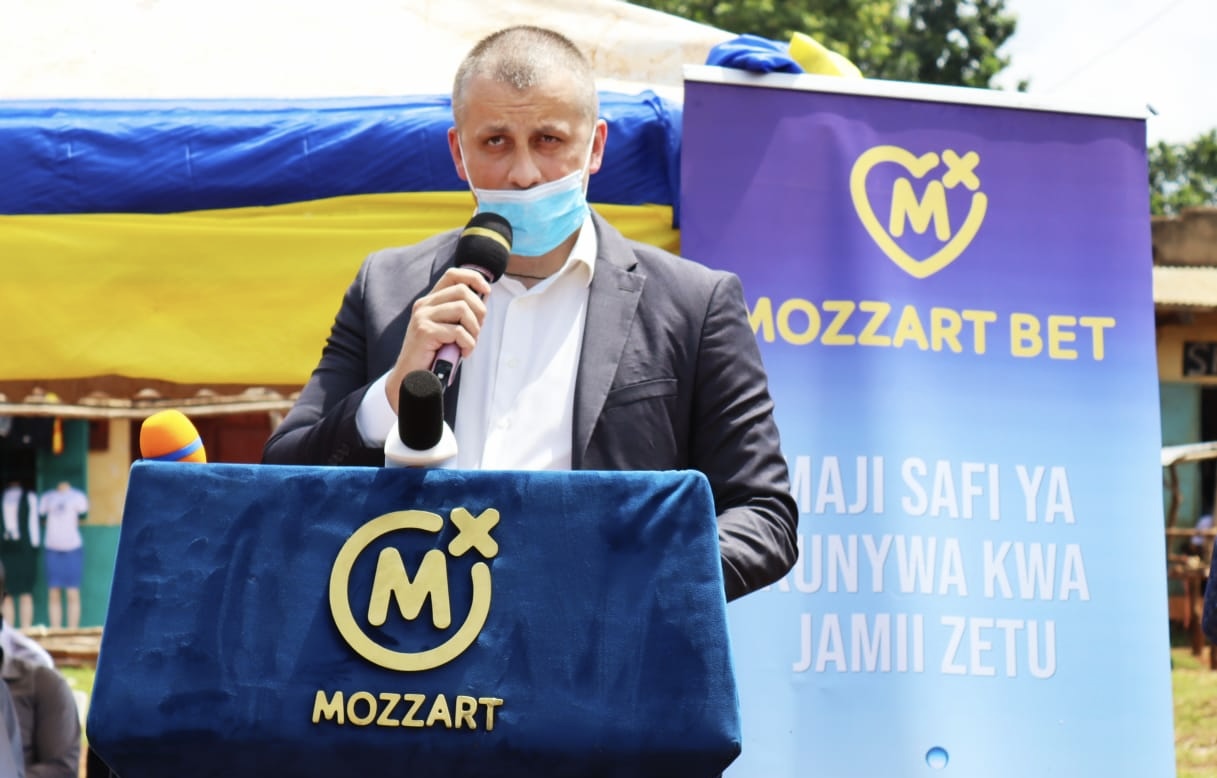
The June 30, 2026 deadline now haunts MozzartBet Kenya Limited the way judgments haunt companies that never expected accountability to arrive. In less than four weeks, Kenya’s freshly minted Gambling Regulatory Authority must decide whether to renew the operating licence of a betting firm that two separate courts, at High Court and appellate level, have confirmed participated in a sophisticated money laundering scheme.
The firm has offered no public accounting of the condemned transactions, no published evidence of reformed internal controls, and no response to a cascade of allegations that have been circulating inside Kenya’s betting industry with specificity that has triggered institutional panic at both MozzartBet’s headquarters and inside the GRA itself.
What MozzartBet has done, with mechanical consistency across every regulatory crisis in its six-year Kenyan history, is throw money at the problem. Sponsorships. Community tournaments. PR blitzes.
And now, according to multiple insider sources across the betting sector and regulatory circles, a rumoured Sh100 million deployed in a structured influence operation targeting the GRA board ahead of the renewal decision. One source with direct knowledge of internal GRA deliberations has gone further, telling this publication that a specific senior board member is not merely aware of the alleged approach but is actively facilitating negotiations between MozzartBet and individuals inside the authority.
The source’s account, while not independently corroborated through documentary evidence, is consistent with the institutional panic now visible at the GRA, the speed with which board members have reportedly moved to publicly distance themselves, and the extraordinary specificity of the allegations already published by a section of the media.
MozzartBet has not responded to any of the allegations.
The GRA has not issued a formal statement. And the man on whose desk the licence decision ultimately lands, Director General Peter Maina Karimi, is himself fighting a High Court challenge over whether his appointment is lawful under the very Act he now administers. Kenya’s gambling reform experiment is being tested from every direction simultaneously.
Two Courts, One Verdict, Six Years of Impunity
The facts of the money laundering case are settled. They were settled in the High Court in April 2022 when Justice E.N. Maina of the Anti-Corruption and Economic Crimes Division ruled that over Kshs.300 million held across three bank accounts was proceeds of crime and should be forfeited to the State.
They were settled again, finally and bindingly, on 23 May 2025 when Justices Francis Tuiyott, Fred Ochieng and Aggrey Muchelule of the Court of Appeal dismissed MozzartBet’s consolidated appeals in Civil Appeal E250 and E313 of 2022 and upheld every material finding from the lower court. The company exhausted its litigation and lost. What remains is not a legal dispute. What remains is a licence renewal application from a company the judiciary has twice condemned.
The scheme worked as follows. Between February and August 2020, MozzartBet Kenya Limited transferred massive sums through its own M-Pesa paybill platform, paybill number 290059, to Kimaco Connections Limited, a company owned by Peter Kiilu Makau and Consolata Mwende Kiilu.
Within just five days, Kshs.256.8 million moved from MozzartBet to Kimaco.
On a single day the transfer reached Kshs.50 million. The lowest single transfer was Kshs.1.8 million. The Assets Recovery Agency established across sworn evidence that MozzartBet received Kshs.641 million in a three-month window, of which Kshs.384 million alone flowed through paybill number 311372, before dispersal to a network of associated companies.
Kimaco Connections, the supposed software supplier at the centre of the arrangement, was a shell in every sense that term carries in financial crime. It filed nil tax returns with the Kenya Revenue Authority during the entire relevant period, meaning it declared to the taxman that it earned nothing, even as hundreds of millions moved through its accounts. It had no meaningful staff, no PAYE records, could not demonstrate it had paid rent on its own premises, and could produce no credible documentation of the software it allegedly delivered.
Kimaco’s lawyer argued in court that the software was never delivered only because state preservation orders had frustrated the contract. Both courts rejected this comprehensively.
The concealment architecture was deliberate. The Assets Recovery Agency argued, and the courts agreed, that MozzartBet specifically used mobile money transfer services to move the funds because M-Pesa transactions in this volume and at this speed were designed to circumvent Central Bank of Kenya prudential guidelines that would otherwise require declarations about the source and destination of large sums.
The deliberate avoidance of conventional banking channels, which carry mandatory source-of-funds reporting requirements, is the textbook definition of the layering phase of money laundering. The money then moved from Kimaco through Pescom Kenya accounts controlled by Peter Kiilu Makau into Open Skies Management Services.
“Open Skies is owned by Emmanuel Charumbira. Emmanuel Charumbira is simultaneously a director of MozzartBet Africa and a shareholder of MozzartBet Kenya. The money laundered through Kimaco ended in the pockets of MozzartBet’s own people.”
The court documented individual receipts. Branimir Melentijevic, a Serbian national and shareholder of MozzartBet Africa, the Mauritius entity that controls 70 percent of MozzartBet Kenya, received payments totalling approximately USD 104,563 through two invoices purportedly for software services.
Musa Cherutich Sirma, former Kenyan member of parliament for Eldama Ravine and former Minister for East African and Regional Cooperation, who is listed as a director of MozzartBet Kenya, received over Kshs.17.2 million from Pescom Kenya. Emmanuel Charumbira’s Open Skies received Kshs.242 million from Kimaco. The court found that these payments to MozzartBet’s own directors and shareholders had not been adequately explained.
The appellate judges invoked the duck test with the precision of people who have seen every excuse available in financial crime litigation: if it walks like a duck, swims like a duck and quacks like a duck, then it probably is a duck. MozzartBet’s transactions walked, swam and quacked. Both courts agreed. The Kshs.300 million forfeiture stands as a final, non-appealable judicial record.
The Tax History MozzartBet Prefers You Forget
The 2020 money laundering scheme did not emerge from a company that had never attracted regulatory concern. It emerged from a company that had already been through Kenya’s 2019 betting industry crackdown and survived through accommodation rather than compliance, a pattern that would define its relationship with every regulator it has subsequently faced.
In the sweeping 2019 crackdown under Interior Cabinet Secretary Fred Matiang’i, Kenya’s government directed mobile money providers including Safaricom, Airtel and Telkom to withdraw paybill numbers and SMS codes for betting firms that had not satisfied the KRA on withholding tax arrears.
The BCLB declined to renew licences for 27 operators. Seventeen foreign directors across the industry were deported. MozzartBet was among the firms suspended.
KRA records from the period show the taxman’s demand against MozzartBet in that cycle was Kshs.12.5 million in tax arrears, a figure that appears modest but which the company initially contested before capitulating. According to contemporaneous reporting, MozzartBet was among ten operators cleared by KRA within weeks after choosing to negotiate and settle rather than fight the demand in court.
The speed of that accommodation bought MozzartBet its licence back in June 2019, one of only two betting firms alongside Betika to receive early renewal. What contemporaneous industry sources noted at the time was that MozzartBet’s decision to negotiate rather than litigate, as SportPesa was doing simultaneously, was strategically calibrated.
The company was not interested in testing the law. It was interested in staying operational. That same calculation, writ massively larger, is what the alleged Sh100 million bribery operation represents in 2026.
What makes the 2019 tax episode particularly relevant now is who was running mCHEZA at the time.
Peter Maina Karimi, the man President William Ruto appointed as GRA Director General in February 2026, was the Chief Executive Officer of Acumen Communications Limited, which launched and operated the mCHEZA betting platform under BCLB licence number 686 from December 2015 onwards. In the same 2019 KRA tax reckoning that caught MozzartBet, KRA records show that Acumen Communications Limited, trading as mCHEZA, owed Kshs.43.2 million in tax arrears. Peter Karimi was running that company.
This is not a peripheral detail.
It is the central biographical fact about Kenya’s gambling regulator at the moment of the most consequential licence decision he will make in this tenure.
The Director General who must decide whether to renew the licence of a company condemned for money laundering is a man who ran a betting company, who went through the same 2019 tax crackdown, and whose appointment to lead the GRA is now being challenged in the High Court on the grounds that the Gambling Control Act bars a person who was a director, employee or shareholder of a betting company from appointment to the GRA board unless five years have elapsed since they left that company.
The DG’s Appointment: A Legal Cloud Over the Decision-Maker
The case before High Court Judge Patricia Nyaundi, filed by Patrick Mwashigadi, is not a procedural footnote. It goes to the legitimacy of Peter Karimi’s authority to make any licensing decision at all.
The petitioner’s lawyer argued with documented specificity that Karimi had been the Chief Executive Officer of mCHEZA, a licensed gambling and sports betting operator in Kenya, continuously since 2016, which is over a decade.
The Gambling Control Act, No. 14 of 2025, bars a person who was a director, employee or shareholder of a betting company from appointment to the GRA board if they had not resigned or left that company at least five years before. The petitioner argued the appointment was patently unlawful, ultra vires, null and void ab initio.
The GRA defended the appointment by pointing to Karimi’s senior regional leadership roles at Societe BIC and Nokia International, conspicuously omitting in its press release the name of the company Karimi was working at immediately before his appointment.
The petitioner’s lawyer identified this omission as a material non-disclosure, arguing that Karimi was allegedly still a director of Umsuka Capital Limited, a financial services entity associated with the mCHEZA payment infrastructure, at the time of appointment.
Umsuka Capital was subsequently closed by the Communications Authority of Kenya for non-compliance.
That the GRA’s press release chose to emphasise Nokia and Societe BIC rather than mCHEZA, when mCHEZA defined virtually all of Karimi’s gambling sector experience, has not been explained.
Karimi’s legal team has sought to have the case struck out as a labour dispute outside the High Court’s jurisdiction. As of publication, the matter remains before Justice Patricia Nyaundi.
What this means in practical terms is that every licensing decision Peter Karimi makes between now and the resolution of that case, including and especially the MozzartBet decision, is being made by a Director General whose authority is actively contested in court.
If the High Court eventually finds that Karimi’s appointment was unlawful, the validity of any licence renewal he approved or denied during that period becomes a live legal question.
“The GRA’s Director General is a former betting operator whose appointment is being challenged in court under the very law he now administers. He is being asked to rule on the licence of a company convicted of money laundering. Kenya has placed a complex problem in the hands of an institution already fighting for its own legitimacy.”
The Sh100 Million Influence Operation: What Insiders Are Saying
It is in this pressure-saturated context that the bribery allegations circulating in Kenya’s gambling sector acquire their institutional weight. Multiple sources, speaking independently and in different capacities across the industry, describe a structured effort by MozzartBet to mobilise close to Sh100 million ahead of the June 30 renewal decision. The accounts are consistent in their broad architecture even where they diverge in granular detail.
One source with direct knowledge of internal GRA deliberations told this publication that the alleged influence operation is not being managed at arm’s length. A specific senior member of the GRA board, whose identity is known to this publication but is not named at this stage absent documentary corroboration, is described by this source as actively facilitating negotiations between MozzartBet and individuals within the authority. The source characterised the arrangement as a brokerage rather than a direct approach, with the board member allegedly positioning himself as an intermediary capable of delivering a favourable renewal outcome in exchange for a share of the Sh100 million fund.
A second source, operating from inside the betting industry with visibility of MozzartBet’s operational decision-making, confirmed that the company has been in what were described as aggressive back-channel discussions with regulatory contacts since March 2026, when the pressure of the June deadline became concrete.
This source described the company’s internal calculus as straightforward: the value of the Kenyan licence, measured in annual revenue, dwarfs the alleged Sh100 million by multiples.
From a purely transactional perspective, the alleged investment makes commercial sense for a company whose only alternative is licence cancellation and forced exit from one of East Africa’s most lucrative betting markets.
A third source, a lawyer familiar with both the court record and the current regulatory dynamics, said the specificity of the allegations now in the public domain has had an immediate chilling effect on the GRA board’s capacity to accommodate MozzartBet quietly.
Several board members reportedly moved to distance themselves from any association with the approach within hours of the initial publications.
The source described a majority faction within the GRA as having concluded that revocation is the only survivable institutional outcome, not because every board member is committed to principle, but because being seen to renew MozzartBet’s licence after this level of public exposure would be institutionally fatal for a regulator that has not yet completed its first year.
The alleged bribery operation must be understood alongside MozzartBet’s documented public relations strategy, which has followed an identical template across every regulatory crisis since 2020.
Football sponsorships. Grassroots tournaments. Community donations. CSR initiatives designed to flood local media with positive imagery and generate goodwill that regulators in politically networked environments feel when making decisions about prominent corporate citizens.
The football blitz currently running across Kenya is not marketing. It is regulatory risk management. Every tournament banner is a message to the GRA: we are beloved. Every sponsored goal is an argument against cancellation. The courts have already ruled on the company’s financial conduct. The sponsorships are the appeal.
The Man at the Centre: What Peter Karimi Must Answer
Peter Maina Karimi came to the GRA directorship on the strength of two decades of experience in the gambling and telecommunications sectors.
The GRA board chair Joseph Kirui Limo, a former Member of Parliament for Kipkelion East appointed by President Ruto as the GRA’s non-executive chairperson in October 2025, described Karimi’s appointment as proof of the authority’s commitment to modernisation, integrity and responsible gaming. The language was well-chosen. The circumstances are more complicated.
Karimi founded Acumen Communications Limited and led its mCHEZA betting platform from its launch in late December 2015, when it partnered with Greek gaming technology group INTRALOT and Safaricom’s M-Pesa, until 2026.
KRA records from the 2019 crackdown show mCHEZA’s parent company Acumen Communications owing the taxman Kshs.43.2 million during the same period that MozzartBet was settling Kshs.12.5 million. Both companies navigated that crisis. Karimi’s mCHEZA survived and continued operating.
His associated mobile payment company Umsuka Capital was subsequently shut by the Communications Authority of Kenya for non-compliance.
The profile that emerges from the public record is of a man who understands the betting industry from the inside, who has experienced the regulatory pressure of the 2019 crackdown as an operator, and who now sits in the regulatory seat that in 2019 was occupied by the body that could have ended his company’s licence.
That is not automatically disqualifying. It might, in a well-governed institution, represent useful contextual knowledge. What it absolutely demands is transparent, documented recusal from any matter in which a conflict of interest, real or perceived, could compromise the integrity of the decision.
The MozzartBet licence decision is exactly such a matter.
A Director General whose own appointment is being challenged in court under provisions of the Gambling Control Act, who came from the betting operator community he is now regulating, who is making the most consequential licensing decision of the GRA’s inaugural year, is a person who must be seen to be above any suspicion of accommodation.
Every step of his decision-making process on the MozzartBet file, every meeting, every communication, every internal recommendation, must be documented and must be available to any court that is subsequently asked to review the decision.
Sources inside the GRA tell Kenya Insights that it is precisely Karimi’s decision-making process that the betting industry and civil society are most closely watching. The June 30 deadline is not a formality. It is his first real test.
The Gambling Control Act Leaves No Room For Accommodation
Whatever pressure is being applied and however the internal GRA politics are resolving, the legal framework admits of no flexibility that would allow a reasonable regulator to renew MozzartBet’s licence without extraordinary, publicly documented justification.
The Gambling Control Act, 2025, which came into force in August 2025 and was specifically designed to close the AML enforcement gaps that had placed Kenya on the FATF grey list in February 2024, is explicit.
The Act mandates the GRA to conduct security checks, vetting and due diligence on licensees, their shareholders, directors, beneficial owners and staff. It requires operators to implement robust AML compliance programmes aligned with Kenya’s Proceeds of Crime and Anti-Money Laundering Act, including customer due diligence, ongoing transaction monitoring, suspicious transaction reporting, and data protection compliance.
Any online operator must run an approved control system covering AML safeguards.
The GRA is mandated to require real-time monitoring of gambling transactions. Renewal applications must demonstrate compliance with all these obligations across the entire licence validity period.
MozzartBet’s compliance history is a Court of Appeal judgment confirming that its own payment infrastructure was used to layer hundreds of millions in proceeds of crime. Its financial crime record is a Kshs.300 million forfeiture to the State.
The foreign directors named in the court record, Branimir Melentijevic, Emmanuel Charumbira and Loncar Koviljka, continue to be associated with MozzartBet Africa, the Mauritius entity holding 70 percent of MozzartBet Kenya.
The Gambling Control Act’s requirement that at least 30 percent of shares be held by Kenyan citizens must be satisfied on a look-through basis to ultimate beneficial owners.
The Mauritius entity’s beneficial ownership chain has never been publicly disclosed in terms that would satisfy a modern AML compliance assessment.
Kenya’s FATF grey list status makes this doubly critical. In February 2024, international assessors concluded that Kenya’s AML enforcement was not functioning as its own laws required.
The Gambling Control Act was the legislative response.
If the GRA, the Act’s primary enforcement arm, renews the licence of a judicially condemned money launderer as its first major test, Kenya’s FATF remediation credibility collapses.
International financial institutions, correspondent banking relationships, and investor confidence in Kenya’s regulatory architecture are all downstream of that collapse. The cost of accommodating MozzartBet extends far beyond the gambling sector.
Civil Society and Lobby Groups Prepare the Courts
Multiple civil society organisations and industry lobby groups are understood to be in advanced preparation to file a court petition challenging any renewal.
The legal theory is airtight.
A binding Court of Appeal judgment finding that MozzartBet’s transactions were proceeds of crime, combined with a GRA decision to renew its licence under a statute explicitly requiring AML compliance as a licensing condition, would produce an administrative action in direct contradiction of a superior court finding. Any competent judicial review application filed against that renewal would almost certainly succeed.
The petitioners reportedly intend to place before the court not only the appellate judgment but also the published intelligence concerning the alleged Sh100 million influence operation, as evidence of continuing criminal conduct directly relevant to the licensing fitness assessment.
If the bribery allegations reach a court as part of a licensing challenge, MozzartBet finds itself defending its 2020 money laundering record, its current licensing conduct, and the question of whether the GRA decision-making process was itself compromised.
That is not a litigation position any company in the world wants to occupy.
Lobby groups are also understood to be preparing formal complaints to the Financial Action Task Force and to Kenya’s Anti-Money Laundering Advisory Board, specifically addressing the question of whether a GRA renewal of MozzartBet’s licence, given the judicial record, constitutes a failure by Kenya’s regulatory architecture that is relevant to the country’s grey list exit assessment. The international dimension of this decision is not hypothetical. It is on the regulatory calendar.
The Questions That Must Have Documented Answers Before June 30
This investigation is addressed directly to the Gambling Regulatory Authority board, to Director General Peter Karimi, to the Assets Recovery Agency, to the Financial Reporting Centre, to the Directorate of Criminal Investigations, and to every parliamentary committee with oversight jurisdiction. These are not rhetorical questions. They are the minimum standard of documented inquiry that a functional regulator must complete before making a licensing decision on this file.
MozzartBet must provide the complete, independently verified, current beneficial ownership register of MozzartBet Africa, the Mauritius entity holding 70 percent of MozzartBet Kenya, identifying every natural person with any direct or indirect ownership interest, their jurisdiction of tax residency, and confirmation that no such person is subject to any sanctions, criminal proceedings, or adverse court findings in any jurisdiction. The Mauritius corporate structure must be looked through to its human owners.
The company must provide a full forensic accounting of every shilling that moved from its paybill platform to Kimaco Connections and through the subsequent layering chain between February and August 2020.
It must explain, specifically and with documentation, why a software procurement contract of this scale was processed through a betting platform’s mobile money paybill rather than conventional banking channels that require source-of-funds declarations. The explanation must address what steps MozzartBet’s management took when those funds ended in the personal accounts of its own directors.
Emmanuel Charumbira, Branimir Melentijevic and Musa Sirma must each provide a sworn, independently audited account of every payment they received in connection with the Kimaco scheme and what they understood the basis of those payments to be.
The GRA must assess whether any of these individuals, found by two courts to have received funds from a money laundering scheme, continue to hold any form of beneficial interest or operational influence in MozzartBet Kenya Limited.
The GRA must formally disclose every communication, formal or informal, between any board member, management official, staff member or agent of the authority and any representative, agent, intermediary or associate of MozzartBet Kenya in connection with the current licence renewal.
This disclosure obligation extends to communications by any board member acting in any capacity, including what a source described to this publication as the alleged active facilitation of negotiations by a named board member.
That board member must be named, and their communications in this matter must be disclosed and independently investigated.
Peter Karimi must formally recuse himself from any aspect of the MozzartBet licence decision in which his prior industry relationships, or any aspect of the allegations currently before the High Court regarding his appointment, could be seen to compromise his independence.
If he does not recuse himself, he must provide a documented, publicly available statement of the basis on which he has assessed and excluded any conflict of interest.
The Pattern That Explains Everything
Zoom out from the immediate June 30 crisis and what you see is a company that has operated in Kenya for nearly a decade according to a single operational philosophy: regulators are a market to be managed, not a law to be followed. In 2019, MozzartBet negotiated its way back from a tax enforcement action while competitors fought in court.
In 2020, it used its own payment infrastructure to layer hundreds of millions through a network of shell companies and returned the proceeds to its own directors.
In 2022, it fought the forfeiture order all the way to the Court of Appeal and lost. In 2026, it is allegedly deploying Sh100 million to purchase regulatory protection from a new authority that has explicitly been created to end exactly this mode of operation.
Each episode in this pattern is individually significant. Together, they describe a company whose relationship with Kenya’s regulatory environment has never been based on compliance.
It has been based on power, proximity and payment. Sasa Krneta, the country manager described in 2021 and 2022 reporting as boasting of having pocketed the BCLB’s then managing director Peter Mbugi, understood the operating environment correctly. The question is whether the new environment, with its new Act and its new authority and its new Director General fighting his own legal challenge, is actually different, or whether it is merely the same market with a different price list.
The mainstream media that runs MozzartBet’s advertising across sports sections and prime-time betting promotions will not ask this question.
The sponsorships that blanket Kenyan football and sustain media revenues represent a structural conflict of interest that has insulated MozzartBet from the kind of sustained, adversarial, evidence-based reporting that its judicial and regulatory record demands.
Kenya Insights has no such conflict. We take no advertising from betting companies. We are answerable only to the public record and to our readers.
“Two courts have spoken. Six years of regulatory conduct are documented. The question is not whether MozzartBet should lose its licence. The question is whether Kenya’s new gambling regulator will prove that the Gambling Control Act has teeth, or whether it will become another BCLB, available to the highest bidder.”
Kenya’s KRA collected Kshs.31 billion from the betting and gaming sector in the 2024/25 financial year, according to figures cited at the iGaming AFRIKA Summit held in Nairobi in May 2026.
The sector is vast, growing and deeply embedded in the financial lives of millions of Kenyans who use M-Pesa to place small bets through the same paybill infrastructure that MozzartBet weaponised for money laundering in 2020.
Those Kenyans deserve a regulator that treats the judicial record as binding and treats a Sh100 million influence operation as the predicate for criminal referral, not the opening offer in a negotiation.
June 30 is not a routine deadline. It is a referendum on whether Kenya’s regulatory architecture can be bought, and whether the men appointed to protect it have the independence to say no when the offer arrives with that many zeros attached.
The courts have finished their work. The GRA’s has barely begun.
___
This investigation draws on court records in Mozzartbet Kenya Limited v Assets Recovery Agency and 2 others [2025] KECA 897 (KLR) and ACEC No. E004 of 2021; KRA tax demand records from the 2019 betting industry crackdown; company registration documents filed in Kenyan courts and multiple confidential sources inside Kenya’s betting and regulatory sectors.
Kenya Insights allows guest blogging, if you want to be published on Kenya’s most authoritative and accurate blog, have an expose, news TIPS, story angles, human interest stories, drop us an email on [email protected] or via Telegram











MozzartBet Faces Licence Cancellation For Operations in Kenya Amid Tax Evasion, Money Laundering Scandals As Rumours Swirl Of Sh100M Bribery To Evade Trap

Rogue Developers, Engineers, Architects and City Hall Officials Charged Over Deadly Manzil Towers Collapse

Kalonzo Unveils His 2027 Presidential Campaign Platform

Artur Margaryan of Kenya’s Infamous Artur Brothers Seeks Prime Minister’s Office in Armenia

Sonko Re-Elected Head of Party

US Denied Visas to Team Officials for World Cup – Iran

Why Drivers Cheered Bolt’s Reported Exit: Inside the Slow Financial Strangulation of Thousands of Kenyan Drivers and Riders in Kenya

Court Halts NTSA Smart Driving Licence Rollout and Instant Traffic Fines: What This Means

Pentagon Raises Israel Spy Threat To Highest Level: Report

NIS Officer Found Dead Inside Locked House in Nyamira

Cement, Cash and Courts: How the Hashu Dynasty Crushed the Ramji Brothers for Fourteen Years and Why the Walls Are Now Closing In

Why Ruto’s Favourite Candidate Adan Mohammed Could Be Locked Out of the KRA Top Job

Inside The Urban Planning Cartel That Owns Nairobi

LifeCare on the Brink: SHA Fraud, Stolen Wages, and the Rotten Empire Jayesh Saini Built

Este Medical Kenya Fights American’s Explosive Complaints

Safaricom’s Sh1.4 Billion Reckoning: How Kenya’s Most Profitable Company Stole a Man’s Idea and Got Caught

The Rot Inside Absa: How Bank Insiders Are Looting Nairobi’s Customers

Inside FAFSA Fraud: How Kenyan Cybercriminals Siphoned Millions from America’s Sh12 Billion Student Loan System

Denial Under Duress: The Untold Collapse Threatening David Lagat’s DL Group’s Empire

THE INSURER THAT TOOK YOUR PREMIUM AND FORGOT YOUR NAME: How ICEA Lion Left a Client Begging for Sh7.8 Million Across Four Months
-
 Investigations3 days ago
Cement, Cash and Courts: How the Hashu Dynasty Crushed the Ramji Brothers for Fourteen Years and Why the Walls Are Now Closing In
-
 Investigations2 days ago
Inside The Urban Planning Cartel That Owns Nairobi
-
 Investigations2 weeks ago
LifeCare on the Brink: SHA Fraud, Stolen Wages, and the Rotten Empire Jayesh Saini Built
-
 News2 weeks ago
Este Medical Kenya Fights American’s Explosive Complaints
-
 Americas2 weeks ago
Inside FAFSA Fraud: How Kenyan Cybercriminals Siphoned Millions from America’s Sh12 Billion Student Loan System
-

 Investigations7 days ago
Betika Faces DCI Probe, Directors Arrest and License Revocation Over Massive 29.5 Million Safaricom Customers’ Data Breach
-

 News1 week ago
Eight Students Arrested In Kenya After Suspected Deadly School Arson Attack
-
 News1 week ago
How Uhuru’s Deal With Obama In 2015 Paved Way For America’s Ebola Plan In Kenya