
Business
Inside Bharat Thakrar’s Plot for a Hostile Scangroup Takeover
Five years after being thrown out of the company he built from a one-room agency into East Africa’s most powerful advertising empire, Bharat Thakrar is coming back. With a ruinous Sh3.3 billion in aggregate losses piling up under WPP’s watch, a share price in freefall, and a Sh4.5 billion lawsuit still in play, the founder is rallying minority shareholders in an audacious bid to reclaim the boardroom. But is this the return of a wronged patriarch or a wounded tycoon’s act of revenge? This investigation goes inside the scandal, the numbers, the racialism claims, the secret WhatsApp messages, and the corporate power struggle that has turned Kenya’s most celebrated advertising firm into a cautionary tale.

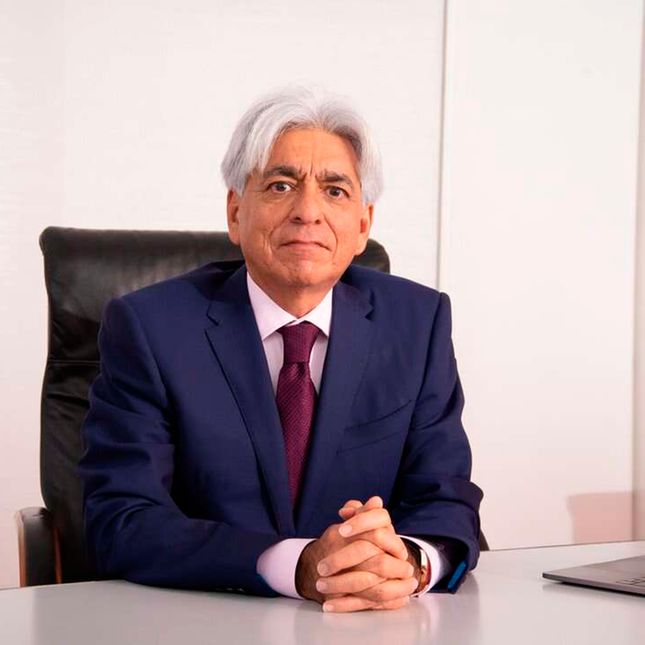
Bharat Thakrar built WPP Scangroup from nothing. In December 1982, working out of modest premises in Nairobi, he launched a small advertising agency called Scanad, funded by determination and a training ground that had taken him through Advertising Associates, where he oversaw the launch of Close-Up toothpaste, Blue Band and Royco Mchuzi Mix. He had no university degree. He had, instead, four decades of stubbornness and an instinct for the business of persuasion that few in sub-Saharan Africa could match.
What followed was the kind of entrepreneurial arc that Kenyan business mythology is built on. Through a combination of organic growth and shrewd acquisitions, Thakrar turned Scanad into Scangroup, one of the most formidable marketing communications conglomerates in East and Central Africa, offering advertising, media buying, public relations, digital, research and experiential services across the continent. In August 2006, he took the company public on the Nairobi Securities Exchange in an IPO that was six times oversubscribed, a signal, at the time, of extraordinary investor confidence in the man and his machine.
Then WPP arrived.
The London-listed advertising giant first took a minority stake in 2006, months after the IPO, before acquiring additional shares in 2013 to claim a controlling interest. The company was rebranded WPP Scangroup in 2015. Thakrar, speaking at the time with the enthusiasm of a man who believed he had secured a permanent partnership, invoked an African proverb: “If you want to go quickly, go alone. If you want to go far, go together.” By 2020, the partnership had propelled revenues to levels Scanad’s founder could never have imagined from those early days. By 2021, Thakrar was gone.
He is now trying to come back. And the numbers he is carrying into that fight may be the most damning corporate performance indictment ever assembled against a majority shareholder at the Nairobi Securities Exchange.
“Anywhere else in the world this board would have been kicked out given the cumulative losses over the last five years.” — Bharat Thakrar, May 2026
The Fall: A Suspension Without a Conviction
On February 18, 2021, WPP Scangroup’s board issued a terse statement announcing the suspension of both the Chief Executive Officer and the Chief Finance Officer, Satyabrata Das. The grounds cited were “allegations of gross misconduct and possible offences in their capacity as senior executives and employees of the company.” No specifics were given. No charges were named. The statement landed on a market that had not been warned, and shares fell to a record low the same day.
The allegations, it later emerged, had originated from whistleblower reports submitted by employees and former employees of Scangroup through a “Right to Speak” line, according to WPP. The board appointed Control Risks Group, a British risk consultancy, to conduct a comprehensive investigation. Deloitte and Touche LLP, Scangroup’s external auditor, had reportedly flagged possible alteration of financial books after the publication of the 2020 results was delayed by four months, adding to the public gravity of the situation.
The investigation ran for months. Then, in September 2021, Scangroup published a statement that amounted to a full corporate exoneration: the probe “did not identify items of material nature that required adjustments to the results of the company or the group for the year ended December 31, 2020 or to the balance sheets at that date.” In plain language, the investigation found nothing actionable. No financial irregularity was confirmed. No books had been cooked. No misconduct of material consequence was proven.
But by then, Thakrar was already gone. He had resigned on March 23, 2021, months before the clearance, insisting that his resignation was not voluntary but coerced. He would later describe it in court papers as the product of a process that was “clearly pre-determined.” Court documents filed by Thakrar allege that the entire investigation was spearheaded not by the board’s own committee but by Andrea Harris, WPP’s Group Chief Counsel in London, who frequently participated in Scangroup board meetings to brief directors on the probe. At the time of his exit, Thakrar was directed to surrender all items to Ben Kelly, WPP’s head of risk. The handover had the texture of a termination, not a resignation.
Thakrar has also alleged, in legal filings, that his suspension followed a pattern of discriminatory conduct. His lawyers, in a demand letter that preceded the Nairobi court filing, accused WPP of using “neo-colonialist practices” that were “clearly targeted only at our client who is of Indian extraction.” The letter noted that a British national in a high-ranking Scangroup executive position, who was also allegedly implicated in the same set of charges levelled against Thakrar, was not suspended or investigated. That individual was instead promoted to become CFO of one of WPP’s largest companies. WPP denied the claims, stating that “Bharat resigned from WPP Scangroup in 2021, following allegations of impropriety between 2014 and 2018.”
Control Risks Group extracted WhatsApp messages from Thakrar’s iCloud via his work laptops. Kenya’s data regulator found the process unlawful.
The Data War: Secret WhatsApp Messages and a Regulator’s Ruling
The manner in which the investigation was conducted is itself a matter of legal record and regulatory finding. In October 2024, Kenya’s Office of the Data Protection Commissioner ruled against WPP Scangroup, its parent company WPP Plc, and Control Risks Group, ordering them to pay Thakrar Sh1.95 million in compensation for personal data breaches.
The Commissioner’s determination, signed by Data Commissioner Immaculate Kassait, found that Control Risks Group had accessed Thakrar’s private WhatsApp messages stored in iCloud through his work laptops, without demonstrating compliance with the principle of data minimisation. The ruling ordered WPP Scangroup to give Thakrar access to his personal data related to his employment, within seven days. CRG argued that WhatsApp messages did not constitute sensitive personal information under the Data Protection Act. The Commissioner rejected that argument.
Scangroup declared it would appeal the ruling, with then-CEO Patricia Ithau describing the company as disagreeing with the determination. But the regulatory finding stands as an independent judicial acknowledgement that the investigation into Thakrar’s conduct was conducted, at least in part, through unlawful means. It is precisely the kind of finding that gives Thakrar’s allegations of a manufactured ouster their most credible institutional footing.
The Lawsuit: Sh4.5 Billion, Dismissed on a Technicality
In March 2024, Thakrar filed suit in the Nairobi commercial court against WPP Plc, WPP Scangroup, and all of the company’s directors, seeking more than half a billion shillings in domestic damages plus losses that UK media reported could reach £24 million, roughly Sh4.3 billion, for reputational injury, emotional and mental damage, and loss of business opportunity. The suit alleged unlawful interference with contractual relations, inducement of breach of contract, conspiracy to injure his status and reputation, and a pattern of defamatory conduct that, he argued, reached as far as Airtel Africa, to whom WPP allegedly gave “further defamatory and false statements.”
Thakrar further alleged that WPP had “manipulated itself into a position to control the board” by appointing additional directors in violation of Capital Markets Authority guidelines requiring that at least one in three directors be independent. He described his suspension as the result of a “surreptitious investigation using unlawful means” and accused the board of endorsing his suspension without having seen the draft investigation report from Control Risks.
In May 2025, High Court Judge Josephine Mong’are struck out the case, ruling that it should have been filed before the Employment and Labour Relations Court as an employer-employee dispute, not in the commercial division. Mong’are found that the court had no jurisdiction to determine the matter, which “falls squarely with the Employment and Labour Relations Court as it relates to and arises out of a dispute between an employer and employee.” Thakrar announced he would file an appeal within the statutory fourteen-day period. The underlying claims remain unheard on their merits.
What the dismissal demonstrated, above all else, is that Thakrar is not done. He filed the appeal. He continued to hold his shares. He watched the numbers worsen. And then, in May 2026, he moved.
The Empire Thakrar Built: Revenue, Reach and the Golden Years
To fully understand what is at stake, one must understand what WPP Scangroup was under Thakrar’s leadership and how far it has fallen since his removal. When Scangroup listed on the NSE in 2006, it was a respected but mid-sized agency. The WPP partnership unlocked scale. Revenue grew from Sh829.57 million in 2006 to Sh5.02 billion by 2015, the year of the rebrand. Net profit more than doubled over the same period to Sh478.67 million. Under Thakrar, the company built a multi-agency model that spanned advertising, media, public relations, digital and research across Sub-Saharan Africa’s most commercially significant markets.
Major blue-chip accounts including KCB Bank, Equity Bank, NCBA, and Airtel Africa were among the relationships that defined Scangroup’s commercial dominance. In 2020, the company completed the sale of its Kantar TNS data and research subsidiary to Bain Capital Group for approximately Sh5 billion after costs and taxes, a transaction that demonstrated the depth and value of what had been assembled under Thakrar’s stewardship. At the point of his forced departure in February 2021, revenues stood at approximately Sh7 billion and the share price at Sh5.94. These numbers matter because they are the baseline against which the post-Thakrar era must be judged.
The Wreckage: Five Years of Losses and a Collapsed Share Price
The financial record of WPP Scangroup since Thakrar’s removal is not a story of restructuring or strategic transition. It is a story of consistent, accelerating destruction of shareholder value.
In 2022, the first full year under post-Thakrar management with Patricia Ithau as CEO, the company reported a loss of Sh145.5 million. Management declared this a turnaround, pointing to some operational improvements. In 2023, the company returned a profit of Sh130 million, largely attributed to forex gains and organic growth from existing clients rather than meaningful revenue expansion. Revenue for that year stood at Sh6.6 billion on a gross basis but gross net revenue, the industry metric that strips out media pass-through costs, was only Sh2.2 billion, indicating a structurally hollowed-out business. No dividend was declared. No dividend has been declared in any of the years since Thakrar’s removal.
The 2024 results erased whatever comfort the 2023 profit had provided. Net loss widened to Sh506.7 million, a full reversal of the Sh130 million profit. Revenue fell to Sh2.4 billion on a gross basis from Sh3.1 billion. The company attributed part of the loss to a Sh248.7 million foreign exchange hit caused by the strengthening of the Kenyan shilling, which appreciated from Sh160 to the dollar to Sh129. Two “significant creative businesses” were also lost during the year, contributing to the top-line deterioration.
Then came 2025. Full-year results published in April 2026 confirmed a net loss of Sh713.7 million, a 41 percent deepening from the prior year’s loss. Revenue collapsed to Sh2.04 billion. Cash reserves declined 59.7 percent to Sh864.48 million. The company has shed operations in Nigeria and Tanzania and divested its South African public relations business, a structural retreat from the pan-African footprint that Thakrar spent four decades constructing. The share price, as of May 6, 2026, stood at Sh2.24, a 62 percent decline from the Sh5.94 at which it traded on the day Thakrar was suspended. In aggregate trading terms, the company has incurred losses of approximately Sh3.3 billion between 2021 and 2025.
Four consecutive profit warnings. No dividends for five years. Revenues less than one-third of what they were at Thakrar’s departure. A share price at less than half its 2021 value. These are the numbers that Thakrar has placed, in a formal requisition letter dated May 8, 2026, before the board that WPP put in place and continues to back.
Revenue has fallen from Sh7 billion when Thakrar was removed to Sh2 billion today. No dividend has been paid in five years. Cash reserves have collapsed 59.7 percent.
The Client Exodus: KCB, Equity, NCBA, Airtel Africa
Behind the headline numbers lies an account of client relationship management that raises questions about what, exactly, has been happening inside Scangroup’s agencies since Thakrar left. The requisition letter names KCB Bank, Equity Bank, NCBA and Airtel Africa as major clients lost during the five-year period under review. The shareholders allege that these departures accounted for nearly a quarter of the company’s revenues at the time of their exits.
The Airtel Africa loss is particularly significant in its public profile. In May 2025, Ogilvy Africa, Scangroup’s flagship agency, lost a fifteen-year contract with the telecoms firm. The Capital Markets Authority separately disclosed the material contract change. The termination ended one of the longest-standing advertising relationships in the sub-Saharan African market. Staff headcount, which stood at 554 before layoffs in May 2023, had declined to 434 by December 2024, with further redundancies announced in 2025. A once-dominant agency is contracting on every measurable axis simultaneously.
The Governance Scandal Inside the Scandal: The Sh1.2 Billion Loan
The most explosive allegation raised by Thakrar’s minority shareholder bloc is not about lost clients or historic losses. It is about what the current board has allowed to happen with the company’s remaining cash.
The requisition letter flags a Sh1.2 billion long-term loan that WPP Scangroup has extended to WPP Group Services SNC, a wholly owned subsidiary of WPP Plc, at an interest rate of five percent per annum. The minority shareholders argue that this rate is materially below prevailing market conditions, pointing to average deposit rates of 6.86 percent and average lending rates of 16.85 percent. In other words, a cash-depleted Kenyan subsidiary with no dividends and a collapsing share price is lending more than a billion shillings to its cash-rich British parent at rates that would not pass muster at a commercial bank.
With cash reserves standing at only Sh864.48 million at year-end, the loan, at Sh1.2 billion, actually exceeds the company’s entire cash balance. The minority shareholders describe the terms as raising “serious questions as to WPP Plc’s continuing strategic, financial and governance commitment to the group.” They have also raised concerns about a Sh78 million receivable from Ogilvy South Africa, another WPP subsidiary, and have demanded detailed disclosure on repayment arrangements and recoverability.
The question this raises is whether an independent board, acting in the interests of all shareholders rather than the majority, would have approved such a transaction. The Capital Markets Authority’s guidelines on related-party transactions and the Companies Act 2015’s requirements for director independence are not abstract protections. They exist precisely to prevent a controlling shareholder from extracting value from a listed subsidiary at the expense of minority investors.
The Takeover Bid: Numbers, Names and the Arithmetic of Power
The mechanism through which Thakrar is attempting his return is Article 44.4 of Scangroup’s Articles of Association, which requires the board to convene a general meeting when shareholders representing at least ten percent of the company’s issued share capital submit a written requisition. Thakrar and his wife Sadhana Thakrar hold 45,302,860 shares representing 10.48 percent of issued capital. A bloc of six additional minority shareholders brings the combined holding to 58,725,648 ordinary shares, or 13.59 percent of the total 432,155,985 shares in issue.
Their requisition, dated May 8, 2026 and addressed to Chairman Richard Omwela, demands the removal of all nine sitting directors and their replacement with a slate of five new nominees. That slate is led by Thakrar himself, alongside his son Rishab Thakrar, former Scangroup Executive Creative Director Andrew White, businessman Carl Adam Ogola, and Kunal Kamlesh Bid, founder of Bid Securities. Andrew White is the copywriter behind some of Kenya’s most enduring advertising slogans, including “Mimi ni Member” for Equity Bank and “Milele” for Tusker.
Arrayed against them is WPP Plc, which through Cavendish Square Holding BV and Ogilvy South Africa controls approximately 56 percent of issued share capital. On a straight vote, WPP defeats every single resolution. The majority shareholder can, if it chooses, ignore the requisition’s substantive demands entirely and simply outvote the minority at the AGM. That is the arithmetic reality of Thakrar’s position. He knows it. WPP knows it. The strategic question is not whether Thakrar can win the vote. It is whether his campaign generates enough public, regulatory and commercial pressure to force WPP into meaningful concessions.
The AGM was scheduled for June 8, 2026 at 10:00 a.m. In a manoeuvre that critics read as pre-emptive damage control, the board announced on May 13, two days before publishing the formal AGM notice, that three of the nine directors named in Thakrar’s ouster resolutions had “retired” effective the same date. The three who departed were Jon Eggar, Patou Nuytemans and Shahid Sadiq. In their place, the board proposed Kagiso Musi, Nick Douglas and Manuel Segimon. Thakrar had previously claimed, without documentary evidence, that all three departing directors were no longer employed by WPP Plc. Their retirement days before the formal AGM notice validated that allegation publicly.
WPP controls 56 percent of the shares and can defeat every resolution. But Thakrar is not playing for the vote. He is playing for the narrative.
The Wider Context: A Global Template for Founder Pushback
Thakrar’s fight with WPP has a more famous parallel than most Kenyan commentators have noted. WPP itself went through a structurally identical crisis in 2018, when its founder Sir Martin Sorrell, who had built WPP from a wire basket manufacturer into the world’s largest advertising holding company, was forced out following an investigation into alleged misconduct. Sorrell denied the allegations, departed with a protracted battle over his shareholding, and immediately founded S4 Capital, a competing digital advertising business that went public and grew rapidly.
The parallel is instructive. WPP, which ousted its own founder in circumstances it considered embarrassing, turned around and applied a similar process to the founder of its African subsidiary. Whether that constitutes institutional consistency or corporate irony depends on one’s perspective. What is consistent is the pattern: whistleblower allegations, an investigation conducted under the authority of London-based corporate counsel, a resignation described by the subject as coerced, and a subsequent legal fight that WPP has tried, with mixed success, to contain.
Globally, shareholder activism of the kind Thakrar is deploying has been rising. Activist investors have mounted record numbers of campaigns against underperforming companies in recent years, with targets ranging from energy conglomerates in the United States to consumer multinationals in Asia. In Kenya, such campaigns are exceptionally rare. The Nairobi Securities Exchange has few precedents for minority shareholders formally requisitioning the removal of an entire board at a listed company. Thakrar’s bid, whether or not it succeeds at the June 8 AGM, has already made that history.
The New CEO Problem: Three Leaders in Five Years
One dimension of the governance crisis that has received insufficient scrutiny is the leadership churn that has occurred at Scangroup since Thakrar’s departure. The company has now had three CEOs, and an interim period, in five years. Alec Graham served as interim COO following Thakrar’s suspension. Patricia Ithau was appointed substantive CEO in 2022, tasked with “rapidly steering the organization through dynamic shifts in the marketing and communication field.” Her three-year tenure produced one year of modest profit, surrounded by losses, before her contract ended in July 2025 without renewal.
Miriam Kaggwa, the Chief Operating Officer, then served as interim leader while the board searched for a permanent replacement. In November 2025, Akua Brayie Owusu-Nartey was appointed Group CEO and Executive Director, effective from November 17, with a mandate to steer the company back to profitability. Owusu-Nartey brings regional experience from Ghana, Nigeria, Kenya, Tanzania and Zambia, and held roles at Ogilvy Africa and Publicis West Africa. She has been in post for less than seven months and is now at the centre of a hostile takeover attempt.
The leadership question matters beyond individual competence. A company that cycles through chief executives while accumulating losses, shedding clients and contracting geographically is a company that has not resolved the strategic crisis at its core. The board that hired and let go of each of these CEOs has been chaired throughout by Richard Omwela, one of the directors Thakrar specifically names for removal.
What a Thakrar Return Would Actually Mean
For shareholders, clients and staff, the scenario of a Thakrar-led board carries implications that cut in multiple directions. The case for a Thakrar return rests on the proposition that the company’s post-2021 decline is attributable, at least in significant part, to the loss of relationships, institutional knowledge and client confidence that Thakrar personally embodied. For major Kenyan advertisers, Thakrar was not merely a CEO. He was the face and the relationship. The departure of KCB, Equity and NCBA in the years following his removal may partly reflect the evaporation of those personal connections.
The case against rests on a different reading of the same history. Thakrar was, by the end of his tenure, running a company that WPP believed had serious governance problems. The original whistleblower reports alleged misconduct spanning multiple years. The investigation found no material financial irregularity, but that is not the same as finding no misconduct of any kind. The full Control Risks report has never been published. Thakrar’s own lawsuit continues to allege things that WPP denies. The court has not yet heard the merits. For institutional investors and CMA-regulated clients, the return of a CEO who resigned under an unexplained investigation, regardless of whether he was ultimately cleared of financial wrongdoing, is not a simple governance restoration.
There is also the arithmetic problem. Even if every minority shareholder votes with Thakrar and the proxy campaign generates maximum participation from the retail shareholder base, WPP’s 56 percent holding means the June 8 vote is mathematically not competitive. Thakrar cannot win through the ballot box alone. His campaign is better understood as a public pressure strategy designed to force WPP either to negotiate, to make board concessions beyond the three pre-emptive retirements already announced, or to take seriously the prospect of a governance crisis that lands on the front pages of the London financial press.
WPP itself is under independent commercial and investor pressure. The London-listed parent has been navigating its own restructuring, digital transformation challenges and falling share price. A sustained public fight about governance failures at an African subsidiary, conducted through Kenyan courts, data regulators, social media and NSE-listed company mechanisms, is not the kind of press that helps WPP’s own narrative with institutional investors in London. Thakrar, for all that he may be a deeply interested party in this dispute, clearly understands that dynamic.
The PR Company With a PR Crisis
There is a dimension to this story that has been substantially underreported: the company at the centre of this crisis is, at its core, a public relations and marketing firm. WPP Scangroup sells, to its clients, the capacity to manage reputation, control narrative, shape public perception and handle crisis communications. Its agencies include Ogilvy, one of the most storied brand-building operations in the world. The board and management of WPP Scangroup are, professionally speaking, the people who should know better than anyone how this kind of story unfolds and how to get in front of it.
They have not got in front of it. The company has issued no substantive public response to the minority shareholders’ May 8 requisition letter, with its enumeration of Sh3.3 billion in losses, a collapsed share price, departed major clients and a questioned related-party loan. It preemptively retired three directors to limit the damage of the specific board-removal resolutions, but it has not addressed the underlying commercial and governance critique. Its current CEO, who has been in post for six months, has not publicly outlined a credible turnaround thesis with specific financial targets and client acquisition commitments. The company that sells crisis communications cannot manage its own crisis.
For current and prospective clients of WPP Scangroup’s agencies, specifically Ogilvy Africa, Scanad, JWT, Y&R and the group’s other subsidiaries, the question of board stability and strategic direction is not abstract. Clients commit marketing budgets on twelve-month and multi-year cycles. They need confidence that the agency they brief in January will still have the same creative leadership, strategic team and institutional memory in December. A company that has cycled through three CEOs in five years, is losing clients at the pace documented in its own published results, and is now subject to a public hostile takeover attempt does not project that confidence.
The Capital Markets Dimension: CMA and NSE Accountability
Kenya’s Capital Markets Authority has regulatory responsibility for listed companies and their governance. The standards applicable to WPP Scangroup include requirements for director independence, related-party transaction disclosure, and the treatment of minority shareholders. The minority shareholders’ requisition letter explicitly raises concerns about whether the Sh1.2 billion loan to WPP Group Services at five percent interest was properly disclosed and properly approved under applicable related-party transaction rules. It also raises concerns about whether three board members who are no longer WPP employees were properly disclosed as having changed status.
The CMA has the power to investigate, to require enhanced disclosure, and to take regulatory action where governance failures are established. Whether it chooses to exercise that power in relation to a company whose majority shareholder is a London Stock Exchange-listed multinational is a test of institutional independence that the authority should take seriously. The NSE listing, for WPP Scangroup, is not merely a fundraising mechanism. It carries obligations to Kenyan retail shareholders, pension funds and institutional investors who purchased shares on the basis of disclosures and governance standards that a listed company is bound to maintain.
For retail shareholders who bought WPP Scangroup shares at Sh5.94 and are now holding paper worth Sh2.24, the question of accountability is not rhetorical. Those investors have lost 62 percent of their capital over five years while the board collected fees and the parent company received a Sh1.2 billion loan at below-market rates. That is the kind of outcome that shareholder activism exists to prevent. That it is happening now, five years too late, does not make it less necessary.
Conclusion: A Reckoning Whose Outcome Is Not the Point
Bharat Thakrar will almost certainly lose the June 8, 2026 vote. WPP controls 56 percent. The arithmetic does not change. The board will be re-elected under ordinary business, and the special business resolutions for board removal will be defeated by the simple deployment of the majority shareholder’s voting power. The Kenyan press will write it up as a defeat for the founder and a reaffirmation of WPP’s control.
That reading would miss the point. What Thakrar has accomplished, regardless of the vote outcome, is to place on public record, in a formal requisition carrying legal standing under Kenya’s Companies Act, the most comprehensive and sourced indictment of a publicly listed company’s performance and governance ever assembled in Kenyan corporate history. The Sh3.3 billion in losses is documented. The 62 percent share price collapse is documented. The client exodus is documented. The Sh1.2 billion below-market loan is documented. The data protection violation is a regulatory ruling. The court case, though dismissed on jurisdiction rather than merits, is a matter of public record.
WPP Scangroup’s board, its current CEO Akua Brayie Owusu-Nartey, its chairman Richard Omwela, and its majority shareholder WPP Plc now face a choice that extends beyond the AGM. They can treat the June 8 vote as a problem to be managed and won, retire to the silence of majority ownership, and continue the present trajectory of declining revenues, contracting operations and zero dividends. Or they can acknowledge that the company is in structural crisis, that the post-Thakrar strategy has not worked, and that the minority shareholders raising these concerns are entitled to a credible answer.
Bharat Thakrar is not, in this fight, merely a bitter former CEO seeking revenge. He is a 10.48 percent shareholder who has watched five years of capital destruction and has chosen to do, with the tools available to him under Kenyan law, exactly what minority shareholder protections were designed to enable. Whether his proposed alternative is the right answer for Scangroup’s future is a separate question. The one question that cannot be avoided is whether the current arrangement is working. The numbers have answered it.
Kenya Insights allows guest blogging, if you want to be published on Kenya’s most authoritative and accurate blog, have an expose, news TIPS, story angles, human interest stories, drop us an email on [email protected] or via Telegram



Why Absa Bank Is On The Spot For Enabling Sh150 Million Alleged Insider Fraud In Vetlab Club

Somalia’s Disputed President Allegedly Siphons Up to $6 Million Monthly from Kenyan Miraa Trade, Sharing the Spoils with Nairobi’s Shadow Cartels

Ahmed Adan Hefow: Governor Otuoma’s Trusted Right-Hand Man at the Centre of Busia’s Deepening Finance Scandal

Karua Detained at Entebbe as Uganda Blocks Besigye Lawyer From Entering Country

How KCB and Airtel Turned Kenya’s Unbanked Into a Data Goldmine Behind a ‘Financial Inclusion’ Deal

The Chivayo Network: How a Convicted Fraudster Won Access to Presidents, Passports and Billion-Dollar Deals Across Africa

BURRIED TWICE: The Victoria Bank CEO Yogesh Pattni Files

Court Stops Transfer Of EABL Shares To Asahi By Diageo In A Fresh Snag

Death Before Justice: Stephen Ngei, Victim of Sh180 Million Laptop Tender Scam Linked to Allan Chesang, Killed in Highway Crash

Court Brands Sh1.1 Billion Fee Demand by Lawyer Victor Swanya “Excessive and Exorbitant,” Exposes How City Hall Lets Public Money Bleed Through Legal Bills

Businessman Philip Waithaka Kinuthia’s Minor Son Allegedly Drove Drunk, Killed Two Peponi Students in Ngong Road Horror Crash as Claims of Cover-Up Intensify

Inside NCBA’s Decline: How a Banking Giant Lost Its Strategic Edge

Cement, Cash and Courts: How the Hashu Dynasty Crushed the Ramji Brothers for Fourteen Years and Why the Walls Are Now Closing In

Standard Chartered Ghosts Haunt Joshua Oigara At Stanbic As Whistleblower Spills Beans

South Sudan: Adut Salva Kiir’s Shadow Treasury Exposed

Inside The Urban Planning Cartel That Owns Nairobi

THE VULTURE AND THE SCHEME How Nairobi West Hospital Became the Most Dangerous Institution in Kenya’s SHA Ecosystem and Why the Books Must Be Audited Now

The President’s Daughter and The Missing Witness: How Adut Salva Kiir’s Shadow Treasury Silenced Its Most Dangerous Critic

How Adil Popat Saved His Empire On The Eve Of Imperial Bank Collapse and Why Kenya’s Mainstream Media Buried The Story

Why John Ngumi Is Running From the EACC and Why the Sh415 Million Payday May Be the Least of His Worries
-
 News1 week ago
Businessman Philip Waithaka Kinuthia’s Minor Son Allegedly Drove Drunk, Killed Two Peponi Students in Ngong Road Horror Crash as Claims of Cover-Up Intensify
-
 Business2 weeks ago
Inside NCBA’s Decline: How a Banking Giant Lost Its Strategic Edge
-
 Business2 weeks ago
Standard Chartered Ghosts Haunt Joshua Oigara At Stanbic As Whistleblower Spills Beans
-
 Africa2 weeks ago
South Sudan: Adut Salva Kiir’s Shadow Treasury Exposed
-
 Investigations4 days ago
THE VULTURE AND THE SCHEME How Nairobi West Hospital Became the Most Dangerous Institution in Kenya’s SHA Ecosystem and Why the Books Must Be Audited Now
-
 Africa2 weeks ago
The President’s Daughter and The Missing Witness: How Adut Salva Kiir’s Shadow Treasury Silenced Its Most Dangerous Critic
-
 Business2 weeks ago
How Adil Popat Saved His Empire On The Eve Of Imperial Bank Collapse and Why Kenya’s Mainstream Media Buried The Story
-
 Business2 weeks ago
Why John Ngumi Is Running From the EACC and Why the Sh415 Million Payday May Be the Least of His Worries