
Investigations
The Man Who Thinks He Has Everyone Covered: Speaker Wetang’ula, CS Mudavadi and a Bribed Judge in Wamukota’s Corrupt Blueprint to Seize KETRACO
A man facing EACC prosecution recommendations for an Sh18.5 billion scandal, who cannot produce a master’s degree, who has been suspended, interdicted and placed on compulsory leave, is now boasting in Nairobi bars that he has the Speaker of the National Assembly, the Prime Cabinet Secretary, and a sitting female judge in his pocket. The silence of the men he names speaks louder than any denial. Kenya Insights has reviewed the full dossier.

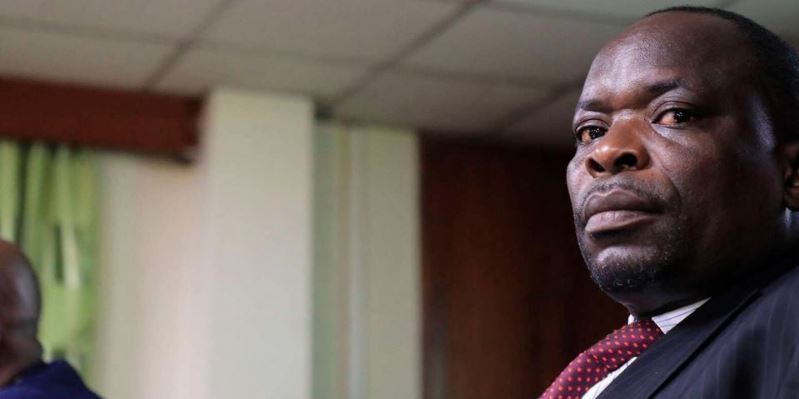
He was not whispering. That, above everything else, is what those who were present in that Nairobi establishment in the weeks before the June 2 application deadline for KETRACO’s chief executive position find most remarkable about what they heard. Antony Tawayi Wamukota, the long-serving General Manager for Design and Construction at the Kenya Electricity Transmission Company, twice appointed acting Managing Director of the same institution, and a man the Ethics and Anti-Corruption Commission has recommended for prosecution over an Sh18.5 billion scandal, was speaking with the unhurried confidence of someone who has calculated, with some care, that he cannot lose.
The boast, as it was relayed to this publication through multiple independent accounts from individuals with direct knowledge of what was said that evening, was not a single claim but a catalogue, delivered in the specific language of a man who is not performing confidence but reporting a completed transaction.
He claimed a sitting female Luhya judge had been secured for the sum of three million shillings and would deliver whatever court orders he required in proceedings directly connected to the KETRACO recruitment. He declared that the executive and the legislature stood behind him. He named, with the ease of a man naming people he has already paid, two of the most powerful figures from Western Kenya in the current national administration as his personal guarantee against anyone who might question his qualifications, his corruption record, or his right to the corner office at a company managing Sh200 billion in public infrastructure assets.
“I have the executive, the legislature, and even influence reaching into the judiciary,” he reportedly told the room, adding with what sources describe as the slightly forced laugh of a man projecting control he needs others to believe he possesses: “Everything is covered.”
“I have the executive, the legislature, and even influence reaching into the judiciary. Everything is covered.” — Antony Wamukota, overheard in a Nairobi establishment, as reported to Kenya Insights by multiple independent sources
THE SILENCE THAT CONFIRMS EVERYTHING
The names Wamukota has been dropping with such confidence are not hypothetical. They are Speaker of the National Assembly Moses Wetang’ula, the third in Kenya’s constitutional line of succession and the most senior elected official from the Luhya community, and Prime Cabinet Secretary Musalia Mudavadi, whose office’s authority reaches across the machinery of government with a breadth that makes his awareness of significant developments within his community’s political network a matter of institutional inevitability rather than mere probability.
Both men have been publicly named by Wamukota as his political guarantors in a live recruitment dispute at a major state corporation where he faces disqualification on both academic and integrity grounds. Multiple sources with knowledge of these proceedings confirm that the reports of his public boasts have reached both men’s offices through channels that are well established.
Both men have said nothing.
In Kenya’s political culture, where figures of the stature of Mudavadi and Wetang’ula have spent careers demonstrating a sophisticated and finely calibrated understanding of when public denial is required as a political instrument, silence in the face of specific, named, public claims is not a passive condition. It is a choice. And choices made at this level of political seniority carry consequences and communications that the people making them understand with precision.
A man facing active EACC prosecution recommendations is invoking your name as his personal guarantee of impunity in the recruitment for a public leadership role, claiming you will override formal qualification requirements and integrity standards on his behalf, and boasting in establishments across Nairobi that he has arranged judicial outcomes through payments made in your name’s shadow. If that claim were false, the denial would have come within hours. It has not come at all.
“Wamukota does not speak those names the way a man speaks names he has stolen. He speaks them the way a man speaks names he has paid for. There is a difference, and people who have been in these rooms long enough know exactly which one they are hearing.” — Senior energy sector source, speaking on condition of anonymity
THE FILE THAT MAKES THE BACKING NECESSARY
The scale and determination of the political architecture Wamukota has assembled is itself the most precise available measure of what he knows about his own file. A man with a qualifying degree and a clean record does not require the Speaker of the National Assembly and the Prime Cabinet Secretary as his personal institutional shields in a CEO recruitment exercise. He applies, he is assessed, and if he is the best candidate, he gets the job. The architecture of political patronage that Wamukota has constructed and is now publicly describing, at personal and reputational risk to the figures being named, exists in direct proportion to the weight of what he is carrying.
What he is carrying begins with the Loiyangalani-Suswa 400kV Transmission Interconnector, a 435-kilometre powerline designed to connect the Lake Turkana Wind Power plant in Marsabit to the national grid at Suswa. The project was catastrophically delayed under the contract management oversight of the man who was, at the relevant time, KETRACO’s General Manager for Design and Construction. The Spanish contractor Isolux Ingenieria went bankrupt mid-construction, and the cumulative failures of project stewardship produced a penalty bill of Sh18.499 billion paid to Lake Turkana Wind Power for electricity the plant generated but could not transmit because the line was not ready.
The EACC’s investigation into this failure produced prosecution recommendations against a list of named individuals that includes Wamukota, former Energy Principal Secretary Patrick Nyoike, KETRACO colleagues Peter Njehia and Carol Kiara, and the officials of Luanda Concrete and Earth Movers Limited. The charges recommended encompass conspiracy to commit economic crimes, abuse of office, conflict of interest, fraudulent acquisition of public funds, and money laundering.
The connection between Wamukota and Luanda is not a matter of rumour or anonymous assertion. It is documented in court filings forming part of the public record of High Court Petition E111 of 2023. EACC investigators seized from Wamukota a formal letter of introduction he had written for Luanda’s directors to the Development Bank of Kenya, bank transfer records from his personal account to Luanda Concrete and Earth Movers, documentation of equipment purchases where Luanda paid on behalf of a company in which Wamukota and his mother are named as shareholders, and a rubber stamp for Luanda physically found in his possession at KETRACO. The directors of Luanda carry the Wamukota family name. The investigation further identified his connection to Aliceson Investments Limited, with his mother listed as a co-director.
This is not the conduct of a man who kept his professional and private interests at arm’s length during the project he was supposed to be overseeing. It is the conduct of a man who believed, with apparently justified confidence, that his political connections would insulate him from the consequences of using his institutional position as a procurement pipeline for companies carrying his family’s name.
THE DEGREE THAT DOES NOT EXIST
Against that backdrop arrives the question of his academic credentials, and the answer is both simple and devastating. KETRACO’s board advertised the managing director position requiring a master’s degree as a minimum. Wamukota’s publicly documented professional record lists a Bachelor of Science in Civil Engineering and a CPA qualification. No master’s degree appears anywhere in his documented credentials. Industry sources who have followed his career closely note that this gap has been an internal subject of institutional discussion since at least 2022, when he was placed in the acting MD role and questions were raised about whether his academic profile matched the authority he was being handed. The Nyakundi Report’s investigation adds a further detail that has circulated within KETRACO as settled institutional knowledge: questions have been raised internally about the standing of the institution from which he obtained even his undergraduate degree.
Every other serious candidate in the current recruitment field holds postgraduate qualifications from accredited universities. Several hold multiple advanced degrees. The master’s degree requirement is not a frivolous bureaucratic imposition for an entity managing Sh200 billion in assets, handling World Bank and multilateral financing, and coordinating with regional power pools across East Africa. It is the minimum credential commensurate with that responsibility, and Wamukota does not have it.
COFEK AND THE ART OF THE JUDICIAL PROXY
The Consumer Federation of Kenya filed its petition in the High Court seeking to halt the KETRACO CEO recruitment on the grounds that the master’s degree requirement exceeds what the Government Owned Enterprises Act permits. The timing was precise: filed days before the June 2 application deadline. Its legal effect, if successful, would be to eliminate the one qualification requirement that most directly disqualifies the one candidate whose political backers most needed it eliminated.
The GOE Act sets a statutory floor for appointment to state corporation leadership. It requires a degree, ten years of relevant experience, five years in senior management, and Chapter Six compliance. It does not prohibit a board from setting higher standards commensurate with the complexity of the institution. Legal analysts who have examined this argument with the seriousness it deserves are largely dismissive of the petition’s substantive merits. A board does not exceed its authority by determining that the chief executive of a Sh200 billion infrastructure entity should hold a postgraduate degree. It exercises that authority.
What the petition does, and what its timing and the identity of its primary beneficiary makes impossible to avoid examining, is provide a judicial mechanism through which a political arrangement can be converted into a legal outcome. By eliminating the master’s degree requirement through conservatory orders, the petition would advance Wamukota’s candidacy to an interview stage where his political backing, rather than his academic credentials, becomes the decisive variable. That is precisely the stage at which the names he has been describing as his guarantee are expected to deliver their return on whatever investment has been made in their use.
The question of who activated COFEK’s institutional machinery for this specific action, at this specific moment, on behalf of a primary beneficiary who does not hold the qualification being challenged, and what was communicated to Secretary-General Stephen Mutoro about the desired outcome, are questions that sit in the public interest with an urgency that the relevant investigative authorities should not allow to dissipate.
The COFEK petition did not emerge from an independent assessment of consumer rights in public sector recruitment. Its primary beneficiary is a man who does not hold the qualification being challenged. Its timing was a deployment, not a coincidence of civic concern.
MR. POWERPOINT AND THE TRANSFORMER THAT NEVER WORKED
The corruption file and the political architecture are the dominant stories. But they do not exist in isolation from a record of technical stewardship that current and former KETRACO staff have described, in accounts shared with this publication across multiple independent conversations, as a catalogue of decisions whose consequences have been absorbed by Kenya’s electricity consumers in the form of avoidable costs, outages, and infrastructure damage.
Staff within KETRACO refer to Wamukota by a nickname that has acquired the persistence of institutional truth: Mr. PowerPoint. The designation captures something precise about its subject, specifically a facility with presentation slides that exists in inverse proportion to his command of the technical substance those slides are meant to communicate. The nickname has circulated with enough durability to qualify as settled institutional knowledge rather than passing gossip.
In 2022, he personally authorised the purchase of two 132kV power transformers for the Kitale-Ortum project at a voltage rating incompatible with that transmission line. When senior engineers identified the error and raised technical objections, he dismissed them. He reportedly suggested the transformers could be adapted through a process that the engineers confirmed was not technically possible. The equipment spent two years in a warehouse, components stolen during storage, while KETRACO paid Sh85 million in fees for equipment it could never deploy. The error was attributed to the supplier.
During testing at the Suswa substation, a critical node in the Ethiopia-Kenya interconnector, a fault that experienced transmission engineers assessed as resolvable within fifteen minutes through standard isolation procedures prompted Wamukota, then serving as acting CEO, to order a complete emergency shutdown of the entire facility. Power was cut to three counties for six hours. The subsequent technical assessment of that decision was unambiguous: it reflected a fundamental misunderstanding of grid management protocols that postgraduate training in power systems engineering would have prevented.
The incident that most clearly illuminates the human cost of this technical inadequacy is the dismissal of a lead project engineer who held a master’s degree from the University of Nairobi. He had corrected Wamukota’s technical assessments in front of colleagues on more than one occasion. He was removed from the project. His replacement was a family member carrying a diploma in business information technology. The project continued under the revised arrangement with the technical consequences that those qualifications made inevitable.
THE JUDICIAL BRIBERY CLAIM AND THE JSC’S OBLIGATION
Wamukota’s bar room declaration that a sitting female Luhya judge has been secured for three million shillings to deliver favourable court orders in proceedings connected to this recruitment is not a claim that can be received, noted, and allowed to dissipate without institutional consequence. It is a public claim of active judicial corruption in live proceedings, made by the primary beneficiary of those proceedings, with enough specificity to identify the nature of the judicial relationship being described.
The Judicial Service Commission carries a constitutional obligation that is not satisfied by passive receipt of such information. The identity of the judge being described, the nature of her relationship to the COFEK proceedings and any related KETRACO litigation, and the conduct of any judicial officer who may have received or solicited payment in connection with these proceedings, are matters the JSC has both the authority and the obligation to examine with the urgency that active, live judicial corruption demands.
That Wamukota made this claim publicly, in a room with witnesses, about specific proceedings in which he has a direct and documented financial interest, removes any ambiguity about whether the claim is serious enough to warrant institutional attention. It demands it.
THE APPOINTING AUTHORITY’S MOMENT OF TRUTH
This appointment arrives at a moment when President Ruto’s administration has invested public credibility in the proposition that Kenya’s state corporations will be led by people who qualify for the jobs they are given and who can withstand integrity scrutiny. The November 2023 suspension crackdown, directed by Head of Public Service Felix Kosgei on the EACC’s recommendation, was a public declaration that officials under active anti-corruption investigation would not continue to exercise authority over the institutions under scrutiny. Wamukota was on that list. He survived it. He has survived everything.
But permanent appointment to the managing director role is a different category of decision from the employment relationship he has been litigating to preserve. It is an affirmative choice, made with full knowledge of the EACC’s prosecution recommendations, the documented Luanda financial relationships, the academic credentials gap, the technical stewardship failures, the political patronage network he has publicly described, and the judicial bribery claims he has been making in establishments across Nairobi.
Appointing this man to lead KETRACO would not simply be a bad personnel decision. It would be a declaration, delivered through the machinery of the state, that the political network he has assembled is more powerful than the institutions designed to hold it accountable, that the EACC’s prosecution recommendations are advisory rather than consequential, that a missing master’s degree is a qualification that political backing can substitute for, and that the courts of this country can be purchased by the people with sufficient desperation and sufficient connections to make the call.
The archives are public. The court filings are accessible. The EACC’s institutional position has not been withdrawn. The boast has not dissolved. It has reached the desks of people with the authority to act on it, and the country is watching what they choose to do with what they now know.
Kenya Insights allows guest blogging, if you want to be published on Kenya’s most authoritative and accurate blog, have an expose, news TIPS, story angles, human interest stories, drop us an email on [email protected] or via Telegram



Migori Payment Row Deepens As Branding Firm Demands Sh3.8 Million Over Unpaid Piny Luo Festival Deal

Utumishi Girls Fire Suspects To Be Charged With Murder

Putin Says Russia Ready For Peace Talks With Ukraine Based on Anchorage, Istanbul Agreements

South Sudanese Must Give Adut Salva Kiir The Benefit Of The Doubt

Kenya Stops Work At The US-Linked Ebola Facility

‘The Polygamist’ Pirated Book Go On Sale in Nairobi Following Show Popularity

Justice Mong’are, the Machakos Injunction and the EABL-Asahi Questions Kenya Cannot Ignore

The EABL–Asahi Deal and the Growing Demand for Judicial Transparency

Samburu Governor Lati Lelelit Exposed For Paying Sh60 Million To Ghost Workers

THE GHOST AT ELYSEE PLAZA: How Ghanaian Businessman Erick Agbeko Built a Two-Decade Empire of Land Fraud in Kenya

Businessman Philip Waithaka Kinuthia’s Minor Son Allegedly Drove Drunk, Killed Two Peponi Students in Ngong Road Horror Crash as Claims of Cover-Up Intensify

Inside NCBA’s Decline: How a Banking Giant Lost Its Strategic Edge

South Sudan: Adut Salva Kiir’s Shadow Treasury Exposed

Cement, Cash and Courts: How the Hashu Dynasty Crushed the Ramji Brothers for Fourteen Years and Why the Walls Are Now Closing In

Standard Chartered Ghosts Haunt Joshua Oigara At Stanbic As Whistleblower Spills Beans

Inside The Urban Planning Cartel That Owns Nairobi

THE VULTURE AND THE SCHEME How Nairobi West Hospital Became the Most Dangerous Institution in Kenya’s SHA Ecosystem and Why the Books Must Be Audited Now

The President’s Daughter and The Missing Witness: How Adut Salva Kiir’s Shadow Treasury Silenced Its Most Dangerous Critic

How Adil Popat Saved His Empire On The Eve Of Imperial Bank Collapse and Why Kenya’s Mainstream Media Buried The Story

Why John Ngumi Is Running From the EACC and Why the Sh415 Million Payday May Be the Least of His Worries
-
 News1 week ago
Businessman Philip Waithaka Kinuthia’s Minor Son Allegedly Drove Drunk, Killed Two Peponi Students in Ngong Road Horror Crash as Claims of Cover-Up Intensify
-
 Business2 weeks ago
Inside NCBA’s Decline: How a Banking Giant Lost Its Strategic Edge
-
 Africa2 weeks ago
South Sudan: Adut Salva Kiir’s Shadow Treasury Exposed
-
 Business2 weeks ago
Standard Chartered Ghosts Haunt Joshua Oigara At Stanbic As Whistleblower Spills Beans
-
 Investigations5 days ago
THE VULTURE AND THE SCHEME How Nairobi West Hospital Became the Most Dangerous Institution in Kenya’s SHA Ecosystem and Why the Books Must Be Audited Now
-
 Africa2 weeks ago
The President’s Daughter and The Missing Witness: How Adut Salva Kiir’s Shadow Treasury Silenced Its Most Dangerous Critic
-
 Business2 weeks ago
How Adil Popat Saved His Empire On The Eve Of Imperial Bank Collapse and Why Kenya’s Mainstream Media Buried The Story
-
 Business2 weeks ago
Why John Ngumi Is Running From the EACC and Why the Sh415 Million Payday May Be the Least of His Worries