
Business
THE INSURER THAT TOOK YOUR PREMIUM AND FORGOT YOUR NAME: How ICEA Lion Left a Client Begging for Sh7.8 Million Across Four Months
Kenya’s most celebrated insurance group held a fully documented, fully approved, KSh 7.8 million motor claim hostage for nearly a quarter of a year, releasing the funds only after a public shaming campaign on X forced its hand. The scandal is not an aberration. It is a window into a sector rotting from the inside.

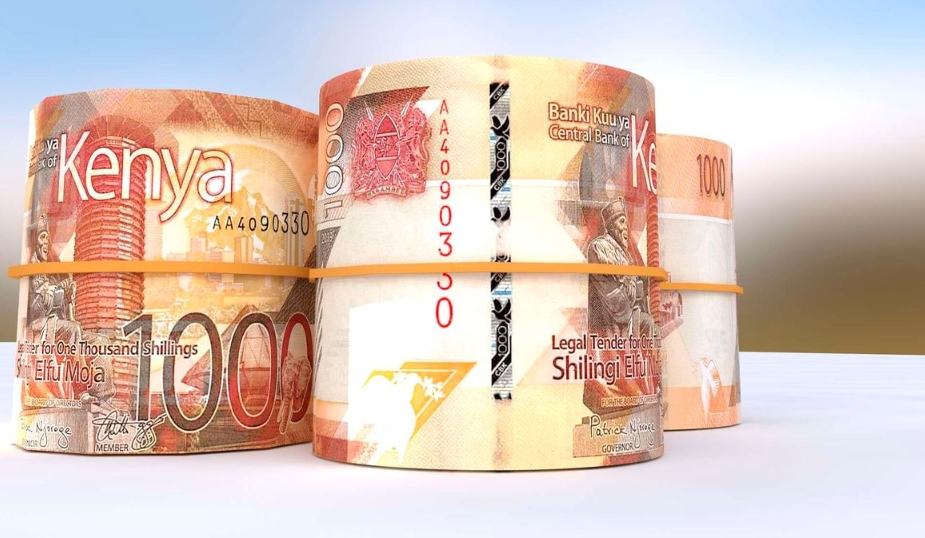
On a Friday morning in early May 2026, a Nairobi motorist named Alex Njenga logged onto X and typed words that no insurance company in Kenya wants to see trending: his claim number, his registration plate, and the name of his insurer. He had spent 118 days doing things by the book. He had filed on time. He had submitted every document. He had signed and returned the discharge voucher that the insurer itself had issued, a document that in industry parlance signals a deal done and a cheque owed. And still, Njenga was broke, vehicleless, and begging.
The insurer was ICEA Lion. The claim was KSh 7,800,000, covering a Landcruiser Prado registered KDV 187J under a comprehensive motor policy for which Njenga had paid premiums exceeding KSh 300,000. The incident that triggered the claim had been investigated by both the police and independent assessors, with findings concluded by March 2026. By every metric the insurance industry uses to define a settled claim, this case was closed. Yet the money did not move.
What moved instead was a social media storm that would strip the mask off one of Kenya’s most aggressively marketed financial brands, expose a claims department that had apparently mastered the art of delay, and drag into public view the uncomfortable arithmetic at the heart of Kenya’s insurance sector: an industry that is extraordinarily good at collecting money and structurally reluctant to return it.
A Claims Department Running on Empty Promises
Njenga’s account of his four-month ordeal reads like a manual for institutional stonewalling. From the moment he filed his claim in late January 2026, he was routed to a claims officer named Magdalene Nekesa, through whom the company would deliver a sustained programme of empty assurances. Each week brought a new promise. Each promise expired unredeemed. Njenga later told his growing audience on X that he had been forced to “beg the claims department every day,” a phrase that should detonate alarm bells at a company whose brand promise is “Better Together.”
“I’m tired of begging them to compensate my claim of Ksh 7.8 million for KDV 187J,” Njenga posted directly at the insurer. “The claims department have been taking me in circles since I filed my claim in January 2026.”
The bureaucratic choreography reached its most cynical point when ICEA Lion’s customer service account responded on April 23, 2026, claiming the claim had already been paid on April 15. It had not. Njenga was still waiting. Whether the company had processed a payment that was then reversed, or whether its customer service division was operating on information entirely disconnected from its claims department, the practical consequence was the same: a man with a valid, assessed, voucher-signed claim was publicly told he had been paid money he had never received. The company later apologised for “the experience” and invited him to DM details for follow-up. It did not, at any stage, explain why a fully documented, high-value claim sat unresolved for nearly four months after a discharge voucher had been issued and returned.
The Breaking Point: Regulators, Cancellations, and a Country Watching
By the first week of May 2026, Njenga had exhausted the private channels. He had threatened to report the matter to the Insurance Regulatory Authority. He had cancelled his life insurance policy with ICEA Lion, telling the company in public that he no longer trusted it to honour obligations to his dependants. That statement, quiet and personal as it was, carried the specific gravity that insurance companies fear most: a client who had concluded that the promise underwriting his family’s financial security was worthless.
The public amplification accelerated on May 7.
Users across X began sharing Njenga’s posts, tagging the IRA’s official handle and demanding regulatory intervention. One widely circulated post issued a demand framed with surgical clarity: “You had no business insuring the car if you knew you weren’t ready to pay.” Others shared their own histories with delayed ICEA Lion claims, transforming a single policyholder’s grievance into a pattern-recognition exercise the company could not suppress.
On the morning of May 8, Njenga renewed his threat to involve the IRA. Hours later, an RTGS transfer landed in his account. By Friday, he confirmed the full KSh 7,800,000 had reflected, thanking what he called the “X family” for support that had achieved in hours what four months of legitimate process had failed to deliver. ICEA Lion has not issued a public statement. It has not explained the delay. The silence is itself a statement.
The Sector’s Dirty Numbers
What happened to Alex Njenga is not unique. It is not even unusual. It is, by the Insurance Regulatory Authority’s own data, a representative experience of what Kenyan policyholders routinely endure. IRA data shows complaints against insurers rose for the fourth straight year to 1,962 in 2023, surpassing the 1,878 in the previous year, with delayed settlement of claims accounting for 1,045 cases, or 53.3 percent of the complaints. That figure means the single largest source of policyholder suffering in Kenya’s insurance sector is not fraud, not mis-selling, not mis-pricing. It is an insurer taking your money and then not paying when it is due.
The claim rejection crisis has grown so acute that the IRA published the draft Insurance (Claims Management) Guidelines, 2025, introducing tighter procedures amid a sharp rise in declined payouts, with insurers rejecting claims worth KES 1.51 billion in the first half of 2025, up from KES 879.9 million in the same period the previous year.
The draft guidelines that followed from this crisis are so elementary in their demands that their very necessity indicts the industry they seek to reform. Under the proposals, insurers will be required to acknowledge claim notifications within two working days and make settlement offers or communicate decisions within seven days of receiving investigation reports. They will also be barred from requesting information at the claims stage that should have been obtained when issuing the policy.
That such rules need to be written into law reveals what the industry has been doing in their absence. According to Kenya’s insurance law, an insurer should admit or deny liability, determine the amount, identify the claimant and pay within 90 days, with a company able to request a 30-day extension, and failure to pay within the set deadlines attracting a five percent penalty on the unpaid amount. Njenga’s claim sat for 118 days. If ICEA Lion did not apply for and receive a formal extension, the statutory penalty provisions were arguably triggered. The regulator has not commented.
AAA-Rated, KSh 194.2 Billion in Assets, and Still Running Clients in Circles
The particular cruelty of ICEA Lion’s conduct in the Njenga case lies in the company’s own positioning. ICEA Lion is not a struggling mid-tier underwriter scraping for liquidity. In June 2024, GCR Ratings affirmed ICEA LION Life Assurance Limited and ICEA General Insurance Company’s national scale financial strength rating at AAA (KE) with a stable outlook for the third year running, affirming ICEA LION Insurance Holdings’ solid financial profile characterised by very strong capitalization and above-average earnings. The group’s asset base stood at KES 194.2 billion as of the 2023 year-end results, and it serves over 1.6 million clients.
The group’s modern identity was forged through the 2012 merger of the Insurance Company of East Africa and Lion of Kenya Insurance Company Limited, a strategic horizontal integration that combined two top-five insurers to enhance competitiveness, efficiency, and market share. ICEA LION Holdings is owned by First Chartered Securities with a majority stake of 75.9 percent, which is in turn wholly owned by the ultimate parent company Asset Managers Limited, with the remaining shareholding held by Prudential Financial Inc, an entity incorporated in the United States.
A company sitting on KSh 194.2 billion in assets, rated AAA, and collecting premiums north of KSh 300,000 from a single comprehensive motor policy, found itself unable to process a KSh 7.8 million payout for 118 days after the discharge voucher was signed. The premium Njenga paid represented less than four percent of the claim he was owed. The only rational explanation for the delay is that the company calculated it would cost less to defer than to pay.
ICEA Lion’s Pattern: Uganda and Now Nairobi
The Njenga case is not the first time ICEA Lion has been publicly confronted over motor claim delays. In late 2023, Ugandan media personality Andrew Kyamagero alleged in a lengthy thread that ICEA Lion refused to honour his comprehensive motor insurance policy that remained unsettled since mid-November 2023. The company issued a statement describing the claims as misleading, attributing the delays to complications arising from Kyamagero’s choice of a non-panel repair garage. The dispute was ultimately resolved privately, after the social media noise reached sufficient volume.
The Uganda incident and the Kenya incident share a structural fingerprint. In both cases, a policyholder with a legitimate claim found that their only effective leverage was public humiliation of the insurer. In both cases, resolution came after social media pressure rather than before it. The question this pattern raises deserves a direct answer from ICEA Lion’s board: how many policyholders without a social media following, without the language to articulate their grievance, without the networks to amplify it, are still waiting?
The Trust Deficit Strangling the Industry
Insurance uptake in Kenya remains low compared to other key economies, with insurance penetration coming in at 2.2 percent as at H1 2025, according to the IRA and Central Bank of Kenya, a decline of 0.2 percentage points from 2.4 percent recorded in 2024, against the global average of 7.4 percent per the Allianz Global Insurance Report 2025. The insurance sector recorded 9.4 percent growth in gross premium to KSh 395.3 billion in FY 2024, while insurance claims increased by 12.5 percent to KSh 105.7 billion.
Trust issues, specifically slow claims processing and complex policy terms, consistently discourage insurance sign-ups among Kenyan consumers. When delayed settlement accounts for more than half of all formal complaints to the regulator for four consecutive years, that distrust is not paranoia. It is pattern recognition.
The IRA’s Long-Overdue Reckoning
The Insurance Regulatory Authority has started the process of reviewing the current underwriting laws to cut claims payment period from the current 90 days, while the Competition Authority of Kenya and courts have been forced to step in for some insurers to honour claims payments in the wake of mounting complaints, widening the trust deficit between customers and insurers.
The draft Insurance (Claims Management) Guidelines outline specific grounds that can no longer be used to decline claims. Insurers will not be allowed to decline claims from incidents that have been reported late without considering and documenting the reasons for the delay. The Association of Kenya Insurers responded with predictable ambivalence. AKI’s manager for general insurance business called the proposed guidelines “a mixed bag,” noting that having grounds for not rejecting claims spelled out raised concerns, since reporting a claim late may in some circumstances mean the insurer cannot collect any evidence to determine whether they are dealing with a genuine claim.
What the regulatory discussion has not confronted directly is the question of accountability for patterns of deliberate delay. A five percent penalty on an unpaid claim does not compensate a policyholder who spent four months without a vehicle, whose livelihood was disrupted, and whose psychological endurance was ground down by an institution contractually obligated to protect them. The penalty structure assumes delay is an occasional operational failure. The complaint statistics, and the Njenga case, suggest it is a routine commercial strategy.
Social Media as Kenya’s Unofficial Insurance Regulator
What the Njenga case has demonstrated, most sharply, is that Kenya’s formal accountability mechanisms for insurance disputes are functionally inadequate for the policyholders who need them most. The IRA complaints process exists, but it is slow, requires documentation, and places the burden of pursuit on the aggrieved party. The courts exist, but litigation is expensive and inaccessible to most claimants. The industry’s own internal processes, as Njenga’s 118-day experience illustrates, are easily weaponised against the policyholder through deferral, misdirection, and invented confirmations of payments never made.
Social media has stepped into that vacuum. It is imperfect. It favours the articulate and connected. It creates perverse incentives for companies to resolve the loudest complaints while ignoring quieter ones. But in the Kenyan insurance context, it has become the most reliable enforcement mechanism available to an ordinary policyholder with a legitimate grievance and no institutional leverage. That is an indictment, not of social media, but of every formal structure that was supposed to make it unnecessary.
Njenga, who works as an insurance broker and described the ordeal as a “nightmare,” said he plans to switch to third-party motor cover in future and is shopping for a replacement Landcruiser 100 Series. He urged ICEA Lion’s claims department to “evolve or they will lose plenty of clients.” The company, which has built a brand on the promise that it will be there in life’s defining moments, spent four of those months proving the opposite. The AAA rating speaks to solvency. It says nothing about conscience, and it says nothing, it turns out, about the willingness to pay.
Kenya Insights allows guest blogging, if you want to be published on Kenya’s most authoritative and accurate blog, have an expose, news TIPS, story angles, human interest stories, drop us an email on [email protected] or via Telegram


Dennis Onyango: Why Raila Won Elections But Never Became President

Israel, Iran Trade Fire Despite Trump’s Call For Restraint

Dennis Onyango Lifts Lid on Raila’s Inner Circle, Says Sifuna Lost Baba’s Trust While Babu Was Viewed as a Threat

Sibling Rivalry? Cracks Emerge Within Linda Mwananchi

Instant Traffic Fines Still Active Despite Court Order, NTSA Clarifies

Why All Eyes Are On Gambling Authority CEO Peter Karimi As Kenya’s Betting Firms Race To Beat The June Licence Renewal Deadline

The Deal Behind Nairobi Animal Orphanage: Is This Really About Animals Or Billions In Prime Park Land

The Great Mogo Extraction: How a Latvian Fintech Built a Debt Trap for Kenya’s Most Vulnerable Borrowers and Got Away With It

Iran Launches Missiles At Israel For First Time Since Mideast Truce

MozzartBet Faces Licence Cancellation For Operations in Kenya Amid Tax Evasion, Money Laundering Scandals As Rumours Swirl Of Sh100M Bribery To Evade Trap

Cement, Cash and Courts: How the Hashu Dynasty Crushed the Ramji Brothers for Fourteen Years and Why the Walls Are Now Closing In

Why Ruto’s Favourite Candidate Adan Mohammed Could Be Locked Out of the KRA Top Job

Inside The Urban Planning Cartel That Owns Nairobi

LifeCare on the Brink: SHA Fraud, Stolen Wages, and the Rotten Empire Jayesh Saini Built

Este Medical Kenya Fights American’s Explosive Complaints

The Rot Inside Absa: How Bank Insiders Are Looting Nairobi’s Customers

Inside FAFSA Fraud: How Kenyan Cybercriminals Siphoned Millions from America’s Sh12 Billion Student Loan System

Betika Faces DCI Probe, Directors Arrest and License Revocation Over Massive 29.5 Million Safaricom Customers’ Data Breach

Denial Under Duress: The Untold Collapse Threatening David Lagat’s DL Group’s Empire

Court Confirms Safaricom Customers Data Was Sold To Betting Companies In Seven-Year Cover-Up
-
 Investigations3 days ago
Cement, Cash and Courts: How the Hashu Dynasty Crushed the Ramji Brothers for Fourteen Years and Why the Walls Are Now Closing In
-
 Investigations2 days ago
Inside The Urban Planning Cartel That Owns Nairobi
-
 Investigations2 weeks ago
LifeCare on the Brink: SHA Fraud, Stolen Wages, and the Rotten Empire Jayesh Saini Built
-
 Americas2 weeks ago
Inside FAFSA Fraud: How Kenyan Cybercriminals Siphoned Millions from America’s Sh12 Billion Student Loan System
-
 Investigations1 week ago
Betika Faces DCI Probe, Directors Arrest and License Revocation Over Massive 29.5 Million Safaricom Customers’ Data Breach
-

 News1 week ago
Eight Students Arrested In Kenya After Suspected Deadly School Arson Attack
-
 Investigations3 days ago
Fresh Move Launched to Remove Kenya Railways MD Mainga From Office After Awarding Sh817 Million Consultancy Contract
-
 News1 week ago
How Uhuru’s Deal With Obama In 2015 Paved Way For America’s Ebola Plan In Kenya