
Investigations
The Greek Heist: How Inform Lykos Allegedly Robbed Kenyan Taxpayers of Sh650 Million While Printing the Nation’s Exams and Ballots
A 127-year-old Athens-listed security printing firm walked into Kenya’s most sensitive public contracts, printed millions of examination papers and election ballots, then allegedly told the taxman it was a far cheaper job than it actually was. KRA says the shortfall is Sh650 million. The story of how it happened exposes a procurement system rotten to its foundations.

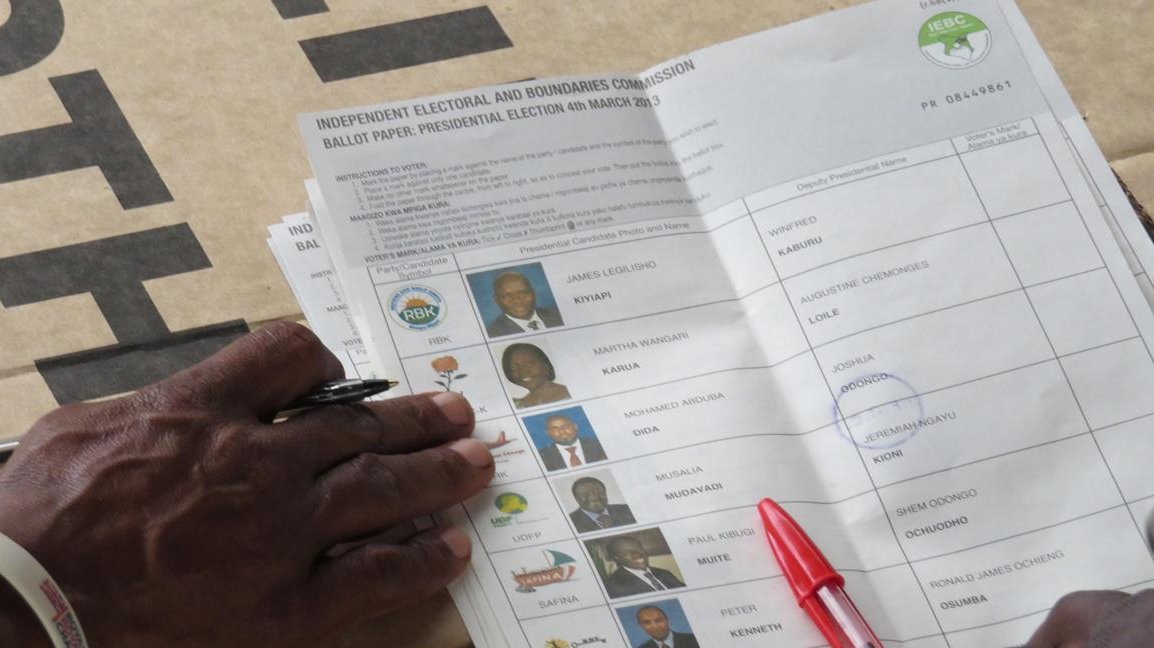
When the Kenya Revenue Authority wrote to the Kenya National Examinations Council on January 26 this year, the letter was spare and clinical in its language, as tax authority correspondence tends to be. It spoke of an inquiry into allegations of tax evasion through under-declarations of values declared for customs purposes on imports covering the period January 2020 to date.
But behind that careful bureaucratic phrasing lay something far uglier: a Greek printing company that had collected billions of shillings from Kenyan public coffers and then, investigators now allege, filed paperwork with the taxman that bore almost no resemblance to what it had actually been paid.
The company at the centre of the inquiry is Inform Lykos (Hellas) SA, an Athens-based, Athens Stock Exchange-listed firm founded in 1897 that specialises in secure document and information management.
It is a company with a century of history and a presence across Greece, Romania and Albania. It is also, since 2020, the firm that has printed Kenya’s national examination papers, and the same firm that supplied ballot papers for the 2022 General Election.
The total value of contracts it has received from the Kenyan government runs into the billions. What it allegedly paid in taxes on those contracts, KRA investigators now believe, is a fraction of what was legally owed.
The numbers are not in dispute. The KNEC contract was valued at approximately €18.7 million, or Sh2.8 billion at current rates. The KRA has calculated that the taxes payable on that contract, under Delivery Duty Paid terms where the supplier bears all tax obligations, amount to Sh781 million.
What Inform Lykos actually declared to customs, according to investigators, was a contract value of just €4.2 million, generating a tax liability of Sh132 million.
The gap between what was owed and what was paid is Sh649 million. Add to that the interest on the outstanding amount and the penalties that accrue under Kenyan tax law, and the company faces a bill that could exceed the value of that single alleged misrepresentation many times over.
“The firm is suspected to have lied to KRA by indicating the Knec contract value was €4.2 million, against an actual value of €18.7 million.”
The KRA’s calculations of the shortfall break down as follows: Sh653.9 million in unpaid VAT, Sh250,000 in concession fees, Sh70.9 million in Import Declaration Form fees, and Sh56.7 million in Railway Development Levy.
These are not figures conjured from imagination.
They are derived from the actual contract value, cross-referenced against Kenya’s import duty regime, and verified against the invoices Inform Lykos presented to customs agents upon arrival of the examination materials in the country.
THE CUSTOMS GAMBIT
The mechanics of the alleged fraud are straightforward, which makes it all the more audacious.
When goods are imported into Kenya under a DDP contract arrangement, the importing party is responsible for ensuring that all applicable taxes are settled before the goods are released. The supplier, Inform Lykos, was the DDP party in its arrangement with KNEC. That means it was legally responsible for paying import duties, VAT, and all associated levies on the examination papers it shipped from Greece.
What KRA investigators allege is that instead of basing those tax declarations on the true contract value of €18.7 million, the firm submitted documentation suggesting the goods were worth only €4.2 million, roughly a fifth of their actual value.
The result was a tax payment of Sh132 million against a true liability investigators have pegged at Sh781 million.
Clearing and forwarding agents who handled the examination papers on their arrival in Kenya have been interviewed by KRA. Among those pulled into the investigation is Ansta Logistics Ltd, a licensed customs agent that processed the consignments.
The KRA has also interviewed senior KNEC officials as part of its widening inquiry, and has formally demanded from the council a full suite of documents: the signed contract with Inform Lykos, all related procurement records, payment schedules, and any correspondence that might illuminate how a Sh2.8 billion contract came to be represented to customs officials as worth less than a quarter of that sum.
What makes the alleged scheme particularly galling is its location at the absolute apex of Kenya’s education system. These were not examination papers for private institutions or commercial certifications.
They were the official papers used in the Kenya Certificate of Secondary Education and the Kenya Certificate of Primary Education examinations, the tests that determine the life trajectories of hundreds of thousands of Kenyan children every year.
While those children sat in examination halls across the country, the firm that printed their papers was allegedly defrauding the state of the revenue that funds the schools they had just left.
A PATTERN ACROSS CONTRACTS: THE BALLOT PAPER TRAIL
What complicates this story further, and what the KRA now appears to be probing, is that Inform Lykos did not enter Kenya through the KNEC examination contract alone.
In October 2021, the Independent Electoral and Boundaries Commission awarded the company a three-year framework contract worth approximately €28 million, or Sh3.4 billion at prevailing rates, for the supply and delivery of ballot papers, a printed voter register, statutory election result declaration forms, and election result declaration forms for the 2022 General Election.
That contract saw more than 120 million ballot papers printed in Athens and shipped to Kenya for use in the August 9, 2022 polls.
The KRA has signalled that its investigators may also review the tax payments Inform Lykos made in connection with the IEBC ballot paper contract.
If the same customs valuation pattern alleged in the KNEC arrangement was replicated across the far larger IEBC deal, the potential tax exposure climbs into territory that would make the current Sh650 million shortfall look modest by comparison.
Kenya Insights has not been able to independently establish the precise tax declarations Inform Lykos made on the IEBC shipment, but the direction of the KRA inquiry makes clear that investigators believe there may be more to find.
Inform Lykos beat at least thirteen competing firms to secure the IEBC ballot paper tender, quoting a price of €7,172.85 per 3,000 ballot papers, which IEBC said represented the lowest evaluated responsive price.
Among those that tendered and failed was Dubai-based Al Ghurair Printing and Publishing LLC, which had supplied Kenya’s ballots in 2017 and was disqualified this time on local content grounds.
The Greek firm’s path to the IEBC contract was not entirely smooth.
A competitor, Shailesh Patel trading as Africa Infrastructure Development Company, filed a procurement complaint alleging unfairness in the evaluation. That challenge was eventually overcome, and Inform Lykos received the award. What Kenyan taxpayers were not told at the time was that the firm would then allegedly understate the value of what it was shipping into the country.
“KRA could also evaluate the taxes paid by Inform Lykos on the Sh3.4 billion IEBC ballot papers contract. The full exposure may dwarf the current Sh650 million claim.”
THE POLITICAL SHADOW OVER THE IEBC DEAL
The ballot paper contract did not arrive without political controversy.
In July 2022, weeks before the general election, the Daily Nation reported that then-Bungoma Senator Moses Wetangula, a principal in William Ruto’s Kenya Kwanza coalition, had lobbied on behalf of three Greek businessmen connected to Inform Lykos during a January 2021 visit to Kenya.
Documents showed that Wetangula had written to the Greek Ambassador to Kenya in June 2021, two months before the IEBC published the ballot paper tender, requesting visa facilitation for a confidant, Joshua Abdalla Makokha, to travel to Greece in connection with meetings related to the firm.
Months earlier, in January 2021, Wetangula had written letters welcoming three Greek nationals to Kenya for what he described as an investment tour covering Bungoma, Busia and Trans Nzoia counties.
Azimio Secretary General Junet Mohamed wrote to the IEBC, the Ethics and Anti-Corruption Commission, and the Directorate of Criminal Investigations, declaring that his coalition had established beyond any doubt that Inform Lykos secured the contract through Wetangula’s personal intervention. Wetangula denied any involvement, calling the allegations malicious and false and dismissing them as ODM fabrications designed to destabilise Kenya Kwanza ahead of polling day.
No formal investigation of Wetangula was ever concluded in relation to the matter, and the ballot papers were delivered without incident. Wetangula went on to be elected Speaker of the National Assembly.
What the political noise obscured at the time was the quieter question of whether Inform Lykos was meeting its tax obligations in full.
Nobody in official Kenya asked that question loudly in 2022. KRA appears to be asking it now, and the answers emerging from Times Tower are not flattering to the firm.
AN INDUSTRY BUILT ON SECRECY AND SCANDAL
Kenya’s examination and election printing industry has been a magnet for procurement scandal for more than two decades. The case of Inform Lykos cannot be properly understood without reference to that history, because what it reveals is not a one-time lapse by one foreign firm but the chronic vulnerability of a procurement system that handles sensitive, high-value contracts with inadequate oversight and a demonstrated inability to hold violators to account.
The most instructive precedent is the Chickengate scandal, named for the code word that Smith and Ouzman, a UK-based security printing firm, used for the bribes it paid to Kenyan officials.
Between 2009 and 2013, Smith and Ouzman’s directors, Christopher Smith and his son Nicholas Smith, paid kickbacks totalling approximately Sh50 million to officials at the then Interim Independent Electoral Commission and the Kenya National Examinations Council.
The money was funnelled through a Kenyan agent, Trevy James Oyombra, whose KCB account served as the distribution point.
The bribes were coded as chicken in email exchanges between the Smiths and Oyombra, communications that the UK’s Serious Fraud Office eventually obtained, analysed, and used to build an airtight prosecution.
In February 2015, a jury at Southwark Crown Court convicted Nicholas Smith after a four-year SFO investigation.
His father Christopher received a suspended sentence and 250 hours of community service.
The SFO noted the case marked the first corporate conviction for foreign bribery by a UK firm. A confiscation order required the company to pay approximately Sh200 million in combined fines and forfeiture, and Kenya eventually recovered Sh52 million of that sum in 2016, which President Uhuru Kenyatta directed be used to purchase ambulances.
The Kenyan end of the scandal moved far more slowly. Former IEBC CEO James Oswago, procurement officer Hamida Ali Kibwana, and agent Trevy Oyombra were eventually charged.
They were acquitted in 2021 after the court ruled that prosecutors could not rely solely on the UK proceedings to secure a conviction and that the independent Kenyan evidence was insufficient.
At KNEC, former CEO Paul Wasanga and officials Ephraim Wanderi, Michael Ndua and Geoffrey Gitogo were named in the UK court papers but were never charged in Kenya.
The Ethics and Anti-Corruption Commission investigated and concluded it could not establish that they had received bribes. None of them faced criminal consequence.
The pattern should be familiar by now. Foreign firm wins contract through suspect means or exploits weak oversight. Money exits Kenya. Kenyan state agencies investigate with varying degrees of vigour. Prosecutions either do not materialise or collapse.
The foreign firm moves on.
What Inform Lykos is accused of is a variation on that same pattern: not bribery of officials, but the systematic under-declaration of contract values to cheat the revenue authority of taxes that should have funded Kenyan public services.
WHO IS INFORM LYKOS?
Founded in 1897 and headquartered in Koropi in the Attica region of Greece, Inform Lykos is not a small operator.
The company has been listed on the Athens Stock Exchange since 1994, trading under the ticker LYK. As of March 2023, Inform Lykos Holdings SA was acquired by and operates as a subsidiary of Austriacard Holdings AG, an Austrian group active across the fields of digital security, information management, and the Internet of Things, with eight production facilities and seven personalisation centres across Europe and additional facilities in South America and the United States.
In Africa, the company had established a track record before Kenya. In 2019, it supplied ballot papers for the Nigerian presidential election.
When it arrived in Kenya in 2020 as the new KNEC printer, it made history as the first non-UK company since independence to supply Kenya’s national examinations.
That record, presented at the time as a commercial achievement, now reads rather differently in the light of the KRA investigation.
The company’s own regulatory filings to the Athens Stock Exchange confirm the scale of its Kenyan contracts.
In a filing made ahead of the 2022 general election, Inform Lykos told its shareholders it had secured a three-year framework contract with the IEBC with a budget of €28 million and an estimated volume of more than 120 million ballots.
That disclosure to its shareholders in Athens was materially different from the valuations its agents were allegedly presenting to Kenyan customs authorities.
The shareholder communications spoke of a lucrative African windfall. What customs authorities saw was allegedly a far more modest import.
THE COSTS OF LOOKING AWAY
Sh650 million is not an abstract number. It is the equivalent of constructing and equipping several dozen primary school classrooms in rural Kenya.
It is enough to fund multiple county referral hospital departments for a year.
It is the kind of revenue that, had it been properly collected, might have reduced the chronic shortfalls in capitation grants that force Kenyan school principals to send students home for fees every term.
Instead, if the KRA’s calculations are correct, that money remained in the hands of a foreign company that had already been paid billions for services rendered to the Kenyan state.
The investigation is ongoing.
The KRA has not concluded its inquiry, and Inform Lykos has not been formally charged with any criminal offence in Kenya.
The company has not publicly responded to the investigation.
KNEC has not commented on the specific allegations, though it is cooperating with the KRA’s document demands. Kenya Insights made attempts to obtain comment from the company’s representatives and did not receive a response by the time of publication.
What is known is this: a company that entered Kenya’s most sensitive public contract ecosystem, printing the papers that determine the futures of schoolchildren and the papers that determine who governs the nation, is now under investigation for allegedly falsifying the declarations it made to the body responsible for collecting the taxes that fund both of those systems.
The audacity of that, if proven, goes beyond ordinary tax evasion. It is a particular kind of contempt for a country whose children sit examinations and whose citizens vote under the assumption that the institutions serving them are not themselves being robbed.
The KRA probe continues.
Kenya is waiting for answers. And a Greek company with 127 years of history and a listing on the Athens bourse is discovering that the bill for allegedly gaming an African tax system may yet come due.
Kenya Insights allows guest blogging, if you want to be published on Kenya’s most authoritative and accurate blog, have an expose, news TIPS, story angles, human interest stories, drop us an email on [email protected] or via Telegram



How Adil Popat Saved His Empire On The Eve Of Imperial Bank Collapse and Why Kenya’s Mainstream Media Buried The Story

South Sudan: Adut Salva Kiir’s Shadow Treasury Exposed

Wajir North MP Ibrahim Abdi Dissatisfied With2026/27 Budget, Claims It Totally Excludes North Eastern Region

The Eldoret Tax Fortress: How David Langat Turned an Industrial Park Dream Into Kenya’s Most Sophisticated Domestic Tax Haven

Why John Ngumi Is Running From the EACC and Why the Sh415 Million Payday May Be the Least of His Worries

Shiquo Hii Style Store Was Not Raided, Anti-Counterfeit Authority Confirms; Says Influencer Used Empty Shelves for Content as She Relocates

Treasury CS Mbadi Unveils Sh4.8 Trillion Budget Estimates

Fraud, Misrepresentation and A Decade Of Evasion: How Indo Africa Finance Pocketed Sh150 Million Youth Funds and Fought To Keep Every Cent

Kenya Picks Chinese Firm For Sh375 Billion JKIA Upgrade Project After Adani Fallout

The President’s Daughter and The Missing Witness: How Adut Salva Kiir’s Shadow Treasury Silenced Its Most Dangerous Critic

Cement, Cash and Courts: How the Hashu Dynasty Crushed the Ramji Brothers for Fourteen Years and Why the Walls Are Now Closing In

Inside The Urban Planning Cartel That Owns Nairobi

Standard Chartered Ghosts Haunt Joshua Oigara At Stanbic As Whistleblower Spills Beans

Inside NCBA’s Decline: How a Banking Giant Lost Its Strategic Edge

Why Ruto’s Favourite Candidate Adan Mohammed Could Be Locked Out of the KRA Top Job

LifeCare on the Brink: SHA Fraud, Stolen Wages, and the Rotten Empire Jayesh Saini Built

Betika Faces DCI Probe, Directors Arrest and License Revocation Over Massive 29.5 Million Safaricom Customers’ Data Breach

Este Medical Kenya Fights American’s Explosive Complaints

Fresh Move Launched to Remove Kenya Railways MD Mainga From Office After Awarding Sh817 Million Consultancy Contract

The Rot Inside Absa: How Bank Insiders Are Looting Nairobi’s Customers
-
 Investigations1 week ago
Cement, Cash and Courts: How the Hashu Dynasty Crushed the Ramji Brothers for Fourteen Years and Why the Walls Are Now Closing In
-
 Investigations7 days ago
Inside The Urban Planning Cartel That Owns Nairobi
-
 Business2 days ago
Standard Chartered Ghosts Haunt Joshua Oigara At Stanbic As Whistleblower Spills Beans
-
 Business3 days ago
Inside NCBA’s Decline: How a Banking Giant Lost Its Strategic Edge
-
 Investigations2 weeks ago
Betika Faces DCI Probe, Directors Arrest and License Revocation Over Massive 29.5 Million Safaricom Customers’ Data Breach
-
 Investigations1 week ago
Fresh Move Launched to Remove Kenya Railways MD Mainga From Office After Awarding Sh817 Million Consultancy Contract
-

 Business1 week ago
TRUST BETRAYED: How Senior DTB Bank Insiders Allegedly Looted Sh149 Million From a Customer’s Account Over Five Years
-
 News2 weeks ago
How Uhuru’s Deal With Obama In 2015 Paved Way For America’s Ebola Plan In Kenya