
Investigations
THE FIXER IN THE FILE ROOM: How Parliamentary Health Committee Clerk Adan Gindicha Cleared Mediheal Hospital of Organ Harvesting Claims Despite Mounting Evidence
A 314-page government report named him for criminal prosecution. International broadcasters documented his victims. And then Parliament’s Health Committee secretariat, helmed by clerk Adan Sora Gindicha, produced a report that cleared him. Someone needs to explain why.

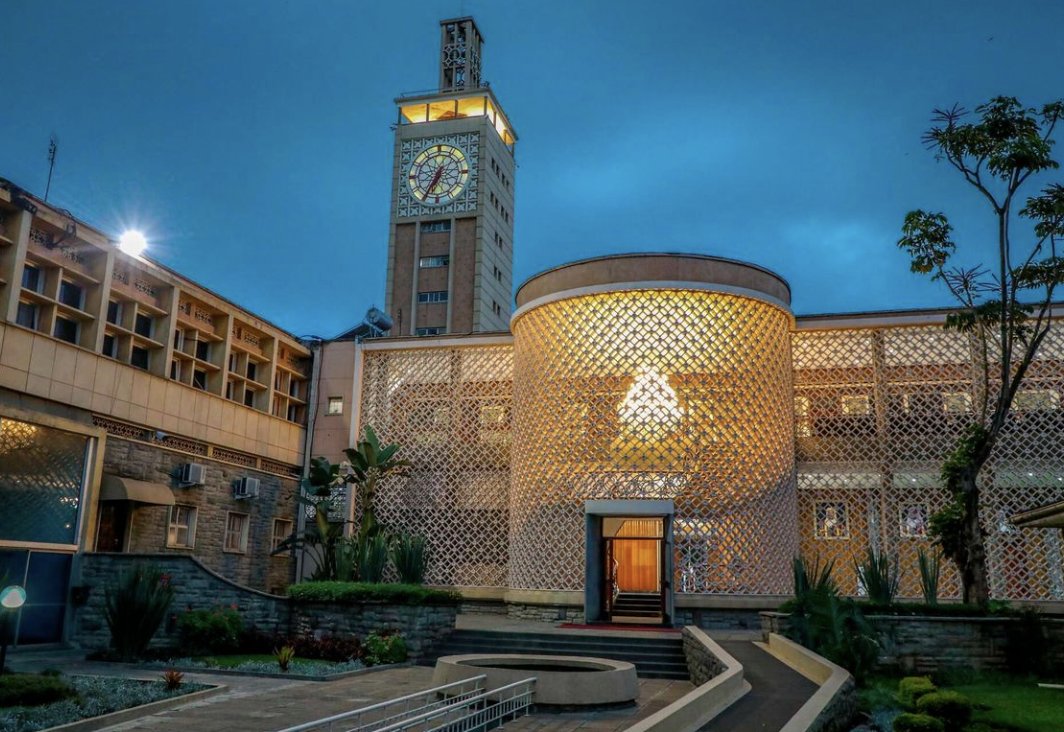
NAIROBI: On April 15, 2026, the National Assembly’s Departmental Committee on Health tabled a report that did something extraordinary.
It looked at years of documented evidence, at a damning 314-page independent government investigation, at the testimonies of mutilated young men from Oyugis and Eldoret, at the findings of three major German media houses, at the condemnation of Kenya’s own Kenya Renal Association, and it decided that Dr Swarup Ranjan Mishra’s Mediheal Group of Hospitals had done nothing wrong.
The committee recommended that all sanctions on the hospital be lifted immediately, save for the transplant licence, and that the institution be rehabilitated.
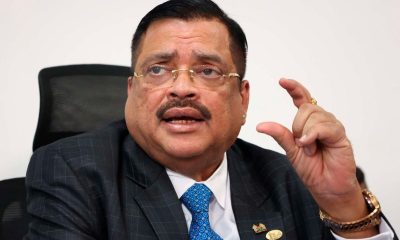
The man credited as the nerve centre of the secretariat that steered that report from its first public hearing to its final page is Principal Clerk Assistant II Mr Adan Sora Gindicha, the head of the Health Committee’s parliamentary secretariat. His name does not appear on the report’s cover. It never does. But his fingerprints, critics are now arguing, are all over the outcome.
Parliament works in ways that are deliberately opaque to the public. When a committee begins an inquiry, it is the elected members who take the cameras and the questions.
But the bureaucratic scaffolding of any committee, how it frames its terms of reference, how it schedules hearings, whose testimony it prioritises, how evidence is categorised and summarised before it reaches members, how the final draft is structured and what language is used to characterise findings, that scaffolding is built and maintained by the secretariat.
The head of that secretariat is the clerk. In the Mediheal inquiry, that was Mr Gindicha. And the question that medical professionals, civil society actors and senior government sources are now asking, quietly but with growing urgency, is this: did the process that produced this exoneration serve justice, or something else entirely?
The committee looked at a 314-page criminal indictment and saw nothing. That is not an accident. That is architecture.
Who Is Adan Sora Gindicha, And Why Does It Matter?
Mr Adan Sora Gindicha is a career parliamentary civil servant, the kind of institutional figure who accumulates quiet influence over years of being the person who knows where the files are.
Parliament’s own website confirms his designation as Principal Clerk Assistant II and Head of Secretariat for the Departmental Committee on Health.
What the website also reveals, and what has attracted pointed commentary in parliamentary circles, is that Mr Gindicha is not a newcomer to high-profile committee work.
Records show he previously served in the same capacity as head of secretariat for the Sports and Culture Committee, meaning he has navigated the administrative corridors of multiple powerful legislative bodies.
In theory, a parliamentary clerk is a neutral officer, a facilitator of process rather than a shaper of outcome. The clerk schedules.
The clerk files.
The clerk minutes.
In practice, anyone who has spent time around committee work knows that the distinction between process and outcome in a parliamentary inquiry is frequently fiction.
The clerk decides, in consultation with the chair, which witnesses appear in what order.
The clerk shapes how evidence is summarised for committee members who have not read every submission. The clerk is the person MPs lean on when they are uncertain about the weight of a document or the credibility of testimony.
In a technical inquiry about medical ethics, transplant law and international organ trafficking networks, the gap between what MPs know and what the clerk tells them is wide enough to drive a bus through.
Mr Gindicha has not responded to questions submitted by Kenya Insights about his role in the inquiry. His superiors at Parliament have similarly declined to comment. What is on the public record is the outcome of the process he administered. That outcome has appalled some of the most credible medical voices in the country.
What The Evidence Actually Said
To understand why the parliamentary clearance has caused such an uproar, it is necessary to reconstruct what the full evidentiary record against Mediheal actually looked like before Mr Gindicha’s committee produced its sanitising verdict.
The problems at Mediheal’s Eldoret Fertility and Transplant Centre were not invented in 2025. As far back as 2019, allegations of irregular organ transplants were circulating.
Mishra dismissed them at the time as politically motivated, a framing he would return to repeatedly over the following six years.
The first serious institutional signal came from the Kenya Blood Transfusion and Transplant Service, which in 2023 documented suspicious patterns at Mediheal, including an unusually high volume of transplants, a heavy reliance on unrelated donors and recipients, large cash movements, and a significant foreign patient population.
That report was filed. It gathered dust.
The officials who produced it were eventually suspended when the scandal exploded in 2025, ostensibly to protect the integrity of a fresh investigation, but the timing struck observers as at least as convenient for Mishra as for accountability.
In April 2025, the German investigation changed everything. Deutsche Welle, ZDF and Der Spiegel published the results of a months-long collaborative inquiry that traced an international organ trafficking network from its brokers in Europe and Israel to its operating theatres in Eldoret.
The reporting documented donors from Kenya, Azerbaijan, Kazakhstan and Pakistan who had been recruited, many of them with little understanding of the medical risks involved, and paid as little as two thousand dollars for kidneys that recipients in Germany and Israel were paying up to two hundred thousand dollars to receive.
DW journalists spoke to four young men in Oyugis who described being approached by brokers, transported to Mediheal, handed documents in English they could not read, operated on without adequate informed consent, and then sent home with a fraction of the payment they had been promised.
One man described being asked, after his surgery, to recruit new donors at a commission of four hundred dollars per referral.
The logic of a structured trafficking network, recruiting from one end, compensating for delivery at the other, was hiding in plain sight.
Donors from Azerbaijan, Kazakhstan and Pakistan were flown in. Young Kenyan men were paid $2,000 for kidneys that fetched $200,000 on the other end. One told DW: if I could go back, I would never have done it.
Health Cabinet Secretary Aden Duale acted within days of the publication, suspending all kidney transplant services at Mediheal facilities on April 17, 2025, and establishing an independent expert committee chaired by Prof Elizabeth Bukusi of the Kenya Medical Research Institute.
That committee was given ninety days and a mandate to examine everything. It examined everything. The 314-page report it produced in July 2025 was among the most devastating official documents to emerge from any government investigation into a private health institution in Kenya’s post-independence history.
The Bukusi committee found that between 2018 and March 2025, Mediheal Hospital handled 417 donors and 340 recipients, with Mediheal’s Eldoret branch alone accounting for approximately eighty-one percent of all donors and seventy-six percent of all recipients across the institutions reviewed.
Male donors made up seventy-seven percent of the total, a stark gender imbalance the committee described as consistent with systematic targeting of vulnerable males.
More than thirty-eight percent of donors and recipients had unknown or undocumented nationalities, a documentation failure the committee characterised as a serious red flag.
A single surgeon and a single anaesthesiologist were found to have operated on twenty-four patients within a fourteen-day window, raising questions the report described as deeply troubling regarding patient safety.
Inconsistencies and suspected irregularities in consent form signatures were documented.
Patients were categorised in hospital records as mutual friends in ways that appeared designed to avoid legal scrutiny of the donor-recipient relationship.
Payment patterns were described as consistent with systematic organ commercialisation.
The committee’s recommendation was unambiguous. Mishra himself, together with chief nephrologist Dr A. Srinivas Murthy, transplant surgeon Dr Sananda Bag, and anaesthesiologist Dr Vijay Kumar, should be investigated immediately for potential criminal involvement in organ trafficking and for possible violations of national transplant laws and ethical standards.
The Kenya Medical Practitioners and Dentists Council should be investigated for possible regulatory failure and criminal collusion due to repeated inaction in the face of multiple documented complaints.
The suspension of Mediheal should be maintained until all investigations are concluded.
CS Duale received the report and pledged publicly that it would not gather dust.
President Ruto, who had already suspended Mishra from the Kenya BioVax Institute chairmanship in April and then fired him outright in July, appeared to be sending an unambiguous signal.
Kenya’s police began parallel inquiries. The international scrutiny remained intense. The trajectory of accountability, measured against the weight of the Bukusi report, seemed clear.
Then came Mr Gindicha’s committee. And the trajectory changed.
The Man Behind The Money: Swarup Mishra’s Biography of Ambition
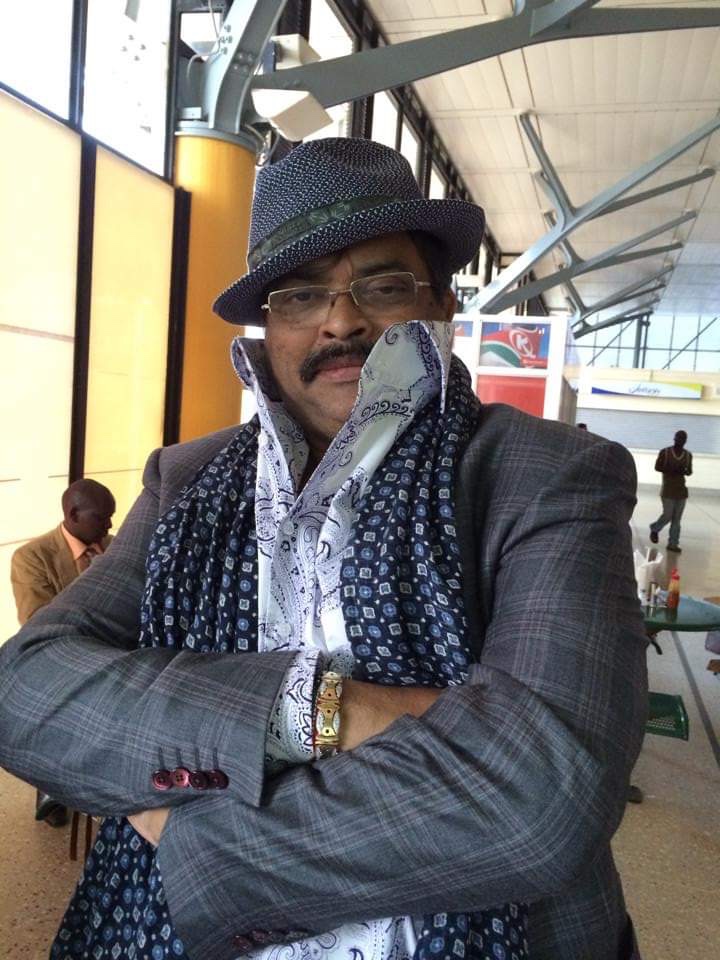
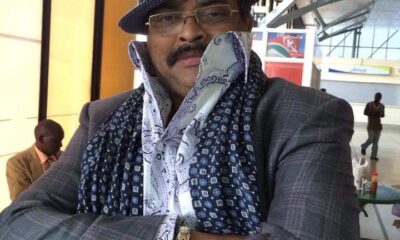
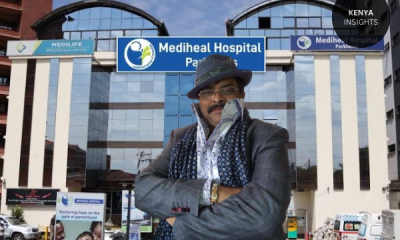
Swarup Mishra.
It is impossible to assess the significance of the parliamentary clearance without understanding who Swarup Ranjan Mishra is, where he came from, how he built his power, and why a committee of elected Kenyan legislators might find reason to treat his interests with unusual sensitivity.
Dr Mishra was born in Odisha, India, and arrived in Kenya to work as a lecturer of obstetrics and gynaecology at Moi University in Eldoret. It was a relatively modest beginning in a city that was then still expanding its professional class.
Together with his wife Dr Pallavi Mishra, a gynaecologist, he founded Mediheal Group of Hospitals, with the Eldoret branch opening in December 2004.
The early years were, by all accounts, a genuine story of entrepreneurial medicine. The facility filled gaps in specialist care that public hospitals in the region could not meet, and it expanded steadily, adding branches in Nairobi and Nakuru, and developing subspecialties including in vitro fertilisation and, critically, kidney transplantation.
By 2015, Mediheal had performed more than three hundred kidney transplants, an extraordinary number for a private facility in East Africa at the time.
Mishra’s transition from doctor to politician was enabled by his deep embeddedness in the Rift Valley community.
He earned the Kalenjin name Kiprop, a mark of genuine cultural acceptance that translated directly into political viability. In 2017, he made history by becoming the first person of Asian origin to win a parliamentary seat in a Kalenjin-dominated constituency, defeating incumbent James Bett on a Jubilee Party ticket to become Kesses MP.
His tenure in Parliament placed him at the intersection of medical business and legislative power, a position of unique leverage in the regulatory environment that governed his own industry.
The 2022 elections were catastrophic for Mishra.
He fell out with then-Deputy President William Ruto, opted to run as an independent, and was swept away by the UDA wave.
Julius Rutto defeated him with thirty-two thousand votes to Mishra’s twenty-one thousand. The humiliation was public and complete. In 2023, Mishra joined UDA and apologised to the electorate for his political choices. The rehabilitation was gradual but effective.
By November 2024, President Ruto had rewarded his returned loyalty with the chairmanship of the Kenya BioVax Institute Limited, a state corporation with a mandate that included representing Kenya as a contact person for the World Health Organization and foreign governments. Mishra’s comeback appeared complete.
What the BioVax appointment also did was place Mishra back at the intersection of political protection and medical enterprise at precisely the moment the organ trafficking allegations were accelerating toward a formal crisis.
When DW published its findings in April 2025, Mishra was not just a private hospital owner facing scrutiny.
He was a sitting state official, appointed by the President, chairing a government body with international health diplomacy functions.
That proximity to power was, sources suggest, not incidental to the outcome of the subsequent parliamentary inquiry.
A Man Drowning in Debt, With Everything to Play For
The financial context of Dr Mishra’s situation at the time of the parliamentary inquiry deserves close examination, because a man with nothing left to lose behaves differently from a man with everything still at stake.
And Swarup Mishra, throughout 2024 and 2025, was a man fighting on multiple fronts to prevent the total collapse of his empire.
Mediheal’s financial troubles began in late 2022, when the National Health Insurance Fund delisted the hospital from its approved facilities, followed by Minet and other insurance schemes covering government employees.
The revenue loss was crippling. By mid-2024, auctioneers had descended on the Nakuru branch, seizing nine vehicles and other assets over forty million shillings in unpaid salaries owed to eighteen doctors.
Courts became a constant battlefield.
A Sh701 million debt to Bank of India, secured against seventeen parcels of land in Eldoret, Iten and Kisii, threatened to consume the property base of the entire group.
By November 2025, six of Mishra’s prime Eldoret properties were scheduled for auction on December 10th of that year, including hospital buildings, farmland and residential properties jointly registered with his wife.
The pattern that emerges from this financial portrait is one of a man for whom the organ trafficking scandal was not simply a reputational inconvenience but potentially the difference between the revival of his medical and business empire and its total liquidation.
With the transplant programme suspended and criminal prosecution being recommended by the government’s own investigators, the future of Mediheal as a going concern depended heavily on the parliamentary process producing a different conclusion from the Bukusi committee.
In that context, the question of who shaped the parliamentary process and how they came to do so becomes vastly more significant than it might appear on its surface.
A man staring at the auction of his hospital, his farms, his home, with a 314-page indictment over his head, needed Parliament to look the other way. The Health Committee obliged.
Kenya Insights is not in a position to state that Dr Mishra, or anyone acting on his behalf, made any approach to Mr Adan Gindicha or any other officer of the parliamentary secretariat.
What Kenya Insights can state is that the financial desperation of the man who benefited most from the parliamentary exoneration was acute and well-documented, that the exoneration directly contradicted the findings of a superior investigative body, and that the figure who managed the documentary and procedural architecture of the inquiry has declined to answer any questions about how that architecture was assembled.
Readers are entitled to draw their own conclusions from that pattern.
The Bukusi Report Versus The Nyikal Report: A Study in Incompatibility
The sharpest measure of what the parliamentary inquiry produced is to place its conclusions directly alongside the Bukusi committee’s findings and ask whether the two documents could plausibly be examining the same institution.
The Bukusi committee: 314 pages. A fifteen-member team of Kenya’s most credible medical, legal and public health specialists. Three months of national hearings spanning Vihiga, Eldoret, Bomet, Meru, Nakuru, Kisumu, Nairobi and Mombasa.
Findings of systematic documentation failure.
Evidence of cash payments inconsistent with altruistic donation. Gender imbalances indicating targeted exploitation. Forged or questionable consent signatures. Patients categorised as mutual friends in ways that appear designed to circumvent transplant law.
Surgeons performing operations at inhuman pace.
Fourteen named individuals recommended for criminal investigation, including the hospital’s founder, three senior doctors, and regulatory officials. The recommendation: suspend Mediheal, prosecute Mishra and others, investigate the Kenya Medical Practitioners and Dentists Council for criminal collusion.
The Nyikal committee: cleared Mediheal of malpractice or breaches of the Health Act and Human Tissue Act.
Recommended the immediate lifting of all sanctions except for the organ transplant licence. Acknowledged regulatory gaps but attributed them to a systemic weakness rather than specific institutional criminality. Urged Parliament to strengthen the legal framework going forward.
The recommendation: rehabilitate Mediheal, restore operations.
These are not two bodies that reviewed the same evidence and reached different conclusions through legitimate differences of interpretation.
These are two bodies that appear to have been looking at fundamentally different questions.
The government committee asked: was a crime committed? Its answer was yes, and here are the names of those who committed it.
The parliamentary committee appears to have asked: can we find sufficient procedural violations on the hospital’s own documentation to sustain a finding of malpractice? When the hospital’s lawyers managed the narrative of what documentation was presented, the answer was no. The difference between those two questions is the difference between accountability and whitewash.
Medical professionals who spoke to Kenya Insights, all of whom declined to be named for professional reasons, described the parliamentary report as inexplicable in the context of what the Bukusi committee established.
One nephrologist with direct knowledge of transplant practice described the claim that no malpractice occurred as medical fiction.
A public health lawyer described the committee’s framing as legally incoherent, noting that the standard for a finding of organ trafficking does not require a signed confession. The patterns documented by Bukusi, cash payments, unrelated donors, undocumented nationalities, coercive recruitment chains, would satisfy criminal trafficking definitions in virtually every jurisdiction on earth.
That Parliament chose to ignore them does not make them disappear.
Bernard Kitur’s Warning: Someone Tried to Silence This Story
The Mediheal investigation was never simply a regulatory matter.
Its political dimensions were signalled early and explicitly. Nandi Hills MP Bernard Kitur, at one point during the parliamentary proceedings, stated publicly that his life was in danger because of his efforts to expose the alleged syndicate at Mediheal.
That is not a claim that a cautious politician makes lightly. It is a claim that speaks to the character of the interests at stake and the willingness of those interests to extend themselves beyond legitimate lobbying into something considerably darker.
Mr Kitur’s warning did not trigger a formal protection response from the parliamentary administration. It did not prompt Mr Gindicha’s secretariat to conduct any documented inquiry into the nature or basis of the threat.
It appears, from everything that followed, to have been noted and filed alongside the rest of the inconvenient evidence.
It is worth also recalling the context in which Mediheal responded to the German investigation and the government probe.
The hospital filed a lawsuit against the Ministry of Health, seeking to nullify the Bukusi inquiry on grounds of procedural unfairness.
Its lawyer, Katwa Kigen, appeared before the Bukusi committee in Eldoret and presented a posture of cooperation while simultaneously pursuing litigation to destroy the investigation in court.
The hospital’s vice president publicly insisted that all donors arrived voluntarily with their own documentation, a claim directly contradicted by the testimony of multiple donors and by the patterns documented in the Bukusi report.
Mediheal’s owner described the allegations as recycled misinformation.
Yet three years before the DW investigation, the Kenya Blood Transfusion and Transplant Service had already documented the red flags internally. The misinformation, wherever it originated, was not with the accusers.
The Architecture of Exoneration: How Parliamentary Process Can Be Weaponised
Kenya’s parliamentary committee system is structurally vulnerable to capture when powerful private interests are at stake.
The committees depend on witnesses presenting themselves voluntarily, on documentation being provided by the parties under scrutiny, and on secretariat staff who are civil servants rather than independent investigators.
There is no requirement that a parliamentary committee seek out evidence that a subject of inquiry has chosen not to volunteer.
There is no subpoena power for documentary records held by private parties.
There is no independent forensic capacity attached to the Health Committee secretariat. What the committee gets, in large measure, is what it is given.
In the Mediheal inquiry, what the committee was given included voluminous hospital records curated by Mediheal’s own management, testimony from hospital officials led by chief consultant nephrologist Dr A. Srinivas Murthy, and legal representation by one of Kenya’s most capable courtroom advocates.
What the committee appears to have weighed against that, despite the Bukusi report’s existence, was insufficient to tilt the outcome.
The question of why that imbalance existed, and who was responsible for allowing it to persist through 80 days of proceedings, leads directly back to Mr Gindicha.
The role of a committee clerk in managing what members see and when they see it, in determining which expert witnesses are scheduled and how their testimony is contextualised, in shaping the initial drafts from which a final report emerges, is not trivial.
It is, in high-stakes inquiries of this kind, potentially determinative.
Parliamentary clerks in Kenya are not immune to the same pressures that have compromised regulatory officials, judicial officers and government investigators across successive administrations.
The KMPDC officials who ignored multiple documented complaints about Mediheal over years are being recommended for investigation by the Bukusi committee.
The two KBTTS officials who had supervised previous investigations were suspended during the crisis. The pattern of institutional actors finding reasons not to act against Mediheal is long enough to constitute a structural phenomenon, not a series of isolated oversights.
Where Mr Gindicha fits in that pattern is a question that only a transparent accounting of his conduct during the inquiry could resolve. That accounting has not been provided. Parliament has not offered one. The parliamentary administration has not volunteered one. And Mr Gindicha himself has remained silent.
What Amon Kipruto Has to Live With
While parliamentarians and clerks debate process and procedure in Nairobi, Amon Kipruto Mely, a young Kenyan man from the Rift Valley, is living with one kidney.
He was, according to DW’s investigation, introduced to a middleman who organised his transport to Mediheal Hospital in Eldoret, where he was received by Indian doctors who handed him documents in English, a language he did not understand.
He was not informed of the health risks.
He was operated on. He was compensated at a fraction of what he had been promised. And when he left, the brokers who had recruited him asked him to go back to his community and find more young men willing to do what he had done.
Amon is not an abstraction.
He is not a regulatory gap or an ethical framework deficiency. He is a person whose body was treated as a commodity in a hospital whose parliamentary secretariat has now declared blameless.
If he travelled to Nairobi and knocked on the door of Mr Gindicha’s office to ask why the institution that took his kidney has been cleared, what would the Principal Clerk Assistant II say to him?
The parliamentary report recommends that the National Treasury prioritise funding for the East Africa Centre of Excellence in Urology and Nephrology at Kenyatta National Hospital.
It recommends that the Ministry of Health develop a national human resource strategy for transplant specialists.
It recommends that transplant coverage be reviewed under the Social Health Authority.
These are fine recommendations.
They are the kind of recommendations that look good on paper, that give a committee something to show for itself, that allow the institutional actors involved to claim they have contributed something positive.
What they do not do is hold anyone accountable for what happened to Amon Kipruto. Or to the men from Oyugis. Or to the donors from Azerbaijan and Kazakhstan who were flown into Eldoret to provide kidneys for Israeli patients at a thousand-dollar margin per organ.
The system that hurt those people has been declared functional. The men who ran it have been told they may return to work, once the paperwork is sorted.
Amon Kipruto lost a kidney. Parliament produced a report. Swarup Mishra got his clearance. Adan Gindicha’s secretariat filed it. Nobody has been charged with anything.
The Reckoning That Did Not Come
It is not lost on observers that the political geography of this exoneration maps cleanly onto lines of power. Swarup Mishra was, as of his firing from BioVax in July 2025, politically wounded but not destroyed.
He retained his lawyers, his hospital properties in litigation rather than auction, and his documented networks of connection into state institutions.
The parliamentary committee that cleared him was chaired by Seme MP Dr James Nyikal, a second-term legislator with a medical background who had publicly committed to a rigorous inquiry.
Whether the rigour that Dr Nyikal intended survived contact with the secretariat process managed by Mr Gindicha is a question that the report’s conclusions make difficult to answer charitably.
What is unambiguous is the hierarchy of accountability that existed before the parliamentary report arrived.
A government-appointed expert committee had explicitly named individuals for criminal prosecution.
Police investigations were running in parallel. The Ministry of Health had pledged implementation. The President himself had fired the hospital’s owner from a state post.
And then Parliament’s committee produced a report that said, in effect, never mind. The hierarchy of accountability was inverted. The expert committee’s findings were not rebutted or challenged on their substance.
They were simply set aside, replaced by a parliamentary verdict that served different interests.
Who benefited? Dr Swarup Ranjan Mishra, an Indian-born physician from Odisha who built a medical empire on Kenyan credit, entered Kenyan politics through Rift Valley goodwill, was fired by the President under the weight of a criminal investigation, and now finds his hospital on a path back to full operation courtesy of the National Assembly’s Health Committee.
Who administered the process that produced that outcome? Mr Adan Sora Gindicha, Principal Clerk Assistant II, Head of Secretariat, the Departmental Committee on Health. And who is asking either of them the hard questions about how this happened? At present, remarkably few people.
This publication is asking them now.
The Questions That Remain Unanswered
Kenya Insights submitted a detailed list of questions to Mr Gindicha through the parliamentary administration.
We asked how the committee’s terms of reference were determined and who advised on their scope.
We asked whether the Bukusi report’s findings were formally placed before committee members as evidentiary material, and if so, how they were characterised in secretariat briefings.
We asked whether any committee members raised concerns about the divergence between the Bukusi committee’s conclusions and the parliamentary inquiry’s trajectory.
We asked whether Mr Gindicha has had any professional, social or financial relationship with any representative of Mediheal, its founder, or any associated entity.
We asked whether he was satisfied that the process he administered produced a just outcome. We received no response.
We submitted similar questions to Mediheal Group of Hospitals and to Dr Mishra personally. We received no response. We asked the parliamentary administration whether any formal review of the inquiry’s conduct would be undertaken given the divergence from the Bukusi report. We received no response.
Silence, in the accountability journalism tradition, is itself a form of answer.
When powerful institutions and the individuals who serve them decline to explain outcomes that benefit private interests at the expense of documented victims, they are not exercising a neutral right.
They are choosing opacity over transparency at a moment when transparency is precisely what justice requires.
The organ trafficking scandal that played out at Mediheal’s Eldoret facility produced real victims, documented by international media houses with no commercial interest in the outcome.
It produced a 314-page government report that named people and recommended their prosecution.
It produced a presidential firing.
And it has now produced a parliamentary report, compiled under Mr Gindicha’s administrative hand, that says the institution at the centre of all of this is essentially blameless.
Somebody should have to explain that.
Somebody should be made uncomfortable by the distance between what Kenya’s best medical investigators found and what Parliament’s Health Committee chose to report.
That somebody is, first and most immediately, Adan Sora Gindicha, the clerk who held the pen. And behind him, the question of who, if anyone, guided that pen from outside the file room.
Kenya Insights allows guest blogging, if you want to be published on Kenya’s most authoritative and accurate blog, have an expose, news TIPS, story angles, human interest stories, drop us an email on [email protected] or via Telegram








Karua Detained at Entebbe as Uganda Blocks Besigye Lawyer From Entering Country

How KCB and Airtel Turned Kenya’s Unbanked Into a Data Goldmine Behind a ‘Financial Inclusion’ Deal

The Chivayo Network: How a Convicted Fraudster Won Access to Presidents, Passports and Billion-Dollar Deals Across Africa

BURRIED TWICE: The Victoria Bank CEO Yogesh Pattni Files

Court Stops Transfer Of EABL Shares To Asahi By Diageo In A Fresh Snag

Death Before Justice: Stephen Ngei, Victim of Sh180 Million Laptop Tender Scam Linked to Allan Chesang, Killed in Highway Crash

Court Brands Sh1.1 Billion Fee Demand by Lawyer Victor Swanya “Excessive and Exorbitant,” Exposes How City Hall Lets Public Money Bleed Through Legal Bills

Trump Unveils New Air Force One

MR. NO SHOW: Finance Bill 2026 Exposes Ndindi Nyoro’s Political Conmanship

Billionaire Eric Muli Rebukes Musalia Mudavadi Over Nairobi Capital Relocation Debate

Businessman Philip Waithaka Kinuthia’s Minor Son Allegedly Drove Drunk, Killed Two Peponi Students in Ngong Road Horror Crash as Claims of Cover-Up Intensify

Inside NCBA’s Decline: How a Banking Giant Lost Its Strategic Edge

Cement, Cash and Courts: How the Hashu Dynasty Crushed the Ramji Brothers for Fourteen Years and Why the Walls Are Now Closing In

Standard Chartered Ghosts Haunt Joshua Oigara At Stanbic As Whistleblower Spills Beans

South Sudan: Adut Salva Kiir’s Shadow Treasury Exposed

Inside The Urban Planning Cartel That Owns Nairobi

THE VULTURE AND THE SCHEME How Nairobi West Hospital Became the Most Dangerous Institution in Kenya’s SHA Ecosystem and Why the Books Must Be Audited Now

How Adil Popat Saved His Empire On The Eve Of Imperial Bank Collapse and Why Kenya’s Mainstream Media Buried The Story

The President’s Daughter and The Missing Witness: How Adut Salva Kiir’s Shadow Treasury Silenced Its Most Dangerous Critic

Why John Ngumi Is Running From the EACC and Why the Sh415 Million Payday May Be the Least of His Worries
-
 News1 week ago
Businessman Philip Waithaka Kinuthia’s Minor Son Allegedly Drove Drunk, Killed Two Peponi Students in Ngong Road Horror Crash as Claims of Cover-Up Intensify
-
 Business2 weeks ago
Inside NCBA’s Decline: How a Banking Giant Lost Its Strategic Edge
-
 Business2 weeks ago
Standard Chartered Ghosts Haunt Joshua Oigara At Stanbic As Whistleblower Spills Beans
-
 Africa2 weeks ago
South Sudan: Adut Salva Kiir’s Shadow Treasury Exposed
-
 Investigations4 days ago
THE VULTURE AND THE SCHEME How Nairobi West Hospital Became the Most Dangerous Institution in Kenya’s SHA Ecosystem and Why the Books Must Be Audited Now
-
 Business2 weeks ago
How Adil Popat Saved His Empire On The Eve Of Imperial Bank Collapse and Why Kenya’s Mainstream Media Buried The Story
-
 Africa2 weeks ago
The President’s Daughter and The Missing Witness: How Adut Salva Kiir’s Shadow Treasury Silenced Its Most Dangerous Critic
-
 Business2 weeks ago
Why John Ngumi Is Running From the EACC and Why the Sh415 Million Payday May Be the Least of His Worries