
Investigations
LSK On The Spot For Renewing Rogue Lawyer Dennis Onyango’s Licence Despite Mounting Evidence He Held Foreign Investors’ Millions Hostage
The Stanbic account, which by the terms of at least three separate court orders ought to be holding approximately USD 975,000 in escrow funds, carries an actual balance of USD 22.78.

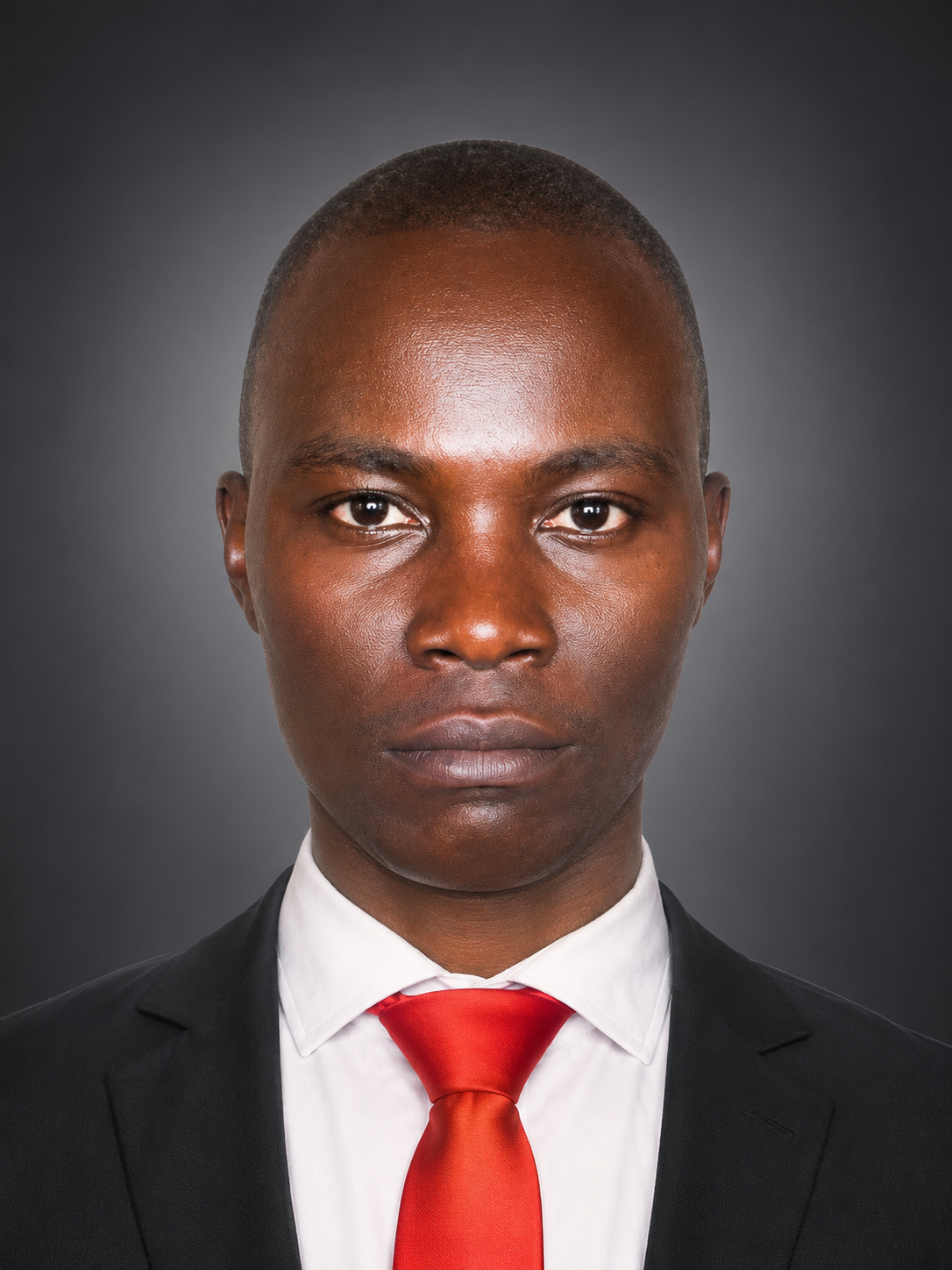
Dennis Ochieng Onyango is not a household name in Kenyan legal circles, and that, sources close to multiple ongoing cases suggest, is precisely how he prefers it. The advocate, who operates under the nameplate of Dennis Onyango and Associates from the seventh floor of Wu Yi Plaza on Galana Road in Nairobi, has cultivated a reputation for keeping a low profile even as a cascade of complaints from foreign investors, documented court filings, formal letters to the Law Society of Kenya, and proceedings before the Advocates Complaints Commission paint a picture that is anything but quiet.
At the centre of the storm is a question that the Law Society of Kenya took months to answer and, when it finally did, answered in a manner that will offer no comfort to the investors left waiting: why, in the face of mounting and documented evidence of client funds potentially misappropriated, did the Law Society renew Dennis Onyango’s practising certificate for the year 2026? The LSK’s eventual response was, in effect, that Onyango was due to face the Advocates Disciplinary Tribunal and that those with money on the line would have to wait until that process ran its course. For TL Cabin OU, the Estonian company whose USD 101,750 has been sitting unaccounted for since June 2023, that answer amounts to being told to join a queue for justice while the man responsible for their money continues to practise law.
The Stanbic Bank account that three court orders say should hold USD 975,000 in escrow carries a balance of USD 22.78. The clients were told to wait for the Tribunal.
Since this investigation was first published, the situation has deteriorated further, and the evidence has grown more damning.
A court order obtained by John Solheim, the plaintiff in High Court Commercial Case No. HCCCOMM E756 of 2024, compelled Stanbic Bank to produce Onyango’s bank statements.
What those statements reveal has shaken those familiar with the matter. The Stanbic account, which by the terms of at least three separate court orders ought to be holding approximately USD 975,000 in escrow funds, carries an actual balance of USD 22.78.
Twenty-two dollars and seventy-eight cents.
The Bank Statements That Expose Everything
The revelations from the Stanbic Bank statements go further than the balance alone. Onyango had previously claimed that TL Cabin’s money, which was deposited into a Consolidated Bank account, had subsequently been transferred into the Stanbic account.
The bank statements obtained by court order demonstrate that this claim is false. TL Cabin’s funds were never paid into the Stanbic account. There is no record of any such transfer. The paper trail that Onyango had been pointing to does not exist.
Worse still, it now appears that the uncertified bank statements that Onyango sent to TL Cabin by WhatsApp in an earlier phase of the dispute were themselves forgeries.
A forged Stanbic Bank letter had already been alleged in the proceedings brought by Norwegian investor John Birger Silheim, a letter the bank subsequently denied issuing.
The WhatsApp bank statements now appear to belong to the same category of fabricated documentation. The account balance was misrepresented. The transactions were misrepresented. And an officer of the High Court of Kenya apparently allowed those misrepresentations to circulate in the context of live legal proceedings.
Onyango sent TL Cabin bank statements by WhatsApp that now appear to have been forged. The Stanbic letter was forged. The account balance was a fiction. And he is still practising.
What makes this particularly grave is the implication for the litigation itself. According to sources familiar with the proceedings, Onyango has allowed at least two active court cases to proceed on the premise that he is holding substantial sums in escrow.
The court orders in those cases were framed around the existence of those funds. Interim orders were sought and granted on that basis. Other parties directed their conduct in reliance on those representations.
The bank statements now obtained by court order reveal that the represented funds were not there. If those representations were knowingly false, then Dennis Onyango, as an officer of the court, may have misled not just his clients but the courts themselves.
The Advocates Act is unambiguous about the obligations of advocates as officers of the court.
The deliberate misleading of a court is among the most serious categories of professional misconduct, one that the Disciplinary Tribunal has the power to address by way of suspension or striking off the Roll. Those remedies remain, as of the date of this publication, still to be applied.
The Tribunal Charges: A Step Forward, But Questions Remain
There is, in the midst of this accumulation of scandal, one development that deserves to be acknowledged plainly.
The Advocates Complaints Commission, the statutory body established under Section 53 of the Advocates Act to receive and investigate complaints of professional misconduct, has in the assessment of sources close to the matter performed its role with commendable diligence.
The Commission has formally recommended charges against Onyango.
The Advocates Disciplinary Tribunal has now formally charged him. Onyango has responded to those charges, and a hearing is currently scheduled for August 2026.
That the Commission acted is worth noting, because the landscape of professional accountability for advocates in Kenya is often described by complainants as a place where nothing moves.
Here, something has moved. The machinery has engaged. But the question of whether it has engaged fast enough, and whether what it does next will be proportionate to what the bank statements now reveal, remains entirely open.
The LSK, when it eventually responded to the complaints submitted by Julian Garrison, indicated in effect that the renewal of Onyango’s practising certificate was a decision they would not revisit pending the outcome of Tribunal proceedings.
This position is legally defensible in narrow terms. Under Section 9 of the Advocates Act, a practising certificate becomes invalid only upon formal suspension by the Tribunal. Until a suspension order is made, the LSK has limited formal grounds to withhold a certificate.
But the law also gives the LSK Council discretion over the renewal process under Section 25 of the Act, and the LSK’s own objects under Section 4(c) of the Law Society of Kenya Act require it to ensure that those practising law meet appropriate standards of professional conduct. The question of whether those provisions were adequately applied in the Onyango case is one the LSK has not yet been asked to answer in public.
The Disciplinary Tribunal has formally charged Onyango and a hearing is set for August 2026. But his practising certificate remains valid while the account stands at USD 22.78.
The Escrow That Swallowed Itself
The facts of the TL Cabin matter, as laid out in a signed letter dated 3 February 2026 from Lembit Niit, a representative of TL Cabin OU, to Dennis Onyango directly, are damning in their specificity.
TL Cabin’s money was transferred into a Consolidated Bank account held by Onyango’s firm on or around 20 and 27 June 2023. The purpose of the funds was explicitly set out in clause 2.7 of the escrow agreement: the money was being held for the purposes of payment to the Seller for ascertained and agreed costs relating to export-related costs.
The transaction concerned a gold purchase arrangement involving a company called Blu Afrique Limited.
The escrow agreement itself foreclosed any genuine dispute about the ownership of the funds. Clause 2.8 confirmed that TL Cabin was the only client for the purposes of the Advocates (Accounts) Rules 1966 and that Blu Afrique Limited was a signatory solely for the purpose of receiving notifications and issuing a jointly signed release notice.
The sale and purchase agreement between buyer and seller, dated 29 November 2023, contained an explicit acknowledgement by Blu Afrique Limited that the escrow funds could be returned to TL Cabin without protest or objection at the earlier of the completion of the gold sale or 12 December 2023.
By 12 December 2023, the gold transaction had not completed. The trigger for return had been met. The money was not returned.
And Onyango’s explanations for why that was so have shifted so many times that sources close to the proceedings say that even those following the matter closely lost track of which excuse was current at any given hearing.
One of the defences Onyango raised in the proceedings involving John Solheim was that Solheim had used the funds to purchase an apartment. Onyango produced documentation said to evidence the transaction, documentation on which he himself appeared as the client’s advocate.
When pressed, Onyango could not substantiate the claim. The apartment was never purchased. It appears to have been an invention, and one that Onyango could not maintain.
As of the date of this publication, Onyango has still not responded to TL Cabin about their funds. He has not returned the money. He has not rendered a proper account. He has not communicated. The silence on his end has been as total as the emptiness of the account.
A Norwegian Investor. Then a British One. Then Court.
TL Cabin is not alone.
The Norway-based businessman John Birger Silheim filed proceedings in the Milimani Commercial and Tax Division in July 2025 against Dennis Onyango, claiming that he deposited USD 403,097 into Onyango’s Stanbic Bank account at the Chiromo branch in four tranches between August and December 2023: amounts of USD 87,097, USD 86,000, USD 130,000 and USD 100,000, all from his personal Norwegian bank account, all for gold procurement purposes. Silheim alleged the production of a forged letter purportedly from Stanbic Bank, a document the bank has since denied issuing.
His application sought urgent orders to freeze the Stanbic account and direct the DCI’s Banking Fraud Unit to investigate and report.
The court orders that followed from that litigation, combined with the order obtained in HCCCOMM E756, are among the three orders now confirmed to have been made against the Stanbic account.
Three court orders.
USD 975,000 that should be sitting in that account by the representations made to the courts. USD 22.78 that is actually there.
It is worth pausing on that arithmetic. If each of the investors and clients whose funds were directed to Onyango’s care did so in reliance on his status as a practising advocate holding money in accordance with the Advocates (Accounts) Rules 1966, and if the account now reveals that the money is gone, then what the bank statements evidence is not a dispute about accounting. It is the apparent disappearance of client funds on a scale that dwarfs the maximum Ksh 5 million compensation order that the Disciplinary Tribunal can make.
Three court orders say USD 975,000 should be in that account. The account has USD 22.78. The Disciplinary Tribunal’s maximum compensation order is Ksh 5 million.
Collins Osewe: The Serial Defendant Who Keeps Reappearing
Collins Alphonce Odoyo Osewe is no stranger to Kenya’s legal system, except that in most of his appearances he sits not at the bar but in the dock.
In October 2025, a Nairobi magistrate was compelled to order Osewe to appear for plea in a criminal case in which he is charged alongside accomplice Patroba Odhiambo Tobias with obtaining Ksh 35.7 million from businessman Bernard Shiaundu Aete by false pretences, through the fraudulent promise of 400 kilograms of gold.
In a separate count, Osewe faces additional charges of swindling Adeyeye Enitan Ogunwusi of Ksh 26.1 million using the same device.
All of these offences are alleged to have occurred in May 2023. When the plea date came, Osewe did not appear. His lawyers told the magistrate he was hospitalised and had booked an emergency procedure in India.

Lawyer Collins Osewe.
None of this has prevented the Law Society of Kenya from issuing Osewe a valid practising certificate.
Despite the criminal charges, despite the civil freeze orders on his accounts, despite his history before the courts as a defendant in gold fraud matters, Osewe holds a current LSK practising certificate.
This is a decision that Garrison, who has repeatedly raised the matter with the Law Society’s compliance and ethics desk, describes as incomprehensible.
Kenya Insights shares that assessment.
The principle that an advocate currently facing criminal charges for professional conduct ought, at the very least, to have the question of their practising certificate actively reviewed is not a novel one. It is elementary.
Earlier civil proceedings confirmed that in 2023, multiple plaintiffs sought and obtained orders freezing accounts held by Osewe, Odero Osiemo and Co. Advocates, and Collins Grace and Associates Advocates, at Ecobank across three separate account numbers, in connection with what they alleged was a USD 610,000 fake gold scheme.
The orders were granted.
The investigation by this publication confirms that Osewe, operating under the name Collins Grace and Associates, has entered an appearance in the HCCCOMM E756 proceedings, purportedly representing the third interested parties.
He did so, the affidavit of service sworn by Onyango himself records, from House No. 182, UN Drive. Osewe was, at the time, listed as inactive on the LSK portal.
There is also the question of that address.
When Garrison’s team previously attempted to serve Osewe at the UN Drive premises while he was listed as active for 2025, a process server reported that the physical address did not exist.
The same address appears in Onyango’s February 2026 affidavit. If the address does not exist, the service is a fiction. If the service is a fiction, the procedural steps built upon it collapse. And if Osewe was not lawfully entitled to practise at the time he purported to accept service, his involvement in the proceedings is itself a potential violation of the Advocates Act.
Osewe faces criminal charges for gold fraud. He is listed as inactive on LSK’s portal. He accepted service in an active High Court case. And LSK has still issued him a practising certificate.
Jonathan Opande and the Blu Afrique Connection
The Blu Afrique thread that runs through the TL Cabin escrow dispute is not without its own colourful history. Jonathan Okoth Opande, a former aspirant for the Nyakach parliamentary seat, was publicly identified by the DCI in October 2023 as one of Nairobi’s most notorious fake gold scammers.
Arrested at Jomo Kenyatta International Airport as he attempted to board a Kisumu-bound Kenya Airways flight, Opande had already survived multiple police dragnets across the preceding months.
The DCI confirmed that Opande, operating as the alleged chief executive of Blu Afrique Limited, had obtained money from two Thai nationals, Kitvisit Songsri and Nutsaphol Songsri, with the promise of supplying gold.
A raid on his Lavington office yielded fake gold bars, pellets, a makeshift smelting machine, KRA export seals, Ministry of Mining branded dust coats, company seals, and documentation of questionable authenticity.
That an entity bearing the name Blu Afrique Limited now appears as an interested party in HCCCOMM E756, where Dennis Onyango is the defendant, and that Onyango continues to invoke that entity’s alleged interests as a basis for withholding TL Cabin’s escrow funds, is a detail that sources close to the matter regard as considerably more than coincidental.
The DCI has identified Opande as operating through Blu Afrique as a vehicle for gold fraud.
The escrow agreement in the TL Cabin matter was structured around a gold transaction in which Blu Afrique was the seller.
The money deposited by TL Cabin with Onyango as escrow agent for that transaction has not been returned. And the account that ought to hold it carries a balance of twenty-two dollars.
Lawyers as the Infrastructure of the Scam
Kenya’s fake gold industry has, over the past decade, perfected the art of borrowed legitimacy.
The most effective weapon in the arsenal of a Nairobi gold fraudster is not a smelting machine or a forged Ministry of Mining letter, formidable as those tools are.
It is the escrow account of a practising advocate, preferably one registered with the Law Society of Kenya, bearing the stamp and signature of a High Court officer.
When a foreign investor is told that their funds will be held securely in the client account of an advocate licensed by the Law Society, they believe it. They are supposed to believe it. The law says they should be able to believe it.
The pattern is well documented across multiple cases. In July 2025, DCI detectives arrested advocate Michael Otieno Owano, proprietor of Otieno M.O. Law Advocates, in connection with a scheme in which a Canadian investor lost USD 618,000, with USD 318,400 wired directly into Owano’s law firm account following a fraudulent proforma invoice from a company called EAI Logistics.
The victim was then directed to wire an additional USDT 300,000 to a cryptocurrency wallet.
No gold was ever delivered.
The DCI Director described the case as a disturbing abuse of legal privilege. In February 2026, Willis Onyango Wasonga was arraigned in connection with a separate scheme in which an American investor’s funds were deposited into what was presented as an escrow account operated by the same Owano, with fictitious legal representation agreements generated to create the illusion of bona fide commercial transactions.
The use of advocate client accounts as conduit points is not incidental to these schemes. It is structural. Without the lawyer’s stamp, the foreign investor does not wire the money.
The stamp is the product. The escrow arrangement is the mechanism. And the Law Society of Kenya is, in a meaningful sense, the guarantor of that mechanism’s credibility.
When advocates implicated in these arrangements continue to hold valid practising certificates, the credibility of every legitimate advocate in Kenya is mortgaged to their conduct.
The LSK’s Response and Its Limits
The Law Society did, eventually, respond to Garrison’s correspondence.
Its position was that Onyango was scheduled to face the Disciplinary Tribunal and that the question of his practising certificate would effectively await the outcome of those proceedings.
This is, in isolation, a procedurally coherent position. The Advocates Act requires formal suspension by the Tribunal before a certificate becomes invalid under Section 9. The LSK cannot unilaterally revoke a certificate in the absence of a Tribunal order.
But coherence is not the same as adequacy.
The LSK’s objects under the Law Society of Kenya Act include the protection of the public interest and the assurance that those practising law meet appropriate professional standards.
The LSK’s own Advocacy Standards Committee and compliance functions exist precisely to give effect to those objects before, not after, harm deepens.
The bank statements now in the hands of the court, and now shared with the LSK, demonstrate that the harm in the Onyango matter has already been severe.
If those statements do not accelerate the LSK’s engagement with the question of whether Onyango should continue to practise pending the August 2026 Tribunal hearing, the question of institutional accountability becomes inescapable.
The LSK has now received copies of the Stanbic Bank statements. The account balance is on record. The court orders requiring funds to be held in that account are on record.
The gap between the two is on record. What the LSK does next with that information will say a great deal about whether its response to Garrison’s original letters was a considered institutional position or a convenient deferral.
The LSK now has the Stanbic bank statements. The account that should hold USD 975,000 has USD 22.78. The question of what the LSK does next has no comfortable answer.
The New Website. Then Its Disappearance.
When this investigation was first published, it noted that Onyango had constructed an impressive new website for his firm, one that described Dennis Onyango and Associates as leaders in regulatory compliance, AML and CFT advisory, and precious metals trade law.
The claim to leadership in anti-money laundering advisory, from a firm whose principal now faces formal charges before the Disciplinary Tribunal and whose client account has been emptied while multiple court orders required it to be full, was remarkable for its audacity.
That website has since been taken down. It follows a previous version of the firm’s website, which Garrison had earlier identified as having been created for the purpose of winning a specific tender by deception, and which was also removed once enquiries began.
A pattern of erecting and dismantling digital faces to suit the moment is not, on its own, a criminal offence. But it is consistent with the broader picture of an advocate who understands the power of appearances and has repeatedly deployed that understanding to the disadvantage of those who trusted him.
The Third Party Ruse and Its Procedural Implications
Dennis Onyango’s tactical response to the mounting pressure in HCCCOMM E756 has been to issue Third Party Notices to three other parties in the proceedings.
A Third Party Notice is the device by which a defendant seeks contribution or indemnity from third parties in respect of any liability they may face.
In circumstances where a defendant has a genuine case to answer and a legitimate basis for seeking contribution, the device is proper litigation. In the present case, sources familiar with the matter argue that its function is delay. There are, they say, other and better devices available to resolve the underlying questions if Onyango’s intentions were straightforward.
The procedural choreography of the third party notices also raises a question about Osewe’s involvement.
If Osewe was not a practising advocate at the time he purported to accept service and file a notice of appointment, his involvement in the proceedings is legally ineffective and potentially constitutes the holding out of oneself as an advocate in contravention of Section 34 of the Advocates Act.
That provision makes it a criminal offence for any person who is not an enrolled and certified advocate to wilfully pretend to be one. It is a question that the Law Society, the Advocates Complaints Commission, and the presiding court in HCCCOMM E756 may all need to engage with before the matter progresses further.
A Pattern, Not an Anomaly
What emerges from this investigation, updated with the developments of recent months, is not the story of one rogue lawyer operating in isolation. It is the story of a system that has allowed a particular model of fraud, using the architecture of the legal profession, to operate with insufficient consequence for those who benefit and insufficient protection for those who suffer.
The Advocates (Accounts) Rules 1966 are unambiguous. Rule 13 requires advocates to maintain records of client funds and to account to clients on demand. The Advocates Complaints Commission exists to prosecute professional misconduct, and in the Onyango case it has, to its credit, done so.
The Advocates Disciplinary Tribunal has formally charged Onyango and set August 2026 for a hearing. But the Tribunal’s maximum compensation order of Ksh 5 million is structurally inadequate to address losses that, if the bank statements are taken at face value, are measured in hundreds of thousands of US dollars.
And the time between the original deposits in June 2023 and an August 2026 hearing represents more than three years during which Dennis Onyango has continued to practise, continued to hold a valid LSK certificate, and continued to say nothing to the clients whose money cannot be found.
At the time of publication, the Advocates Complaints Commission had confirmed that formal charges had been laid and that proceedings before the Disciplinary Tribunal were scheduled for August 2026.
The Law Society of Kenya had been provided with the Stanbic Bank statements and had not issued a public statement on the matter. Dennis Onyango had not responded to TL Cabin. He had not returned the funds. He had not rendered an account. His website had been taken down.
The August 2026 Tribunal hearing will determine what formal sanction, if any, follows. What the bank statements have already determined, however, is that the money is gone. The question now is whether anyone in a position of institutional authority is going to treat that fact with the urgency it demands.
The money is gone. The question now is whether anyone in a position of authority is going to treat that fact with the urgency it demands.
Kenya Insights allows guest blogging, if you want to be published on Kenya’s most authoritative and accurate blog, have an expose, news TIPS, story angles, human interest stories, drop us an email on [email protected] or via Telegram


How Mary Wambui’s Bid To Delete Her Past Collided With A Fresh Sh400 Million Conflict-Of-Interest Finding

Mary Wambui’s Glee Hotel Faces Auction Over Sh100 Million Debt

Somali Government Adviser Held in Kenya Over Alleged Sh3.5 Million Gold Fraud and Terrorism Links

Reprieve for Lawyer Conrad Maloba as Court Extends Orders Blocking His Prosecution in Gold Fraud Case

How Adil Popat Saved His Empire On The Eve Of Imperial Bank Collapse and Why Kenya’s Mainstream Media Buried The Story

South Sudan: Adut Salva Kiir’s Shadow Treasury Exposed

Wajir North MP Ibrahim Abdi Dissatisfied With2026/27 Budget, Claims It Totally Excludes North Eastern Region

The Eldoret Tax Fortress: How David Langat Turned an Industrial Park Dream Into Kenya’s Most Sophisticated Domestic Tax Haven

Why John Ngumi Is Running From the EACC and Why the Sh415 Million Payday May Be the Least of His Worries

Shiquo Hii Style Store Was Not Raided, Anti-Counterfeit Authority Confirms; Says Influencer Used Empty Shelves for Content as She Relocates

Inside NCBA’s Decline: How a Banking Giant Lost Its Strategic Edge

Cement, Cash and Courts: How the Hashu Dynasty Crushed the Ramji Brothers for Fourteen Years and Why the Walls Are Now Closing In

Standard Chartered Ghosts Haunt Joshua Oigara At Stanbic As Whistleblower Spills Beans

Inside The Urban Planning Cartel That Owns Nairobi
South Sudan: Adut Salva Kiir’s Shadow Treasury Exposed

Why Ruto’s Favourite Candidate Adan Mohammed Could Be Locked Out of the KRA Top Job

Betika Faces DCI Probe, Directors Arrest and License Revocation Over Massive 29.5 Million Safaricom Customers’ Data Breach

LifeCare on the Brink: SHA Fraud, Stolen Wages, and the Rotten Empire Jayesh Saini Built
Why John Ngumi Is Running From the EACC and Why the Sh415 Million Payday May Be the Least of His Worries

The President’s Daughter and The Missing Witness: How Adut Salva Kiir’s Shadow Treasury Silenced Its Most Dangerous Critic
-
 Business5 days ago
Inside NCBA’s Decline: How a Banking Giant Lost Its Strategic Edge
-
 Investigations1 week ago
Cement, Cash and Courts: How the Hashu Dynasty Crushed the Ramji Brothers for Fourteen Years and Why the Walls Are Now Closing In
-
 Business4 days ago
Standard Chartered Ghosts Haunt Joshua Oigara At Stanbic As Whistleblower Spills Beans
-
 Investigations1 week ago
Inside The Urban Planning Cartel That Owns Nairobi
-
 Africa3 days ago
South Sudan: Adut Salva Kiir’s Shadow Treasury Exposed
-
 Investigations2 weeks ago
Betika Faces DCI Probe, Directors Arrest and License Revocation Over Massive 29.5 Million Safaricom Customers’ Data Breach
-
 Business3 days ago
Why John Ngumi Is Running From the EACC and Why the Sh415 Million Payday May Be the Least of His Worries
-
 Africa4 days ago
The President’s Daughter and The Missing Witness: How Adut Salva Kiir’s Shadow Treasury Silenced Its Most Dangerous Critic