
News
President Ruto Defends Laikipia Ebola Quarantine Centre, Tells Critics to ‘Relax’
He argued that the facility should not be viewed as a foreign project being imposed on Kenya but as a joint effort intended to strengthen preparedness against future outbreaks.

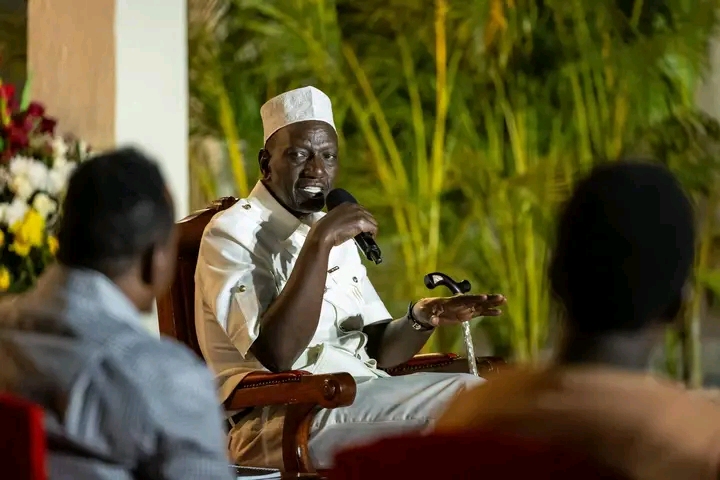
President William Ruto has mounted his strongest defence yet of the controversial Ebola preparedness facility being established at Laikipia Air Base, dismissing criticism from opponents and insisting the project is a necessary investment in Kenya’s health security rather than a threat to the country.
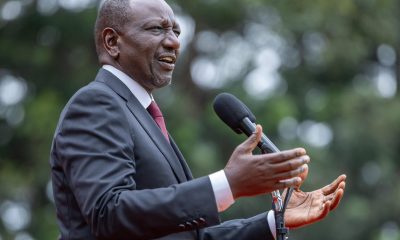
Speaking during the North Eastern Media Roundtable shortly after the Madaraka Day celebrations in Wajir County, the President said the facility was part of a long-standing partnership between Kenya and the United States and was designed to strengthen the country’s ability to respond to future disease outbreaks.
The project has been at the centre of a heated national debate in recent weeks after reports emerged that Kenya had agreed to host a quarantine and emergency response facility linked to Ebola preparedness. The disclosure triggered protests, legal challenges and widespread public concern, with critics questioning why Kenya was hosting the project and whether the country had been exposed to unnecessary health risks.
For the first time since the controversy erupted, Ruto personally addressed the issue, revealing that the initiative followed discussions with the United States government and was anchored within broader bilateral cooperation agreements.
“When President Donald Trump asked the government of Kenya to support them by establishing a centre at Laikipia Air Base, I gave the go-ahead because it was part of an agreement and partnership with friends who have worked with Kenya for 30 to 40 years,” Ruto said.
He argued that the facility should not be viewed as a foreign project being imposed on Kenya but as a joint effort intended to strengthen preparedness against future outbreaks.
According to the President, Kenya has benefited from decades of American support in sectors such as healthcare, security, education and economic development, making the partnership a natural extension of existing cooperation between Nairobi and Washington.
Ruto insisted that the centre was not intended to import diseases into the country but to ensure Kenya is better prepared if a future outbreak emerges within its borders or the wider region.
“What the American government is doing is to work with us in partnership to build the capacity to make sure that if ever we needed a facility, that facility will be there to serve the people of Kenya and to serve our friends, including the Americans,” he said.
His remarks come just days after the High Court temporarily suspended the establishment of the facility and barred the arrival of any foreign patients pending the hearing of a petition filed by the Law Society of Kenya and Katiba Institute.
The legal challenge has intensified scrutiny of the project, with petitioners arguing that the agreement was reached without adequate public participation and raising concerns about transparency and safety protocols.
The controversy has also sparked demonstrations in Nanyuki, where residents have demanded the project be halted. Protesters have questioned why a facility linked to Ebola preparedness should be located in Kenya instead of countries currently battling outbreaks.
Some residents fear that workers and communities around the military installation could be exposed to health risks despite government assurances.
Ruto, however, dismissed those concerns and pointed to Kenya’s existing disease surveillance and containment infrastructure.
The President said the country already operates more than 20 specialised health facilities capable of screening, isolating and managing infectious diseases. He cited institutions including Kenyatta National Hospital, Moi Teaching and Referral Hospital, the Police Hospital, Alupe Hospital and facilities in Thika as part of the national preparedness network.
“These facilities are meant to make sure that there is proper screening and, if there is any positive identification of people who have Ebola, then immediately they are isolated and treated so that we avoid any spread of the disease,” he said.
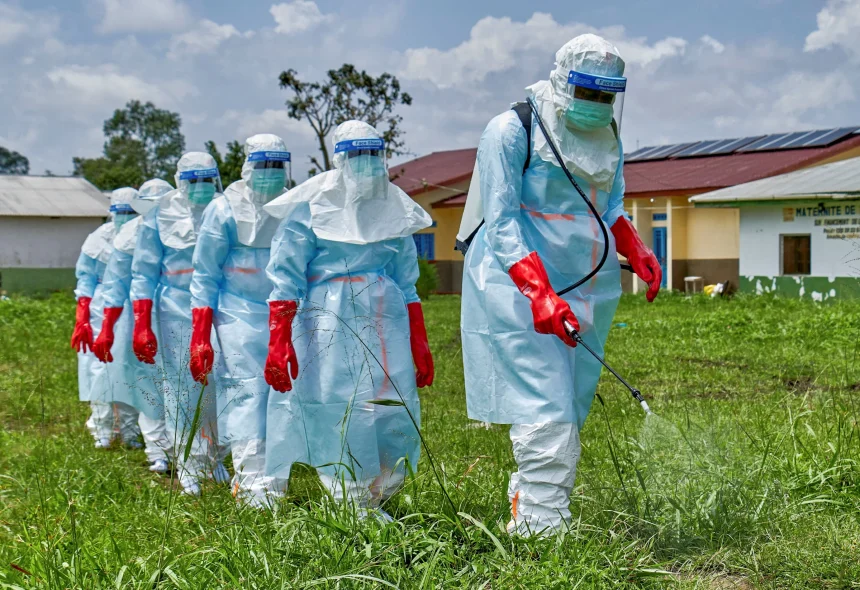
The medical charity Médecins Sans Frontières (MSF) has warned that the rapid spread in DRC is deeply alarming.
The Head of State also linked the project to Kenya’s broader regional responsibilities, noting that Kenyan peacekeepers, health workers, businesspeople and humanitarian personnel regularly travel across East and Central Africa, including the Democratic Republic of Congo, where Ebola outbreaks have previously occurred.
“The fact that we could end up with a case is not far-fetched,” he warned.
Ruto compared the Laikipia facility to emergency measures adopted during the Covid-19 pandemic, when isolation and treatment centres were established to contain the spread of infections.
He maintained that governments have a responsibility to prepare for worst-case scenarios before crises occur rather than waiting until lives are at risk.
As political pressure continues to mount and court proceedings move forward, the President accused some critics of politicising a public health issue and spreading unnecessary alarm.
“We are a responsible government. We know what we are doing. People should relax. Politicians should avoid reckless, unnecessary talk that doesn’t mean anything,” he said.
The dispute comes at a time when East Africa remains on alert over Ebola outbreaks in neighbouring countries. While Kenya has not recorded any confirmed Ebola cases, health authorities continue to monitor developments in the region amid fears that increased cross-border movement could heighten the risk of transmission.
For now, the Laikipia project remains suspended by the courts, but Ruto’s intervention signals that the government is unlikely to back down. Instead, the administration appears determined to frame the facility as a strategic public health asset, even as questions persist over transparency, public participation and the full details of the agreement with the United States.
Kenya Insights allows guest blogging, if you want to be published on Kenya’s most authoritative and accurate blog, have an expose, news TIPS, story angles, human interest stories, drop us an email on [email protected] or via Telegram








BURRIED TWICE: The Victoria Bank CEO Yogesh Pattni Files

Court Stops Transfer Of EABL Shares To Asahi By Diageo In A Fresh Snag

Death Before Justice: Stephen Ngei, Victim of Sh180 Million Laptop Tender Scam Linked to Allan Chesang, Killed in Highway Crash

Court Brands Sh1.1 Billion Fee Demand by Lawyer Victor Swanya “Excessive and Exorbitant,” Exposes How City Hall Lets Public Money Bleed Through Legal Bills

Trump Unveils New Air Force One

MR. NO SHOW: Finance Bill 2026 Exposes Ndindi Nyoro’s Political Conmanship

Billionaire Eric Muli Rebukes Musalia Mudavadi Over Nairobi Capital Relocation Debate

Lawyer Cliff Ombeta Warns Against Taking Insurance Cover With Old Mutual: “Talk to Me Before You Do, Their Imara Cover Is a Fraud”

My Life Is In Danger: Investor Drops Bombshell Expose On Thomas Ogutu CEO VeGrid Ltd And Fugitive Nairobi CEC Charles Kerich – DCI Inaction And Corruption Network Exposed

City Tycoon Chris Obure Returns To Senteu Plaza After Court Victory

Businessman Philip Waithaka Kinuthia’s Minor Son Allegedly Drove Drunk, Killed Two Peponi Students in Ngong Road Horror Crash as Claims of Cover-Up Intensify

Inside NCBA’s Decline: How a Banking Giant Lost Its Strategic Edge

Cement, Cash and Courts: How the Hashu Dynasty Crushed the Ramji Brothers for Fourteen Years and Why the Walls Are Now Closing In

Standard Chartered Ghosts Haunt Joshua Oigara At Stanbic As Whistleblower Spills Beans

South Sudan: Adut Salva Kiir’s Shadow Treasury Exposed

Inside The Urban Planning Cartel That Owns Nairobi

THE VULTURE AND THE SCHEME How Nairobi West Hospital Became the Most Dangerous Institution in Kenya’s SHA Ecosystem and Why the Books Must Be Audited Now

How Adil Popat Saved His Empire On The Eve Of Imperial Bank Collapse and Why Kenya’s Mainstream Media Buried The Story

Why John Ngumi Is Running From the EACC and Why the Sh415 Million Payday May Be the Least of His Worries

The President’s Daughter and The Missing Witness: How Adut Salva Kiir’s Shadow Treasury Silenced Its Most Dangerous Critic
-
 News7 days ago
Businessman Philip Waithaka Kinuthia’s Minor Son Allegedly Drove Drunk, Killed Two Peponi Students in Ngong Road Horror Crash as Claims of Cover-Up Intensify
-
 Business2 weeks ago
Inside NCBA’s Decline: How a Banking Giant Lost Its Strategic Edge
-
 Business2 weeks ago
Standard Chartered Ghosts Haunt Joshua Oigara At Stanbic As Whistleblower Spills Beans
-
 Africa1 week ago
South Sudan: Adut Salva Kiir’s Shadow Treasury Exposed
-
 Investigations3 days ago
THE VULTURE AND THE SCHEME How Nairobi West Hospital Became the Most Dangerous Institution in Kenya’s SHA Ecosystem and Why the Books Must Be Audited Now
-
 Business1 week ago
How Adil Popat Saved His Empire On The Eve Of Imperial Bank Collapse and Why Kenya’s Mainstream Media Buried The Story
-
 Business1 week ago
Why John Ngumi Is Running From the EACC and Why the Sh415 Million Payday May Be the Least of His Worries
-
 Africa2 weeks ago
The President’s Daughter and The Missing Witness: How Adut Salva Kiir’s Shadow Treasury Silenced Its Most Dangerous Critic