
News
Kenya In Talks With US, Duale Breaks Silence On Alleged Ebola Quarantine Plan
More than 55,000 travellers have reportedly been screened so far, while ten suspected Ebola cases tested in the country have all returned negative.

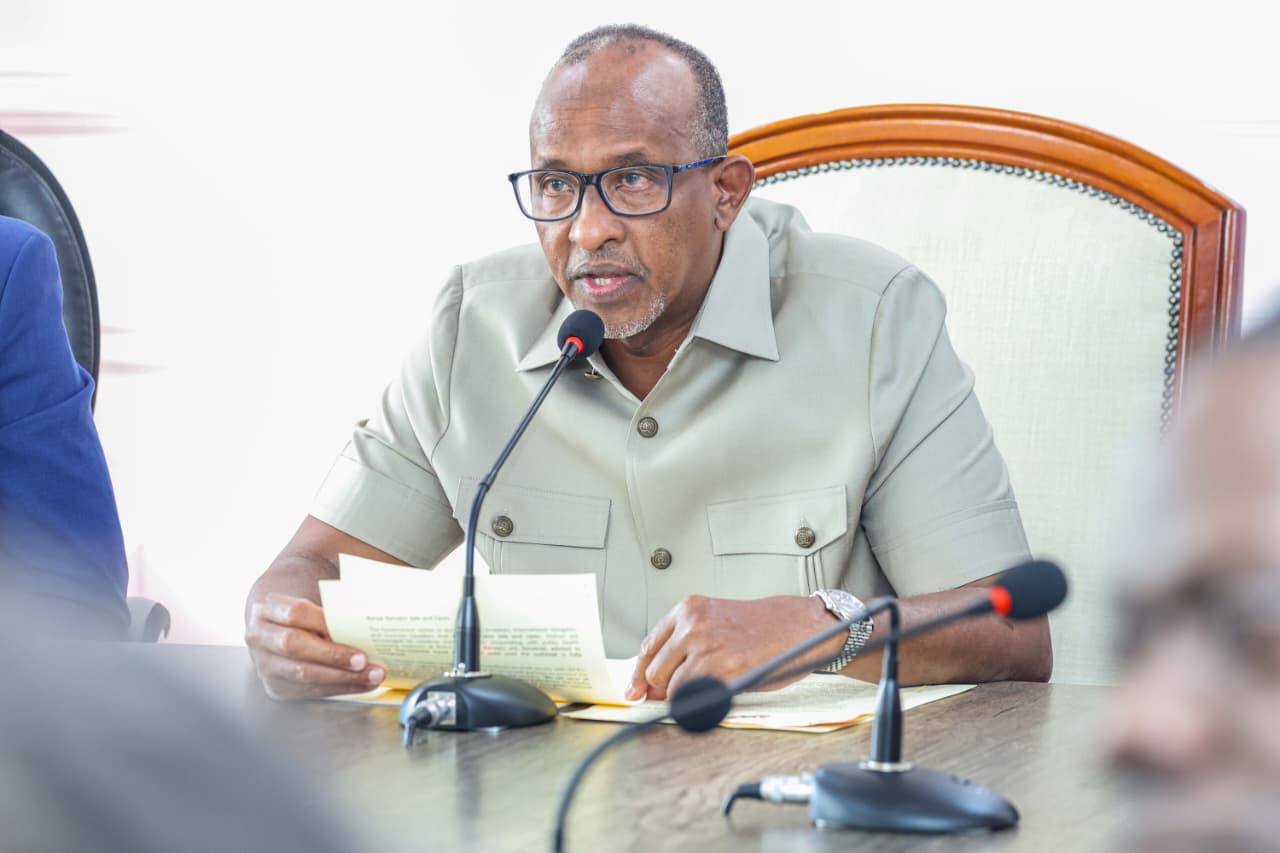
Kenya has moved to calm growing public anxiety after reports emerged that the United States could establish an Ebola quarantine and monitoring arrangement in the country for Americans exposed to the deadly virus.
In a strongly worded statement issued on Wednesday, Health Cabinet Secretary Aden Duale insisted that Kenya remains fully prepared to handle any Ebola-related threat and said the country would only engage in international health cooperation within the limits of Kenyan law and strict biosafety protocols.
The government response followed a report by The New York Times claiming that the administration of US President Donald Trump was exploring plans to send American citizens exposed to Ebola to Kenya for monitoring and treatment.
The report immediately triggered sharp debate online, with many Kenyans questioning why the country was being considered as a possible destination for handling potentially exposed foreign nationals. Others raised fears over whether Kenya risks becoming a regional containment hub for dangerous infectious diseases.
But the Ministry of Health attempted to reassure the public, saying no decision would compromise the safety of Kenyans.
“Kenya is ready. Kenya is capable. Kenya will continue to act responsibly in safeguarding both national and global health security,” Duale said in the statement.
The ministry did not directly confirm whether a quarantine facility for US citizens was under active discussion, a silence that has only intensified speculation. Foreign Affairs Principal Secretary Korir Sing’oei also appeared to distance himself from the reports, telling Reuters that he had not been fully briefed on the matter and was unaware of any formal request for additional support.
The developments come at a time when East Africa remains on heightened alert over recurring Ebola outbreaks in the region. Uganda has in recent years battled several Ebola flare-ups, forcing neighbouring countries including Kenya to tighten border surveillance and emergency response systems.
Kenya’s government says the country has spent years building its epidemic preparedness capacity, lessons largely shaped by regional disease outbreaks including the devastating West African Ebola epidemic between 2014 and 2016, which killed more than 11,000 people.
According to the Ministry of Health, Kenya has already activated its national Incident Management System and intensified screening at airports and border points.
More than 55,000 travellers have reportedly been screened so far, while ten suspected Ebola cases tested in the country have all returned negative.
The ministry said designated laboratories have been equipped for testing while coordination between national and county governments has been strengthened in anticipation of any potential outbreak.
Duale also defended Kenya’s growing role in global health security operations, saying Kenyan medical experts have previously participated in outbreak response missions across Africa and that the country remains a trusted regional partner in emergency health interventions.
The United States has for years maintained deep cooperation with Kenya in public health programmes, including disease surveillance, emergency preparedness, HIV response and laboratory infrastructure. Washington has also heavily invested in Kenyan health systems through agencies such as the Centers for Disease Control and Prevention and USAID.
Still, the suggestion that Americans potentially exposed to Ebola could be monitored in Kenya has sparked political and public sensitivity, especially at a time when many citizens already feel the country is carrying increasing regional security and humanitarian burdens.
Health experts note that Ebola is not airborne and can be contained through strict infection prevention measures, but they also acknowledge that public fear surrounding the virus remains high because of its severe symptoms and historically high fatality rates.
The Ministry of Health maintained that any cooperation with foreign governments would be guided by science and national interest rather than politics.
“Protection of Kenyan citizens, frontline health workers and communities remains paramount,” the statement said.
Even as officials project confidence, pressure is likely to mount on the government to provide clearer answers on the exact nature of ongoing discussions with Washington and whether Kenya could soon host a specialised Ebola monitoring programme tied to US operations in Africa.
Kenya Insights allows guest blogging, if you want to be published on Kenya’s most authoritative and accurate blog, have an expose, news TIPS, story angles, human interest stories, drop us an email on [email protected] or via Telegram








FBI Foils Drone Attack Targeting White House

Messi, Ronaldo Set To Play In World Cup For 6th Time

How Joho Brokered Deal to Free 7 Kenyan Seafarers Jailed in Tanzania for 20 Years Over Human Trafficking

Calls Mount for Probe Into Garissa Woman Rep Edo Udgoon Siyad Over Alleged Role in Controversial Land Transactions Linked to Nzoia Sugar Disputes

Embarrassing State House Gaffe as Hussein Mohamed Names Wrong Japanese Prime Minister, Then Quietly Deletes Statement

A Packet of Milk, A Public Strip Search and 26 Years Thrown Away: The Ugly Face of Lipton Teas’ Kenyan Operations Exposed

The Listing That Doesn’t Lie: What the Market Isn’t Saying About Family Bank’s NSE Debut

8 Dead After US Air Force B-52 Bomber Crashes Shortly After Takeoff In California

Sh11 Billion Zakhem Debt Bombshell Rocks Kenya Pipeline Three Months After IPO, As Questions Mount Over What Investors Were Told

How A Convicted Zimbabwean Fraudster Quietly Bought His Way Into Kenya’s Sh375 Billion JKIA Mega-Deal

Inside NCBA’s Decline: How a Banking Giant Lost Its Strategic Edge

Businessman Philip Waithaka Kinuthia’s Minor Son Allegedly Drove Drunk, Killed Two Peponi Students in Ngong Road Horror Crash as Claims of Cover-Up Intensify

Cement, Cash and Courts: How the Hashu Dynasty Crushed the Ramji Brothers for Fourteen Years and Why the Walls Are Now Closing In

Standard Chartered Ghosts Haunt Joshua Oigara At Stanbic As Whistleblower Spills Beans

Inside The Urban Planning Cartel That Owns Nairobi

South Sudan: Adut Salva Kiir’s Shadow Treasury Exposed

Why Ruto’s Favourite Candidate Adan Mohammed Could Be Locked Out of the KRA Top Job

Why John Ngumi Is Running From the EACC and Why the Sh415 Million Payday May Be the Least of His Worries

The President’s Daughter and The Missing Witness: How Adut Salva Kiir’s Shadow Treasury Silenced Its Most Dangerous Critic

Betika Faces DCI Probe, Directors Arrest and License Revocation Over Massive 29.5 Million Safaricom Customers’ Data Breach
-
 Business7 days ago
Inside NCBA’s Decline: How a Banking Giant Lost Its Strategic Edge
-
 News2 days ago
Businessman Philip Waithaka Kinuthia’s Minor Son Allegedly Drove Drunk, Killed Two Peponi Students in Ngong Road Horror Crash as Claims of Cover-Up Intensify
-
 Investigations2 weeks ago
Cement, Cash and Courts: How the Hashu Dynasty Crushed the Ramji Brothers for Fourteen Years and Why the Walls Are Now Closing In
-
 Business6 days ago
Standard Chartered Ghosts Haunt Joshua Oigara At Stanbic As Whistleblower Spills Beans
-
 Investigations2 weeks ago
Inside The Urban Planning Cartel That Owns Nairobi
-
 Africa5 days ago
South Sudan: Adut Salva Kiir’s Shadow Treasury Exposed
-
 Business5 days ago
Why John Ngumi Is Running From the EACC and Why the Sh415 Million Payday May Be the Least of His Worries
-
 Africa6 days ago
The President’s Daughter and The Missing Witness: How Adut Salva Kiir’s Shadow Treasury Silenced Its Most Dangerous Critic