
Business
Inside the Cover-Up: How Diageo and EABL Allegedly Buried a Sexual Harassment Scandal at the Kisumu Brewery and Are Now Racing to Sell the Evidence Out of Kenya’s Reach
Jane Karuku and Eric Kiniti have threatened a defamation suit against Kamau over the sexual harassment allegations a threat Kamau has met head-on, reportedly responding with nothing more than two words: bring it on.


Two Black Kenyan women walked into Muthaiga Police Station in January 2020 to report that an Irish executive on Diageo’s flagship Sh15 billion Kisumu brewery project had sexually harassed and indecently assaulted them. Six years, three court files, two recused judges and one fabricated whistleblower report later, the company is now trying to outrun its own accusers by selling the entire Kenyan operation to a Japanese conglomerate before anyone can collect what the courts say it owes.
Court records reviewed for this investigation, alongside multiple filings before the High Court’s Commercial and Constitutional Divisions, paint a picture that goes well beyond a contractual dispute.
They describe a project manager accused of indecent assault who vanished from the country within weeks of the complaint being lodged with the Directorate of Criminal Investigations (DCI); a corporate relations director who allegedly told police the accused man did not work for the company at all; and a senior leadership team that, when the women’s employer refused to let the matter die, allegedly weaponised litigation, judicial petitions and a mysterious anonymous “whistleblower” report to bury both the harassment claims and a Sh2.45 billion arbitration award the company was on the verge of losing.
Now, as Diageo PLC moves to offload its 65 percent stake in East African Breweries Limited (EABL) to Japan’s Asahi Group Holdings in a deal reported to be worth in the region of Sh296.5 billion, the contractor at the centre of the storm JILK Construction Company Limited has gone to court twice in recent months warning that the sale is timed to place Diageo’s assets beyond the reach of Kenyan justice before the harassment allegations, the fabrication claims, and the unpaid arbitration award can ever be enforced.
Project Nafasi: The Sh15 Billion Dream That Became a Six-Year Nightmare
It began as a flagship. Project Nafasi, the 2016/2017 revival of Kenya Breweries Limited’s (KBL) Kisumu plant, was sold to the public as a Sh15 billion bet on Western Kenya a brewery that would create thousands of jobs and pull more than 15,000 sorghum farmers into Diageo’s supply chain.
JILK Construction, a Nairobi-based firm led by chief executive Sammy Maina Kamau, won the civil works contract and says it completed its obligations, handing over the site after receiving roughly Sh1.2 billion in payments.
What followed was not the orderly close-out of a successful construction job.
According to filings before the Architectural Association of Kenya, where JILK initiated arbitration in 2020, an initial claim of around Sh163 million ballooned into a demand for Sh2.45 billion plus interest and costs an increase KBL itself has described in court papers as exceeding 1,300 percent.
KBL says the relationship collapsed in 2019 after JILK allegedly left the site; JILK says the dramatic escalation reflects the true scope of unpaid work, delays and losses inflicted on a contractor that, it claims, was effectively answering not to KBL but to Diageo PLC itself which JILK alleges controlled procurement, supervision and financial decision-making on the ground throughout the project.
By November 2024, after years of hearings, the arbitration was effectively over. Submissions were filed. Arguments were made.
Sole arbitrator QS Mutinda Mutuku, appointed by the Architectural Association of Kenya in February 2020, was preparing to deliver his award. JILK was on the brink of a Sh2.45 billion vindication.
Then, on 1 December 2024, everything stopped.
The Harassment Complaint Nobody Was Supposed to Survive
To understand why KBL moved when it did, you have to go back to January 2020 and to two women whose names have barely featured in the corporate press releases issued since.
According to court documents filed by JILK and its directors Bertha Wanjiru Ndirangu, Mary Njeri Wanyutu and Sammy Maina Kamau two female JILK employees reported to Muthaiga Police Station in January 2020 that Brendan Daly, an Irish national serving as project manager and permanently based at the Kisumu site, had sexually harassed and indecently assaulted them.
The application identifies Daly and a second Irish national, Nicholas Quirke, who was also overseeing the project for Diageo, as the men accused of harassing the two female employees during the course of the project.
The charge sheet attached to JILK’s application for private prosecution is, in the company’s own words, explosive.
It does not merely allege that two individuals behaved inappropriately.
It alleges, against Diageo PLC, KBL and EABL collectively, fraudulent trading, a failure to implement or enforce any sexual harassment policy, fabrication of evidence, and a sustained conspiracy to defeat justice with sexual harassment charged specifically against Daly.
Kamau says he raised the harassment concerns directly with senior Diageo officials at the time and that the matter was dismissed without any meaningful investigation.
JILK’s filings go further: they allege that two of the affected workers were subsequently lured away to another firm, an arrangement JILK characterises as creating the unmistakable impression that compliance with advances and silence about them came with rewards, while resistance came with consequences.
Then came the DCI investigation and, JILK alleges, the company’s response to it.
“He Doesn’t Work for Us”: The Departure That Raised Questions
On 5 February 2020, the Directorate of Criminal Investigations formally notified EABL Managing Director Jane Karuku of the sexual harassment allegations against Daly.
According to the Nyakundi Report’s account of the dispute, KBL’s response at the time was to note that the complaint had been lodged after Daly had already left Kenya.
JILK’s filings allege something more pointed: that EABL’s Corporate Relations Director, Eric Kiniti, responded to the DCI by stating that Daly had left the country and denying the company’s liability for his conduct a response JILK characterises in its court papers as misleading and containing false statements. Central to the dispute is a fundamental disagreement over who actually employed Daly.
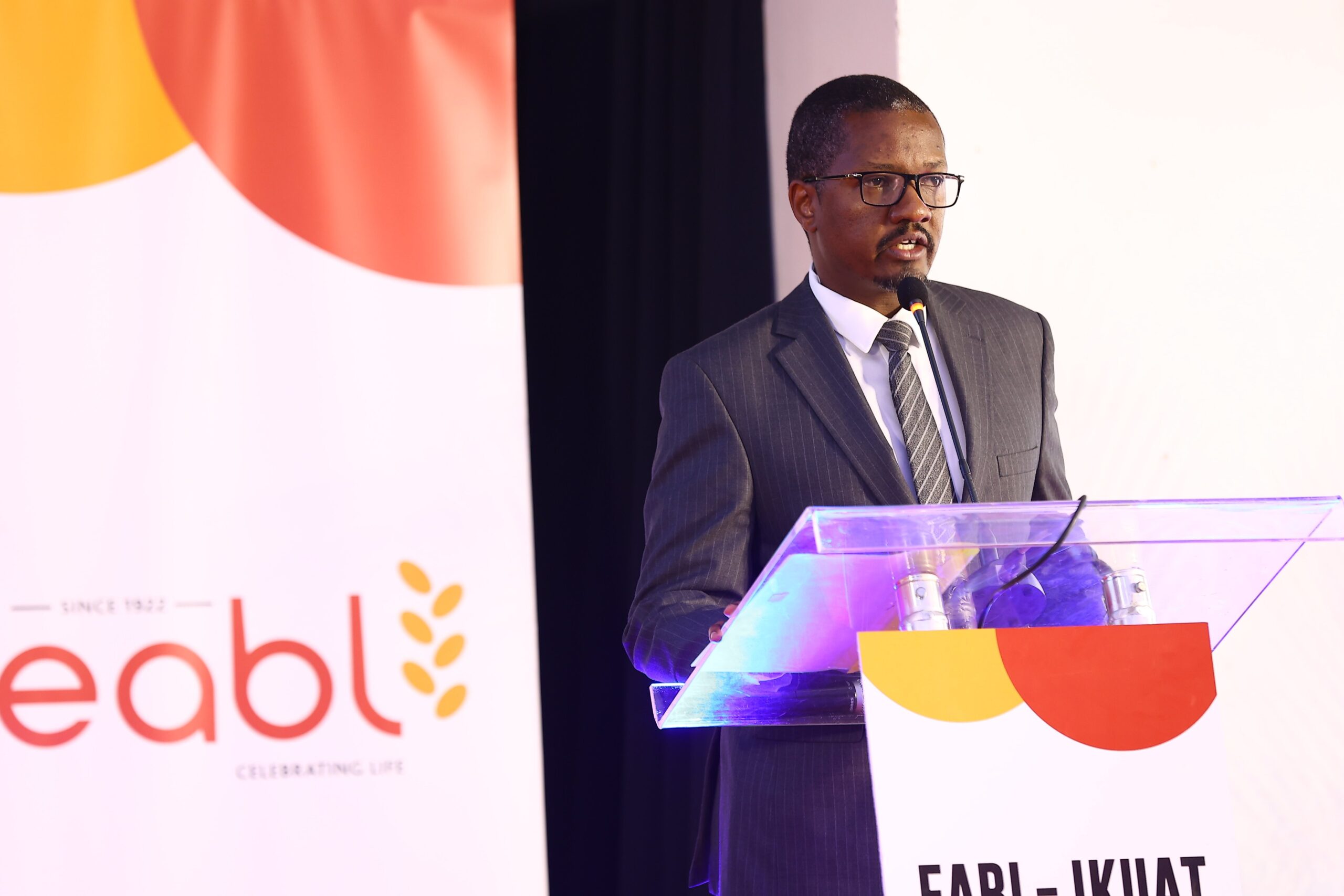
EABL Corporate Relations Director, Eric Kiniti
EABL’s lawyers have rejected the harassment allegations outright as entirely false, malicious and without factual or legal foundation, asserting that Daly was employed not by KBL or Diageo but by a separate firm, JAE Engineering, and that his departure from Kenya had nothing to do with the company.
JILK rejects that framing entirely.
The company maintains that during the 2017–2019 project period it received no internal complaints against Daly and conducted no internal investigation and that the swift departure of a man accused of indecent assault, followed by a corporate disclaimer of any employment relationship with him, is precisely the kind of pattern that turns a personnel problem into an allegation of corporate complicity.
Kamau later alleged, in a January 2026 letter to the Director of Public Prosecutions, that Karuku and Kiniti facilitated Daly’s departure specifically to help him evade accountability, and that Diageo and KBL subsequently pressured JILK to drop the harassment complaints and when that failed, allegedly turned the company’s own litigation machinery against him.
The Whistleblower Report: Manufactured Defence or Genuine Red Flag?
For two years after the harassment complaint, the arbitration over JILK’s Sh2.45 billion claim proceeded largely on its own track. Then, in mid-2022, an anonymous whistleblower report surfaced addressed not at Daly, not at Karuku, not at Kiniti, but at JILK’s own chief executive, Sammy Kamau, and at the arbitrator himself, QS Mutinda Mutuku.
The report accused Kamau and Mutuku of conspiring to manipulate the arbitration in JILK’s favour. According to court records, EABL forwarded this anonymous report to the DCI but, crucially, JILK contends that neither EABL nor the whistleblower ever lodged a formal police complaint that would have allowed the allegations to be properly investigated and tested.
Instead, the report sat as an unverified document until December 2024, when with the arbitrator’s award imminent EABL filed a High Court petition built substantially around it.
JILK’s position is unambiguous: the whistleblower report, it says, was fabricated, timed and deployed for one purpose to manufacture a pretext for halting an arbitration the company was about to lose, and to do so by smearing the integrity of the very arbitrator who was about to rule against it.
If that allegation is ever proven in court, it would not be a footnote to a commercial dispute.
It would be evidence of a Sh2.45 billion company deliberately fabricating documents and feeding them to Kenya’s criminal investigative apparatus to obstruct a legitimate arbitral process precisely the conduct JILK has now formally charged as conspiracy to defeat justice and fabrication of evidence.
The Petition That Stopped an Award and the Judge Who Walked Away
On 1 December 2024, Kenya Breweries Limited filed a constitutional petition in the High Court seeking to nullify the arbitration proceedings entirely, alleging that the process was fundamentally compromised.
Among KBL’s specific claims: that arbitrator Mutinda Mutuku had failed to disclose payments totalling roughly Sh324,000 that he allegedly received from JILK and from Kamau personally, shortly before his February 2020 appointment as sole arbitrator.
The petition achieved its immediate objective.
The High Court granted conservatory orders barring the arbitrator from publishing his award orders that, according to JILK’s subsequent filings, have now stalled the release of a Sh2.45 billion ruling for fourteen months and counting.
Legal commentators, including lawyer Nelson Havi, have publicly criticised the scope and duration of the orders as without precedent for a case at this stage of arbitration.
The petition has also become a magnet for judicial recusals.
In February 2026, High Court Judge Freda Mugambi withdrew from the case during a directions hearing, citing concerns over a possible conflict of interest and stating that stepping aside was necessary to safeguard public confidence in the court’s impartiality, with the file referred to the Principal Judge of the Commercial Division for reassignment.
JILK’s CEO has gone further still in his public framing of the recusal saga, alleging that the entire petition and the litigation chaos it has generated, including the judicial withdrawals forms part of a coordinated scheme to punish him for standing behind the two women who first went to Muthaiga Police Station six years ago.
Separately, JILK has challenged the right of a law firm linked to a former Attorney General to represent KBL in the petition to nullify the Sh2.4 billion award, arguing the firm’s earlier engagement on JILK’s side creates a conflict that would compromise the contractor’s right to a fair hearing a dispute that remains before the court alongside the substantive nullification petition.
“Bring It On”: The Defamation Threats and Five Planned Criminal Charges
As JILK escalated its allegations publicly, EABL’s leadership did not stay silent.
Jane Karuku and Eric Kiniti have threatened a defamation suit against Kamau over the sexual harassment allegations a threat Kamau has met head-on, reportedly responding with nothing more than two words: bring it on.
Kamau’s response was not bravado alone.
According to his January 2026 letter to the Director of Public Prosecutions, he intends to bring five separate criminal charges against Karuku, Kiniti and Daly.
He has asked the DPP’s office for assistance in accessing the evidence and information already compiled by police on the harassment matter, and in a request that should alarm anyone watching this case has asked the DPP to help facilitate Brendan Daly’s return to Kenya to face those charges in person.
JILK’s broader application for leave to privately prosecute names not only Daly, Quirke, Karuku and Kiniti but Diageo PLC, EABL and KBL as corporate entities, and seeks arrest warrants to compel the accused to take a plea.
The applicants have asked the court to summon Diageo PLC CEO Sir Dave Lewis, KBL CEO Andrew Kilonzo and EABL CEO Jane Karuku to appear in connection with the application. Court proceedings on the private prosecution bid have already been marked by delay: earlier hearings were told that EABL had not been fully served with all the relevant documents, an issue that has itself contributed to the case’s slow progress, with the matter most recently set down for a mention hearing in early May 2026.
May 2026: Diageo Goes on the Offensive and the DPP Pushes Back, Hard
If there were any doubt about how seriously Diageo now regards the criminal exposure flowing from this case, it evaporated in May 2026.
That month, Diageo PLC petitioned the High Court for an order permanently barring the DPP, the DCI, the Attorney General and JILK from pursuing any criminal proceedings against it arising from the Kisumu dispute framing the threat of prosecution as a malicious tactic deployed to gain leverage in what Diageo insists is purely a civil and commercial disagreement.
The DPP’s office did not simply oppose the application. It moved to have it thrown out altogether.
In a preliminary objection, the DPP argued that Diageo had approached the court prematurely, since no decision had been made to charge or prosecute the company, and that the petition was based on speculation challenging criminal proceedings that had neither been initiated nor sanctioned by the Office of the Director of Public Prosecutions.
The DPP further argued that prosecutorial power is constitutionally vested exclusively in its office under Article 157, and that granting Diageo’s request would unconstitutionally subordinate that independence to the control of the court, contrary to Article 157(10).
Perhaps most tellingly, the DPP invoked Section 193A of the Criminal Procedure Code which establishes that the mere existence of civil, commercial or arbitral proceedings does not bar criminal investigations or prosecutions arising from the same underlying facts and warned that granting Diageo the blanket immunity it sought would shield the company from accountability indefinitely, regardless of what any future investigation might uncover, in a manner the DPP says runs contrary to the public interest.
Read plainly, this is one of Kenya’s most powerful prosecutorial offices telling the High Court, on the record, that a multinational drinks giant has asked for a permanent shield against criminal accountability for conduct that has not even been formally investigated yet and that doing so would be unconstitutional.
The Asahi Exit: Selling the House While the Locks Are Being Changed
All of this is unfolding against the backdrop of the largest corporate transaction in EABL’s history.
In December 2025, Diageo announced it would sell its entire 65 percent stake in EABL to Japan’s Asahi Group Holdings, in a deal reported to be worth approximately Sh296.5 billion part of a stated global strategy to exit non-core markets and dispose of assets outside Diageo’s core portfolio.
JILK has read the timing very differently.
In January 2026, the contractor filed a Notice of Motion against Diageo PLC, KBL, EABL and the Competition Authority of Kenya, asking the High Court to compel the first three respondents to deposit Sh3 billion into court pending determination of its claims and asked the court, through lawyer Kibe Mungai, to prioritise the matter and deliver judgment by 30 April 2026, explicitly because regulatory approvals for the Asahi sale were expected between May and June 2026.
The filing warned that a planned sale of shares could jeopardise enforcement of the pending arbitral award and JILK’s related claims altogether.
In May 2026, JILK went further still, filing a fresh petition alongside company directors Bertha Wanjiru Ndirangu, Mary Njeri Wanyutu and Sammy Maina Kamau seeking urgent conservatory orders to block the Diageo–Asahi share transfer entirely pending investigation into the alleged human rights and corporate governance violations at the heart of this case.
That petition, filed against a backdrop of complaints lodged with the Competition Authority of Kenya in January 2026 accusing Diageo and EABL of unfair business practices, names the Cabinet Secretary for the National Treasury, the Attorney General, the Capital Markets Authority and the Competition Authority of Kenya as respondents, and explicitly cites incidents of sexual harassment involving female employees, the use of unauthorised personnel on the project, and fabrication of evidence in the arbitration as grounds for blocking the deal.
The petitioners argue the transaction cannot proceed until the Attorney General confirms that proper human rights due diligence has been conducted in line with the United Nations Guiding Principles on Business and Human Rights a standard that, if applied rigorously to the allegations in this case, Diageo and EABL would struggle to meet.
JILK is not alone in sounding the alarm.
A separate petition by Bia Tosha Distributors Limited, a former Diageo distributor, has also sought to halt the Asahi transaction over unresolved legal disputes, with Bia Tosha’s lawyer warning that once Diageo disposes of its Kenyan assets, any judgment obtained against the multinational locally may become effectively unenforceable.
And a formal objection lodged with the Capital Markets Authority by minority shareholder Shane Ngechu, through Nairobi law firm Wamalwa and Echesa Co. Advocates, has pulled the regulatory dimension of the sale into the open turning what Diageo clearly hoped would be a clean, headline-grabbing exit into a transaction shadowed by allegations of sexual harassment, fabricated evidence, and arbitration corruption at every turn.
The Boardroom Exodus Nobody Has Explained
Against this backdrop, EABL’s announcement in mid-January 2026 that Group Chief Financial Officer and Executive Director Risper Ohaga would step down at the end of June 2026 roughly a month after the Asahi deal was announced has not gone unnoticed by market analysts. EABL’s official statement framed the departure, after six years in the role, as Ohaga’s choice to pursue opportunities outside the group, with the company praising her record on governance, internal controls and investor relations through the Covid-19 period and beyond.
EABL has offered no public account of whether Ohaga’s exit bears any relation to the mounting legal exposure detailed in this investigation.
But the timing a senior executive responsible for governance and financial controls departing within weeks of a transaction that multiple petitioners say is designed to place the company’s assets beyond the reach of Kenyan courts is, at minimum, a coincidence that EABL’s board owes the Kenyan public an explanation for.
What This Case Is Really About
Strip away the arbitration figures, the petitions, the recusals and the corporate statements, and what remains is this: two Black Kenyan women say they were sexually harassed and indecently assaulted by a foreign executive on a flagship Diageo project.
They reported it to police. The man left the country within weeks.
The company that employed them says senior EABL officials gave police misleading information about his employment status and his departure. When the women’s employer refused to drop the matter and pressed forward with a billion-shilling arbitration claim, an anonymous report accusing that employer’s own chief executive of corruption appeared a report JILK says was fabricated and which was used, two years later, to freeze an arbitration award the company was about to win.
Diageo, EABL and KBL deny all of it.
They say the harassment claims are false and malicious, that Daly was never their employee, that the whistleblower report was a legitimate flag raised through proper channels, and that JILK’s billion-shilling claim is itself the product of a contractor inflating a modest dispute into an extortion attempt timed to extract maximum value ahead of a sale.
Those denials are on the record and deserve to be weighed. But they do not explain why a company with nothing to hide would ask a court to permanently bar Kenya’s chief prosecutor from ever investigating it and they do not explain why the DPP’s office felt compelled to tell the High Court, in May 2026, that granting such a request would be unconstitutional.
As the High Court continues to weigh the nullification petition, the private prosecution application, and now the petitions seeking to halt the Asahi sale, one fact is not in dispute: Diageo wants this deal closed, and it wants it closed soon. Every court filing examined for this investigation suggests the company is racing a clock that the allegations against it sexual harassment, fabricated evidence, conspiracy to defeat justice were never supposed to survive long enough to outrun.
They have survived six years. The question now is whether they survive the sale.
Kenya Insights allows guest blogging, if you want to be published on Kenya’s most authoritative and accurate blog, have an expose, news TIPS, story angles, human interest stories, drop us an email on [email protected] or via Telegram











Inside the Cover-Up: How Diageo and EABL Allegedly Buried a Sexual Harassment Scandal at the Kisumu Brewery and Are Now Racing to Sell the Evidence Out of Kenya’s Reach

Lopokoiyit The Fraudster? Why A Past Scandal At Safaricom Has Come To Haunt Absa Executive Sitoyo

FACTBOX – Key Provisions In Iran-US Draft Memorandum Of Understanding According To Iranian Media

FACTBOX – What Sanctions Could Be Lifted Under New US-Iran Peace Deal?

Politician Charged in Court for Defrauding Couple Sh1 Million in Botched Deputy President’s Office Tender Deal

After Ndegwa’s Controversial Reign, Vodacom Will Likely Name a Mzungu CEO Next To Clear The Mess Left

The Chairman’s Conflicts: How Adil Khawaja’s Boardroom Empire Compromised Safaricom’s Governance

Businessman Philip Waithaka Kinuthia’s Minor Son Allegedly Drove Drunk, Killed Two Peponi Students in Ngong Road Horror Crash as Claims of Cover-Up Intensify

Painted Into a Corner: Inside Crown Paints’ Sh791 Million Tanzania Gamble, the Shutdown of a Kenyan Factory, and a Sh244 Million Payday for the Boardroom

Shiquo wa Hii Styles Alleges Powerful Somali Cartel Used State Officials to Cripple Her Multi-Million Shoe Empire

Inside NCBA’s Decline: How a Banking Giant Lost Its Strategic Edge

Cement, Cash and Courts: How the Hashu Dynasty Crushed the Ramji Brothers for Fourteen Years and Why the Walls Are Now Closing In

Standard Chartered Ghosts Haunt Joshua Oigara At Stanbic As Whistleblower Spills Beans

Inside The Urban Planning Cartel That Owns Nairobi

South Sudan: Adut Salva Kiir’s Shadow Treasury Exposed
Businessman Philip Waithaka Kinuthia’s Minor Son Allegedly Drove Drunk, Killed Two Peponi Students in Ngong Road Horror Crash as Claims of Cover-Up Intensify

Why Ruto’s Favourite Candidate Adan Mohammed Could Be Locked Out of the KRA Top Job

Why John Ngumi Is Running From the EACC and Why the Sh415 Million Payday May Be the Least of His Worries

Betika Faces DCI Probe, Directors Arrest and License Revocation Over Massive 29.5 Million Safaricom Customers’ Data Breach

The President’s Daughter and The Missing Witness: How Adut Salva Kiir’s Shadow Treasury Silenced Its Most Dangerous Critic
-
 Business6 days ago
Inside NCBA’s Decline: How a Banking Giant Lost Its Strategic Edge
-
 Investigations2 weeks ago
Cement, Cash and Courts: How the Hashu Dynasty Crushed the Ramji Brothers for Fourteen Years and Why the Walls Are Now Closing In
-
 Business5 days ago
Standard Chartered Ghosts Haunt Joshua Oigara At Stanbic As Whistleblower Spills Beans
-
 Investigations1 week ago
Inside The Urban Planning Cartel That Owns Nairobi
-
 Africa4 days ago
South Sudan: Adut Salva Kiir’s Shadow Treasury Exposed
-
 News16 hours ago
Businessman Philip Waithaka Kinuthia’s Minor Son Allegedly Drove Drunk, Killed Two Peponi Students in Ngong Road Horror Crash as Claims of Cover-Up Intensify
-
 Business4 days ago
Why John Ngumi Is Running From the EACC and Why the Sh415 Million Payday May Be the Least of His Worries
-
 Africa5 days ago
The President’s Daughter and The Missing Witness: How Adut Salva Kiir’s Shadow Treasury Silenced Its Most Dangerous Critic