
Business
Painted Into a Corner: Inside Crown Paints’ Sh791 Million Tanzania Gamble, the Shutdown of a Kenyan Factory, and a Sh244 Million Payday for the Boardroom
How Kenyan profits are bankrolling a loss-making Tanzanian subsidiary, why a Kenyan factory is being wound down, and why directors walked away with more money than half the dividend pool as shareholders head into the 68th AGM with a long list of uncomfortable questions

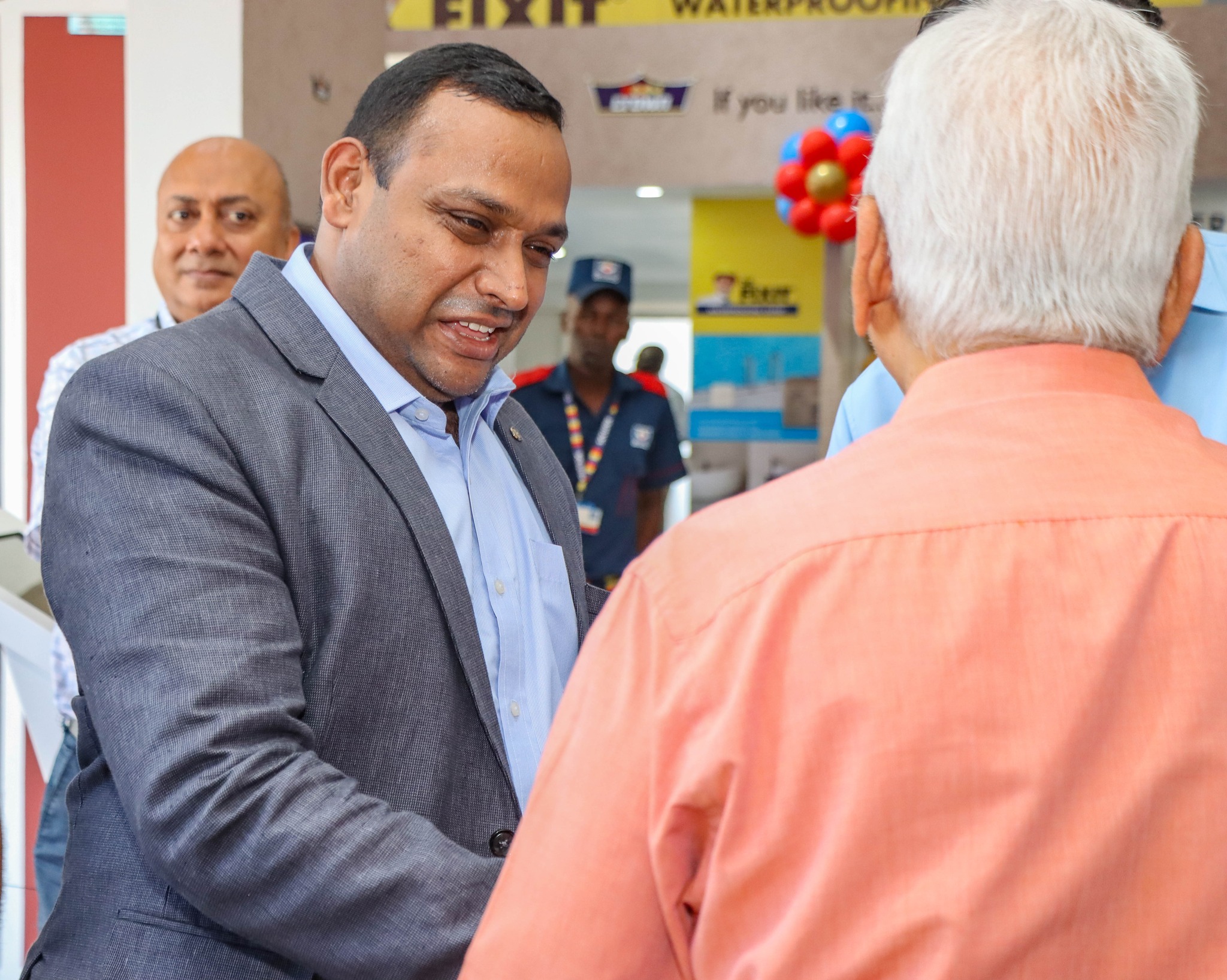
Nairobi — When Crown Paints Kenya Plc shareholders log into, or walk into, the company’s 68th Annual General Meeting on or around 19 June 2026, they will be asked to applaud a headline profit jump. They should think twice before clapping. Behind the celebratory tone of the chairman’s statement sits a balance sheet decision that should alarm every minority investor on the Nairobi Securities Exchange: while the Kenyan business generated almost the entirety of the group’s profit, the board chose to pour fresh capital into a Tanzanian unit that is bleeding money, wrote off the better part of a billion shillings in regional impairments, shut down a Kenyan manufacturing subsidiary, and paid its directors a combined package that swallows roughly a quarter of the entire group’s net earnings.
This is the story the glossy investor briefings will not tell you in plain language. This publication has gone through the company’s own disclosures, cross-checked them against regional reporting, and reconstructed the picture that Crown Paints management would rather shareholders did not piece together before they walk into the AGM hall.
A Kenyan Cash Cow Funding a Tanzanian Money Pit
Crown Paints Kenya Plc closed the 2025 financial year with after-tax profit up 74 percent to Sh948 million, a number management will be keen to put on every slide at the AGM. What the slides will gloss over is where that money actually came from, and where some of it has since gone.
The arithmetic is not subtle.
Kenya remains the overwhelming engine of this business, contributing the vast majority of group revenue, while the regional units in Uganda, Tanzania and Rwanda together account for only a small single-digit share. Yet it is precisely those regional units, and Tanzania above all, that have just absorbed a fresh Sh791.47 million capital injection, according to the company’s own annual report.
That injection lifts total cumulative investment in Crown Paints Tanzania Ltd to Sh1.56 billion, up from roughly Sh773 million the year before.
In other words, the board has effectively doubled down on a subsidiary that, in the very same financial year, triggered an impairment loss of Sh806 million on its own. Total impairment losses across the Tanzania, Uganda and Rwanda units exploded more than fivefold year-on-year, from about Sh150 million in 2024 to Sh914 million in 2025.
An impairment of this scale is not an abstract accounting entry. It is the company’s own auditors and directors formally acknowledging that the value of the Tanzanian investment has collapsed on paper.
And yet, in the same breath, management told shareholders it was injecting still more cash into that same operation, while simultaneously discontinuing the operations of a Kenyan subsidiary, Crown Paints Allied Industries Limited, and beginning the process of deregistering it entirely.
Put plainly: a profitable Kenyan manufacturing footprint is being trimmed at the very moment a loss-making Tanzanian outpost is being expanded with a new depot in Dodoma, a new factory in Dar es Salaam, a remodelled distribution model, a freshly opened warehouse and showroom in Dar es Salaam, and new training and marketing budgets for painters and dealers across Tanzania. If this is a turnaround plan, it is one being financed almost entirely by Kenyan shareholders, for the benefit of a market that has yet to show it can stand on its own feet.
The Silence of the Finance Director
Perhaps the most damning detail in this entire saga is not a number at all. It is a non-answer.
Regional business publication The EastAfrican reported that it sought, repeatedly, to establish the cost of the new Dodoma depot project from Crown Paints Group Finance Director Patrick Mwati. Mwati did not respond to calls or text messages seeking that information.
This is not a minor administrative oversight. Mr Mwati is the finance director of a publicly listed company that is asking its shareholders to keep funding subsidiaries with a documented history of losses.
When a journalist asks a straightforward question about how much a flagship recovery project costs, and the finance director goes silent, shareholders are entitled to ask what exactly is being hidden, and from whom.
If the cost of the Dodoma project cannot be disclosed to the media, can it at least be disclosed, in full, with supporting board resolutions and projected returns, to the shareholders who are ultimately funding it? That is a question the AGM floor should not let Mr Mwati avoid a second time.
The Going Concern Admission Buried in the Fine Print
Crown Paints Kenya’s own annual report contains language that, read carefully, should worry any minority shareholder. The company discloses that Regal Paints Uganda Limited and Crown Paints Tanzania Limited have, in its own words, a history of losses, and that all of the group’s subsidiaries rely on the parent company for working capital, with their ability to continue as going concerns dependent on continued support from the Kenyan parent.
The parent company, the report states, has formally committed in writing to continue providing financial support to these subsidiaries indefinitely, to ensure they can keep trading.
This is, in effect, an open-ended guarantee underwritten by Crown Paints Kenya Plc, and therefore by every shareholder on its register, including the roughly one third of the company held by ordinary investors through the Nairobi bourse.
Despite this, the directors maintain that the outlook for the regional subsidiaries is promising, that they have no immediate plan to cease operations or liquidate any of them, and that they are confident the loss-making units will become profitable in the foreseeable future.
Shareholders have heard variations of this confidence before.
The Tanzanian unit’s investment has nearly doubled since 2024 while its impairments have grown more than fivefold. At what point does promising outlook become a euphemism for sunk cost fallacy on an industrial scale?
Sh244 Million for the Boardroom While a Kenyan Factory Shuts Down
If the Tanzania story is about where shareholder capital is going, the executive remuneration disclosures are about who is benefiting along the way.
According to the Directors’ Remuneration Report for the year ended 31 December 2025, total emoluments paid to eight directors came to Sh243.64 million. On a group net profit of Sh948 million, that is approximately 25.7 percent of the entire year’s earnings consumed by boardroom pay, before a single shilling reaches an ordinary shareholder.
The breakdown makes for uncomfortable reading at a time when a Kenyan subsidiary is being wound down and a Tanzanian one is absorbing fresh hundreds of millions. Vice-Chairman and executive director Hussein H.R.J. Charania received approximately Sh79.29 million, comprising gross earnings of Sh68.71 million plus an Sh8.58 million bonus. Finance Director Patrick M. Mwati, the same executive who would not return calls about the Dodoma project’s cost, took home approximately Sh63.36 million.
Outgoing Group CEO Dr Rakesh K. Rao, who stepped down from the role on 1 October 2025 after two decades at the helm, nonetheless received approximately Sh48.56 million for the year, a sum that reflects his long tenure but which shareholders may reasonably ask to have itemised in full, including any exit package, accrued leave, pension top-ups, or consultancy arrangements that followed his departure.
Incoming Group CEO Mustafa Turra, who only took office on 1 October 2025 after joining from Olam Agri, received approximately Sh30.18 million for a partial year in the role, including a bonus of roughly Sh11.71 million paid shortly after his appointment.
A signing bonus of that size, awarded within months of arrival and before any full-year performance can reasonably be assessed, is the kind of golden hello that shareholders in any market would be entitled to interrogate.
Non-executive directors were not left out. The remuneration report records sitting allowances and a category of other benefits, including housing, motor vehicles, school fees and cash allowances, totalling around Sh16 million across the board.
The Sh427 Million Question: What Shareholders Actually Get
Now place the boardroom number next to what ordinary shareholders are being offered.
The board has recommended a first and final dividend of Sh3 per share for the 2025 financial year, payable on the company’s 142.36 million issued shares. That works out to a total distribution of approximately Sh427 million to all shareholders combined, across every individual and institutional investor on the register.
Run the comparison again, slowly. Eight directors collectively received approximately Sh244 million in pay and benefits for the year. The entire shareholder base, more than 142 million shares spread across institutions, pension funds, and thousands of ordinary Kenyans, will receive approximately Sh427 million in total dividends.
Directors, as a group, walked away with well over half of what the entire shareholder base will collect, despite the fact that shareholders are the ones who own the company, who bear the risk of the Tanzanian write-downs, and who are underwriting the going-concern guarantees extended to loss-making subsidiaries.
To be clear, executive pay at a company of this size is not inherently scandalous, and boards are entitled to compensate talent competitively, particularly during a leadership transition.
But the test is proportionality and timing.
A board that has just recorded an Sh914 million impairment charge, that is asking shareholders to accept continued open-ended funding of loss-making foreign units, and that is shutting down a domestic subsidiary, is in a weak position to defend a remuneration bill equivalent to 25.7 percent of net profit and well over half the dividend pool. The optics alone should trouble any governance-conscious institutional investor on the register.
Who Really Calls the Shots: The Belize Connection
Any discussion of Crown Paints’ capital allocation choices is incomplete without understanding who actually controls the company.
Crown Paints Kenya Plc is majority controlled by Crown Paints and Building Products Limited, a Kenyan-incorporated entity holding approximately 48.42 percent of the shares. That entity is itself a wholly owned subsidiary of Barclay Holdings Limited, a company incorporated in Belize, an offshore jurisdiction. Barclay Holdings also holds a further 19.36 percent of Crown Paints Kenya directly. Combined, this gives the Belize-incorporated ultimate parent effective control of close to 68 percent of the company. The remaining roughly 32 percent is held by minority shareholders through the Nairobi Securities Exchange, including ordinary Kenyan investors and local pension and unit trust funds.
There is nothing illegal about an offshore holding structure, and many legitimately structured multinational groups use them. But when a company controlled from an offshore jurisdiction is simultaneously winding down a Kenyan manufacturing subsidiary, expanding a loss-making foreign unit with fresh shareholder-backed capital, and paying its insider-heavy executive team a remuneration package that dwarfs typical market benchmarks relative to net profit, minority shareholders are entitled to ask whether the structure is serving the company’s stated public shareholders, or a narrower set of interests sitting above the Kenyan listed entity.
Who Carries the Risk, and Who Cashes the Cheque
Strip away the corporate language and the picture that emerges is straightforward. Kenyan operations generate the profit. Kenyan shareholders, through retained earnings and the parent company’s formal support undertakings, are effectively financing the Tanzanian recovery bet. A Kenyan manufacturing subsidiary is being shut down and deregistered. Impairment charges of close to a billion shillings have been booked against regional assets in a single year. And against that backdrop, the people making these decisions awarded themselves a combined package of Sh244 million, more than half of what the entire shareholder base will receive in dividends.
If the Tanzanian bet pays off in future years, management will rightly claim credit for a courageous long-term strategy. But if it does not, and the track record so far, two consecutive years of rising investment alongside rising impairments, gives little comfort, it will be minority shareholders who absorb the loss through depressed share value and foregone dividends, while the executives who approved the strategy will already have banked their bonuses for 2025 regardless of the outcome. That asymmetry, heads the executives win, tails the shareholders lose, is precisely the kind of structure that good corporate governance frameworks exist to prevent.
The Questions Shareholders Should Put to the Board, On the Record
Ahead of the 68th AGM, shareholders, particularly the minority investors who collectively hold close to a third of this company, have every right to demand specific, numerical, on-the-record answers to the following questions. Vague reassurances about promising outlooks should not be accepted as a substitute for hard figures.
1. Why was a further Sh791.47 million injected into Crown Paints Tanzania Ltd, bringing cumulative investment to Sh1.56 billion, in the same financial year that the unit triggered an Sh806 million impairment charge? What independent valuation, sensitivity analysis or break-even model justifies this injection rather than a managed exit or restructuring?
2. What is the total, board-approved budget for the new Dodoma depot and the new Dar es Salaam factory, including land, construction, equipment and working capital? Why could Group Finance Director Patrick Mwati not provide this figure when asked directly by journalists, and will he provide it to shareholders today, in writing?
3. Given that the overwhelming majority of group profit is generated in Kenya, what was the precise rationale for discontinuing operations at Crown Paints Allied Industries Limited and initiating its deregistration? What happens to its employees, its physical assets, its land, and any outstanding liabilities or contracts?
4. How does the board justify total directors’ emoluments of Sh243.64 million, representing 25.7 percent of group net profit and more than half the total dividend payable to all shareholders, in a year marked by a near fivefold increase in impairment losses to Sh914 million?
5. What specific value did outgoing CEO Dr Rakesh Rao deliver in 2025 to justify approximately Sh48.56 million in compensation in a year he led the company for only nine months, and does this figure include any severance, consultancy, or post-departure retainer arrangements that should be separately disclosed?
6. What performance conditions were attached to the approximately Sh11.71 million bonus paid to incoming CEO Mustafa Turra within months of his appointment, and will any element of his or other executives’ bonuses be subject to clawback if the Tanzanian turnaround fails to materialise?
7. What related-party transactions, if any, exist between Crown Paints Kenya Plc or its subsidiaries on one hand, and Barclay Holdings Limited, Crown Paints and Building Products Limited, or any entity connected to members of the Charania family or other directors, on the other? Can the board table a full schedule of these transactions for the 2025 financial year?
8. What is the board’s realistic, numbers-based estimate of how much additional capital the Tanzania, Uganda and Rwanda subsidiaries will require from the Kenyan parent over the next three financial years, and what is the projected impact of that funding commitment on future dividend levels and group gearing?
9. The annual report states the parent company has issued formal undertakings of continued financial support to loss-making subsidiaries. Can the board table these undertakings in full at the AGM, including any caps, conditions, or termination clauses?
10. Does the board accept that a remuneration structure under which directors are paid in full regardless of the outcome of the Tanzania investment, while minority shareholders bear the downside through impairments and constrained dividends, represents a misalignment of interests, and if so, what changes to remuneration structure will be proposed for 2026?
The Bottom Line
Crown Paints had a good year in Kenya. That is not in dispute. What is in dispute is whether the proceeds of that good year are being deployed in the interests of the shareholders who actually own this company, or in the interests of preserving a regional footprint and a remuneration structure that primarily benefits a small group of insiders sitting atop an offshore-controlled corporate pyramid.
A Kenyan factory is being shut down.
A Tanzanian subsidiary with a documented history of losses and a freshly booked Sh806 million impairment has just received Sh791 million more in capital, on top of the Sh773 million already sunk into it. The finance director will not say what the new Dodoma project costs. And the people who signed off on all of this paid themselves Sh244 million, more than half of what every shareholder combined will receive in dividends.
The 68th AGM should not be a coronation. It should be the moment Crown Paints’ board is required, in public, on the record, and in numbers, to explain exactly how this adds up in the interests of the shareholders who put their capital behind this company. Anything less, and the promising outlook so often invoked in the company’s filings will remain exactly what it has been for the past two years: an expensive, unverified promise, paid for by Kenyan shareholders, with no one yet held to account.
Kenya Insights allows guest blogging, if you want to be published on Kenya’s most authoritative and accurate blog, have an expose, news TIPS, story angles, human interest stories, drop us an email on [email protected] or via Telegram


Painted Into a Corner: Inside Crown Paints’ Sh791 Million Tanzania Gamble, the Shutdown of a Kenyan Factory, and a Sh244 Million Payday for the Boardroom

Shiquo wa Hii Styles Alleges Powerful Somali Cartel Used State Officials to Cripple Her Multi-Million Shoe Empire

Absa Bank Kenya Faces Mounting Internal Fraud Storm as Parliament Demands Answers Over Sh3 Million Vanishing From Customer Accounts

Secret Footage Reveals 500kg Zimbabwean Gold Smuggling Pipeline Into Kenya Linked to ‘Spiritual Son’ Networks

mTicket CEO Brian Okinyi Exposed In Court For Attempted Sh500K Fraud

How Mary Wambui’s Bid To Delete Her Past Collided With A Fresh Sh400 Million Conflict-Of-Interest Finding

Mary Wambui’s Glee Hotel Faces Auction Over Sh100 Million Debt

Somali Government Adviser Held in Kenya Over Alleged Sh3.5 Million Gold Fraud and Terrorism Links

Reprieve for Lawyer Conrad Maloba as Court Extends Orders Blocking His Prosecution in Gold Fraud Case

How Adil Popat Saved His Empire On The Eve Of Imperial Bank Collapse and Why Kenya’s Mainstream Media Buried The Story

Inside NCBA’s Decline: How a Banking Giant Lost Its Strategic Edge

Cement, Cash and Courts: How the Hashu Dynasty Crushed the Ramji Brothers for Fourteen Years and Why the Walls Are Now Closing In

Standard Chartered Ghosts Haunt Joshua Oigara At Stanbic As Whistleblower Spills Beans

Inside The Urban Planning Cartel That Owns Nairobi

South Sudan: Adut Salva Kiir’s Shadow Treasury Exposed

Why Ruto’s Favourite Candidate Adan Mohammed Could Be Locked Out of the KRA Top Job

Betika Faces DCI Probe, Directors Arrest and License Revocation Over Massive 29.5 Million Safaricom Customers’ Data Breach

Why John Ngumi Is Running From the EACC and Why the Sh415 Million Payday May Be the Least of His Worries

LifeCare on the Brink: SHA Fraud, Stolen Wages, and the Rotten Empire Jayesh Saini Built

The President’s Daughter and The Missing Witness: How Adut Salva Kiir’s Shadow Treasury Silenced Its Most Dangerous Critic
-
 Business5 days ago
Inside NCBA’s Decline: How a Banking Giant Lost Its Strategic Edge
-
 Investigations1 week ago
Cement, Cash and Courts: How the Hashu Dynasty Crushed the Ramji Brothers for Fourteen Years and Why the Walls Are Now Closing In
-
 Business4 days ago
Standard Chartered Ghosts Haunt Joshua Oigara At Stanbic As Whistleblower Spills Beans
-
 Investigations1 week ago
Inside The Urban Planning Cartel That Owns Nairobi
-
 Africa3 days ago
South Sudan: Adut Salva Kiir’s Shadow Treasury Exposed
-
 Business3 days ago
Why John Ngumi Is Running From the EACC and Why the Sh415 Million Payday May Be the Least of His Worries
-
 Africa4 days ago
The President’s Daughter and The Missing Witness: How Adut Salva Kiir’s Shadow Treasury Silenced Its Most Dangerous Critic
-
 Business3 days ago
How Adil Popat Saved His Empire On The Eve Of Imperial Bank Collapse and Why Kenya’s Mainstream Media Buried The Story