
Business
Shiquo wa Hii Styles Alleges Powerful Somali Cartel Used State Officials to Cripple Her Multi-Million Shoe Empire

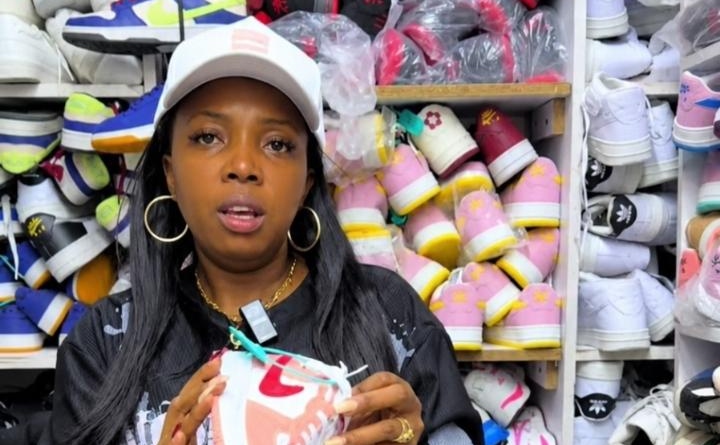
Popular businesswoman and social media personality Shiquo wa Hii Styles has accused a powerful network of importers and corrupt government officials of orchestrating a campaign to cripple her thriving footwear business following the seizure of stock worth millions of shillings.
The entrepreneur, whose shoe store operates from RNG Plaza in Nairobi’s Central Business District, says officers confiscated goods valued at between KSh15 million and KSh20 million during an operation conducted around June 9, 2026. The seized merchandise reportedly included sneakers bearing the trademarks of global brands such as Nike.
What initially appeared to be a routine anti-counterfeit enforcement operation has since evolved into a public dispute marked by serious allegations of business rivalry, regulatory misconduct, and ethnic tensions within Kenya’s highly competitive import sector.
In a series of emotional videos shared online, Shiquo alleged that influential importers are using their connections within government institutions to push independent traders out of the market.
According to her, some traders are being pressured to abandon direct importation and instead purchase stock through established distribution networks.
“They want me to buy from them and not import on my own,” she said in one of the videos, claiming that her success as an independent trader had made her a target.
The businesswoman described the seizure as devastating, saying it wiped out years of effort and investment.
“Every piece of shoe was taken. It’s a huge loss for me. We have to start again, relearn and rebuild,” she said.
The controversy deepened after conflicting accounts emerged regarding the alleged operation.
The Anti-Counterfeit Authority initially appeared to acknowledge that enforcement activities were underway as part of a broader campaign targeting counterfeit goods across the country.
Such operations are typically conducted under the Anti-Counterfeit Act and are intended to protect intellectual property rights and consumers from fake products.
However, the narrative shifted dramatically when the Authority’s Director of Enforcement, Osman Yusuf, publicly denied that any raid had taken place at Shiquo’s premises.
He dismissed reports of a government operation as false and suggested that the empty shelves seen in viral videos could have resulted from the movement of stock rather than an official seizure.
The conflicting statements have fueled speculation online, with supporters questioning whether regulatory agencies are being influenced by powerful business interests, while critics have challenged Shiquo’s account and demanded documentary evidence of the alleged raid.
Social media users remain sharply divided. Many have rallied behind the entrepreneur, portraying her as a symbol of the small business owner struggling against entrenched commercial networks. Others argue that the absence of publicly available raid documents, CCTV footage, or inventory records leaves significant questions unanswered.
The dispute has also reignited broader conversations about Kenya’s import economy, where competition among traders is fierce and allegations of cartel influence have surfaced repeatedly over the years.
Shiquo’s rise from social media influencer to successful retailer reflects the aspirations of many young entrepreneurs who have built businesses around the country’s growing demand for affordable fashion products. Her current predicament, whether ultimately proven to stem from enforcement action or another cause, has highlighted the vulnerability of small and medium-sized enterprises operating in highly contested markets.
Beyond the dispute itself lies a larger concern about transparency and accountability. If the allegations of collusion between business interests and public officials are substantiated, they would raise serious questions about the integrity of regulatory enforcement and the fairness of Kenya’s commercial environment.
At the same time, if the claims are found to be unfounded, the controversy underscores the reputational risks facing both businesses and government agencies in the age of viral social media.
Despite the setback, Shiquo says she intends to rebuild her business and has encouraged fellow entrepreneurs to invest in original Kenyan products and brands.
“We can also grow something from scratch,” she said.
For now, the questions surrounding the alleged seizure remain unresolved. As public scrutiny intensifies, many Kenyans are waiting for clarity from both the authorities and the businesswoman at the center of the storm.
Whether the matter ultimately reveals regulatory overreach, unfair competition, or a misunderstanding amplified online, the controversy has exposed the deep mistrust that continues to surround enforcement actions in Kenya’s import trade. Until a clear account emerges, the debate is unlikely to fade.
Kenya Insights allows guest blogging, if you want to be published on Kenya’s most authoritative and accurate blog, have an expose, news TIPS, story angles, human interest stories, drop us an email on [email protected] or via Telegram


Painted Into a Corner: Inside Crown Paints’ Sh791 Million Tanzania Gamble, the Shutdown of a Kenyan Factory, and a Sh244 Million Payday for the Boardroom

Shiquo wa Hii Styles Alleges Powerful Somali Cartel Used State Officials to Cripple Her Multi-Million Shoe Empire

Absa Bank Kenya Faces Mounting Internal Fraud Storm as Parliament Demands Answers Over Sh3 Million Vanishing From Customer Accounts

Secret Footage Reveals 500kg Zimbabwean Gold Smuggling Pipeline Into Kenya Linked to ‘Spiritual Son’ Networks

mTicket CEO Brian Okinyi Exposed In Court For Attempted Sh500K Fraud

How Mary Wambui’s Bid To Delete Her Past Collided With A Fresh Sh400 Million Conflict-Of-Interest Finding

Mary Wambui’s Glee Hotel Faces Auction Over Sh100 Million Debt

Somali Government Adviser Held in Kenya Over Alleged Sh3.5 Million Gold Fraud and Terrorism Links

Reprieve for Lawyer Conrad Maloba as Court Extends Orders Blocking His Prosecution in Gold Fraud Case

How Adil Popat Saved His Empire On The Eve Of Imperial Bank Collapse and Why Kenya’s Mainstream Media Buried The Story

Inside NCBA’s Decline: How a Banking Giant Lost Its Strategic Edge

Cement, Cash and Courts: How the Hashu Dynasty Crushed the Ramji Brothers for Fourteen Years and Why the Walls Are Now Closing In

Standard Chartered Ghosts Haunt Joshua Oigara At Stanbic As Whistleblower Spills Beans

Inside The Urban Planning Cartel That Owns Nairobi

South Sudan: Adut Salva Kiir’s Shadow Treasury Exposed

Why Ruto’s Favourite Candidate Adan Mohammed Could Be Locked Out of the KRA Top Job

Betika Faces DCI Probe, Directors Arrest and License Revocation Over Massive 29.5 Million Safaricom Customers’ Data Breach

Why John Ngumi Is Running From the EACC and Why the Sh415 Million Payday May Be the Least of His Worries

LifeCare on the Brink: SHA Fraud, Stolen Wages, and the Rotten Empire Jayesh Saini Built

The President’s Daughter and The Missing Witness: How Adut Salva Kiir’s Shadow Treasury Silenced Its Most Dangerous Critic
-
 Business5 days ago
Inside NCBA’s Decline: How a Banking Giant Lost Its Strategic Edge
-
 Investigations1 week ago
Cement, Cash and Courts: How the Hashu Dynasty Crushed the Ramji Brothers for Fourteen Years and Why the Walls Are Now Closing In
-
 Business4 days ago
Standard Chartered Ghosts Haunt Joshua Oigara At Stanbic As Whistleblower Spills Beans
-
 Investigations1 week ago
Inside The Urban Planning Cartel That Owns Nairobi
-
 Africa3 days ago
South Sudan: Adut Salva Kiir’s Shadow Treasury Exposed
-
 Business3 days ago
Why John Ngumi Is Running From the EACC and Why the Sh415 Million Payday May Be the Least of His Worries
-
 Africa4 days ago
The President’s Daughter and The Missing Witness: How Adut Salva Kiir’s Shadow Treasury Silenced Its Most Dangerous Critic
-
 Business3 days ago
How Adil Popat Saved His Empire On The Eve Of Imperial Bank Collapse and Why Kenya’s Mainstream Media Buried The Story