
Investigations
Denial Under Duress: The Untold Collapse Threatening David Lagat’s DL Group’s Empire
As creditors circle, courts freeze land, and a rival conglomerate eyes his crown jewel, tycoon David Langat insists there is nothing to see. The paper trail tells a different story.

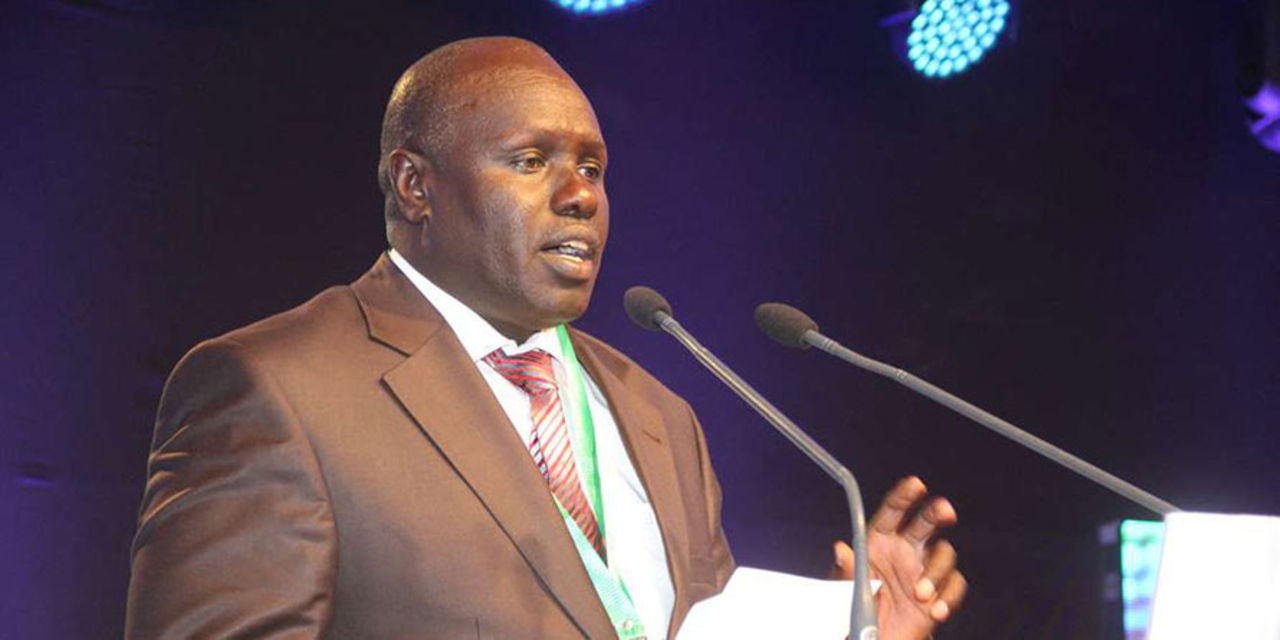
When a man with David Langat’s resources sends a corporate notice denouncing a story as ‘inaccurate and misleading’, the instinct of any seasoned journalist is not to reach for a corrections form. It is to ask the question the denial was designed to prevent: what is it, exactly, that he does not want you to know?
On May 7, 2026, DL Group of Companies issued a statement reacting to reports carried by Africa Intelligence and amplified across business platforms that Kipchimchim Group, one of Kenya’s most acquisitive agricultural conglomerates, was in active discussions to purchase tea assets linked to Langat’s business empire.
The company called the claims false, vowed to contact authorities, and assured stakeholders its operations were intact.
The statement did its job in one sense: it generated headlines saying DL Group denied the sale. What it failed to do was explain why the speculation existed in the first place, or address the compounding body of court records, auction notices, and debt enforcement actions that have quietly accumulated around DL Group’s agribusiness operations for the past three years.
“No discussions at all have taken place at any level regarding such purported sale and there is no intention whatsoever to make such sale.” That assurance would carry more weight if it had not been preceded by two separate forced auction listings of the same property.
That denial, it turns out, is the story DL Group does not want told.
A Debt Trail That Tells Its Own Story
Let us begin with the numbers, because they are not in dispute.
In July 2023, auctioneers acting on behalf of Transnational Bank published formal notices to sell two of Langat’s flagship assets: the DL Koisagat Tea Estate in Nandi County a 1,342-acre property with 2.47 million tea bushes, processing factories, fuel stations, labour camps, two schools, and a chairman’s residence as well as prime commercial property in Shimanzi, Mombasa, registered under the name Koifan Developers Ltd. The combined debt cited at the time was Sh2.1 billion. That auction was cancelled without explanation.
Less than twelve months later, the same properties were relisted for a second forced auction, this time scheduled for September 10, 2024, at a venue in Westlands, Nairobi.
By this point the tea estate alone was independently valued at approximately $14.73 million against an underlying bank debt of approximately $15.5 million, meaning the asset’s forced-sale value had fallen below the debt it was being seized to recover. That second auction’s outcome was never publicly confirmed.
Meanwhile, a separate lender, Stanbic Bank, was engaged in its own dispute with Langat’s companies over a dollar-denominated loan of $16,129,427 advanced in April 2020 at a rate of 9.25 percent per annum and repayable over 120 months.
The bank had already contracted Ascendas Kenya Limited to value the Nandi tea estate arriving at a market value of Sh2.42 billion and a forced sale value of Sh1.821 billion and the Mombasa property at Sh238 million market value. Langat’s companies rushed to court contesting the valuation and arguing, among other things, that a planned sale of his Tanzanian assets had stalled due to regulatory difficulties. The High Court ordered a fresh valuation in February 2025, giving the tycoon another brief reprieve.
Then, in April 2026, Synergy Industrial Credit Ltd a relatively small financial services company moved to enforce a judgment it had obtained against Langat and DL Koisagat Tea Estate Ltd over vehicle loans advanced in April 2016.
The original principal was Sh67.1 million, lent to finance nine heavy commercial motor vehicles repayable over 48 months, ending May 2020.
Langat and his company did not enter an appearance to defend the case. An interlocutory judgment was entered against them in August 2024.
By April 2026, the debt with accumulated interest and costs stood at Sh87 million.
A High Court order now freezes three of Langat’s personal land parcels in Cheptalal, Kericho County; Kiplombe, Eldoret; and Kaptel, Nandi County — barring him and his spouse from selling, transferring, or gifting any of them.
Three banks. Three creditors. Repeated auction notices across three years. A court freeze on personal land. And a rival conglomerate known to be in talks to buy the very assets DL Group says it has no intention of selling.
Synergy’s Sh87 million is a minor figure in isolation. But the fact that Langat’s firm did not even bother to appear in court to contest it and that the debt traces to loans taken in 2016 and never fully serviced speaks to a chronic rather than situational liquidity problem.
The Tanzania Gamble and Its Hidden Costs
In 2018, at the height of his influence, Langat made his boldest move. He spent approximately $46.5 million to acquire a 99 percent stake in three Tanzanian tea companies from British firm Rift Valley Corporation: Mufindi Tea and Coffee, Rift Valley Tea Solutions, and Kibena Tea. The deal gave DL Group an estimated 11,000-tonne annual production capacity in Tanzania, placing it among Africa’s top tea producers.
What followed was years of non-payment to Tanzanian tea farmers and factory workers in the Njombe region a crisis that became serious enough to attract the personal attention of President Samia Suluhu Hassan, who publicly announced at a campaign event in Lupembe ward that DL’s Tanzanian operation had finally secured funds to begin settling its debts. The company only began meaningful disbursements in mid-2025, some seven years after acquiring the operations.
It was this Tanzanian acquisition financed partly through debt that Langat cited in court as part of his difficulty in meeting his obligations to Stanbic Bank.
He told the court that a sale and purchase agreement for the Tanzanian assets was meant to be concluded within three months but ran into ‘requisite regulatory approvals’ that he could not obtain. He expressed confidence that the lender would ‘appreciate his circumstances.’ The bank was less sympathetic, noting that it had restructured the facilities multiple times and found the restructuring ‘unsuccessful’.
Kipchimchim Circles the Carcass
Africa Intelligence, a respected platform covering African business intelligence, reported in late April 2026 that Kipchimchim Group was in discussions to acquire DL Group’s tea assets.
The report was specific enough to prompt DL Group’s formal corporate denial the very denial that has now become the pivot around which this investigation turns.
Kipchimchim is not a casual player. Founded in Kericho from a single kiosk by Samuel Kipsoi Kipterer Ngetich in the 1990s, the group now run by his children Alfred Soi and Benard Soi controls seven tea factories, a 1,250-tonne-per-day sugar plant, thirteen supermarkets, ten bakeries, twenty-eight restaurants, mining operations, construction, and logistics. It is one of Kenya’s most aggressively expanding agricultural conglomerates, and it has been growing fastest since President William Ruto took office in 2022.
That last detail is not incidental.
Langat and Ruto were once close.
The tycoon is widely acknowledged to have funded Ruto’s political campaigns across multiple cycles. After Ruto’s 2022 election victory, Langat was appointed to the National Investment Council alongside other billionaires including Humphrey Kariuki and Safaricom’s Sitoyo Lopokoiyit. The appointment was read as a reward for loyalty.
Then, in January 2024, a company linked to Langat won a Sh60 billion tender to supply machinery to the Kenya Ports Authority.
The deal was blocked before it could be completed, according to multiple sources, by powerful interests within the system.
Insiders have alleged, on condition of anonymity, that pressure was applied to KPA management to redirect the award.
Separately, when an Indian firm won a Kenya Revenue Authority stamp-printing tender for which Langat was positioned as local agent, he was removed from the arrangement without explanation.
At his mother’s burial in September 2024, David Langat made remarks that observers across the political spectrum interpreted as a direct public reproach of President William Ruto the man he had financed and who had appointed him to a national advisory body.
What followed was remarkable.
Political activist Morara Kebaso posted on X, alleging that Ruto had encouraged Langat to take out loans to finance his campaigns with promises of profitable returns after assuming power, and that Ruto was now among those positioned to benefit from the subsequent forced auction of Langat’s properties. Kebaso was arrested and arraigned in court the following month.
The arrest of a critic for repeating albeit in more inflammatory terms what Langat himself had publicly implied at a burial, raised questions that neither DL Group nor State House has answered.
And the timing of Kipchimchim’s reported acquisition discussions, involving a group that has expanded fastest under the current administration, adds a layer of political texture that no corporate statement can neutralise.
A Pattern of Defaults, Not a One-Off Crisis
DL Group’s corporate statement described the circulating reports as part of an attempt by unnamed actors to spread misleading information and sow panic among stakeholders.
But the pattern of debt default that underlies those reports is documented in court files, not online rumours.
In October 2021, Langat and members of his family were sued by African Touch Safaris Limited over an unpaid travel bill of $152,000 incurred over a single year 2018 to 2019 covering domestic and international flights for himself, his spouse, nine children and relatives.
The travel firm alleged that Langat’s company, DL Group, agreed in February 2020 to settle the bills on a monthly basis with two percent interest, but never did. Langat’s family denied there was any contract.
Vehicle loans from 2016, unpaid by 2020.
A travel bill from 2018, unpaid by 2021. A dollar bank facility from 2020, in dispute by 2023. Tanzanian farmers owed money since 2018, paid only partially in 2025. This is not a cashflow blip. It is a structural picture.
What the Denial Actually Reveals
DL Group’s May 7 statement is, in the plainest reading, a crisis communication document. It was issued not to inform the public but to contain the damage from a specific intelligence report that named a buyer and described live acquisition discussions.
The company did not deny that it is under financial pressure. It denied only that it has had discussions about selling its tea assets.
That is a narrow denial.
It does not address whether creditors are pressing for asset liquidation. It does not address whether the Tanzania assets are still on the market. It does not address what happened to the Stanbic Bank dispute or whether the fresh valuation ordered in February 2025 has concluded.
It does not explain why, if DL Group’s ‘business strategy and asset ownership’ remain unchanged, the same flagship property has been publicly listed for forced auction twice in three years.
It also does not address the political dimension of Kipchimchim’s reported interest.
If an entity closely associated with the current government’s business orbit is in discussions to acquire assets from a man who publicly signalled he felt betrayed by the president, that is not a routine commercial transaction. That is a political economy story, and it deserves to be treated as one.
DL Group says it has contacted ‘relevant authorities’ to investigate the source of the claims and the motive behind them.
That is the language of intimidation, directed at a publication that accurately reported a story the group finds uncomfortable. It is also the language of a company that cannot contest the underlying facts and so reaches for the machinery of the state.
The Investors Are Watching
DL Group’s statement spoke of its ambition to ‘grow into a well-established African group that can compete internationally.’ That is a vision statement, not a financial position. Investors and counterparties who read this story alongside the court records will draw their own conclusions.
The group has legitimate assets. Nyali Mall in Mombasa, the Eldoret Special Economic Zone, the proposed Eldo Medicity hospital, DL Farms, and interests across renewable energy and industrial development are real.
The group is not a fiction. But the tea operations its foundational asset class and the source of its earliest export revenues are encumbered, contested, frozen in parts, and now reportedly the subject of acquisition discussions from a rival.
A man who borrowed $46.5 million to buy Tanzanian tea estates and could not pay those estates’ own farmers for seven years is not a man with idle capital to deploy. A man whose flagship domestic tea estate has been listed for forced auction twice in fourteen months is not a man operating from a position of strategic choice. And a man who sat at the National Investment Council while the president’s allies blocked his largest pending tender deal is not a man who can confidently claim the protection of political proximity.
None of this means DL Group is finished.
Langat has survived crises before.
He has restructured, negotiated, delayed, and on at least one occasion in 2023 avoided auction through means that were never publicly explained. He may do so again.
But the question now being asked in Nairobi’s financial corridors is not whether DL Group can survive.
It is whether the group’s tea assets, under whatever legal or commercial arrangement eventually emerges, remain under the control of David Langat.
The denial issued on May 7 does not answer that question. It merely confirms that someone asked it.
Kenya Insights allows guest blogging, if you want to be published on Kenya’s most authoritative and accurate blog, have an expose, news TIPS, story angles, human interest stories, drop us an email on [email protected] or via Telegram



Govt Plans to Monetise eCitizen Data in New Revenue Drive

Dennis Onyango: Why Raila Won Elections But Never Became President

Israel, Iran Trade Fire Despite Trump’s Call For Restraint

Dennis Onyango Lifts Lid on Raila’s Inner Circle, Says Sifuna Lost Baba’s Trust While Babu Was Viewed as a Threat

Sibling Rivalry? Cracks Emerge Within Linda Mwananchi

Instant Traffic Fines Still Active Despite Court Order, NTSA Clarifies

Why All Eyes Are On Gambling Authority CEO Peter Karimi As Kenya’s Betting Firms Race To Beat The June Licence Renewal Deadline

The Deal Behind Nairobi Animal Orphanage: Is This Really About Animals Or Billions In Prime Park Land

Iran Launches Missiles At Israel For First Time Since Mideast Truce

Rogue Developers, Engineers, Architects and City Hall Officials Charged Over Deadly Manzil Towers Collapse

Cement, Cash and Courts: How the Hashu Dynasty Crushed the Ramji Brothers for Fourteen Years and Why the Walls Are Now Closing In

Inside The Urban Planning Cartel That Owns Nairobi

Why Ruto’s Favourite Candidate Adan Mohammed Could Be Locked Out of the KRA Top Job

LifeCare on the Brink: SHA Fraud, Stolen Wages, and the Rotten Empire Jayesh Saini Built

Este Medical Kenya Fights American’s Explosive Complaints

The Rot Inside Absa: How Bank Insiders Are Looting Nairobi’s Customers

Inside FAFSA Fraud: How Kenyan Cybercriminals Siphoned Millions from America’s Sh12 Billion Student Loan System

Betika Faces DCI Probe, Directors Arrest and License Revocation Over Massive 29.5 Million Safaricom Customers’ Data Breach

Court Confirms Safaricom Customers Data Was Sold To Betting Companies In Seven-Year Cover-Up

Fresh Move Launched to Remove Kenya Railways MD Mainga From Office After Awarding Sh817 Million Consultancy Contract
-
 Investigations4 days ago
Cement, Cash and Courts: How the Hashu Dynasty Crushed the Ramji Brothers for Fourteen Years and Why the Walls Are Now Closing In
-
 Investigations2 days ago
Inside The Urban Planning Cartel That Owns Nairobi
-
 Investigations2 weeks ago
LifeCare on the Brink: SHA Fraud, Stolen Wages, and the Rotten Empire Jayesh Saini Built
-
 Investigations1 week ago
Betika Faces DCI Probe, Directors Arrest and License Revocation Over Massive 29.5 Million Safaricom Customers’ Data Breach
-
 Investigations4 days ago
Fresh Move Launched to Remove Kenya Railways MD Mainga From Office After Awarding Sh817 Million Consultancy Contract
-

 News1 week ago
Eight Students Arrested In Kenya After Suspected Deadly School Arson Attack
-
 News1 week ago
How Uhuru’s Deal With Obama In 2015 Paved Way For America’s Ebola Plan In Kenya
-

 Investigations2 weeks ago
The Invisible Hand: Al Jazeera Further Exposes How Safaricom Became The Regime’s Most Powerful Spy