
Americas
The Epstein ‘Switchboard’: New Document Trove Reveals a Financier Who Routed Secrets, Money and Influence Far Beyond His Crimes
Epstein once presented himself as a financial savant with an eye for macroeconomic inflection points. The documents instead depict a social engineer who understood that proximity is currency.

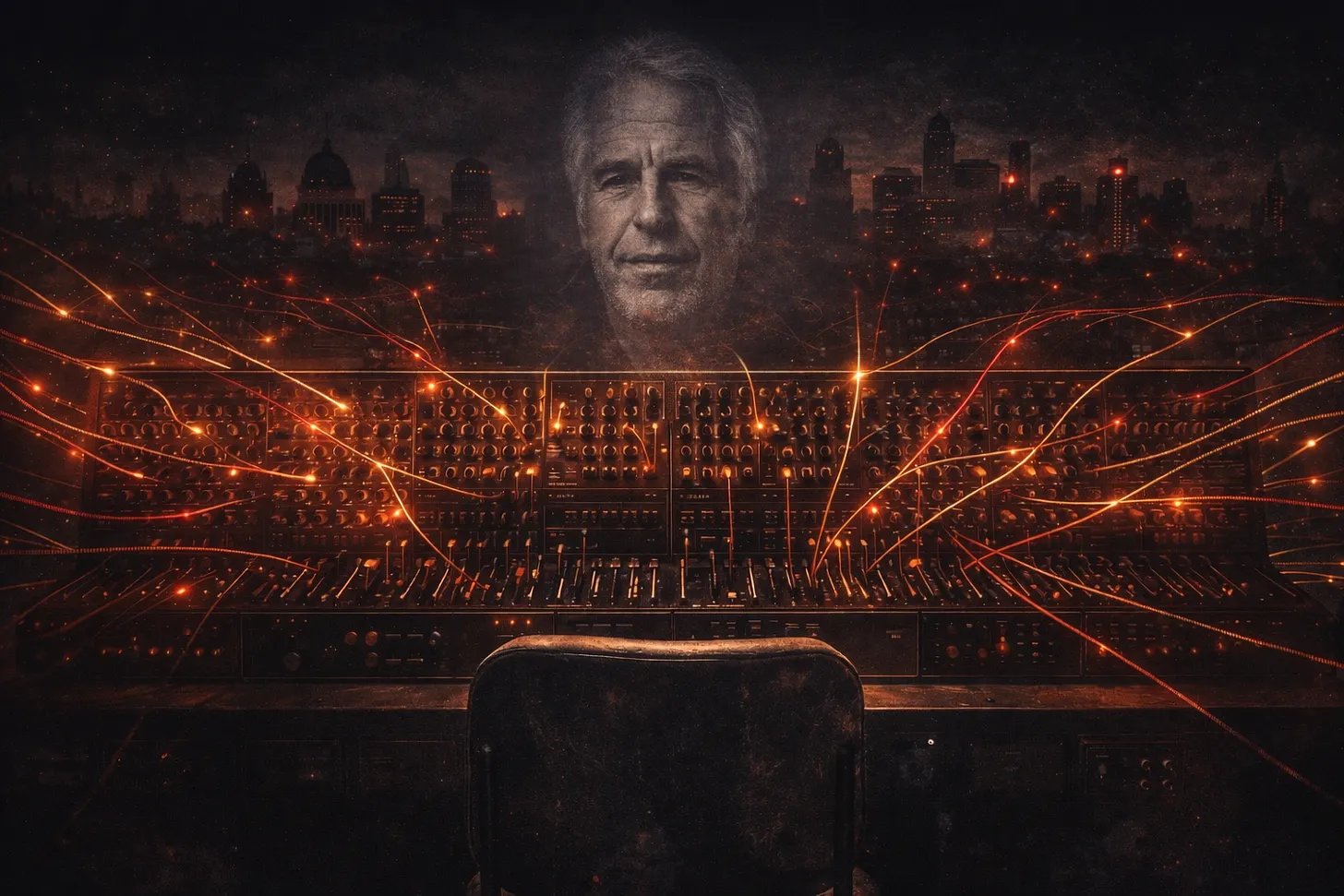
The Epstein ‘Switchboard’: A New Document Trove Recasts a Disgraced Financier as a Broker of Power
In death, as in life, Jeffrey Epstein refuses to recede.
A vast new tranche of federal records released in January has widened the aperture on the financier’s world, revealing not simply a serial sexual predator but a man who, years after his 2008 conviction in Florida, continued to circulate among titans of banking, philanthropy and politics with a fluency that defied public disgrace.
The files do not allege new crimes.
Instead, they illuminate the infrastructure of access: donor-advised funds and pandemic-themed investment vehicles conceived long before Covid-19; email exchanges with billionaires and cabinet-level figures; and proposals that straddled the fault lines between public health, financial engineering and political influence.
Read together, the documents suggest that Epstein functioned less as a solitary deviant than as a kind of switchboard operator for elite networks, routing information, introductions and capital across borders and sectors.

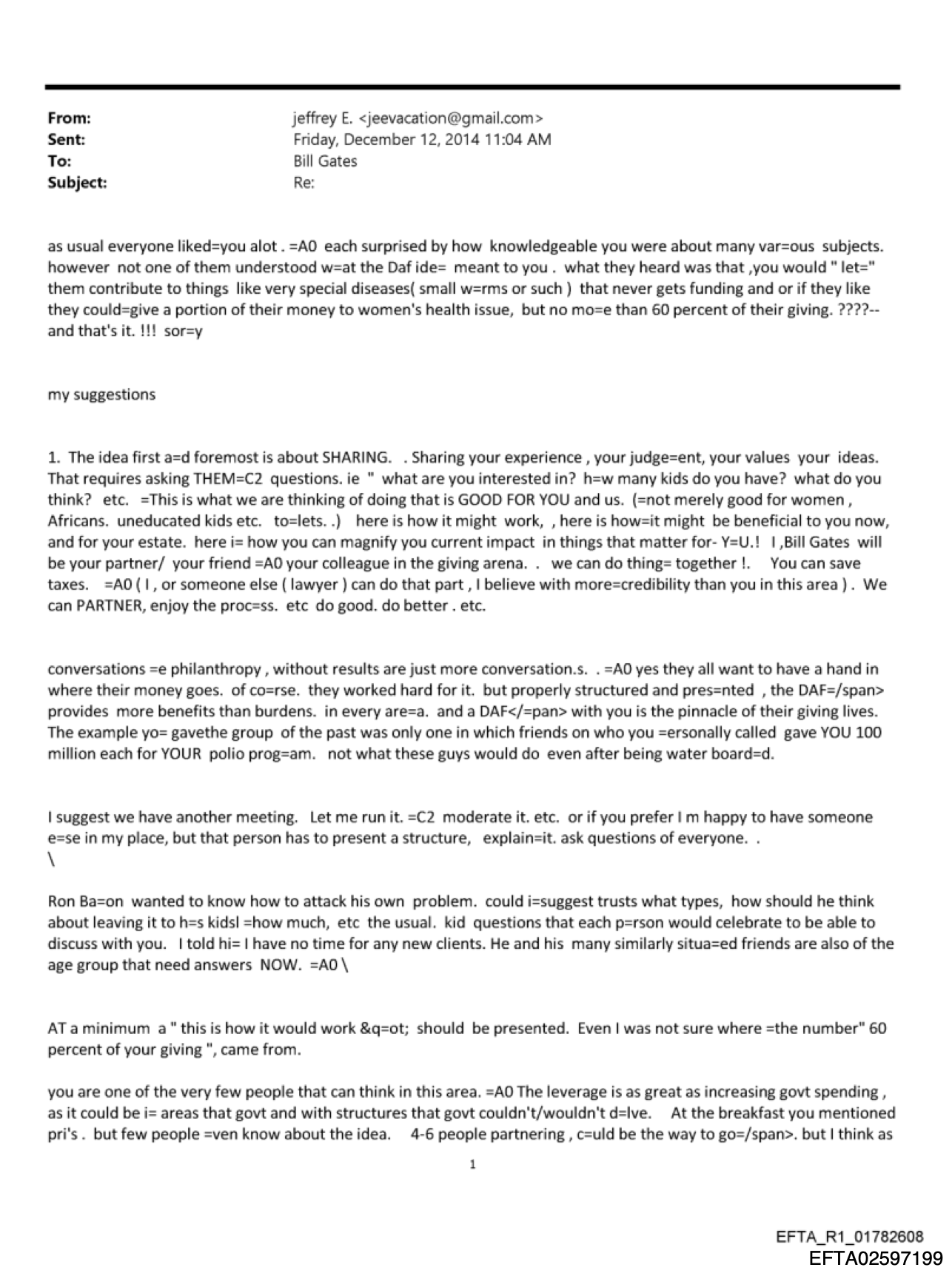
Among the most striking records is a December 2014 email chain in which Epstein, six years after his plea deal for soliciting a minor, hosted a breakfast for wealthy donors and corresponded with Bill Gates about the meeting’s substance.
Gates, who has previously described his interactions with Epstein as limited and a matter of regret, shared impressions from the gathering.
Epstein responded with pointed critiques of philanthropic strategy and offered to help shape subsequent events, even suggesting that Gates and his family visit Little St. James, Epstein’s private island. He referenced Kathryn Ruemmler, then White House counsel, as someone familiar with the setting.
The tone was not deferential. It was advisory. The world’s most prominent philanthropist appeared to be receiving strategic feedback from a registered sex offender who had retained entrée into rooms where multibillion-dollar giving vehicles were conceived.
The records also revisit Epstein’s long relationship with JPMorgan Chase, which continued to bank him for years after his conviction.
Senate inquiries and prior reporting established that the bank processed more than $1 billion in transactions tied to Epstein, even as internal compliance officers raised concerns about suspicious cash withdrawals and transfers that bore the hallmarks of trafficking.
Newly surfaced planning documents reference a proposal known internally as “Project Molecule,” outlining financing and reinsurance strategies linked to biological events — an eerie echo of pandemic-era financial engineering that would later define global markets.
The bank has previously said it regrets its association with Epstein and has settled civil litigation related to the relationship.
Across the Atlantic, the files deepen scrutiny of political intermediaries. Correspondence and contemporaneous reporting detail instances in which sensitive British Treasury materials — including notes on the Volcker Rule and Dodd-Frank deliberations — were forwarded to Epstein shortly after receipt.
Among those drawn into renewed controversy is Peter Mandelson, a former cabinet minister whose contacts with Epstein have been examined by British authorities.
Mandelson has denied wrongdoing, but questions have persisted about why a convicted sex offender remained a conduit for high-level policy intelligence.
The name of Keir Starmer, now Britain’s prime minister, surfaces in the political fallout rather than the emails themselves.
Starmer has condemned Epstein’s crimes and expressed sympathy for victims, yet his past proximity to figures who interacted with the financier has become fodder for opponents demanding fuller transparency.
To be clear, federal investigators have repeatedly stated that while evidence of Epstein’s sexual abuse of underage girls was overwhelming, they found little proof that he operated a blackmail ring on behalf of powerful clients.
No additional high-profile figures have been charged in connection with his trafficking offenses. Epstein’s 2019 death at the Metropolitan Correctional Center in Manhattan was ruled a suicide, though public skepticism has never fully abated.
That skepticism has been amplified by lingering questions about Epstein’s apparent immunity from social exile.
After serving 13 months in a work-release arrangement widely criticized as lenient, he rebuilt his Rolodex with astonishing speed. He met scientists, economists and political strategists. He seeded academic projects.
He positioned himself as an interlocutor between billionaires and policymakers. Even as civil suits mounted and investigative reporters documented allegations of abuse, doors remained open.
The newly released records do not prove that Epstein orchestrated global crises or controlled governments. They do, however, reveal how porous the boundaries were between disgrace and influence.
A man whose name had become synonymous with exploitation was still exchanging policy views, advising on philanthropic architecture and cultivating relationships at the highest levels of finance.
This is the enduring disquiet of the Epstein affair. It is not only about who flew on which plane or attended which dinner. It is about the mechanics of power: how donor-advised funds can obscure capital flows; how private briefings migrate into private inboxes; how reputational risk can be outweighed by access to wealth and connections.
Epstein once presented himself as a financial savant with an eye for macroeconomic inflection points. The documents instead depict a social engineer who understood that proximity is currency.
He trafficked in introductions as much as in money. He recognized that crises — financial, epidemiological, political — create demand for intermediaries who claim to see around corners.
Six years after his death, the switchboard he manned is gone.
But the circuitry — the quiet pathways between philanthropy, finance and governance — remains intact.
The January release does not close the Epstein chapter. It reframes it, shifting the focus from a single criminal to the ecosystem that sustained him long after the world knew who he was.
Kenya Insights allows guest blogging, if you want to be published on Kenya’s most authoritative and accurate blog, have an expose, news TIPS, story angles, human interest stories, drop us an email on [email protected] or via Telegram


Kenyan player wins a Ksh3.2 million jackpot

IEBC Sets August 10 Date For 2027 General Election

Furious Ruto Lashes Out at Gideon Moi Over Repeated ‘Blackmail, Extortionist’ Headlines on The Standard and KTN

Mombasa Gripped by ‘Male Organ Theft’ Panic as Social Media Fuels Mob Attacks and Fear

TOO MUCH PR, NOTHING TO SEE: How Gladys Wanga Built a Perfect Story of Transformation While Homa Bay Bled

Netanyahu Says Israel Must ‘Break Free from Dependence’ After Tensions With Trump Administration

Niger pulls Out Of International Criminal Court After Calling It Neo-Colonialist

Kenya Awards Sh154 Billion JKIA Upgrade Tender To Chinese Firm CRBC

The Untouchable: How KURA’s Silas Kinoti Has Survived A Decade Of Corruption Storms While Kenya’s Roads Bled

Fake Papers, Dirty Millions And The Analo Connect: How Kitisuru MCA Alvin Palapala Built a Shadow Empire Inside Nairobi’s Planning Machine

Businessman Philip Waithaka Kinuthia’s Minor Son Allegedly Drove Drunk, Killed Two Peponi Students in Ngong Road Horror Crash as Claims of Cover-Up Intensify

Inside NCBA’s Decline: How a Banking Giant Lost Its Strategic Edge

South Sudan: Adut Salva Kiir’s Shadow Treasury Exposed

Cement, Cash and Courts: How the Hashu Dynasty Crushed the Ramji Brothers for Fourteen Years and Why the Walls Are Now Closing In

Standard Chartered Ghosts Haunt Joshua Oigara At Stanbic As Whistleblower Spills Beans

Inside The Urban Planning Cartel That Owns Nairobi

THE VULTURE AND THE SCHEME How Nairobi West Hospital Became the Most Dangerous Institution in Kenya’s SHA Ecosystem and Why the Books Must Be Audited Now

The President’s Daughter and The Missing Witness: How Adut Salva Kiir’s Shadow Treasury Silenced Its Most Dangerous Critic

How Adil Popat Saved His Empire On The Eve Of Imperial Bank Collapse and Why Kenya’s Mainstream Media Buried The Story

Why John Ngumi Is Running From the EACC and Why the Sh415 Million Payday May Be the Least of His Worries
-
 News1 week ago
Businessman Philip Waithaka Kinuthia’s Minor Son Allegedly Drove Drunk, Killed Two Peponi Students in Ngong Road Horror Crash as Claims of Cover-Up Intensify
-
 Africa2 weeks ago
South Sudan: Adut Salva Kiir’s Shadow Treasury Exposed
-
 Investigations6 days ago
THE VULTURE AND THE SCHEME How Nairobi West Hospital Became the Most Dangerous Institution in Kenya’s SHA Ecosystem and Why the Books Must Be Audited Now
-
 Africa2 weeks ago
The President’s Daughter and The Missing Witness: How Adut Salva Kiir’s Shadow Treasury Silenced Its Most Dangerous Critic
-
 Business2 weeks ago
How Adil Popat Saved His Empire On The Eve Of Imperial Bank Collapse and Why Kenya’s Mainstream Media Buried The Story
-
 Business2 weeks ago
Why John Ngumi Is Running From the EACC and Why the Sh415 Million Payday May Be the Least of His Worries
-

 Business6 days ago
Inside the Billion-Shilling Betrayal: How Senior Treasury Officials Plundered a UN Poverty Fund and Built a Real Estate Empire on the Backs of Kenya’s Rural Poor
-
 Business3 days ago
BURRIED TWICE: The Victoria Bank CEO Yogesh Pattni Files