
Politics
The Return of NMS? Ruto and Sakaja To Sign A Pact on Managing Nairobi
“Nairobi cannot continue to be the city in filth,” he declared, outlining an ambitious plan to tackle waste management, improve roads, and install street lighting across the metropolis.

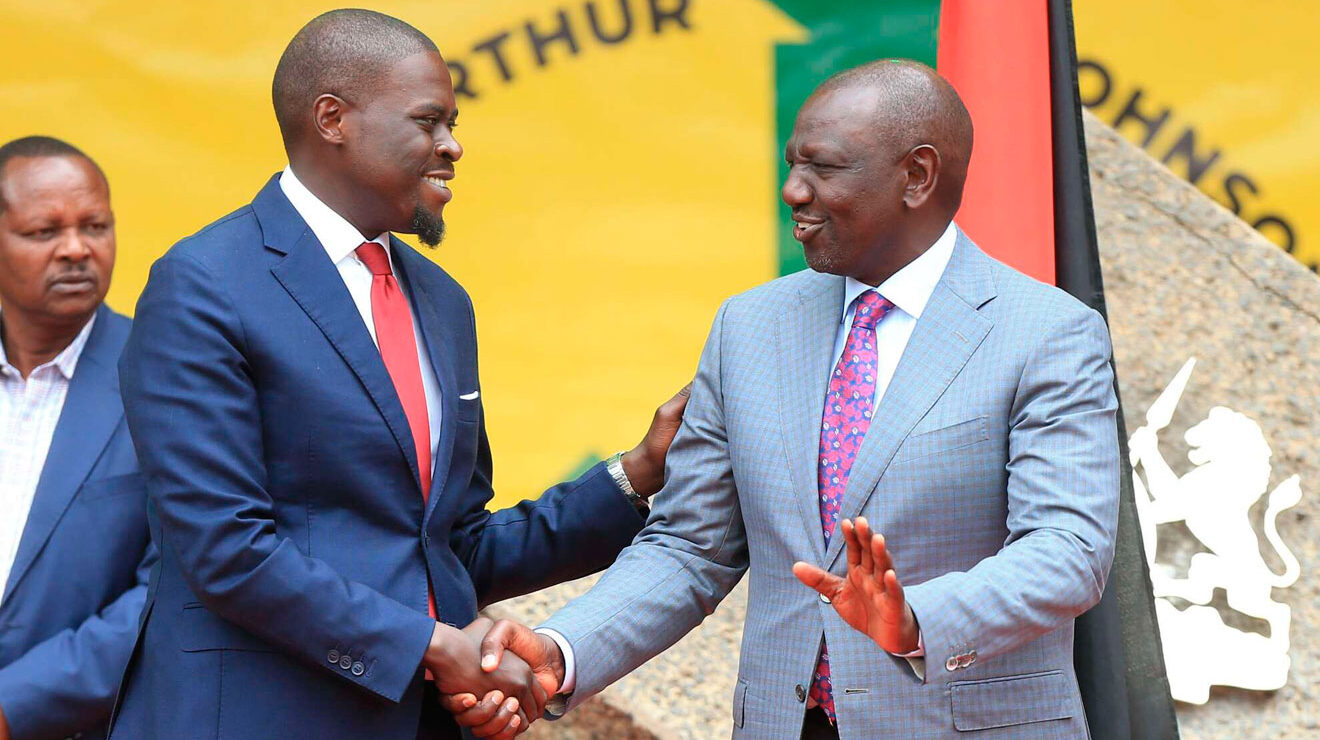
President William Ruto’s announcement of a partnership with Nairobi Governor Johnson Sakaja to manage the capital has triggered memories of the controversial Nairobi Metropolitan Services and raised questions about the county government’s capacity to deliver services.
Nairobi residents nursing memories of the Nairobi Metropolitan Services (NMS) were caught off guard on Sunday when President William Ruto announced plans to enter into a partnership with Governor Johnson Sakaja to restore the capital’s image.
The announcement has sparked debate about whether this marks a return to the transfer of functions that characterized the Mohammed Badi-led NMS era.
Speaking at a public event, President Ruto did not mince his words about the state of the capital.
“Nairobi cannot continue to be the city in filth,” he declared, outlining an ambitious plan to tackle waste management, improve roads, and install street lighting across the metropolis.
The partnership, according to Governor Sakaja, will involve the private sector and focus purely on development.
He cited a collaboration with a Chinese company to generate 45 megawatts of power from waste processed at the Dandora dumpsite as an example of what the initiative could achieve.
However, the announcement has exposed deep divisions among Nairobi’s political leadership.
Kileleshwa Ward Representative Robert Alai was particularly scathing in his assessment, describing the partnership as an indictment of Sakaja’s administration.
“The problems in Nairobi is the incompetence of the governor. The governor cannot bring services, he cannot talk with the corporates, he cannot talk to the private sector,” Alai said.
The criticism speaks to broader frustrations with service delivery in Nairobi. Despite receiving the largest allocation from the County Allocation Revenue, the capital continues to grapple with mountains of uncollected garbage, potholed roads, broken street lights, and clogged drainage systems.
Images of waste heaps along Juja Road and in Eastleigh have become emblematic of a city struggling with basic sanitation.
Embakasi Central MP Benjamin Gathiru echoed concerns about accountability, questioning why additional resources should be channeled to City Hall when current allocations appear to be mismanaged.
“It is just that the money is being stolen by diverting it to pay lawyers and the companies that are said to be collecting garbage, yet we still have a problem with uncollected garbage,” he said.
Nevertheless, not all leaders view the partnership negatively.
Makadara MP George Aladwa welcomed the President’s intervention, noting that a clean and attractive capital is essential for attracting investors and spurring development.
President Ruto revealed that cleanup efforts are already underway through the Nairobi River Regeneration Project, which has employed thousands of young people.
He committed the national government to providing resources for the initiative and pledged that all roads in the capital would be tarmacked.
“We must not have mud along our roads. This city will have street lights so that we make sure that Nairobi is clean, becomes motorable and a city in the light, not in darkness,” he said.
The announcement inevitably draws comparisons to the NMS, which was established in 2020 through a deed of transfer that saw four key county functions—health, transport, public works, and planning—moved to the national government under Major General Badi.
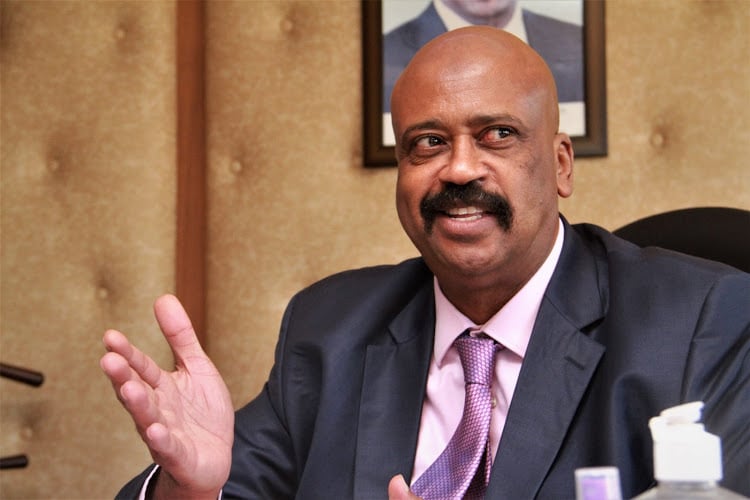
Defunct Nairobi Metropolitan Services ex-boss General Mohamed Badi
While the NMS achieved notable successes in road construction and market renovations, it was also criticized for undermining devolution and sidelining elected county leadership.
The NMS was eventually dissolved after the 2022 elections, with functions reverting to the county government.
Governor Sakaja, who campaigned on a platform of reclaiming Nairobi’s autonomy, now finds himself in the awkward position of inviting national government intervention barely three years into his term.
Critical questions remain unanswered.
What specific functions, if any, will be transferred under this new partnership? Will the county retain control over revenue collection and budget allocation? And most importantly, how will this arrangement differ from the NMS model that many saw as an affront to devolution?
The President has promised that details of the partnership will be finalized soon.
Until then, Nairobi residents can only watch and wait, hoping that this latest intervention will finally deliver the clean, functional city they have long been promised, rather than another experiment in governance that prioritizes politics over service delivery.
Kenya Insights allows guest blogging, if you want to be published on Kenya’s most authoritative and accurate blog, have an expose, news TIPS, story angles, human interest stories, drop us an email on [email protected] or via Telegram







Govt Plans to Monetise eCitizen Data in New Revenue Drive

Dennis Onyango: Why Raila Won Elections But Never Became President

Israel, Iran Trade Fire Despite Trump’s Call For Restraint

Dennis Onyango Lifts Lid on Raila’s Inner Circle, Says Sifuna Lost Baba’s Trust While Babu Was Viewed as a Threat

Sibling Rivalry? Cracks Emerge Within Linda Mwananchi

Instant Traffic Fines Still Active Despite Court Order, NTSA Clarifies

Why All Eyes Are On Gambling Authority CEO Peter Karimi As Kenya’s Betting Firms Race To Beat The June Licence Renewal Deadline

The Deal Behind Nairobi Animal Orphanage: Is This Really About Animals Or Billions In Prime Park Land

Iran Launches Missiles At Israel For First Time Since Mideast Truce

Rogue Developers, Engineers, Architects and City Hall Officials Charged Over Deadly Manzil Towers Collapse

Cement, Cash and Courts: How the Hashu Dynasty Crushed the Ramji Brothers for Fourteen Years and Why the Walls Are Now Closing In

Why Ruto’s Favourite Candidate Adan Mohammed Could Be Locked Out of the KRA Top Job

Inside The Urban Planning Cartel That Owns Nairobi

LifeCare on the Brink: SHA Fraud, Stolen Wages, and the Rotten Empire Jayesh Saini Built

Este Medical Kenya Fights American’s Explosive Complaints

The Rot Inside Absa: How Bank Insiders Are Looting Nairobi’s Customers

Inside FAFSA Fraud: How Kenyan Cybercriminals Siphoned Millions from America’s Sh12 Billion Student Loan System

Betika Faces DCI Probe, Directors Arrest and License Revocation Over Massive 29.5 Million Safaricom Customers’ Data Breach

Court Confirms Safaricom Customers Data Was Sold To Betting Companies In Seven-Year Cover-Up

Fresh Move Launched to Remove Kenya Railways MD Mainga From Office After Awarding Sh817 Million Consultancy Contract
-
 Investigations3 days ago
Cement, Cash and Courts: How the Hashu Dynasty Crushed the Ramji Brothers for Fourteen Years and Why the Walls Are Now Closing In
-
 Investigations2 days ago
Inside The Urban Planning Cartel That Owns Nairobi
-
 Investigations2 weeks ago
LifeCare on the Brink: SHA Fraud, Stolen Wages, and the Rotten Empire Jayesh Saini Built
-
 Investigations1 week ago
Betika Faces DCI Probe, Directors Arrest and License Revocation Over Massive 29.5 Million Safaricom Customers’ Data Breach
-
 Investigations3 days ago
Fresh Move Launched to Remove Kenya Railways MD Mainga From Office After Awarding Sh817 Million Consultancy Contract
-

 News1 week ago
Eight Students Arrested In Kenya After Suspected Deadly School Arson Attack
-
 News1 week ago
How Uhuru’s Deal With Obama In 2015 Paved Way For America’s Ebola Plan In Kenya
-

 Investigations2 weeks ago
The Invisible Hand: Al Jazeera Further Exposes How Safaricom Became The Regime’s Most Powerful Spy