
Opinion
OPINION: Muhoroni Sugar Lease Deal – A Robbery in Broad Daylight That Must Be Halted

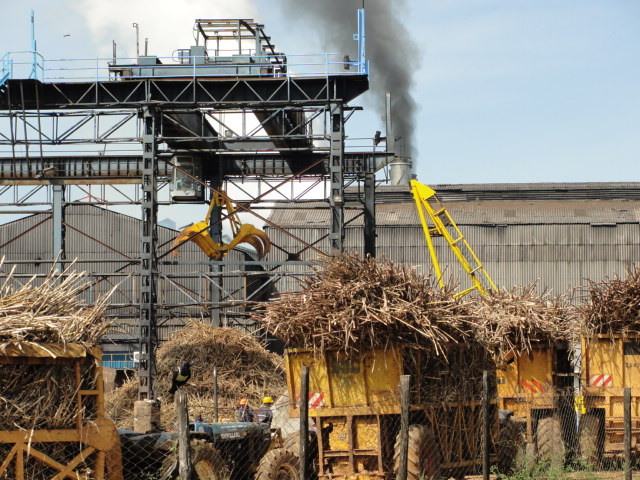
The recent leasing of Muhoroni Sugar Company to West Valley factory represents nothing short of daylight robbery of public assets, threatening the livelihoods of thousands of farmers in the Nyando sugar belt.
This scandalous arrangement must be cancelled immediately before irreparable damage is done to Kenya’s struggling sugar industry.
An Inexperienced Player Handed a Crown Jewel
How does a government entrust a 59-year-old sugar mill with significant production capacity to a company that has barely existed for two years?
West Valley factory, owned by Ben Soi, was only commissioned in October 2023 and has a crushing capacity of merely 1,250 tonnes per day – just over half of Muhoroni’s 2,200 tonnes.
More troubling still, West Valley operates on a tiny 21-hectare plot compared to Muhoroni’s 1,393 hectares of nucleus estate.
It defies logic and transparently violates the government’s own tender requirements, which specified “at least five years in managing and operating a sugar factory” and “an annual turnover of Sh5 billion in three years.” West Valley meets neither criterion.
What we’re witnessing is a classic case of crony capitalism at its worst.
The government is absorbing billions in liabilities – salary arrears, farmer payments, and tax obligations – while handing clean-slate companies to private operators.
In essence, the public bears the costs while connected businesspeople reap the rewards.
The leasing structure creates regional monopolies rather than promoting competition.
In each geographic zone, dominant players can now dictate prices to farmers on a “take it or leave it” basis.
Without competitive pressure, farmers will inevitably face manipulated weighbridges, rock-bottom producer prices, and perpetually delayed payments.
Look beyond the surface, and a more sinister scheme emerges.
These lease arrangements appear designed to transfer control of valuable nucleus estates to well-connected oligarchs.
Private millers who previously lacked nucleus estates now suddenly control vast tracts with mature cane ready for harvesting.
Nothing in the contracts prevents these operators from transporting this “free” mature cane to their existing mills while delaying rehabilitation of the publicly-owned factories they’ve acquired.
Worse yet, the contracts don’t prohibit sub-leasing, opening the door for valuable agricultural land to eventually end up in the hands of political elites.
Government spokespersons trumpet billions in new investment, but the contracts tell a different story. There are no legally binding commitments with clear timelines for rehabilitation and expansion – only vague mentions of “proposed initial investment.” Without enforceable obligations, these promises are worthless.
Perhaps most galling is that these mills have been handed to the very individuals who contributed to their downfall – competitors who systematically poached cane from public mill estates and championed the importation of cheap, substandard sugar that undermined local production.
A Process Designed to Fail
A transaction of this magnitude demanded experienced advisers skilled in structuring leasing deals to protect public interests.
Instead, it was left to politicians and bureaucrats at Kilimo House, resulting in agreements that favor private interests over farmers and taxpayers.
The consequences will be devastating. Hundreds of thousands of farmers in the Nyando sugar belt now find their future in the hands of an untested entity with no proven track record in sugar production.
The Only Solution: Cancel the Leases
There is only one responsible course of action: cancel these deeply flawed leases immediately.
The sugar industry needs genuine reform that prioritizes farmer welfare, promotes fair competition, and preserves valuable public assets.
Kenya’s sugar farmers deserve better than this blatant transfer of wealth to connected individuals. The time to act is now, before the damage becomes irreversible and our sugar industry collapses entirely under the weight of this ill-conceived privatization scheme.
Kenya Insights allows guest blogging, if you want to be published on Kenya’s most authoritative and accurate blog, have an expose, news TIPS, story angles, human interest stories, drop us an email on [email protected] or via Telegram


The Oil Company That Bankrolled a Private Hospital: How Bernard Amuor Makeny Allegedly Turned Nilepet Into His Personal ATM

Death Deferred: How Kenya’s Government Is Bending Aviation Law to Shield the Rogue Developers Strangling Wilson Airport

Hit South African Show Gets The World Talking About Polygamy and Cheating

South Sudan: Fifteen Years of Independence, US$70 Billion in Oil Wealth and GDP Per Capita Cut by Two-Thirds

COFEK Escalates Bid to Oust Gambling Boss Karimi as Fresh Court Battle Puts GRA Leadership Under Siege

Desperate Family Pleads For Ruto’s Help After Safaricom Defies Court Order in Son’s Murder, Exposing Deeper Data Privacy Crisis

Nyali MP Moha Jicho Pevu Caught Up In Alleged Sh44 Million KPA Debt Scam

Somalia Deputy PM Held at JKIA, Deported Over Questionable Acquisition of Kenyan Passport

The White-Coat Heist: How MP Shah Hospital Ran a Decade-Long Double-Extraction Racket While Hiding Behind Charity Status

The Patriarch, His Children, and a Buried Sh3.9 Billion Fraud: The Story of Titus Muya That Kenya Was Never Meant to Read

Businessman Philip Waithaka Kinuthia’s Minor Son Allegedly Drove Drunk, Killed Two Peponi Students in Ngong Road Horror Crash as Claims of Cover-Up Intensify

Inside NCBA’s Decline: How a Banking Giant Lost Its Strategic Edge

South Sudan: Adut Salva Kiir’s Shadow Treasury Exposed

Cement, Cash and Courts: How the Hashu Dynasty Crushed the Ramji Brothers for Fourteen Years and Why the Walls Are Now Closing In

Standard Chartered Ghosts Haunt Joshua Oigara At Stanbic As Whistleblower Spills Beans

Inside The Urban Planning Cartel That Owns Nairobi
The Patriarch, His Children, and a Buried Sh3.9 Billion Fraud: The Story of Titus Muya That Kenya Was Never Meant to Read

THE VULTURE AND THE SCHEME How Nairobi West Hospital Became the Most Dangerous Institution in Kenya’s SHA Ecosystem and Why the Books Must Be Audited Now

The President’s Daughter and The Missing Witness: How Adut Salva Kiir’s Shadow Treasury Silenced Its Most Dangerous Critic

How Adil Popat Saved His Empire On The Eve Of Imperial Bank Collapse and Why Kenya’s Mainstream Media Buried The Story
-
 News2 weeks ago
Businessman Philip Waithaka Kinuthia’s Minor Son Allegedly Drove Drunk, Killed Two Peponi Students in Ngong Road Horror Crash as Claims of Cover-Up Intensify
-
 Business2 days ago
The Patriarch, His Children, and a Buried Sh3.9 Billion Fraud: The Story of Titus Muya That Kenya Was Never Meant to Read
-
 Investigations1 week ago
THE VULTURE AND THE SCHEME How Nairobi West Hospital Became the Most Dangerous Institution in Kenya’s SHA Ecosystem and Why the Books Must Be Audited Now
-
 Business6 days ago
BURRIED TWICE: The Victoria Bank CEO Yogesh Pattni Files
-
 Business1 week ago
Inside the Billion-Shilling Betrayal: How Senior Treasury Officials Plundered a UN Poverty Fund and Built a Real Estate Empire on the Backs of Kenya’s Rural Poor
-

 Business2 weeks ago
The Listing That Doesn’t Lie: What the Market Isn’t Saying About Family Bank’s NSE Debut
-

 Business1 week ago
The Banker Who Walked Away: How Yogesh Pattni Survived a Financial Crime Scandal That Shook Kenya
-

 News1 week ago
My Life Is In Danger: Investor Drops Bombshell Expose On Thomas Ogutu CEO VeGrid Ltd And Fugitive Nairobi CEC Charles Kerich – DCI Inaction And Corruption Network Exposed