
Africa
Zambia Rejects Sh129 Billion US Health Deal Over Secret Mining Demands
Zambia is Africa’s second-largest copper producer after Democratic Republic of Congo, and also has cobalt, nickel, manganese, graphite, lithium and rare-earth elements.

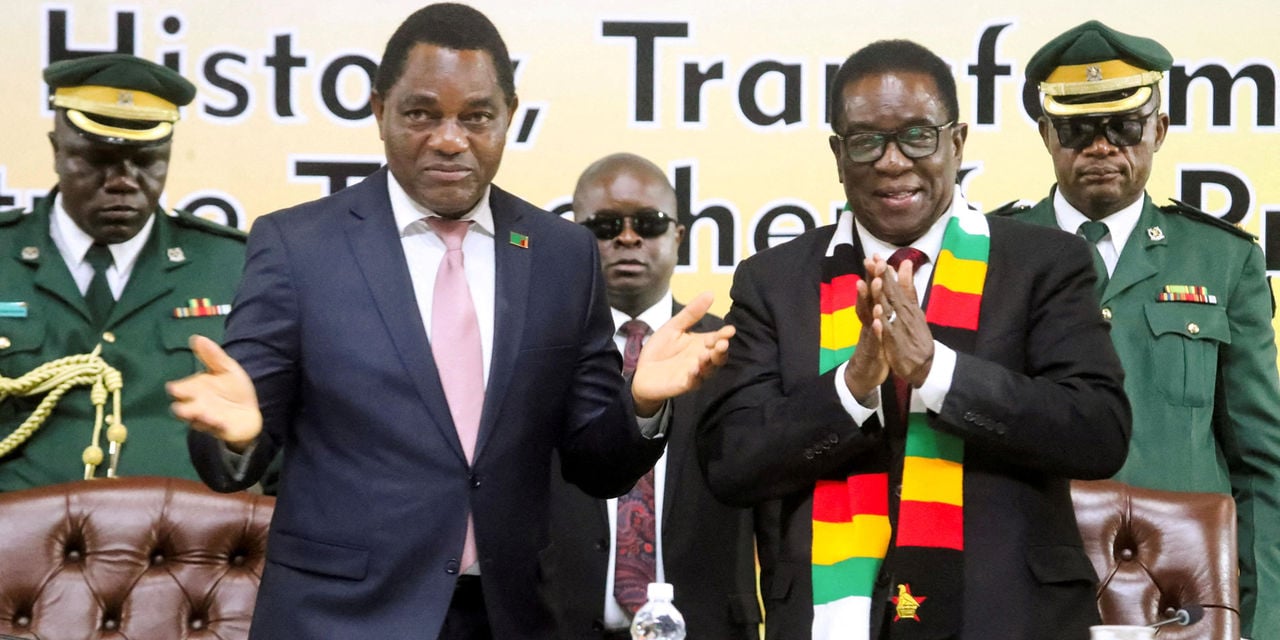
What you need to know:
- Zambia re-negotiating Sh129 billion US health aid deal
- Advocates warn deal linked to mining access and has data sharing risks
- Trump administration says aid should further the national interests of the US
Zambia has pushed back on part of a deal worth more than $1 billion (Sh129 billion) in global health aid from the United States because it does not align with the country’s interests, the government said on Wednesday, as health advocates warned the deal links the money to mining access and has data-sharing risks.
The deal governs more than $1 billion (Sh129 billion) of US funding to tackle conditions like HIV and malaria, as well as improve disease outbreak preparedness and maternal and child health, over the next five years. It also requires around $340 million (Sh44 billion) in co-financing from the Zambian government over the same period, according to a draft of the agreement reviewed by Reuters.
The deal was due to be signed in November, but had been delayed after revised drafts included a problematic section, a Zambian Ministry of Health spokesperson told Reuters on Wednesday.
That section “did not align with the position and interests of the government of Zambia… We have therefore requested further revisions to the content in question,” the spokesperson said, declining to elaborate on what the content covered.
US support in exchange for mining collaboration
In December, the US said that it had committed, with Zambia, to “a plan that aims to unlock a substantial grant package of U.S. support in exchange for collaboration in the mining sector and clear business sector reforms.”
Zambia is Africa’s second-largest copper producer after Democratic Republic of Congo, and also has cobalt, nickel, manganese, graphite, lithium and rare-earth elements.
In response to questions, a US State Department spokesperson told Reuters by email earlier this month that the country would not disclose the details of ongoing diplomatic negotiations.
“Secretary [of State Marco] Rubio has consistently been clear that foreign assistance is not charity; it is designed to further the national interests of the United States,” they added. The spokesperson did not immediately respond to a request to comment on the status of the deal on Wednesday.
Zambia said the agreement was focused on health.
“It has no relation whatsoever to minerals, mining, or any natural resources,” the spokesperson added, saying they remained open to constructive engagement, “but only within terms that are clear, mutually agreed upon, and fully aligned with Zambia’s national interests.”
Draft agreement ties funding to compact
However, the draft agreement reviewed by Reuters outlines how the deal will be terminated and funding discontinued if Zambia and the US fail to agree by April 1 on a “bilateral compact” proposed by Rubio to Zambian President Hakainde Hichilema on November 17, 2025. Three sources said that compact was tied to mining collaboration.
Health advocates in both countries said the data-sharing agreement in the draft, which was due to last for 10 years, was also problematic, and raised concerns over the secrecy surrounding the negotiations.
“The data sharing will be one way from Zambia to the US and the information will benefit the US,” said Owen Mulenga, an officer at the Treatment, Advocacy and Literacy Campaign, a local non-governmental organisation lobbying for equitable, affordable and sustainable access to treatment, care and support for people living with HIV and AIDS in Zambia.
“We need support from the US but there should be transparency,” Mulenga told Reuters. He said there was a lot of speculation the deal was tied to mining but the government had declined to talk about this with activists.
“This deal would slash US government funding to life-saving programs… while prioritising the interests of mining corporations over the needs of Zambians with HIV,” said Asia Russell, executive director of Health GAP, a global HIV advocacy organisation that has closely followed the deal.
The deal is the latest in a series of bilateral agreements reshaping how President Trump’s administration delivers billions of dollars in global health funding, after dismantling its aid agency last year, cutting funding and contracts worldwide – including in Zambia – and pledging to put “America First” in its global health strategy.
Earlier on Wednesday, Zimbabwe pulled out of a deal worth $367 million (Sh47.3 billion), citing data sharing and privacy concerns and describing it as unequal. Kenya’s more than $1.6 billion (Sh206 billion) deal with the US is also suspended, pending a legal case. However, several other countries – including Nigeria and Uganda – have signed.
–Reuters
Kenya Insights allows guest blogging, if you want to be published on Kenya’s most authoritative and accurate blog, have an expose, news TIPS, story angles, human interest stories, drop us an email on [email protected] or via Telegram


Iran Launches Missiles At Israel For First Time Since Mideast Truce

MozzartBet Faces Licence Cancellation For Operations in Kenya Amid Tax Evasion, Money Laundering Scandals As Rumours Swirl Of Sh100M Bribery To Evade Trap

Rogue Developers, Engineers, Architects and City Hall Officials Charged Over Deadly Manzil Towers Collapse

Kalonzo Unveils His 2027 Presidential Campaign Platform

Artur Margaryan of Kenya’s Infamous Artur Brothers Seeks Prime Minister’s Office in Armenia

Sonko Re-Elected Head of Party

US Denied Visas to Team Officials for World Cup – Iran

Why Drivers Cheered Bolt’s Reported Exit: Inside the Slow Financial Strangulation of Thousands of Kenyan Drivers and Riders in Kenya

Court Halts NTSA Smart Driving Licence Rollout and Instant Traffic Fines: What This Means

Pentagon Raises Israel Spy Threat To Highest Level: Report

Cement, Cash and Courts: How the Hashu Dynasty Crushed the Ramji Brothers for Fourteen Years and Why the Walls Are Now Closing In

Why Ruto’s Favourite Candidate Adan Mohammed Could Be Locked Out of the KRA Top Job

Inside The Urban Planning Cartel That Owns Nairobi

LifeCare on the Brink: SHA Fraud, Stolen Wages, and the Rotten Empire Jayesh Saini Built

Este Medical Kenya Fights American’s Explosive Complaints

Safaricom’s Sh1.4 Billion Reckoning: How Kenya’s Most Profitable Company Stole a Man’s Idea and Got Caught

The Rot Inside Absa: How Bank Insiders Are Looting Nairobi’s Customers

Inside FAFSA Fraud: How Kenyan Cybercriminals Siphoned Millions from America’s Sh12 Billion Student Loan System

THE INSURER THAT TOOK YOUR PREMIUM AND FORGOT YOUR NAME: How ICEA Lion Left a Client Begging for Sh7.8 Million Across Four Months

Denial Under Duress: The Untold Collapse Threatening David Lagat’s DL Group’s Empire
-
 Investigations3 days ago
Cement, Cash and Courts: How the Hashu Dynasty Crushed the Ramji Brothers for Fourteen Years and Why the Walls Are Now Closing In
-
 Investigations2 days ago
Inside The Urban Planning Cartel That Owns Nairobi
-
 Investigations2 weeks ago
LifeCare on the Brink: SHA Fraud, Stolen Wages, and the Rotten Empire Jayesh Saini Built
-
 News2 weeks ago
Este Medical Kenya Fights American’s Explosive Complaints
-
 Americas2 weeks ago
Inside FAFSA Fraud: How Kenyan Cybercriminals Siphoned Millions from America’s Sh12 Billion Student Loan System
-

 Investigations7 days ago
Betika Faces DCI Probe, Directors Arrest and License Revocation Over Massive 29.5 Million Safaricom Customers’ Data Breach
-
 News1 week ago
Eight Students Arrested In Kenya After Suspected Deadly School Arson Attack
-
 Investigations3 days ago
Fresh Move Launched to Remove Kenya Railways MD Mainga From Office After Awarding Sh817 Million Consultancy Contract