
News
Syria’s Sednaya Prison Exposes Assad Regime’s Brutality

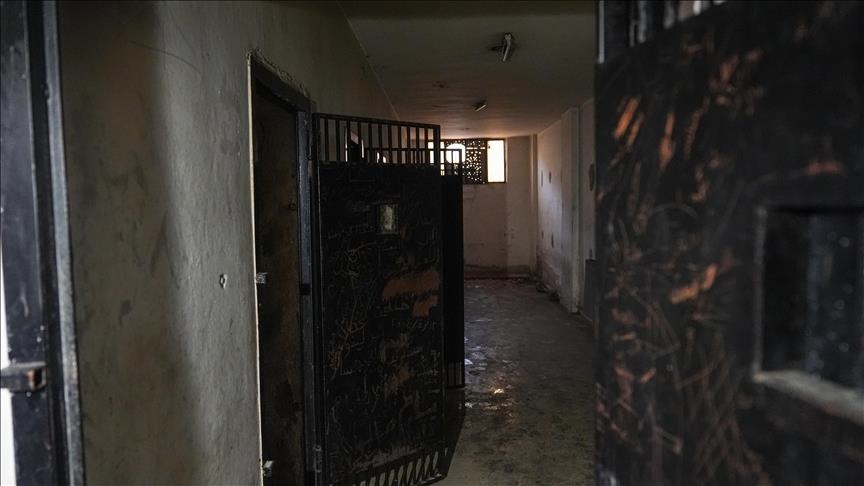
Images and video footage from Sednaya Prison near Damascus have unveiled the brutal treatment of detainees by the deposed Syrian regime.
A 2017 report by Amnesty International called Sednaya a “slaughterhouse,” documenting abuse against detainees, including rape, torture and executions.
According to data compiled by Anadolu from open sources regarding torture and executions in Sednaya, there are two detention centers within the prison compound: the “White Building” and the “Red Building.”
International reports revealed that the Bashar al-Assad regime carried out extrajudicial executions through “mass hangings” at Sednaya, intentionally subjecting detainees to inhumane conditions and systematically depriving them of food, water, and medical care.
Most of the detainees held in the “Red Building” were civilians arrested since 2011 at the onset of the Syrian uprising. Meanwhile, the “White Building” housed officers and soldiers detained for alleged “disloyalty” to the regime.
According to statements from officials and former detainees, the majority of those held in the “Red Building” since 2011 were civilians from all segments of society.
Meat lockers
Former prisoners recounted being transferred to Sednaya from various security branches of the deposed regime in white trucks known as “meat lockers.”
They reported enduring severe beatings and torture upon arrival at the prison, a practice referred to by prison authorities as a “welcome party.”
According to a report by the London-based Syrian Network for Human Rights (SNHR), the Baath regime employed 72 different methods of torture, including physical, psychological, and sexual violence.
Thousands of people were killed in the “Red Building” through secret executions after being held in inhumane conditions, SNHR said.
Executions were carried out in the “execution chamber” located in the southeastern corner of the White Building, typically in the middle of the night.
Reports indicate that between 2011 and 2015, approximately 50 people were hanged every week, and sometimes every two weeks.
After the executions, the victims’ bodies were loaded onto trucks and transported to Tishreen Military Hospital in Damascus for record-keeping.
Their deaths were falsely documented as caused by heart or respiratory conditions, after which the bodies were sent to the Tishreen morgue and subsequently to mass graves.
These mass graves are located on military land near Damascus and in Najha village along the main road between Sweida and Damascus.
Assad fled to Russia after anti-regime groups entered Damascus on Dec. 8 and took control of the capital as regime forces withdrew from public institutions, marking the end of 61 years of the Baath Party’s bloody rule and 53 years of Assad family dominance.
Kenya Insights allows guest blogging, if you want to be published on Kenya’s most authoritative and accurate blog, have an expose, news TIPS, story angles, human interest stories, drop us an email on [email protected] or via Telegram








Why All Eyes Are On Gambling Authority CEO Peter Karimi As Kenya’s Betting Firms Race To Beat The June Licence Renewal Deadline

The Deal Behind Nairobi Animal Orphanage: Is This Really About Animals Or Billions In Prime Park Land

The Great Mogo Extraction: How a Latvian Fintech Built a Debt Trap for Kenya’s Most Vulnerable Borrowers and Got Away With It

Iran Launches Missiles At Israel For First Time Since Mideast Truce

MozzartBet Faces Licence Cancellation For Operations in Kenya Amid Tax Evasion, Money Laundering Scandals As Rumours Swirl Of Sh100M Bribery To Evade Trap

Rogue Developers, Engineers, Architects and City Hall Officials Charged Over Deadly Manzil Towers Collapse

Kalonzo Unveils His 2027 Presidential Campaign Platform

Artur Margaryan of Kenya’s Infamous Artur Brothers Seeks Prime Minister’s Office in Armenia

Sonko Re-Elected Head of Party

US Denied Visas to Team Officials for World Cup – Iran

Cement, Cash and Courts: How the Hashu Dynasty Crushed the Ramji Brothers for Fourteen Years and Why the Walls Are Now Closing In

Why Ruto’s Favourite Candidate Adan Mohammed Could Be Locked Out of the KRA Top Job

Inside The Urban Planning Cartel That Owns Nairobi

LifeCare on the Brink: SHA Fraud, Stolen Wages, and the Rotten Empire Jayesh Saini Built

Este Medical Kenya Fights American’s Explosive Complaints

Safaricom’s Sh1.4 Billion Reckoning: How Kenya’s Most Profitable Company Stole a Man’s Idea and Got Caught

The Rot Inside Absa: How Bank Insiders Are Looting Nairobi’s Customers

Inside FAFSA Fraud: How Kenyan Cybercriminals Siphoned Millions from America’s Sh12 Billion Student Loan System

Denial Under Duress: The Untold Collapse Threatening David Lagat’s DL Group’s Empire

Betika Faces DCI Probe, Directors Arrest and License Revocation Over Massive 29.5 Million Safaricom Customers’ Data Breach
-
 Investigations3 days ago
Cement, Cash and Courts: How the Hashu Dynasty Crushed the Ramji Brothers for Fourteen Years and Why the Walls Are Now Closing In
-
 Investigations2 days ago
Inside The Urban Planning Cartel That Owns Nairobi
-
 Investigations2 weeks ago
LifeCare on the Brink: SHA Fraud, Stolen Wages, and the Rotten Empire Jayesh Saini Built
-
 News2 weeks ago
Este Medical Kenya Fights American’s Explosive Complaints
-
 Americas2 weeks ago
Inside FAFSA Fraud: How Kenyan Cybercriminals Siphoned Millions from America’s Sh12 Billion Student Loan System
-
 Investigations7 days ago
Betika Faces DCI Probe, Directors Arrest and License Revocation Over Massive 29.5 Million Safaricom Customers’ Data Breach
-

 News1 week ago
Eight Students Arrested In Kenya After Suspected Deadly School Arson Attack
-

 Investigations3 days ago
Fresh Move Launched to Remove Kenya Railways MD Mainga From Office After Awarding Sh817 Million Consultancy Contract