
News
Spraying Disinfectants On The Streets Doesn’t Kill Covid-19 And Is Harmful, Says WHO

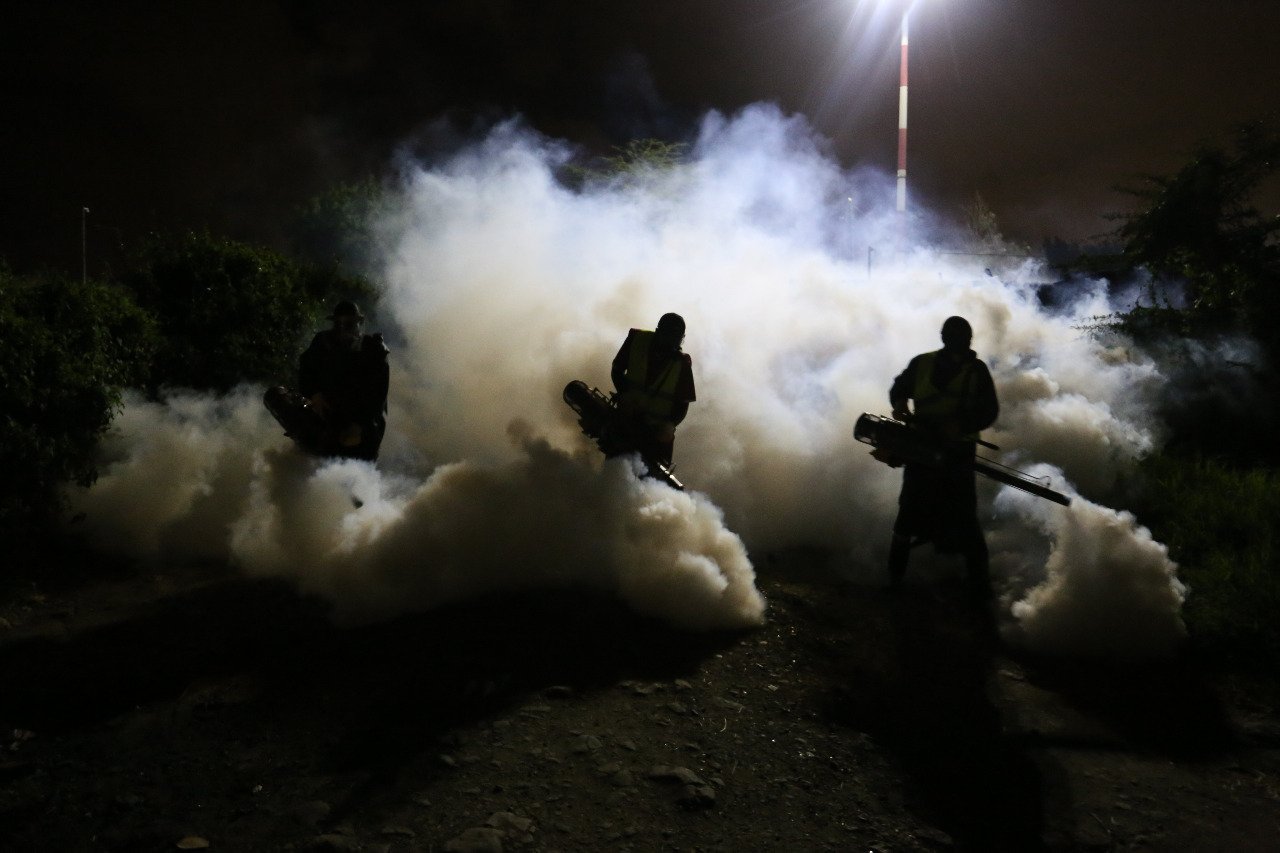
(AFP) – Spraying disinfectant on the streets, as practised in some countries, does not eliminate the new coronavirus and even poses a health risk, the World Health Organization (WHO) warned on Saturday.
In a document on cleaning and disinfecting surfaces as part of the response to the virus, the WHO says spraying can be ineffective.
“Spraying or fumigation of outdoor spaces, such as streets or marketplaces, is… not recommended to kill the COVID-19 virus or other pathogens because disinfectant is inactivated by dirt and debris,” explains the WHO.
“Even in the absence of organic matter, chemical spraying is unlikely to adequately cover all surfaces for the duration of the required contact time needed to inactivate pathogens.”
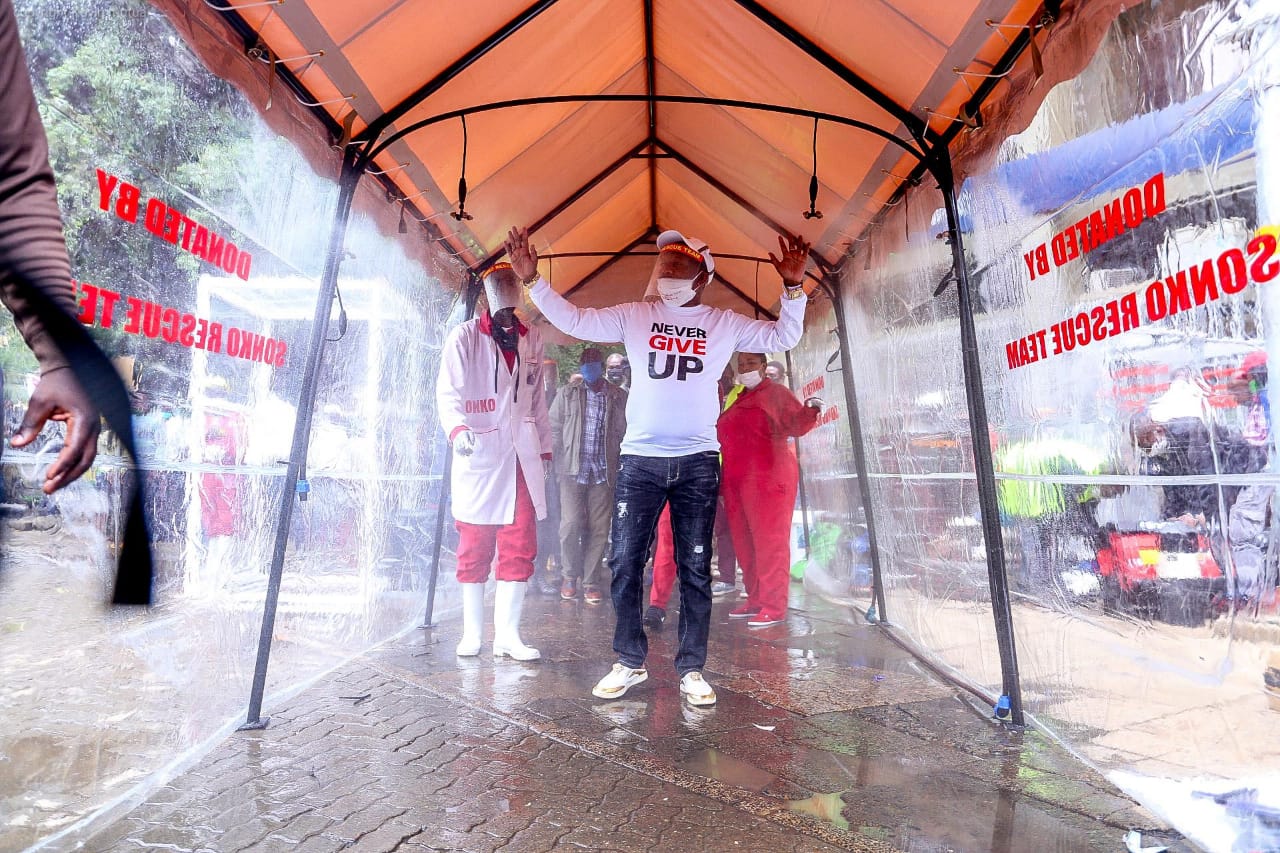
Governor Sonko going through a sanitizing booth.
The WHO said that streets and pavements are not considered as “reservoirs of infection” of COVID-19, adding that spraying disinfectants, even outside, can be “dangerous for human health”.
The document also stresses that spraying individuals with disinfectants is “not recommended under any circumstances”.
“This could be physically and psychologically harmful and would not reduce an infected person’s ability to spread the virus through droplets or contact,” said the document.
Spraying chlorine or other toxic chemicals on people can cause eye and skin irritation, bronchospasm and gastrointestinal effects, it adds.
The organisation is also warning against the systematic spraying and fumigating of disinfectants on to surfaces in indoor spaces, citing a study that has shown it to be ineffective outside direct spraying areas.
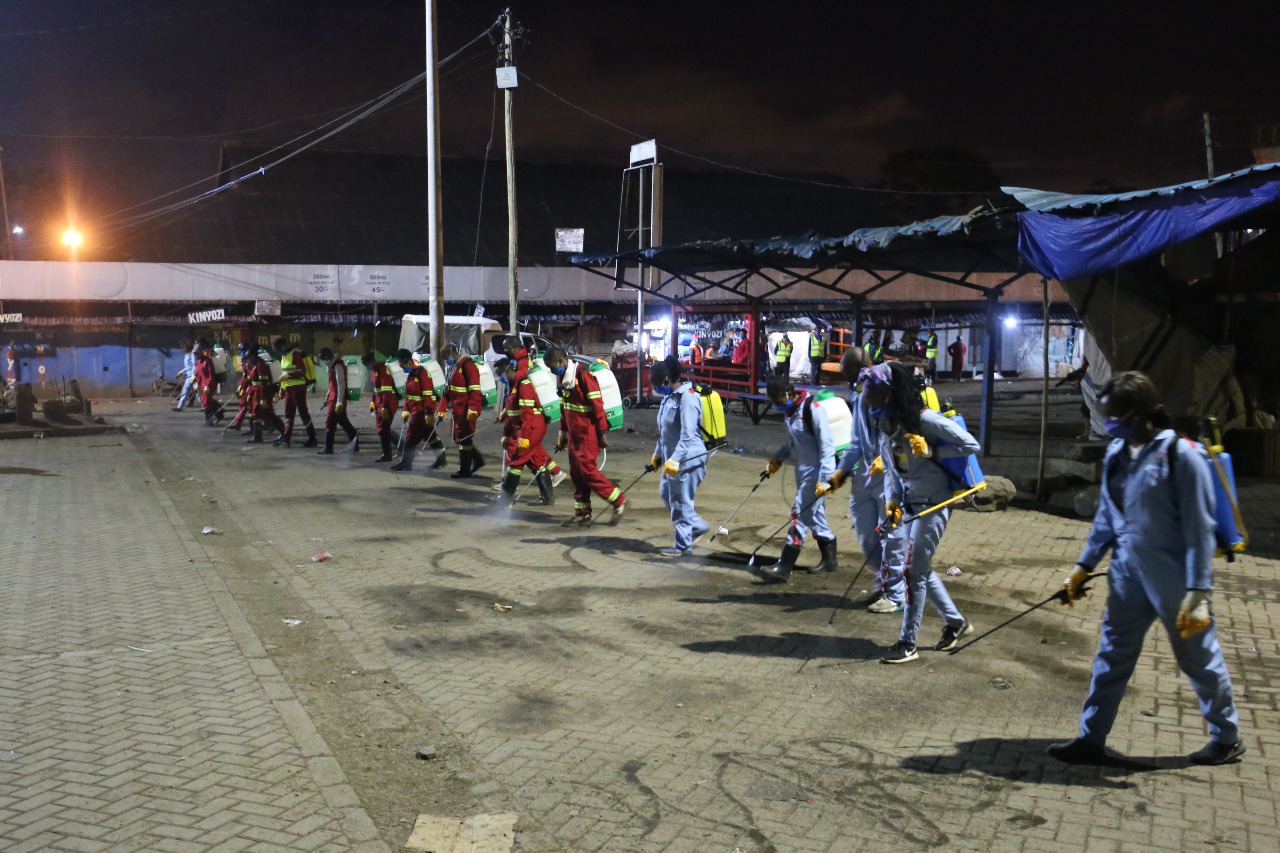
County workers spraying the streets.
“If disinfectants are to be applied, this should be done with a cloth or wipe that has been soaked in disinfectant,” it says.
The SARS-CoV-2 virus, the cause of the pandemic that has killed more than 300,000 people worldwide since its appearance in late December in China, can attach itself to surfaces and objects.
However, no precise information is currently available for the period during which the viruses remain infectious on the various surfaces.
Studies have shown that the virus can stay on several types of surfaces for several days. However, these maximum durations are only theoretical because they are recorded under laboratory conditions and should be “interpreted with caution” in the real-world environment.
Kenya Insights allows guest blogging, if you want to be published on Kenya’s most authoritative and accurate blog, have an expose, news TIPS, story angles, human interest stories, drop us an email on [email protected] or via Telegram


Kenyan player wins a Ksh3.2 million jackpot

IEBC Sets August 10 Date For 2027 General Election

Furious Ruto Lashes Out at Gideon Moi Over Repeated ‘Blackmail, Extortionist’ Headlines on The Standard and KTN

Mombasa Gripped by ‘Male Organ Theft’ Panic as Social Media Fuels Mob Attacks and Fear

TOO MUCH PR, NOTHING TO SEE: How Gladys Wanga Built a Perfect Story of Transformation While Homa Bay Bled

Netanyahu Says Israel Must ‘Break Free from Dependence’ After Tensions With Trump Administration

Niger pulls Out Of International Criminal Court After Calling It Neo-Colonialist

Kenya Awards Sh154 Billion JKIA Upgrade Tender To Chinese Firm CRBC

The Untouchable: How KURA’s Silas Kinoti Has Survived A Decade Of Corruption Storms While Kenya’s Roads Bled

Fake Papers, Dirty Millions And The Analo Connect: How Kitisuru MCA Alvin Palapala Built a Shadow Empire Inside Nairobi’s Planning Machine

Businessman Philip Waithaka Kinuthia’s Minor Son Allegedly Drove Drunk, Killed Two Peponi Students in Ngong Road Horror Crash as Claims of Cover-Up Intensify

Inside NCBA’s Decline: How a Banking Giant Lost Its Strategic Edge

South Sudan: Adut Salva Kiir’s Shadow Treasury Exposed

Cement, Cash and Courts: How the Hashu Dynasty Crushed the Ramji Brothers for Fourteen Years and Why the Walls Are Now Closing In

Standard Chartered Ghosts Haunt Joshua Oigara At Stanbic As Whistleblower Spills Beans

Inside The Urban Planning Cartel That Owns Nairobi

THE VULTURE AND THE SCHEME How Nairobi West Hospital Became the Most Dangerous Institution in Kenya’s SHA Ecosystem and Why the Books Must Be Audited Now

The President’s Daughter and The Missing Witness: How Adut Salva Kiir’s Shadow Treasury Silenced Its Most Dangerous Critic

How Adil Popat Saved His Empire On The Eve Of Imperial Bank Collapse and Why Kenya’s Mainstream Media Buried The Story

Why John Ngumi Is Running From the EACC and Why the Sh415 Million Payday May Be the Least of His Worries
-
 News1 week ago
Businessman Philip Waithaka Kinuthia’s Minor Son Allegedly Drove Drunk, Killed Two Peponi Students in Ngong Road Horror Crash as Claims of Cover-Up Intensify
-
 Africa2 weeks ago
South Sudan: Adut Salva Kiir’s Shadow Treasury Exposed
-
 Business2 weeks ago
Standard Chartered Ghosts Haunt Joshua Oigara At Stanbic As Whistleblower Spills Beans
-
 Investigations6 days ago
THE VULTURE AND THE SCHEME How Nairobi West Hospital Became the Most Dangerous Institution in Kenya’s SHA Ecosystem and Why the Books Must Be Audited Now
-
 Africa2 weeks ago
The President’s Daughter and The Missing Witness: How Adut Salva Kiir’s Shadow Treasury Silenced Its Most Dangerous Critic
-
 Business2 weeks ago
How Adil Popat Saved His Empire On The Eve Of Imperial Bank Collapse and Why Kenya’s Mainstream Media Buried The Story
-
 Business2 weeks ago
Why John Ngumi Is Running From the EACC and Why the Sh415 Million Payday May Be the Least of His Worries
-

 Business6 days ago
Inside the Billion-Shilling Betrayal: How Senior Treasury Officials Plundered a UN Poverty Fund and Built a Real Estate Empire on the Backs of Kenya’s Rural Poor