
News
NTSA Announces Special Procedure For Ownership Transfer Of Vehicles Bought Through Auctions, Repossession

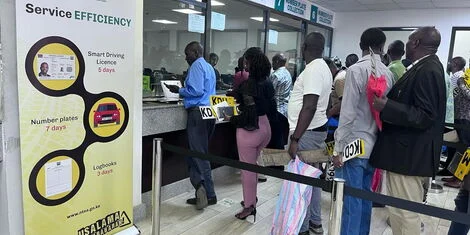
Motorists buying vehicles through auctions, bank repossessions, or court-directed sales have been cautioned that ownership will not be recognised unless a special transfer procedure is followed, the National Transport and Safety Authority has said.
The authority, in a notice on Wednesday, said the process, referred to as an alternative or forced transfer, is compulsory for vehicles acquired through repossession auctions, court orders, and tender-based sales.
NTSA noted that the requirement is meant to ensure all ownership changes are properly recorded in the national vehicle register.
For vehicles sold following bank repossession, NTSA said buyers must provide proof that the auction was conducted lawfully. This includes a certified copy of the auctioneer’s current licence, the auctioneer’s registration certificate, and KRA PIN details.
Buyers must also submit tender documents and an official letter from the bank instructing the auctioneer to conduct the sale.
NTSA further stated that successful applicants are required to present a certificate of sale, the original receipt confirming payment, a discharge letter issued by the bank, and a formal transfer request. The original logbook of the vehicle must also be part of the application.
In addition, the authority said further verification documents will be required to complete the transfer. These include certificates of incorporation for both the bank and the auctioneer, KRA PINs for the two entities, and a letter from the bank identifying the highest bidder.
Sworn affidavits from both the institution that conducted the auction and the buyer are also mandatory.
NTSA added that applicants must obtain a tape lift from the Directorate of Criminal Investigations, complete the prescribed transfer form Form C, and submit proof that the vehicle sale was advertised in a newspaper to demonstrate openness and accountability.
According to the authority, the transfer process begins on the NTSA service portal, where applicants must select the alternative or forced transfer option and provide details of the vehicle and transaction.
All original documents must be scanned and uploaded as one PDF file, after which the applicant selects a logbook collection centre and names the person authorised to collect it.
Applicants are then required to make online payments for the forced transfer and vehicle inspection services. NTSA explained that the system enforces a mandatory seven-day waiting period before allowing the buyer to book a vehicle inspection at a preferred NTSA centre.
On the scheduled inspection date, the vehicle must be presented together with all original documents for verification by NTSA officers. Once the inspection is completed and approved, the new owner is notified through an SMS message.
NTSA said the cost of the transfer depends on the engine size of the vehicle and applicable inspection charges, adding that once verification is successful, the transfer is usually finalised within three working days.
Kenya Insights allows guest blogging, if you want to be published on Kenya’s most authoritative and accurate blog, have an expose, news TIPS, story angles, human interest stories, drop us an email on [email protected] or via Telegram


Nyali MP Moha Jicho Pevu Caught Up In Alleged Sh44 Million KPA Debt Scam

Somalia Deputy PM Held at JKIA, Deported Over Questionable Acquisition of Kenyan Passport

The White-Coat Heist: How MP Shah Hospital Ran a Decade-Long Double-Extraction Racket While Hiding Behind Charity Status

The Patriarch, His Children, and a Buried Sh3.9 Billion Fraud: The Story of Titus Muya That Kenya Was Never Meant to Read

The Founder’s Ransom: How Titus Muya Had to Be Paid Sh231 Million to Let Go of Family Bank and Why That Bill Is Now Yours

Kenya’s gambling industry pushes back against a licensing bill

Kenya Airways Sinks Into Deeper Turbulence As American Supplier Sues In New York Court Over Sh129 Million Unpaid Debts

Kenyan player wins a Ksh3.2 million jackpot

IEBC Sets August 10 Date For 2027 General Election

Furious Ruto Lashes Out at Gideon Moi Over Repeated ‘Blackmail, Extortionist’ Headlines on The Standard and KTN

Businessman Philip Waithaka Kinuthia’s Minor Son Allegedly Drove Drunk, Killed Two Peponi Students in Ngong Road Horror Crash as Claims of Cover-Up Intensify

Inside NCBA’s Decline: How a Banking Giant Lost Its Strategic Edge

South Sudan: Adut Salva Kiir’s Shadow Treasury Exposed

Cement, Cash and Courts: How the Hashu Dynasty Crushed the Ramji Brothers for Fourteen Years and Why the Walls Are Now Closing In

Standard Chartered Ghosts Haunt Joshua Oigara At Stanbic As Whistleblower Spills Beans

Inside The Urban Planning Cartel That Owns Nairobi

THE VULTURE AND THE SCHEME How Nairobi West Hospital Became the Most Dangerous Institution in Kenya’s SHA Ecosystem and Why the Books Must Be Audited Now

The President’s Daughter and The Missing Witness: How Adut Salva Kiir’s Shadow Treasury Silenced Its Most Dangerous Critic

How Adil Popat Saved His Empire On The Eve Of Imperial Bank Collapse and Why Kenya’s Mainstream Media Buried The Story

Why John Ngumi Is Running From the EACC and Why the Sh415 Million Payday May Be the Least of His Worries
-
 News2 weeks ago
Businessman Philip Waithaka Kinuthia’s Minor Son Allegedly Drove Drunk, Killed Two Peponi Students in Ngong Road Horror Crash as Claims of Cover-Up Intensify
-
 Investigations1 week ago
THE VULTURE AND THE SCHEME How Nairobi West Hospital Became the Most Dangerous Institution in Kenya’s SHA Ecosystem and Why the Books Must Be Audited Now
-
 Business2 weeks ago
How Adil Popat Saved His Empire On The Eve Of Imperial Bank Collapse and Why Kenya’s Mainstream Media Buried The Story
-
 Business4 days ago
BURRIED TWICE: The Victoria Bank CEO Yogesh Pattni Files
-
 Business1 week ago
Inside the Billion-Shilling Betrayal: How Senior Treasury Officials Plundered a UN Poverty Fund and Built a Real Estate Empire on the Backs of Kenya’s Rural Poor
-

 Business1 week ago
The Listing That Doesn’t Lie: What the Market Isn’t Saying About Family Bank’s NSE Debut
-

 Business1 week ago
The Banker Who Walked Away: How Yogesh Pattni Survived a Financial Crime Scandal That Shook Kenya
-

 News6 days ago
My Life Is In Danger: Investor Drops Bombshell Expose On Thomas Ogutu CEO VeGrid Ltd And Fugitive Nairobi CEC Charles Kerich – DCI Inaction And Corruption Network Exposed