
Africa
Evidence Shows Kenya-Branded Arms Found in Sudan War Zone

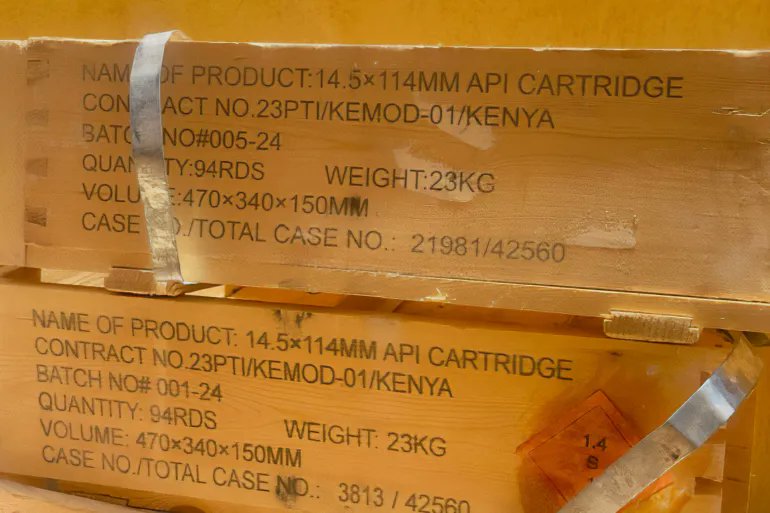
Investigative report reveals ammunition crates marked “Kenya” discovered in abandoned RSF depot in Khartoum
A comprehensive six-month investigation has uncovered disturbing evidence of Kenyan-branded ammunition in Sudan’s conflict zone, raising serious questions about Kenya’s potential involvement in the devastating civil war that has torn the East African nation apart.
The investigation, conducted by the NMG in collaboration with international research organization Bellingcat, discovered crates of ammunition clearly marked “KENYA” in a depot previously controlled by the Rapid Support Forces (RSF) in Khartoum’s Salha area.
The discovery
The evidence emerged through videos posted on social media in May 2025, showing Sudanese Armed Forces (SAF) soldiers celebrating their capture of an abandoned RSF weapons cache.
The footage revealed wooden crates and green boxes bearing clear “KENYA” markings, along with contract numbers linking the ammunition to Kenya’s Ministry of Defence.
Analysis of the ammunition labels showed contract number “23PTI/KEMOD-01/KENYA,” indicating delivery to Kenya’s Ministry of Defence under a 2024 contract.
The crates contained 14.5 x 114MM armor-piercing incendiary cartridges and 82mm high-explosive mortar bombs.
Geolocation and verification
Investigators meticulously verified the location of the weapons cache through multiple sources.
They identified specific individuals in the videos, including Major Al-Makki Abdul Quddus Ahmed of the Sudan Armed Forces, and geolocated the footage to Salha, Omdurman, approximately 10 kilometers from central Khartoum.
The timing coincides with SAF’s successful offensive to recapture areas of Khartoum that had been under RSF control since fighting erupted in April 2023.
International implications
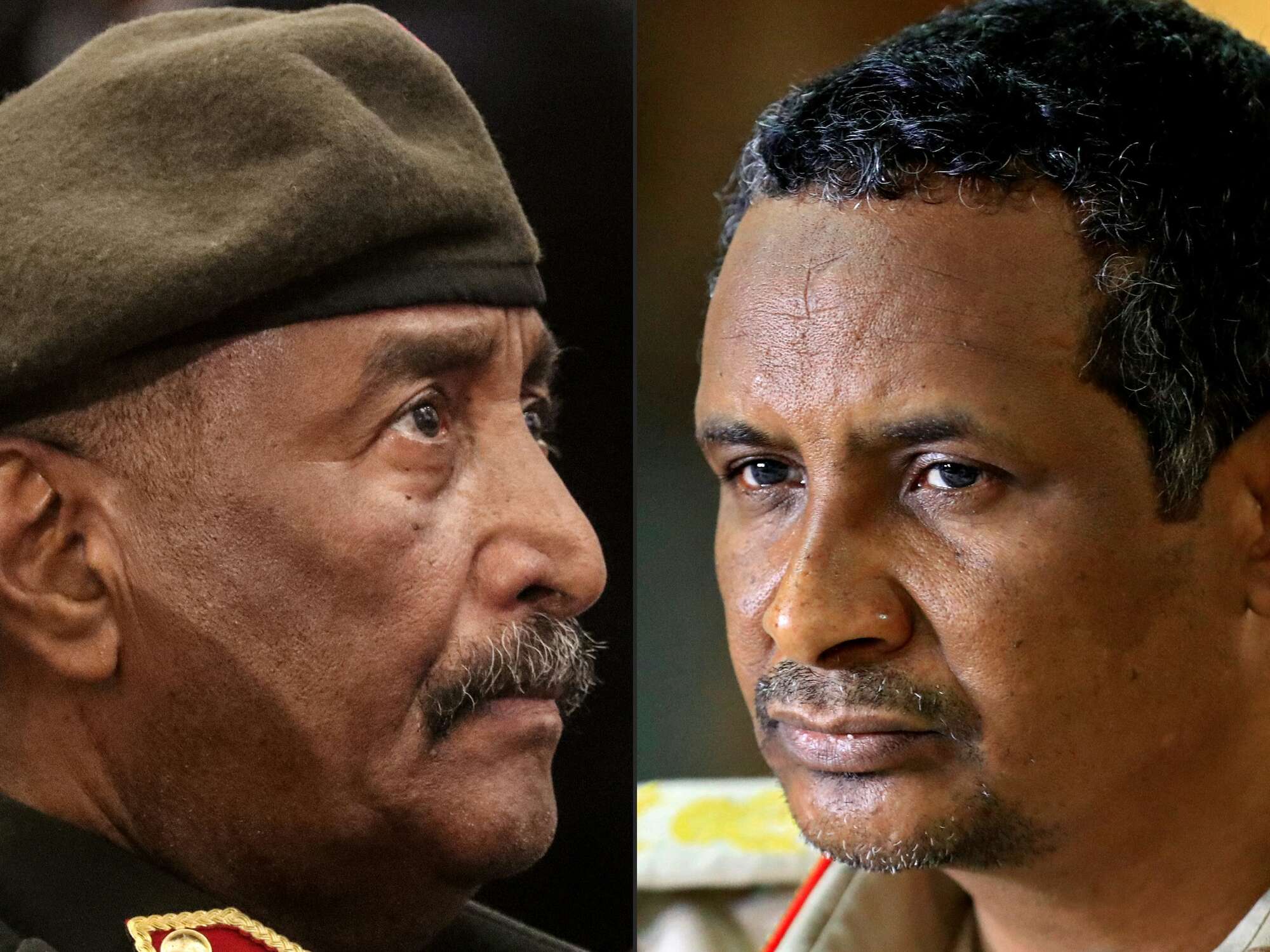
Sudan’s Army chief Abdel Fattah al-Burhan (left) and Sudan’s paramilitary Rapid Support Forces commander, General Mohamed Hamdan Daglo (Hemedti). Photo: AFP
The discovery carries significant diplomatic ramifications for Kenya, which has positioned itself as a mediator in the Sudan conflict.
President William Ruto, who chairs the regional IGAD Quartet on Sudan, has repeatedly called for an end to the violence while hosting meetings with leaders from both warring factions.
A January 2024 United Nations Security Council report had already identified Kenyan airports as potential transit routes for weapons supplies to the RSF, noting cargo flights from the UAE that switched off transponders while passing through Kenyan airspace en route to Chad.
Kenya’s response
Kenya’s Ministry of Defence has categorically denied the allegations.
In a statement to investigators, the ministry said it does not recognize the crates or inscriptions, emphasizing that the Kenya Ordnance Factory Corporation maintains strict records of all ammunition supplies and undergoes regular audits.
“The Ministry of Defence therefore distances itself from the allegations,” the statement read, adding that Kenya remains “fully committed to upholding the rule of law and continues to operate strictly within the mandate granted by the Constitution.”
Regional concerns
The revelations have prompted warnings from international partners about Kenya’s diplomatic standing.
The United States has expressed “deep concern” about Kenya’s perceived association with the RSF, hinting at potential sanctions if the country continues supporting the paramilitary group.
Sudan has already retaliated by halting Kenyan tea imports and recalling its ambassador following a February 2025 RSF conference in Nairobi that aimed to establish a parallel government.
The Sudan conflict has created one of the world’s worst humanitarian crises, with millions displaced and facing severe food insecurity.
The discovery of foreign weapons in the conflict zone underscores the international dimensions of what began as an internal power struggle between military factions.
As investigations continue, the evidence of Kenyan-branded ammunition in RSF-controlled areas presents a significant challenge to Kenya’s stated position as a neutral mediator seeking peace in Sudan.
The findings suggest a complex web of regional involvement that extends far beyond diplomatic efforts to end the conflict.
The story highlights the delicate balance African nations must maintain between regional stability, economic interests, and international diplomatic obligations in an increasingly complex geopolitical landscape.
Kenya Insights allows guest blogging, if you want to be published on Kenya’s most authoritative and accurate blog, have an expose, news TIPS, story angles, human interest stories, drop us an email on [email protected] or via Telegram


Govt Plans to Monetise eCitizen Data in New Revenue Drive

Dennis Onyango: Why Raila Won Elections But Never Became President

Israel, Iran Trade Fire Despite Trump’s Call For Restraint

Dennis Onyango Lifts Lid on Raila’s Inner Circle, Says Sifuna Lost Baba’s Trust While Babu Was Viewed as a Threat

Sibling Rivalry? Cracks Emerge Within Linda Mwananchi

Instant Traffic Fines Still Active Despite Court Order, NTSA Clarifies

Why All Eyes Are On Gambling Authority CEO Peter Karimi As Kenya’s Betting Firms Race To Beat The June Licence Renewal Deadline

The Deal Behind Nairobi Animal Orphanage: Is This Really About Animals Or Billions In Prime Park Land

Iran Launches Missiles At Israel For First Time Since Mideast Truce

Rogue Developers, Engineers, Architects and City Hall Officials Charged Over Deadly Manzil Towers Collapse

Cement, Cash and Courts: How the Hashu Dynasty Crushed the Ramji Brothers for Fourteen Years and Why the Walls Are Now Closing In

Inside The Urban Planning Cartel That Owns Nairobi

Why Ruto’s Favourite Candidate Adan Mohammed Could Be Locked Out of the KRA Top Job

LifeCare on the Brink: SHA Fraud, Stolen Wages, and the Rotten Empire Jayesh Saini Built

Este Medical Kenya Fights American’s Explosive Complaints

The Rot Inside Absa: How Bank Insiders Are Looting Nairobi’s Customers

Inside FAFSA Fraud: How Kenyan Cybercriminals Siphoned Millions from America’s Sh12 Billion Student Loan System

Betika Faces DCI Probe, Directors Arrest and License Revocation Over Massive 29.5 Million Safaricom Customers’ Data Breach

Court Confirms Safaricom Customers Data Was Sold To Betting Companies In Seven-Year Cover-Up

Fresh Move Launched to Remove Kenya Railways MD Mainga From Office After Awarding Sh817 Million Consultancy Contract
-
 Investigations4 days ago
Cement, Cash and Courts: How the Hashu Dynasty Crushed the Ramji Brothers for Fourteen Years and Why the Walls Are Now Closing In
-
 Investigations2 days ago
Inside The Urban Planning Cartel That Owns Nairobi
-
 Investigations2 weeks ago
LifeCare on the Brink: SHA Fraud, Stolen Wages, and the Rotten Empire Jayesh Saini Built
-
 Investigations1 week ago
Betika Faces DCI Probe, Directors Arrest and License Revocation Over Massive 29.5 Million Safaricom Customers’ Data Breach
-
 Investigations4 days ago
Fresh Move Launched to Remove Kenya Railways MD Mainga From Office After Awarding Sh817 Million Consultancy Contract
-

 News1 week ago
Eight Students Arrested In Kenya After Suspected Deadly School Arson Attack
-
 News1 week ago
How Uhuru’s Deal With Obama In 2015 Paved Way For America’s Ebola Plan In Kenya
-

 Investigations2 weeks ago
The Invisible Hand: Al Jazeera Further Exposes How Safaricom Became The Regime’s Most Powerful Spy