
Business
Confusion As KNCCI Board Rejects CEO’s Resignation
The board did not provide specific reasons for not confirming Farah’s appointment but expressed appreciation for his contributions during his brief tenure and wished him well in his future endeavors.

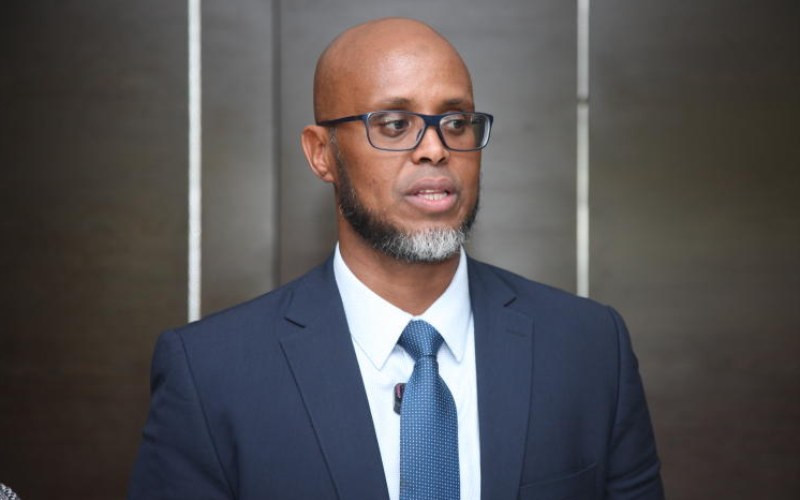
In a surprising turn of events, the Kenya National Chamber of Commerce and Industry (KNCCI) Board of Directors on Saturday dismissed the resignation of CEO Ahmed Farah, asserting that his departure was due to the expiry of his probationary period, which concluded on April 17, 2025.
On Friday, Farah announced his resignation as KNCCI’s Chief Executive Officer after serving only five months. Appointed in November 2024 to succeed Patrick Nyangweso, Farah cited “differing perspectives” with the board as the reason for his early exit.
In a statement to the media, he expressed gratitude to the KNCCI board for the opportunity to serve and praised his team and stakeholders for their commitment to advancing Kenya’s business environment.
“As with many leadership journeys, moments of divergence can shape the way forward. In this case, differing perspectives between myself and the Board of Directors have brought my tenure to a close,” Farah said.
However, on Saturday, the KNCCI board issued a statement, quoted by local media, clarifying that Farah’s exit was not a resignation but the result of his probationary period ending, which the board chose not to extend.
“The Board of Directors of the Kenya National Chamber of Commerce and Industry wishes to announce the expiry of the probation period for Chief Executive Officer Mr. Ahmed Farah’s contract,” the statement read.
The board did not provide specific reasons for not confirming Farah’s appointment but expressed appreciation for his contributions during his brief tenure and wished him well in his future endeavors.
Sources familiar with the matter, speaking to Kenya Insights, alleged tensions between Farah and the board, particularly with KNCCI President Erick Rutto.

These sources claim disagreements over operational control have strained the relationship, alleging that Rutto runs the organization like a personal fiefdom—micromanaging all decisions while leaving the CEO with no meaningful responsibilities.
They further assert he exclusively works with sycophantic board members who never challenge his unilateral decisions.
Additional allegations of financial impropriety, including calls for a forensic audit of the company’s unaudited finances (which haven’t been reviewed for years), reportedly exacerbated tensions. However, these claims remain unverified, and the board hasn’t publicly addressed them.
Questions remain about why the board later sponsored damage-control media articles, and about the extent of organizational dysfunction that allegedly forced the CEO’s abrupt departure.
The fiasco surrounding Farah’s departure highlights ongoing challenges within KNCCI’s leadership, raising questions about the organization’s governance and strategic direction.
Kenya Insights allows guest blogging, if you want to be published on Kenya’s most authoritative and accurate blog, have an expose, news TIPS, story angles, human interest stories, drop us an email on [email protected] or via Telegram










The Oil Company That Bankrolled a Private Hospital: How Bernard Amuor Makeny Allegedly Turned Nilepet Into His Personal ATM

Death Deferred: How Kenya’s Government Is Bending Aviation Law to Shield the Rogue Developers Strangling Wilson Airport

Hit South African Show Gets The World Talking About Polygamy and Cheating

South Sudan: Fifteen Years of Independence, US$70 Billion in Oil Wealth and GDP Per Capita Cut by Two-Thirds

COFEK Escalates Bid to Oust Gambling Boss Karimi as Fresh Court Battle Puts GRA Leadership Under Siege

Desperate Family Pleads For Ruto’s Help After Safaricom Defies Court Order in Son’s Murder, Exposing Deeper Data Privacy Crisis

Nyali MP Moha Jicho Pevu Caught Up In Alleged Sh44 Million KPA Debt Scam

Somalia Deputy PM Held at JKIA, Deported Over Questionable Acquisition of Kenyan Passport

The White-Coat Heist: How MP Shah Hospital Ran a Decade-Long Double-Extraction Racket While Hiding Behind Charity Status

The Patriarch, His Children, and a Buried Sh3.9 Billion Fraud: The Story of Titus Muya That Kenya Was Never Meant to Read

Businessman Philip Waithaka Kinuthia’s Minor Son Allegedly Drove Drunk, Killed Two Peponi Students in Ngong Road Horror Crash as Claims of Cover-Up Intensify

Inside NCBA’s Decline: How a Banking Giant Lost Its Strategic Edge

South Sudan: Adut Salva Kiir’s Shadow Treasury Exposed

Cement, Cash and Courts: How the Hashu Dynasty Crushed the Ramji Brothers for Fourteen Years and Why the Walls Are Now Closing In

Standard Chartered Ghosts Haunt Joshua Oigara At Stanbic As Whistleblower Spills Beans

Inside The Urban Planning Cartel That Owns Nairobi

THE VULTURE AND THE SCHEME How Nairobi West Hospital Became the Most Dangerous Institution in Kenya’s SHA Ecosystem and Why the Books Must Be Audited Now
The Patriarch, His Children, and a Buried Sh3.9 Billion Fraud: The Story of Titus Muya That Kenya Was Never Meant to Read

The President’s Daughter and The Missing Witness: How Adut Salva Kiir’s Shadow Treasury Silenced Its Most Dangerous Critic

How Adil Popat Saved His Empire On The Eve Of Imperial Bank Collapse and Why Kenya’s Mainstream Media Buried The Story
-
 News2 weeks ago
Businessman Philip Waithaka Kinuthia’s Minor Son Allegedly Drove Drunk, Killed Two Peponi Students in Ngong Road Horror Crash as Claims of Cover-Up Intensify
-
 Investigations1 week ago
THE VULTURE AND THE SCHEME How Nairobi West Hospital Became the Most Dangerous Institution in Kenya’s SHA Ecosystem and Why the Books Must Be Audited Now
-
 Business1 day ago
The Patriarch, His Children, and a Buried Sh3.9 Billion Fraud: The Story of Titus Muya That Kenya Was Never Meant to Read
-
 Business5 days ago
BURRIED TWICE: The Victoria Bank CEO Yogesh Pattni Files
-

 Business1 week ago
Inside the Billion-Shilling Betrayal: How Senior Treasury Officials Plundered a UN Poverty Fund and Built a Real Estate Empire on the Backs of Kenya’s Rural Poor
-

 Business2 weeks ago
The Listing That Doesn’t Lie: What the Market Isn’t Saying About Family Bank’s NSE Debut
-

 Business1 week ago
The Banker Who Walked Away: How Yogesh Pattni Survived a Financial Crime Scandal That Shook Kenya
-

 News1 week ago
My Life Is In Danger: Investor Drops Bombshell Expose On Thomas Ogutu CEO VeGrid Ltd And Fugitive Nairobi CEC Charles Kerich – DCI Inaction And Corruption Network Exposed