
News
Death Deferred: How Kenya’s Government Is Bending Aviation Law to Shield the Rogue Developers Strangling Wilson Airport
Forty-one buildings illegally piercing Wilson Airport’s protected airspace. A regulator whose officers were threatened at gunpoint. A city planning chief now facing criminal charges. And a government so captured by developer interests that it would rather reroute aircraft over a national park than flatten a single illegal floor. This is not an aviation story. It is a corruption story. And the crash it is building towards will be Kenya’s fault.


There is a flight every few minutes out of Wilson Airport. Each one is a small negotiation with physics, with terrain, and now, increasingly, with concrete.
Pilots descending into Runway 32 have described it in terms that should terrify every Kenyan who has ever boarded a light aircraft: a jagged, unmarked skyline of pale high-rises rising through the Obstacle Limitation Surface that international aviation law says must remain clear.
They adjust their patterns.
They prefer Runway 14 where they can. They bank earlier, climb harder, and file the kind of internal reports that regulators are supposed to act on. But nobody acts.
The buildings keep going up. The flight paths keep tightening. And the government of Kenya, now formally confronted with evidence of 41 non-compliant structures within six kilometres of the country’s busiest domestic airport, is seriously entertaining the idea of moving the aircraft rather than removing the buildings.
That is not a policy option. It is a confession.
The Numbers the Government Cannot Walk Back
In March 2026, Kenya Civil Aviation Authority Director General Emile Arao appeared before the Senate Standing Committee on Roads, Transportation and Housing and confirmed what pilots and aviation insiders had been saying for years. A 2024 government survey of a six-kilometre radius around Wilson Airport found 41 structures that either exceed KCAA’s Obstacle Limitation Surface requirements or were built entirely without the mandatory KCAA clearance.
Out of 134 structures assessed, 41 are in violation.
That is more than 30 per cent. In any rational regulatory environment, this figure would trigger an emergency enforcement campaign. In Kenya, it triggered a committee recommendation to study flight path redesigns.
The named violators are not informal settlements that can be dismissed with the usual contempt reserved for Nairobi’s poor. They include an institutional building of the Parliamentary Service Commission, reportedly six metres above its approved height.
They include the Local Authorities Provident Fund building, also six metres over the limit. They include Nairobi West Hospital, Equity Holding Limited premises, and the Shree Ambaji Temple. Dozens of private high-rises, some exceeding approved heights by over 20 metres, complete the list. These are not structures built by ignorant squatters. They were built by people with lawyers, surveyors, and political connections. And that, in every particular, is the point.
Senators demanded a full list, with plot numbers and ownership details. As of this writing, that list has not been released.
The Kenya Association of Air Operators has confirmed in its own internal report, seen by The Standard, that some structures were built without KCAA approval, while others obtained approval and then exceeded their approved heights anyway. The Civil Aviation (Aerodromes) Regulations, 2018, are explicit: no structure may penetrate the airport’s Obstacle Limitation Surfaces without KCAA’s written authorisation. The law is not ambiguous. The violations are not disputed. And yet the buildings stand.
The Story Behind the Approvals
To understand how 41 illegal buildings came to pierce the airspace above Kenya’s most critical domestic hub, you must understand the ecosystem in which Nairobi’s development approvals actually operate. That ecosystem has a name, and it is now before the courts.
Patrick Analo served for years as Nairobi County’s Chief Officer for Urban Planning. He controlled the most lucrative desk in the county government, the office that decides which developments get approved. In early June 2026, the Ethics and Anti-Corruption Commission arrested him at his Syokimau residence. Investigators reportedly recovered Sh5.3 million in cash.
They also seized title deeds, vehicle logbooks, laptops, land sale agreements, vehicle sale agreements, and dozens of Nairobi County building approval plans. The Director of Public Prosecutions has since confirmed charges of abuse of office, neglect of official duty, manslaughter in connection with a South C building collapse, and making false documents. His wife, separately, has declared interest in a 2027 parliamentary seat.
Analo, before his arrest, had declined to reveal to The Standard the names of the owners of the buildings in the Wilson Airport flight corridor, saying doing so would endanger his career. Officials from both City Hall and KCAA separately told reporters that the owners are shielded by a powerful politician from North Eastern Kenya.
Kenya Insights is not in the business of relaying allegations about unnamed politicians without substantiation.
But this: the pattern is real, the protection is real, and the fact that a senior city planning official told reporters, on the record, that he feared for his career if he named building owners in a public interest aviation safety context, tells you everything about the nature of the power being exercised.
Meanwhile, inside KCAA, the pressure was more visceral.
Insiders told The Standard that a KCAA officer was visited by armed individuals who demanded approval of building plans in the flight path. A second officer fled the country. KCAA declined to answer formal questions. That silence is its own answer.
Bomas of Kenya: When a Presidential Project Becomes an Air Safety Veto
The 41 buildings are, in one sense, the bottom of this scandal. The top is a single construction project that exposes with crystalline clarity how the government of Kenya ranks developer and political interests above aviation safety.
In November 2025, the CEO of Bomas of Kenya wrote to KCAA to advise that construction at the Bomas complex, adjacent to Wilson Airport’s flight corridor, would require the erection of four cranes ranging from 75 to 85 metres above ground level, operating from mid-November 2025 through April 2026. KCAA convened a stakeholders meeting, notably at the Weston Hotel in Lang’ata, to discuss mitigation.
Sources with knowledge of the internal KCAA deliberations told reporters that the authority had raised concerns and internally would have required the construction to comply with height restrictions. Instead, KCAA was directed to find an alternative route so as not to appear to block what was described as one of President William Ruto’s flagship projects.
A senior Ministry of Transport official described the trap this created with unusual candour: if the hotel development proceeds at full scale, Wilson Airport’s Runway 07 approach becomes functionally untenable. Pilots are not equivocal.
One told The Standard: we will have to choose. Either the new Bomas or Runway 07. We cannot have both. When a sitting government forces its aviation regulator to route aircraft around a politically connected construction site rather than enforce the safety perimeter around an operational airport, it has made its hierarchy of interests explicit. Developers are above pilots. Projects are above passengers. Political convenience is above the law.
The Flight Path Option Is Not a Solution. It Is a Scandal.
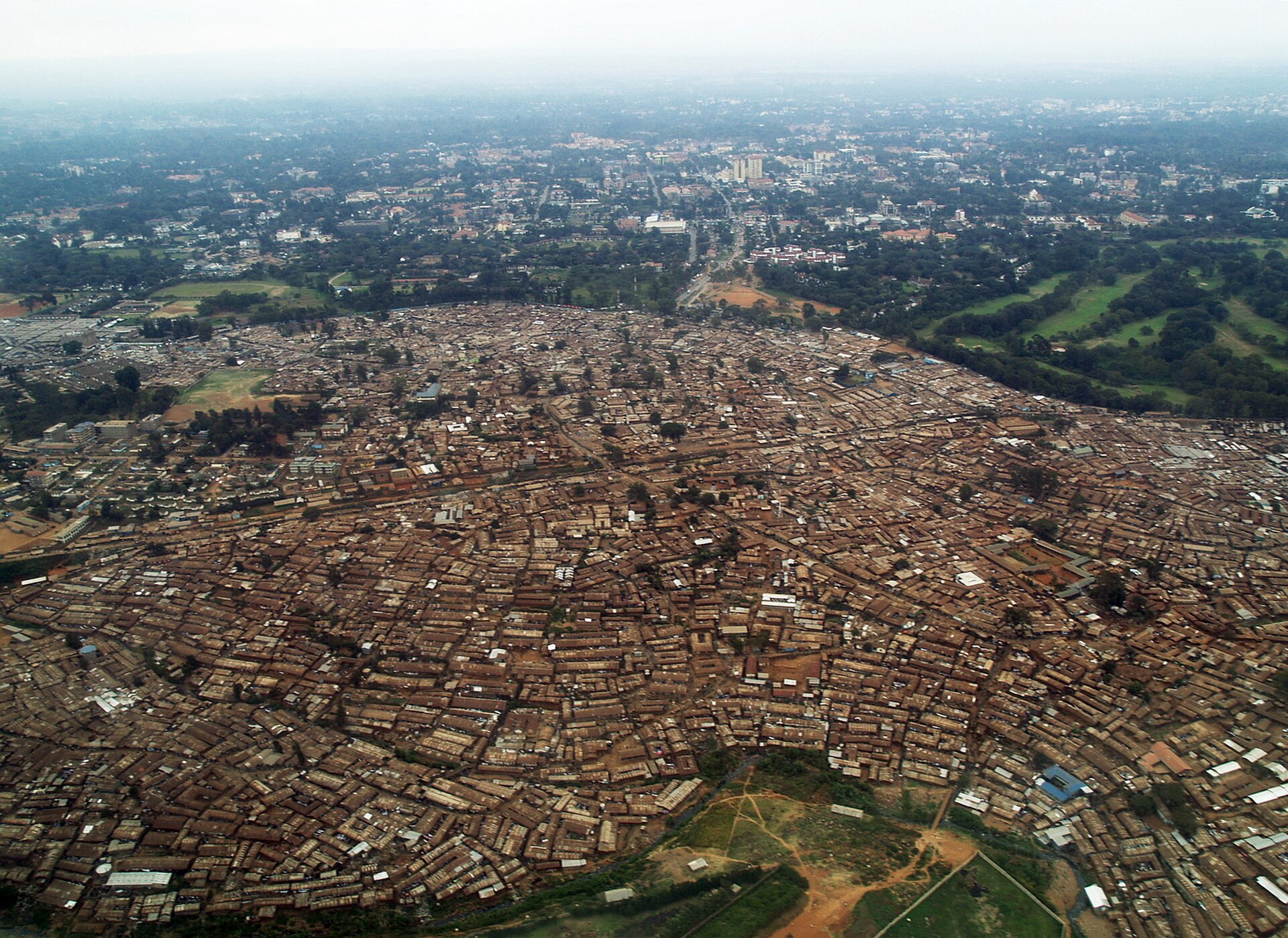
Aerial view illustrating the dense urban development and proximity of buildings to Wilson Airport and its surrounding zones (mix of formal high-rises and other structures encroaching on airspace buffers).
Let us be precise about what is being proposed and what it means. Wilson Airport sits on the southern boundary of Nairobi, immediately adjacent to Nairobi National Park.
The airport’s current operational patterns already see pilots preferring Runway 14 departures to avoid the South C obstacle field, a preference that routes aircraft over the park.
KCAA has acknowledged this.
The proposed redesign of flight paths would formalise and expand that routing, channelling more aircraft traffic over the national park to accommodate the illegal concrete that politically connected developers have erected on the approach corridors.
The environmental consequences are not hypothetical. Increased overflights generate noise stress on wildlife, disrupt breeding patterns in sensitive zones, and create a permanent aviation-ecological conflict that Kenya does not currently have.
The safety consequences are not abstract either.
Narrowing usable airspace, rerouting approaches over terrain, and reducing the margin for error available to pilots in marginal weather conditions or mechanical emergency is not a mitigation. It is a compounding risk.
The International Civil Aviation Organisation standards Kenya is bound by do not offer a provision for bending flight paths around politically inconvenient demolition orders. You enforce the law, or you do not. There is no redesign clause for corruption.
Wilson Airport handles more than 120,000 aircraft movements per year. It is the operational hub for medical evacuations, humanitarian flights, pilot training, safari aviation, charter operations, and domestic routes that connect Kenyans across the country.
The March 2026 runway excursion, in which an aircraft with 39 passengers aboard veered off the Wilson runway on arrival from Kisumu, is a reminder that this airport operates at the edge of what its current infrastructure safely supports. Adding compressed airspace to that equation is not policy. It is negligence with a ministerial signature.
The Demolition Precedent Kenya Refuses to Set

President William Ruto addresses graduate interns recruited under the Affordable Housing Programme during an engagement at State House, Nairobi, on January 23, 2026.
Kenya has demolished buildings before. It demolished Kenyans’ buildings before. When the structures of the urban poor encroached on riparian land, on road reserves, on government-designated corridors, the response was swift, often brutal, and accompanied by official justifications about public interest and the rule of law.
Thousands of families were displaced along Nairobi’s rivers and rail corridors in operations that attracted international criticism for their inhumanity but proceeded regardless, because the political cost of enforcement fell on those without power.
Now the government faces 41 buildings, owned by people with money, lawyers, and in several reported cases, direct political protection. And suddenly enforcement is complicated. Suddenly the law requires study.
Suddenly there are options to explore, committees to convene, lists to withhold, and flight paths to redesign. The contrast is not subtle. It is the operating logic of Kenya’s regulatory state made visible in concrete and steel: the law is enforced downward and negotiated upward.
KAA has previously gone to court and obtained orders stopping construction of 24 houses in South C that it argued posed safety risks to Wilson Airport. The legal mechanism exists. The regulatory framework exists. The audit data exists. What is missing is not the authority to act. What is missing is the willingness to act against people who can fight back.
What Must Happen Now
The Senate Roads, Transportation and Housing Committee has demanded a full list of the 41 structures, including plot numbers, ownership details, and the history of approvals or lack thereof for each. That list must be made public in its entirety. Not as a redacted summary. Not as a briefing to a closed committee session. As a public document, searchable and attributable, so that Kenyans can see precisely which buildings are endangering which flight paths, and who owns them.
KCAA must issue formal enforcement notices to every non-compliant structure, with legally binding timelines for modification or demolition. Where structures were built without any KCAA clearance whatsoever, the authority should be applying to the courts for demolition orders immediately, as it has the legal standing to do.
The National Construction Authority, whose mandate covers structural compliance, must be drawn into enforcement action alongside KCAA, KAA, and the Nairobi County government, a government that, it must be said, is simultaneously prosecuting its own former chief planning officer for the corruption that made many of these structures possible.
The flight path redesign option should be formally withdrawn from the table. Kenya should communicate to ICAO and to the international aviation community that it is enforcing its OLS standards, not accommodating violations of them.
The country’s aviation safety record, ICAO audit scores, and international operator confidence all depend on that commitment being credible.
And the armed individuals who reportedly visited a KCAA officer to demand building approvals must be identified and prosecuted. The officer who fled the country should be able to come home safely. If the Directorate of Criminal Investigations cannot or will not open that file, the question of who those individuals were and who sent them must be put to Parliament directly.
The Crash That Has Not Happened Yet
In March 2024, a Safarilink Dash 8 departing Wilson Airport collided with a Cessna 172 in the circuit. Two people died. In March 2026, an aircraft with 39 people aboard departed from runway centreline on arrival. Both incidents unfolded in the same airspace that 41 illegal buildings are steadily compressing. Neither crash has yet been definitively attributed to encroachment. The next one may be.
When it happens, there will be an inquiry. There will be senators expressing outrage. There will be a ministerial statement.
There will be, almost certainly, a committee recommendation to study the matter further. The buildings that caused it will still be standing, because their owners will have obtained injunctions, and their political patrons will be making calls, and some junior KCAA officer will be wondering whether this is the job that costs them everything.
Or Kenya can act now.
Demolish what the law requires to be demolished. Prosecute who the evidence requires to be prosecuted. Publish the full list of 41. Remove the political protection. And tell every developer in the country who is eyeing a lucrative site near an airport that the Obstacle Limitation Surface is not a starting point for negotiation.
These buildings should be flattened. Not because this newspaper says so. Because the Civil Aviation Act, the ICAO standards Kenya has signed, the KCAA’s own audit, and the testimony of every pilot who has ever corrected their approach over South C say so. The only question is whether Kenya’s government will act before or after people die.
Kenya Insights allows guest blogging, if you want to be published on Kenya’s most authoritative and accurate blog, have an expose, news TIPS, story angles, human interest stories, drop us an email on [email protected] or via Telegram











The Oil Company That Bankrolled a Private Hospital: How Bernard Amuor Makeny Allegedly Turned Nilepet Into His Personal ATM

Death Deferred: How Kenya’s Government Is Bending Aviation Law to Shield the Rogue Developers Strangling Wilson Airport

Hit South African Show Gets The World Talking About Polygamy and Cheating

South Sudan: Fifteen Years of Independence, US$70 Billion in Oil Wealth and GDP Per Capita Cut by Two-Thirds

COFEK Escalates Bid to Oust Gambling Boss Karimi as Fresh Court Battle Puts GRA Leadership Under Siege

Desperate Family Pleads For Ruto’s Help After Safaricom Defies Court Order in Son’s Murder, Exposing Deeper Data Privacy Crisis

Nyali MP Moha Jicho Pevu Caught Up In Alleged Sh44 Million KPA Debt Scam

Somalia Deputy PM Held at JKIA, Deported Over Questionable Acquisition of Kenyan Passport

The White-Coat Heist: How MP Shah Hospital Ran a Decade-Long Double-Extraction Racket While Hiding Behind Charity Status

The Patriarch, His Children, and a Buried Sh3.9 Billion Fraud: The Story of Titus Muya That Kenya Was Never Meant to Read

Businessman Philip Waithaka Kinuthia’s Minor Son Allegedly Drove Drunk, Killed Two Peponi Students in Ngong Road Horror Crash as Claims of Cover-Up Intensify

Inside NCBA’s Decline: How a Banking Giant Lost Its Strategic Edge

South Sudan: Adut Salva Kiir’s Shadow Treasury Exposed

Cement, Cash and Courts: How the Hashu Dynasty Crushed the Ramji Brothers for Fourteen Years and Why the Walls Are Now Closing In

Standard Chartered Ghosts Haunt Joshua Oigara At Stanbic As Whistleblower Spills Beans

Inside The Urban Planning Cartel That Owns Nairobi

THE VULTURE AND THE SCHEME How Nairobi West Hospital Became the Most Dangerous Institution in Kenya’s SHA Ecosystem and Why the Books Must Be Audited Now
The Patriarch, His Children, and a Buried Sh3.9 Billion Fraud: The Story of Titus Muya That Kenya Was Never Meant to Read

The President’s Daughter and The Missing Witness: How Adut Salva Kiir’s Shadow Treasury Silenced Its Most Dangerous Critic

How Adil Popat Saved His Empire On The Eve Of Imperial Bank Collapse and Why Kenya’s Mainstream Media Buried The Story
-
 News2 weeks ago
Businessman Philip Waithaka Kinuthia’s Minor Son Allegedly Drove Drunk, Killed Two Peponi Students in Ngong Road Horror Crash as Claims of Cover-Up Intensify
-
 Investigations1 week ago
THE VULTURE AND THE SCHEME How Nairobi West Hospital Became the Most Dangerous Institution in Kenya’s SHA Ecosystem and Why the Books Must Be Audited Now
-
 Business1 day ago
The Patriarch, His Children, and a Buried Sh3.9 Billion Fraud: The Story of Titus Muya That Kenya Was Never Meant to Read
-

 Business5 days ago
BURRIED TWICE: The Victoria Bank CEO Yogesh Pattni Files
-
 Business1 week ago
Inside the Billion-Shilling Betrayal: How Senior Treasury Officials Plundered a UN Poverty Fund and Built a Real Estate Empire on the Backs of Kenya’s Rural Poor
-

 Business2 weeks ago
The Listing That Doesn’t Lie: What the Market Isn’t Saying About Family Bank’s NSE Debut
-

 Business1 week ago
The Banker Who Walked Away: How Yogesh Pattni Survived a Financial Crime Scandal That Shook Kenya
-

 News7 days ago
My Life Is In Danger: Investor Drops Bombshell Expose On Thomas Ogutu CEO VeGrid Ltd And Fugitive Nairobi CEC Charles Kerich – DCI Inaction And Corruption Network Exposed