
Investigations
Allegations of Mismanagement and Leadership Clashes Prompt KNCCI CEO’s Resignation After Five Months
Farah’s abrupt exit has sparked concerns about the Chamber’s stability and governance.

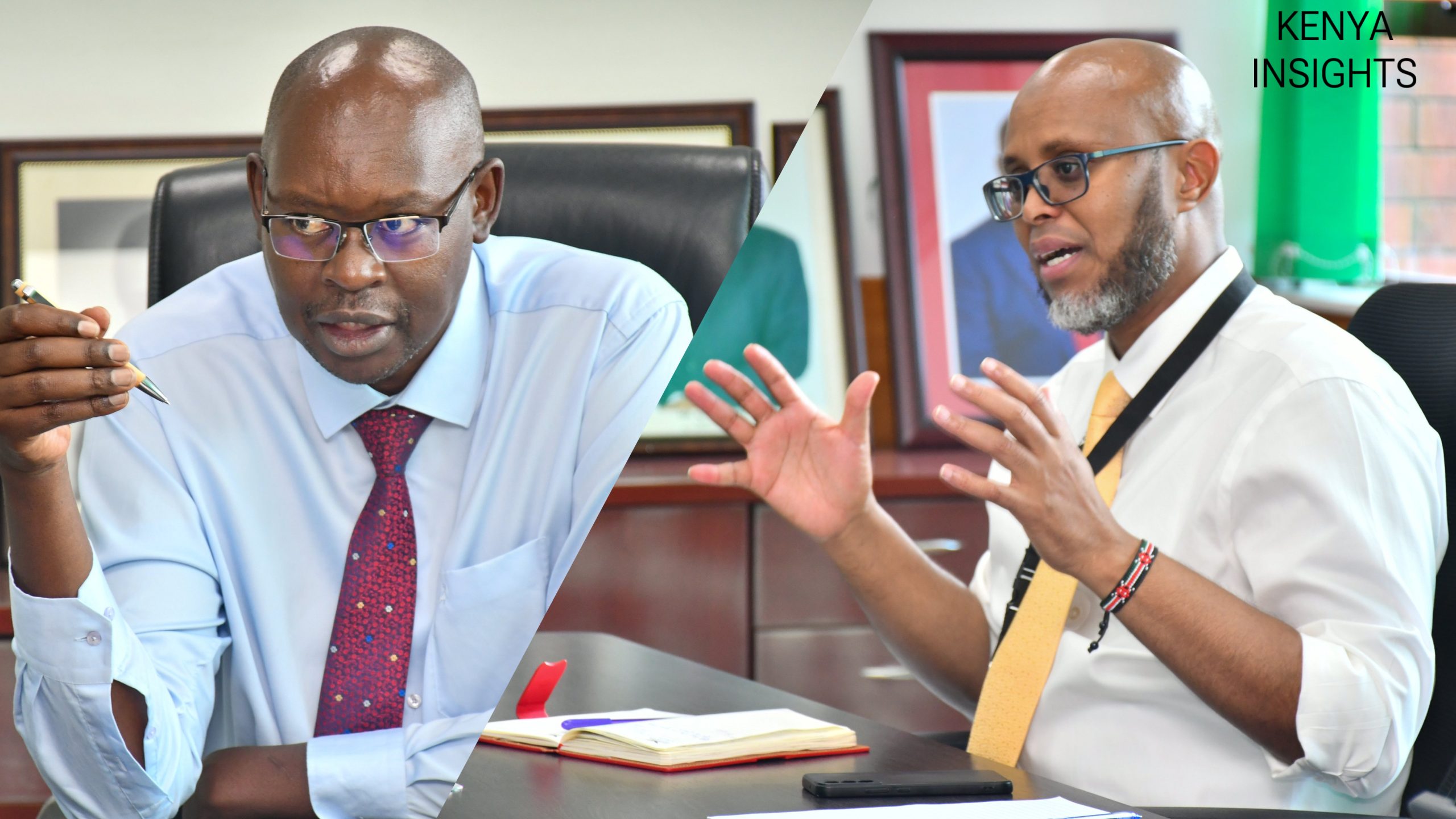
Ahmed Farah, Chief Executive Officer of the Kenya National Chamber of Commerce and Industry (KNCCI), has resigned just five months after his appointment, citing irreconcilable differences with the organization’s board.
In a statement released on Friday, Farah announced that his departure was effective immediately. While he did not specify the reasons for his exit, he alluded to “differing perspectives” with the KNCCI Board of Directors as the catalyst for his decision.
“As with many leadership journeys, moments of divergence can shape the way forward,” Farah said. “In this case, differing perspectives between myself and the Board of Directors have brought my tenure to a close.”
Farah expressed gratitude for the opportunity to lead KNCCI, highlighting his work with a committed team and valued stakeholders dedicated to advancing Kenya’s business landscape. “It has been an honor to serve in this role and contribute to the Chamber’s strategic mandate,” he said. He also voiced optimism about KNCCI’s potential to foster a resilient and globally competitive economy under new leadership.
Farah joined KNCCI in November 2024, succeeding Patrick Nyangweso, who had served as CEO since April 2023. Prior to KNCCI, Farah was the Country Director for TradeMark Africa (TMA) Kenya, where he spearheaded initiatives focused on economic growth and regional integration. He also serves on Kenya’s National Investment Council and contributed to a presidential think tank on post-COVID-19 economic recovery. Farah holds a Bachelor’s degree in Commerce from Kenyatta University and a Master’s degree in International Development from the University of Manchester.
Allegations of Internal Strife
While Farah’s statement was diplomatic, an anonymous source within KNCCI, speaking to Kenya Insights, alleged that his resignation stemmed from deeper issues within the organization, including conflicts with KNCCI President Erick Rutto and concerns over financial mismanagement.
According to the source, Farah faced significant challenges working with Rutto, who is accused of exerting excessive control over the organization’s operations. “Farah has had a rough ride as CEO, particularly with the president, who acts like he runs the Chamber single-handedly,” the source claimed. “Rutto has the final say on every decision, including financial matters, where he has imposed loyalists as bank signatories to approve his projects without scrutiny.”
The source further alleged that Farah’s resignation was a preemptive move to protect his reputation amid potential scandals. “Farah is being cautious because the scandals are about to erupt, and he doesn’t want his clean record tainted,” the source said. They also claimed that Rutto boasts of enjoying the backing of President William Ruto, citing their shared ethnic background.”
Rutto’s Leadership Under Scrutiny
Erick Rutto, who assumed the KNCCI presidency in 2023, has faced criticism for his leadership style, with some drawing parallels to his predecessor, Richard Ngatia, who was also accused of mismanagement and micromanaging the Chamber. Rutto, who served as Vice President under Ngatia, has been linked to similar governance issues, according to insiders.
Recently, Rutto made headlines for criticizing The Standard newspaper, accusing it of publishing negative stories that “drive away investors and damage confidence” in Kenya. “Foreigners read our headlines and think Kenya is a banana republic,” Rutto was quoted as saying.
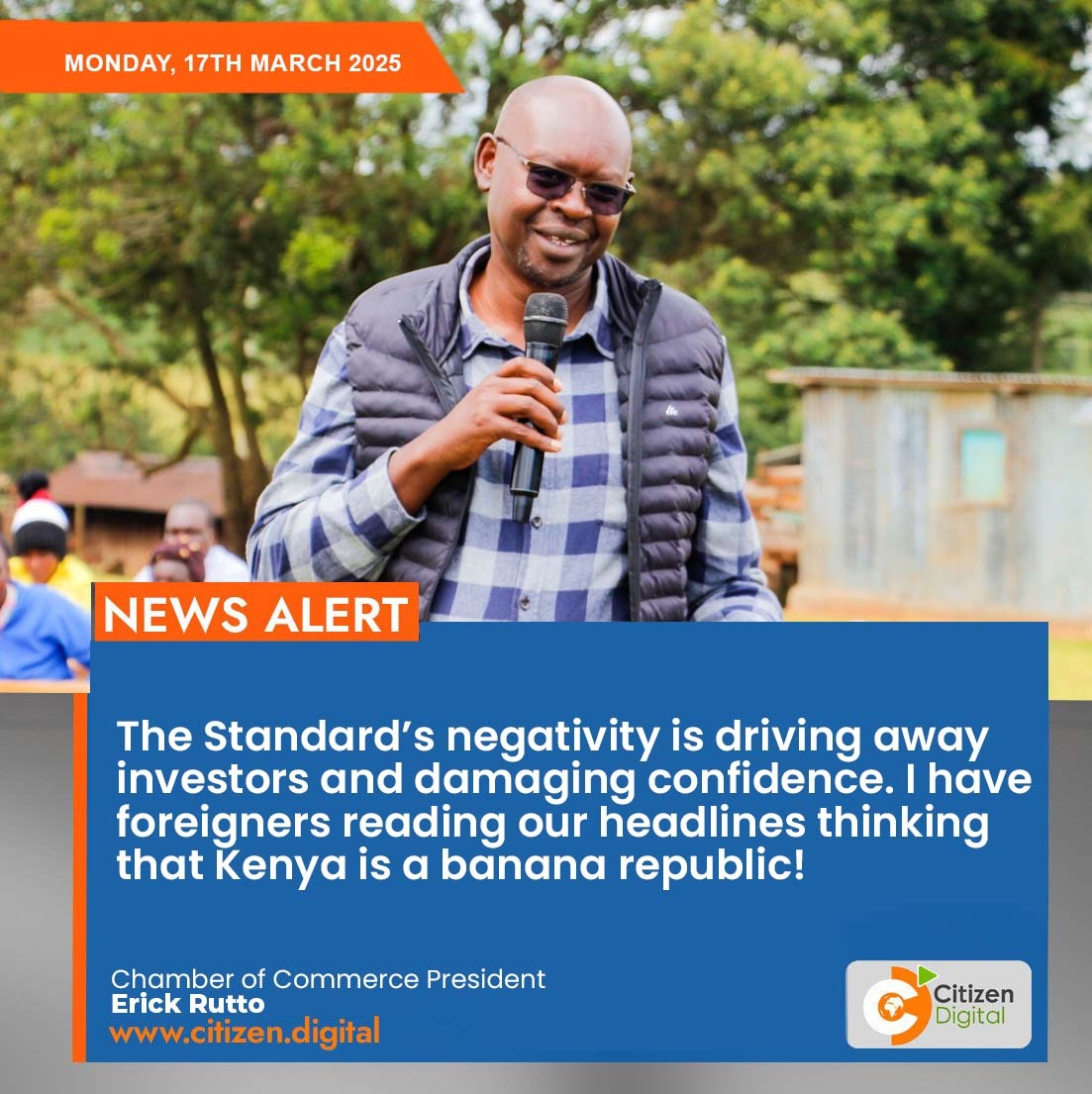
His remarks raised questions about KNCCI’s neutrality, given its status as a non-governmental organization, and fueled speculation that his criticisms aligned with the government’s efforts to curb critical media coverage.
The Kenya Kwanza government has faced accusations of attempting to silence critics, including journalists and social media users, through measures such as withdrawing advertisements from media outlets perceived as hostile. Reports of abductions targeting government critics have further heightened concerns about press freedom and civic space in Kenya.
KNCCI’s Role
KNCCI, led by Rutto, Vice President Mustafa Ramadhan, and a Board of Trustees chaired by Kiprono Kittony, plays a critical role in advocating for Kenya’s business community. The organization works to promote trade, investment, and economic development through partnerships with government, private sector stakeholders, and international bodies.
Farah’s abrupt exit has sparked concerns about the Chamber’s stability and governance. As KNCCI navigates this leadership transition, stakeholders are calling for greater transparency and accountability to restore confidence in the organization.
Kenya Insights will continue to investigate these developments and provide updates as more information becomes available.
Kenya Insights allows guest blogging, if you want to be published on Kenya’s most authoritative and accurate blog, have an expose, news TIPS, story angles, human interest stories, drop us an email on [email protected] or via Telegram









Karua Detained at Entebbe as Uganda Blocks Besigye Lawyer From Entering Country

How KCB and Airtel Turned Kenya’s Unbanked Into a Data Goldmine Behind a ‘Financial Inclusion’ Deal

The Chivayo Network: How a Convicted Fraudster Won Access to Presidents, Passports and Billion-Dollar Deals Across Africa

BURRIED TWICE: The Victoria Bank CEO Yogesh Pattni Files

Court Stops Transfer Of EABL Shares To Asahi By Diageo In A Fresh Snag

Death Before Justice: Stephen Ngei, Victim of Sh180 Million Laptop Tender Scam Linked to Allan Chesang, Killed in Highway Crash

Court Brands Sh1.1 Billion Fee Demand by Lawyer Victor Swanya “Excessive and Exorbitant,” Exposes How City Hall Lets Public Money Bleed Through Legal Bills

Trump Unveils New Air Force One

MR. NO SHOW: Finance Bill 2026 Exposes Ndindi Nyoro’s Political Conmanship

Billionaire Eric Muli Rebukes Musalia Mudavadi Over Nairobi Capital Relocation Debate

Businessman Philip Waithaka Kinuthia’s Minor Son Allegedly Drove Drunk, Killed Two Peponi Students in Ngong Road Horror Crash as Claims of Cover-Up Intensify

Inside NCBA’s Decline: How a Banking Giant Lost Its Strategic Edge

Cement, Cash and Courts: How the Hashu Dynasty Crushed the Ramji Brothers for Fourteen Years and Why the Walls Are Now Closing In

Standard Chartered Ghosts Haunt Joshua Oigara At Stanbic As Whistleblower Spills Beans

South Sudan: Adut Salva Kiir’s Shadow Treasury Exposed

Inside The Urban Planning Cartel That Owns Nairobi

THE VULTURE AND THE SCHEME How Nairobi West Hospital Became the Most Dangerous Institution in Kenya’s SHA Ecosystem and Why the Books Must Be Audited Now

How Adil Popat Saved His Empire On The Eve Of Imperial Bank Collapse and Why Kenya’s Mainstream Media Buried The Story

The President’s Daughter and The Missing Witness: How Adut Salva Kiir’s Shadow Treasury Silenced Its Most Dangerous Critic

Why John Ngumi Is Running From the EACC and Why the Sh415 Million Payday May Be the Least of His Worries
-
 News1 week ago
Businessman Philip Waithaka Kinuthia’s Minor Son Allegedly Drove Drunk, Killed Two Peponi Students in Ngong Road Horror Crash as Claims of Cover-Up Intensify
-
 Business2 weeks ago
Inside NCBA’s Decline: How a Banking Giant Lost Its Strategic Edge
-
 Business2 weeks ago
Standard Chartered Ghosts Haunt Joshua Oigara At Stanbic As Whistleblower Spills Beans
-
 Africa1 week ago
South Sudan: Adut Salva Kiir’s Shadow Treasury Exposed
-
 Investigations4 days ago
THE VULTURE AND THE SCHEME How Nairobi West Hospital Became the Most Dangerous Institution in Kenya’s SHA Ecosystem and Why the Books Must Be Audited Now
-
 Business1 week ago
How Adil Popat Saved His Empire On The Eve Of Imperial Bank Collapse and Why Kenya’s Mainstream Media Buried The Story
-
 Africa2 weeks ago
The President’s Daughter and The Missing Witness: How Adut Salva Kiir’s Shadow Treasury Silenced Its Most Dangerous Critic
-
 Business2 weeks ago
Why John Ngumi Is Running From the EACC and Why the Sh415 Million Payday May Be the Least of His Worries