
News
Catholic Altar Wine Replaced After Becoming A Favourite in Kenyan Bars
After exploring several wine options, the Catholic Church in Kenya settled on a South African vintage.

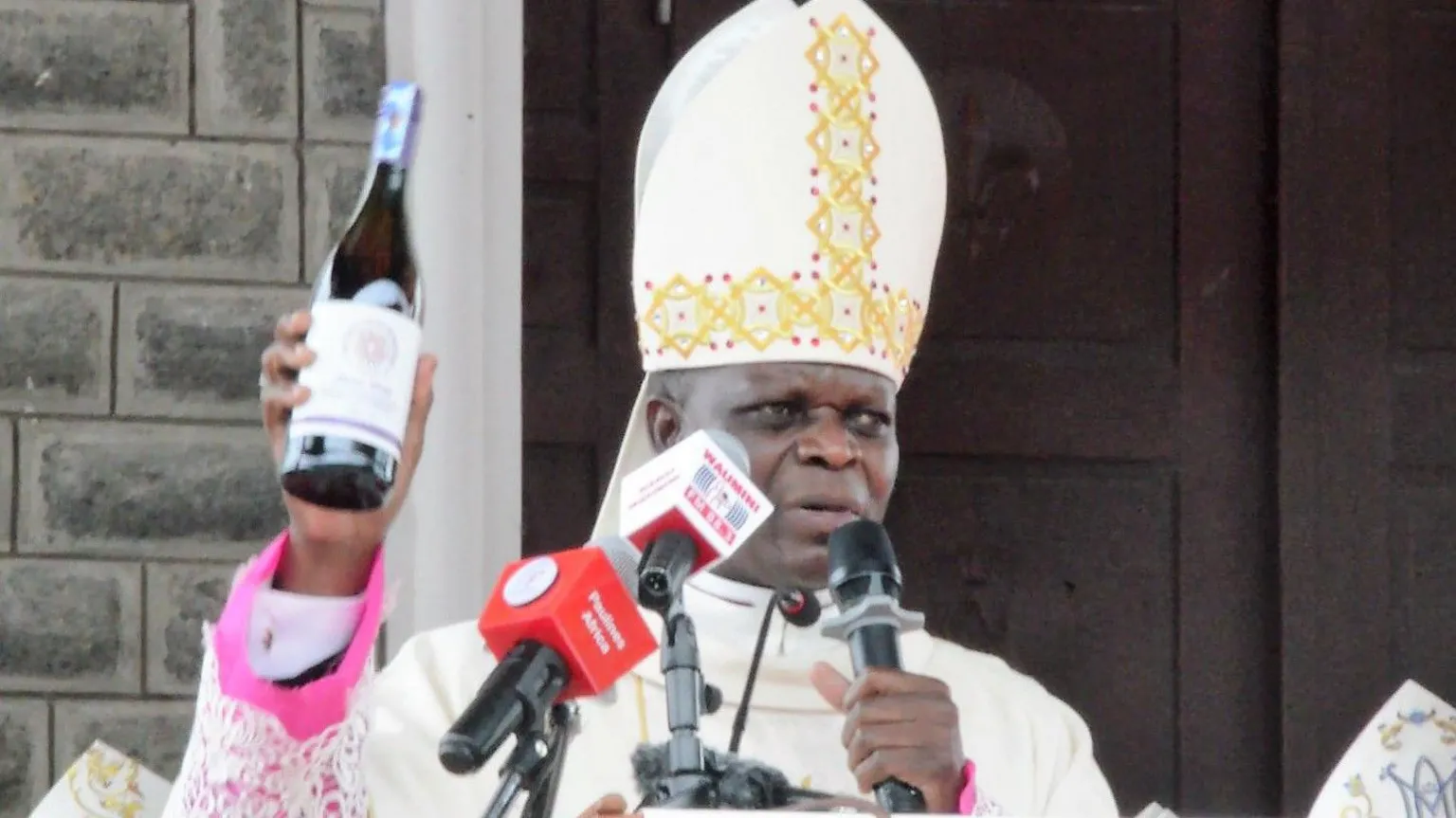
The Kenyan Catholic Church has introduced a new brand of altar wine for Holy Mass after the previous one became widely available in local bars.
Simply labelled Mass Wine, the new sacramental drink bears the coat of arms of the Kenya Conference of Catholic Bishops (KCCB) and an official signature to certify its authenticity.
“The newly approved wine is not for sale at any business outlet, but is imported and owned by the KCCB, and only distributed to the dioceses,” Archbishop of Nyeri Anthony Muheria told the BBC.
The move has been welcomed by the Catholic faithful, who believe that the previous brand had lost its sanctity due to its widespread use outside the church.
Wine is used at Mass to symbolise the blood of Jesus Christ and is normally drunk by the priest. On some occasions, it is given to the congregation as well.
The composition of the wine is regulated by the Catholic Church’s Canon Law, according to Archbishop Muheria.
“Vigilance on the quality and standards of the wine and hosts [bread used to symbolise the body of Christ] used in the Mass is given to the Catholic bishops of the country. This is reviewed from time to time,” the archbishop added.
The old wine, which was distributed by a local alcohol manufacturer, was widely sold in liquor shops, hotels, bars and supermarkets.
“It has become common that unfortunately, the former wine is readily available in secular outlets and bars,” Archbishop Muheria told the BBC.
After exploring several wine options, the Catholic Church in Kenya settled on a South African vintage.
The new wine was officially introduced for the first time to thousands of worshipers during this year’s National Prayer Day at the Subukia National Marian Shrine in Kenya’s Nakuru area on Saturday.
“This is the only wine that will be used in Mass celebrations across the country, going forward,” said Archbishop Maurice Muhatia Makumba, the KCCB chairman, as he held a bottle of the new sacramental wine.
He directed all Catholic churches in the country to discontinue use of the old wine and urged priests to familiarise themselves with the new distribution guidelines and authorised outlets.
“The newly approved wine is not for sale at any business outlet,” said Archbishop Muheria, adding that the new drink was imported and owned by the KCCB.
“This assures purity from source.”
The label on the new wine reads: “The fruit of the vine and the work of human hands will become our cup of joy” – a reflection of the wine’s sacred purpose.
Altar wine, popularly known as divai in Swahili language, is consumed differently across dioceses, depending on the liturgical season and the level of church activity.
Demand peaks during Easter, Christmas, and other major religious events.
Some members of the Catholic community welcomed the introduction of the new wine, expressing concern that the old was being sold casually in shops like any ordinary drink, diminishing its sacred significance.
“It is a valid step toward preserving the sacredness of the Eucharist and ensuring that only properly prepared wine is used for Mass,” one Catholic told BBC.
Many of Kenya’s Christians are Catholic – about 10 million people, or 20% of the population, according to government statistics.
Other Christians belong to a variety of evangelical churches and other denominations, including the Anglican Church of Kenya and the Presbyterian Church.
(BBC)
Kenya Insights allows guest blogging, if you want to be published on Kenya’s most authoritative and accurate blog, have an expose, news TIPS, story angles, human interest stories, drop us an email on [email protected] or via Telegram


Kenya’s gambling industry pushes back against a licensing bill

Kenya Airways Sinks Into Deeper Turbulence As American Supplier Sues In New York Court Over Sh129 Million Unpaid Debts

Kenyan player wins a Ksh3.2 million jackpot

IEBC Sets August 10 Date For 2027 General Election

Furious Ruto Lashes Out at Gideon Moi Over Repeated ‘Blackmail, Extortionist’ Headlines on The Standard and KTN

Mombasa Gripped by ‘Male Organ Theft’ Panic as Social Media Fuels Mob Attacks and Fear

TOO MUCH PR, NOTHING TO SEE: How Gladys Wanga Built a Perfect Story of Transformation While Homa Bay Bled

Netanyahu Says Israel Must ‘Break Free from Dependence’ After Tensions With Trump Administration

Niger pulls Out Of International Criminal Court After Calling It Neo-Colonialist

Kenya Awards Sh154 Billion JKIA Upgrade Tender To Chinese Firm CRBC

Businessman Philip Waithaka Kinuthia’s Minor Son Allegedly Drove Drunk, Killed Two Peponi Students in Ngong Road Horror Crash as Claims of Cover-Up Intensify

Inside NCBA’s Decline: How a Banking Giant Lost Its Strategic Edge

South Sudan: Adut Salva Kiir’s Shadow Treasury Exposed

Cement, Cash and Courts: How the Hashu Dynasty Crushed the Ramji Brothers for Fourteen Years and Why the Walls Are Now Closing In

Standard Chartered Ghosts Haunt Joshua Oigara At Stanbic As Whistleblower Spills Beans

Inside The Urban Planning Cartel That Owns Nairobi

THE VULTURE AND THE SCHEME How Nairobi West Hospital Became the Most Dangerous Institution in Kenya’s SHA Ecosystem and Why the Books Must Be Audited Now

The President’s Daughter and The Missing Witness: How Adut Salva Kiir’s Shadow Treasury Silenced Its Most Dangerous Critic

How Adil Popat Saved His Empire On The Eve Of Imperial Bank Collapse and Why Kenya’s Mainstream Media Buried The Story

Why John Ngumi Is Running From the EACC and Why the Sh415 Million Payday May Be the Least of His Worries
-
 News2 weeks ago
Businessman Philip Waithaka Kinuthia’s Minor Son Allegedly Drove Drunk, Killed Two Peponi Students in Ngong Road Horror Crash as Claims of Cover-Up Intensify
-
 Africa2 weeks ago
South Sudan: Adut Salva Kiir’s Shadow Treasury Exposed
-
 Investigations1 week ago
THE VULTURE AND THE SCHEME How Nairobi West Hospital Became the Most Dangerous Institution in Kenya’s SHA Ecosystem and Why the Books Must Be Audited Now
-
 Business2 weeks ago
How Adil Popat Saved His Empire On The Eve Of Imperial Bank Collapse and Why Kenya’s Mainstream Media Buried The Story
-

 Business4 days ago
BURRIED TWICE: The Victoria Bank CEO Yogesh Pattni Files
-

 Business7 days ago
Inside the Billion-Shilling Betrayal: How Senior Treasury Officials Plundered a UN Poverty Fund and Built a Real Estate Empire on the Backs of Kenya’s Rural Poor
-

 Business1 week ago
The Listing That Doesn’t Lie: What the Market Isn’t Saying About Family Bank’s NSE Debut
-

 Business1 week ago
The Banker Who Walked Away: How Yogesh Pattni Survived a Financial Crime Scandal That Shook Kenya