
Opinion
Ahmednasir’s Explosive Claim: Uhuru’s Corruption Dwarfed Ruto’s
The Senior Counsel’s analysis centers on what he describes as a fundamental disconnect between actual corruption levels and public perception.

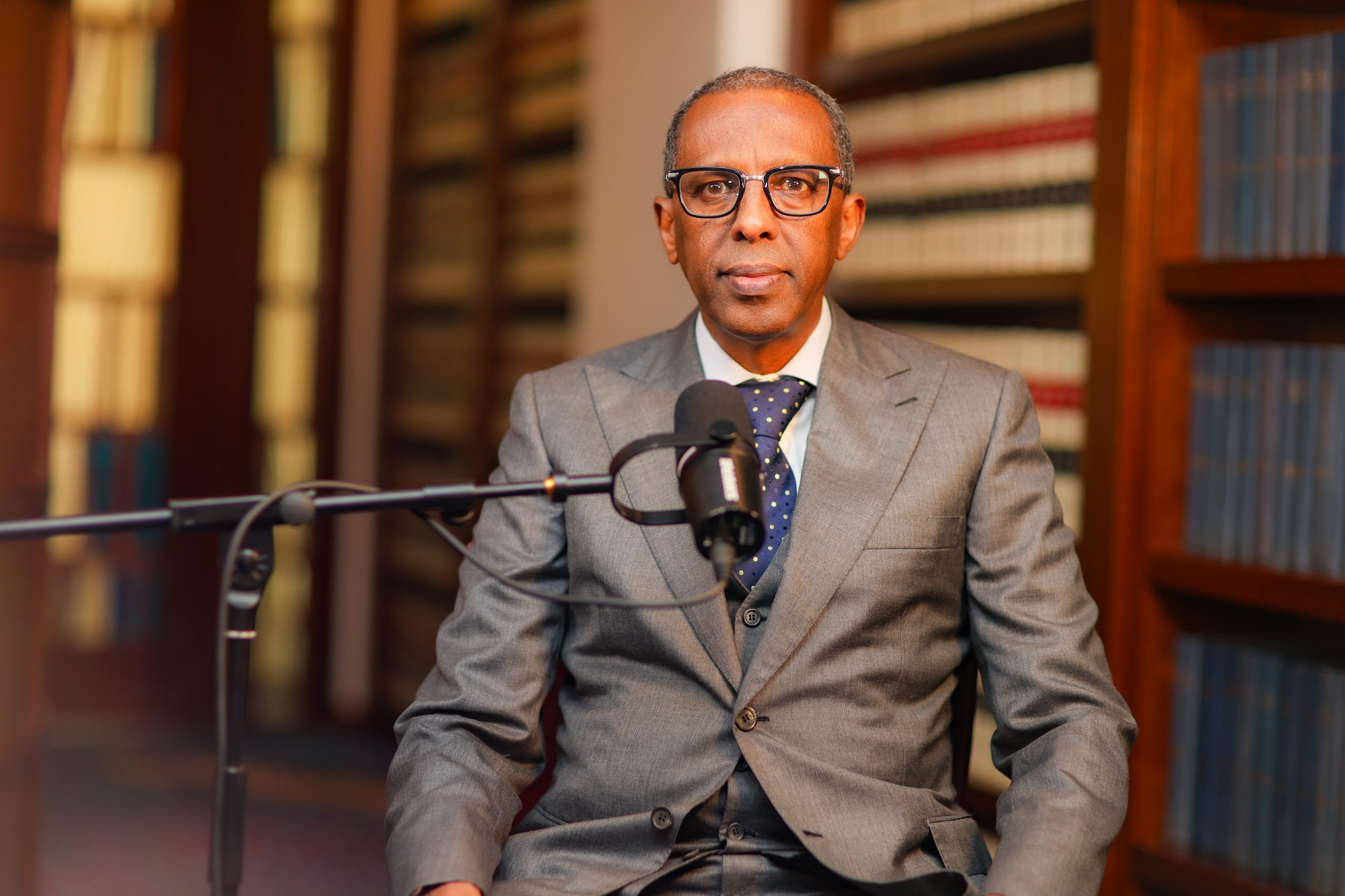
Ahmednasir Abdullahi Argues Public Perception Contradicts Reality on Presidential Corruption Levels
NAIROBI, Kenya – Prominent Kenyan lawyer Ahmednasir Abdullahi has delivered a scathing analysis that challenges conventional wisdom about corruption under Kenya’s current and former presidents, arguing that President William Ruto’s administration has engaged in significantly less corruption than his predecessor Uhuru Kenyatta’s government, despite public perception suggesting otherwise.
In a detailed ten-point analysis that has ignited debate across Kenya’s social media landscape, Abdullahi claims that corruption during Ruto’s first 30 months in office amounts to “roughly 20% of the theft during Uhuru’s tenure,” while acknowledging that public perception paints Ruto’s administration as more corrupt.
The perception vs. reality paradox
The Senior Counsel’s analysis centers on what he describes as a fundamental disconnect between actual corruption levels and public perception.
According to recent reports, President Ruto has acknowledged that “corruption has become a cancer that is eating Kenyan society” during his State of the Nation address, reflecting the administration’s awareness of public sentiment.
Abdullahi attributes this perception gap to what he terms a “complex interplay of politics, ethnicity, history, and sociology,” arguing that Kenyan society applies different standards to corruption based on the ethnic background of those in power.
Ethnic dimensions of corruption perception
The lawyer’s most controversial assertions center on ethnic perceptions of corruption in Kenya.
He argues that corruption by Kalenjin leaders, including Ruto, is viewed as “wanton and malevolent,” while corruption by Kikuyu leaders is seen as “dignified” and the “normal act of smart politicians and businessmen.”
This differential treatment, Abdullahi suggests, stems from several factors including the generational nature of wealth accumulation, the visibility of corrupt proceeds, and social familiarity with those involved in corruption schemes.
Generational wealth and social acceptance
A key element of Abdullahi’s analysis focuses on how different communities handle corrupt wealth.
He argues that Kikuyu corruption benefits from “generational chains” that create “corruption alibis and false heritage of old money,” while Kalenjin corruption is typically “first-generation,” making it more visible and socially unacceptable.
The lawyer contends that this generational difference affects how corrupt proceeds are used and perceived.
While Kalenjin corruption is characterized as “consumption enterprise” that is difficult to hide, Kikuyu corruption serves as “seed capital for business” that can be more easily legitimized through established business networks.
Regulatory approaches to corruption
Abdullahi draws distinctions between how different presidents have managed corruption within their administrations.
He argues that Kikuyu presidents “tightly regulate corruption from a class point of view,” limiting participation to “pre-screened players of second and third generation.”
In contrast, he claims Kalenjin presidents practice “corruption pluralism,” allowing broader participation that creates “a stampede to loot ferociously.”
This difference in approach, the lawyer suggests, affects both the scale of corruption and public perception of its acceptability.
Visibility and social dynamics
The analysis also addresses the visibility of corrupt wealth, arguing that Kalenjin corruption is “on your face” – visible through luxury items, housing changes, and lifestyle upgrades that neighbors can observe.
Kikuyu corruption, by contrast, is described as more discreet, with wealth channeled into rural properties and existing social networks that maintain established appearances.
Controversy
Abdullahi’s analysis comes as the lawyer continues to be a controversial figure in Kenyan legal circles, having been banned from appearing before the Supreme Court in January 2024 for “persistent and baseless attacks” on judicial integrity.
Despite this ban, he remains an influential voice in Kenyan political discourse.
Kenya’s corruption challenges are well-documented, with the country scoring 32 out of 100 on Transparency International’s 2024 Corruption Perceptions Index, ranking 121st among 180 countries.
Recent reports have even included Ruto among world leaders exhibiting “corruption and authoritarian rule” in 2024.
Implications for Kenyan politics
Abdullahi’s analysis raises uncomfortable questions about how ethnicity and social class influence perceptions of corruption in Kenya’s multiethnic society.
His arguments suggest that anti-corruption efforts may be undermined not just by weak institutions, but by deeper social biases that determine which forms of corruption are tolerated and which provoke public outrage.
The lawyer’s claims, while controversial and likely to face significant criticism, highlight the complex intersection of ethnicity, class, and governance in Kenya’s political landscape.
Whether his statistical claims about relative corruption levels can be substantiated remains an open question, but his analysis of public perception dynamics reflects observable patterns in Kenyan political discourse.
As Kenya continues to grapple with corruption challenges across different administrations, Abdullahi’s provocative analysis adds another layer to ongoing debates about accountability, ethnic politics, and the role of public perception in shaping political narratives.
The debate sparked by these assertions is likely to continue as Kenyans assess the performance of their current administration against historical precedents, while considering how ethnic and class dynamics influence their judgments about political leadership and corruption.
Kenya Insights allows guest blogging, if you want to be published on Kenya’s most authoritative and accurate blog, have an expose, news TIPS, story angles, human interest stories, drop us an email on [email protected] or via Telegram











The Oil Company That Bankrolled a Private Hospital: How Bernard Amuor Makeny Allegedly Turned Nilepet Into His Personal ATM

Death Deferred: How Kenya’s Government Is Bending Aviation Law to Shield the Rogue Developers Strangling Wilson Airport

Hit South African Show Gets The World Talking About Polygamy and Cheating

South Sudan: Fifteen Years of Independence, US$70 Billion in Oil Wealth and GDP Per Capita Cut by Two-Thirds

COFEK Escalates Bid to Oust Gambling Boss Karimi as Fresh Court Battle Puts GRA Leadership Under Siege

Desperate Family Pleads For Ruto’s Help After Safaricom Defies Court Order in Son’s Murder, Exposing Deeper Data Privacy Crisis

Nyali MP Moha Jicho Pevu Caught Up In Alleged Sh44 Million KPA Debt Scam

Somalia Deputy PM Held at JKIA, Deported Over Questionable Acquisition of Kenyan Passport

The White-Coat Heist: How MP Shah Hospital Ran a Decade-Long Double-Extraction Racket While Hiding Behind Charity Status

The Patriarch, His Children, and a Buried Sh3.9 Billion Fraud: The Story of Titus Muya That Kenya Was Never Meant to Read

Businessman Philip Waithaka Kinuthia’s Minor Son Allegedly Drove Drunk, Killed Two Peponi Students in Ngong Road Horror Crash as Claims of Cover-Up Intensify

Inside NCBA’s Decline: How a Banking Giant Lost Its Strategic Edge

South Sudan: Adut Salva Kiir’s Shadow Treasury Exposed

Cement, Cash and Courts: How the Hashu Dynasty Crushed the Ramji Brothers for Fourteen Years and Why the Walls Are Now Closing In

Standard Chartered Ghosts Haunt Joshua Oigara At Stanbic As Whistleblower Spills Beans

Inside The Urban Planning Cartel That Owns Nairobi

THE VULTURE AND THE SCHEME How Nairobi West Hospital Became the Most Dangerous Institution in Kenya’s SHA Ecosystem and Why the Books Must Be Audited Now
The Patriarch, His Children, and a Buried Sh3.9 Billion Fraud: The Story of Titus Muya That Kenya Was Never Meant to Read

The President’s Daughter and The Missing Witness: How Adut Salva Kiir’s Shadow Treasury Silenced Its Most Dangerous Critic

How Adil Popat Saved His Empire On The Eve Of Imperial Bank Collapse and Why Kenya’s Mainstream Media Buried The Story
-
 News2 weeks ago
Businessman Philip Waithaka Kinuthia’s Minor Son Allegedly Drove Drunk, Killed Two Peponi Students in Ngong Road Horror Crash as Claims of Cover-Up Intensify
-
 Investigations1 week ago
THE VULTURE AND THE SCHEME How Nairobi West Hospital Became the Most Dangerous Institution in Kenya’s SHA Ecosystem and Why the Books Must Be Audited Now
-
 Business1 day ago
The Patriarch, His Children, and a Buried Sh3.9 Billion Fraud: The Story of Titus Muya That Kenya Was Never Meant to Read
-
 Business5 days ago
BURRIED TWICE: The Victoria Bank CEO Yogesh Pattni Files
-
 Business1 week ago
Inside the Billion-Shilling Betrayal: How Senior Treasury Officials Plundered a UN Poverty Fund and Built a Real Estate Empire on the Backs of Kenya’s Rural Poor
-

 Business2 weeks ago
The Listing That Doesn’t Lie: What the Market Isn’t Saying About Family Bank’s NSE Debut
-
 Business1 week ago
The Banker Who Walked Away: How Yogesh Pattni Survived a Financial Crime Scandal That Shook Kenya
-
 News1 week ago
My Life Is In Danger: Investor Drops Bombshell Expose On Thomas Ogutu CEO VeGrid Ltd And Fugitive Nairobi CEC Charles Kerich – DCI Inaction And Corruption Network Exposed