
Business
The Banker Who Walked Away: How Yogesh Pattni Survived a Financial Crime Scandal That Shook Kenya
How money laundering and economic crime allegations against Victoria Commercial Bank CEO Dr. Yogesh Pattni erupted with the force of a national scandal in August 2023 — then went cold. A trail of buried files, a sugar cartel’s hidden empire, political funding networks, compromised insolvency proceedings, and the recurring Kenyan phenomenon of powerful men watching their cases simply vanish.

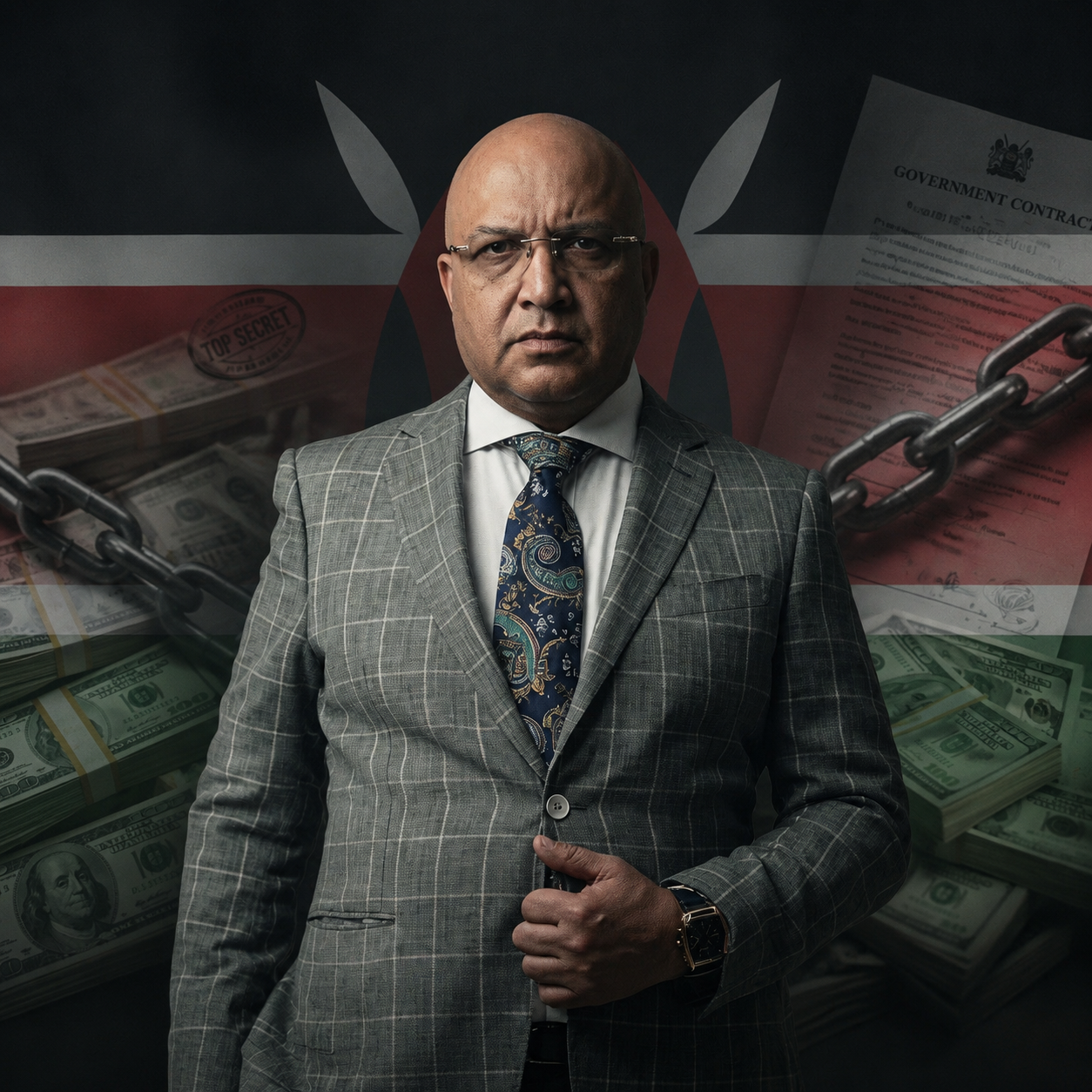
It was 6 o’clock on the morning of Monday, August 28, 2023, when detectives from the Directorate of Criminal Investigations’ Banking Fraud Investigations Unit descended on the gleaming Two Rivers Mall offices of Victoria Commercial Bank.
Their target was the bank’s long-serving chief executive, Dr. Yogesh Pattni. Before Nairobi had eaten breakfast, one of the most consequential arrests in Kenya’s banking sector in recent memory had been made, and the city’s financial and political elite were quietly reaching for their phones.
The timing was calculated to feel like a thunderclap. Less than 48 hours earlier, sugar billionaire Jaswant Singh Rai the Rai Group patriarch whose tentacles stretch from cane fields in western Kenya to paper mills in Webuye and oil refineries in Nakuru had been dramatically abducted in broad daylight along Wood Avenue, Kilimani, by men who appeared to be police officers.
He was held for two days and released on the evening of Sunday, August 27, unhurt, with no ransom demanded and no explanation offered. Hours after Rai’s release, investigators came for Pattni.
For the better part of that Monday, Pattni was grilled at DCI headquarters on Kiambu Road.
His lawyer, Gibson Kimani, confirmed the arrest to the press: his client had been taken and questioned for hours. The questions, as court documents and investigative sources would later reveal, were direct and damning in their breadth.
They covered alleged money laundering, tax fraud, conspiracy to defraud Mumias Sugar Company, the bank’s opaque role in facilitating a Dubai-registered entity called Vartox Resources to acquire tens of millions of dollars in distressed Mumias debt, the alleged proxy ownership of a substantial stake in Victoria Commercial Bank by Jaswant Rai, the bank’s broader client base, its arms dealing links and the circumstances of how it obtained its operating approvals from the Central Bank of Kenya.
The nation watched.
President William Ruto himself, standing before residents of Kakamega County, publicly named the sugar cartel operators and issued what amounted to an ultimatum withdraw your cases, leave the country, face jail, or, in his precise and chilling phrasing, ‘go to heaven.’ Vartox Resources withdrew its multi-billion-shilling Mumias Sugar Court of Appeal petition within days of Pattni’s arrest. The heat was intense, the pressure visible, the moment historic.
Then, as has become a Kenyan tradition with any scandal touching the truly powerful, the noise stopped.
Nearly three years on, the file on Yogesh Pattni and Victoria Commercial Bank appears to have gone cold. No charges have been publicly announced. No prosecution has been confirmed. The Central Bank of Kenya has maintained its customary institutional silence. The Directorate of Public Prosecutions has offered no public accounting of whether it received a complete, prosecutable file or what it found therein. The case that exploded into every Kenyan newsroom in a week of high drama has, for all public purposes, simply ceased to exist.
This investigation asks one foundational question: why?
‘The investigation is an attempt by the DCI to criminalize standard commercial and civil transactions.’ — Yogesh Pattni, in sworn court affidavit, August 2023
THE ARCHITECTURE OF AN ALLEGED SCHEME
To understand what investigators were probing, one must understand the labyrinthine financial structure that allegedly allowed Mumias Sugar Company once the largest sugar producer in sub-Saharan Africa, the economic heartbeat of western Kenya to be picked apart by private interests while its farmers, workers and suppliers were left without payment or remedy.
Mumias was placed under receivership by Kenya Commercial Bank in 2019 over an unpaid debt of Sh545 million, a figure almost comically small relative to the strategic and social value of the mill.
KCB appointed Ponangipalli Venkata Ramana Rao as receiver-manager. What followed was years of litigation that consumed the courts, paralysed the revival process and enriched advocates enormously.
At the centre of the murkiest transactions sat two critical Mumias assets an ethanol plant and a cogeneration power facility that had been used as security for loans advanced by French development lender Proparco (approximately USD 35 million) and EcoBank.
According to DCI court documents seen and reported by multiple Kenyan newsrooms, including this publication, those assets moved in a chain of transactions that raised serious regulatory eyebrows. Victoria Commercial Bank one of Kenya’s smallest lenders, operating from discreet premises with a select clientele allegedly acquired the debt and rights over these assets from Proparco and EcoBank.
The combined value of the two assets: approximately Ksh1.9 billion for the cogeneration plant and Ksh4 billion for the ethanol facility. The question investigators were urgently asking was how a small bank of VCB’s balance sheet size had the capacity to acquire assets worth close to USD 45 million and Ksh800 million, and whether the source of those funds was legitimate.
Victoria Commercial Bank then, according to investigators, transferred those benefits to Vartox Resources Inc. a company registered in the British Virgin Islands, operating through a Dubai address, with a director named Kristian Khachatourian and local signatory Amal Kokkandathil Joseph in transactions investigators alleged were not notified to other listed lenders.
Vartox thus emerged holding a Sh6 billion claim against Mumias Sugar, an insolvent company whose revival was a declared national priority. The timing of Vartox’s entry into the picture precisely as the Mumias lease process was being contested was described in legal papers by multiple parties as a tactical manoeuvre designed to derail the process, not to recover a legitimate debt.
DCI Inspector Isaac Ogutu swore in court that preliminary investigations had established that unnamed individuals conspired to defraud Mumias Sugar Company with the purpose of sabotaging its revival.
He alleged the transactions in question could be fictitious and that they were recorded in the actual books of account of the bank. On June 23, 2023, the DCI obtained a court order allowing it to probe Vartox’s shilling and dollar accounts from January 1, 2019. Then Pattni went to the Commercial Court, arguing the DCI was conducting a sham probe targeting accounts that did not even belong to Vartox, and on July 5, 2023, obtained a conservatory order halting the investigation.
This was the legal armour in place when detectives nonetheless came for him on August 28.
That they moved despite the active court order tells investigators and legal analysts something significant: the Banking Fraud Unit had developed sufficient grounds, in their professional assessment, to justify the risk. What happened to those grounds thereafter is the question that remains unanswered.
THE PROXY QUESTION: WHO REALLY OWNS VICTORIA COMMERCIAL BANK?
Victoria Commercial Bank has, in all public statements and regulatory filings, consistently denied that Jaswant Singh Rai is a shareholder in the institution, directly or through proxies. The bank’s position is categorical: Rai has no ownership stake.
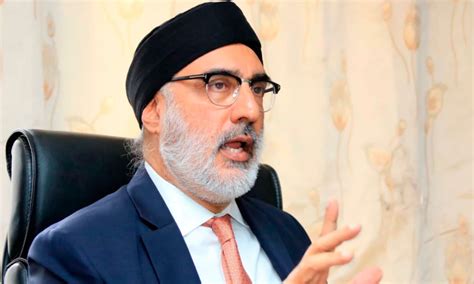
Jaswant Rai.
Sources within investigative and business intelligence circles, however, have long maintained a different account.
The allegation persistent, documented in multiple court proceedings by interested parties, reported by several news outlets since at least 2022 is that Rai controls approximately 40 per cent or more of VCB through carefully layered nominee and proxy structures that shield his name from the formal shareholder register.
Such structures, in which a beneficial owner uses nominee directors and shareholders to obscure ultimate ownership of a regulated institution, are not unique to Kenya.
They are, however, prohibited under the Banking Act and CBK prudential guidelines, which require full disclosure of beneficial ownership and fitness-and-propriety assessments for any person exercising significant influence over a bank.
If the allegation is accurate, the implications cascade. It would mean the CBK’s licensing and ongoing supervisory process failed to identify or act on a hidden controlling interest.
It would mean the bank’s governance structures, its credit decisions, its risk appetite and its customer relationships were, at least in part, being shaped by a businessman who simultaneously ran one of the most litigious and controversial sugar empires in the country.
It would explain why a small bank found itself acquiring USD 45 million worth of distressed assets tied to an insolvency proceeding in which Rai’s interests were directly engaged. It would mean the institution was not merely a creditor in the Mumias drama it was, on this account, a vehicle for its orchestration.
Pattni has denied this in sworn affidavit and through his lawyers. The CBK has not publicly responded to questions about its supervisory oversight of VCB’s ownership structure. The DCI probe was in material part aimed at establishing precisely this connection.
That the probe has stalled means the central question of who actually owns and controls Victoria Commercial Bank has not received a definitive, court-tested answer.
How a small bank acquired assets worth close to USD 45 million nearly the size of its reported balance sheet has never been adequately explained to regulators or the public.
THE POLITICAL ARCHITECTURE: WHO FUNDED WHOM
The money laundering investigation did not emerge in a vacuum. It erupted within a very specific political context one that sources intimate was directly relevant to both the pace of the investigation and, ultimately, to its apparent arrest.
When DCI officers grilled Jaswant Rai at JKIA in July 2023, court documents and sources confirm that questions extended beyond Mumias Sugar.
Rai was asked about his associations with Muhoho Kenyatta, the younger brother of former President Uhuru Kenyatta, and his alleged role in financing opposition politics, including Raila Odinga’s 2022 presidential bid.
According to Kenya Insights’ contemporaneous sources, Rai is alleged to have channelled substantial sums reported as high as Sh2 billion through networks connected to the Kenyatta family circle during the campaign season.
Sources intimate to this publication that Pattni and Rai were among a network of Asian-Kenyan businessmen who invested substantially in maintaining Jubilee’s grip on power through the Uhuru era.
That investment, according to these sources, purchased not merely access but protection protection from regulatory scrutiny, protection for proxy ownership arrangements, protection for commercial relationships that might not have survived neutral, disinterested regulatory examination.
The ascent of William Ruto, whose political identity was explicitly built on disrupting established patronage networks and whose public rhetoric around cartels was unusually specific and personal, represented an existential threat to those arrangements.
These sources further intimate that elements of this network continue to provide material support financial and organisational to mobilisation efforts aimed at making Ruto a single-term president.
The ‘Wantam’ framing, shorthand for one-term movement sentiment, has circulated in political commentary for some time. Sources suggest the resistance is not merely political opposition but reflects the material interests of individuals whose business models require a return to the previous order.
Kenya Insights does not present these allegations as established fact. They come from sources who cannot be identified but who have provided accurate intelligence on Kenyan financial sector matters in the past.
What can be stated factually is that the DCI probes of both Rai and Pattni occurred in a period of active political turbulence around the sugar sector, that both men had documented associations with the political architecture of the Kenyatta era, and that the investigations stopped advancing shortly after the initial arrests. The confluence of those facts is, at minimum, a matter demanding proper, independent accounting.
THE NYAKUNDI AFFAIR: WEAPONISING THE DCI

Blogger Cyprian Nyakundi.
Long before the Mumias drama reached its August 2023 crescendo, there was an earlier episode involving Yogesh Pattni and the state’s investigative apparatus one that, if anything, raises more troubling questions about how Victoria Commercial Bank and its chief executive have historically related to law enforcement.
On January 3, 2020, blogger Cyprian Nyakundi published a post about Pattni and Victoria Commercial Bank on his widely-read website.
According to detailed court documents filed in Petition No. 5 of 2020 at the Milimani High Court and subsequently reported by other blogs — Pattni responded to those publications by contacting a businessman named Dharmesh Shah. Shah, the court records indicate, then contacted a man called Nuri ‘Tinta’ Akasha, described in the proceedings as a relative of the infamous Akasha brothers who are serving long sentences in the United States for drug trafficking offences.
What followed was a sting operation.
DCI Corporal Charles Odhiambo, according to the court’s findings, was not merely present during the encounter he was at its centre, facilitating, advising and ultimately setting up the conditions that led to the arrest of Nyakundi and a co-petitioner on extortion charges.
A secret camera was installed.
The encounter was choreographed. On March 11, 2021, High Court Justice A.C. Mrima delivered a judgment that devastated the prosecution’s case and exposed something far more troubling than a blogger seeking a payment.
Justice Mrima found that ALL the evidence the DPP intended to rely upon had been obtained through entrapment, in violation of Article 50(4) of the Constitution of Kenya.
He quashed the criminal case entirely.
His language was precise and damning: ‘In essence, had it not been Corporal Odhiambo advising, linking up Nuri with the Petitioners and being firmly behind the whole encounter, there is no evidence that the Petitioners would have nevertheless taken any steps to commit the offence.’ The DCI, the judge concluded, was ‘at the centre of the whole matter’ from inception.
Read alongside the 2023 investigation, this earlier episode illuminates a pattern.
In 2020, when Pattni faced reputational threat from a blogger writing about money laundering allegations, elements within the DCI appear to have been mobilised to neutralise that threat through entrapment.
In 2023, when the same DCI’s Banking Fraud Unit moved against Pattni himself on money laundering grounds, the investigation collapsed.
One asks not merely whether cases can be engineered against enemies of the powerful but whether cases against the powerful can be just as efficiently engineered to fail.
Victoria Commercial Bank was an interested party in the Nyakundi petition, with Pattni himself swearing a detailed replying affidavit. The court records are public. The judgment stands. The pattern it reveals is one that the DCI Directorate must confront.
‘The DCI was at the centre of the whole matter.’ — Justice A.C. Mrima, High Court of Kenya, March 2021
THE PROPERTY TRANSACTION: A JUDGE’S FINDING OF ILLEGALITY
While attention has focused on the sugar sector and money laundering allegations, a 2025 court ruling in Kisumu largely unreported at the national level delivered a judicial finding about Pattni’s personal business conduct that deserves scrutiny.
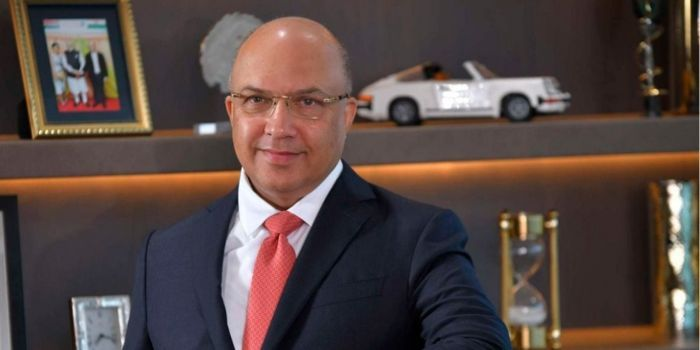
Yogesh Pattni.
In Case E166 of 2019, Justice Alfred Mabeya of the High Court in Kisumu ruled on a complex property transaction in which Pattni, his wife Azmina Pattni and Victoria Commercial Bank sought to purchase prime Kisumu plots from Intcon Africa Limited a company that was itself indebted to Diamond Trust Bank.
The Pattnis paid Ksh85 million in two tranches in 2017 and 2018 and issued guarantees through VCB.
The transaction was structured, Justice Mabeya found, through a shell special-purpose vehicle called Flynn Limited in a manner explicitly designed to avoid paying stamp duty on a property sale by disguising it as a corporate reorganisation.
‘It was designed to appear as a corporate reorganization,’ Justice Mabeya observed, ‘but in substance, it was a sale and purchase transaction meant to evade taxes.’ The court found the entire arrangement to constitute misrepresentation and illegality, in violation of Section 3(3) of the Law of Contract Act.
The Pattnis ultimately prevailed in the sense that DTB and the lawyer, Mohammed Madhani, were ordered to refund the Ksh85 million. But the judicial finding of tax evasion by design a structure ‘meant to evade taxes’ in a justice’s own words sits on the public record.
It is worth noting this was a civil proceeding, not a criminal prosecution.
No criminal charges for tax evasion arose from Justice Mabeya’s findings. The Kenya Revenue Authority has not publicly indicated whether it acted on the court’s characterisation of the transaction.
This is, again, consistent with the broader pattern: findings of financial irregularity in formal judicial proceedings, followed by institutional silence.
THE DEBT CHAIN: HOW MUMIAS FARMERS WERE LEFT WITHOUT RECOURSE
At the centre of every legal argument, every court filing and every denial from VCB’s lawyers lies a human reality that has been largely abstracted from the public discourse.
The cane farmers of western Kenya the smallholders and outgrowers whose generations of labour created the cane supply that Mumias Sugar needed to function have been waiting years for payment of debts owed by the miller. For them, the insolvency proceedings are not an academic exercise in creditor hierarchy. They are the difference between school fees paid or unpaid, between a family farm saved or sold.
The entry of Vartox Resources into the Mumias insolvency proceedings armed with a Sh6 billion claim it inherited through VCB from Proparco and EcoBank, secured against the ethanol and cogeneration assets had the direct practical effect of inserting a foreign-registered private creditor ahead of or alongside the claims of local farmers, workers and suppliers.
The mechanisms by which those assets moved from development lenders into a Dubai-BVI entity, and then were used as legal weaponry in the insolvency process, are precisely what investigators were trying to establish.
The conservatory orders obtained by Pattni and Rai effectively froze that investigation while the litigation continued.
When Vartox withdrew from the Court of Appeal proceedings on August 30, 2023, within 48 hours of Pattni’s arrest, it appeared at least momentarily that the legal blockade was dissolving. Sarrai Group’s lease was already invalidated by Justice Mabeya’s April 2022 ruling.
A new administrator had been appointed.
The path to revival seemed, briefly, clearer. Yet the criminal investigation into the transactions that had blocked Mumias for years appears to have been quietly shelved. For the farmers waiting at the farm gate, that silence is not an abstraction. It is a continuation of the same injustice in a different form.
A KENYAN PATTERN: BIG CASES THAT DIE
The story of the stalled Pattni investigation does not stand alone.
It belongs to a recognisable taxonomy of Kenyan economic crime prosecutions that begin loudly and end quietly, whose trajectory reveals not random institutional failure but a consistent pattern of effective impunity for the financially and politically connected.
The cases are often launched with visible force.
There is a dramatic arrest, an intensive media cycle, authoritative statements from investigators, court documents that seem to promise accountability.
Then: conservatory orders multiply, witnesses become unavailable, evidence chains are challenged procedurally, files are returned by the DPP marked ‘insufficient evidence,’ or simply cease to progress.
The accused continue building their empires. The files sit in filing cabinets or exist only as digital artefacts of a moment when accountability seemed possible.
Consider the contaminated sugar scandal of the Uhuru era.
Consignments of mercury- and copper-tainted sugar entered the country or were stored in Nairobi’s Industrial Area godowns and at Rai Paper Mills in Webuye, condemned by KEBS.
The scandal consumed parliamentary committee time and public oxygen. West Kenya Sugar and Kabras Sugar companies linked to the Rai empire were among the names in public discourse. No conviction followed. The implicated companies continued operating. The network emerged intact.
Consider the multi-year investigations into banking sector fraud at KCB, NCBA, Absa and Credit Bank each of which has generated investigative reporting, regulatory findings and public alarm without consistently producing criminal accountability for senior executives.
Consider the KETRACO-Inabensa arbitration scandal, where bribery allegations involving a court official consumed investigators before the matter dissipated. Consider the repeated findings by oversight bodies of procurement fraud across government ministries, few of which have produced prosecuted convictions of senior officials.
The pattern is structural.
Kenya’s criminal justice apparatus is genuinely capable of prosecuting the powerless the petty fraudster, the junior official, the visible street-level criminal with efficiency.
It demonstrably struggles to maintain momentum against those who can afford the most experienced senior counsel, obtain conservatory orders from sympathetic courts, use legitimate litigation processes to delay and exhaust investigations, and who operate within networks that extend into the command and staffing structures of the very institutions tasked with investigating them.
This is not cynicism.
It is an observation grounded in case after case, file after file, announcement after announcement that produced no outcome. It is the lived experience of accountability journalism in Kenya.
THE INSTITUTIONAL SILENCE THAT CONDEMNS
The questions that remain open in the Pattni matter are not subtle. They are blunt, institutional, and unanswered. They deserve answers from four specific institutions.
The Directorate of Criminal Investigations is owed a direct and specific accounting.
DCI Director Mohammed Amin who came to the role with a reputation for professionalism and independence must satisfy himself, and the public, that the Banking Fraud Unit file on Pattni and Victoria Commercial Bank was pursued to its legitimate investigative conclusion, that it was transmitted to the DPP in complete and prosecutable form, and that no element of the investigation was compromised by extra-institutional interference.
Sources have alleged to this publication that financial inducements were deployed within the investigative chain to ensure the case lost momentum.
This publication does not assert those allegations as proven fact.
But they are specific, they come from multiple credible circles, and they demand that the Director personally review the file and satisfy himself of its integrity.
A passive response silence, or reference to ‘ongoing investigations’ is not adequate given the public interest.
The Central Bank of Kenya has regulatory obligations under the Banking Act that are direct and non-discretionary.
Its supervisory mandate includes ongoing fitness-and-propriety assessment, beneficial ownership scrutiny and oversight of related-party transactions.
How a bank of VCB’s reported balance sheet size acquired the capacity to take on Proparco and EcoBank’s combined Mumias debt exposure has never been explained publicly.
The CBK must account for how its supervisory process engaged with the allegations that Jaswant Rai held a significant beneficial interest in the bank through proxies and what action, if any, it took.
The Director of Public Prosecutions must confirm, publicly and specifically, whether a complete investigative file on the Pattni matter was received, whether prosecutable evidence was established, and if not, why not.
If a file was received and found insufficient, the reasons must be given.
The institutional credibility of the DPP rests on the public’s ability to distinguish between cases dropped for legitimate evidential reasons and cases dropped for reasons that serve someone’s interests. In the current climate, given the history of this matter, silence is indistinguishable from complicity.
The Kenya Revenue Authority sits on a specific finding from Justice Mabeya’s Kisumu ruling: a structured property transaction explicitly characterised by a sitting judge as designed to evade tax. The KRA must account for whether it has reviewed that finding and taken appropriate action.
Institutional silence on the Pattni file is not neutrality. In a matter of this scale, silence is a choice and it is a choice with victims.
WHAT VICTORIA COMMERCIAL BANK AND YOGESH PATTNI SAY
In fairness and in fidelity to the principles of balanced reporting that this publication applies to all investigations, the public record of Pattni’s and VCB’s defences must be stated clearly.
In his sworn affidavit before the Commercial Court in 2023, Pattni stated categorically that when he appeared before DCI investigators on June 21, 2023 voluntarily, before the August arrest he received no specific particulars of any alleged offence.
He stated that the DCI ‘did not provide specific details of how Vartox and Victoria Bank defrauded Mumias.’ He described the investigation as ‘an attempt by the DCI to criminalize standard commercial and civil transactions in order to intimidate, threaten and harass the applicants and give advantage to certain undisclosed parties in Mumias insolvency proceedings.’
He denied that Victoria Bank purchased shares in Mumias, describing the acquisition as purely a debt instrument inherited from Proparco. He stated that the accounts the DCI sought to investigate did not belong to Vartox.
These are not frivolous submissions.
They were made in sworn form before a court of competent jurisdiction. If true, they would represent a significant abuse of the criminal process in furtherance of commercial litigation strategy. That possibility also deserves investigation which is precisely why the matter requires transparent, independent review rather than silent burial.
Pattni and VCB were invited to respond to the specific questions raised in this investigation prior to publication. No response was received by the time of going to press. This publication maintains the right and the obligation to publish matters of significant public interest on the basis of documented evidence, court records and sourced information, while remaining committed to accurately reflecting any responses that are subsequently provided.
CONCLUSION: THE CASE THAT CANNOT BE ALLOWED TO SLEEP
Nearly three years have elapsed since the DCI Banking Fraud Unit hauled Yogesh Pattni from his Two Rivers Mall office and the nation watched, with real hope, as it appeared the long arm of the law was finally reaching into the protected corridors of Kenya’s financial elite.
In those three years: Vartox withdrew from the Mumias proceedings. Jaswant Rai has since secured a lease on Nzoia Sugar factory, extending his western Kenya footprint even as the investigations into his financial networks showed no public progress. Victoria Commercial Bank continues to operate, serving its selective clientele from its discreet premises.
The farmers of Mumias and western Kenya continue to wait for payment, for justice, for clarity on who exactly caused the destruction of an institution that was once the anchor of their economy.
The case against Yogesh Pattni and Victoria Commercial Bank was never just about one banker or one bank. It was about whether Kenya’s institutions the DCI, the DPP, the CBK, the courts have the collective will to pursue economic crime when the accused are sufficiently connected, sufficiently resourced and sufficiently networked to make pursuit uncomfortable.
Every time a case of this scale dies quietly, it sends a message to every Kenyan citizen: the law applies to you, not to them.
That message is corrosive. It is the seed of every Gen Z protest, every anti-corruption demonstration, every moment of public despair about whether this country can be governed justly.
President Ruto stood before the residents of Kakamega in August 2023 and made them a promise. He named the cartel operators. He issued the ultimatum.
He used language that has not been used by a Kenyan head of state in a generation. The investigative institutions heard that speech. The question is whether they were empowered or allowed to act on it.
This publication calls for the following specific actions. DCI Director Mohammed Amin must personally review the Pattni file and account publicly for its status.
The DPP must confirm whether the file was transmitted in complete form and what action was or was not taken.
The CBK must address its supervisory obligations regarding VCB’s ownership structure and balance sheet capacity.
The KRA must respond to the judicial finding on the Kisumu property transaction. Parliamentary and oversight committees with jurisdiction over the financial sector and law enforcement must summon the responsible accounting officers and demand answers on the record.
The story of Yogesh Pattni and Victoria Commercial Bank is far from over. This investigation continues, and Kenya Insights will report every development. The file on this matter will not be allowed to sleep.
Kenya Insights allows guest blogging, if you want to be published on Kenya’s most authoritative and accurate blog, have an expose, news TIPS, story angles, human interest stories, drop us an email on [email protected] or via Telegram














The Banker Who Walked Away: How Yogesh Pattni Survived a Financial Crime Scandal That Shook Kenya

Ukraine Sets Moscow Refinery Ablaze In Biggest Attack In Years

NTSA Announces Mandatory Refresher Courses for All Motorists Starting July

Taiwan Accuses Kenya of Yielding to China

Activists File Petition To Stop Govt Officials From Blocking Kenyans On Social Media

US-Iran Agreement: Key Details Revealed

Generation Hooked: How BAT Kenya Built a Profit Machine on Teenage Addiction

The Enemy Within: How Old Mutual’s Own Staff and Rotten Systems Are Draining Kenya’s Insurance Giant

THE GRAND MULLAH AND THE PIPELINE : How Ahmednasir Turned a Lebanese Contractor’s Legal Battle into a Multi-Billion-Shilling Machine Against a State Corporation

Finance Bill 2026 ‘Rushed’ Through Second Reading Without Our Input – Opposition MPs

Businessman Philip Waithaka Kinuthia’s Minor Son Allegedly Drove Drunk, Killed Two Peponi Students in Ngong Road Horror Crash as Claims of Cover-Up Intensify

Inside NCBA’s Decline: How a Banking Giant Lost Its Strategic Edge

Cement, Cash and Courts: How the Hashu Dynasty Crushed the Ramji Brothers for Fourteen Years and Why the Walls Are Now Closing In

Standard Chartered Ghosts Haunt Joshua Oigara At Stanbic As Whistleblower Spills Beans

Inside The Urban Planning Cartel That Owns Nairobi

South Sudan: Adut Salva Kiir’s Shadow Treasury Exposed

Why John Ngumi Is Running From the EACC and Why the Sh415 Million Payday May Be the Least of His Worries

How Adil Popat Saved His Empire On The Eve Of Imperial Bank Collapse and Why Kenya’s Mainstream Media Buried The Story

The President’s Daughter and The Missing Witness: How Adut Salva Kiir’s Shadow Treasury Silenced Its Most Dangerous Critic

Betika Faces DCI Probe, Directors Arrest and License Revocation Over Massive 29.5 Million Safaricom Customers’ Data Breach
-
 News3 days ago
Businessman Philip Waithaka Kinuthia’s Minor Son Allegedly Drove Drunk, Killed Two Peponi Students in Ngong Road Horror Crash as Claims of Cover-Up Intensify
-
 Business1 week ago
Inside NCBA’s Decline: How a Banking Giant Lost Its Strategic Edge
-
 Investigations2 weeks ago
Cement, Cash and Courts: How the Hashu Dynasty Crushed the Ramji Brothers for Fourteen Years and Why the Walls Are Now Closing In
-
 Business1 week ago
Standard Chartered Ghosts Haunt Joshua Oigara At Stanbic As Whistleblower Spills Beans
-
 Investigations2 weeks ago
Inside The Urban Planning Cartel That Owns Nairobi
-
 Africa6 days ago
South Sudan: Adut Salva Kiir’s Shadow Treasury Exposed
-
 Business7 days ago
Why John Ngumi Is Running From the EACC and Why the Sh415 Million Payday May Be the Least of His Worries
-
 Business6 days ago
How Adil Popat Saved His Empire On The Eve Of Imperial Bank Collapse and Why Kenya’s Mainstream Media Buried The Story